WestBridge FAQs and Photo Galleries | | |
Finding the right information can make an overwhelming process feel a little easier.
We've added two new FAQ pages to answer some of the most common questions about treatment, what to expect, and how to get started.
PHP FAQs & IOP FAQs
Whether you're seeking help for yourself or supporting someone you care about, these resources are designed to provide clear, straightforward information when you need it most.
| | |
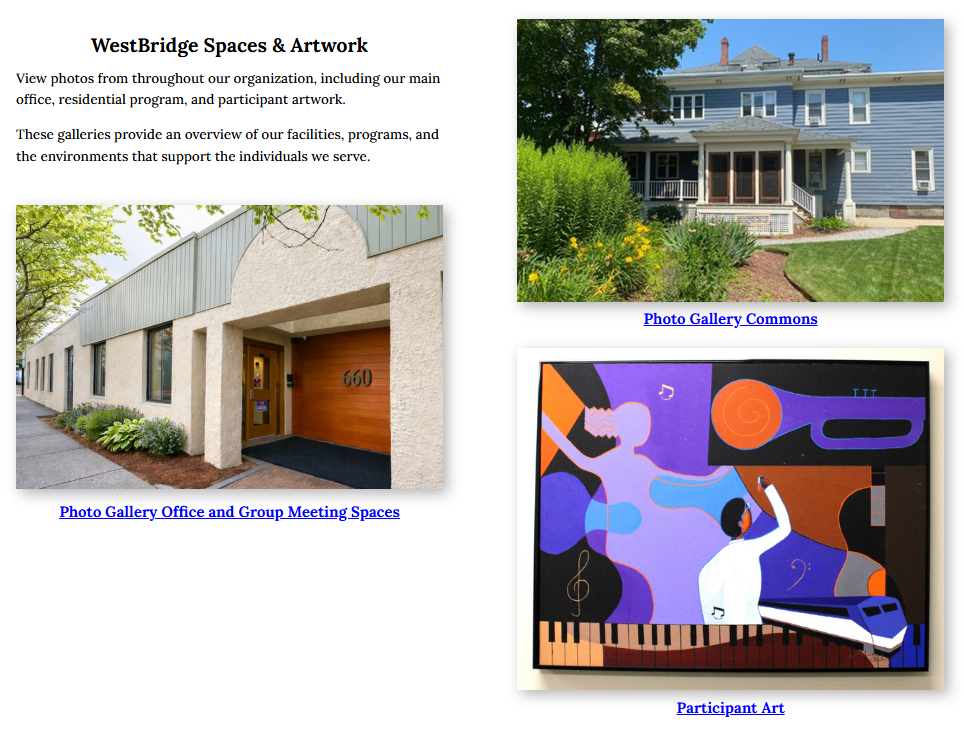
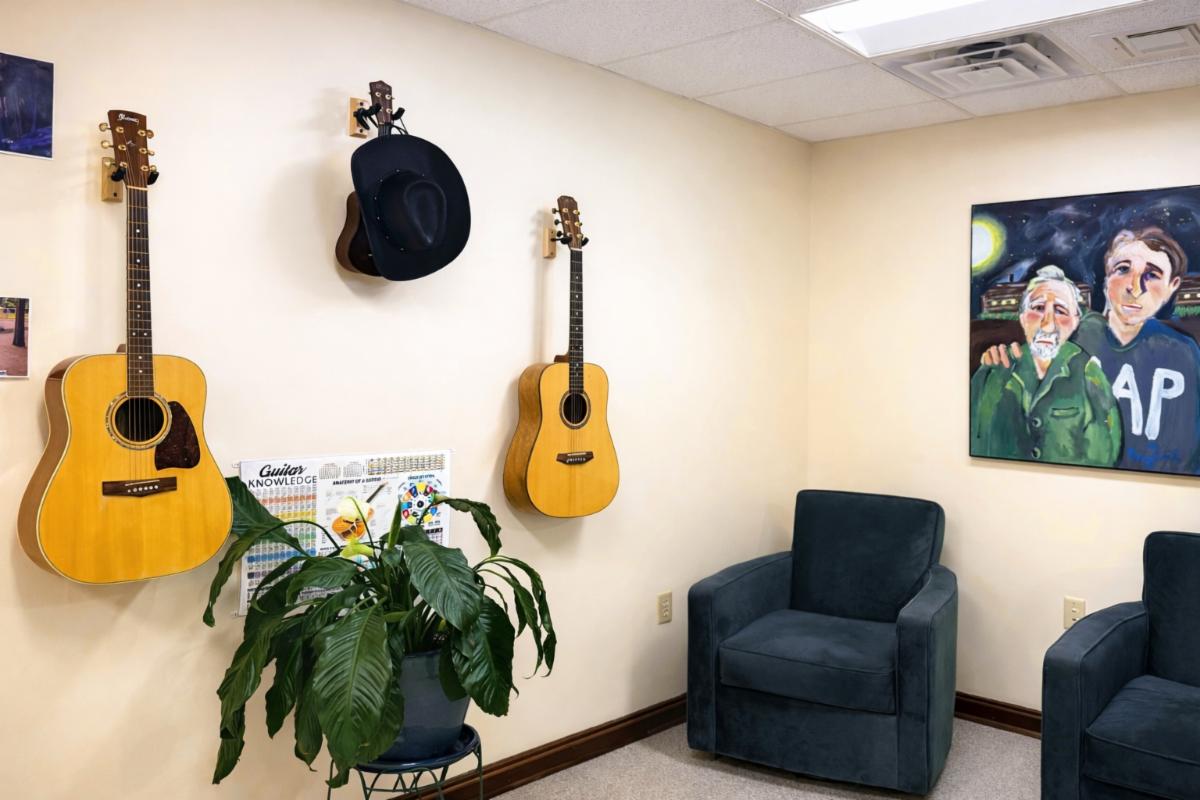
We have added some photo galleries to our website, so people interested in learning more about the WestBridge facility can see an overview of our facilities, programs, and the environments that support the individuals we serve. Explore the photo galleries.
| | | Digital Minimalism and Mental Health | | |
Digital Minimalism, also known as Digital Detox, is not about giving up technology or pretending the internet and all of our connected devices do not exist. Instead of letting technology control your day, digital minimalism encourages you to use technology as a tool that supports your goals, values, and wellbeing instead of as a crutch.
Technology has become such a part of almost every aspect of our lives. We use it to communicate, for work, to learn, to shop, to entertain ourselves, and also to stay informed. While modern technology offers many benefits, it can also consume more of our time, attention, and energy than we realize, including affecting our mental health.
We have heard about some of the hidden costs of too much technology, which includes reduced physical activity. Physical strain is also a hidden cost. The hours spent staring at screens can contribute to eyestrain, headaches, neck pain, wrist discomfort, and disrupted sleep.
When physical health suffers, mental wellbeing often suffers as well. Social isolation, exposure to negativity, and constant mental alertness are additional issues and concerns. Although technology can connect us with people around the world, it can reduce meaningful face-to-face interactions. Some people find themselves spending more time building an online life than participating in their real-world communities and relationships.
The first step toward digital minimalism is understanding how you currently use technology.
Most smartphones track screen time automatically. If you take a close look at your usage over the past week, you can identify your total daily screen time, the apps you use most often, and how many times you pick up your phone each day.
Take a moment to be honest with yourself. Which apps really add value to your life? Awareness is often the first and most powerful step toward change.
Most smartphones allow you to set daily usage limits for specific apps. Start with some realistic goals rather than a quick, drastic reduction. A small, sustainable change is more effective than an ambitious goal that typically gets abandoned quickly.
Notifications are designed to pull your attention away from whatever you are doing. Consider turning off alerts for apps that are not essential (instructions above). Allow important messages from family, friends, or work when necessary, but try to eliminate interruptions that serve little purpose other than to rope you into automatically checking your phone.
Many people find that switching their phone screen to greyscale makes it less appealing. Without the bright colors and icons, scrolling often becomes less automatic and more intentional.
Additional Steps to Reducing Digital Clutter
- Take a critical look at the apps on your phone. If an app regularly leaves you feeling stressed, distracted, or unhappy, consider deleting it. Remember that deleting an app is not permanent. You can always reinstall it later if you truly need it.
- Move distracting apps off your home screen or remove them from your phone entirely.
- Unsubscribe from newsletters you never read and turn off notifications you do not need. Digital organization is often less about organizing and more about eliminating.
- Pay attention to how different accounts, websites, and content affect your mood.
- Follow people and organizations that educate, inspire, or genuinely entertain you. Unfollow accounts that consistently create stress, anxiety, or negativity.
| | |
How to Turn Off Notifications on iPhone
- Open Settings.
- Tap Notifications.
- Select an app.
- Toggle Allow Notifications off, or customize how notifications appear.
- Repeat for other apps.
You can also use Focus Modes to limit notifications during work, family time, or sleep.
Using Focus Mode on iPhone
- Open Settings.
- Tap Focus.
- Choose a mode such as Work, Personal, or Sleep.
- Select which people and apps are allowed to notify you.
- Schedule the Focus mode to activate automatically.
How to Turn Off Notifications on Android
- Open Settings.
- Tap Notifications.
- Select App Notifications or a similar option depending on your device.
- Choose an app.
- Turn notifications off or customize notification categories.
Many Android phones also offer Do Not Disturb settings that allow only important calls or messages to come through.
Using Do Not Disturb on Android
- Open Settings.
- Tap Notifications or Sound & Vibration.
- Select Do Not Disturb.
- Choose who and what can interrupt you.
- Set a schedule for work hours, evenings, or overnight.
| | Staff Spotlight - Andrew Stephens, LICSW
WestBridge Clinical Director | | |
Andrew Stephens is a Licensed Independent Clinical Social Worker (LICSW) and the Clinical Director for outpatient services at WestBridge. He received his Master’s in Social Work degree from Boston College after obtaining a BS in Criminal Justice from Northeastern University. Andrew has over 20 years’ experience in the field and has spent over 15 years providing clinical leadership in both commercial and non-profit settings, successfully developing programs and initiatives that improve service quality and client outcomes.
Andrew’s clinical approach makes use of multiple intervention styles, including CBT, Narrative Therapy, Motivational Interviewing, Logotherapy, and Socratic Dialogue to provide a compassionate, person-centered approach to treatment. He is well-versed in the treatment of anxiety disorders, mood disorders, psychosis, substance dependence, and personality disorders with a particular specialization in the field of trauma recovery.
Andrew has extensive experience with making differential diagnoses and assisting clients to create optimum plans of care. He has a comprehensive understanding of the interconnectedness between family systems, socio-economics, culture, substance misuse and mental health. He is passionate about social justice and improving the quality of life for communities and the individuals within them.
| | |
Upcoming Father’s Day can be many things at once.
For some, it is a time to celebrate the people who helped shape their lives. For others, it may be a reminder of loss, absence, complicated relationships, or roads not taken. Every experience is different.
On Father's Day, we recognize fathers and father figures, but also the many people who have offered guidance, encouragement, stability, and support when it was needed most. The impact of caring for others is not defined by a title.
Whether today brings joy, reflection, sadness, gratitude, or a mix of emotions, we hope you treat yourself with kindness and give yourself the space to experience the day in your own way.
| | |
June has many dates that deserve recognition: Men’s Health Month, Men’s Health Week: June 15–21, 2026, National PTSD Awareness Month, National PTSD Awareness Day: June 27, LGBTQ Pride Month and National Safety Month.
Please find some resources below that can help educate and raise awareness.
Men’s Health Month and Men’s Health Week: June 15–21, 2026
National PTSD Awareness Month and National PTSD Awareness Day: June 27
LGBTQ Pride Month
National Safety Month
“Where each participant has a tailored plan for
recovery based on their dreams and hopes”
– A grateful family member
| | Chef Bradley’s “Rectory Brownies” | | |
Recipe courtesy of WestBridge's Chef: Bradley Labarre, CEC, CCA, AAC
Ingredients:
- 1 pound unsalted butter
- 1 pound plus 12 ounces semisweet chocolate chips
- 6 ounces unsweetened chocolate
- 6 extra-large eggs
- 3 tablespoons instant coffee granules
- 2 tablespoons pure vanilla extract
- 2-1/4 cups sugar
- 1-1/4 cups all-purpose flour
- 1 tablespoon baking powder
- 1 teaspoon salt
- 3 cups chopped walnuts (optional, can substitute white chocolate chips instead)
Method:
- Preheat the oven to 350 degrees.
- Butter and flour 12 x 18 x 1-inch baking sheet (also known as a half sheet pan).
- Melt together the butter, 1 pound of chocolate chips, and the unsweetened chocolate in a medium bowl over simmering water. Allow to cool slightly.
- In a large bowl, stir (do not beat) together the eggs, coffee granules, vanilla, and sugar. Stir the warm chocolate mixture into the egg mixture and allow to cool to room temperature.
- In a medium bowl, sift together 1 cup of flour, the baking powder, and salt. Add to the cooled chocolate mixture.
- Toss the walnuts and 12 ounces of chocolate chips in a medium bowl with 1/4 cup of flour, then add them to the chocolate batter.
- Pour into the baking sheet.
- Bake for 20 minutes, then rap the baking sheet against the oven shelf to force the air to escape from between the pan and the brownie dough.
- Bake for about 15 minutes more, until a toothpick comes out clean.
- Do not overbake! Allow to cool thoroughly, refrigerate, and cut into 20 large squares.
Printable Recipe
| | This Month's WestBridge Puzzle | | |
This month's puzzle was created from one of our own photos of the WestBridge Common's dining room. Take a short break, reset your focus, and enjoy a few minutes of low-pressure problem-solving before jumping back into your day.
| | |
Direct admissions are available in all programs.
Levels of care include:
Residential treatment at WestBridge provides a structured, 24/7 supportive environment for adults who need more stability than outpatient care can offer. At The Commons, a 12-bed, home-like setting, participants receive individualized care for mental health challenges, with or without co-occurring substance use. With consistent clinical support and a therapeutic community model, individuals can step away from daily pressures and focus fully on recovery, building the foundation for long-term stability.
WestBridge’s Partial Hospitalization Program (PHP) provides structured, intensive mental health and substance use treatment in a supportive outpatient setting, five hours per day, five days per week for 4 – 6 weeks. Designed for individuals experiencing moderate to severe psychiatric symptoms, emotional distress or substance use disorders that interfere with daily functioning, and who require a higher level of care than traditional outpatient therapy but do not need 24-hour inpatient hospitalization. As such, PHP can serve as a step-down from inpatient care or a step-up from lower levels of outpatient support.
WestBridge offers two Intensive Outpatient Programs, a morning IOP and an afternoon IOP. Individuals are able to attend programming in-person or virtually via Zoom. Additional flexible options will be available soon.
For more information: Call our admissions team at 1-877-461-7711, email inquiry@westbridge.org or connect with us at https://www.westbridge.org/admissions/.
| | |
WestBridge started our Building Bridges Newsletter last September,
if you would to catch up with past issues, please click here.
If you have a friend or loved one who you think might be interested
in this newsletter, please pass along our
email signup link for the newsletter.
| | | | |