|
As many of you know, we have been planning to open a cat lounge to provide a space where the public could visit our senior cats. As we were moving toward this goal, we encountered challenge after challenge that encouraged us to take a step back and look at how we were approaching the project. A leased commercial space would not offer the outdoor space and natural light that cats need, and it would have been much more chaotic than our “retired” cats would desire. With that in mind, we are moving in a direction that will help create the best environment for our senior cats in a sanctuary environment that will feel like home to them, have plenty of natural light, and a safe outdoor space they can enjoy.
Spaces like this don’t happen overnight, and they, like a lounge, take time, money, and people. While we work diligently to identify the best space for the cats and the rescue, we thank you for your help and support. We will continue to keep you posted on our journey and look forward to hosting a “reveal party” to share the details!
| |
Three Vet Visits in One Day!
Running a senior cat sanctuary with 55+ cats means frequent vet visits: just like elderly people regularly visit their doctors for age-related illnesses, aging cats need to visit the vet to address common age-related feline illnesses. It’s not unusual for us to have multiple vet appointments each week to address our senior cats' health issues—sometimes even multiple visits in one day!
The second week of May was no different. Three of our cats, Queenie, Daisy, and Prancer, were seen in one day, each for a different reason, to make sure their health needs are met. Here are their stories:
| | |
Queenie
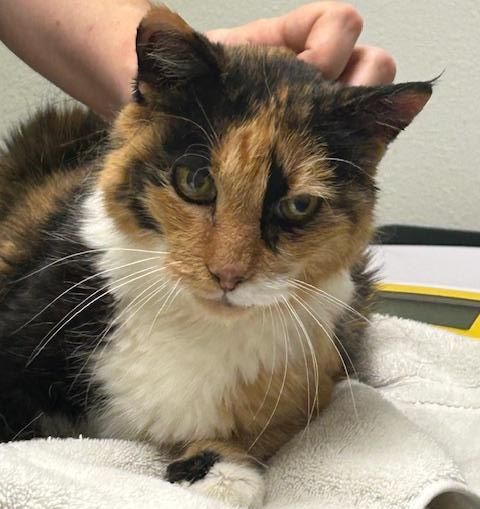
Queenie, a sweet 16+ year-old calico, never complains, but we could tell she wasn’t feeling well when she stopped eating her favorite meals. A quick trip to the vet and bloodwork revealed she is suffering from stage 2 kidney disease and a urinary tract infection. The vet recommended antibiotics and fluids along with a specialized kidney diet when she starts eating regularly again. Unfortunately, once Queenie finished her antibiotics, she quit eating again and seemed to be in a lot of pain, so she had to return to the vet. They found her gums had receded, and the root of a tooth was exposed. She will be scheduled for a dental treatment soon. Please send good vibes for Queenie!
| | |
Daisy
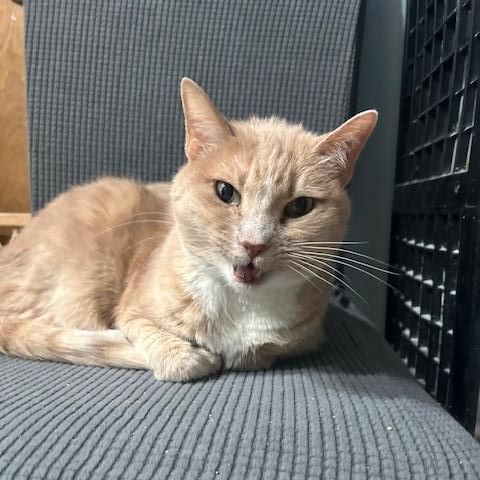
Daisy, a 15-year-old cream-colored tabby, is new to us. Even though it takes time to get to know a cat’s personality, we noticed Daisy had stopped eating, so we took her to the vet for a wellness check. The vet suspected hyperthyroidism and noted an abnormal heart rhythm, but Daisy’s bloodwork and echocardiogram came back as normal, so she got a clean bill of health. While there’s no clear explanation for her lack of appetite and lethargy, we know we have left no stone unturned, despite the cost, in finding what was going on so we could address it.
| | |
Prancer
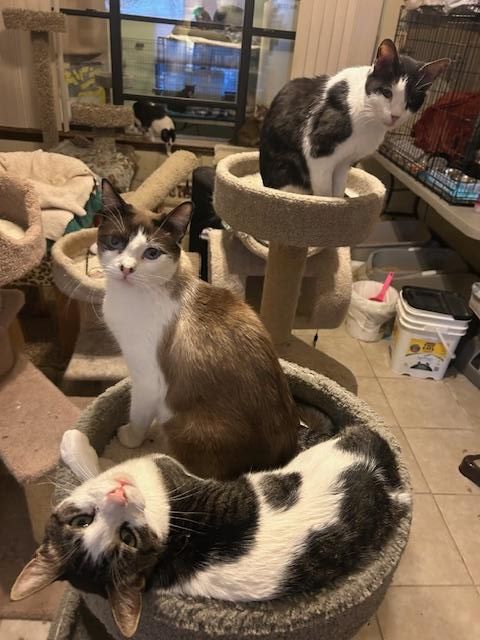
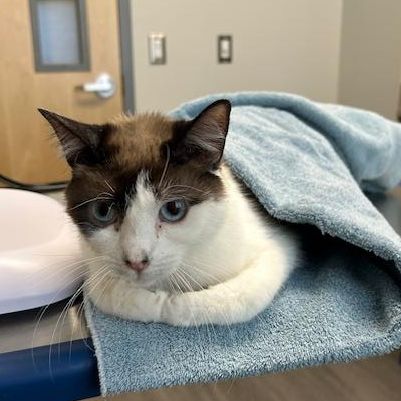
Poor Prancer! Despite his young age, this two-year-old snowshoe boy has had several sporadic seizures and was regularly taking the medication Phenobarbital. Prancer has been seizure-free for a while, and during his follow-up vet visit this week, his bloodwork indicated we could slowly wean him off Phenobarbital. If the seizures return, he’ll need to go back on the medication, but we are hopeful that he can stay off the meds. Wish Prancer luck!
Many of our senior cats require continued veterinary care, treatment, and specialized diets, and make regular visits to the vet to keep their age-related illnesses in check.
In fact, we spend more than $60K a year on vet costs, including exams, medications, dentals, surgeries, and other treatments. If you love our mission and want to support what we do for our cats, here are some ways you can do that:
You can donate via:
PayPal: junescats@q.com
Venmo: @junescats505
FB: Click the Donate button on our Facebook page
Or send a check to JSCR at PO Box 16521, ABQ, NM 87191
| | |
June's Has a New, Dedicated Vehicle
Thanks to a generous grant, June’s Senior Cat Rescue was able to purchase a dedicated vehicle to rescue cats and transport them to vet visits. We travel throughout New Mexico to help senior cats, often racing against time for those facing euthanasia. Relying on volunteers’ personal vehicles limits participation due to wear and tear, forcing us to post urgent calls for drivers—delaying rescues. Having our own vehicle allows us to quickly get on the road to save the life of a senior cat in need. In 2024, we saved cats from shelters in Torrance County, Edgewood, Valencia County, and Rio Rancho, and from Noah’s Ark Animal Shelter in Eddy County.
Running a senior cat sanctuary with 55+ cats also means frequent vet visits: just like elderly people regularly visit their doctors for age-related illnesses, aging cats need to visit the vet to address common age-related feline illnesses like kidney disease, diabetes, and hyperthyroidism. When it comes to vet visits, vehicle size can also be an issue for volunteers: not all volunteers have a car that can transport two cat carriers at the same time. A dedicated vehicle not only takes the wear and tear burden off of volunteers, it also allows for volunteers to transport multiple cats at the same time, and lets more than one volunteer accompany the cats, making for a potentially calmer trip to the vet.
Care for our cats costs more than $60K per year for exams, medications, dentals, surgeries, and other treatments. And just as with people, senior cats can experience sudden downturns, and our cats often need emergency vet care on weekends. In December 2024, we visited the emergency vet every weekend. Using personal vehicles for these trips has become impractical for volunteers, highlighting the need for a dedicated rescue vehicle.
| | Every little bit helps! Your donation goes directly to improving the lives of our cats. Thank you for your kindness and generosity! | | | | |