|
There’s seaweed, red skies at night, walking under ladders, cows sitting down in a field and rabbit's feet…
… all indicators, hints and harbingers that herald change, portents of good and bad… omens and old-wives-tales.
When I was a kid, I broke my wrist. A proper Colles fracture. If I told you, these days, when there is rain about, my wrist aches, you’d say ‘yer bonkers’. Well, I may be, but all I’ll say is… I know when to take an umbrella.
I also have another indefatigable indicator. As reliable as a litmus test. My in-box.
People are kind enough to share their secrets, expectations, gossip, ambitions and …
…how they feel.
Of the assortment of daily comments, tickings off and questions I enjoy, the one thing I really pay attention to is, how people feel.
I can tell you... people ain't feeling good.
When morale drops in an organisation it can lead to a range of negative consequences… decreased productivity, increased absenteeism, sickness, staff churn and a decline in the quality of work.
It can also foster a negative environment, impacting engagement, customer satisfaction, and even the organisation's reputation.
These unwelcome indicators don’t all arrive at the same time. They ferment and creep up. The NHS may be unique but it is not immune to any of this. It is happening now.
I see it, every day. A growing sense of uncertainty, driven by slashing budgets, workforce reductions, and the confusion the unplanned closure of NHS England by 2026, and the unstructured demolition of ICBs has wrought.
People doing the real jobs in the NHS see this chaos as disinvestment, masquerading as ‘reform’. Sensible, grown-up people write to me, not just about what’s happening to them but the direction of travel.
They know, we know... without massive investment digital transformation isn’t going to happen.
With the national finances in the state they are in, workforce expansion is off the agenda and that makes shifting care unlikely. There is nothing to indicate that reducing demand is going to happen this time, any more than it happened all the other times and…
… without a central capacity to direct the changes … in serious doubt.
When national institutions are wound down, and no clear governance model replaces them, frontline staff are left guessing; who’s in charge, what matters. Who has any idea of what next week looks like.
The 9.5yr plan will bring nothing in the short-term and it is the short term that is unravelling.
Morale doesn't just depend on working conditions… it depends on belief.
Right now, belief in the future is evaporating in a cloud of uncertainty... against a backdrop of the imminent collapse of struggling local authorities.
Reflected in a ‘clear belief’ is the importance of three things, all of which are missing;
- Effective leadership
- Clarity of purpose and structure
- The interdependence of strategy, systems and people
James O. McKinsey, was an American professor of accounting who founded the consultants, McKinsey in 1926. He said;
‘A well-run company is not a collection of people, but a collection of systems.’
Interesting that he saw it that way round.
Morale, he thought, was the predictable outcome of how well an organisation was structured and led.
Right now we have no structures...
... DH+ is in turmoil, NHSE is collapsing, ICBs are disintegrating, the best people are leaving, or gone… all of which might be forgivable if there was something we knew would replace the demolition.
What is there? I see nothing.
The 9.5yr plan will be irrelevant to the here-and-now and as for the future...
... no one can predict the next decade. Foreign wars, international debts and crises, workforce pressure, migration, politics, technology and happenstance each and all have the power to make a plan nothing more that a wish list.
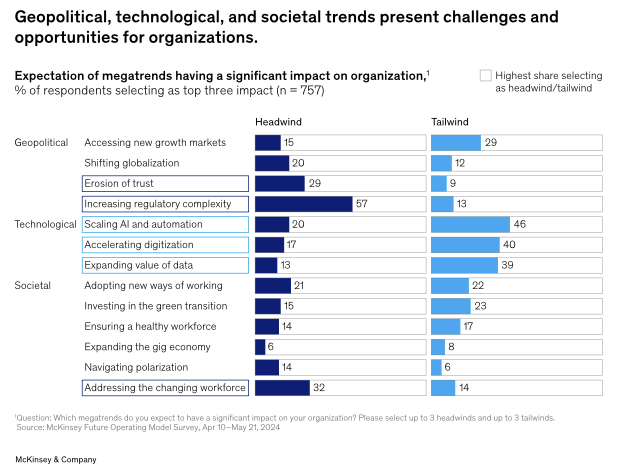
The McKinsey report, ‘The War for Talent’, 1997, so good it was updated in 2001, highlighted that talent and morale are central to organisations importance.
More recently, the ‘McKinsey on Burnout’ series of reports between 2022 and 2024, told us morale improves with autonomy, purpose, psychological safety and meaningful purpose. Transactional leadership and constant restructuring erode morale, rapidly.
Consistently McKinsey have shown that low morale leads to high turnover, reduced productivity, and poor outcomes…
… especially in services like healthcare.
Why does this matter? Well…
… it’s just that...
the new chair of the wreckage that we call NHSE, was, for 12yrs, a partner with McKinsey and led their healthcare practice across Europe, Africa, Australia, Asia and North America.
… just sayin’.
|