|
HAPPY ANNIVERSARY
WUKY CELEBRATES MILESTONE
| | |
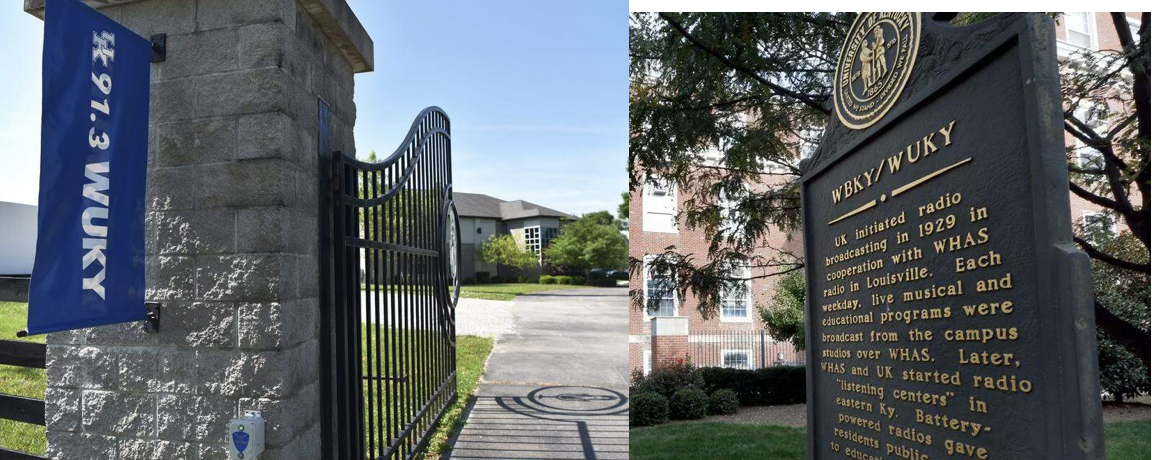
The Kentucky Broadcasters Associations congratulates WUKY on 85 years of service to central Kentucky and the University of Kentucky.
The station started in 1929 with radio production on the University of Kentucky’s campus. A series of shows for “farmers and housewives across Kentucky” were produced by the College of Agriculture and aired on WHAS in Louisville. On Oct. 17, 1940, it became the radio station WBKY. Under program director Ruth Foxx Newborg, the station’s primary mission was to serve rural schools. Its limited schedule ran from noon until 2 p.m. on weekdays. But after technical and financial problems, the station suspended broadcasting in 1941.
In 1945, WBKY relocated to McVey Hall at UK and began broadcasting on the new FM band. As part of the FCC transition away from low-band frequencies, the station transitioned to 91.3 FM in 1947. The station struggled in the early years of FM broadcasting. In 1948, a lack of listeners with FM radios was forcing it to air only six hours per week — from 7 to 9pm Monday, Wednesday and Friday nights.
WBKY became WUKY on October 1, 1989. WUKY is the first university-owned FM non-commercial education radio station in the nation and served as one of the initial advisors to National Public Radio (NPR) and helped shape public media to what it is today.
WUKY was one of 90 stations that carried the inaugural broadcast of “All Thing Considered” when it debuted in 1971. WUKY continues to air many of NPR’s anchor programs, like “Morning Edition” and “All Things Considered”, while offering many more of their informative and entertainment programs.
Portions of this story courtesy of the Lexington Herald-Leader and WUKY
| | |
CONDOLENCES
REMEMBERING DICKY MARTIN
| | |
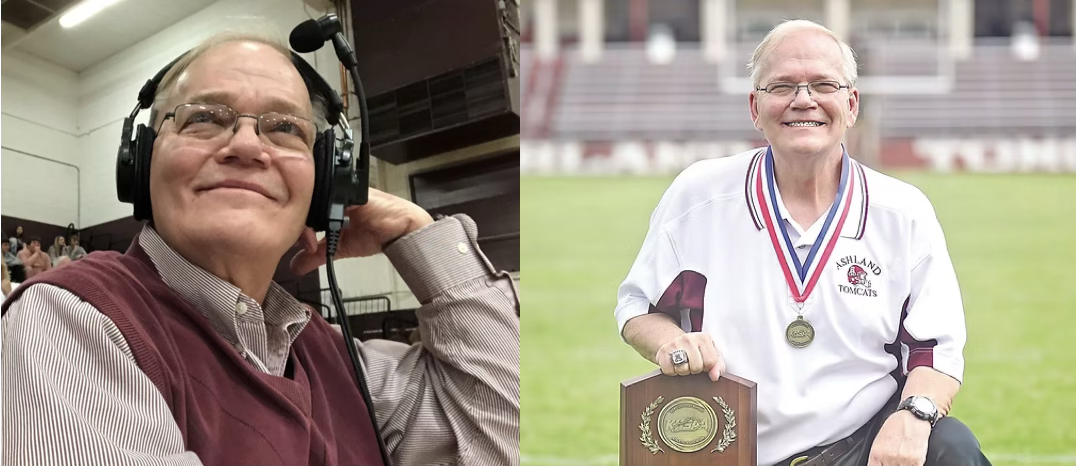
The Kentucky Broadcasters Association mourns the recent passing of legendary Ashland play-by-play announcer, Dicky Martin.
Dicky was in his 50th season as the voice of the Tomcats, having missed only two games during that time. Between he and his father Dick, the two gave Ashland 73 consecutive years of Tomcat sports broadcasts.
Both Martins had a similar style: blunt, passionate, fiercely loyal. They never hesitated to call out poor play or questionable officiating, all through maroon-tinted glasses. Dicky often said, “There’s an on-and-off switch on your radio if you don’t like what you hear.” He could be hard on the Tomcats, but no one else better be. Criticize his team, and you were taking on family.
His first broadcast came in 1973 when his father pretended to lose his voice and handed the mic to Dicky during a Raceland–Holy Family game. Dicky had just graduated from Ashland the year before. By 1975, he was the full-time voice of the Tomcats. The rest, as they say, was history.
Dicky Martin was 71. Click HERE for complete obituary information.
| | |
SESSION FOR PUBLIC MEDIA
THURSDAY, NOVEMBER 13 @ 12:00PM ET
| | |
The Kentucky Broadcasters Association has partnered with Ten Minute Trainer Network for a complimentary 90-minute session for public broadcasters, called Unlocking the Power of Your Underwriting Message.
In this energizing and forward-focused session, Speed Marriott and Derron Steenbergen will challenge and inspire you to view underwriting through a fresh lens, one that connects mission, message, and community impact.
You’ll explore how to:
- Listen with intention and uncover partner needs
- Build stronger, solution-based relationships
- Transform transactional asks into meaningful conversations
The session wraps with an open dialogue featuring public media experts sharing what’s working in today’s changing sponsorship landscape.
Don’t miss this opportunity to elevate your underwriting message and connect with fellow professionals. Click HERE to register.
| | |
BROADCAST ADVOCATE PODCAST
LIFELINE: INSIDE THE BFOA
| | |
The Broadcasters Foundation of America (BFOA) reaches across the United States and Puerto Rico to provide an anonymous safety net for radio and television broadcaster professionals who find themselves in acute financial need due to an illness, accident, or emergency. In this episode hosted by Dennis Lyle (Illinois Broadcasters Assoc.), BFOA board member Ray Cole and BFOA president/CEO Tim McCarthy share insight into over two decades of BFOA's support to the broadcast community through both sustaining and emergency grants. BFOA grant recipient Terrie Cammarie joins the conversation and personally shares her family's story of BFOA support.
Click HERE to watch the podcast.
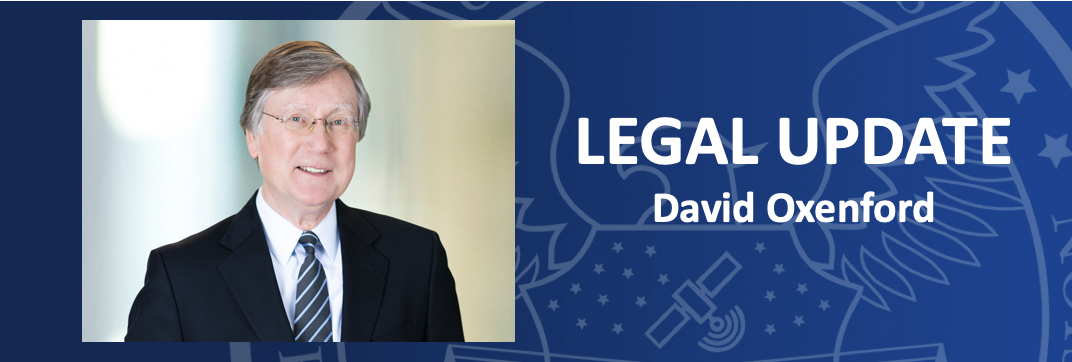
| | We would normally provide you with some of the regulatory developments of significance to broadcasters from the past week, with links to where you can go to find more information as to how these actions may affect your operations. But, as the government shutdown has drastically limited activity at the FCC, and as Congress did not produce significant news this week while focused on the shutdown and other activity, we thought that we should provide some reminders on specific regulatory activity that is curtailed by the shutdown and about some of the issues that may arise once it is resolved. Click HERE to read more. | | |
THIS WEEKS MEMBER PIC
TURNING THE BIG 4-0
| | |
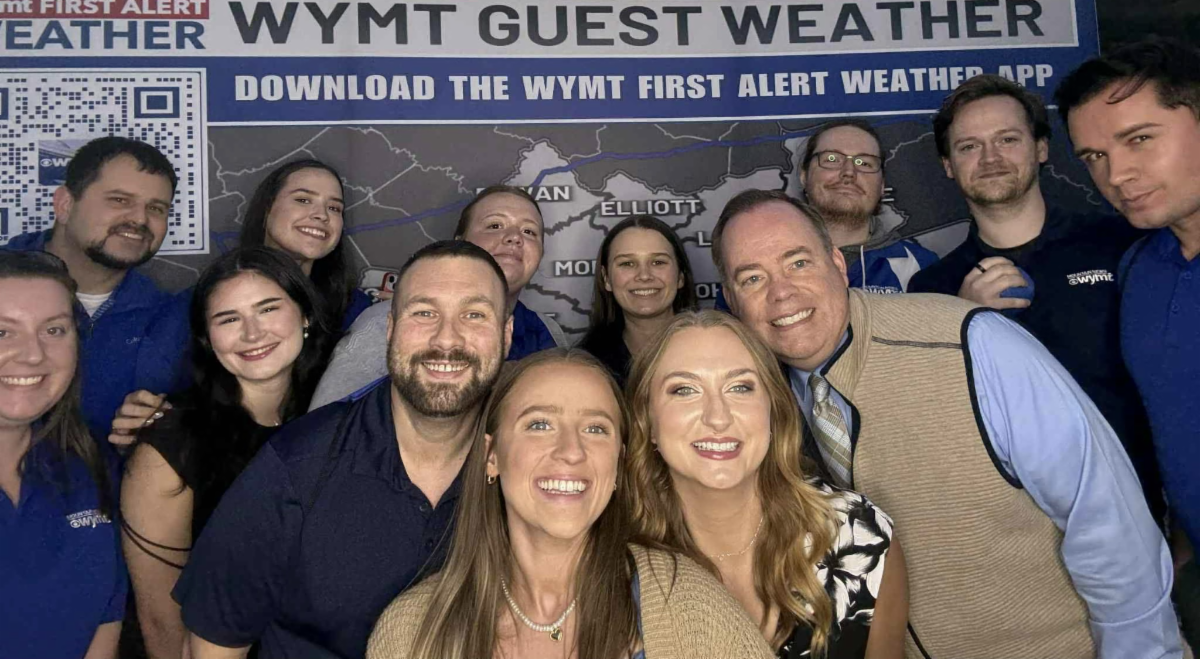
Pictured above: WYMT-TV employees celebrating the stations 40th anniversary in downtown Hazard.
A vision of Ralph Gabbard, WYMT signed on the air October 19, 1985, with the first newscast airing just two days later. Gabbard later called WYMT his greatest accomplishment and the call letters, which he chose himself, stand for "We're Your Mountain Television".
While the sets, employees and technology have changed in the last four decades, the station’s mission has not. WYMT has been with viewers through natural disasters, crimes that shocked the region, long election nights and national stories that changed America and the world.
From all of us at KBA, Happy 40th WYMT!!
| | We want to promote YOU! Send us your staff additions, promotions and special events. Email Chris at chris@kba.org | | |
IS YOUR SALES MODEL OBSOLETE?
Our fall session of the Leadership MasterClass virtual class began recently. It always gets a laugh in sessions when we discuss recruiting and hiring, and we talk about the candidate who claims to have 20 years of selling experience, but upon further inspection and questioning, you find that they only have 1 year of experience that they have repeated 20 times. The not-so-funny truth is that a failure to evolve, adapt, and change with the times leads to irrelevance.
If there is one thing we’ve always known, which was punctuated by recent events, change is constant. To stay relevant and effective, we too must change. What we learned just five years ago conceptually may still be true, but tactically, it is out of date.
Frank V. Cespedes is a senior lecturer at Harvard Business School and the author of many books. In a recent Harvard Business Review article, Cespedes says today’s coherent sales model has three core components:
-
Customer selection criteria. In short, are you calling on the right clients? Time spent with the wrong targets increases cost of sale, prolongs the process, and is built around quantity, not quality.
-
Clarity about your customers and their buying process. Customers differ dramatically in what they want from a product and how they respond to marketing initiatives. Knowing the differences is crucial because it’s your responsibility to adapt to the market; it’s not the market’s responsibility to adapt to your sales model.
-
The go-to-market economics and metrics. Salespeople spend less than a third of their time selling. Cespedes posits that this presents a tremendous opportunity to adjust the sales model to put the reps where they have the most impact.
In his book, Sales Management That Works – How to sell in a world that never stops changing, Cespedes likens the sales model to perishable goods:
Like perishable goods in grocery stores, sales models have a sell-by date. As product standards evolve and new entrants emerge, buyers have more choices and demand more in terms of quality and performance across vendors. Firms that fail to adjust to changing customer expectations lose an advantage.
When was the last time you took a serious look at the way you are doing things? What’s working and what’s not working? As a manager, what are the obstacles to even greater team performance? Chances are it’s in one of those three areas.
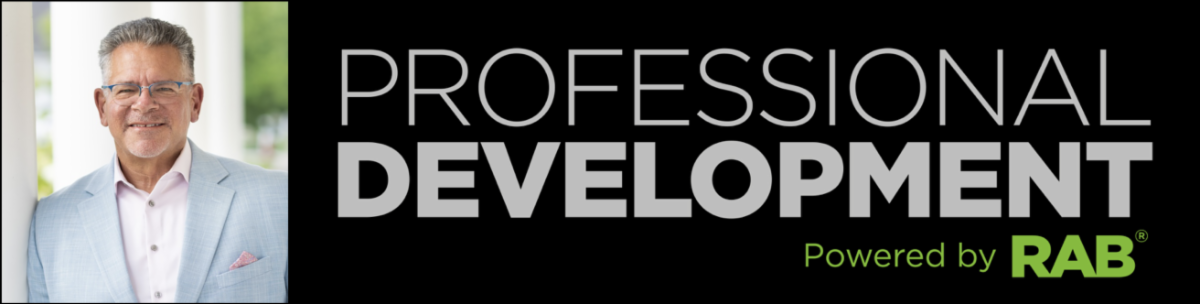
| | Jeff Schmidt is the SVP of Professional Development at the Radio Advertising Bureau. You can also connect with him by email JSchmidt@rab.com or on Twitter and LinkedIn. | | |
NOVEMBER 20, 2025
9:00am - Board of Directors Meeting - Bowling Green
*All times shown are Eastern
| | | | |