Kentucky Coalition For Healthy Children Newsletter | | Working collaboratively on policies and practices in and around schools that promote equity and improve the physical, social, and emotional health and well-being of children, youth, and families. | | The opinions and viewpoints expressed in this newsletter do not necessarily reflect the positions of all coalition partners. | | |
Webinar│KYGA26 Update and Look Ahead
The Kentucky Youth Advocates Policy team is holding a webinar on January 20, at 2:00 ET with updates on the Blueprint for Kentucky’s Children priorities for the 2026 Kentucky General Assembly. More information and registration here.
Continuing Education Event | Effective Advocacy – Making Every Voice Count!
On January 23, the legislative process, state and local, and ways to make policy change happen through advocacy will be described from the perspective of an experienced lobbyist/psychologist, Dr. Sheila Schuster (Advocacy Action Network), a policy analyst/advocate, Kelly Taulbee (Kentucky Voices for Health), and legislators who knows Frankfort and local policy well, Kentucky State Representatives Dr. Lisa Willner and Dr. Kim Banta. More information and registration here.
Webinar │ State & Federal Policy Updates
Join the ThriveKY coalition for its first advocacy webinar of 2026 on January 27. They will cover the Kentucky Legislative Session and policy updates related to Medicaid, SNAP, behavioral health, and housing safety net programs. Find more information and register here.
Training Series | Eating Disorders
Aetna SKY and the Kentucky Eating Disorder Council have partnered with Viamar Health to offer an Eating Disorder Training Series in February of 2026. Viamar Health is an Eating Disorder Treatment Center in Florida. The first training, From Disordered Eating to Eating Disorders: Identifying the Threshold Using Growth Charts and Screening Tools, will take place on February 4, 2026. Registration info is here. The second training, Understanding Eating Disorders: Core Features of Anorexia, ARFID, Bulimia and Binge Eating, will take place February 18, 2026. Registration info is here.
Data | Kentucky 2025 Kids Count Data Dashboard
The Kentucky KIDS COUNT Data Dashboard published by Kentucky Youth Advocates (KYA), features the latest data on 16 measures of child well-being at the county and school district levels, showing whether outcomes for children have improved, worsened, or stayed the same compared to baseline data.
Video | KVH Annual Meeting
Kentucky Voices for Health (KVH) held its Annual Meeting in December with a focus on access to health care, most importantly Medicaid. Secretary of the Cabinet for Health and Family Services Dr. Steven J. Stack gave the opening remarks and a legislative panel that included Sen. Max Wise, Sen. Brandon Smith, Rep. Mary Lou Marzian, Rep. Ken Fleming, and Rep. Derek Lewis shared their perspectives on the coming session, budget shortfalls and the sustainability for programs like Medicaid, as well as their policy priorities like oral health, housing, and transportation. The keynote Speaker was Jesse Cross-Call of FamiliesUSA. At the meeting, KVH shared this video raising awareness of the importance of protecting Medicaid access.
Grand Rounds │ Trauma Informed Strategies to Address Challenging Classroom Behaviors
The Bounce Coalition Fall Grand Rounds examined a classroom case study and brainstormed solutions to deepen their understanding of trauma-informed behavior management strategies to keep students engaged in learning environments. The recording is available here.
| | What's New in Children's Health | | |
Kentucky Reaffirms Universal Hepatitis B Vaccination for Newborns
The Kentucky Department for Public Health (KDPH) has reaffirmed its recommendation for universal hepatitis B vaccination at birth, despite recent changes in federal guidance. Federal health officials recently announced a shift away from universal newborn hepatitis B vaccination, recommending instead a risk-based approach that limits vaccination to infants born to mothers who test positive for hepatitis B or whose infection status is unknown.
KDPH emphasizes that administering the hepatitis B vaccine at birth, followed by completion of the full vaccine series, is essential to protecting infants and communities from a virus that continues to disproportionately affect Kentuckians. Hepatitis B infection rates are nearly three times the national average in Kentucky. The vaccine remains fully covered by private insurance, Medicaid, and the Vaccines for Children program.
In the KDPH statement, the Kentucky public health authority continues to recommend that:
- All newborns receive the hepatitis B vaccine birth dose.
- Newborns born to biological parents who test positive for hepatitis B infection or have an unknown hepatitis B status receive both the vaccine and hepatitis B immunoglobulin within 12 hours of birth.
- All children complete the full vaccination series within 18 months in accordance with the American Academy of Pediatrics’ recommended child and adolescence immunization schedule.
- Children who are not fully vaccinated by 18 months follow the American Academy of Pediatrics’ recommended catch-up immunization schedule.
| | |
Building Health Beyond Healthcare
Population health is shaped by more than medical care alone, it depends on social and economic conditions such as access to safe housing, affordable food, quality education, supports in early childhood, an adequate living wage, and healthy environments. Trust for America’s Health has released the report Advancing Policies that Create Conditions for Good Health: Opportunities, Barriers, and Strategies.
The report explores state policies designed to strengthen the foundations of health and reviews the legislative landscape shaping their adoption. It also examines recent federal actions that have reduced funding and eliminated programs at both the federal and state levels creating changes that are likely to slow progress on health-promoting policies in many states. As these gaps emerge, the report highlights opportunities for states and cross-sector partnerships to step in, fostering collaboration and innovation to sustain and advance population health.
| | |
Turning the Tide: Promising Progress in Youth Tobacco Prevention
The Campaign for Tobacco Free Kids has released their 2025 Report. Tobacco use remains the leading cause of preventable disease and death, killing nearly half a million people in the United States each year. each year. The report states that significant progress has been made with youth tobacco use falling to record lows in the nation. According to the 2024 Youth Tobacco Survey, cigarette smoking among high school students fell to 1.7%, compared to over 36% when the Campaign for Tobacco-Free Kids launched in 1996. And E-cigarette use among high school students fell to 7.8%, a sharp decline from a peak of 27.5% in 2019.
The report also includes information about the Campaign’s other work in the areas of Food and Nutrition, Health Systems Strengthening, and Injury Prevention.
| | |
Seeds of Esperanza: Growing Hope and Healing to Kentucky’s Latino Children
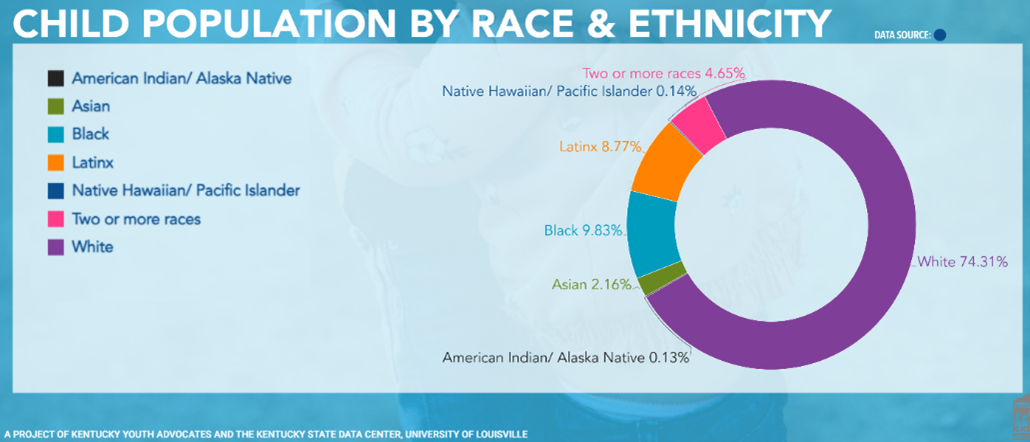
Latino children are one of the fastest-growing segments of Kentucky’s young population, contributing significantly to the Commonwealth’s increasing diversity. As illustrated in the graph, Latino children now make up 8.77% of Kentucky’s total child population.
| | |
According to the 2025 Kentucky Kids Count Data Dashboard, there are 99,964 Latino children living in the state. While this figure remains below the national average, where nearly one in four children is Latino, it represents a vital and growing portion of Kentucky’s future.
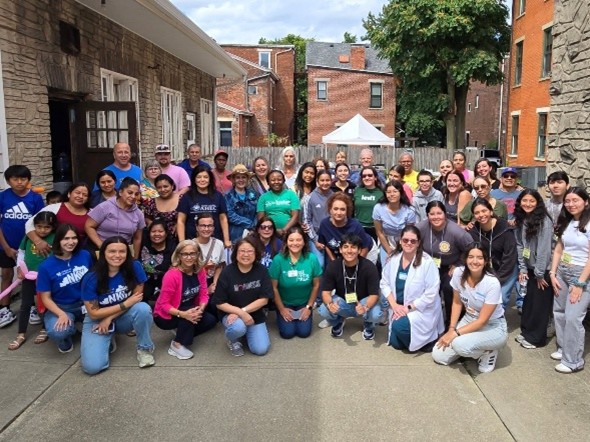
Although Jefferson and Fayette counties have the largest numbers of Latino children, Northern Kentucky has experienced steady growth in recent years. The Esperanza Latino Center, whose mission is to empower immigrant families through health, education, and advocacy, plays a critical role in supporting these children and their families. The Center serves Boone, Kenton, and Campbell counties, home to 3,729, 4,300, and 956 Latino children, respectively.
| |
Esperanza Latino Center provides a wide range of essential services, including health navigation, educational support, legal assistance, and community outreach for Latino families across Northern Kentucky. In response to the growing mental health needs of Latino children and youth, the Center has recently expanded its programming to address barriers such as language and cultural differences, a shortage of bilingual providers, and stigma surrounding emotional well-being.
Through Navegando con Esperanza (Navigating with Hope), Esperanza has integrated trauma- and grief-informed practices across its work, ensuring that all direct services, particularly those provided through the bilingual front desk, are delivered with a mental health lens. Staff and volunteers have completed trauma-informed assistance training and QPR certification in mental health and suicide prevention. In 2025 alone, Esperanza assisted more than 4,800 cases, supporting families with school enrollment, after-school programs, healthcare navigation, financial assistance, and legal consultations with its in-house immigration attorney.
As part of this expanded focus, Esperanza has hosted community events and workshops that promote wellness, connection, and trust. The Center’s Annual Health Fair brought together hundreds of attendees, volunteers, and health providers, delivering over 315 health services, including screenings, vaccinations, and mental health referrals, alongside educational resources, Zumba activities, and a shared community meal. Esperanza also developed an easy-to-understand bilingual booklet to help youth and families better understand trauma and grief and connect with local resources, including bilingual therapists in Northern Kentucky. Looking ahead, the Center is exploring opportunities to deepen partnerships with public schools and field experts to strengthen coordination and expand mental health support for Latino youth.
As Kentucky’s Latino child population continues to grow, ensuring access to culturally responsive, inclusive, and compassionate support is increasingly important. Organizations like Esperanza Latino Center are not only meeting immediate needs but also strengthening communities and shaping healthier futures for the next generation. By investing in health, education, and mental well-being, Kentucky can embrace its growing diversity and help ensure that every child has the opportunity to thrive and succeed across the Commonwealth.
| | |
The 2026 Kentucky legislative session runs from January to mid-April 2026 (Legislative Calendar). This is a time to advocate for bills that will improve children’s health in the Commonwealth. Don’t forget these advocacy steps to take action:
-
Know Your Legislators: Find your State Senator and Representative using the LRC website.
-
Learn Key Issues & Priorities: The Kentucky Coalition for Healthy Children and its member organizations, will be posting their policy priorities and agendas, so follow these and other groups that will be advocating for the well-being of children and youth, especially this budget session.
- Contact Legislators: During the session, call or email their Frankfort offices, introduce yourself, mention bill numbers, with a focus on one bill per contact. Be brief and include information on the impact of the bill, share a personal story, ask for their stance.
-
Engage Directly at the Capitol: If possible, attend events, join advocacy days, speak at committee hearings if relevant. If you can’t go directly, KET also has its Legislative Coverage site.
-
Use Online Tools: Track bills (we will share bill trackers related to our member organizations’ priorities in this newsletter). You can also go directly to the LRC web site to follow bills or use Kentucky.gov Bill Watch. Social media can also be a form of following the legislative events and sharing views.
| | | | Do you have an upcoming event or exciting news to celebrate with our coalition? Please email Ally Wells at awells@heatlhy-ky.org to be featured in an upcoming KCHC Newsletter! | |
Amalia Mendoza | KCHC Newsletter | 502-326-2583
| | Current KCHC Steering Committee Member Organizations: | | | | |