Kentucky Coalition For Healthy Children Newsletter | | Working collaboratively on policies and practices in and around schools that promote equity and improve the physical, social, and emotional health and well-being of children, youth, and families. | | The opinions and viewpoints expressed in this newsletter do not necessarily reflect the positions of all coalition partners. | | |
Public Comment | CMS Interim Final Rule on Medicaid
Kentucky Voices for Health (KVH) is collecting public comments to the Centers for Medicare and Medicaid Services (CMS)’s new Interim Final Rule. The regulations are open to public comment so now is the time to make sure Kentuckians’ experiences are part of the federal record before the rule is finalized. The deadline for submitting is July 31, the KVH link for comments can be found here.
Series│State & Federal Policy Updates
Join the ThriveKY Coalition’s series for important updates on the economy, Medicaid, KCHIP, SNAP, housing, transportation, childcare, public health, and behavioral health. An in-person program is being held this month on July 14 in Corbin. For more information about the series, CEUs, and how to register click here.
Grand Rounds| Uplifting Youth Voices
The Bounce Coalition’s Grand Rounds this month is focused on equipping youth to be facilitators with the mindset, skills, and tools needed to lead. This Grand Rounds will be presented by youth leaders from Sowing Seeds with Faith and other youth-serving organizations. More information and registration here.
Artist Opportunity | Social Justice and Health Equity Art Installation
The Foundation for a Healthy Kentucky (FHKY) is inviting artists from across the Commonwealth to submit work for a new art installation exploring social justice and health equity in Kentucky. The installation is being launched in honor of FHKY’s anniversary celebration and is open to both professional and amateur artists, including students. Selected artists will receive a $100 stipend for exhibiting their work and may choose to offer pieces for sale during the installation. More information is available here.
Training │Minimizing Trauma through Minimal Facts Interviews
Aetna SKY and the Barren River Child Advocacy Center have partnered to offer The Minimizing Trauma through Minimal Facts Interviews, a one-hour training that provides essential guidance for professionals and caregivers on how to respond appropriately and compassionately when a child discloses sexual abuse. Each session is capped at 30 attendees. If the session is capped, email about Andrea Polk at polka@aetna.com about the waitlist.
Training 1 (08/05/26)
Training 2 (08/19/26)
| | What's New in Children's Health | | |
New Data on Kentucky's Children
The 2026 KIDS COUNT® Data Book from the Annie E. Casey Foundation shows that while Kentucky has made progress on several measures of child well-being, significant health challenges remain. Kentucky ranks 36th in the nation overall, with improvements on eight of 16 child well-being indicators over the past five years, but troubling trends in children’s health warrant continued attention.
One of the most concerning findings is that child and teen deaths increased from 29 to 31 deaths per 100,000 children between 2019 and 2024. State data point to growing numbers of deaths from accidental poisonings or overdoses and suicide involving firearms, underscoring the need for continued investments in youth mental health, injury prevention, and family supports.
The report also found that Kentucky’s child health insurance coverage has declined since the end of pandemic-era Medicaid protections. There has been a 25% increase in the number of children without health insurance compared to 2019. Even small declines in coverage can create barriers to preventive care, behavioral health services, and treatment for chronic conditions.
The KIDS COUNT Data Book reminds us that behind every statistic is a child and a family. These trends reinforce the importance of ensuring that Kentucky’s children have access to health coverage, timely mental health care, and the supports they need to grow up healthy and thrive.
| | |
More Youth Are Seeking Mental Health Advice from AI, Often in Secret
A new study published in the Journal of the American Medical Association, JAMA Pediatrics, found that nearly 1 in 5 U.S. adolescents and young adults (19%) reported using an artificial intelligence (AI) chatbot for mental health advice in 2025, marking an increase of almost 50% from the previous year. The article AI Chatbot Use and Disclosure for Mental Health Among US Adolescents and Young Adults, states that, more concerning, most users (64%) said they did not tell anyone they had used an AI chatbot for emotional or psychological support.
The findings raise important questions about the growing role of AI in youth mental health. While chatbots are available 24/7 and may feel anonymous and easy to access, they are not trained mental health professionals and may provide inaccurate, incomplete, or unsafe advice. The fact that most young people are using these tools without discussing it with a parent, trusted adult, or health care provider may make it even more difficult to identify when additional support is needed.
The authors emphasize that the widespread use of AI chatbots for mental health advice highlights an urgent need for parents, clinicians, educators, and policymakers to better understand how young people are using these technologies. As AI becomes increasingly integrated into everyday life, ensuring that youth have access to evidence-based mental health care and understand the limitations of AI tools will be an important public health priority.
Share Your Story in Support of the Kids Online Safety Act
Congress is once again considering the Kids Online Safety Act (KOSA), bipartisan legislation that would require social media platforms and other online services to take reasonable steps to protect young users from online harms.
Inseparable, a national mental health advocacy organization, is collecting short video messages from parents, young people, educators, and other advocates explaining why online safety matters and why Congress should pass KOSA. The organization has provided prompts and tips to make participation quick and easy.
Consider submitting a video message and sharing this opportunity with others in your network to help amplify the importance of protecting children and youth online.
| | |
New Tool Helps Schools Strengthen Student Health Services
Strong school health services are essential to helping students stay healthy, in school, and ready to learn, in these times of increased challenges in accessing health care more than ever. To support continuous improvement, the American Academy of Pediatrics (AAP) has developed the Health Services Assessment Tool for Schools (HATS), a free self-assessment resource that helps school districts and states evaluate the quality and comprehensiveness of their school health services. The tool was developed through the AAP’s Training, Education, Assistance, Mentorship, and Support (TEAMS) initiative in collaboration with national school health organizations, and public health partners, in a coordinated approach.
HATS is designed to help schools identify strengths, recognize gaps, and prioritize improvements in areas such as chronic disease management, mental health services, emergency preparedness, preventive health services, infectious disease management, and school-based health centers. The assessment also examines the policies, infrastructure, and partnerships needed to sustain high-quality school health services over time.
As Kentucky continues to expand and strengthen school-based health services, tools like HATS can help districts assess current practices, identify opportunities for growth, and build stronger systems of care for children.
| | |
Justice Served: Supporting Youth Resilience
For more than 15 years, Project Ricochet has worked to improve health, resilience, and opportunity for youth and families across Central Kentucky. Founded in Lexington in 2010, the organization focuses on serving communities that have historically faced barriers to health, wellness, and support services. Through culturally responsive programming, trauma-informed care, youth advocacy, and creative expression, Project Ricochet helps young people and families build connections, strengthen coping skills, and thrive.
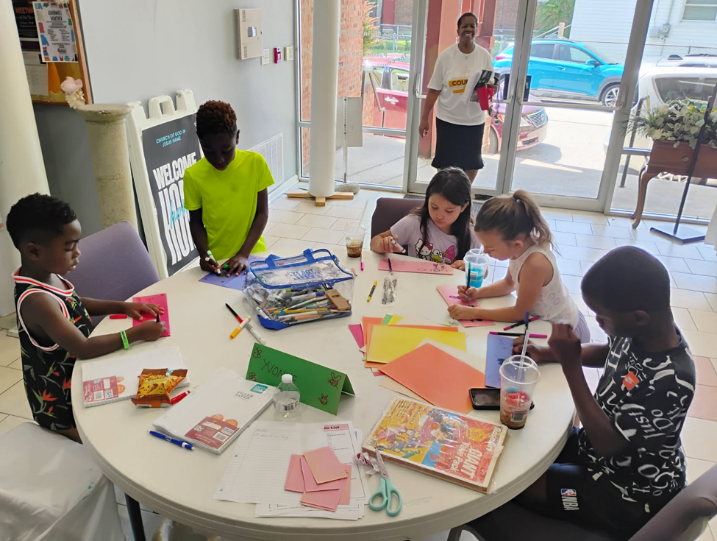
One of the organization’s signature youth initiatives is Justice Served: Youth and Adult Healing Circles, an initiative designed to support young people impacted by trauma, family instability, community violence, and involvement with the juvenile justice or child welfare systems. The program provides Healing Circles, expressive arts activities, peer support, and family engagement opportunities in trusted community settings, including libraries, community centers, barbershops, and salons.
Project Ricochet’s approach recognizes that healing often happens outside of traditional clinical settings. Through Healing Circles, youth are encouraged to express themselves through art, storytelling, and guided conversations that help build emotional awareness, confidence, and resilience. The organization also works closely with families and caregivers to strengthen support networks and connect participants to additional resources when needed.
| |
During the past year, Justice Served activities directly engaged approximately 136 youth in Healing Circles and reached more than 500 children, youth, parents, and community members through related events and outreach efforts. One of the program’s largest community events brought together more than 200 children and families for back-to-school activities, resource distribution, and opportunities for youth to discuss their hopes and concerns about the upcoming school year.
The program’s success is reflected in the stories shared by participants. During Healing Circle sessions, youth have used painting, creative writing, and discussion to explore difficult emotions and experiences. One young participant used artwork to express feelings of sadness connected to a family relationship, while another created a piece representing peace, hope, and connection. These activities help youth develop healthy ways to process emotions while fostering supportive relationships with peers and caring adults.
Project Ricochet’s work extends beyond Justice Served through initiatives that promote health education, youth leadership, literacy, community health worker support, and arts-based healing. By meeting young people where they are and creating welcoming spaces grounded in culture, creativity, and community, Project Ricochet continues to make a meaningful difference in the lives of Kentucky children and families.
| | |
Support Families Accessing Summer EBT
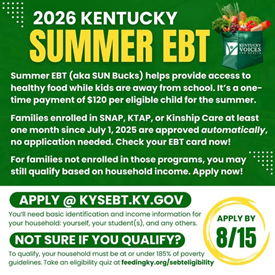
Help ensure Kentucky children have access to nutritious food this summer by spreading the word about Summer EBT. Eligible children can receive a one-time $120 grocery benefit to help families purchase food while school is out.
While many eligible children are automatically enrolled, some families must apply. The application deadline is August 15, and benefits expire 122 days (about four months) after they are issued, so families should use them promptly.
Encourage families to check their eligibility, apply if needed, and keep their Summer EBT card for future years. Families can check their eligibility and find out if they should apply at https://feedingky.org/sebteligibility/.
For more information, visit Feeding Kentucky’s Kentucky Outreach Guide for Summer EBT.
| | | | Do you have an upcoming event or exciting news to celebrate with our coalition? Please email Ally Wells at awells@heatlhy-ky.org to be featured in an upcoming KCHC Newsletter! | |
Amalia Mendoza | KCHC Newsletter | 502-326-2583
| | Current KCHC Steering Committee Member Organizations: | | | | |