Kentucky Coalition For Healthy Children Newsletter

Issue 49 | June 2026

Working collaboratively on policies and practices in and around schools that promote equity and improve the physical, social, and emotional health and well-being of children, youth, and families.

The opinions and viewpoints expressed in this newsletter do not necessarily reflect the positions of all coalition partners.

KCHC Member Highlights

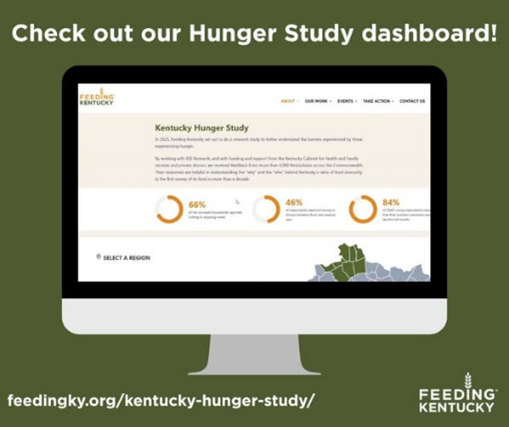
New Resource | Kentucky Hunger Study

Feeding Kentucky recently released data from a statewide hunger study done in partnership with IQS Research and funded by the Kentucky Cabinet for Health and Family Services. The research examines the attitudes, behaviors, and barriers Kentuckians face in accessing food, finding that food insecurity is driven less by the availability of food and more by affordability challenges, transportation barriers, and the difficult financial tradeoffs families make each month. Explore the dashboard of the results here.


Nomination Period | Board of Directors

The Foundation for a Healthy Kentucky is looking for Kentuckians interested in joining its Board of Directors in 2027! Priorities for this nomination cycle include people with expertise in business administration, food insecurity, mental health, and infant and maternal health. Nominations are due July 22. Anyone interested can find more information here.


Webinar Series│ State & Federal Policy Updates

Join the ThriveKY Coalition’s webinar series for important updates on the economy, Medicaid, KCHIP, SNAP, housing, transportation, childcare, public health, and behavioral health. An in-person program is being held this month on June 9 in Louisville. For more information about the series, CEUs, and how to register click here.


Kentucky Behavior Institute 2026 | Registration Open

The Kentucky Council for Children with Behavioral Disorders is hosting the Kentucky Behavior Institute 2026 on June 15-16 in Louisville. It will offer sessions designed for every educator, including Back to Basics, Positive & Proactive Classrooms and sessions for Administrators (new and seasoned). Attendees can choose sessions that best meet their needs and take away practical strategies to use immediately in their classrooms and schools. Learn more and register here.


Summit | Advancing Lactation Care Through Collaboration

The 2026 Lactation and Collaboration Summit hosted by the Kentuckiana Lactation Improvement Coalition is being held June 22-23 in Louisville. This two-day summit brings together lactation professionals, healthcare providers, public health leaders, and community organizations who are actively shaping how families are supported during pregnancy, birth, and the postpartum period. More information is available here.


Symposium | Improving Population Health Through Chronic Disease Prevention

Join the Kentuckiana Health Collaborative the Kentucky Department for Public Health Physical Activity and Nutrition Program for a forum to explore how healthcare stakeholders can strengthen chronic disease prevention by expanding access to nutrition and physical activity support, improving connections between clinical and community resources, and advancing policies that promote supportive environments. The event is being held on June 3 in Frankfort. Download the flyer for more details. 

What's New in Children's Health

Monitoring Medicaid and CHIP Trends

Georgetown University Center for Children and Families (CCF) has tracked Medicaid and CHIP enrollment for more than a decade, As states prepare to implement H.R.1, the One Big Beautiful Bill Act, including new work reporting requirements and more frequent renewals, and immigrant families face growing barriers to coverage, enrollment trends remain a key early warning sign of coverage losses.


To support policymakers, researchers, and advocates, CCF is launching an expanded 50-state Medicaid and CHIP enrollment tracker. Using the latest state and CMS administrative data, the tracker allows users to monitor enrollment trends by state and population group, including children, adults, and Medicaid expansion adults. Data currently extend through at least October 2025, with some states reporting through January 2026, and will be updated monthly.

Early findings show Medicaid/CHIP enrollment fell by about 3.3 million people (4%) during 2025, the third consecutive year of declines following the unwinding period.

What’s Happening with School Meals


A new report from Food Research & Action Center (FRAC), Large School District Report: A Snapshot of School Meals Participation in October 2025, found that 84 percent of large school districts reported high food costs, 81 percent cited rising labor costs, and 74 percent expressed concern about how proposed SNAP and Medicaid cuts could affect school meal programs.


Despite these pressures, 77 percent of districts offered free meals to all students in some or all schools, citing benefits such as reduced food insecurity, less meal debt, and improved academic achievement. The report also found that while districts served 47.8 million lunches in October 2025, only 26.8 million breakfasts were served, highlighting the need for expanded breakfast programs like breakfast after the bell.

Medicaid and School Health Services


A new Urban Institute Report, How Medicaid Helps Fund K–12 Education, highlights Medicaid’s critical role in funding school health services and warns that proposed Medicaid cuts and policy changes could significantly affect state K-12 funding.


The report includes state-by-state data showing how schools rely on Medicaid to support services such as physical and behavioral health care for students. It also underscores the importance of state action to strengthen school Medicaid programs and help mitigate the impact of potential funding losses. An interactive data tool allows readers to explore what these changes could mean for schools in their state. 

In Your Community

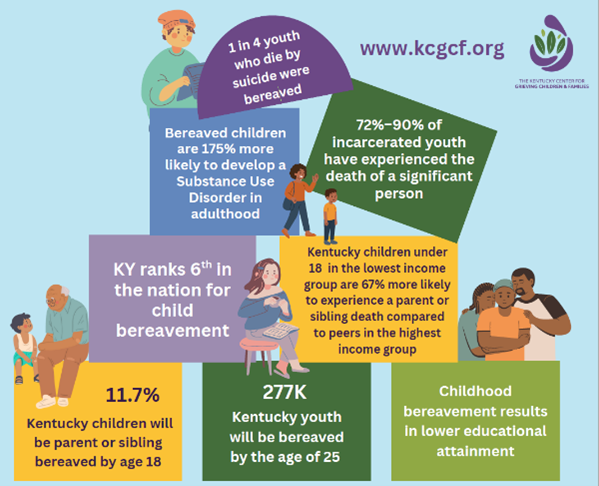
Supporting Children Through Grief: A Lifeline for Kentucky Families


When children experience loss, whether from the death of a loved one, family separation, incarceration, foster placement, or other major life changes, the emotional impact can affect every part of their lives, including school performance, behavior, relationships, and mental health. Across Central Kentucky, the Kentucky Center for Grieving Children and Families is helping children and families navigate these difficult experiences with compassion, connection, and support.


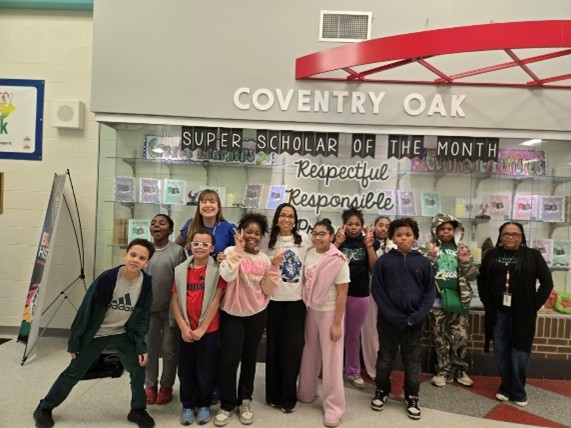
Through expanded school-based grief services and community partnerships, the organization is reaching more students than ever before. This past year, the Kentucky Center for Grieving Children and Families collaborated with six school districts, Clark, Fayette, Franklin, Madison, Scott, and Woodford Counties, to provide 43 grief support groups for students coping with both death-related and non-death-related losses.


The organization’s 11-week School-Based Grief Support Groups are designed for students in grades K–12 and provide a safe, supportive space where children can share feelings, build resilience, and learn healthy coping strategies alongside peers experiencing similar challenges. Each small group serves between four and ten students, allowing trained facilitators to provide individualized support and meaningful connection.

Recognizing that schools are often on the front lines of identifying students in distress, the organization also offers specialized training for teachers, Family Resource and Youth Services Centers (FRYSCs), counselors, and school support staff. These trainings help adults recognize signs of grief and respond with empathy and practical support.


Parents and caregivers are also an important part of the healing process. The center provides parent education courses, along with virtual and in-person support opportunities that help caregivers better understand how grief affects children and how to support them at home. The Center also offers free family support groups in Lexington and has plans to expand to a second site for the family programs this fall. Children and adults often try to shield each other from the emotions and impacts of a loss, and comprehensive support programming helps families better communicate with one another and grow together instead of apart after a loss.


In 2025 the organization also expanded services for vulnerable youth through a partnership with the Audrey Grevious Center, a Fayette County Public Schools educational program serving court-involved students. In addition to ongoing grief support groups at the Center, day camps, therapeutic equine experiences, and pop-up programming provide additional experiences for healing and connection.


By meeting children where they are, in schools, camps, and community settings, the Kentucky Center for Grieving Children and Families is helping young people feel seen, supported, and empowered during some of life’s hardest moments. Their work reminds us that no child should have to grieve alone.

Take Action!

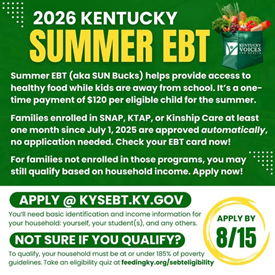
Don’t Miss Summer EBT Benefits for Kids!


Summer EBT for eligible Kentucky families helps access healthy food while school is out. Eligible children receive $120 in grocery benefits per eligible child for the summer, which can be used at grocery stores, farmers markets, and other retailers that accept SNAP.


More information on the program can be found at: https://feedingky.org/sebteligibility/


Key Actions:

  • Share information about Summer EBT with families who may not know they qualify.
  • Help families check eligibility (especially those not enrolled in SNAP, KTAP, or Kinship Care).
  • Connect families to local schools, community groups, or benefits navigators who can help them apply.
In Case You Missed It

Misinformation threatens measles elimination status, overall health. Can KY alter course?


Millions expected to lose Affordable Care Act coverage as costs spike


Meta settles social media addiction case with Breathitt County School District


A conversation with the retiring director of Prevent Child Abuse Kentucky


6 tips from doctors to keep your kids safe at summer camp


Beshear announces universal pre-K program in two rural Kentucky counties


Drop in Child Medicaid and CHIP Enrollment Even Before HR 1 Policies Take Full Effect is Troubling Sign


SNAP Tracker: People Are Losing Food Assistance as the Republican Megabill Is Implemented


The American Affordability Tracker

Contact Us!

Do you have an upcoming event or exciting news to celebrate with our coalition? Please email Ally Wells at awells@heatlhy-ky.org to be featured in an upcoming KCHC Newsletter!

Amalia Mendoza | KCHC Newsletter | 502-326-2583
amendoza@healthy-ky.org | www.kentuckyhealthychildren.org
Current KCHC Steering Committee Member Organizations:

Advocacy Action Network

Aetna Better Health of Kentucky

Alliance for a Healthier Generation

American Academy of Pediatrics KY Chapter

American Heart Association

Anthem Medicaid

Bounce Coalition

Cairn Guidance Inc.

Cumberland Family Medical Center Inc.

Kentucky Department for Behavioral Health, Developmental & Intellectual Disabilities

Feeding Kentucky

Foundation for a Healthy Kentucky

Gay, Lesbian & Straight Education Network – Bluegrass

Humana

Kentucky Association for School Social Work

Kentucky Association of School Administrators

Kentucky Council on Problem Gambling

Kentucky Department for Medicaid Services

Kentucky Student Voice Team

Kentucky Department for Public Health

Kentucky Department of Education

Kentucky Health Departments Association

Kentucky Nurses Association

Kentucky Primary Care Association

Kentucky Public Health Association

Kentucky Psychological Association 

Kentucky School Boards Association

Kentucky Voices for Health

Kentucky Youth Advocates

KY Parent Teacher Association – 16th District

Playworks

Pritchard Committee for Academic Excellence

Seven Counties Services

Spalding University

St. Elizabeth Healthcare

Trans Parent Lex

United Healthcare

University of Kentucky College of Health Sciences

University of Louisville School of Public Health & Information Studies

#iCANendthetrend