Kentucky Coalition For Healthy Children Newsletter | |
Working collaboratively on policies and practices in and around schools that promote equity and improve the physical, social, and emotional health and well-being of children, youth, and families. | |
The opinions and viewpoints expressed in this newsletter do not necessarily reflect the positions of all coalition partners. | |
|
Advocacy Series | State & Federal Policy Updates | October 3
The ThriveKY coalition and the Cabinet for Health and Family Services will hold their Quarterly Advocacy Update on state and federal policies with an impact on Kentucky families on October 3, 2023, 2:00 to 3:30 ET. Register here.
Policy Forum | Howard L. Bost Memorial Health Policy Forum Healthcare Workforce S.O.S. | October 11
A strong and robust healthcare workforce is fundamental to ensuring access to high-quality care. Unfortunately, there are many areas of Kentucky that have a shortage of these vital resources. It’s a crisis that needs attention. This free, daylong event will highlight some of the factors contributing to the shortage and explore potential solutions. Learn and collaborate with experts on ways we can better support our healthcare providers, optimize the use of our resources, and sustain the current workforce.
Join the Foundation for a Healthy Kentucky on October 11 from 9am-4pm ET in Lexington, KY and register here.
Advocacy Series | ThriveKY Regional Advocacy for Thriving Communities Series | October 17
Kentucky Voices for Health (KVH) & the coalition of ThriveKY partners will provide in-person around the Commonwealth events this year, April through November, with updates on state and federal policies that impact the health and wellbeing of Kentuckians. Speakers will discuss how to advocate for a stronger safety net through public assistance programs designed to support thriving communities. The series includes important updates on the economy, Medicaid, KCHIP, SNAP, housing, transportation, childcare, public health, behavioral health, and others. They provide tools to assist community members with meeting basic needs and tips on being a more effective advocate in your community. Click here for more information.
Register here for the October 17 event in Louisville from 10am-1pm EDT.
| |
|
Virtual Forum | Bounce Grand Rounds | October 17
Join the Bounce Coalition for a virtual forum designed to foster cross-sector collaboration and build a more resilient, trauma-informed community – while generating practical solutions.
Learn more here and register.
Symposium | Pediatric Behavioral and Mental Health Symposium | November 3
National and local speakers will address the efficacy of select pediatric mental health treatment approaches. Presentation topics include intergenerational trauma, mental health challenges of displaced youth, telemental health and mental health concerns of individuals with autism spectrum disorder. Learn more here and register at nortoncme.com.
Presentation | Task Force on School and Campus Security
Dr. Sheila Schuster, Executive Director of the Advocacy Action Network, and Dr. Joe Bargione of the Bounce Coalition, presented at the September 19, 2023, meeting of the Task Force on School and Campus Safety. This task force was set up to study and review implementation of SB 1 (RS 2019) relating to school safety. Further, the task force was tasked with reviewing access to mental health services provided within districts and determine if any federal funds are available for these services. Dr. Schuster and Dr. Bargione, members of the Kentucky Coalition for Healthy Children’s Steering Committee, presented on strengthening trauma-informed schools for prevention and resilience.
The PowerPoint presentations can be found here.
| |
What's New in Children's Health | |
 | |
State of Obesity Report and Kentucky’s Children and Youth
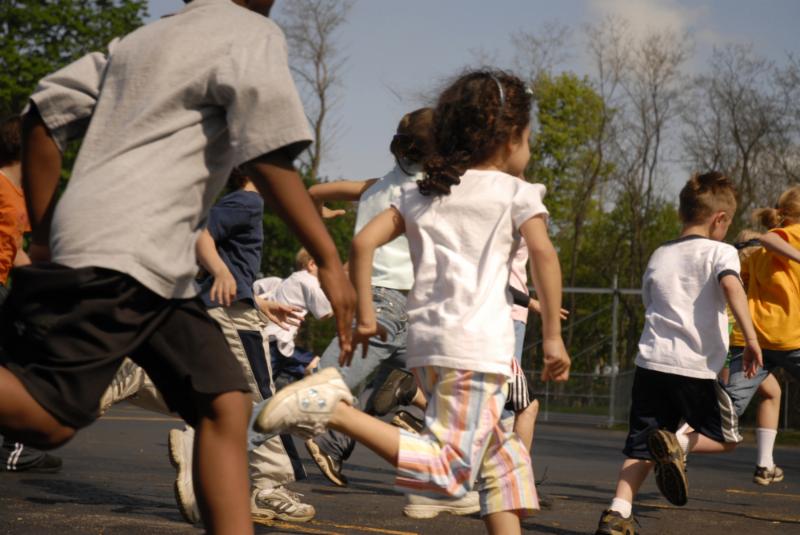
Trust for America’s Health (TFAH) has released the State of Obesity 2023: Better Policies for a Healthier America report. The report indicates that Kentucky’s children ages 10 to 17 have one of the highest obesity rates in the nation, ranking No. 2. The report indicates that 19.6% of the Commonwealth’s high-school students have obesity and 16.2% are overweight. Overall, since the initial THAH initial report published in 2004, the national youth obesity rate has increased by 42%.
The report emphasizes that obesity is a multifactored disease that involves more than individual behavior changes and that the obesity crisis is rooted in economic, health, and environmental inequities. As the CEO of TFAH, Dr. J. Nadine Garcia, has pointed out, “Ensuring all people and communities have equitable opportunity and access to healthy food and physical activity is fundamental to addressing this crisis.”
The report includes state policies linked to obesity prevention, and recommends policy actions including:
- Fully fund CDC’s proven chronic disease and obesity prevention programs so they reach every state.
- Make healthy school meals available for all students and increase access to Supplemental Nutrition Assistance Program (SNAP) and other nutrition support programs.
- Implement a mandatory front-of-package labeling system on food packaging to help consumers make informed choices.
- Close tax loopholes and eliminate business-cost deductions for advertising unhealthy food to children.
- Make physical activity and the built environment safer and more accessible for everyone, including by increasing federal education funding for health and physical education and investing in active transportation projects like pedestrian and bike paths.
- Increase access to health insurance through expanding Medicaid, making marketplace insurance more affordable, and expanding healthcare screenings for social needs.
| |
|
The Children's Health Care Report Card
Georgetown University’s Center for Children and Families has an interactive Children’s Health Care Report Card on the Number of Uninsured Children. Some of the findings of the report include:
- The number of uninsured children declined during the COVID-19 pandemic largely due to federal law which has protected access to health care for Medicaid beneficiaries by requiring states to keep them enrolled during the federally declared COVID-19 public health emergency in exchange for enhanced federal funding.
- Children in low-wage working families with annual incomes between $30,305 and $54,900 (for a family of three) saw the biggest reductions in their uninsured rates.
- These coverage gains are at risk because the Medicaid continuous coverage protection lifted at the end of the federal COVID-19 public health emergency.
Latino Children’s Health in the U.S. Worsened by Anti-immigrant Discrimination
As we celebrate Hispanic Heritage Month, it is important to note what researchers at the Harvard T.H. Chan School of Public Health have found with respect to Latino children experiencing more health issues than non-Latino white children. The study, State-Level Anti-Immigrant Sentiment and Policies and Health Risks in US Latino Children, was published in Pediatrics, the Journal of the American Academy of Pediatrics. The study reports that the issue is due to systemic inequities—such as laws aimed at excluding them from obtaining health care or housing— which lead to chronic stress.
The study found that in states with higher levels of systemic inequities, as measured by prejudicial attitudes toward Latino communities as well as policies considered exclusionary toward immigrants, Latino children were more likely to experience chronic physical health conditions such as asthma and diabetes, as well as mental health conditions.
|  | |
Fostering Wellness: Empowering Teachers' Health through Campus Initiatives in Casey County | |
|
Teachers and other staff at Casey County Schools are finding support on campus to adopt healthier lifestyles. The project started in 2018 thanks to a Healthy Schools Grant. Staff voiced a need for better options and motivation to improve their diet and physical activity, and the district answered the call.
The district began with a year-long “Biggest Loser” challenge for staff and had over 50 participants in the first year. Not only did the competition motivate teachers to get active and eat healthy, the prizes involved also contributed to the overall goal. Examples of this include water bottles to encourage drinking more water, hand weights to encourage physical activity, and bento lunch boxes and a cookbook to encourage healthier eating. Over 350 pounds were lost district wide and the competition is now held each school year.
| |
Access to healthier food options was also addressed during this project. A survey in 2022 revealed that staff wanted more nutritious snacks in the teacher lounges and during meetings. Soon, the lounges became equipped with a 3-tier tray that displayed snack options that were easy to grab, high in protein, low in carbohydrates, as well as some dried fruit options. Water bottles were also distributed to every employee in the district. The snacks were a hit, with one teacher saying, “This has helped me make better decisions for snacks. Instead of getting a candy bar, I am now reaching for the healthy snack in my drawer.”
Teacher wellness is important on a number of levels. For starters, it’s important for themselves and their health. But it’s also important for the kids in their classrooms. A teacher can be a support system, friend, role model, and more to their students. So, the healthier they are, the better they can support the youth around them. Kids also pay attention to what adults do around them, so setting a good example of healthy eating and physical activity is important.
Casey County was one of nine districts within the state which partnered with the Kentucky Department of Education from 2018-23 in the implementation of a Centers for Disease Control and Prevention Healthy Schools Cooperative Agreement to develop and implement school health infrastructure, best practices, programming and policies. For more information, contact Rachael King (Rachael.king@casey.kyschools.us).
| |
|
2023 KY General Election Voting Information and Deadlines
-
Kentucky's General Election is Tuesday, November 7, 2023. Polls will be open from 6:00 a.m. to 6:00 p.m. local time. If you are in line to vote at 6:00 p.m., you must be allowed to cast your ballot.
- The deadline to register to vote in the General Election is Tuesday, October 10, 2023 at 4:00 pm Local Time.
-
Register or check your registration information at www.GoVote.KY.gov . Do check your registration for correct information such as address, phone numbers and email. Only use this site, as your information goes directly to the Kentucky Secretary of State’s office.
- Encourage people who will turn 18 years old ON or BEFORE Tuesday, November 7, 2023 to register to vote now, even if they are not yet 18. Once registered, they are eligible to vote in the general election, as long as their birthdate is on or before November 7th.
- Absentee ballots may be requested by midnight on Oct. 24th at www.GoVote.KY.gov for a verifiable reason (unlike during the COVID period, when no reason had to be given).
REGISTER TO VOTE AND THEN, VOTE! SPREAD THE WORD TO OTHERS TO GET REGISTERED AND TO VOTE. LEARN ABOUT THE CANDIDATES AND SUPPORT THOSE YOU WANT TO BE YOUR STATE GOVERNMENT LEADERS.
REMEMBER: ELECTIONS HAVE CONSEQUENCES!
| | |
|
Do you have an upcoming event or exciting news to celebrate with our coalition? Please email Alexandra Kerley at akerley@healthy-KY.org to be featured in an upcoming KCHC Newsletter! | |
Amalia Mendoza | KCHC Newsletter | 502-326-2583
| |
Current KCHC Steering Committee Member Organizations: | | | | |