New Series on KDIGO Guideline Methodology | | |
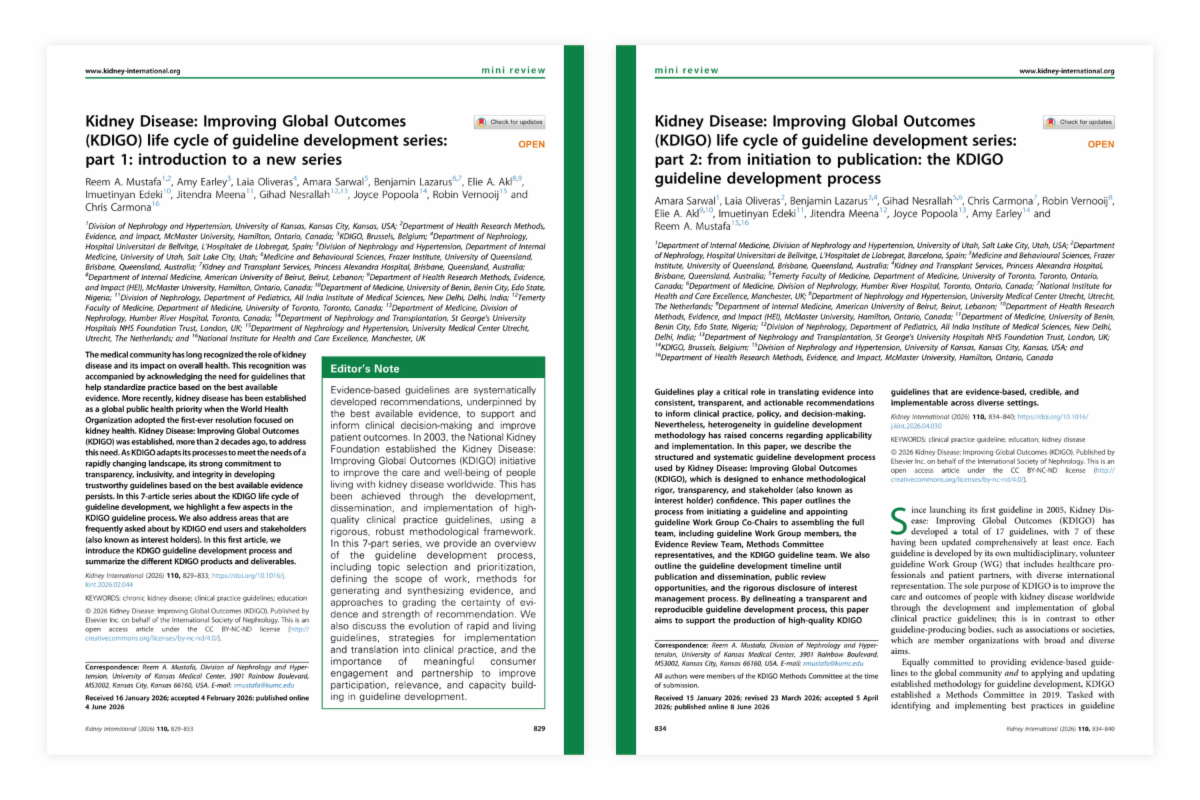
KDIGO has launched a new seven-part methods series in Kidney International, offering an in-depth look at the methodology and processes that underpin the development, updating, and implementation of KDIGO Clinical Practice Guidelines. The series provides greater transparency into the work behind KDIGO guidelines and how evidence is evaluated and translated into guidance for clinical practice.
Developed by the KDIGO Methods Committee and KDIGO Methods Fellows, the “Life Cycle of Guideline Development” series complements the KDIGO Methods Manual and takes readers through the full guideline development process. The series includes:
By bringing together each stage of the guideline life cycle in a single series, the papers aim to provide clinicians, researchers, guideline developers, patients, and other members of the kidney community with a closer look at how KDIGO guidelines are developed, from the first clinical question to everyday practice. The series also highlights how KDIGO’s methods continue to evolve to incorporate new evidence, advances in guideline methodology, and the perspectives and needs of the global kidney community.
| | KDIGO 2027 CKD Guideline Update Available for Public Review | | |
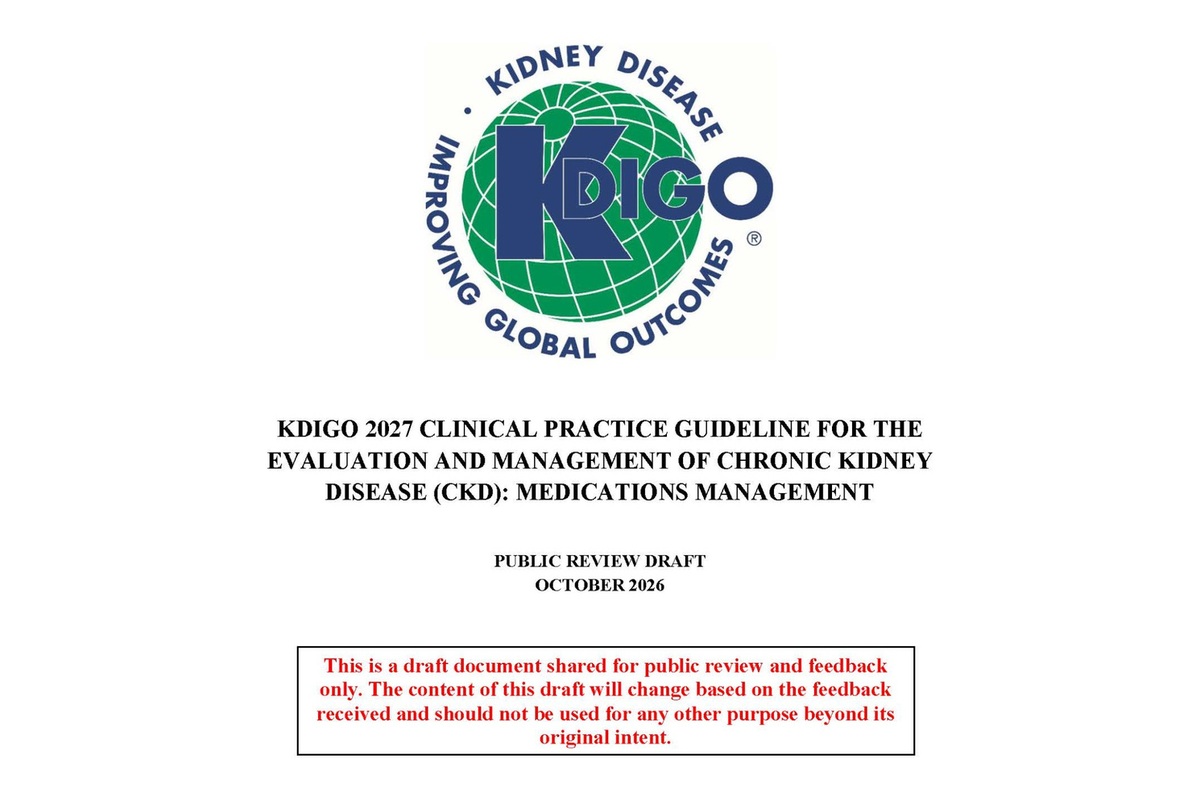
A draft of the KDIGO 2027 Clinical Practice Guideline for the Evaluation and Management of Chronic Kidney Disease (CKD): Medications Management is now available for public review through November 4, 2026. KDIGO invites the global kidney community to review the draft and share feedback to help inform the final update.
The focused update addresses important new evidence that has emerged since publication of the KDIGO 2024 CKD Guideline, with particular attention to SGLT2 inhibitors, GLP-1-based therapies, and nonsteroidal mineralocorticoid receptor antagonists (nsMRAs) in people with CKD, excluding those with established kidney failure receiving dialysis or those who have received a kidney transplant.
Visit the KDIGO CKD Guideline website to download the public review draft and share comments via the feedback survey.
| | New Survey on C3G and aHUS | | |
KDIGO invites physicians caring for patients with C3 glomerulopathy (C3G) and atypical hemolytic uremic syndrome (aHUS) to participate in an international survey examining global variability in access to diagnostic and therapeutic resources for these conditions.
Developed through the KDIGO Early Career Professionals Program, the survey is open to physicians responsible for the care of adult or pediatric patients with C3G and/or aHUS, regardless of their specific expertise in these diseases.
To help minimize duplicate responses, participants are encouraged to submit one response per center for adult care and one for pediatric care, where applicable. Take the survey.
| | New KDIGO IgAN Podcast Series | | |
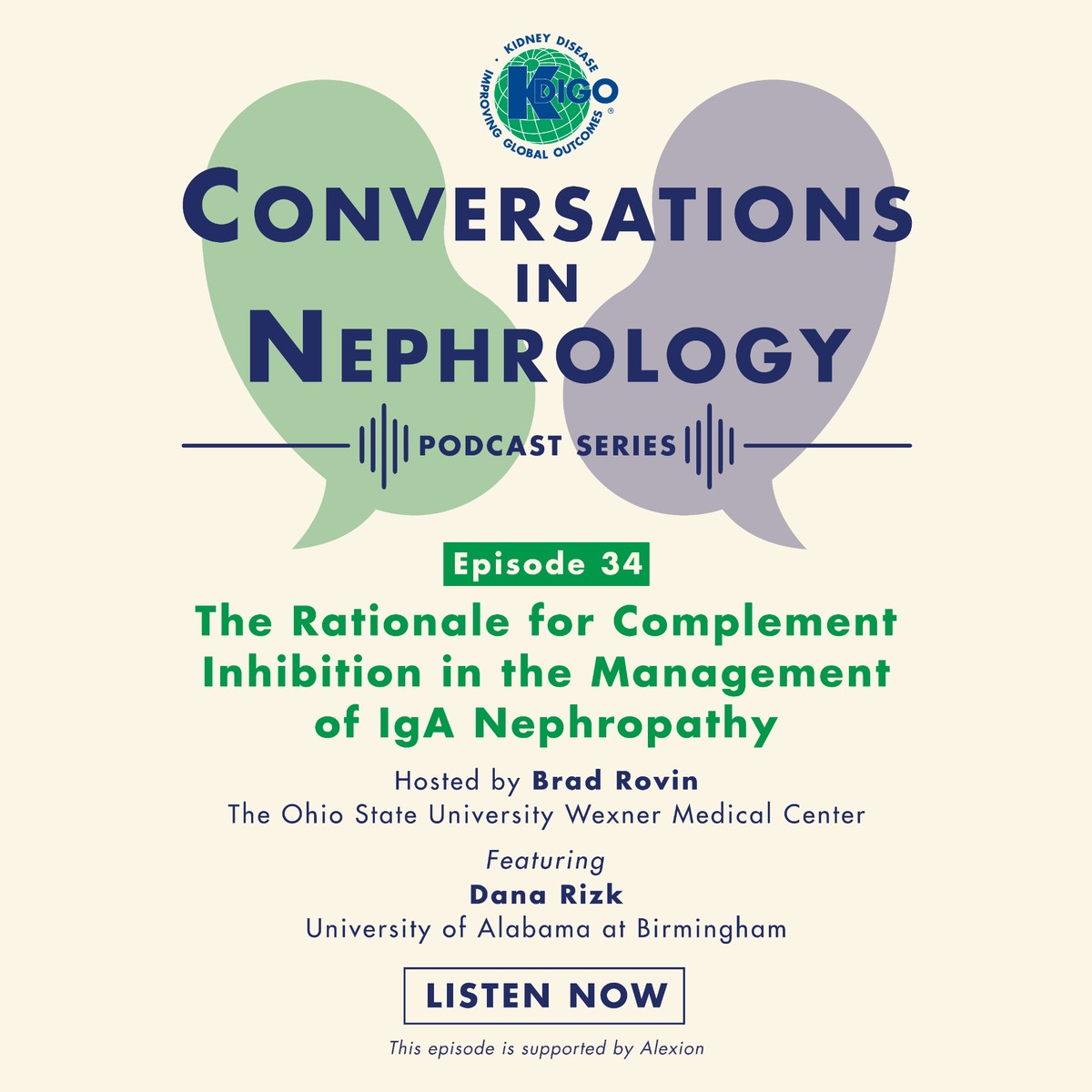
KDIGO is launching a new three-part Conversations in Nephrology podcast series exploring the evolving role of complement inhibition in the management of IgA nephropathy (IgAN). Hosted by KDIGO IgAN/IgAV Guideline Co-Chair Brad Rovin, MD (United States), the series begins with a new episode featuring Dana Rizk, MD (United States), with two additional episodes to be released in the coming weeks.
In Episode 34, “The Rationale for Complement Inhibition in the Management of IgA Nephropathy,” Dr. Rovin and Dr. Rizk examine the evidence linking the complement system to IgAN. They draw on experimental research and genome-wide association studies and discuss the roles of the lectin, alternative, and terminal complement pathways.
Upcoming episodes will feature Andrew Bomback, MD (United States), on building a patient profile for complement inhibition and Sayna Norouzi, MD (United States), on where complement inhibitors fit within the IgAN therapeutic toolbox.
Listen on your favorite podcast platform.
| | |
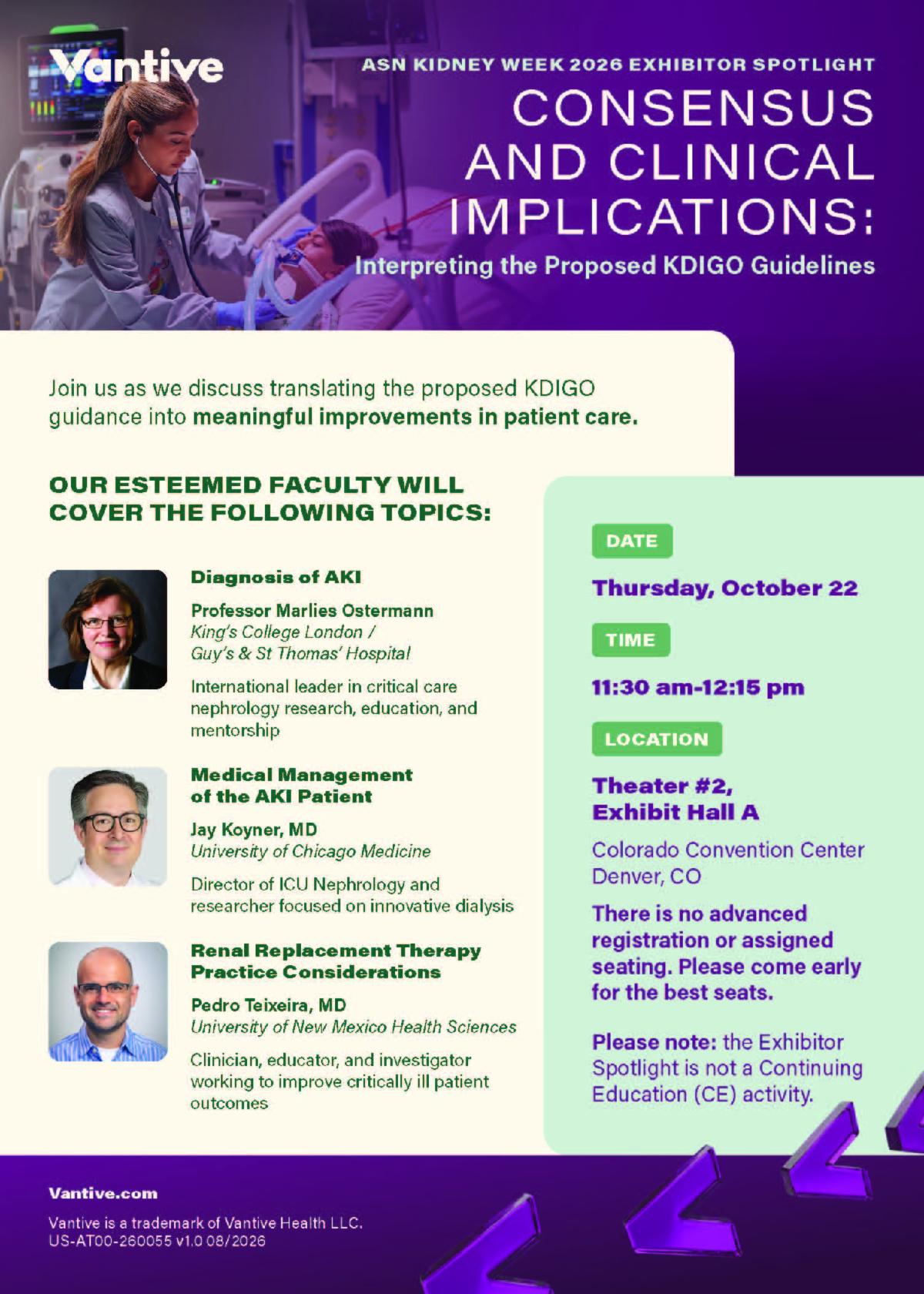
Consensus and Clinical Implications: Interpreting the Proposed KDIGO Guidelines
October 22, 11:30 AM - 12:15 PM MDT
Colorado Convention Center, Theater #2, Exhibit Hall A
ASN Exhibitor Spotlight
Are you attending ASN Kidney Week 2026? Don’t miss the KDIGO-Vantive Exhibitor Spotlight on the forthcoming KDIGO Clinical Practice Guideline for Acute Kidney Injury (AKI) and Acute Kidney Disease (AKD).
Hear directly from KDIGO AKI/AKD Guideline Co-Chair Marlies Ostermann, MD (United Kingdom), Work Group Member Jay Koyner, MD (United States), and Pedro Teixeira, MD (United States) on key areas addressed in the proposed guidance. The session will explore the diagnosis of AKI, the medical management of people with AKI, and considerations in kidney replacement therapy practice, with a focus on translating the proposed KDIGO guidance into meaningful improvements in patient care.
No advance registration or assigned seating is required. Attendees are encouraged to arrive early for the best seats. Please note that the Exhibitor Spotlight is not a Continuing Education (CE) activity.
| | |
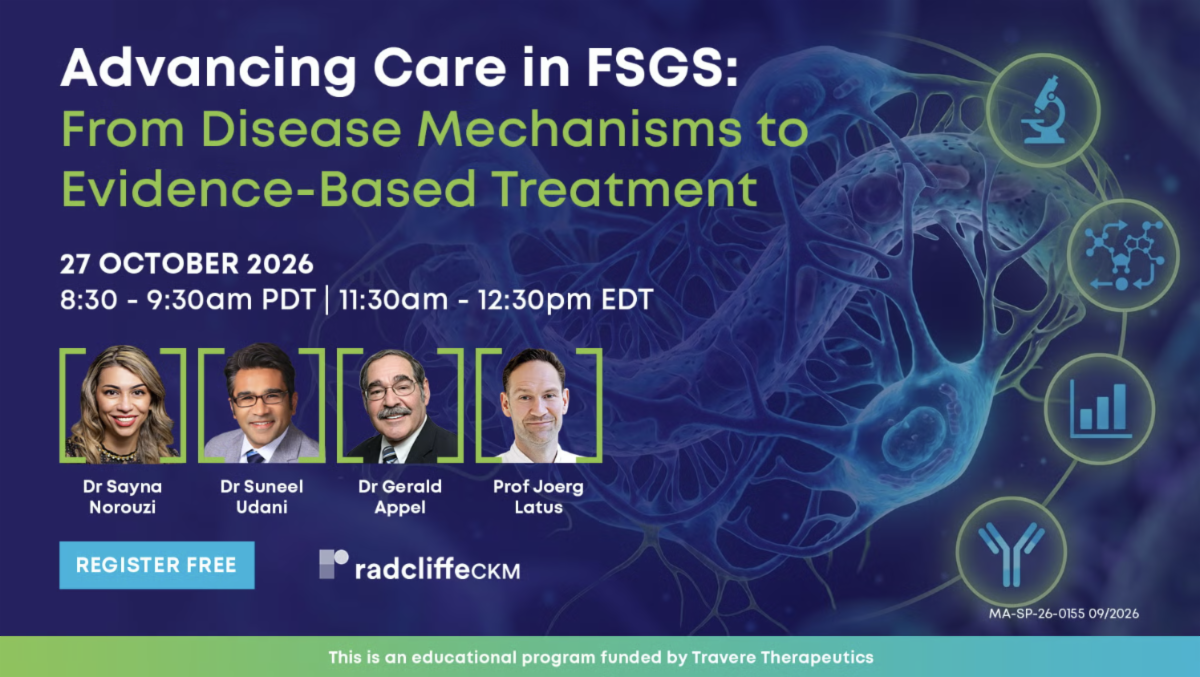
Advancing Care in FSGS: From Disease Mechanisms to Evidence-Based Treatment
October 27, 8:30 - 9:30 AM PDT, 11:30 AM - 12:30 PM EDT
Webinar
When proteinuria persists in focal segmental glomerulosclerosis (FSGS), the challenge is not identifying the problem. It is knowing how to interpret the data and apply it to the next treatment decision.
In an upcoming webinar hosted by Radcliffe CKM, Sayna Norouzi, MD (United States), Suneel Udani, MD (United States), Gerald Appel, MD (United States), and Joerg Latus, MD (Germany) will examine how proteinuria, nephrotic syndrome status, patient characteristics, and clinical data can inform treatment selection.
Join the faculty on October 27 to learn how to identify appropriate patients for treatment and incorporate recently approved therapies into evidence-based care pathways. Register.
| | |
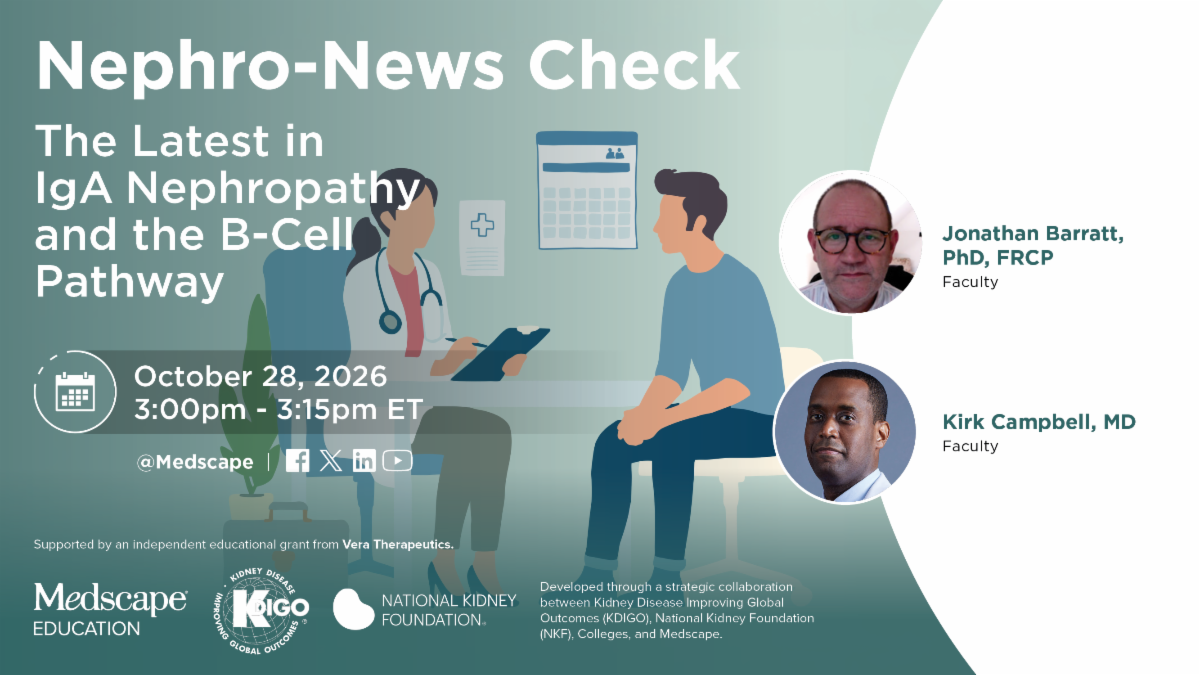
Nephro-News Check: The Latest in IgA Nephropathy and the B-Cell Pathway
October 28, 3:00 - 3:15 PM ET
Social Media Event
Join Jonathan Barratt, PhD, FRCP (United Kingdom), and Kirk Campbell, MD (United States), for a live Nephro-News Check on the latest developments in IgAN and the B-cell pathway.
In this 15-minute conversation, the faculty will review emerging data on novel B-cell-modulating therapies and evolving clinical trial evidence, and discuss how these developments may shape clinical decision-making and the use of new therapies in IgAN care.
You can watch the event live on X, Facebook, LinkedIn, and YouTube.
| | |
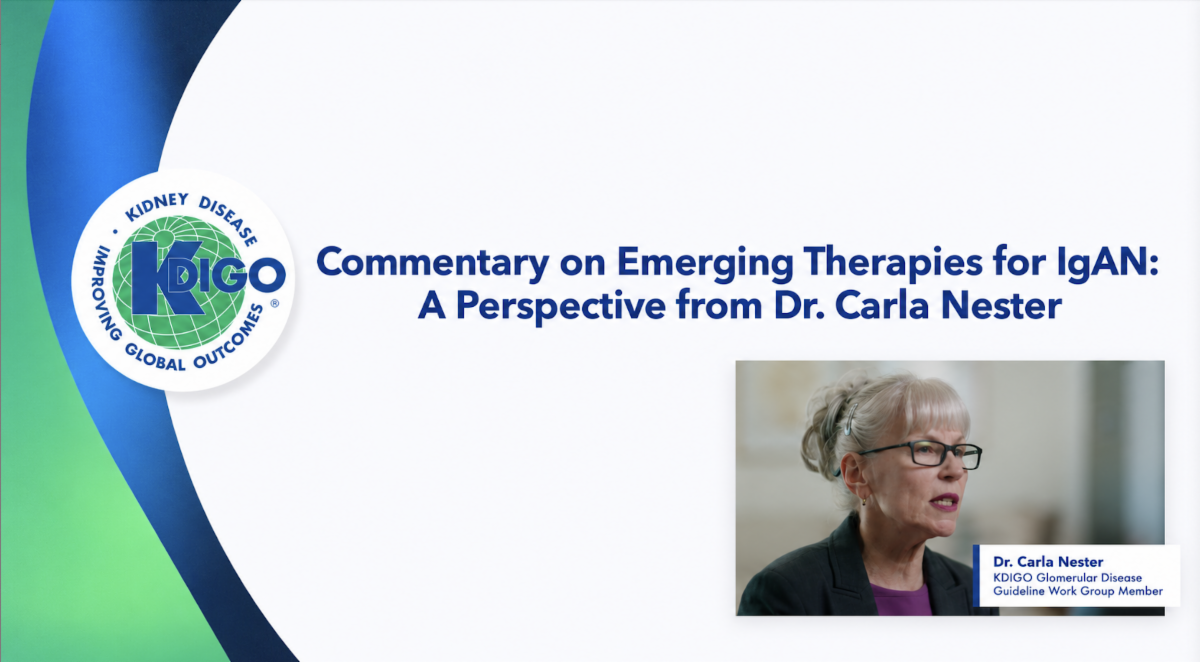
Commentary on Emerging Therapies for IgAN: A Perspective from Dr. Carla Nester
Expert video
In a new KDIGO video, Carla Nester, MD (United States), discusses the rapidly evolving treatment landscape for IgA nephropathy (IgAN) and recent developments following publication of the KDIGO 2025 IgAN/IgAV Guideline.
Dr. Nester, a KDIGO Glomerular Diseases Guideline Work Group Member, reviews emerging and recently approved therapies, how they target distinct mechanisms of disease, and the importance of addressing both disease-specific pathways and the progression of chronic kidney disease. She also discusses considerations for navigating an expanding range of treatment options and translating emerging clinical trial evidence into individualized patient care. Watch the video.
| | |
Germany's Move Toward Kidney Paired Exchange and Nondirected Donation
Editorial
A new editorial in Kidney International Reports examines Germany’s move toward kidney paired exchange (KPE) and nondirected living kidney donation, drawing on international experience to highlight considerations for governance, donor safeguards, equity, transparency, and public trust. The authors argue that successful KPE requires more than an effective matching system: clear accountability, transparent rules, strong donor protections, and equitable access will be critical as Germany develops a national program.
Led by Louise Benning, MD (Germany), the paper grew out of her project through the KDIGO Early Career Professionals Program, where she was mentored by Michelle Josephson, MD (United States), a KDIGO Executive Committee member and Co-Chair of the forthcoming update to the KDIGO Clinical Practice Guideline for the Care of Kidney Transplant Recipients. Dr. Benning and Dr. Josephson co-authored the paper together with Wan-Zi Lu, PhD (United States), and Klemens Budde, MD (Germany). Read the editorial.
| | |
New IPNA Commentary Highlights Pediatric Considerations in the KDIGO 2026 Anemia Guideline
Commentary
A new commentary from the International Pediatric Nephrology Association (IPNA), published in Pediatric Nephrology, examines the KDIGO 2026 Clinical Practice Guideline for the Management of Anemia in Chronic Kidney Disease (CKD) from a pediatric perspective. Authors Oleh Akchurin, MD (United States), and Meredith Atkinson, MD (United States), consider how the updated recommendations apply to children, particularly where pediatric evidence remains limited.
The commentary highlights key considerations for the diagnosis and treatment of anemia in children with CKD, areas where recommendations rely on evidence extrapolated from adults, and priorities for future pediatric research. Read the commentary.
| | |
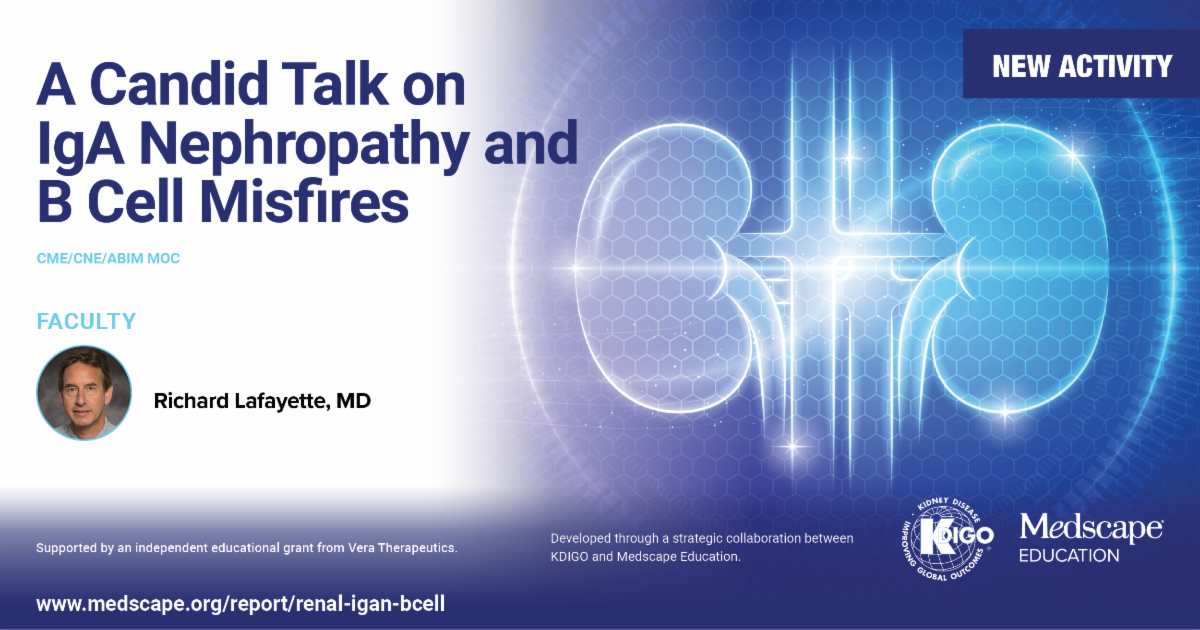
A Candid Talk on IgA Nephropathy and B Cell Misfires
Continuing Education Activity
What drives IgAN, and how can understanding B cell signaling inform new targeted therapies?
In the new educational activity, Richard Lafayette, MD (United States), explores the roles of the mucosal immune system and B cell signaling in IgAN, as well as how emerging therapies target these pathways.
Access the activity and earn continuing education credit on Medscape Education.
| | |
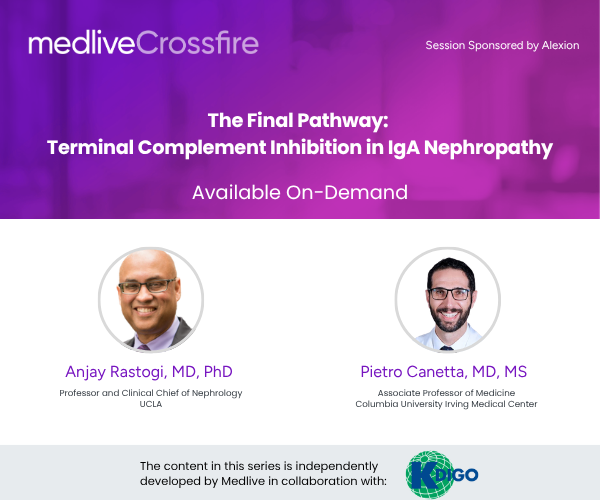
The Final Pathway: Terminal Complement Inhibition in IgAN
On-Demand Webinar
Many patients with IgAN remain above KDIGO proteinuria targets despite optimized supportive care. This on-demand program examines where terminal complement inhibition may fit in treatment, including complement activation and glomerular injury, KDIGO treatment targets, the clinical evidence for terminal complement inhibition, and the implications of residual proteinuria and cumulative proteinuria exposure.
Anjay Rastogi, MD (United States), and Pietro Canetta, MD (United States), discuss practical considerations including treatment candidacy, interpretation of pathology findings, dosing, initiation, and monitoring. The 60-minute program can be viewed in full or as four individual chapters. Watch the program.
| | |
Russian Translation of the KDIGO 2026 Anemia in CKD Guideline
Translation
The KDIGO 2026 Anemia in CKD Guideline is now available in Russian. The translation was published as a supplement to Nephrology and Dialysis and includes the guideline’s recommendations and practice points on the diagnosis and management of anemia in CKD. Read the translation.
| | |
About KDIGO
KDIGO is a Belgian foundation committed to developing and implementing global nephrology guidelines that improve outcomes for people with kidney disease. KDIGO is independent, volunteer-led, self-managed, and accountable to the public and the people it serves. KDIGO thanks our annual supporters for their partnership. Learn more.
| | | | |