|
|
 |
|
March/April 2016
Newsletter
|
|
|
|
|
|
|
|
From Our President
Seems our march out of winter is continuing on into April, darn it. Spring in Chicago - all four seasons in one day. I heard someone on the radio say that the groundhog should be charged with perjury! But, it is what it is. Just keep those pansies in your garage for now; their time will come.
I should be cheerleading for our spring meetings and events, but I'm in a different mood these days. Please do read on about all of the great things KGC has going on this spring...come sun or snow!
We have been preoccupied by sentimentality and emotional swings in our family since my father-in-law, Si Keehn, passed away the day before Valentine's Day. His memorial service was this past weekend. The church service and family gatherings over weekend were the last formal events to commemorate his life. Now, with nothing else to busy ourselves with planning, we are left with just our grief, having to figure out what our world will be like without him...the new "normal." We all dragged our heels leaving Marcia's apartment on Sunday, even though she had already surrendered to a nap in her bedroom. Time to face it; time to deal with it.
It is so easy to keep ourselves busy and not take the time to do other important things that are harder to do, easier to put of...to be with our selves; to take stock of where we are and what we are doing; to sit and really listen to those we like and love who have things to tell us; to really pay attention to what's going on in and around us; to put down the "to do" list and take care of bigger things.
One my father-in-law's best qualities was that he never took anything for granted, and that's an amazing way to go through life when you think about it. His passing brought us so many gifts - cards and letters, flowers and hugs, and sincere and beautiful words of comfort from so many...and so many from our KGC friends. Thank you, on behalf of Marcia and me and the Keehn family, for supporting us and being there for us. I don't take any of you for granted and am profoundly grateful.
Yours,
Stephanie
I repeat...
No winter lasts forever; no spring skips its turn.
- Hal Borland
________________________________________________________________________
|
|
|
|
|
|
Monday, April 11th
Monday, May 9th
10:45 a.m.
Kenilworth Union Church Library
|
|
|
|
|
KGC April Meeting
"
Gardens of France:
From Paris to the Provinces"
By Tish Robinson
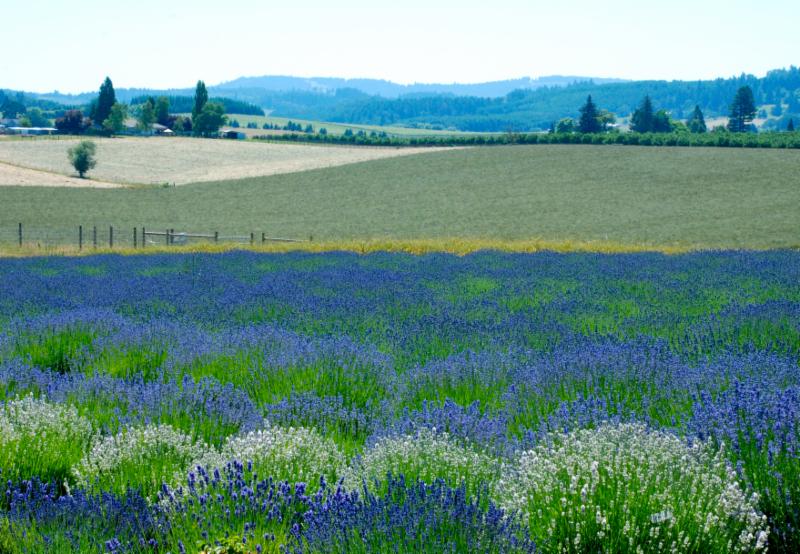
Tish is a well-known speaker on the topic of France and its garden styles and traditions. "From Paris to the Provinces" features the range of styles and trends represented throughout France -- from traditional formal French gardens and parks to appealing kitchen potagers found throughout the French countryside.
Wednesday, April 13th
9:30 am
Home of Terri Lorenz
2326 Iroquois, Wilmette
|
|
|
|
∞ ∞ ∞ ∞ ∞ ∞ ∞ ∞ ∞ ∞ ∞ ∞
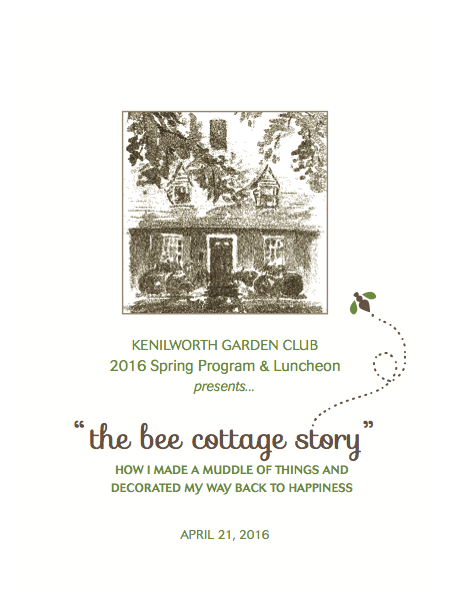
2016 KGC SPRING BENEFIT
Thursday, April 21st
10:30 am - 1:00 pm
Skokie Country Club, Glencoe, IL
Featuring speaker Frances Shultz discussing her book
Luncheon and book signing to follow the presentation.
Or contact Anne Brown at
asb1954@reagan.com for additional printed invitations.
Questions? Contact Marty Shaw at Marty@martypeterson.com.
Please send checks (made out to KGC) to Marty Shaw at:
315 Sterling Road, Kenilworth 60043.
** PLEASE NOTE: All Active and Affiliate KGC members (except for newly elected 2016 members) are required to purchase a minimum of two tickets for the benefit (or make a donation to the club in that amount, $75 x 2 = $150). This constitutes an important part of our fundraising for the year, so thank you in advance for doing your part.
∞ ∞ ∞ ∞ ∞ ∞ ∞ ∞ ∞ ∞ ∞ ∞
|
KGC March Meeting
|
|
|
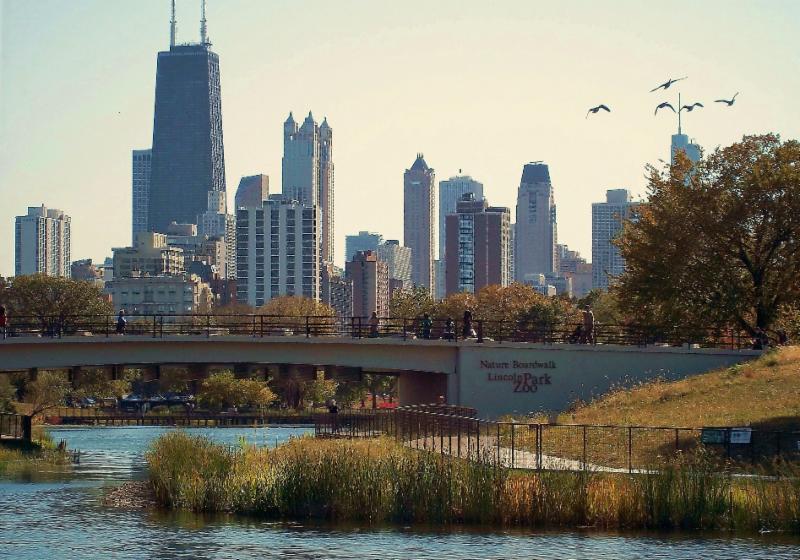
The Nature Boardwalk at Lincoln Park Zoo
|
"Designing an Urban Oasis for People and Animals"
For our March meeting, held at Beth Glass' lovely Northfield home, we were fortunate to have a very special guest speaker arranged by long-time Lincoln Park Zoo board member Judy Keller. Through her lengthy affiliation with LPZ, she graciously arranged for Troy Baresel, the Zoo's CFO/Senior VP of Operations and the man with the vision for the Zoo's horticultural presence, to speak to us about the Zoo's past, present and future plans for its many landscaped areas.
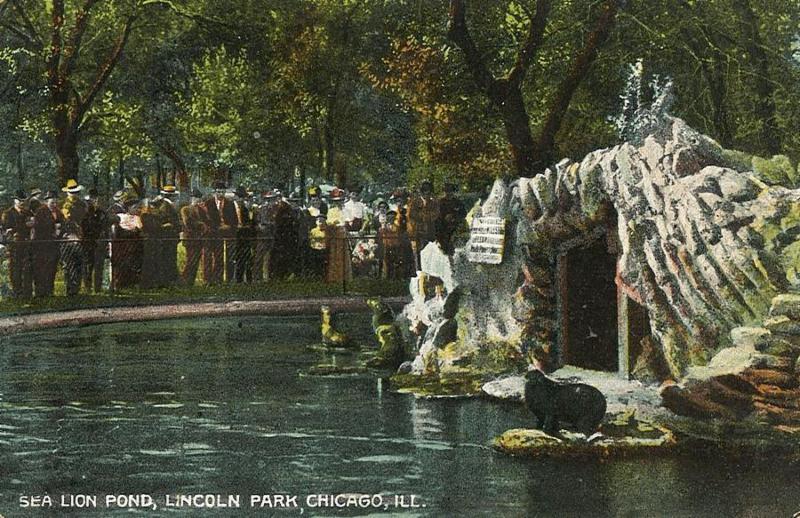
Lincoln Park Zoo was was founded in 1868 with the gift of two swans from the New York Park District,
 |
|
|
Early 1900s image of Lincoln Park Zoo.
|
making it one of the oldest zoos in the U.S. and one of only a few remaining with free admission. In 1874, the swans were joined by a bear cub from the Philadelphia Zoo -- the first animal purchased for Lincoln Park Zoo. The bear became quite adept at escaping from its home and could frequently be found roaming Lincoln Park at night. The landmark Lion House opened in 1912, followed by the Primate House in 1927.
The facility underwent a dramatic transformation in the 1970s and 1980s with the addition of many new, naturalistic exhibits and educational programs. In 1995, the Zoological Society assumed management of the Zoo from the
Chicago Park District, which still today remains the owner. The new Zoo management made conservation a key focus, hiring over 20 PhDs in conservation, and aimed to make the gardens the same high quality as the animals. In 2001, LPZ introduced the Children's Zoo, including the Farm-in-the-Zoo and its extensive vegetable garden. Today, the Zoo encompasses over 35 acres of prime property in Lincoln Park.
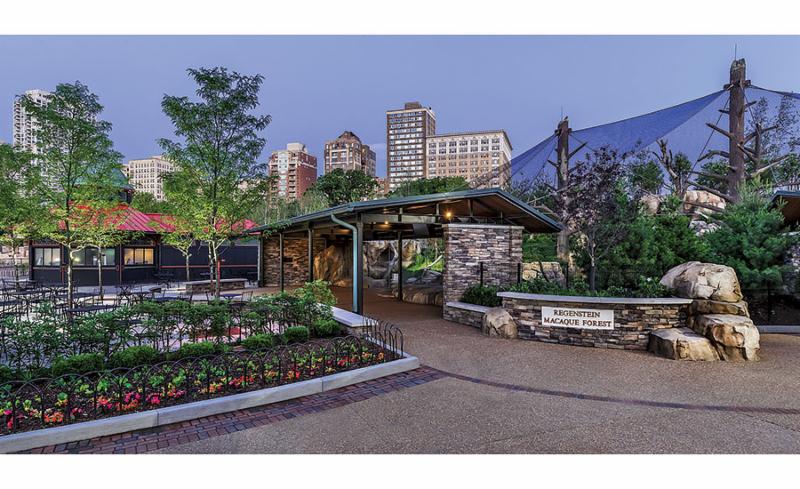
When Troy Baresel joined the Zoo 29 years ago, there was little attention paid to the park's landscaped areas, with almost all of the funding designated to supporting the welfare of the animals. Troy made it his objective to lead the future direction of the gardens and establish consistency throughout all of the Zoo's garden areas. "I wanted it to be recognized as a strolling garden, not just a zoo." Through the years, he has worked to standardize the park's landscaped areas, focusing on improving consistency, visibility, placement, and four-season applicability. His team has standardized all of the ornamental fencing, walkways, planting areas, and brick work to unify everything and create a consistent look throughout (see photo below). "The Zoo staff is doing a lot of the infrastructure work in-house," he reported proudly.
"The upcoming renovated polar bear and penguin exhibits will confirm to the new standards, as well."
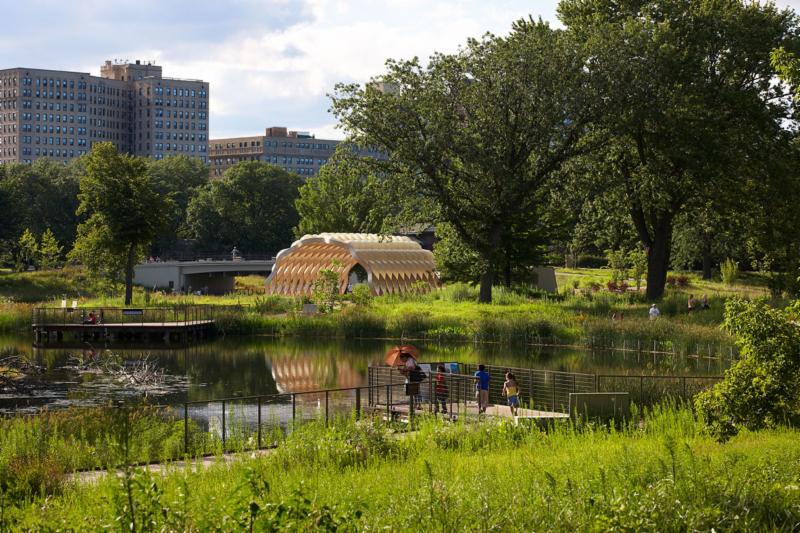
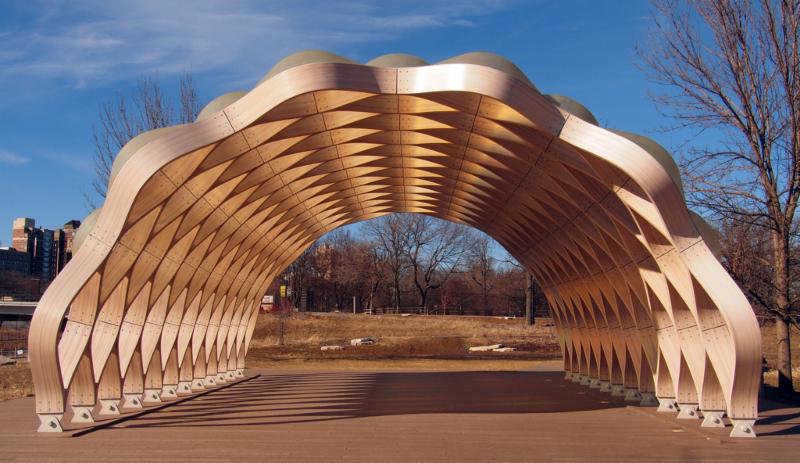
In 2010, the Zoo's new Nature Boardwalk (pictured top) was unveiled, serving as an outdoor environmental classroom. The half-mile long boardwalk and its adjacent 14-acres of restored habitat and wetlands transformed a once polluted and neglected urban pond into an educational, family-oriented space. Designed by Studio Gang and featuring the iconic honeycomb-shaped education pavillion (below), the Nature Boardwalk was designed to create "a slice of prairie in the big city." All plants are native to the area and selected for their sustainability and suitability to the urban wildlife, such as coyotes, fox, skunks, possums, dozens of varieties of birds and water fowl, and many others.
"We are dedicated to connecting people with nature by providing a free, family-oriented wildlife experience," Troy explained.
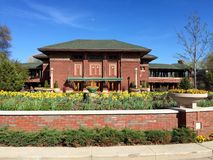
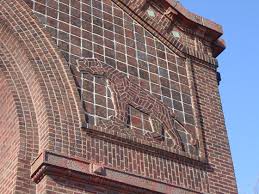
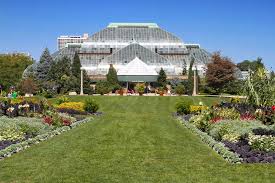
The Zoo grounds also feature three national landmark buildings (below L-R) - Cafe Brauer/South Pond Refactory (est. 1908), the Kovler Lion House (est. 1912), and the Lincoln Park Conservatory (est. 1890-1895).
Over the years, the Zoo has lost over 180 trees to disease. Troy and his team have been instrumental in re-treeing the grounds with species that are sustainable for the future, including disease-resistant oaks and elms (no ash or maple). They planted an allee of American Elms in the mall for shade, Black Oak Savannah in the Nature Boardwalk, and flowering Prairie Fire crab apples scattered throughout the grounds to match Washington DC's vibrant spring color. They also planted trees from central and southern Illinois that are resilient to global warming. "We have to be very diligent in our research," he explained. "There's about a 10-page book of plants we can't use because they can be toxic. We must always consult with the veterinary department to ensure that all of our plantings are safe for the wildlife."
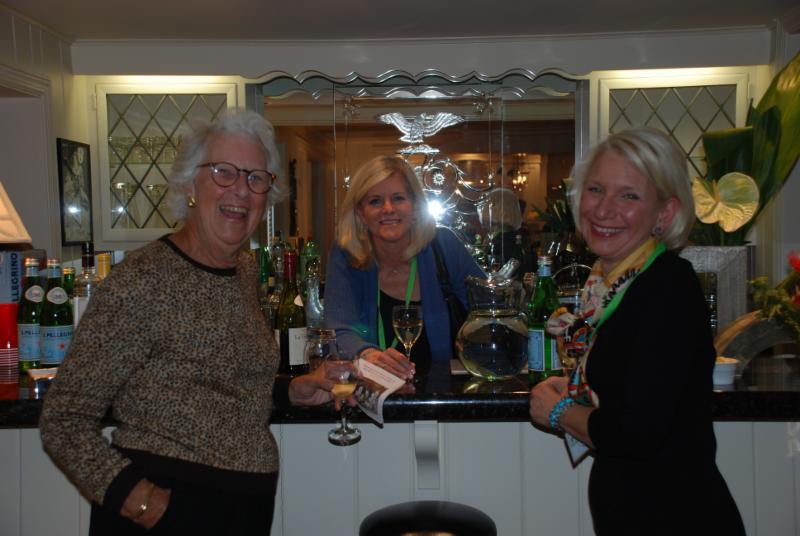
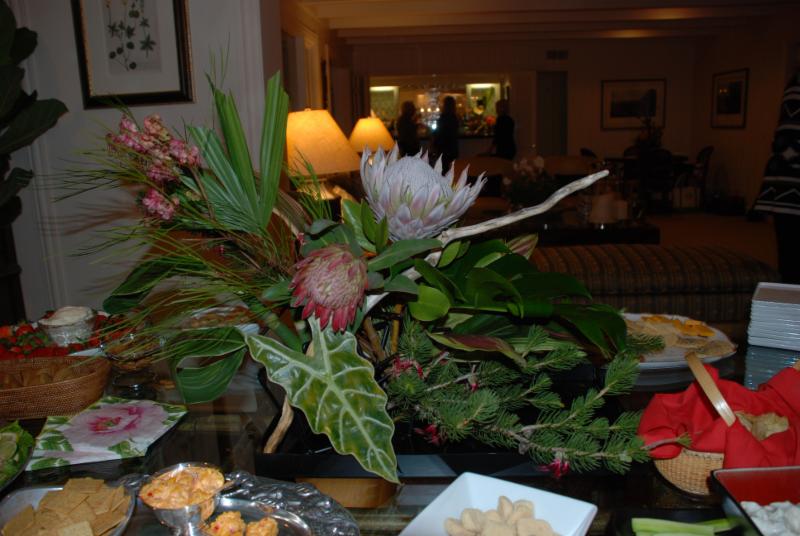
Thank you to Troy Baresel for his fascinating and informative presentation, to Beth Glass for inviting us into her home, to Shelley Galloway and Terri Lorenz for the stunning floral arrangements, and to the evening's hostesses: Sue Cozzens, Martha Spalding, Mary Glerum, Stephanie Keehn, Lenore Macdonald and Stacey De Luca.
|
|
KGC TIDBITS
A little of this, a pinch of that...
The deadline for ordering KGC's "Homegrown" cookbook is
April 5th.
Please call Stephanie Keehn at 847-977-9565 TODAY(!),
if you would like to place an order.
- - - - - - - - - - - - - - - - - - - - - - - - - - - - - - - - - - - - - - - - - - - - -
The sun never sets on the KGC Bylaws Committee and KGC Finance Committee.
They will be asking you to approve the following housekeeping language for the new Bylaws at the April Club Meeting:
G.
Fiscal Year: The Club shall adopt, except in circumstances where it would be unreasonable, the Garden Club of America's fiscal year.
If you have any questions, please contact Stephanie or Lenore. Thank you!
|
|
BEAUTIFICATION PLANT SALE
May 12 & 13, 2016
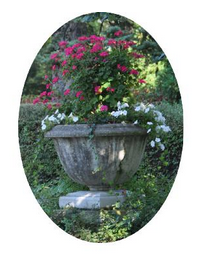
It's finally spring, so go ahead and be a little "impatien"! Place your orders
NOW for the "Kenilworth Blooms" Plant Sale, an annual Kenilworth Beautification project. Anton's Greenhouse in Evanston will be the supplier for the second year. All plants will be delivered directly to your house on Thursday, May 12th and Friday, May 13th.
Order deadline
- Sunday, May 1st
Good news: Available for the first time this year is a mold-resistant variety of impatien, called "Bounce." It is disease-resistant and does well in complete shade and up to just half a day in the sun, "bouncing back from wilting." It will continue to bloom until the first frost.
New offerings this year will also include
:
Coleus Red Head - beautiful color, grows in part-sun or part-shade
Hanging Baskets of Holy Moly - a yellow Million Bell with rose markings
Flats of: Dwarf Dahlias in a Figaro Mix
Click here for the
2016 Kenilworth Plant Sale Order Form. Mail order forms to: Patti Smietana, 336 Warwick Rd., Kenilworth 60043
And remember...your purchase of flowers during the annual plant sale helps support the maintenance and improvement of the public parklands of Kenilworth. In recent years, the efforts and funds of Kenilworth Beautification have helped fund the beautification of Water Tower Park, Townley field borders, and Centennial Park. This year, the focus is on the two highly visible parks located on the west side of Green Bay Road and Kenilworth Avenue. The small park on the northwest corner is named North Park and the larger park on the southwest corner is named Maggi Park.
***Each garden club will be asked to supply 5-6 volunteers to off-load the plants and arrange the orders on the morning of May 11th at the Village Yard and finally to deliver the plants to each house on May 12th and 13th.
|
|

UPCOMING KGC DATES
Mark the following dates on your calendar for these exciting upcoming
Kenilworth Garden Club events and activities!!
KGC April Meeting
With Guest Speaker Tish Robinson -- "The Wonders of France"
Wednesday, April 13; 9:30 am --
Home of Terri Lorenz,
2326
Iroquois, Wilmette
2016 KGC Spring Benefit
With Guest Speaker Frances Shultz, "The Bee Cottage Story"
Thursday, April 21; 10:30 am -- Skokie Country Club
KGC Annual Meeting & Luncheon
Wednesday, May 11; 10:30 am --
Skokie Country Club
Invitations will be mailed
(Please help us with our planning and RSVP for all KGC events. Thank you!)
 (COPY & PRINT THIS PAGE, SO YOU DON'T MISS A THING!)
|
|
2016 KGC FLORAL DESIGN WORKSHOPS
|
|
|
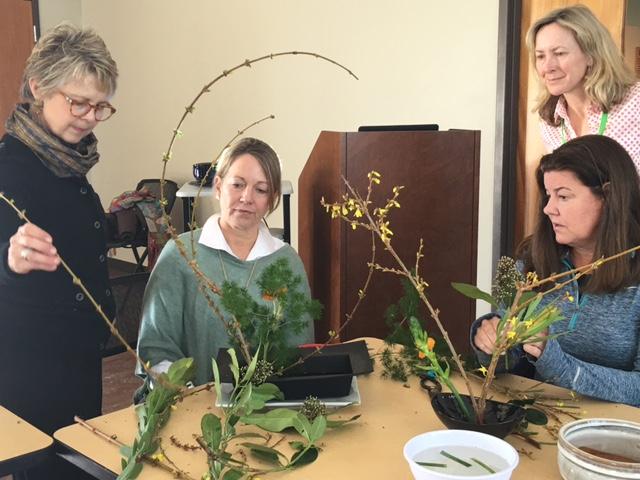
KGC members creating stunning floral arrangements at the Ikebana workshop.
|
SOS TUNE-UP LEAD BY GINNY NOYES -- Tuesday, MAY 3rd
KGC IN-HOUSE FLOWER SHOW -- Wednesday, JUNE 15th
Please watch your email for more details.
For questions or to sign up for any floral workshop, contact Shelley at:
|
|
FABULOUS FLORAL DESIGN
|
|
|
Thanks to Beth Glass for the photos.
|
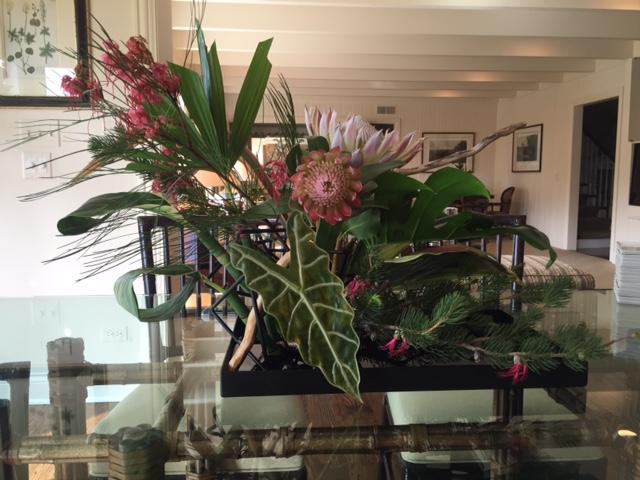
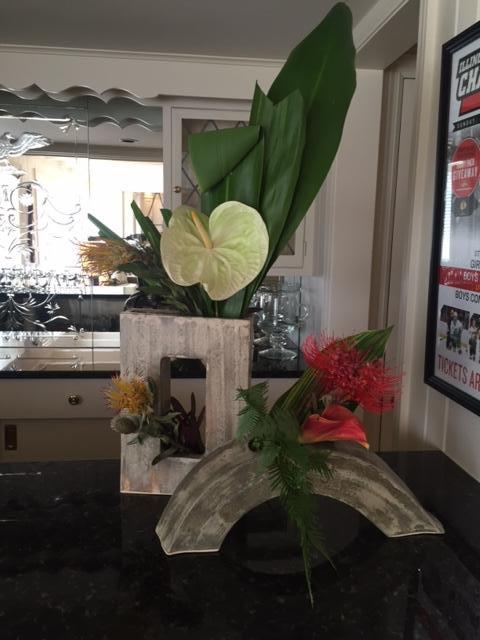
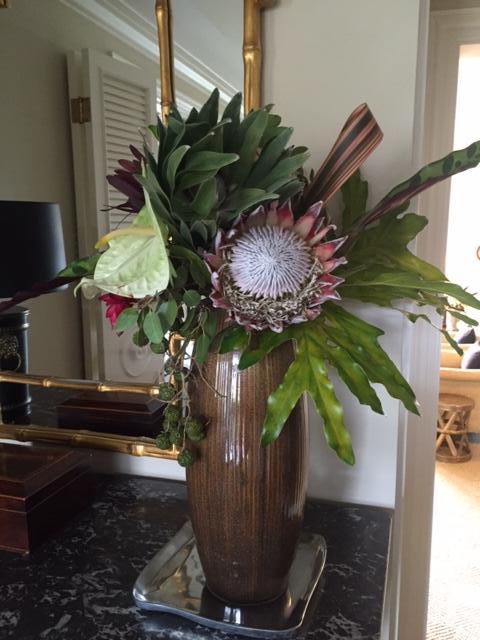
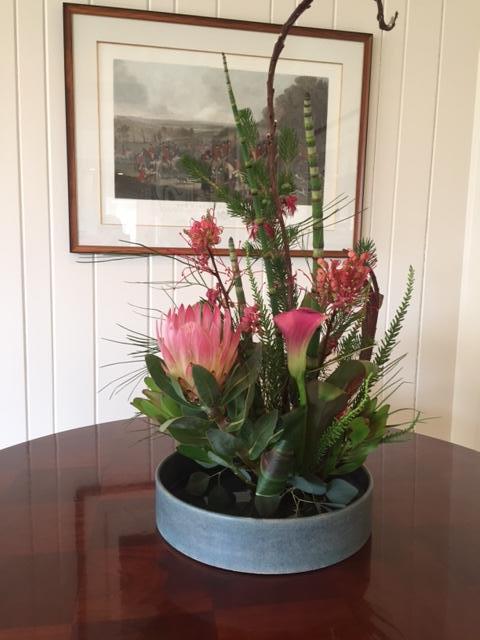
At our March meeting, we had a wonderful presentation on the horticultural wonders of the Lincoln Park Zoo. The Floral Design Committee attempted to interpret the zoo theme using tropical materials typical of some of the native habitats of the zoo residents. We also tried to include floral material with common names referring to animals. Our style of design was Asian/contemporary-inspired. We used kenzans to hold the flowers in one container and a metal structure to support the blooms in another one. An additional creative support was the use of horsetail as a water receptacle. The horsetail naturally sections off, and we filled a section with water before inserting a decorative leaf (TI-Leaves) which gave the leaf more height. We thought the subtle colors and varied textures fit in well with Beth Glass' beautifully-designed home.
Plant materials used:
Zantedeschia aethiopica, Calla lily, "Pig Lily", Origin: South Africa
Leucadenron sp., Conebush, South Africa
Salix sachalinensis 'sekka', Sekka dragon tail, fishtail willow, NE Asia
Grevillea spp., spider flower, Australia
Equisetum, horsetail, snakegrass - a "living fossil"
Alocasia, ape face, Asia and Australia
Anthurium adreadnum, flamingo flower, Hawaii
Protea nerifolia 'Pink Mink', protea, South Africa
Protea cynarodes, King protea, South Africa
Leucospermum, Pincushion protea, Zimbabwe
- Shelley Galloway, Floral Design Chair
|
|
A Garden History & Design "One Minute Report"
from the Archives of American Gardens (AAG)
What Time Is It?: The Beauty of Floral Clocks
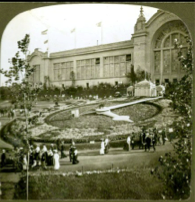
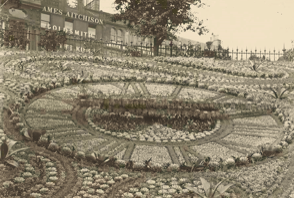
Floral clocks started appearing in outdoor public spaces at the turn of the twentieth century. Not to be confused with botanist Carl Linnaeus' flower clock - which laid out a variety of flowers in a clock-like design, which opened and closed accordance with the hour of the day - the floral clocks referred to here were large-scale timepieces placed among richly colored and contrasting carpet plants in elaborate patterns. Some worked like sundials, dependent on the sun to mark time, while others were fully functioning timepieces.
The design for one of the earliest floral clocks, at Edinburgh's Princes Street Gardens, is credited to Parks Superintendent John McHattie who arranged to have clock-makers Ritchie & Son install the necessary mechanical parts. When the clock began operating in 1903, it had only an hour hand; a minute hand was added the following year. The Princes Street Gardens' floral clock featured a twelve-foot dial and hands created from long, shallow troughs of sheet metal planted with flowers. It was not only a work of ingenuity for masterfully combining the technology of clock-making with the art of garden design, but also for the engineering
it took to install the clock on a forty degree incline
|
|
|
)
Floral clock in front of Agricultural Building at Louisiana Purchase Exposition, 1904.
|
|
|
|
|
Princes Street Gardens, Edinburgh, Scotland. c. 1910s
|
|
Floral clocks were regularly showcased at world's fairs and in public spaces ranging from parks to cemeteries. They were perfect for ornately planted Edwardian-era carpet beds that featured sometimes over-the-top figurative designs, such as historic scenes, lettering, or coats of arms. Don't forget that it's always a perfect time to document a garden for the Garden Club of America Collection at the Archives of American Gardens!
|
|
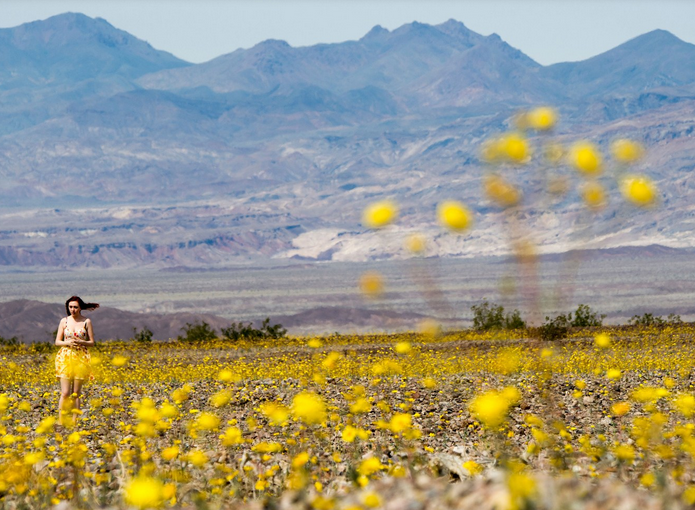
"Death Valley's Rare 'Super Bloom' Covers Desert with Beautiful Flowers"
At our April meeting, photographer Jim Rowan touched on the four American deserts, each with its own distinct ecosystem. As its name suggests, California's Death Valley National Park is the hottest and driest place in North America because of its lack of surface water and its low relief. Located on the northwest corner of the Mojave Desert, Death Valley contains a diverse desert environment of
salt-flats,
sand dunes,
badlands, valleys, canyons, and mountains. And it is home to many species of plants and animals that have adapted to this harsh
desert environment, including
creosote bush,
bighorn sheep,
coyote, and the
Death Valley pupfish, a survivor of much wetter times.
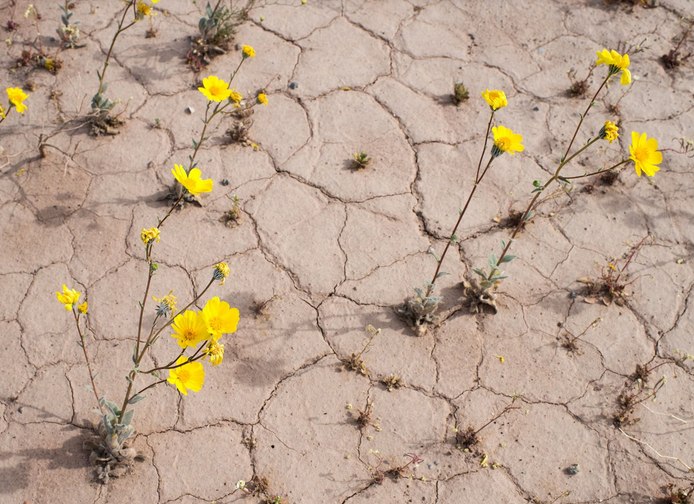
The uncharacteristic and unpredictable weather patterns brought on by El Niño have caused much speculation and concern among scientists, meteorologists and oceanographers. At the same time, some parts of the country are seeing benefits from El Niño's warmer weather and precipitation. The normally arid Death Valley site is suddenly awash in bright yellow, pink, and purple blooms thanks to El Niño, which brought unusually plentiful rains in the fall. The result is a once-in-a-blue-moon "super bloom" in the desert.
|
|
|
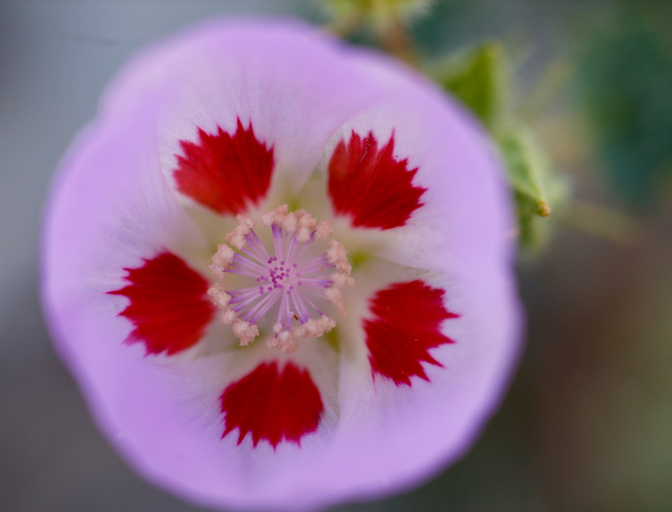
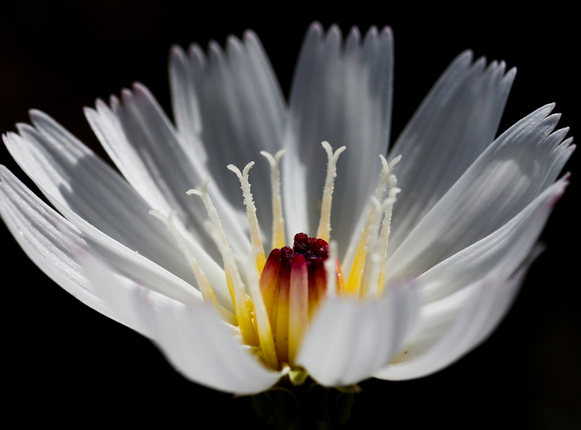
The Desert Five-Spot is native to the southwestern US.
|
|
|
|
|
The last "super bloom" occurred in 2005, also after a significant rainfall.
|
|
|
|
|
White Gravel Ghost, also know as a parachute plant for the way it appears to hover in the air.
|
|
*Information excerpted from Wikipedia and
Conde Nast Traveler.
|
|
KENILWORTH COMBINED COUNCIL
|
|
|
Photos by Cheryl Anderson
|
BEAUTIFICATION PLANT SALE - May 12 & 13, 2016
Anton's Greenhouse in Evanston will be the supplier for the second year. All plants will be delivered directly to your house on Thursday, May 12th and Friday, May 13th.
Order due date - Sunday, May 1st
VILLAGE JOINT COMMITTEE is gathering feedback from teachers, parents and community residents in regards to upcoming projects in Kenilworth. Sears School is looking at major construction in 2017, and VJC is attempting to make sure the school's needs dovetail with the community's needs, in particular the Village House.
PARK DISTRICT
It was great having John Kiwala, Director of Parks and Recreation, at the meeting. He told us that the Park District will be sending out a community survey compiled by a professional survey company. The survey will include questions asking if there is interest regarding "programs" and the resident's suggestions for events that could be held at the Kenilworth Assembly Hall. Already in the works is a Murder Mystery Theatre event on April 23rd, cooking classes presented by a Bar-B-Que chef and the possibility of a garden walk during the summer.
The Park District has a
new website:
kenilworthparkdistrict.org. Look for notices on the site for what's happening around the village.
THE VILLAGE INITIATIVE - KW2023 - addressing storm water management with the resurfacing of Cumberland, Melrose and Roslyn with porous asphalt will begin at the end of March or beginning of April; this new surface allows for better drainage. Later in the summer, West Kenilworth Avenue will undergo the same process.
MAGGI PARK
There were discussions about the two proposed curved limestone walls in Maggi that replicate those on the east side; they would visually fit well in connecting the East and West sides of Green Bay Road. It's a very expensive undertaking when using the best choice of product for the walls; firms are being contacted for bids. It may turn out to be a "long-term" project for Beautification. Suggested at the meeting was that it may be prudent to delay until 2017 for work to commence on Maggi due to the road resurfacing.
John Kiwala explained that 2-3 additional seasonal workers are needed to properly maintain Maggi Park, which is bigger than Centennial Park. At this time, there are only 2 workers, and maintaining Maggi with new plantings would stretch the current manpower.
Cheryl Anderson, Kenilworth Civic Co-Chair
|
|
CONSERVATION EDUCATION

Earth Day 2016
"Let every individual and institution now think and act as a responsible trustee of Earth, seeking choices in ecology, economics and ethics that will provide a sustainable future, eliminate pollution, poverty and violence, awaken the wonder of life and foster peaceful progress in the human adventure." - John McConnell, Founder of Earth Day
The History of Earth Day
Over 40 years ago, John McConnell envisioned having a day to celebrate the natural wonders of our planet. This idea was first suggested to a few members of the San Francisco Board of Supervisors and other community leaders, especially interested in caring for and improving our natural environment. From the beginning, the proposal called for observance of Earth Day on March 21, which is the Vernal Equinox. This is the moment when night and day are equal throughout the Earth - reminding us of Earth's beautiful systems of balance which humanity has partially upset and must restore. This is also the first day of spring in the northern hemisphere. The Board of Supervisors proceeded with approval and Mayor George Christopher issued a proclamation on March 21, 1970, which inaugurated the first Earth Day. A few other cities in Northern California did the same.
On March 20, 1975, President Gerald Ford signed a proclamation declaring Friday, March 21, 1975 as Earth Day. He called upon all concerned citizens and government officials to observe this day with appropriate ceremonies and activities. He asked that special attention be given to personal voluntary activities and educational efforts directed toward protecting and enhancing our life-giving environment. As stated in the Proclamation, the original Earth Day was to be observed on March 21, although most states celebrate it on April 22.
Over forty years later, Earth Day, which started off as a local annual event, is now observed globally. It is a significant day of the year, because people from all nations, backgrounds, races, colors, and religions celebrate their similarities -- living on Earth as neighbors.
What Can You Do?
In our own community, you can assist the students of Joseph Sears School with the spring cleanup in the outdoor classroom on April 7 at 1:00 pm. Or go to
www.swancc.org/education/ for a list of activities and ideas that help our earth every day.
On a national level, you can go to
http://www.earthday.org/ to pledge your support of the
Paris Accord (this landmark agreement will be signed at the United Nations in New York on Earth Day - April 22, 2016!) and to register for the
Millions of Climate Voters Campaign which is committed to registering one million climate voters for the 2016 election. Not only will this facilitate participation in our democratic system, it will encourage voters to think about climate change when they cast their ballot. "We must develop climate voters in order to build the requisite national political support for climate policy that produces real change in this country."
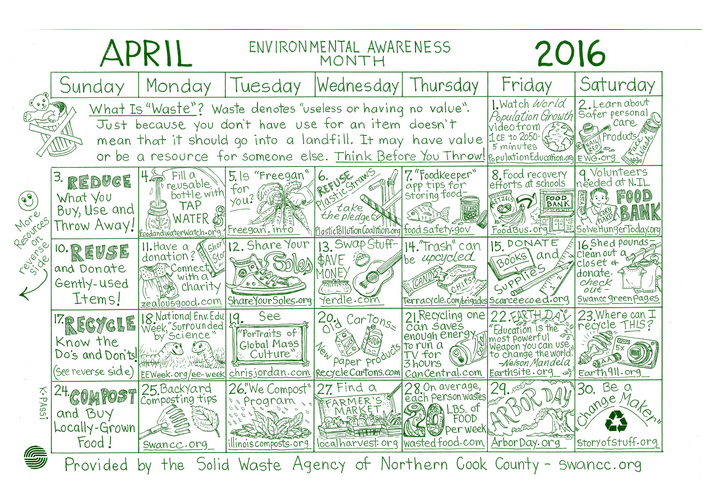
Or make your own lasting mark by volunteering in your neighborhood park or organizing a clean-up or recycling event of your own. It's not too late to start! Following is a list of items you can do every day in the month of April:
|
|
GCA NEWS
The Garden Club of America "Plant of the Year" has been awarded!
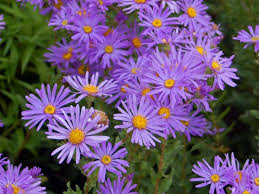
Symphyotrichum oblongiflolium var. angustatus 'Raydon's Favorite'
has been named the 2016 Freeman Medal winner.
Aster 'Raydon's Favorite' is a cultivar named in the 1980s and recognized for its marked improvement over most better-known asters by presenting a more compact form, fragrance and a dazzling bright blue-purple flower with a yellow center in the fall. Ranging from zones 3 to 9, this cultivar can be grown in almost any sunny or partial shady location as it is tolerant of wind, heat, pollution, and soil compaction, and resistant to diseases, including powdery mildew, deer, rabbits, rodents and insects. While the aromatic compounds of this aster may make it resistant to wildlife, it is a pollinator plant attracting hummingbirds, bees, butterflies and other beneficial insects. Commonly referred to as the aromatic aster, 'Raydon's Favorite' lives up to its name as when brushed against, the plant releases a nice hint of mint. Named by Allen Bush after plantsman Raydon Alexander of San Antonio, Texas, this cultivar is believed to be originally from Lookout Mountain, Tennessee.
|
|
|
|
RECIPES OF THE MONTH
Since KGC's beloved cookbook, "Homegrown," is in its second printing and again available for purchase, it's only fitting to highlight a couple of the wonderful recipes featured within.
The following recipes for grilled lamb and roasted potatoes are perfect for spring entertaining!
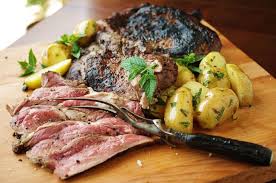
Anne Brown's California-Style Leg of Lamb
My dearest friend, Polly, gave me this recipe. Absolutely the best grilled lamb ever! - Anne
1 7-lb leg of lamb, butterflied
1/4 cup soy sauce
1/2 cup brandy
Juices of 1 orange and 1 lemon
2 tablespoons honey
1 teaspoon dry mustard
1 large tomato, coarsely chopped
3 medium garlic cloves, minced
1/4 teaspoon finely ground pepper
2 cups veal or chicken stock
Remove excess fat from lamb. Combine all ingredients, except lamb and stock, in a blender or food processor until smooth. Marinate lamb in blended mixture for 12-24 hours, refrigerated, turning occasionally.
Prepare grill for high-heat grilling. Fire should be very hot. Remove lamb from marinade, reserving 1/2 cup. Place lamb 3 inches from flame. Grill each side about 20 minutes for medium rare (25-30 minutes for medium-well). Meat should be pink on the inside for best flavor and texture. Let meat rest for 5-10 minutes, then cut against the grain in diagonal slices. Combine reserved marinade with stock in saucepan and boil until reduced to 3/4 cup. Serve with the lamb. Serves 6-8.
Joan Dodson's Wine-Roasted Fingerling Potatoes with Onions and Olives
I have also used small, halved white and/or red potatoes. Fresh snipped herbs on top are nice. Good with grilled meats. - Joan
4 lbs. medium fingerling potatoes (I don't peel)
1 red onion, thinly sliced
1 cup nicoise olives or other good quality olives
1/2 cup extra virgin olive oil
1/4 cup dry white wine
4 bay leaves
2 large garlic cloves, thinly sliced
Kosher or sea salt
Preheat the oven to 375 degrees. In a roasting pan, toss all of the above ingredients and season with the salt. Cover with foil and bake for 1 hour or until just tender. Uncover, stir well and bake for 30 minutes longer, or until potatoes are tender and lightly glazed. Season with salt and fresh ground pepper to taste. Serves 8.
|
|
|
|
|
|
|
|
FOCUS ON PHOTOGRAPHY
The Akron Garden Club Presents
AMAZING PLACES!
A Juried Exhibit of 20 Photographs from Units of the National Park Service
Conservancy
September 16 to November 18, 2016
Goal:
* To support the GCA celebration of the centennial of the U.S. National Park Service
* To include as many GCA photographers as possible from Zones X and XI
* To include as many NPS sites and parks as possible
Important dates:
* Registration:
March 30 - April 30
. Each participant may register up to 3 images
* Submission of JPEG images for jurying:
June 1 - July 13
* Notification of 20 accepted JPEG images:
July 22
* Submission of the 20 final prints:
July 26 - Aug 26
Registration:
* Open to any member from a Zone X or Zone XI GCA club
* Send registration form to: Elise Bennett
ekhbennett@gmail.com
. (form in schedule below)
Note: Registration date is separate from submission date of JPEGS.
Subject matter:
* Units of the U.S. National Parker Service include a "National Park", "National Preserve", "National Seashore", etc. (refer to list below)
* Focus on land forms, landscapes and nature.
* Image should exemplify what makes this park special or unique.
For a complete list of National Parks by state, click
here.
To view the
Amazing Places! Photography Schedule in its entirety, click here.
§ § § § § § § § § § §
Snapshots of Chicago
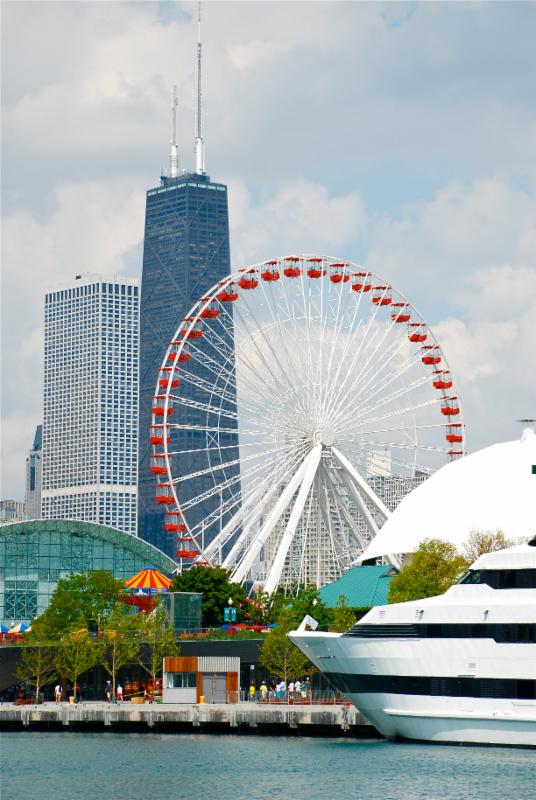
This spring, according to Lincoln Park Zoo's Troy Baresel, a Columbia University professor/art curator will be conducting a photography exhibition highlighting Chicago public spaces. Keep your eye on the Lincoln Park Zoo website, www.lpzoo.org, for more details. Submissions are expected to be accepted in May. I will keep you posted.
-- Stacey De Luca, Photography Chair
|
|
|
Spring is a great time to explore new facets of photography. Check out these classes offered by Jack Carlson at Chicago Botanic Garden. All classes are certain to fill up in no time -- especially the new ones -- so don't wait! I would consider joining a class with you. If interested, contact me at sdeluca13@yahoo.com.
April
Beginning Digital Photography (4 Sat. No 16) April 2-30 9-12 9
NEW! Photographing in Natural Light (4 Thursdays) April 21-May 12 9-12 p
Intermediate Digital Photography (4 Wed) April 27-May 18 9-12 p
May
NEW! Urban Photography (4 Tues) May 3-24 10 -1 p
Intermediate Digital Photography (4 Sat No May 29) May 7-June 4 9-12 p
NEW! Composition in Landscape Photography (5 Wed) May 25-June 22 9-12 p
June
NEW! Mettawa Manor Photo Workshop (1 Thursday) June 9 10-3 p
Photographing Butterflies & Blooms (1 Thursday) June 23 7-10 a
Photographing Butterflies & Blooms (1 Saturday) June 25 7-10 a
|
|
In this column, we will share pertinent information about the Village of Kenilworth for residents who may have missed it or for non-residents who may just be interested.
Village Water Contract
At the February Kenilworth Village Board Meeting, the Trustees authorized the execution of a contract with the Village of Wilmette for the purchase of potable water. In order to begin receiving water from Wilmette, construction of a booster pump station will occur in the area between Kenilworth Avenue and Glendenning. The Village has selected a contractor and work is expected to begin in April.
As part of a separate project, the Village will also be making improvements to our water distribution system by connecting the main near Melrose and Green Bay to the main on Kenilworth Avenue. The Village was able to save on project cost by performing both projects at the same time.
|
|
|
|
Happenings Around Town
|

Sunday, April 10, 2:00-3:30 pm
Lecture: Jens Jensen, Visionary
Historian and author Julia S. Bachrach will illuminate Jens Jensen's belief that all human beings need to commune with nature, and will highlight many of his most significant Prairie-style landscapes in Chicago and on the North Shore.
Free for museum members, $5 for non-members.
For more information, visit www.wilmettehistory.org, or call 847-853-7666.
Wilmette Historical Museum, 609 Ridge Road, Wilmette
April 15-17, 10:00 am-5:00 pm daily
Antique, Garden & Design Show
Insiders know that spring is officially here when the Antiques, Garden & Design Show opens at the Chicago Botanic Garden. The Show promises to inspire stylish living, while offering beautiful gardens and objects in a way that transcends the ordinary. Multiple indoor gardens designed by Craig Bergmann Landscape Design will accentuate the Show this year.
Tickets can be purchased at the door or by clicking here.
Chicago Botanic Garden, 1000 Lake Cook Rd., Glencoe
Saturday, April 16, 8:30 am-Noon
Earth Day & Arbor Day at Northbrook Village Green
Red's Garden Center will again join the festivities at this year's Earth Day celebration at Village Green.
Their garden experts will be available to answer your gardening questions, as well as provide helpful tips and flower suggestions. A variety of vendors will feature earth-friendly ideas and concepts for your home or business. The event takes place rain or shine.
Fee: Free
Northbrook Village Green, corner of Shermer and Meadow Roads in Downtown Northbrook
Saturday, April 23, 1:00 pm
Earth Day Walk
Take a special guided walk through McDonald Woods to celebrate Earth Day. Learn about a variety of spring wildflowers and the restoration work underway. The walk is free and lasts from 45 minutes to an hour.
Fee: Free*
Chicago Botanic Garden, 1000 Lake Cook Rd., Glencoe
Saturday, April 30, 10:30 am
Gardening Up! Rooftop, Container and Small Space Gardens
Join GoGreenWilmette for a free lecture by author and rooftop farmer Annie Novak. Gardeners will find plenty of inspiration and tips, along with cameos of rooftop gardens far and near. Annie Novak is the head farmer and cofounder of the nation's first commercial green roof vegetable farm, the Eagle Street Rooftop Farm atop Broadway Stages in Brooklyn, as well as manager of the Edible Academy at the New York Botanical Garden. She is also founder and director of Growing Chefs, a field-to-fork food education program.
Fee: Free*
Registration Required at http://www.chicagobotanic.org/calendar/event/gardening_up
Alsdorf Auditorium, Chicago Botanic Garden, 1000 Lake Cook Rd., Glencoe
Saturday and Sunday, May 7 & 8, 10:00 a.m. - 4:30 p.m.
The Central States Dahlia Society Sale
The Central States Dahlia Society presents its annual plant and root sale. The sale features dahlias in an array of sizes, shapes, and colors. This is a great opportunity to purchase dahlias seen on display at the society's annual show in September. Society members will be available to answer questions and provide written information about dahlia planting and care.
Fee: Free*
Chicago Botanic Garden, 1000 Lake Cook Road, Glencoe
May 7- October 30, 10:00 am-5:00 pm daily
Model Railway Garden - Landmarks of America
The 7,500-square-foot Model Railroad Garden features trains running on 1,600 feet of track. The garden-scale trains are 1/29th the size of life-size trains, traversing high and low through tunnels, across bridges, and around buildings. All are intricately handcrafted with natural materials, including twigs, bark, leaves, acorns, and pebbles. More than 5,000 tiny trees, shrubs, groundcovers, and flowering plants of close to 300 varieties re-create the topographical landscape of America.
Tickets are required and can be purchased at the Railway Garden gate.
Chicago Botanic Garden, 1000 Lake Cook Rd., Glencoe
Saturday, May 14, 11 a.m. - 3 p.m.
World Bonsai Day
World Bonsai Day was created in 2010 to promote bonsai and friendship throughout the world. Bonsai curator Chris Baker demonstrates bonsai tree styling and bonsai landscape (slab) planting. Demonstrations take place in the Runnells Courtyard. At 1 p.m., Chris Baker leads a Spring Garden Walk featuring "Bonsai Collection Highlights." Spring blooming highlights in the Bonsai Collection could include wisteria, crabapple, and azalea.
Fee: Free*
Chicago Botanic Garden, 1000 Lake Cook Rd., Glencoe
Sunday, May 15, 1:00-5:00 pm
29th Annual Housewalk: "Exploring Indian Hill"
This year's housewalk, sponsored by the Wilmette Historical Society, explores the curving streets of Wilmette's Indian Hill Estates, a park-like residential neighborhood laid out 90 years ago by architect Philip Maher. The tour highlights five early homes designed by five different architects. Their close proximity to one other will allow participants to enjoy an afternoon stroll as they visit five beautiful houses in this distinctive Wilmette neighborhood.
Tickets purchased in advance are $40 for Wilmette Historical Museum members; $50 for non-members; and $25 for high school or college students. Advance tickets may be purchased by Saturday, May 14th at 5:00 p.m. by visiting the Museum's website at www.wilmettehistory.org or calling the Museum at (847 853-7666.
Sunday, May 22, 9:30 am-3:00 pm
97th Annual Kenilworth Memorial Day Celebration
Everyone is invited to the 10 am run, the 2 pm parade, followed by the Memorial Ceremony and community picnic sponsored by The Kenilworth Club and Kenilworth Scouts.
* Chicago Botanic Garden charges a $20 parking fee for non-members
|
|
|
Beyond The Garden Gate
GCI Gardening Studies School
Do you want to become a better gardener? Do you want to know more about plant materials and how they grow? Then, Gardening Studies courses are for you.
The GCI Gardening Studies courses are designed for members and other interested persons to become accomplished horticulturists. These courses are especially valuable for anyone who wants to improve their gardening skills and learn the "nuts and bolts" of home gardening success. Instructors are accredited and academically associated with a horticulture, botany, biology or comparable department of a college or university, a County Agriculture Agent, and/or be a horticulture professional who is a specialist in their field.
April 20 - 21
Course I, Series 23
College of DuPage
Glen Ellyn, IL
For more information, click here.
|
|
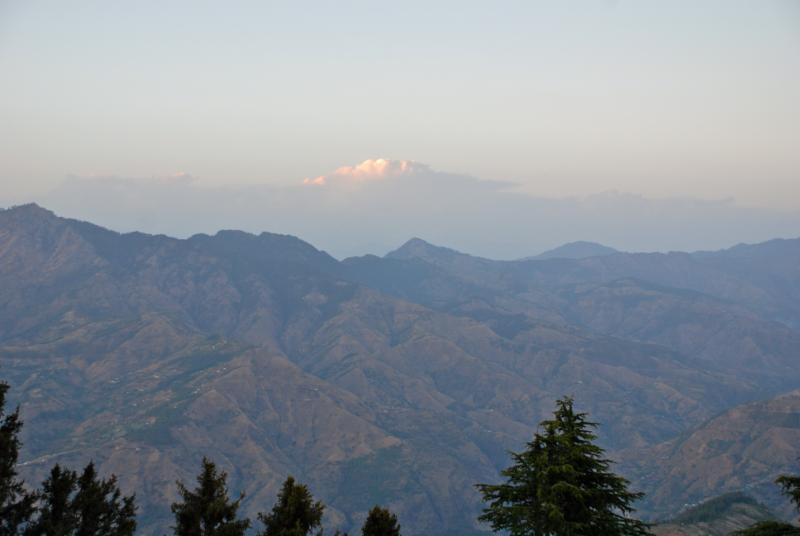
JAPANESE GARDENS
By Cheryl Anderson
|
|
|
All photos by Shelley Galloway
|
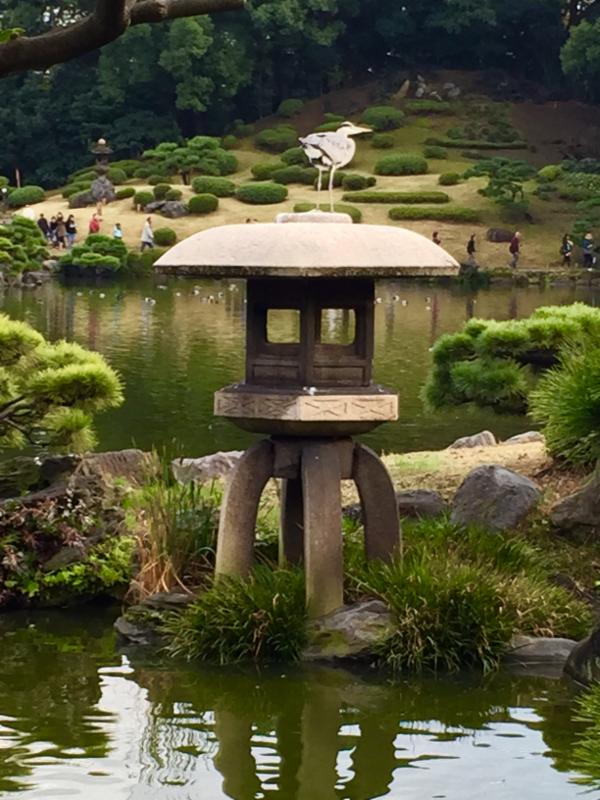
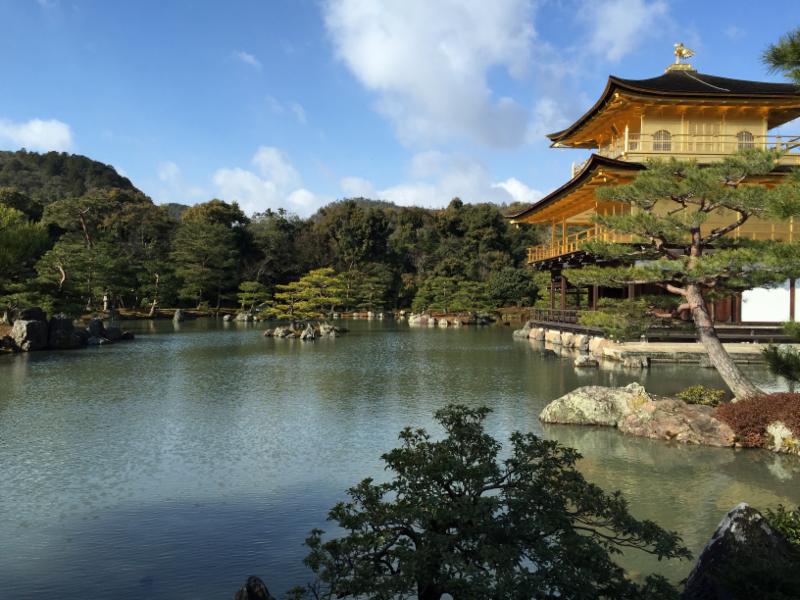
Disparate elements come together to make a Japanese garden; each element having its own purpose and meaning, making the whole speak to our inner-most senses. Serenity often envelopes us as we slowly walk along a path or cross a bridge leading to a small island planted with trees and flowers and shrubs. With purpose and intention, the island has been thoughtfully planted with flora that will change with the seasons.
A Japanese garden does not require that all of the ten or so elements specific to this style of garden be incorporated in a single garden; sometimes though, there are more of these elements present than you first realize. Best to go slowly and enjoy the discovery of landscapes that were carefully "composed". They are "traditional gardens that create miniature idealized landscapes."
During the Asuka period (538-710), Japanese merchants observed gardens in China and brought those ideas back to Japan. The first Japanese gardens were on the island of Honchu, a landscape which greatly influenced the future of what we today know as the Japanese garden. The influencing elements found on the island are: volcanic peaks, four distinct seasons, narrow valleys, a variety of flowers, lakes, small stones, mountain streams, waterfalls and a variety of trees (especially the evergreen). Emperors and nobles were the first to have these "pleasure gardens"; the style was mentioned in the first chronicle of Japanese history in 720 AD.
Over time, Japanese garden designers incorporated their own aesthetics, keeping in mind Japanese culture, the garden's use and the materials available. By the Edo period (1603-1868), a distinct Japanese appearance was present, using borrowed landscapes in the distance or replicating famous views similar to a postcard. These gardens were mostly promenade or dry-rock zen gardens; the prototype being the garden of Katsura Imperial Villa, Kyoto (1641-1662).
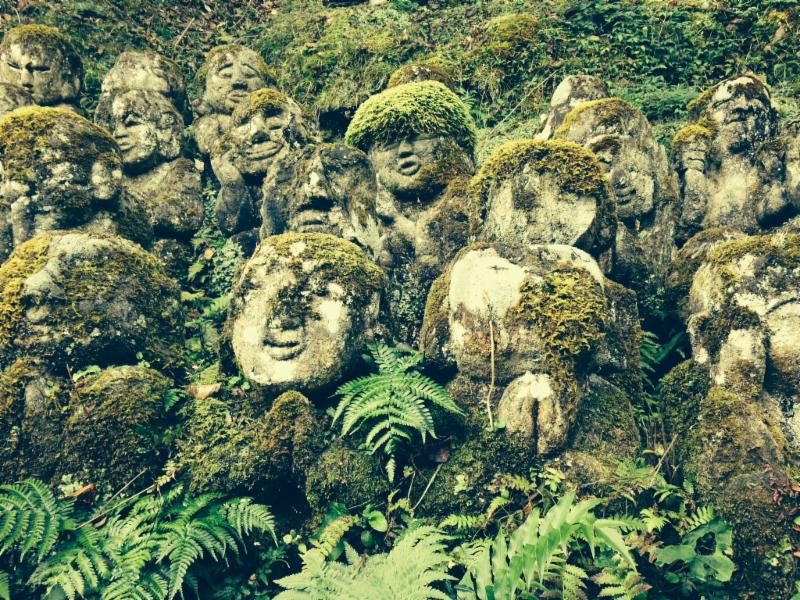
Japanese gardens seem well-suited to contemplation and meditation, as they have their roots in the Japanese religion of Shinto. Other influences are "(from) the Chinese philosophy of Daoism and Amida Buddhism, imported from China in or around 552 AD." It's from Chinese legends that elements such as rocks placed to represent turtles and cranes are commonly found in the Japanese garden.
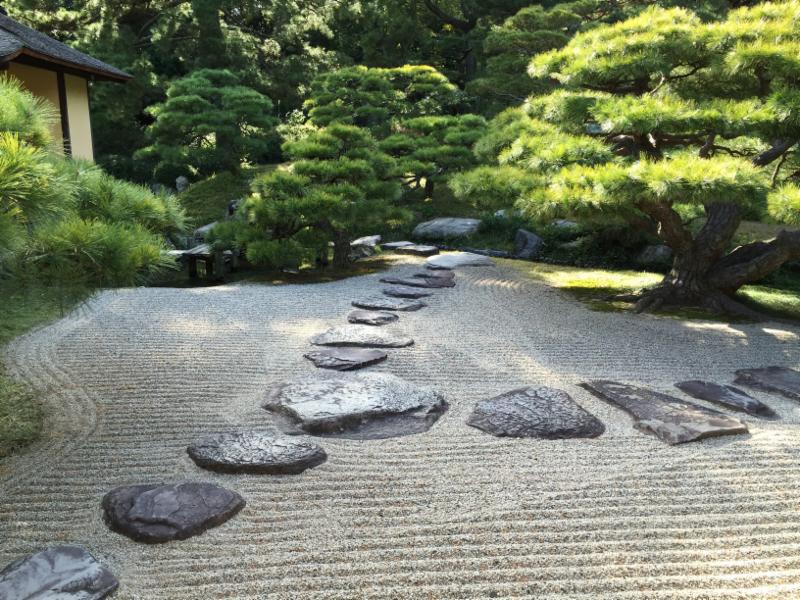
Everything has its purpose in a Japanese garden -- the flora, the buildings, designs carefully raked into sand, spaces filled with small stones (sometimes all white), a bridge to a small island, the sound of water falling or merely still in a pond. Hundreds of years of the country's culture come into view as you stroll through. Maybe you wonder, what is the story behind each element you see?
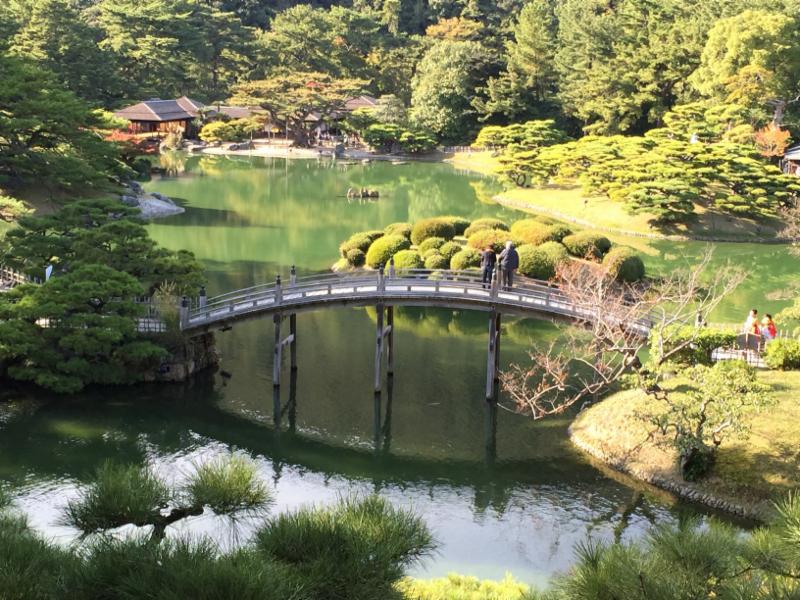
A traditional Japanese garden,"an imitation landscape", appearing to be so strictly planned, to me is neither harsh nor rigid in the atmosphere it creates, but rather a peaceful one. If for no other reason, one has to walk carefully along narrow pathways in the garden, slowing down our pace of movement and in turn perhaps slowing down our racing minds.
|
|
GCA 2016 Annual Meeting - Minneapolis, MN
May 19-23
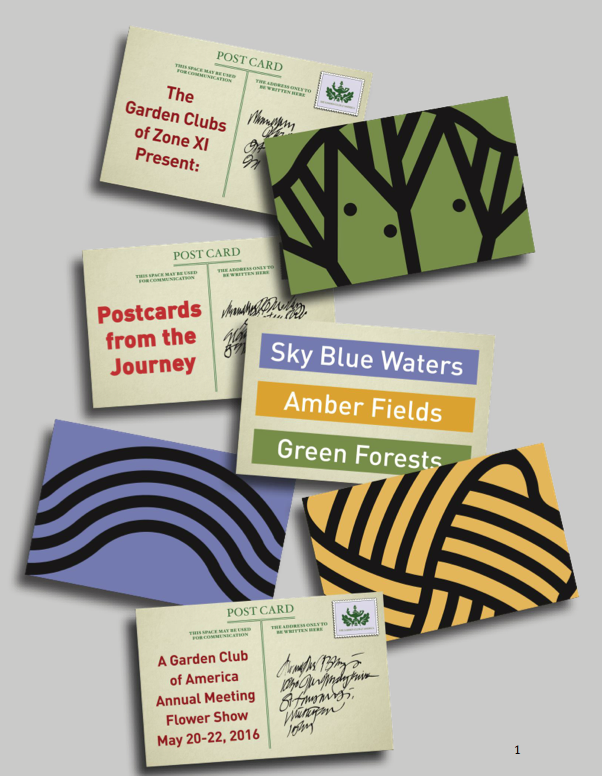
The 2016 Annual Meeting, to be held in Minneapolis, MN, will feature a full Flower Show entitled
"Postcards from the Journey -- Sky Blue Waters - Amber Waves - Green Forests". Since the meeting will be held in a Zone XI locale, they have created three classes exclusively for members of Zone XI clubs to showcase their talents in Floral Design, Horticulture and Photography. While the schedule is still being finalized, you can get a sneak peak by clicking on the link below.
|
|
|
Good News Travels Fast...

CONGRATULATIONS to Shelley Galloway!
Her photo submission (above) for the 2016 Boston Flower Show won her a First Place recognition in her class, as well as the competition's Best in Show award!! Well done, Shelley. Thanks for representing KGC so beautifully!
∞ ∞ ∞ ∞ ∞ ∞ ∞ ∞ ∞ ∞ ∞ ∞
WELCOME NEW MEMBERS!!
We have an outstanding new class of KGC members!
Helen Balch
Kelly Chestnut
Kendra Cunningham-Kasper
Carla Stephens
Charlotte Walsh
Please look for these lovely ladies at our upcoming meetings and events, and welcome them to KGC!
|
|
|
AND SPECIAL THANKS TO...
Beth Glass for defying injury and hosting the March meeting in her lovely home;
Sue Cozzens, Martha Spalding, Mary Glerum, Stephanie Keehn, Lenore Macdonald and Stacey De Luca for serving as hostesses for the March meeting;
Mary Gordon for all of her hard work on membership -- she's been so patient and conscientious;
Marty Shaw for all of her extra work on Programs and the logistics for our meetings. And
Lenore Macdonald for stepping up to help coordinate the hostesses for the last couple of meetings;
Kathy Elmer and the Finance Committee (Lenore Macdonald, Diane Phillips, Katherine Buehler) for their work on the new budget;
The Ware Team for evaluating the proposals and choosing the best plan for improving the hardscape around the fountain;
Mary Lois Hakewill for donating her time to creating the KGC needlepoint canvases;
And
Anne Brown and Sue Cozzens for all their work as Co-Chairs of the Benefit.
|
|
|
To submit material for inclusion in the Kenilworth Garden Club newsletter, please contact:
sdeluca13@yahoo.com
|
|
|
|