What You'll Find in this Newsletter | |
Advocacy: Attend the Kansas Department of Wildlife and Parks Commission Meetings
Conservation: Prescribed Burns Support Healthy Kansas Landscapes
Education: What good is a birder? | Introducing the Kansas Conservation Club
Upcoming Events: Special Keynote Event with Kenn Kaufman (April 11)
Philanthropy Corner: Celebrating Earth Month
Chapter Spotlight: Smoky Hills Audubon
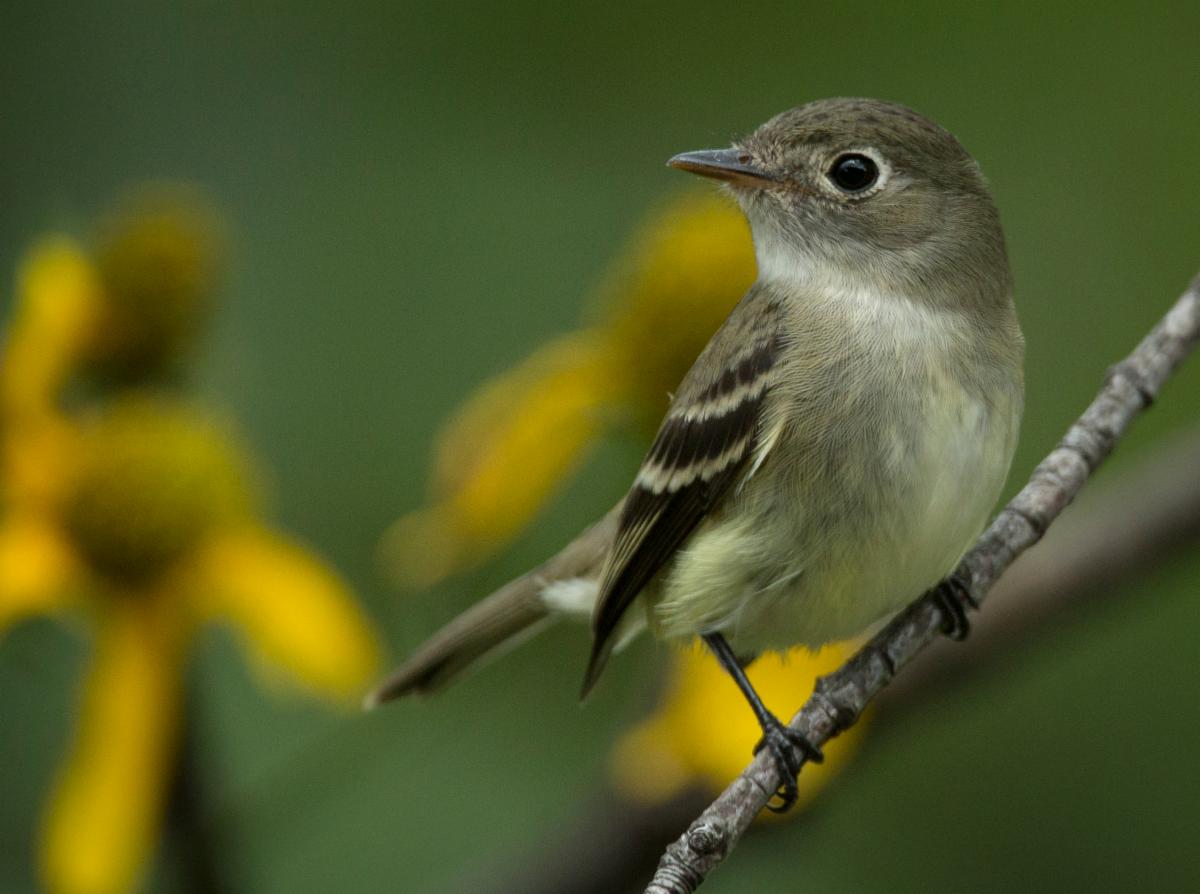
| | Least Flycatcher by Karole Erikson | |
Attend the Kansas Department of Wildlife and Parks Commission Meetings
With the legislative session drawing to a close, many may be wondering, “What now?” Another valuable opportunity to contribute to conservation in Kansas is to attend the Kansas Department of Wildlife and Parks Commission meetings, which are held quarterly throughout the state. For those unable to attend in person, a virtual option is available. The next meeting is scheduled for April 9 at 12:00 PM in Topeka. Meetings typically last 2–3 hours, though attendees are not required to stay for the entire time.
Why attend? These meetings are well-attended by hunters and outfitters. Increased participation from those interested in recreation and nature appreciation would help ensure a broader range of voices and perspectives are heard. Many attendees come simply to listen, but discussions often prompt questions or opportunities to provide feedback. Designated public comment periods also offer a chance to share concerns about wildlife or recreational opportunities across the state.
| | Prescribed Burns Support Healthy Kansas Landscapes | | |
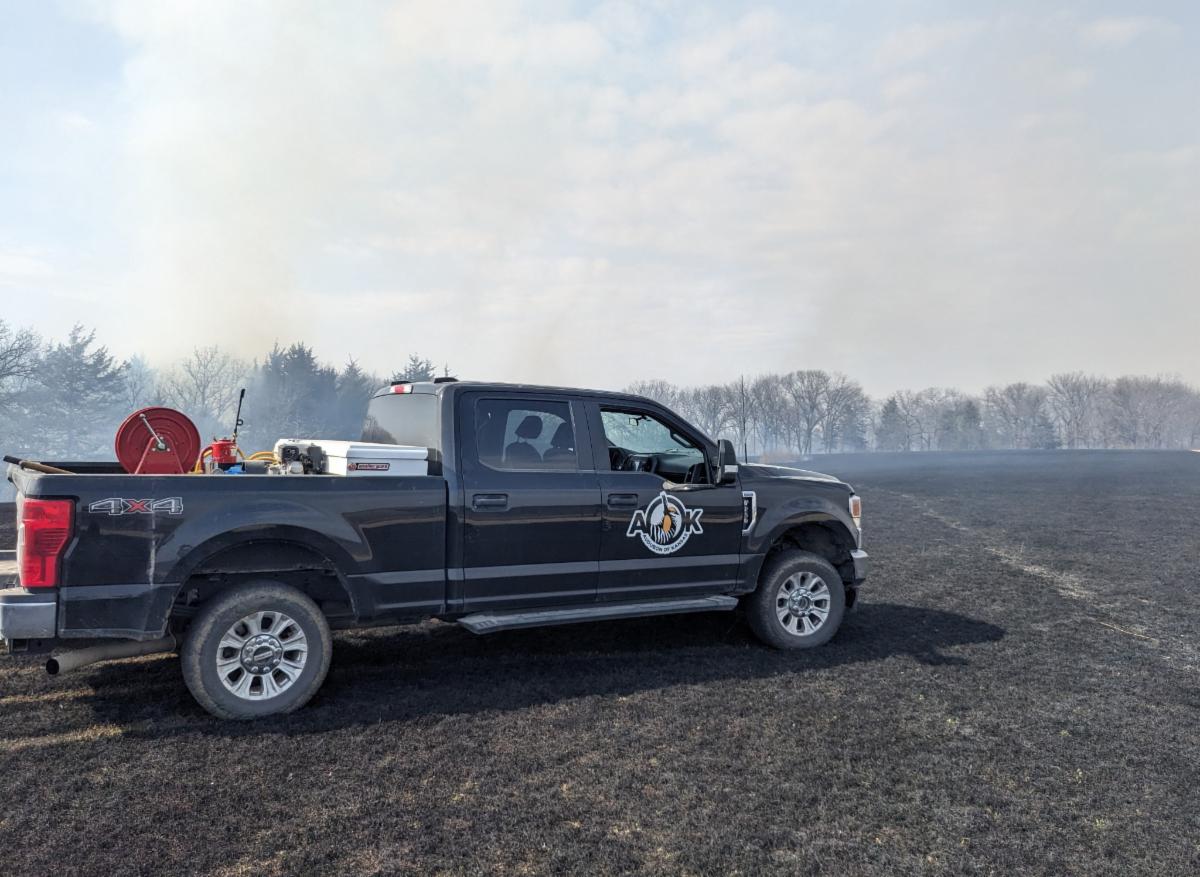
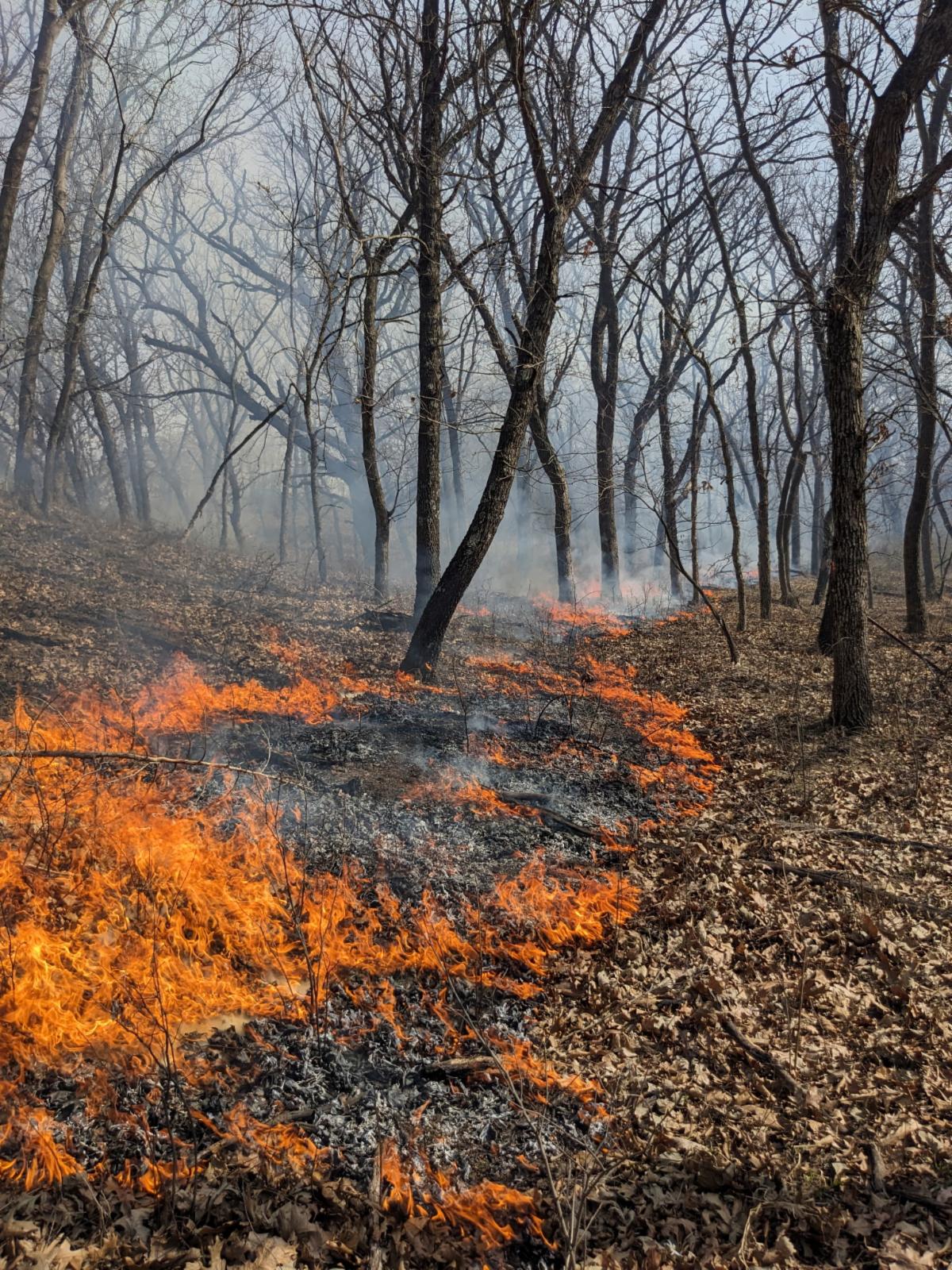
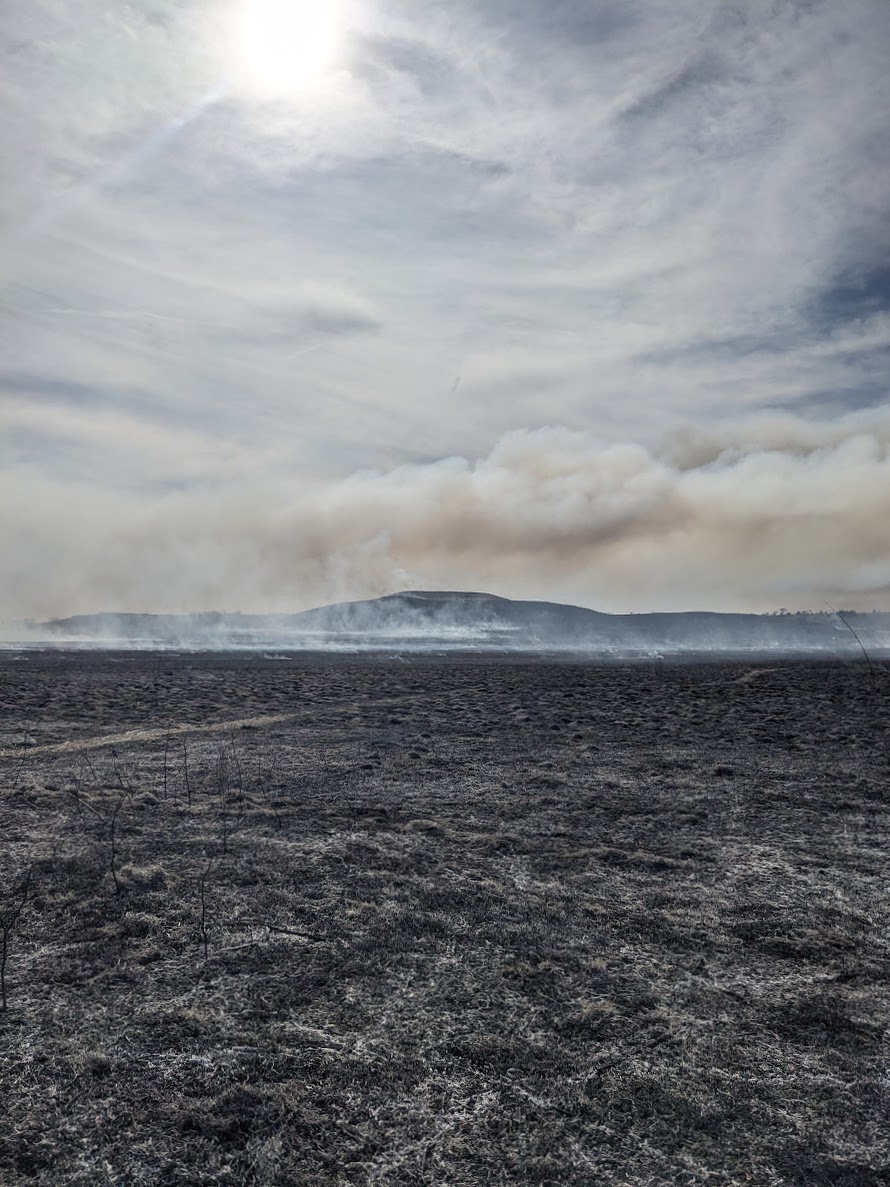
AOK, alongside dedicated volunteers, recently assisted the Mount Mitchell Prairie Guards to conduct a prescribed burn at Mount Mitchell Prairie Heritage Park (Wamego, KS).
Fire is a vital natural disturbance in prairie ecosystems, releasing nutrients locked in decaying plant matter, suppressing woody and invasive species, and creating conditions that support diverse native plants and wildlife. While commonly used by ranchers to improve forage quality for livestock, prescribed fire also plays a critical role in sustaining healthy habitat across Kansas.
Additional burns were carried out at the Johnson Wildlife Preserve (Auburn, KS)—to become an AOK Protected Area—where fire is used as part of ongoing prairie and rangeland management alongside cattle grazing. Surrounding woodlands were also treated, where fire helps clear the forest floor and promote the regeneration of desirable species, from spring ephemerals to oak trees.
Prescribed fire proves to be a powerful and effective tool in the responsible management of our state's landscape. Understanding the benefits, and working together to implement it, creates a more beautiful state which benefits wildlife and industry alike. Additional burns are planned at both Far West Wildlife-Friendly Farm (Herington, KS) and Achterberg Wildlife-Friendly Demonstration Farm (Lincoln, KS) this spring, and later this year.
| | Photos: (above) AOK vehicle equipped with tools to support prescribed burning; (left) section of woodlands at the Johnson Wildlife Preserve during recent burn; (right) aftermath of recent burn at Mount Mitchell Heritage Prairie Park | |
What good is a birder?
Celebrating the life of Tom Ewert
| | |
Birders are a curious bunch. They can be found outside any time of year and practically anywhere. Bird counts in December and January? Yes! Out before dawn in spring to watch prairie-chickens? Yes! Up late to watch woodcock in March? Yes! Farmers’ fields and water treatment plants for rare birds? Yes! In your local park to look for warblers in May? Yes! Watching duck and crane migration in fall? Yes!
Why? Some birders are listers, trying to see 100 species in every county, or adding to their ‘life list’ or ‘big year list’ to see how many species they can see in their lifetime, or in a given year. Some just enjoy birds in their backyard and rarely travel to see them. Some birders use birding as an excuse to get out in nature with friends. Some birders relish the moment a bird comes close to them or they get to see tender moment like parents feeding young. Some birders are focused on one species, like finding as many eagles as they can. However you bird, spending time in nature improves your mental and physical health.
Some birders don’t stop at looking at birds but take the difficult next step to become an advocate for their conservation. They contribute all their time, talent, and treasure to protecting the birds they love so much.
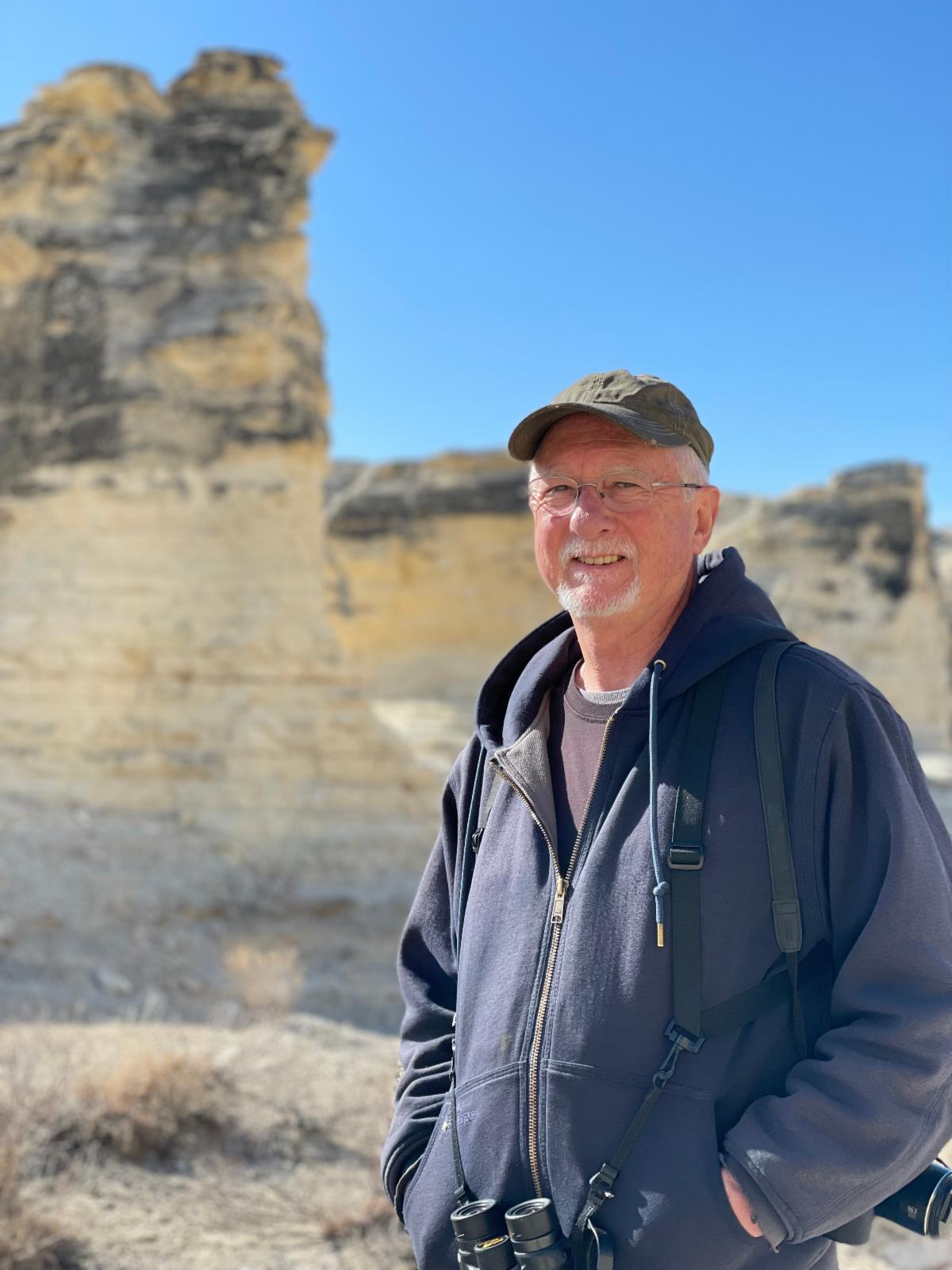
In February, we lost one of the biggest advocates for birds in Kansas: Tom Ewert. Fittingly, he was on a birding trip in Ecuador, passing away after seeing his 600th species in the country. Tom was first and foremost known as a birder. He kept many lists – county lists, life lists, country lists. His eBird profile says that he saw over 3,000 species in almost 4 dozen countries. If a rare bird was reported in Kansas, Tom would be there. Tom not only poured himself into birdwatching, he was just as passionate about bird conservation. Tom joined the Board of Trustees for AOK in 2014, and served as Treasurer for the last seven years, helping to expand AOK’s endowments. He was the first to volunteer for work days and events, and often recruited other volunteers to assist. He spent a large portion of his life providing humanitarian assistance throughout the world. He was a Master Gardener for Sedgwick County, a board member for Wichita Audubon Society and Wichita Parks Commission, and an election volunteer. Tom was also a great friend with a wry humor, mentoring many people about birds and gardening. He will be greatly missed. We invite you to go birding and enjoy a cold beer afterward, Tom's favorite post-birding activity, in his honor.
| | Photo of Tom Ewert at Castle Rock Badlands (Quinter, Kansas) | | Introducing the Kansas Conservation Club | | |
Do you know someone 18-25 years old interested in nature? The Kansas Conservation Club is a group led by young adults for young adults (18-25 years old).
Mission:
Building a community of young adults to preserve and connect with Kansas’ natural world through political advocacy, scientific collaboration, partnerships, outdoor experiences, and public education.
The club is hosting it's first event in conjunction with the Kansas Lek Treks Prairie-Chicken Festival in April.
| | |
4/6-4/8: Pre-Festival: Sharp-tailed Grouse Tour
4/13-4/15: Post-Festival: Sharp-tailed Grouse Tour
Registration is officially closed for this year's events but make plans to join us for a special keynote event (detailed below).
|
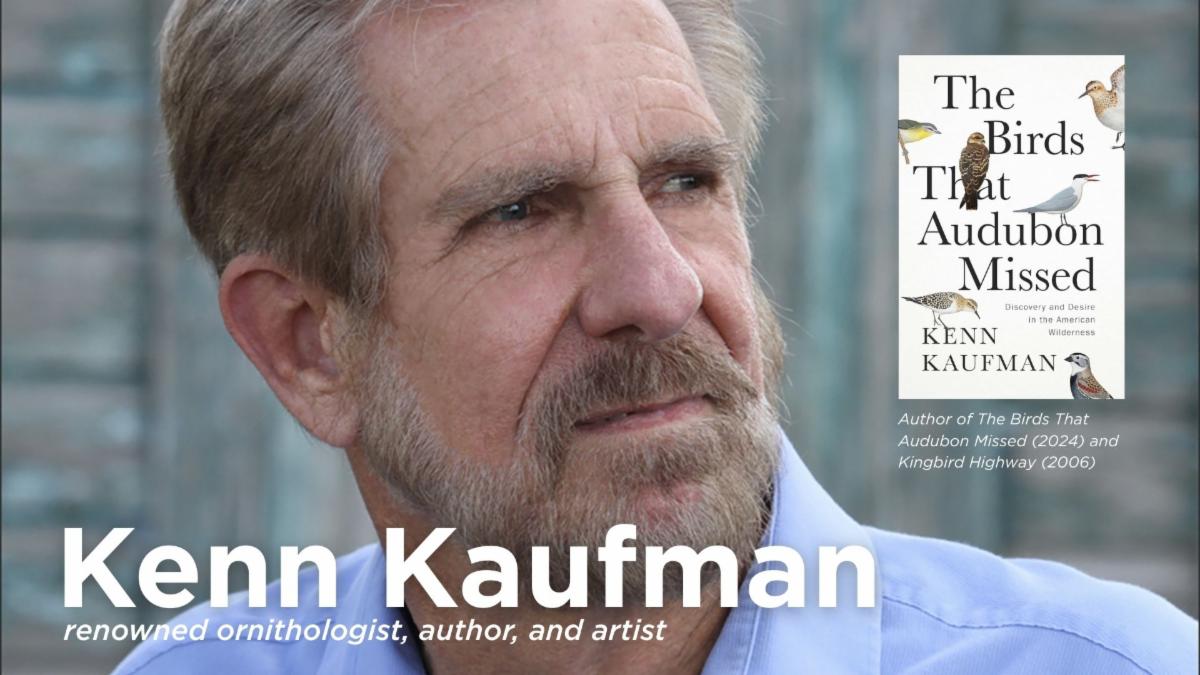
Apr 11 | 7:30 PM: “Abundant Life: Prairie-chickens as Icons of the American Landscape” with Kenn Kaufman
Fort Hays Ballroom, Fort Hays State University Memorial Union
700 College Drive
Hays, KS 67601
AOK invites you to a special keynote event to conclude the 5th Annual Kansas Lek Treks Prairie-Chicken Festival. This event is open to the public.
In the early 1800s, prairie-chickens were widespread across vast swaths of North America, and today it’s hard for us even to imagine how numerous they were. Prairie-chickens were among a handful of iconic species that defined the wildlife of this continent. Kenn Kaufman has been studying the history of that era, and in this presentation he will take a trip back in time to describe North America’s wildlife spectacles of two centuries ago.
Of course, even if the cast of characters has shifted, there are still natural wonders all around us. This program will also celebrate today’s abundance of nature, and the conservation groups, government agencies, and private landowners who are working to preserve these treasures for the future.
Kenn is a renowned ornithologist, author, artist, and a two-time recipient of the American Birding Association’s lifetime achievement award. He is the author of 14 books including his cult-classic Kingbird Highway and his most recent title The Birds That Audubon Missed. Both titles will be available for purchase at the event with a book signing to follow.
|
April events continued...
Apr 18: Earth Day at the Topeka Zoo
635 SW Gage Blvd
Topeka, KS 66606
9:00 AM-3:00 PM
Find AOK at this "PARTY FOR THE PLANET," an annual community celebration dedicated to protecting the world we share.
Learn More
Apr 24: Salina Reads Happy Hour Book Discussion
Red Fern Booksellers
106 S Santa Fe Ave
Salina, KS 67401
6:00-7:30 PM
Enjoy light appetizers and lively conversation while delving into Fuzz: When Nature Breaks The Law through a panel discussion including Dr. Jackie Augustine, AOK Executive Director.
Learn More
Apr 25: Trails & Bird Tales
Greenbush Camp & Retreat Center
947 W 47 HWY
Girard, KS 66743
8:00-10:30 AM
AOK will be present at this free, family event featuring an adventurous morning of hiking and bird watching.
Learn More
Apr 25: Plants for Birds
Andover Public Library
1511 E Central Ave
Andover, KS 67002
6:00 PM
Join Dr. Jackie Augustine, AOK Executive Director, in learning how you can make your backyard a wildlife haven by planting native trees, shrubs, and wildflowers.
| |
May 1-2: Big Kansas Road Trip
Humboldt, KS
Join Samuel Richards, AOK's Kansas Protected Areas Manager, for guided nature walks along the Neosho River Park.
Learn More
| |
Celebrating Earth Month
As we begin Earth Month, it's important to consider the work we've done and recommit to the work ahead.
At Audubon of Kansas (AOK), our commitment takes shape in early morning hours spent conducting breeding bird surveys and long days restoring prairie habitat. This work involves removing invasive species so native grasses and wildflowers return, and creating opportunities for people—some for the very first time—to experience the phenomena of the natural world.
This work doesn’t happen on its own.
This Earth Month, your donation to AOK will go twice as far. Every gift will be matched dollar-for-dollar up to $35,000. Your support helps expand restoration efforts, strengthen advocacy, and create more opportunities for people of all ages to connect with nature and become part of the conservation conversation.
Thank you for being part of this ongoing work to protect wildlife and their habitat, today and tomorrow.
| | |
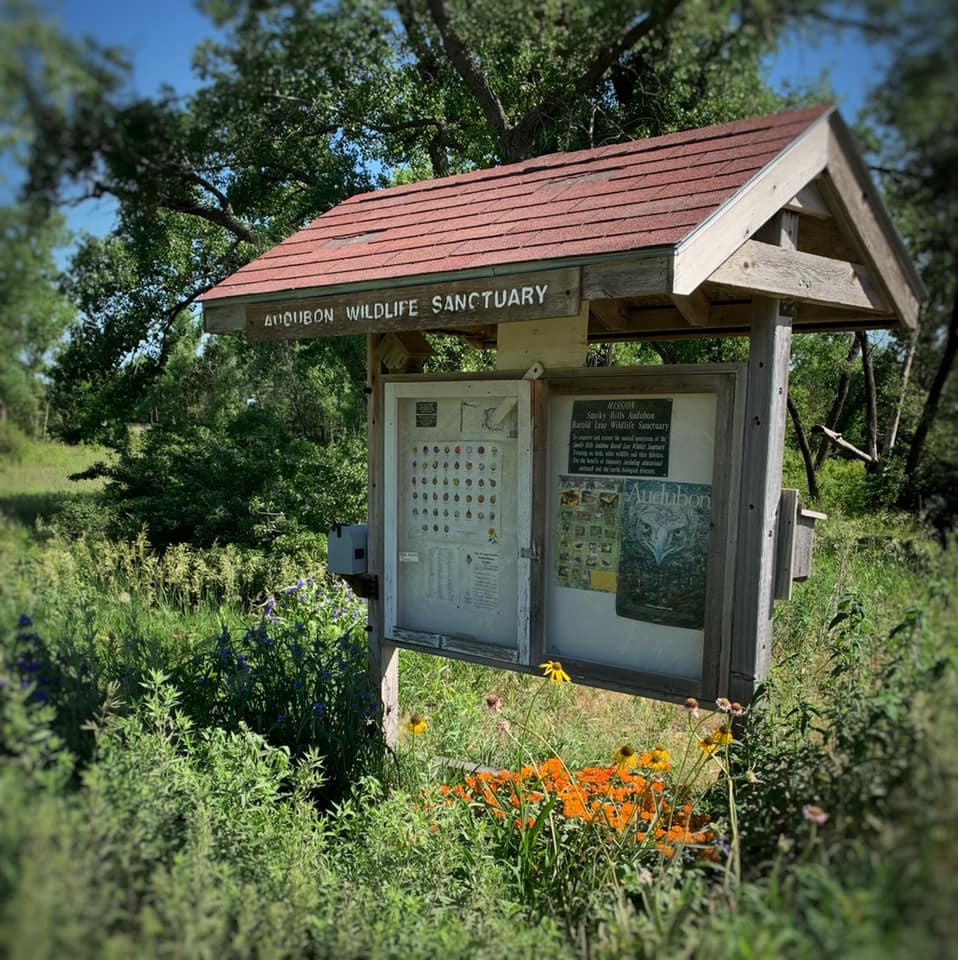
Founded in the 1970s, Smoky Hills Audubon began as a new chapter in Salina, Kansas, and continues today with a mission focused on bird conservation, habitat protection, and environmental stewardship—in short, helping people reconnect with nature.
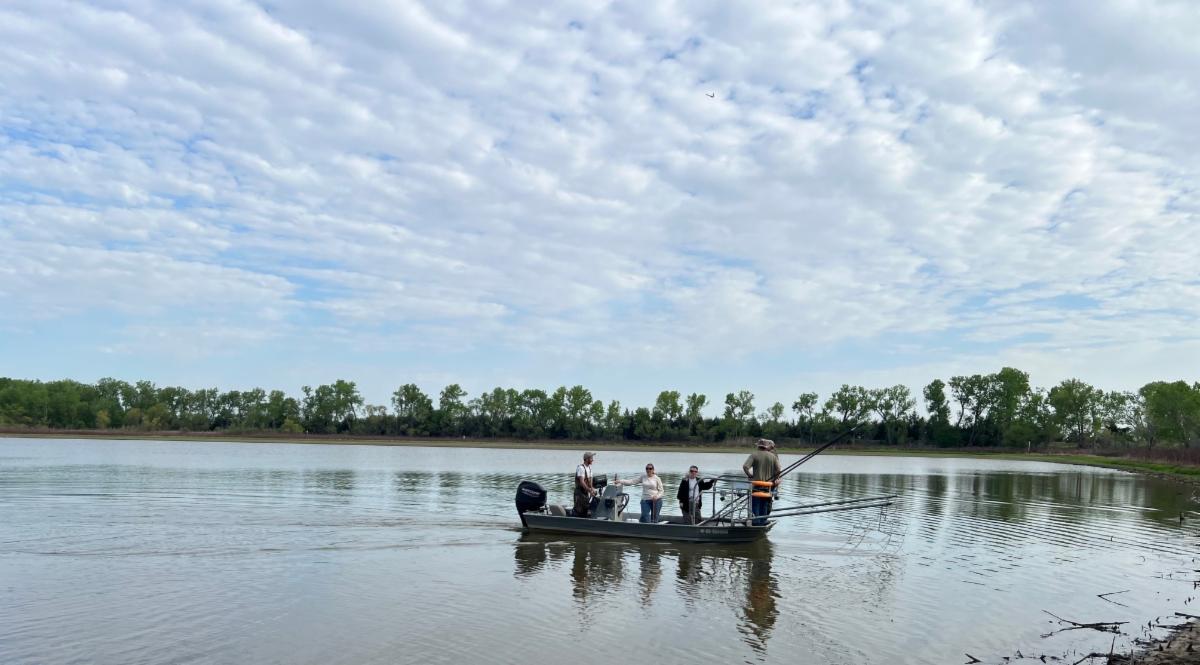
One unique feature supporting this mission is a 67-acre sanctuary located near the I-70 and I-135 interchange. The site, once used as a soil source during interstate construction, was later transformed into a wildlife sanctuary and now includes a small pond open to fishing.
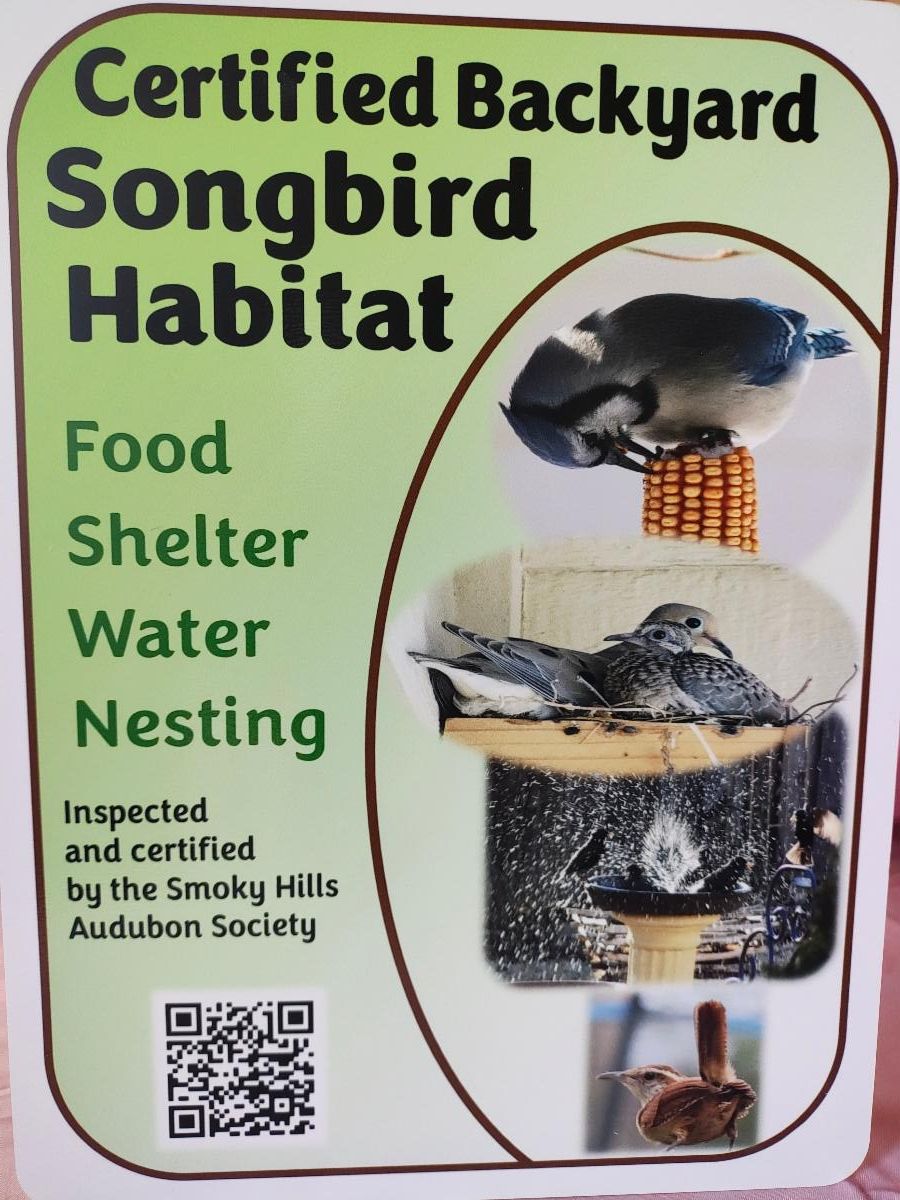
Another way the chapter encourages connection with nature is through its Songbird Habitat Certification Program. Participants can have their backyards certified by providing essential elements such as shelter, water, and food for local birds. A chapter member visits the site to verify habitat features, and for a small fee, participants receive a sign recognizing their efforts as wildlife stewards.
Discover ways to bring nature closer to home!
| | |
Photo: (above) Smoky Hills Audubon Wildlife Sanctuary; (left) fishing pond at sanctuary;
(right) Certified Backyard Songbird Habitat sign
| | | | |