|
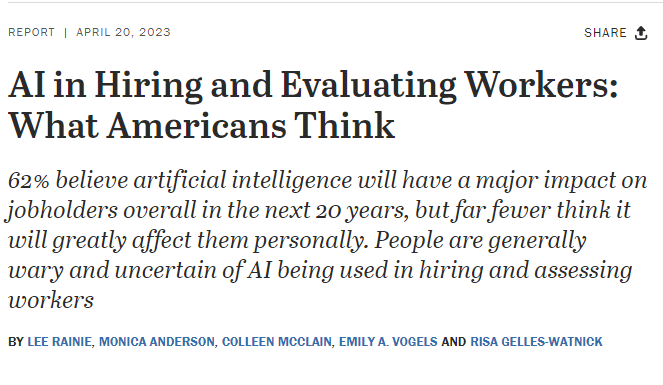
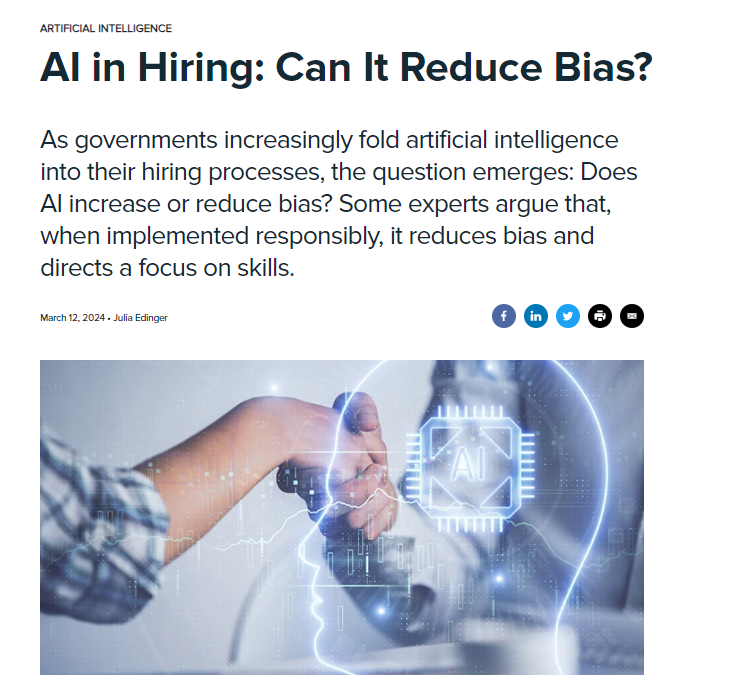
As emerging artificial intelligence (AI) technology becomes readily available in workplace operations, the “modern hiring process” is swiftly evolving to prioritize efficiency and equity while retaining the human element in the hiring and recruitment processes. Companies across various sectors are adopting AI in the workplace and it poses significant opportunities and challenges in its implementation. It is clear that AI on its own without the support of humans cannot be entirely ethical and requires the help of humans in ultimate decision-making. AI tools in the modern hiring process should be considered helpful tools and not a complete replacement.
Arguably one of the most important parts of a job application is the resume the candidate submits, yet human resource professionals and recruiters find themselves struggling with a tedious review process with up to 250 submissions for 1 position on average when only 12% meet the actual requirements for the job, according to Zety.
A report from the Harvard Business School found that top candidates have become “hidden” to recruiters due to the volume of applications and estimate that there are more than 27 million hidden, qualified workers in the US overlooked by hiring managers. It’s said that these “hidden gems” can benefit from a hiring process with better resume screening to improve the selection process and hire talent that may otherwise be lost in the bunch.
AI tools such as resume screening have the potential to efficiently identify qualified candidates and reduce the amount of time it takes to hire - a struggle often shared by company and government HR departments. Resume screening tools use machine learning algorithms to review information provided by candidates and AI scans those documents to draw out relevant information for the review of the hiring manager. The hiring manager assigns screening criteria to narrow down candidates and get to a short list of candidates to move on to the next step of the hiring process.
|