|
Teaching & Leading with Intention
Bi-Weekly Insights from Research for Better Teaching
| | |
Keeping Minds Engaged and Learning Moving
Attention and momentum don't happen by chance. They are intentionally built through purposeful instruction, active processing, and smooth lesson flow.
| | |
Last year, we explored two essential ingredients of effective instruction: capturing students' attention and maintaining lesson momentum. If you'd like to revisit those ideas, you can find them here: Attention: The Gateway to Learning and Momentum: Keeping Learning on Track.
As a new school year gets underway, these two concepts become especially important. During the first few weeks, students are learning not only the curriculum, but also how learning happens in your classroom. Every transition, attention signal, and instructional routine either strengthens or weakens the flow of learning.
Now is the ideal time to establish habits that keep lessons moving, maximize instructional time, and help students stay focused from beginning to end.
| | |
Space is never neutral.
Make sure your layout isn’t just functional—but intentional.
| | |
Why It Matters:
Attention and momentum work together to maximize learning. Students can't think deeply if their attention isn't focused, and even the best-planned lesson loses its impact when momentum stalls.
Skillful teachers intentionally gain and sustain students' attention while designing lessons that move purposefully from one learning experience to the next. Together, these practices protect instructional time and keep students cognitively engaged.
| |
Try This:
This week, focus on one attention move and one momentum move.
-
Attention move: Pause before giving important directions, use a consistent attention signal, or ask a thought-provoking question before introducing new content.
-
Momentum move: Prepare materials in advance, give directions before transitions, or shorten one transition by 30 seconds.
Reflect at the end of the week: Which adjustment had the greatest impact on student engagement?
| |
Small Shifts, Big Impact:
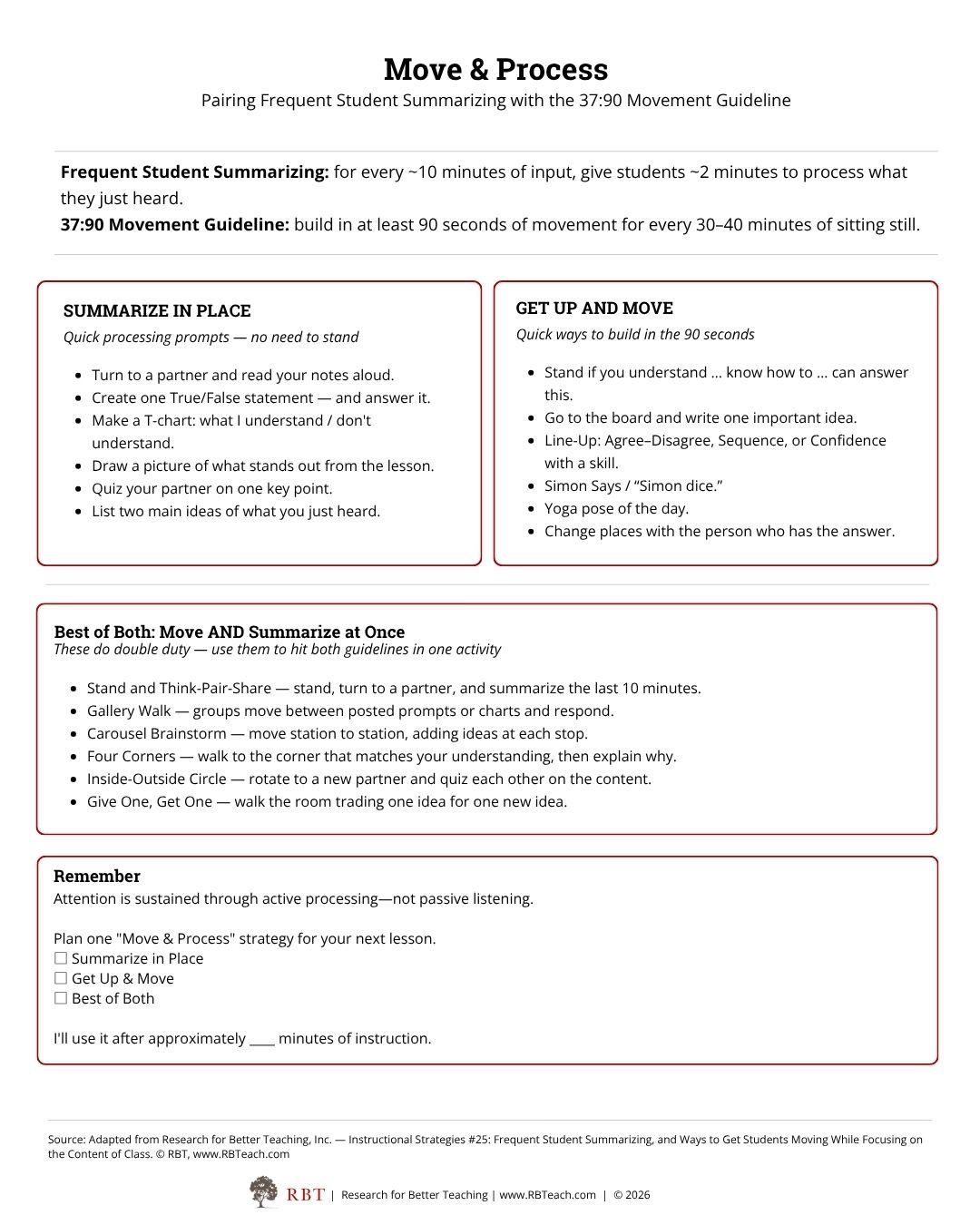
Instead of waiting for attention to drift, intentionally plan opportunities for students to move and process throughout the lesson. After about 10 minutes of new learning, pause for approximately 2 minutes of student processing through discussion, writing, or summarizing. Periodically add brief movement tied to the learning to re-energize attention and maintain lesson momentum. hese simple shifts help sustain attention, protect instructional momentum, and make student thinking visible. The Featured Resource includes classroom-ready "Move & Process" activities that put these ideas into practice.
| | |
Routines aren’t rigid—they’re empowering.
They give students the structure they need to thrive and teachers the stability to teach with intention.
| |
For Instructional Leaders:
During classroom visits, look beyond student compliance to evidence of cognitive engagement.
Notice:
- How does the teacher gain students' attention at key moments?
- What strategies help sustain attention throughout the lesson?
- When attention wanes, how does the teacher intentionally refocus students?
- Are transitions protecting or interrupting instructional momentum?
These look-fors often reveal opportunities to strengthen both lesson design and classroom management.
| |
Research Connection:
The Skillful Teacher, 8th Edition describes attention, momentum, and time as essential conditions for learning. Building on the work of Patricia Wolfe (2011), the book reminds us that the brain is always paying attention to something—the challenge for teachers is directing students' attention to what matters most. It also draws on Kounin's work on classroom momentum, expanded by Zimmerman (2017), emphasizing that smooth lesson flow, minimal downtime, and purposeful transitions keep students engaged in learning. One practical application of this research is to intentionally alternate periods of teacher input with opportunities for students to process, discuss, write, and move—helping sustain both attention and instructional momentum throughout the lesson.
| | Move & Process: Keeping Students Engaged Throughout the Lesson | | |
Attention isn't something teachers gain once—it's something they intentionally sustain. This practical classroom guide combines two research-based strategies to help maintain engagement:
-
Frequent Student Summarizing (10:2): After approximately 10 minutes of instruction, provide students with about 2 minutes to process their learning through talking, writing, drawing, or summarizing.
-
37:90 Movement Guideline: Build in at least 90 seconds of purposeful movement every 30–40 minutes to refresh attention while keeping students focused on the learning.
The resource includes ready-to-use Move & Process activities—such as Think-Pair-Share, Gallery Walks, Four Corners, and Give One, Get One—that simultaneously sustain attention, maintain lesson momentum, and make student thinking visible.
| | Be sure to check out all the other resources | |
Spread the Word:
Teaching and Leading with Intention
| | Missed an issue of the newsletter? You can find archived copies here. | | Looking to deepen your expertise, refresh your practice, or grow your leadership impact this summer? RBT’s Summer Open Courses are now open for enrollment! These courses are designed for individuals or small groups (fewer than 25) . | | | |
Analyzing Teaching for Student Results
In-Person
Instructor: Deb Reed
IIn-Person Dates:
-
September 29
- October 20
- November 19
- December 10
- January 13
- February 10
- March 4
Time: 8:30am - 3:30pm EST
Location: 1 Acton Place, Acton, MA
| | | | | |