Message from the Chair

The fragility and resilience of our sector has been on display these past few months as we’ve tackled more natural disasters, pressures on household travel budgets and global policy uncertainty.


The accommodation sector has risen to the challenges. Our thoughts were with those in Queensland and Northern NSW affected by Cyclone Alfred and I was buoyed by the spirit of cooperation across our hotels to support each other and importantly, our guests.


We started the year with cautious optimism and I’m sure you’ll agree the prediction is proving sound.


The latest statistics from the ABS decrease in short-term visitor arrivals in Australia and unfortunately, it’s still below pre-COVID levels. However, China has retaken its lead as the largest source country followed by New Zealand and the United States.


It’s not surprising then that accommodation data released for March showed a slight decline in average occupancy. The results are solid, but we would all be hoping for sustained growth.


Let’s hope April is better with people taking advantage of the Easter and ANZAC Day long weekends to holiday across Australia and thank you to all the teams working across this busy period to look after our guests.


James and the team are keeping a close watch on the Australia-United States relationship and although most of the focus has been physical products like steel and aluminium, AA has reinforced to the Australian Government the importance of trade in services such as tourism.


The Federal Election campaign is drawing to a close and AA was well placed and well prepared with our key priorities. The priorities were formed through consultation with our members and I thank you for your input. James will detail more about the policies in his CEO message but I want to back his call that we all play our part in engaging in the political process during this campaign, and after, to better our sector.


Accommodation is a vital part of local communities as well as the broader state and Australian economies, so if we all tell that same narrative we will all share in the benefits of a united voice.


We are reaching the final step of the amalgamation and formation of AA with the interim Board of Directors transitioning to new substantive positions where they will represent states or territories. The ballot is being conducted independently by the Australian Electoral Commission with results expected by the end of June.


All of this means that the middle of 2025 will become a defining milestone for AA. We will enter the new financial year with a new Federal Government and new Board of Directors. To this end the Board and CEO are working on a new strategic plan to help guide us through the next three years. The goals and objectives being guided by both the policy and political contexts but what you, as accommodation providers, need at a practical level.


Thank you for your membership and for what you do to make our sector a great one to be a part of as we continue to deliver on our purpose to be an influential advocate for a better future.


Regards,

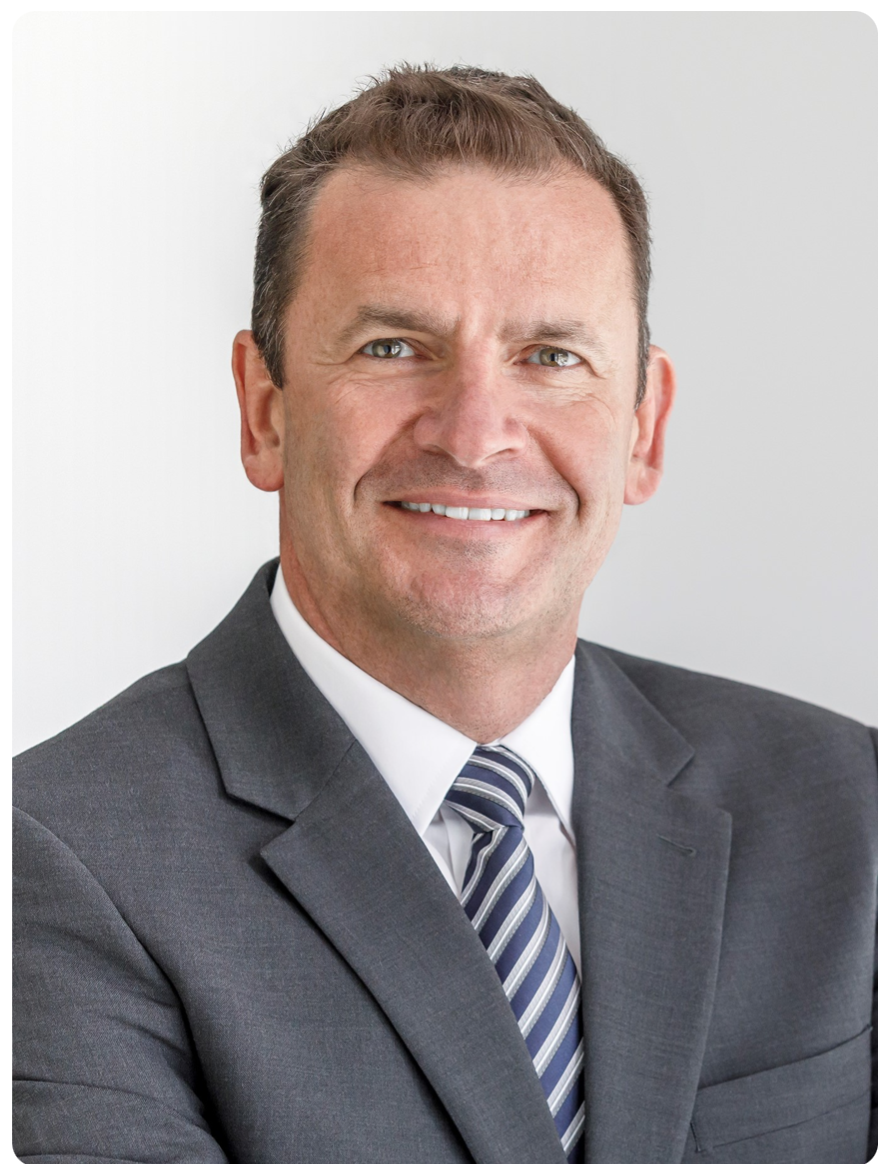
David Mansfield

Chair

Message from the CEO's Desk

We’re almost halfway through the year and what an interesting year it has been both locally and globally. People often say they’re not interested in politics but it’s difficult at the moment to avoid it!


Increasingly, even those not usually interested suddenly have strong views on Donald Trump, global trade tariffs, proposed bed taxes in Queensland or cost of living pressures – and rightly so.


Being part of these discussions is the priority of Accommodation Australia as your peak body. And there is no better time to tell the story of our great accommodation industry than during this Federal Election campaign.


It’s one of the rare times when politicians of all stripes are out on the hustings, travelling the country and actually listening to the community.


The politicians stay in your accommodation properties regularly so don’t waste an opportunity to, politely, tell them what’s on your mind or what support you need.


We need to engage with all sides of politics and tell our story, because as an industry, we have a compelling one to tell.


The latest data shows nationally we employ 117,000 people as their main job – the highest number in almost 10 years. There are also another 30,000 working in our sector as their second job.


We know 40 per cent of these jobs are in regional Australia and more than 60 per cent are held by women.


Our industry generated tourism-related revenue of over $21.2 billion in 2023-24 and, along with the other sectors in the accommodation and food service industry, contributed over $60 billion in value-add to the Australian economy.


Most remarkably we did that while still recovering from the devasting impact of the restrictions imposed during the pandemic.


And we did it at a time when international holiday visitor nights are still 11% less than pre-pandemic levels and total international visitor arrivals are still 12% lower.


Long before the election date was decided, our Association was working on narrowing down our industry’s key priorities:


1.   Boost tourism demand

2.   Improve Training and Skills

3.   The right migration settings

4.   Regulation of Short-term rental accommodation

5.   Energy, tax and small business support.


Tourism demand is an important one for us. International tourism to Australia grows when travellers are inspired to come – so increasing Tourism Australia’s funding to $200 million per annum plus $20 million for events is important.


We also need to facilitate an increase and diversification of international and domestic aviation capacity and competition so they can get here – including the new Western Sydney Airport.


The next two priorities, training and skills and migration, are two sides of the same issue - staffing.


We need to better train the people we have and also be able to supplement that with a workforce from overseas. We want to improve employer incentives to food trades apprentices and restore hospitality traineeship incentives.


To supplement our home-grown workforce, we would like to see a minimum of 47,000 employer-sponsored places per year within the permanent migration program.


Restaurant managers should be restored to the Core Skills Occupation List, and we should ensure all of the key skilled occupations vital to hospitality are eligible for sponsorship.


We need to also allow regional employers to sponsor all skilled occupations for temporary or permanent skilled migration.


Short Term Rental Accommodation (STRA) is a hot topic in the community, and it is also one of our key priorities. We need to improve housing availability and affordability by overseeing a national framework of State/Territory regulation of short-term rental accommodation.


We recommend a national registration system, a cap of 90 days per annum with scope for local governments to impose lower caps, as well as effective enforcement of the regulation.


It is no surprise to anyone running a business that we need incentives and subsidies to alleviate the increasing costs of energy and we need to retain hospitality industry access to gas as an energy source.


And finally, we should remove fringe benefits tax on legitimate business entertainment expenses and restore their deductibility (excluding alcohol costs) for small business, and increase the accelerated depreciation rate for accommodation properties to improve cash flow and support increased hotel refurbishment.


Don’t be afraid to make your voice heard this Federal Election if you find yourself side by side with a pollie – we have a great story to tell so let’s take every opportunity to tell it.


Kind Regards

James Goodwin

Chief Executive Officer

By Jenny Lambert, National Policy Director

It is often said that a week is a long time in politics, in which case the last three months have been an eternity. With Cyclone Alfred putting a stop to the strongly predicted April election, the government was forced to roll out a Federal Budget at the end of March and then call the election for May the 3rd a few days afterwards. Since then, we have had two major international events dominate the discourse, with Trump’s Tariff Liberation Day sending the markets into a spin, and then the death of the Pope. During all of this, the accommodation sector has delivered steady performance in terms of occupancy and average daily rates, with some key highlights driven by events (see the STR story in this Key News Update for more information).


Given that it was the Federal Budget that the government really did not intend to have, the only major surprise on the night of the 25th of March were the relatively modest additional tax cuts starting in 2026. The key features of the Budget were:

  • Additional personal tax cuts with a cost to budget from 2026-27 totalling $17.1 billion over 3 years.
  • Excise on draught beer frozen for two years.
  • $150 energy rebate for individuals and small businesses – cost $1.8 billion
  • Increasing the medicare levy low-income threshold estimated to decrease receipts by $648 million over five years from 2024-25.
  • Tourism Australia's funding maintained at current levels for next year.
  • Over $10 billion in additional health spending over four years – including on medicare, the PBS aged care and cheaper medicines.


For the full Federal budget summary prepared by AHA/AA see here.


Legislation to secure the $20,000 instant asset write off for businesses with revenue less than $10 million was one of the last Bills to pass the Parliament before it was prorogued. Labor announced earlier this month that it would be extended into next financial year. In comparison, the Coalition has promised to make the instant asset write off a permanent feature of the tax system for small businesses with an increased $30,000 threshold.


Also in the election campaign there have been a few announcements that impact us including the major concern of the Coalition’s promise to slash Net Overseas Migration by 100,000 including a major reduction in the number of international students, with particular impact to be felt in the capital cities. Not only will this have a negative impact on the economy, as international education is a major export earner, but it will also be very detrimental to the hospitality workforce. With the Coalition falling further behind in the opinion polls, they are seeing this policy as a vote winner, as it is blaming migrants for the housing crisis rather than on the more obvious cause being the lack of housing supply and the soaking up of rentals by the Short-Term Rental Accommodation market. This week we have at least seen that chefs will be one of the priority occupations in the Coalition’s migration policies, but the potential negative impact on pathways to permanency and skilled migration generally remain.


In job vacancy quarterly data released by the ABS this month, the Accommodation and Food Service Industry had 38,700 vacancies in February 2025, which was about the same as November 2024 and up from 35,100 in February 2024. This number of vacancies is second only to the Health Care industry and more than twice as many as industries such as manufacturing. The change in vacancies since pre COVID (February 2020 - just when COVID was first impacting) is 162.5%, which is the highest change of all industries. Demonstrating the difficulty still being experienced by members and also the growth in the industry, as the graph below shows, the average quarterly vacancy figure for the AFS industry pre-COVID was much lower than it is today. Since February 2021, job vacancies have been consistently higher each quarter than the larger retail industry.


Despite this positive picture of an industry still growing and needing to fill gaps in our workforce, we will not escape the impact of US President Trump's tariff announcements, with both threats and opportunities in the offing. On the threat side, there will almost certainly be a negative impact on both local and global growth even after Trump walked back some of the changes. However, the tariff war with China continues, as does most of the 10% tariffs, so there will still be impacts on the Australian economy if the current situation continues. Perhaps there will be a further change of direction. We can only hope.


In news about Short Term Rental Accommodation, it is confirmed that the 5% STRA levy in the ACT is going ahead as at 1 July 2025. Also, the SA Parliament has launched an inquiry into STRA led by the Greens. Interestingly, in the third of four election debates, the Prime Minister was specifically asked by a journalist with which the AA has engaged what he intended to do about the rise of short-term rental accommodation given its impact on available housing and communities. The PM's response that it was a state government issue was disappointing given his own national housing policy provides the opportunity to discuss a national framework for regulation - an action AA has called for in its own national STRA policy. Our policy document, with updated information on further action taken globally and the mounting evidence of the negative impact of STRA on housing, can be seen here.

Regards,

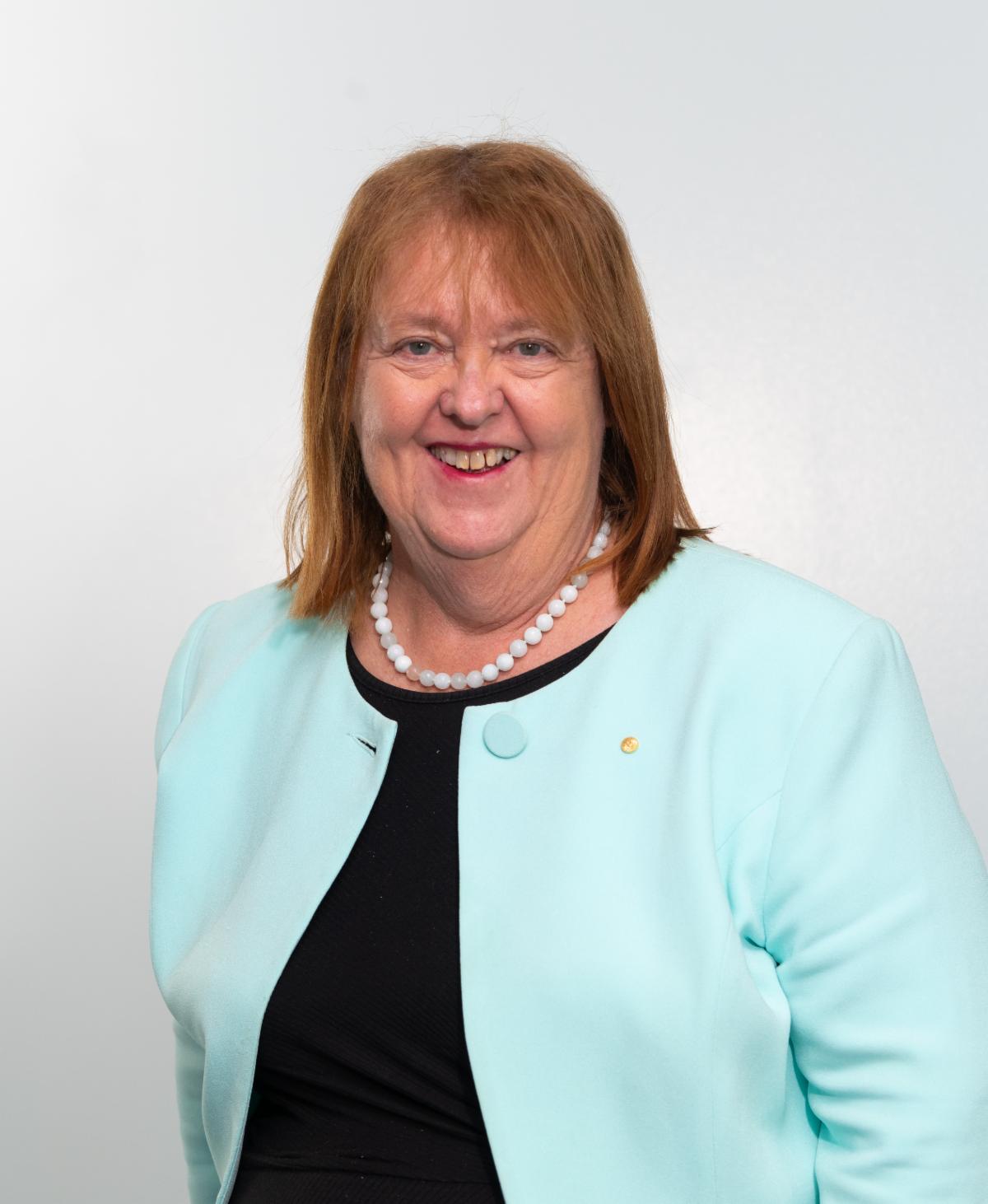
Jenny Lambert

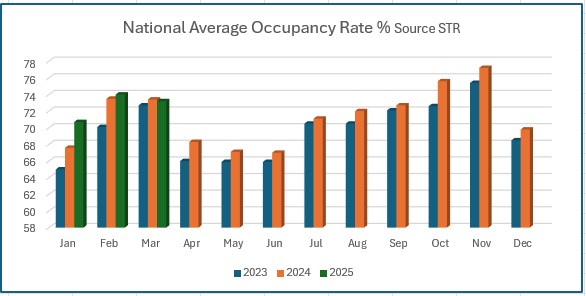
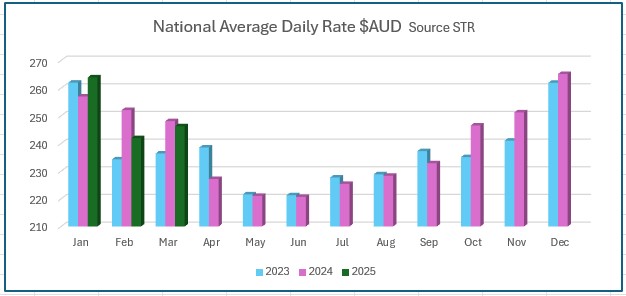
On the back of disappointing news of a decline in international arrivals in February as well as the cyclone impact in Queensland, the latest STR accommodation data released for March 2025 showed a slight decline in the national average occupancy rate compared to both to the previous month and also March 2024. The average occupancy in the month of March across Australia was 73.2% compared with 73.4% in March 2024, and the Average Daily Rate also declined slightly to $246.24 compared with $247.12 in March 2024. Revenue per available room in March 2025 was $180.32, down 1% from $181.88 in March 2024. Occupancy rates for March 2025 were up compared to last year in NSW, Victoria, SA, WA and Tasmania, with Victoria having the strongest rise, and Queensland the largest fall. The largest falls in ADR were experienced by South Australia (-4.3%), ACT (-5%) and NT (-12.4%). New Zealand also experienced a decline in the average occupancy rate in March 2025, decreasing from 77.4% to 75.7%. ADR for the month was also down, being NZD247.71 compared with NZD254.52 in March 2024. In the year to March 2024, Australia's average occupancy at 72.6% was higher than for the same period last year, but the ADR was down 0.3% to $250.65.


In some better news, preliminary capital city STR data for the month to 19th of April indicates a such stronger performance in occupancy and ADR for all capital cities, with only Darwin not seeing an increase in ADR, although their occupancy rose from 67.6% for the same period last year to 73.1%. Adelaide's Gather Round performed very well for hotels with the ADR above $450 for two nights this year, compared to a peak last year of $419.


The graphs below derived from the STR data show the monthly average performance of occupancy and ADR across Australia since January 2023.

Information provided by STR

eeger is changing the future of Tourism, Hospitality, and Travel careers in Australia. It’s Where People People Grow!


Managed by Accommodation Australia on behalf of the Tourism, Hospitality, and Travel industries and this project received funding from the Australian Government via Austrade, eeger is an industry-led platform for the visitor economy, aiming to:

  • Serve as a central source of information for education, training, and careers in the visitor economy
  • Connect job seekers with employers across Tourism, Hospitality, and Travel
  • Provide education and training opportunities as well as career pathway information
  • Offer businesses in the visitor economy insights and resources to help them advertise jobs and find employees.


Join our pre-launch registration to stay up to date on industry and career opportunities at eeger.com.au!

Accommodation Australia is working closely with various industry organisations across Tourism, Hospitality, and Travel to create eeger.

28 Apr 2025: Accommodation Hotels Key Driver of the NSW Economy

28 Apr 2025: Records Continue to Roll for State's Accommodation Providers

08 Apr 2025: WA’S Best Hotels Honoured at 2025 AHA – Perth Airport Accommodation Awards for Excellence

05 Apr 2025: Mayors' move for tourism bed tax labelled shortsighted tax grab

26 Mar 2025: Budget 2025-26: government support for Tourism Australia, Rex Airlines

26 Mar 2025: Tasmania's Summer Sizzles for Accommodation Sector

18 Mar 2025: AHA (WA) Welcomes New Look WA Cabinet

18 Mar 2025: AHA (WA) Welcomes WA Labor's Liquor and Tourism Investment Policies

14 Mar 2025: Western Sydney Airport plans will mean more jobs

14 Mar 2025: NSW Government invests in $16 million Joint Fund to draw International Carriers to Western Sydney Airport

13 Mar 2025: Introducing City Feels Adelaide

13 Mar 2025: Western Sydney Airport Plans Will Mean More Tourism Jobs

04 Mar 2025: Strengthening the Future: Accommodation Australia's 2025 Election Priorities

20 Feb 2025: Road Map for Industry Recovery

19 Feb 2025: Accommodation Australia Outlines Industry Roadmap to Recovery

19 Feb 2025: Roadmap Unveiled for Accommodation Industry Recovery!

18 Feb 2025: ACCC gives okay to new Qatar Airways flights for Virgin Australia due to start in June

18 Feb 2025: Hospitality's Roadmap for Recovery: Accomodation Australia calls for Action Ahead of Federal Election

18 Feb 2025: Road Map for Accommodation Industry Recovery

17 Feb 2025: Hoteliers Say Short Term Rental Investors Fuelling Housing Crisis

11 Feb 2025: Nominations Open for NSW Accommodation Awards

Upcoming Events

Accommodation Australia is hosting numerous events across the country. Please visit the links below for updated list of events in each state/territory.

Other events include Hotel Market Updates across Australia. Please keep an eye out for the calendar of events from your state /territory representatives.

Traveller’s today are looking for more than just a place to stay — they’re seeking businesses that care about their environmental impact. For accommodation providers, embracing sustainability and gaining recognised certification offers a real opportunity to stand out and lead positive change. Read More