|
Your preschooler might have graduated preschool by now. Perhaps you've even registered your child for Kindergarten.
What should you and your child do now?
-
Keep learning throughout the summer. Visit your local library for new books and activities that will keep alive her love of learning. Try some activities listed below.
-
Stay active. Summer is the perfect time to help your child engage in fun activities, like swimming, biking, tree climbing and just playing.
-
Share your child's preschool graduation with PA's Promise for Children! What made this year of preschool special for your child? Was your child involved in Head Start or PA Pre-K Counts? Send your story to Mary at marhal@pakeys.org.
Because your child has will be entering Kindergarten in the fall, this will be the last edition of
Kindergarten, Here I Come news you will receive. The next enews you receive will be
Kindergarten, Here I Am. You don't need to do anything to receive this--we'll take care of it for you.
If you're an early learning provider, or have another child entering preschool, you can sign up for another enews.
If you have questions, please email Mary at marhal@pakeys.org.
| | |
Did you know that when preschoolers play, they learn? It's true! Use these activities to encourage your preschooler to play. Click here to print the book list for May.
We're learning Language and Literacy Skills
Do it!
Ask your preschooler to tell you a story. Write the words on a blank piece of paper. Give them the paper and a crayon and ask them to illustrate it. Turn your child's story into a book. Give your child pictures from magazines, newspapers, or clipart to illustrate or recreate their story.
Read it!
The Grumpy Morning by Pamela Duncan Edwards. Harry the Dirty Dog by Gene Zion.
We're learning through Play
Do it!
Make a pile of clothing items, such as a hat, pants, swimsuits, etc. Ask questions about which items would be needed to do certain things. For example, "What would you wear when you go to bed?" Provide an opportunity for your preschooler to dress with the choices. As you help them dress, describe the clothing articles and their use. Include the color, pattern, and size in your descriptions. Create a visual aid of clothing options for them to select their outfit.
Read it!
Jesse Bear, What Will You Wear? by Nancy White Carlstrom. Caps for Sale by Esphyr Slobodkina.
We're learning Social and Emotional Development
Do it!
Use words and pictures to list things to do to be clean and healthy. For example, draw a SOAP bar and write SOAP next to the image. Create a timeline of activities for healthy behaviors, and use a checklist to show your preschooler completed activities.
Read it!
Mrs. McNosh Hangs up Her Wash by Sarah Weeks. The Flea's Sneeze by Karla Firehammer.
We're learning Mathematical Thinking and Expression
Do it!
Share a food item with your preschooler. For example, cut a piece of toast in half to share. Talk about who has the larger piece or who has the smaller piece. Develop a picture story about sharing. Use real objects for your preschooler to see, touch, and or feel parts of things. Be sure to describe equal, larger, and smaller. Make a picture list of all the new words used.
Read it!
Spaghetti And Meatballs For All! by Marilyn Burns. Cora Cooks Pancit by Dorina K. Lazo Gilmore.
| | |
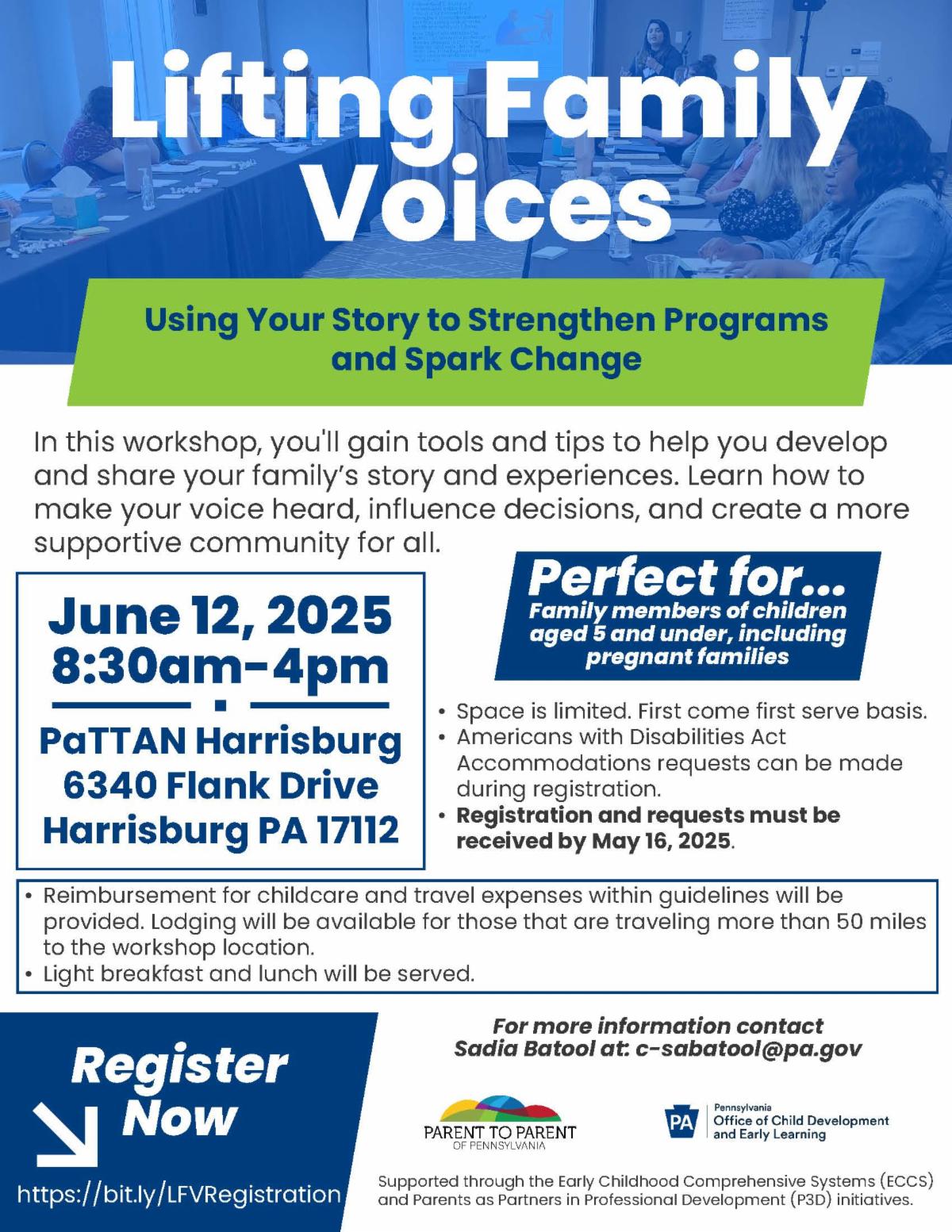
There's Still Time to Apply for Lifting Family Voices: Using your Story to Strengthen Programs and Spark Change
Are you pregnant or a parent/caregiver of a child/children birth to age five in Pennsylvania? If so, Pennsylvania’s Office of Child Development and Early Learning (OCDEL) invites you to register for the Lifting Family Voices: Using your Story to Strengthen Programs and Spark Change workshop on June 12, 2025, 8:30am – 4pm in Harrisburg, PA. In this workshop, you'll gain tools and tips to help you develop and share your family’s story and experiences. Learn how to make your voice heard, influence decisions, and create a more supportive community for all.
Reimbursement for child care and travel expenses such as lodging and mileage within guidelines will be provided.
Registration is due by May 16, 2025. Seats are limited and will be provided on a first come first serve basis. See the flyer for more details. Apply here. For questions, please contact Sadia Batool at c-sabatool@pa.gov.
| |
The Importance of Independent Play
Sara, three and half years old, stacks blocks on each other, then knocks them down, only to build them again.
At three years old, Chen takes books off the shelf, looks through pages, and tells stories to stuffed animals.
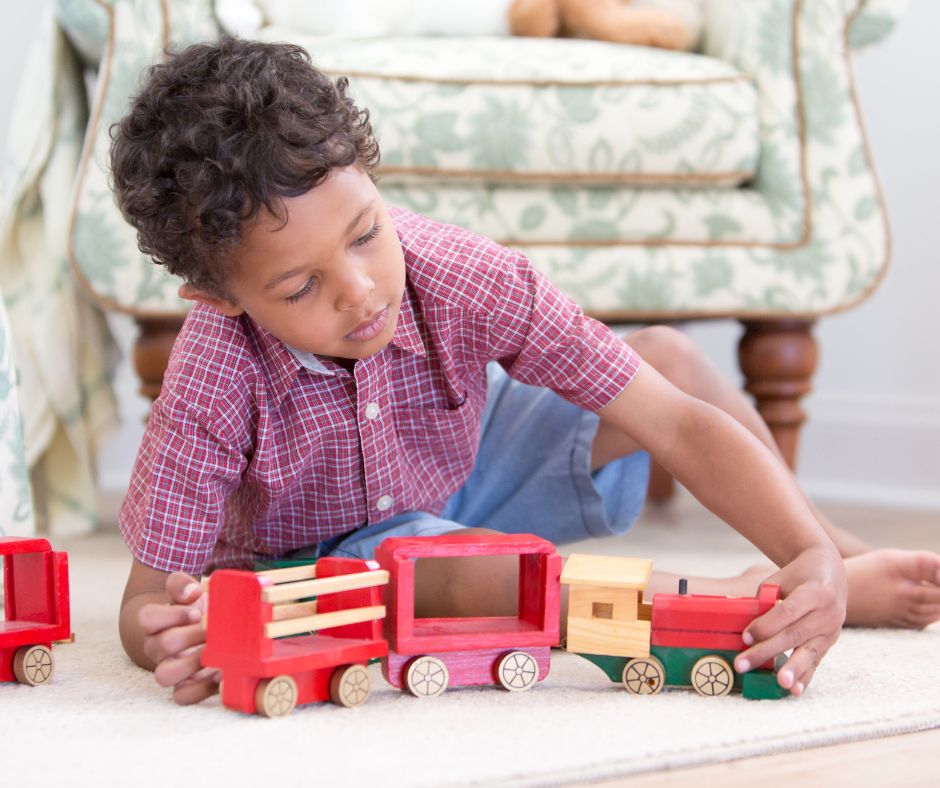
Jamal, four years old, hooks play trains together and runs them along imaginary paths.
What do all of these have in common? They’re all examples of independent play!
Research has shown the importance of play. Play can enhance brain structure and function and promote executive function (the process of learning). While interaction with adults and other children during play builds important cognitive, language, and self-regulation skills, independent play also has benefits. When a child plays alone, it can foster imagination and creative play, build persistence and problem-solving skills, and teach patience and resilience. Find out how you can help your child develop independent play skills.
| | |
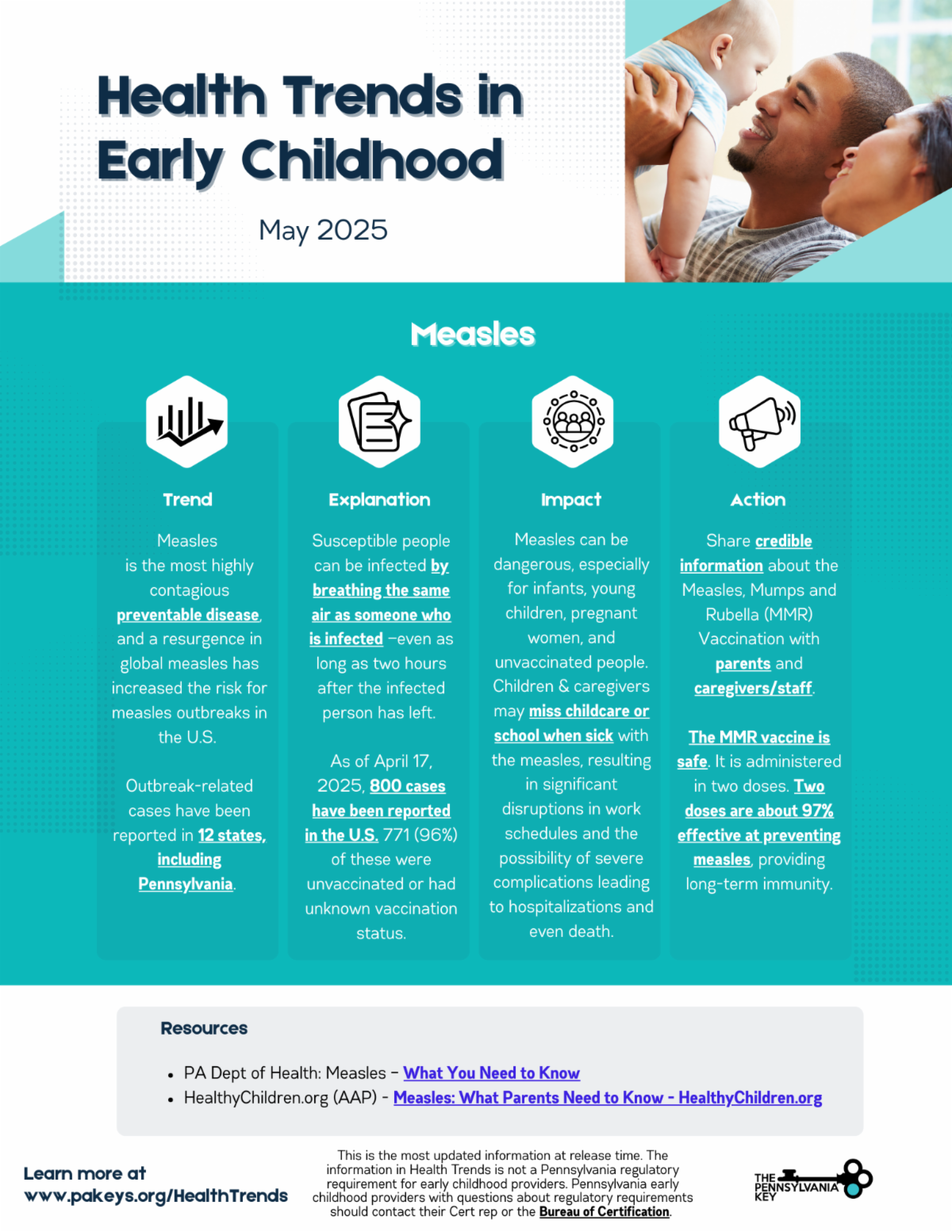
This Month’s Health Trends in Early Childhood: Measles on the Rise
Measles cases are increasing, and it’s important to stay informed. This month’s Health Trends in Early Childhood shares what families and caregivers need to know about this easily spread illness—and how we can work together to help keep little ones safe.
Every month, Health Trends in Early Childhood shines a light on key health topics that affect young children. You'll learn why each issue matters, how it affects kids and the people who care for them, and simple steps we can all take to protect children’s health and well-being.
In this month’s issue:
- Quick facts about what’s happening with measles right now
- Why preventing it early is so important
- Easy ways to help protect children
- Trusted resources to learn even more
You’re welcome to print and share this month’s one-page Health Trend—and don’t forget to check out the helpful links for more info.
When we all stay informed and take action, we help create healthier communities for every child.
| | |
Keeping Your Kids Safe from Tick Bites
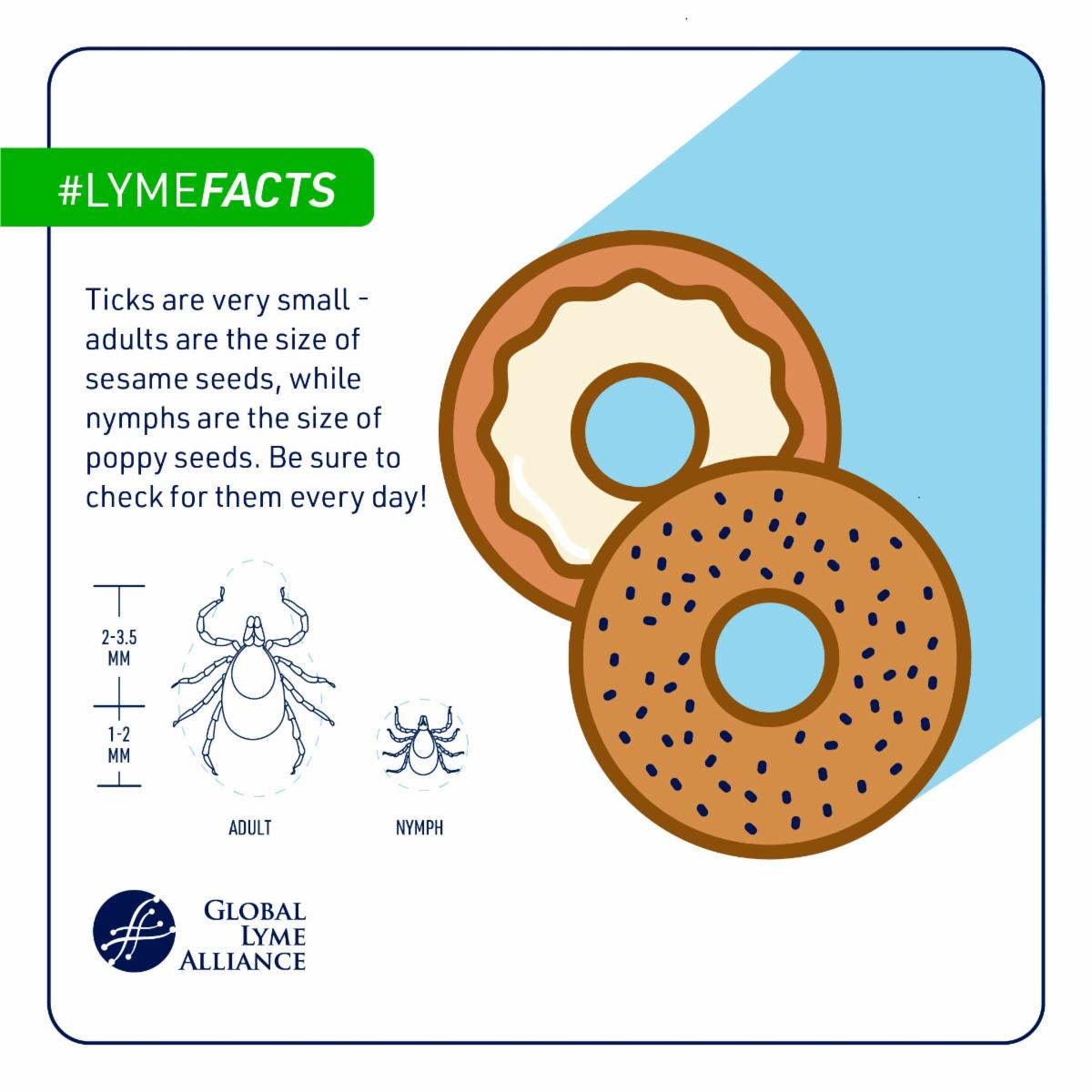
As warmer weather brings us outdoors, it’s important to remember that ticks are more active during the spring and summer. These tiny pests can carry diseases, so protecting your children from tick bites is crucial. Here are some simple tips to help protect your child:
-
Dress for Protection: When heading out for walks or hikes, dress your child in light-colored clothing. This makes ticks easier to spot. Long sleeves, long pants, and tucked-in socks can help keep ticks away from the skin.
-
Use Tick Repellent: Apply insect repellents that are safe for children, especially on exposed skin. Look for products containing 20-30% DEET or those specifically labeled for tick prevention.
-
Stay on Trails: Encourage kids to stay on well-maintained paths and avoid brushing against tall grasses or bushes, as ticks tend to hide in these areas.
-
Check for Ticks: After outdoor play, carefully check your child’s skin, especially in warm areas like behind the ears, underarms, and the waist. The sooner a tick is removed, the lower the risk of illness.
-
Shower After Outdoor Activities: A quick shower after outdoor adventures can help remove ticks before they can attach.
Following these simple steps, you can help ensure your children have a fun, safe summer while keeping ticks at bay!
| | |
Safe at Home: Protecting Kids from Lead in Water and Paint
Keeping our children safe and healthy starts right at home. One hidden danger many families may not know about is lead—an invisible toxin found in old paint and even in drinking water. However, with a few simple steps, families can prevent childhood lead exposure and create a safe environment for kids to grow and thrive. Learn how to protect your child from lead.
| | |
Watch: Videos to Help Preschool Kids Recognize Their Emotions
The Healthy Minds, Thriving Kids Pre-K Project is a video series, based on mental health research, created to make important mental health skills available to preschool children (age 3 to 5). These videos introduce important ideas, taught the way young children learn best: through entertaining, relatable stories set in a vivid, imaginary world. Each video features a memorable song that reinforces the key messages.
Watch the complete series with your child. You can also download the free companion guides that summarize key ideas and include an activity that can help kids practice the skills they’re learning. For older children, explore more free, evidence-based video resources for K-12. Each video in the series is available in both English and Spanish.
| | |
Calendar of Activities for Early Learning Providers
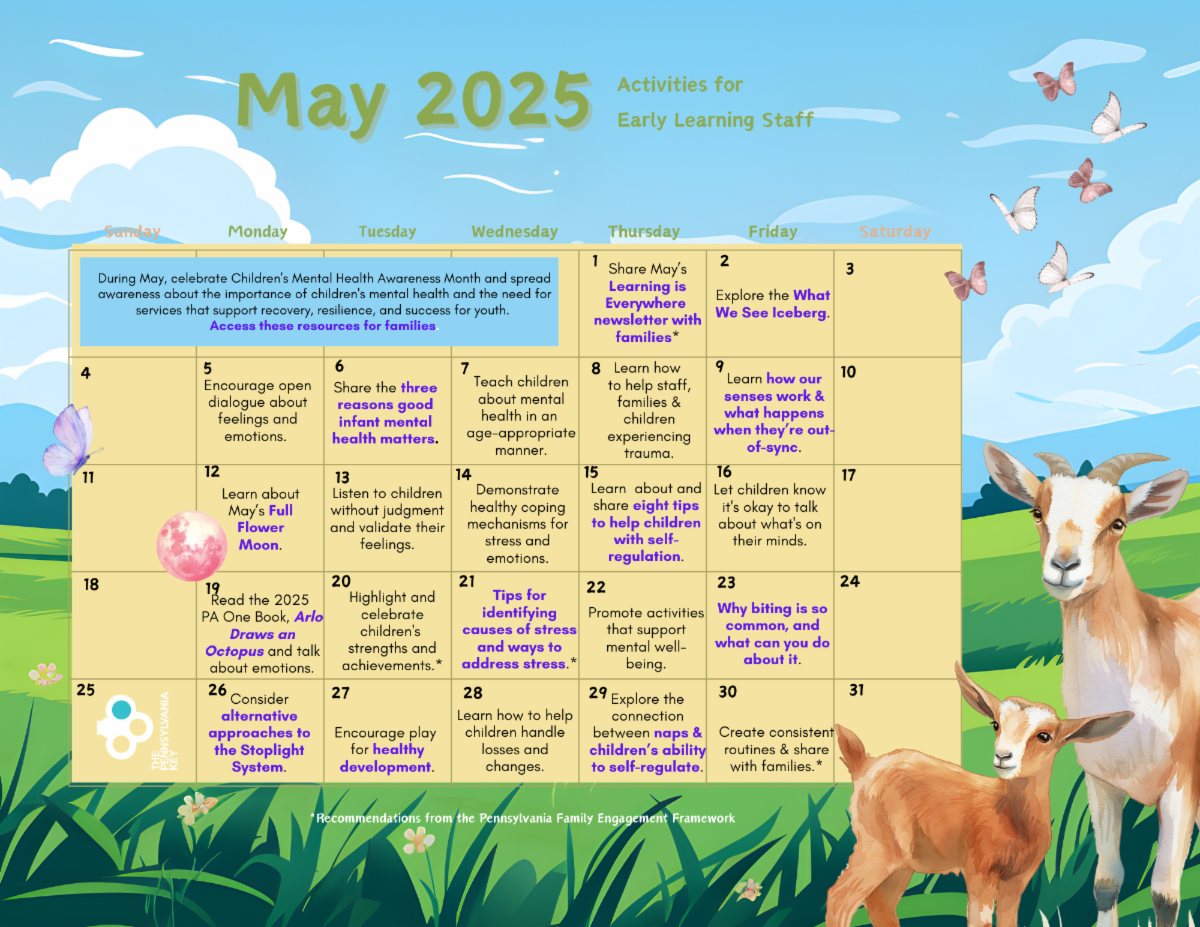
During May, celebrate Children's Mental Health Awareness Month and spread awareness about the importance of children's mental health and the need for services that support recovery, resilience, and success for youth.
Check out the May Calendar of Activities for Early Learning Professionals with activities and information to help prepare children and their families for school success.
| | | | |