|
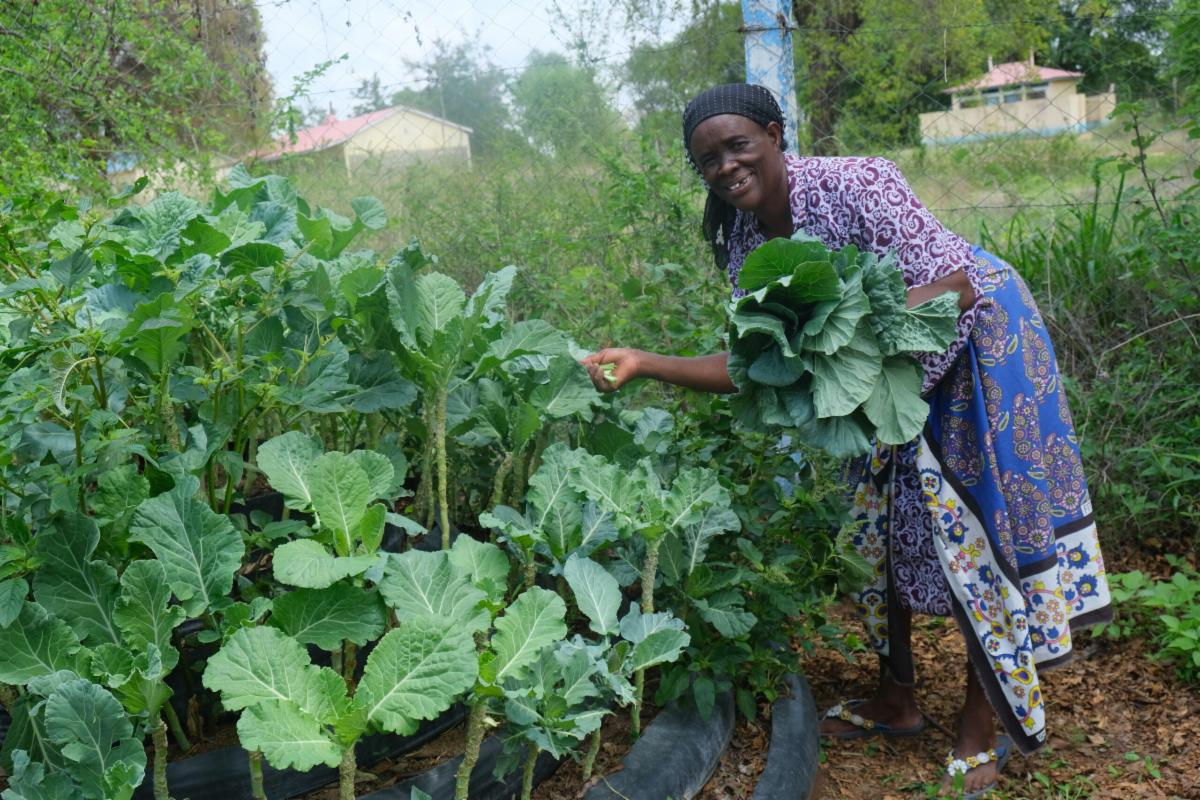
In Katwala, Kenya, where dry soil once dominated, green patches of vegetables now stand under the scorching sun. The smallholder farmer is at the heart of this change. Rachael Mbili, a 57-year-old widow and mother of six, has inspired her community and transformed her family’s lives with her determination and openness to new ideas.
“I used to depend only on rain-fed farming,” Mbili recalls, brushing her hand across a lush garden sukuma wiki leaves. “When the rains failed, everything failed; no food, no income. It was a struggle to provide for my family.”
Then, through the Integrated Initiatives for Sustainable Livelihoods (IISL) Project, which was implemented by Anglican Development Services East (ADSE) with funding from Alongside Hope, she went to a workshop on how to build and manage a kitchen garden in her community. She learned how to cultivate crops all year round with locally sourced materials, repurposed containers, and little water thanks to the classes.
“When I first heard about kitchen gardens, I thought it was just another project idea that would fade away,” she says. “But after the training, I decided to try it at home. I told myself, ‘Let me see if it really works.’”
Mbili constructed her first kitchen garden next to her house. Within a few weeks, the vegetables began to sprout. The results were beyond what she had imagined. “I couldn’t believe how much I harvested from that small space,” Mbili says proudly. “I no longer had to buy vegetables from the market, and my children started eating fresh, organic food every day.”
Encouraged by the success, she expanded and built two more gardens, harvesting a steady crop of spinach, kale and leafy amaranth. Soon Mbili started selling surplus produce to her neighbours and at the local market. She uses manure and natural pest control methods, which keep her vegetables healthy and chemical-free.
“My vegetables are safe. I use cow dung manure and organic pesticides as we were taught during the project training,” she explains. “I know my family is eating clean food and my neighbours love buying from me because they trust my produce, she says.
Today, the benefits of her kitchen gardens go far beyond food security. The surplus vegetables she sells provide her with a modest and steady income, which she uses to buy household essentials and pay her children’s school tuition. “When I sell a bunch of kale for just a few shillings, it may look small,” she says, “but when you add up the sales at the end of the week, it really makes a difference.” She makes at least one thousand Kenya Shillings (about $10 CAD) in a week.
Mbili’s success has made her a local champion and advocate for kitchen gardening in Katwala. She now helps other women in her community set up their own gardens for a small fee. “I don’t just build the gardens for them,” she says enthusiastically. “I also show them how to maintain them, how to water wisely, and how to use organic fertilizer. It feels good to see other families benefiting just like mine.”
Mbili sums up her journey with a smile: “This kitchen garden changed my life. I never imagined that something so simple could bring so much food, income, and happiness to my home. Now I tell everyone; if I can do it, so can you!”
________________________________________
|