|
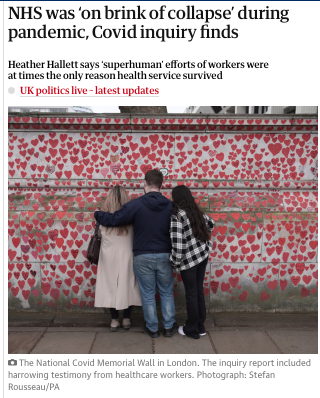
The latest module of the Covid Inquiry has arrived…
… not with the razzmatazz of a brass band, or the fanfare of trumpeters, but with the quiet, inexorable tread, of a Mahler adagio…
… with a quiet devastating clarity.
It's not a story about a virus overwhelming a well-prepared system.
It is the story of a system that went into the pandemic weakened, already stretched, and everyone knew.
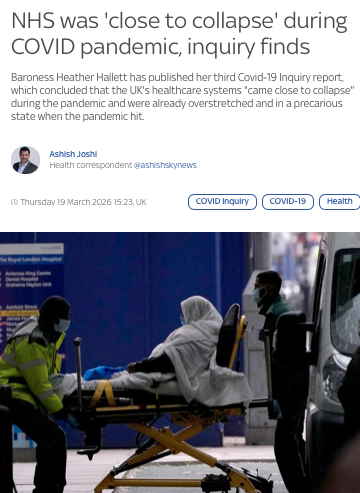
Baroness Hallett’s conclusion is measured but unmistakable;
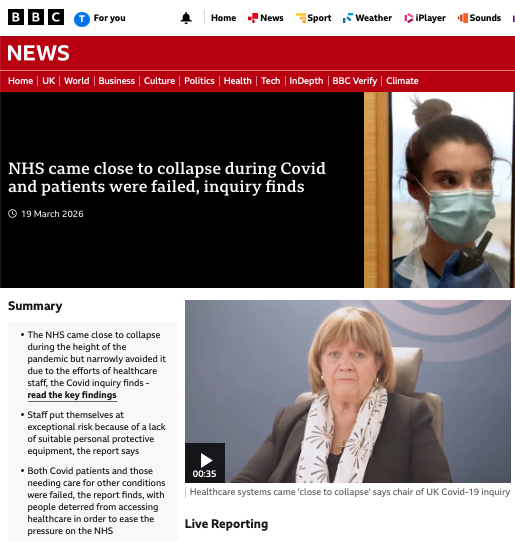
‘… the NHS and wider health systems coped, but only just.’
That phrase does a lot of work.
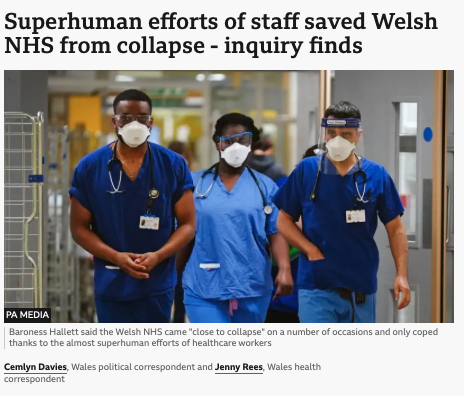
It acknowledges the extraordinary efforts of staff, but it also implies something more uncomfortable…
… this was not resilience by design,
… this was survival by gargantuan effort.
To understand why, you have to look back over the decade preceding the outbreak.
The Inquiry’s earlier work, (particularly Module 1) makes clear that the UK was not blindsided by a pandemic. The risks were well understood. Exercises had been run. Lessons had been identified. Plans existed.
The problem was not a lack of knowledge. It was a failure to act on what was already known.
Exercise Cygnus, for example, identified critical gaps in capacity and coordination, yet most of its recommendations remained ignored years later.
Other exercises produced similar warnings, but actions were either delayed, diluted or deprioritised.
By 2019, key strands of preparedness-work were paused as attention and staff were shifted to Brexit planning.
The system did not stumble into unreadiness… it drifted there.
This matters because Module 3 shows that when Covid arrived, it collided with a service running at full stretch.
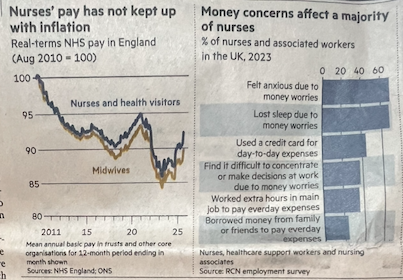
The NHS had, for years, been operating with high bed occupancy, persistent workforce shortages (~40,000 nurse vacancies).
An ageing, inadequate estate. Waiting lists already running at 3.4m.
No problems hidden. They were well documented, well rehearsed and crucially… tolerated.
Chris Whitty’s observation, cited in the report, is the most telling;
‘… running the system [so] tightly… was a choice.’
That's the pivot point…
- lack of headroom,
- absence of surge resilience,
- reliance on staff goodwill…
… these weren’t accidents. They were the cumulative result of deliberate policy decisions over the ten years that followed the world banking crisis.
This is where austerity, while not named in overtly political terms by the Inquiry, becomes unavoidable in the analysis.
The report is careful, but the implication is clear...
... funding constraints limited the ability of both health and public health systems to build and maintain resilience.
- Capital investment lagged.
- Infrastructure outdated.
- Workforce planning failed to keep pace with demand.
- Social care, fragile and underfunded and
- unable to support the NHS.
The consequence; a system that routinely ran hot.
Managing day-to-day pressures, with little or no headroom to absorb shocks.
High occupancy rates, often exceeding safe thresholds, meant there was no elasticity.
Beds existed on spreadsheets, but not always in staffed-reality. Plans assumed capacity that could not, in practice, be delivered.
When the pandemic struck, the NHS did not collapse, but that is not the same as saying it was prepared.
It coped…
… because staff stretched themselves to the limit,
… because elective care was cancelled,
… because normal services were disrupted,
… because patients bore the consequences…
… in delayed treatment, isolation and, in too many cases, avoidable harm.
What emerges from this report is a pattern;
- lessons identified, not implemented;
- risks acknowledged, not mitigated;
- capacity reduced in the name of efficiency; and
- resilience treated as expendable.
The Inquiry stops short of political judgement, but the narrative is clear...
... you cannot run a system at the edge of its capacity for a decade and expect it to absorb a once-in-a-century shock without consequence.
Covid did not so much break the NHS, as reveal the neglect it was in. The pandemic exposed the accumulated impact of years in which preparedness was partial, capacity was constrained and resilience was sacrificed.
The uncomfortable truth is this…
… austerity did not arrive by accident. It was forged in the Conservative-Liberal Democrat coalition and sustained by successive Conservative governments under David Cameron, Theresa May and Boris Johnson.
George Osborne set the fiscal course...
... the NHS was left to run hot, year after year. For ten years the NHS ran on uplifts of little more than 1-2%. Jeremy Hunt and successors managed its consequences.
Grants to councils were cut by ~40–50%.
The system did not drift into fragility.
It was managed there…knowingly.
-oOo-
Have the best weekend you can.
|