Estimated Reading Time: 6-8 minutes.


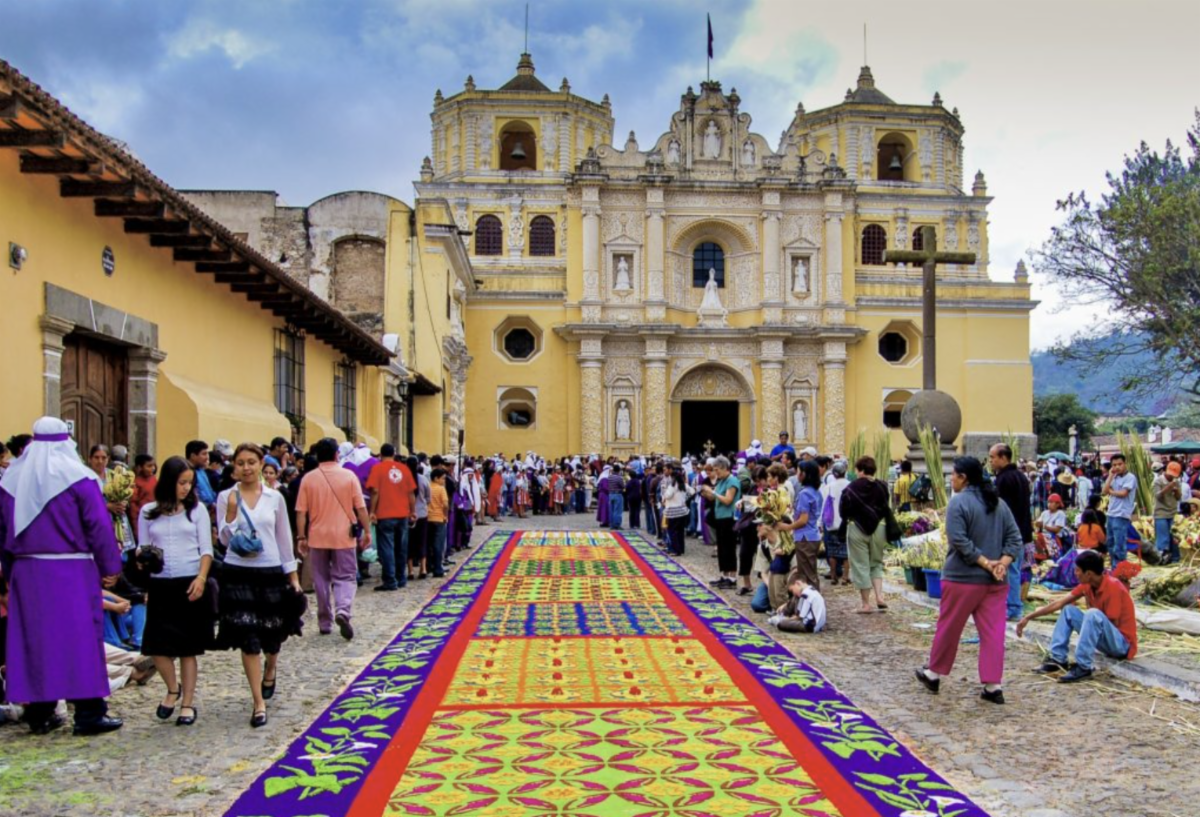
On a long ago trip to Antigua, Guatemala, my husband Will and I woke up very early to explore the streets. We did not expect to see a particular phenomenon unfolding: the streets were covered with dozens of handmade temporal carpets made of dyed sawdust, flower petals and seeds. These carpets or “alfombras” were stunning and intricate works of art that had been created painstakingly all throughout the previous night. We wandered the streets admiring the vivid colors, intricate patterns and truly awe-inspiring beauty all while watching people put finishing touches on the murals. It was like being in a live museum where the art was being created at the exact moment of observation and appreciation. I was transfixed and felt a deep sense of awe. 


Not knowing the traditions of Semana Santa, I was, well, just a little surprised when a few hours later the beautiful tapestries were completely demolished as the daily religious procession of Easter floats walked right over and through them. What had once been stunning works of art were now scattered sawdust and dead flower petals. Following the morning's procession, the streets were quickly cleaned and all trace of the carpets disappeared. Yet later that evening the mural making began anew. I learned more: the alfombras were often designed months in advance–plans were drawn out on templates, materials and colors carefully curated, and day-of scaffolding constructed to allow the creators to hover above them in order to create the carpets over the course of a single night. The works were designed to be briefly savored and then disappear. A cycle of creation and destruction. 


So began our week: we watched as each evening the murals were painstakingly created, and each morning the procession passed over them. We admired, savored and then watched as the art was upended. Unlike a piece of traditional art, no one would ever see the exact alfombra ever again. In this process of planning, creativity, destruction and rebirth, the goal was simply to create, savor–and then detach from the outcome. It was the ultimate tribute to the design process of visualizing, creating, prototyping and then starting anew. 


I wonder how the experience of looking at our lives, our schools and our decision making with less permanence and more fleetingness might allow us to savor “not knowing” and to trust a range of outcomes that might unfold? This process reminds us of the need for embracing liminality as we think about our schools, our lives and the nuance possible in decision making. 


Carla Silver, in her inaugural article this year, “The Liminality of August,” wrote about this important concept: 


"We all have experience with liminality: the times and spaces where we are leaving one thing and not quite at the next. The time between ending one job and starting another, or having left home but not yet arrived at a destination. The concept of liminality was first popularized by the anthropologist and ethnographer Arnold van Gennep, and later Victor Turner, who studied and wrote about rites of passage in various cultures. The idea of liminality served as a way to capture that space in the middle of a ritual: leaving one stage or status but not having fully entered the next."


As much as we might crave stability and predictability, the reality is that we are all always in a continuous cycle of change, caught between creating and destroying. In our schools, we regularly set up systems and practices to ensure predictability, student support and the best possible outcomes. Administrators carefully set up systems for hiring, admissions, fundraising and professional growth. Teachers prepare materials and processes for learning. Parents and students “get ready” to engage in the school year ahead, and the carpet is laid. While we don’t actively think of the school year as an act of destruction, it is, in fact, one that unfolds. We create a beautifully organized model as the year begins and often we need to start anew when events or plans abruptly change. We cannot always—or ever— anticipate what curve balls will come our way. 


The same patterns often emerge in our personal lives: As one area of our life feels stable, another area is most certainly changing. Some changes are welcome: a wedding, a new role or position, a graduate departing for college, a new apartment or home, a long-awaited vacation. Other changes are often connected to life’s greatest stressors: losing one’s job, illness, the ending of a relationship, watching one’s child struggle, supporting aging parents. And yet, for those of us who have navigated a difficult change, it often leads to a new outlook and a brilliant moment of opportunity. It’s almost impossible to see in the moment as we often want to know, with certainty, what will happen next. 

How might we embrace a spirit of not knowing and impermanence? What if we allowed ourselves a small piece of liminal space to sit between what was and what might be and savor not having the answer? How can we work on managing what’s happening internally instead of trying to control the external specifics of the decision?


In their new book, How to Live a Meaningful Life, Stanford Design School designers Bill Burnett and Dave Evans share their insights for making meaning when the outcome of what might be next is unknown. Developing curiosity and wonder are a driving ideas in their work. By starting with curiosity, it allows us to stop and observe closely and deeply before making a plan to respond. 


"When you are curious you don’t tend to see things to do; you just notice things as they are. When you get really good at curiosity, the tendency to turn your observations into tasks evaporates and you are confronted with the intrisic-ness of the world….Your attention has moved from tasks to be completed in the future to the here and now. Your curiosity has brought you into the moment, and you begin to shift from the transactional world to the flow world." 


In L+D’s work with schools and school leaders, we often observe a culture of doing, solving, checking things off a list. It’s a necessary part of a busy and demanding school world. Stuff needs to get done. And yet, in our fast-paced, now-focused world, how do we let ourselves breathe a bit to see what else might unfold in this process of not doing and not knowing?


Consider these practices as ways into slowing down, becoming more curious about oneself, and allowing the liminal to lead:


Listen to your body. 


As yourself—how did body feel when you made a good and important decision? Were you in “fight or flight” mode—a place where your sympathetic nervous system was triggered (not healthy) and you made a hasty decision out of immediacy vs. groundedness? How might you reset through breathing, time and sleep to get to the pace of “rest and digest” where your parasympathetic nervous system (that’s the heathy one) can process and weigh in. Ask yourself: How does your body feel when you are making “this” decision? Is your heart racing? Is your stomach upset? Are you breathing in shallow breaths? These are all indications that you are not in the ideal place for this decision.


Deliberately take more time.


State (to yourself and others around you) that you are not going to make a particular decision quickly or immediately. Review the classic list of options; urgent, important, urgent and important, neither urgent nor important. Which one is it? And if it is truly urgent, you will know. Many decisions feel urgent but actually are not—a few extra hours or even days may be just fine. Let people know you need more time to really ponder and explore options. Make this an expectation. 


Build in routines and space for not knowing— and be ok with it.


Consider keeping an "awareness journal” –make notes on how you respond to issues or topics that arise at work and at home with the goal of reflecting back on yourself. Where and how do you come to a decision? How do you show up physically and emotionally? When do you feel good about your process and outcomes? Burnett and Evans suggest a range of observation activities from using the lenses we use when visiting a museum (deep observation) to putting on “wonder glasses” as practice to enhancing creativity and insight. 


Expand beyond dichotomies –no more either/or! 


We can move too quickly into this or that. “I must find another job. I must stay in this role forever because….(pay, children, location, age, stage!).” Ask yourself: “what else” over and over again? Just like other brainstorming exercises, don’t stop at just two or at the obvious. Write out as many ideas as possible before you start to narrow down. Then, take a walk or a nap before assessing. Give your brain and body time to feel the options. 


Consider being “the never ending prototype.” 


Bill Burnett and Dave Evans remind the reader that “There is no final product” when making a decision about your life or career. This concept applies to so many decisions at work and at home. Consider a lifelong design process as part of how you operate when making significant work or personal decisions. 


Antonio Viva, L+D partner, also reflected on these practices in his article, “Leading in the In-Between” where he articulates that developing the ability to pause intentionally as a leader is a valuable and much needed skill to cultivate: 


"Knowing how to pause, observe, think, reflect and take in new information is where thinking of our leadership as a practice and not just a job can be effective. We are not pausing indefinitely or passively. We pause intentionally. To observe and listen deeply. To ask questions and gather perspectives. This allows us to lead in the in-between and notice what becomes visible precisely when the certainty has become disrupted."


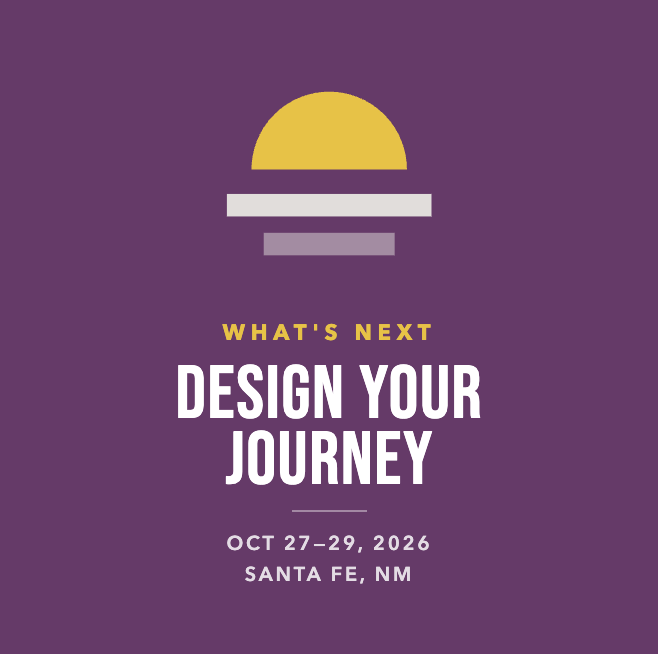
In the upcoming L+D October workshop "Design Your Journey” in Santa Fe, New Mexico, we will be experimenting with various ‘ways in’ to reflect on how you might design your life, as well as ways to consider new models of decision making and changes as you think about what is ahead. By giving yourself time and space—particularly liminal space—between moments, you just might be able to savor what happens when we slow down, admire the alfombras and be just fine with what happens next. As Burnett and Evans state, “The wise designer is an adaptive storyteller capable of weaving in new threads of the story as they appear.” Let yourself tell a new story about how you respond to change. 


What's Next: Design Your Journey is an opportunity to bring the principles of design to your own career trajectory. Join a cohort in beautiful Santa Fe, NM for a place-based opportunity to dig deeply into where you have been, where you are, and of course, to design where you are heading.


This is not a vacation. It's an investment in the leader your school needs you to be. This distinctive L+D workshop will give you the gift of time and space for introspection and reflection, as well as offer practical design skills and ways to take action.

Over six months, teams of educators and school leaders take on a real challenge at their school, supported by professional learning, coaching, and a structured design process. The Expedition culminates in an optional in-person pitch competition held adjacent to the 2027 NAIS Annual Conference* in Baltimore, where finalists compete for $15,000 in prizes. Learn more!

Badass Facilitator Training is not for those that are interesting in learning more about facilitation, it is a small cohort program geared towards more experienced facilitators.


A chance to dig deeper beyond the tools, activities, and moves, BAF is a chance to explore the responsibility a facilitator has to create, protect and expand a container for individuals and groups. The program is a lab, designed for practice, and participants will be actively facilitating during the program. Hosted by Antilles School in St. Thomas, U.S. Virgin Islands, it is as easy to get to as anywhere in the U.S. and an opportunity to learn in a unique and inspiring place.

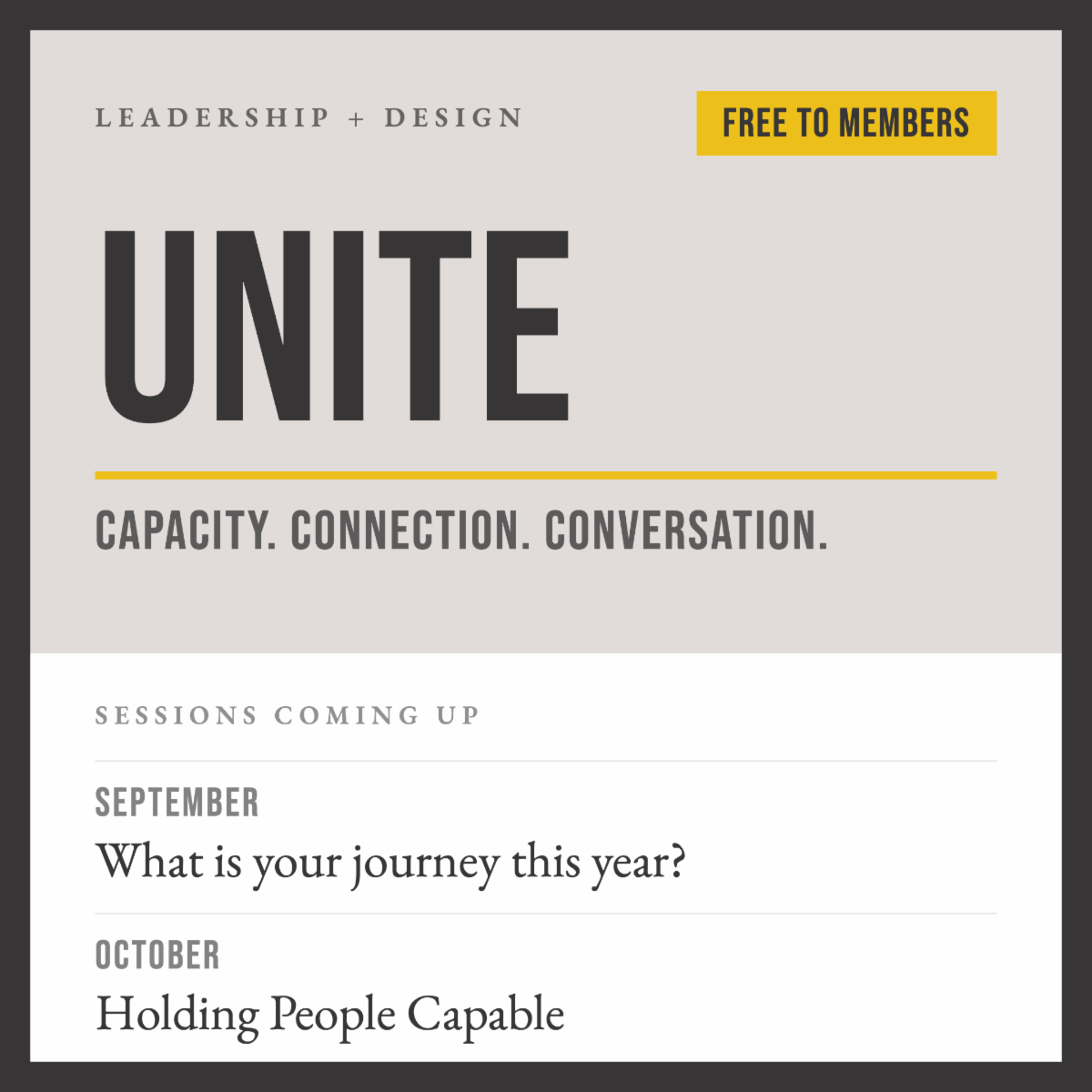
L+Doer's Unite is an online community that you join via subscription for a year. You can join as an individual or you can join as a school. Centered around regular offerings online, surprise toolkit offerings, and a #MightyNetworks community, it is an opportunity to build a network of other L+Doers.


  • Free Online Workshops
  • Job Postings
  • A town square where you can collaborate and share
  • Resources
  • Quarterly Surprise Drops


Contact Us:

info@leadershipanddesign.org

 
Instagram  LinkedIn