Estimated Reading Time: 5-7 minutes


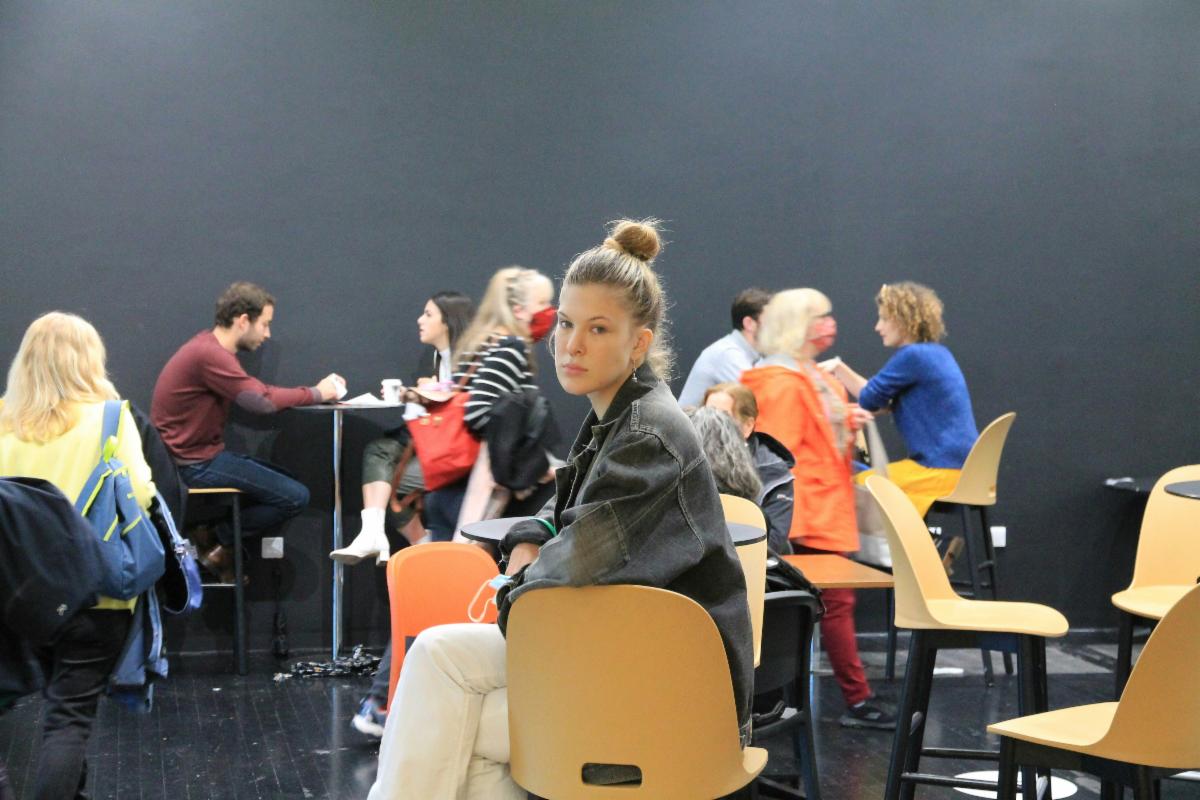
You enter the meeting late. The room is buzzing. People are mingling, chatting, and noshing, and everyone is starting to take their seats. You find a chair between two colleagues you don’t know well, although you’ve passed each other in the halls. Oh, yes! You might have worked with one of them on a committee a few years ago. Did you like working together? You can’t quite recall. You smile and say hello, and the meeting begins.


As the presenter starts to speak, you glance from side to side and wonder: What do I know about the people I’m sitting with? What is their life like outside of this space? Who are their people? What are their values? Where did they come from? Who am I to them? Where will they go when they leave this place? What makes them tick? What gives them purpose?


At this moment, you are practicing Sonder.


If you read Greg Bamford’s article a few weeks ago about the role of Sonder in strategic planning, you may remember his introduction to the concept. The word comes from The Dictionary of Obscure Sorrows, and it describes “the realization that everyone around you has a life as rich and complex as your own. Each person you pass is the main character of their own story, even if, to you, they are just extras in the background.” If you’d like a better feel for the concept, take two minutes to watch this video.


I truly believe practicing Sonder is one of the most powerful ways we can embrace our shared humanity and come to appreciate and admire the people around us: those we know well, those we pass every day at work, and those we meet only in a fleeting moment. When you build the habit of Sonder, you start to see the world differently. The perspectives of others begin to seep into your own.


But we work in busy places, and we live in a distracted society. When I worked in schools, I remember walking into a faculty lounge full of teachers and staff who were all living in a kind of parallel existence. It was an aloof place. It’s not that people were unfriendly or unkind, but they didn’t really know one another, and there wasn’t much effort to change that. I didn’t know anything about their lives outside of school, and they didn’t know the details of mine. Did they even exist after they left campus? Maybe, just maybe, they disappeared into the ether once they reached the BART station down the street.


There’s a term for that person now: the NPC, or non-player character, which comes from the world of video games. It’s the opposite of Sonder. An NPC is a background character in your game, while you (and only a few others) are controlled by real humans with agency and critical thought. The term even suggests that those characters may not exist when you aren’t there to see or hear them.


Lucky for us, our colleagues aren’t NPCs. They are wonderful, flesh-and-blood people with rich, messy, and interesting lives, just waiting to be discovered if we’re willing to look.

Here are seven ways you might practice Sonder in your workplace.

Ask banal questions. Every meeting is a chance to get to know someone a little better. Sometimes the meeting’s leaders will build in time for this, but that won’t always happen, so take it into your own hands. Arrive early if you can, and sit next to someone you don’t know. Use those in-between moments to ask a question that brings that person into sharper focus. I’m not talking about something deeply personal like, “Tell me about your relationship with your mother.” Try something like, “What did you have for breakfast this morning?” It might seem like a silly, inconsequential question, but it helps you picture your colleague doing something ordinary, far from the workplace. In that small moment, they come to life in a new way, and you get a peek into their world.


Picture your colleagues (or strangers) as children. There is something magical about this trick. Almost anyone becomes more human, more tender, and more relatable when you picture them as a child, surrounded by parents, siblings, grandparents, and maybe the family pet. Imagine them at play and at school. Wonder which parts of who they are today might have taken root in those early years.


“Stalk” a colleague at work. This isn’t as creepy as it sounds. It’s stalking in the best possible way. Without letting on, quietly observe a colleague for part of the day. Notice how they spend their free time, what they eat for lunch, and who they sit with. What are they wearing? When and how do they arrive? What time do they leave? Notice the choices they make, and appreciate that those choices are different from yours and belong to a person with their own agency. Wonder about this human who is not you.


Swap videos. This exercise, called the 30-Second Video, comes from the book Rituals for Work, by Kursat Ozenc and Margaret Hagen. It takes a bit more time and coordination than the others, and it’s less stealthy than the idea above, but it can offer real insight into the life of someone in your organization. Find a partner, ideally someone you don’t know well, and each make a short video of your day built from three-second clips. Start when you wake up in the morning and end when you go to bed. It doesn’t matter what you film; the idea is to capture about 10 moments, string them together, and then swap videos with your partner. Think of it as proof of life outside the moments you share.


Imagine the thought bubble. This is a game I like to play at airports instead of looking at my phone, but it works beautifully at work too, especially in meetings. Watch people and try to imagine a thought they might be having. Notice their facial expressions and other nonverbal cues. “This meeting is [fill in the blank].” “I’m hungry.” “What should I make for dinner tonight?” “I need to book that grooming appointment for the dog.” “I hope my son did okay on his math test.” “I need to pick up flowers before I visit my mom in the hospital.” Like picturing someone as a child, this game reminds us how wonderfully complex our fellow humans are. Their thoughts can be profound or simple, and that’s part of what makes them human.


Several years ago, the Cleveland Clinic created a beautiful and moving video showing that the best hospital care is really about empathy for patients. It can be hard to watch, but it shows the power of recognizing that the people around us may be going through something difficult, or something wonderful, that we know nothing about. It’s also a gentle reminder to offer others grace, because you never know what is happening in their lives.


Collaborate to build something. Find a colleague you wouldn’t normally work with, someone from another department, division, or office, and create something together that will add value to the workplace - something small like a warm-up for a meeting or a pop-up dance party or an interactive bulletin board in that “aloof” faculty lounge that gets people talking. When you create something with another person, you learn a lot about them, usually by just working side by side and making conversation and connection.


Look up at the night sky. Practicing Sonder is humbling because it moves you out of the center of the universe. Nothing makes me feel smaller, in the best way, than standing in a field on a clear night and looking up at a sky full of stars. I like to imagine other people all across the landscape looking up at the same moment - maybe I pick a colleague - and I picture them thinking about me while I’m thinking about them. I might feel small in that moment, but I never feel alone.


David Brooks’s book How to Know a Person, which came out a few years ago, encourages us to truly see other people and value them by getting to know their lives more deeply. Sonder goes one step further: it takes us out of the main character role and places someone else at the center, even if just for a few moments.


So give it a try! Practice Sonder this week at your school or organization, and let us know how it goes. We’d love to hear about your Sonder moments at info@leadershipanddesign.org.


Reframe the past, engage in the present and design for the future. Over two engaging, interactive days (April 15th and 16th, 2027) at Fort Worth Country Day School, participants in this program will cultivate their presence as optimistic futurists. Working in teams, they will practice the habits, mindsets needed to create a preferred future -- bringing tools back to their school.


We will time travel to 2037, using the signals of today to build out possible future contexts. We will imagine how schools might adapt and evolve to meet the needs, address the challenges, and leverage the opportunities of these unexplored futures.

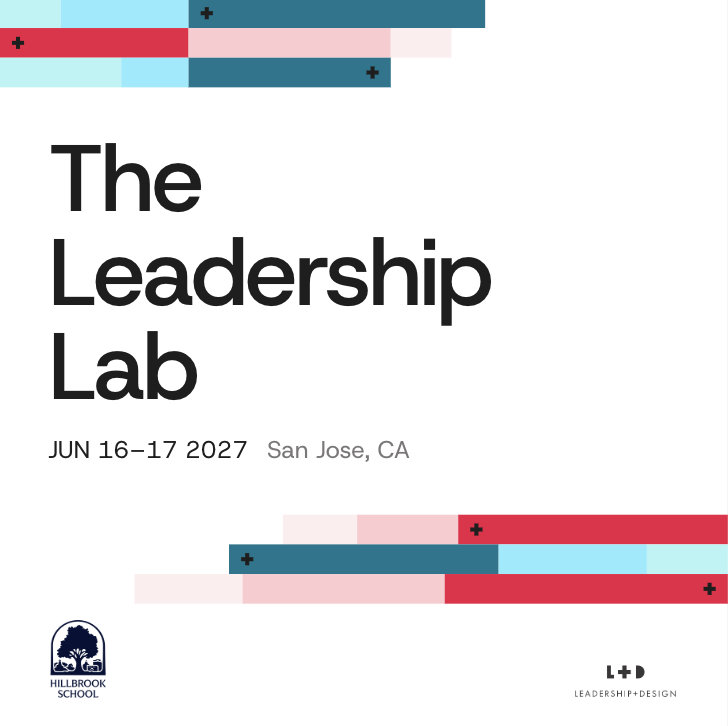
Leadership Lab - June 16-17, 2026 - Whether you lead now, and realize that leadership is not the same skill set you thought or if you aspire to be a leader, and you are looking for a learning experience that is experiential, Leadership Lab is exactly what you think - a lab. We experiment, we test, and we learn from experience. There is no dogma or right answers shared - we lean into the difficult reality that leadership is both personal and professional. Hosted this year in beautiful San Jose, California in partnership with The Hillbrook School,

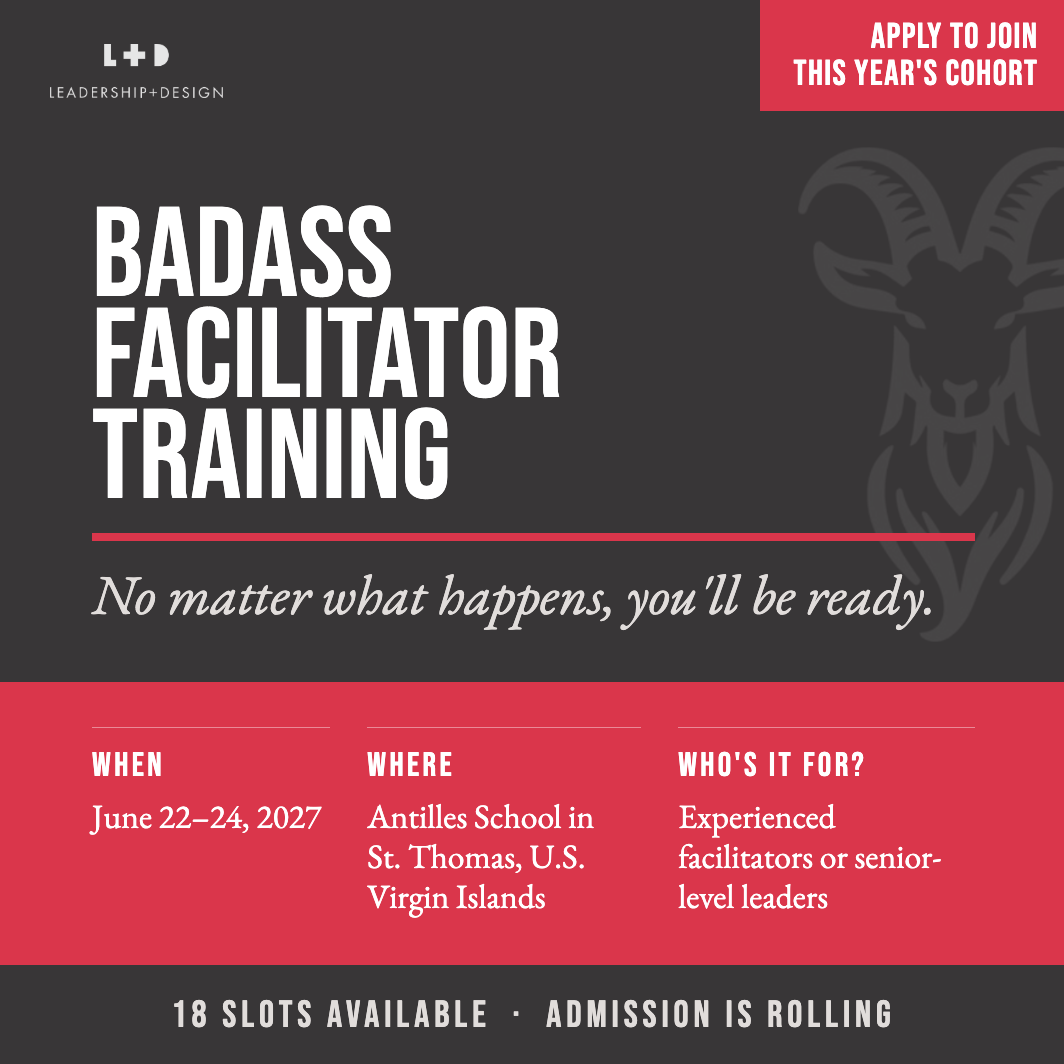
Badass Facilitator Training (June 22-24th, 2027) is not for those that are interesting in learning more about facilitation, it is a small cohort program geared towards more experienced facilitators.


A chance to dig deeper beyond the tools, activities, and moves, BAF is a chance to explore the responsibility a facilitator has to create, protect and expand a container for individuals and groups. The program is a lab, designed for practice, and participants will be actively facilitating during the program. Hosted by Antilles School in St. Thomas, U.S. Virgin Islands, it is as easy to get to as anywhere in the U.S. and an opportunity to learn in a unique and inspiring place.

L+Doer's Unite is an online community that you join via subscription for a year. You can join as an individual or you can join as a school. Centered around regular offerings online, surprise toolkit offerings, and a #MightyNetworks community, it is an opportunity to build a network of other L+Doers.


  • Free Online Workshops
  • Job Postings
  • A town square where you can collaborate and share
  • Resources
  • Quarterly Surprise Drops


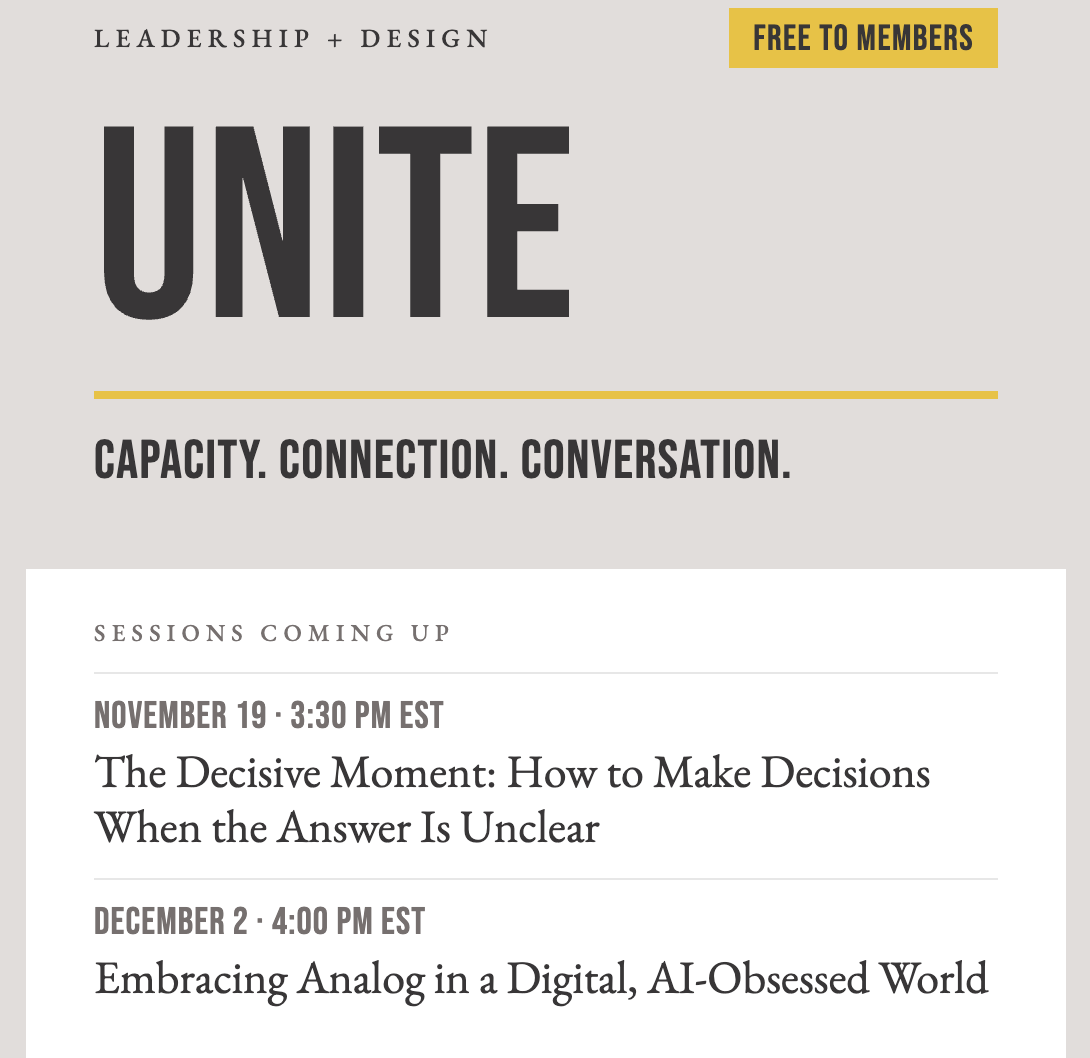
November's session is on decision making, and December is focused on how to stay Analog in a digital world.


Contact Us:

info@leadershipanddesign.org

 
Instagram  LinkedIn