|
Lake Auburn Watershed Protection Commission
Watershed Newsletter
| | |
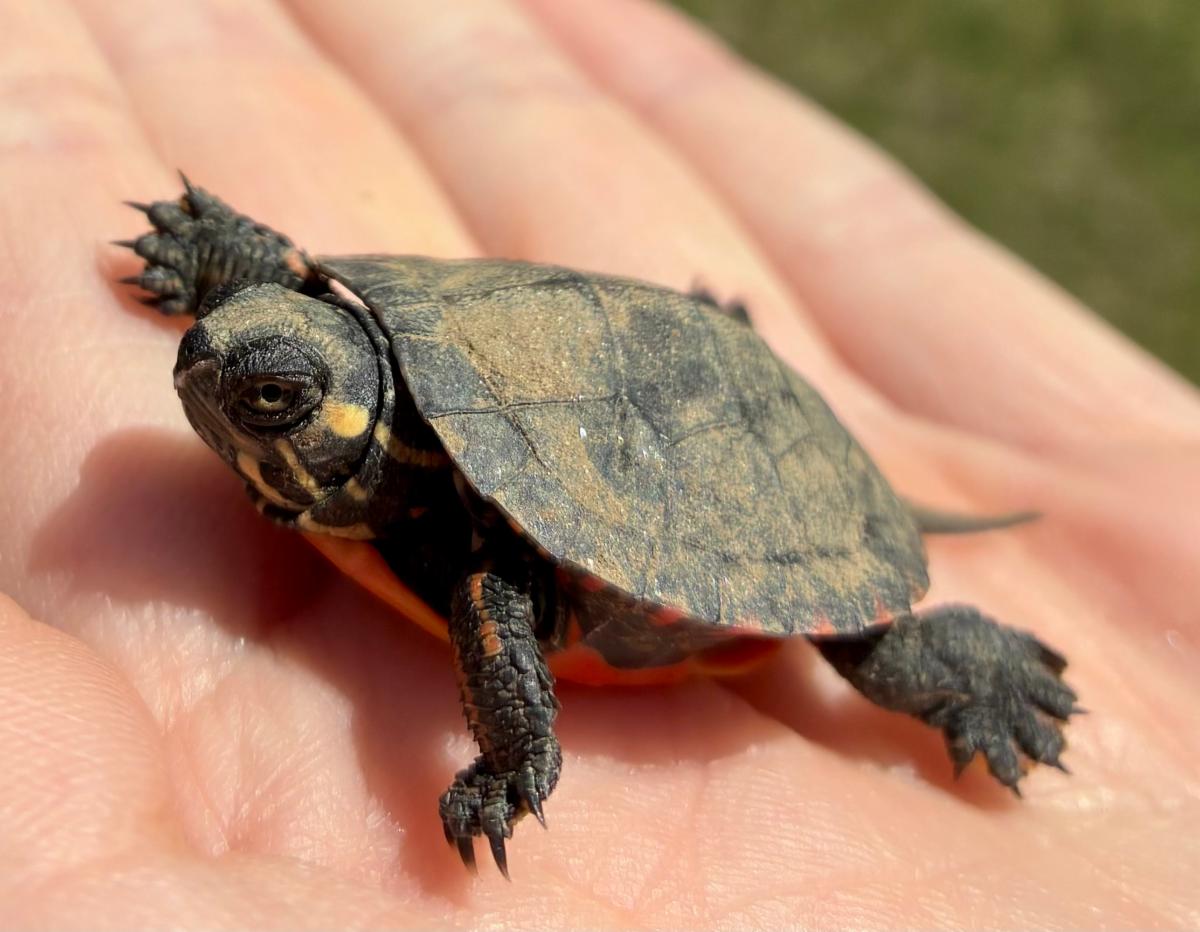
May absolutely flew by, and June seems to be moving at about the same pace! My goal for this month to stop and smell the roses, both literally and proverbially, and I find that being on the lookout for wildlife helps me slow down. I came upon this baby Eastern painted turtle in the parking lot recently, and got to hang out with them for a moment and dust them off before bringing them closer to the lake shore. It was a nice reminder for me of all the other living things with whom I share space, with agendas and needs of their own. I hope you can spend some time slowing down this month - maybe on or near Lake Auburn - and notice the other living things that call this watershed home.
Phoebe
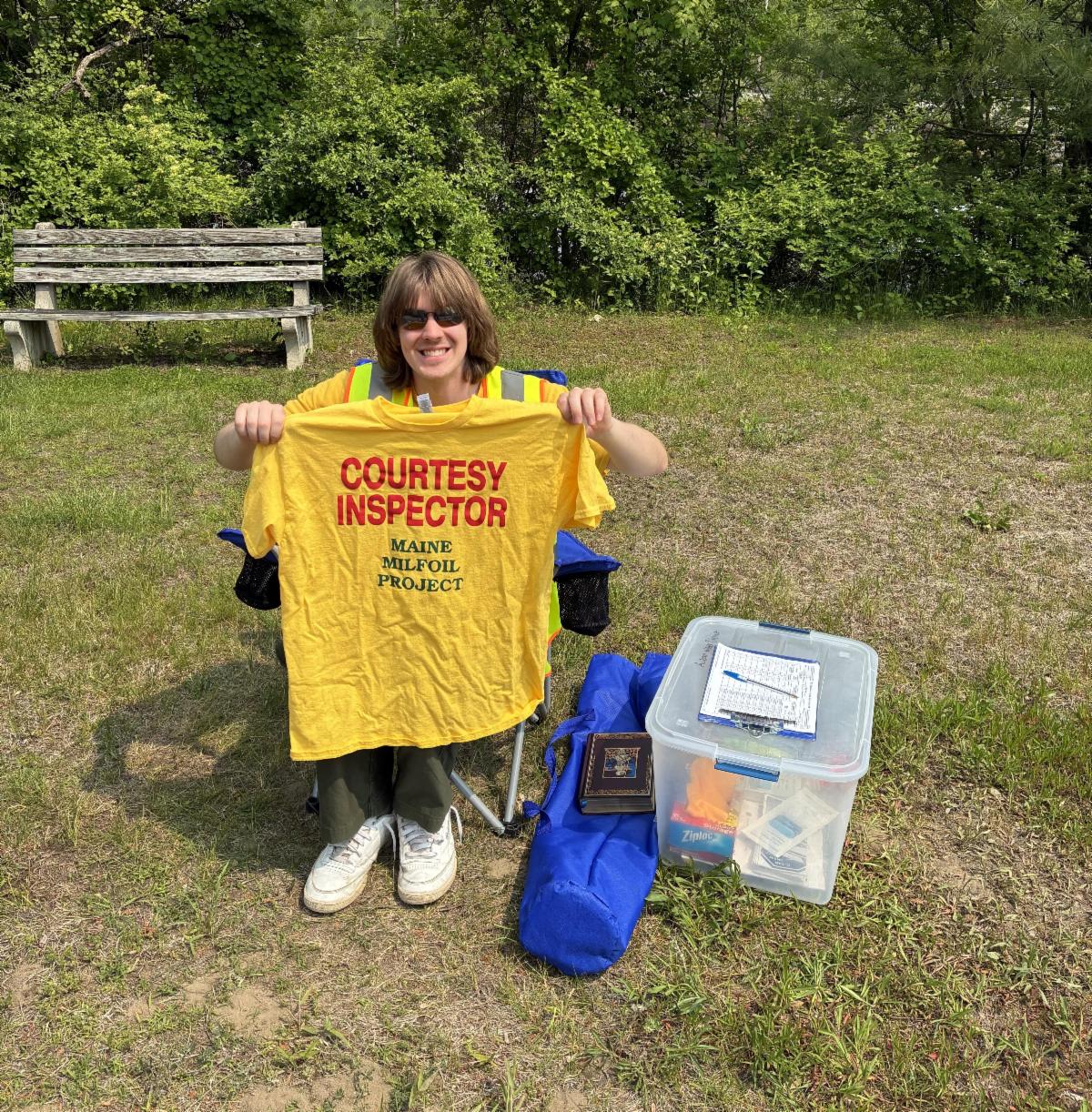
| | Be sure to say hi to Gabe, a Courtesy Boat Inspector for LAWPC, at the boat launch! | | |
REMINDER: Clean, Drain, Dry
Courtesy Boat Inspectors are on the job at the Lake Auburn boat launch! CBIs are there to help boaters inspect their boats and equipment, explain Maine’s laws about transporting aquatic plants, and provide support to help prevent the spread of invasive species. Talk with CBIs at the Lake Auburn boat launch this season to learn more about the program, and remember to always clean, drain, and dry your boat!
| | |
LAWPC Meeting
When: Wednesday June 11, 3:00-5:00pm
Where: Androscoggin Valley County Council of Governments office, 125 Manley Road, Auburn
Public attendance is encouraged at meetings of the Lake Auburn Watershed Protection Commission. Come learn about current watershed protection efforts and erosion control projects, and engage with the Commission during the public comment section of the meeting.
| | Upcoming Events Hosted by Our Colleagues | | |
Triennial Review of Water Quality Standards
When: Monday June 23, 9:00am - 12:00pm
Where: virtual meeting - see button below to register
Maine's Department of Environmental Protection is hosting a public information session regarding the triennial review of the state's water quality standards. This meeting will go over current proposals to update water quality standards, and the public is encouraged to both provide comments on the current proposals, and to submit their own proposals as well. This is a great opportunity to provide input on Maine's water quality standards, and to learn more about the state governing bodies that help protect your water.
| | |
Marsh & Stream Explorers
When: Saturday June 28, 9:00-11:30am
Where: Jamies Pond, Hallowell
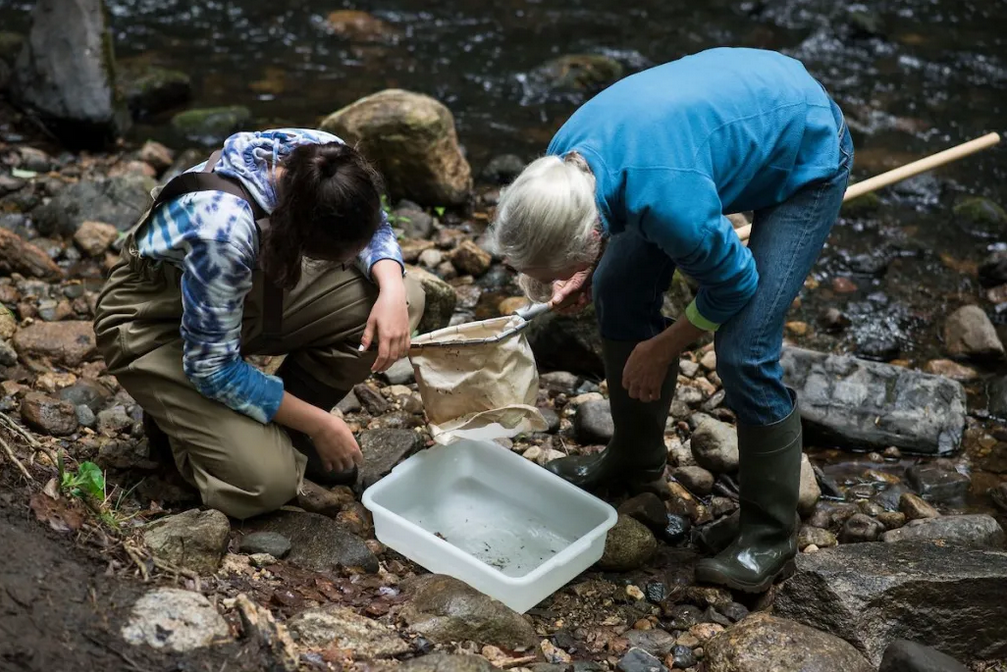
The Maine Department of Environmental Protection and Maine Audubon are offering a Marsh and Stream Explorers hands-on training. Their aim is to recruit, train, and support volunteers interested in searching streams and freshwater wetlands for large aquatic insects that are indicators of water quality. Participants at this session will learn how to find and identify "Least and Most Wanted" aquatic insects that are indicators of stream health, and will be asked to visit one to three streams between May and October to search for them. LAWPC will be hosting a Stream Explorers event later this summer, so come learn the basics now and then join us out in the watershed!
Photo from Maine Audubon website
| | | |
Reflections
May Birding Walk
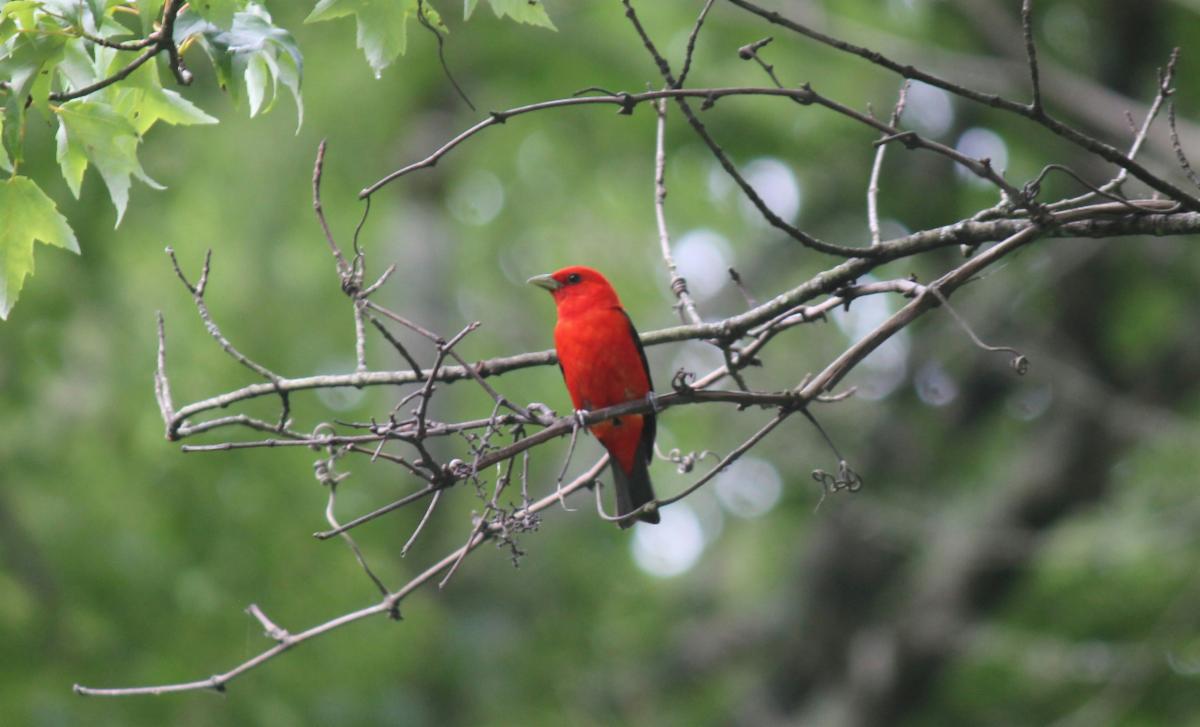
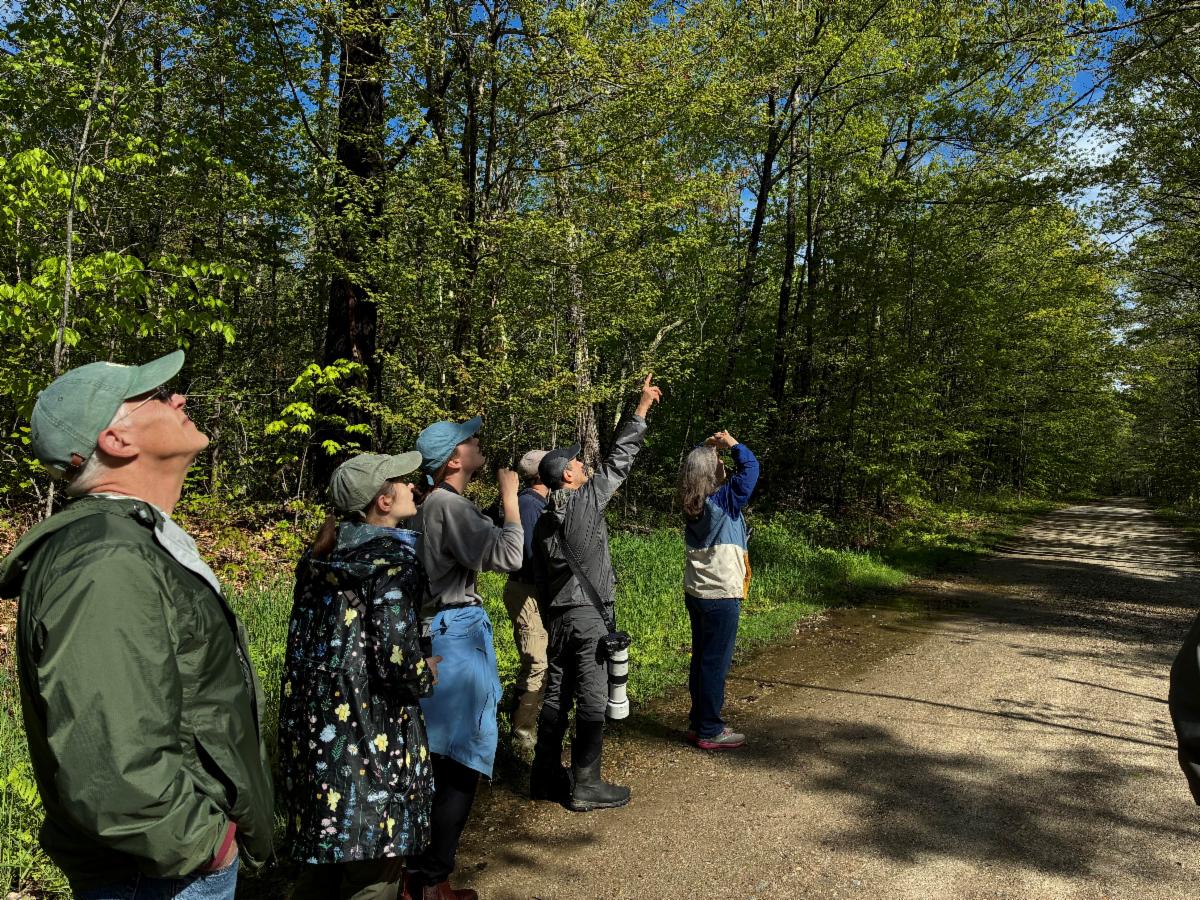
We got out in the watershed in May hoping to find some birds, and we were not disappointed! The group was led by Maine Master Naturalist Christine Murray, and spent the morning walking along Whitman Spring Road Trail. We observed 41 different species of birds in all, including a scarlet tanager, ruffed grouse, ruby-throated hummingbird, and 15 warbler species! A huge thanks to all who attended, and to Christine for guiding us.
Photo of scarlet tanager by anish lakkapragada on Unsplash
| | |
White-tailed Deer
Odocoileus virginianus
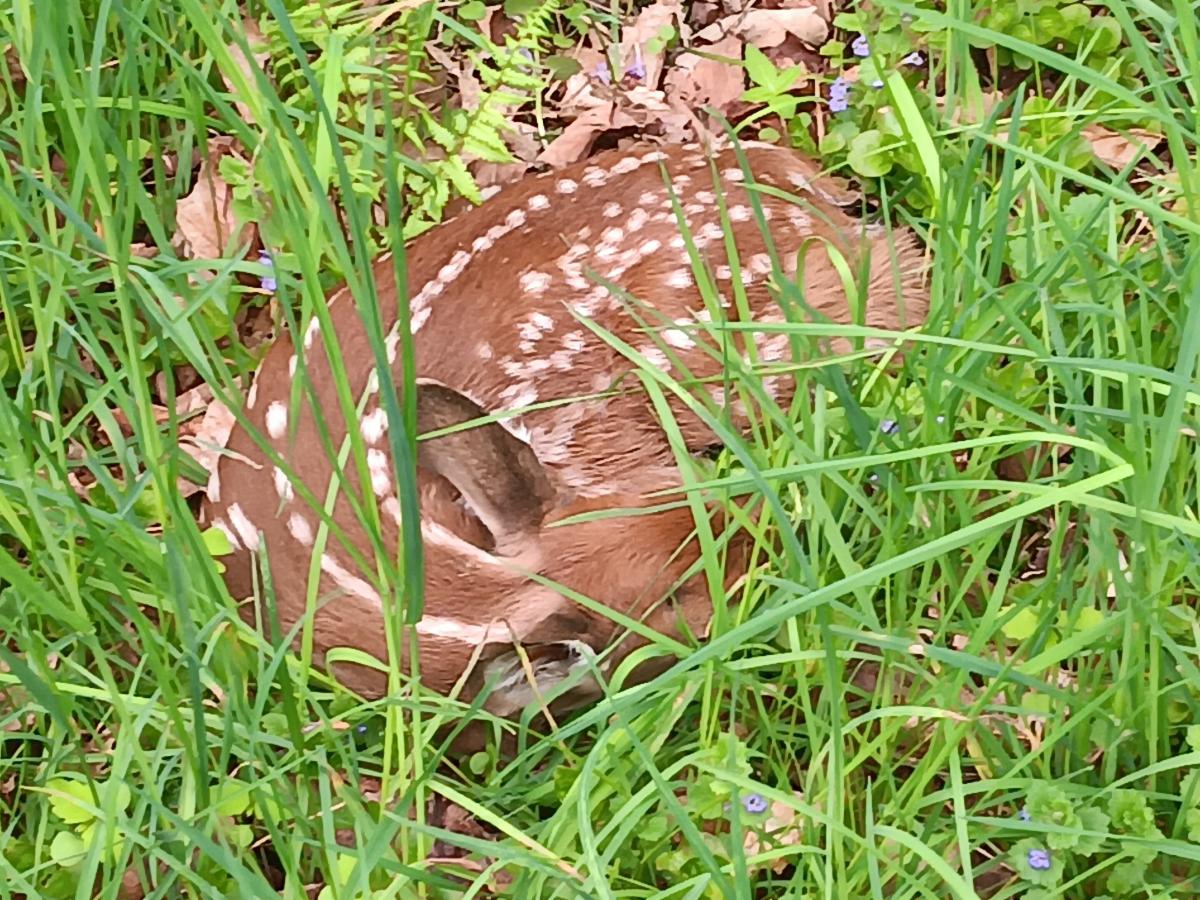
Peak fawning season is upon us! Does can give birth to anywhere between one and four fawns in a season. In Maine there are 130 fawns born for every 100 does, on average. Caring for an infant is a huge job for mothers of many species, white-tailed deer included. Does need to feed for much of the day in order to keep up the milk production needed to nurse their young. Before going off to feed, a doe will hide fawns on the forest floor to keep them safe until she returns, as they aren't yet strong enough to keep up with her while she grazes. If you come upon an unaccompanied fawn while out on a hike, its mother is almost certainly nearby and coming back to check on it soon. She may not do so with you (or your dog) nearby, so move away from the area to give the doe and fawn space, and to keep from alerting predators as to the fawn's location. If you see a fawn near a dead deer, or the fawn is injured in some way, call the Maine Department of Inland Fisheries and Wildlife dispatch center (1-800-452-4664) to be connected with a wildlife biologist or game warden who will tell you what to do next. Check out the flow-chart linked below to help you decide if a call to IF&W is necessary.
Photo by Rob Crosby
| |  | |
Emerald Ash Borer
Agrilus planipennis
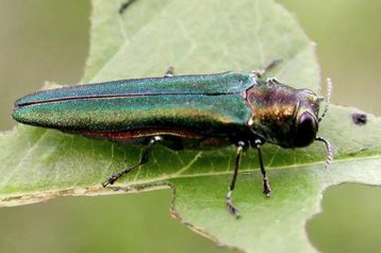
One insect you'll hope not to see this month is the emerald ash borer (EAB). Unfortunately, it is likely that you will become acquainted with this tiny green beetle, as all watershed land is now within the EAB quarantine zone. After hitching a ride to North America on cargo transported from Asia, the EAB has spread to 37 states and the District of Columbia since its first sighting in Michigan in 2002. The beetle lays its eggs in the bark of an ash tree, which is then eaten by the larvae who burrow into the tree to feed. This damages the inner bark and phloem of the tree, leading to vertical cracks in the bark and dead branches near the tree's crown. Excessive woodpecker activity can be a sign of an infestation - they will peel off the outer bark of an ash and punch holes in the inner bark to get at the larvae. EAB is at the highest risk of spreading between May 1 and October 1, but fortunately the infestation can only move a few miles per year on its own. To help limit the spread, use only local or certified heat-treated firewood, and use the Maine Forest Service's Tree Ailment Form to report an EAB infestation on your property.
Photo from U.S. Department of Agriculture
| | |
How Can I Help?
Pet Waste
| | |
You may have wondered why you need to pick up your pet's waste outside, when it seems like there are plenty of wild animals dropping their excrement on the forest floor all the time! Unfortunately, not all poop is created equal. Read on to understand the fundamental differences between wild animal waste and pet waste, and why it's critical to pick up after your pets to help keep our watershed clean:
What's the problem? Improperly disposed pet waste
Why does it matter? Pet waste is a leading source of nutrient and bacteria pollution in urban streams and waterways. When pet waste isn't bagged up and thrown away, it is broken down by rain and carried along in runoff, eventually ending up in local water bodies. This means that many of the poops you see on lawns and trails in the watershed will make their way into Lake Auburn, the drinking water source for Auburn and Lewiston. Whereas a wild animal both eats and defecates in the area in which it lives, creating a closed system in which nutrients are staying within the same area, pets generally eat food from outside the local area. The nutrients from their food are then added to the watershed, where they can cause algal blooms and even lead to fish kills. Pet waste can also transmit bacteria and parasites, leading to increased risk of disease for humans. There's no "safe" location to leave pet waste outside either - your own yard, the dog park, or a hiking trail... if you're in the watershed, it's all going to make its way into Lake Auburn.
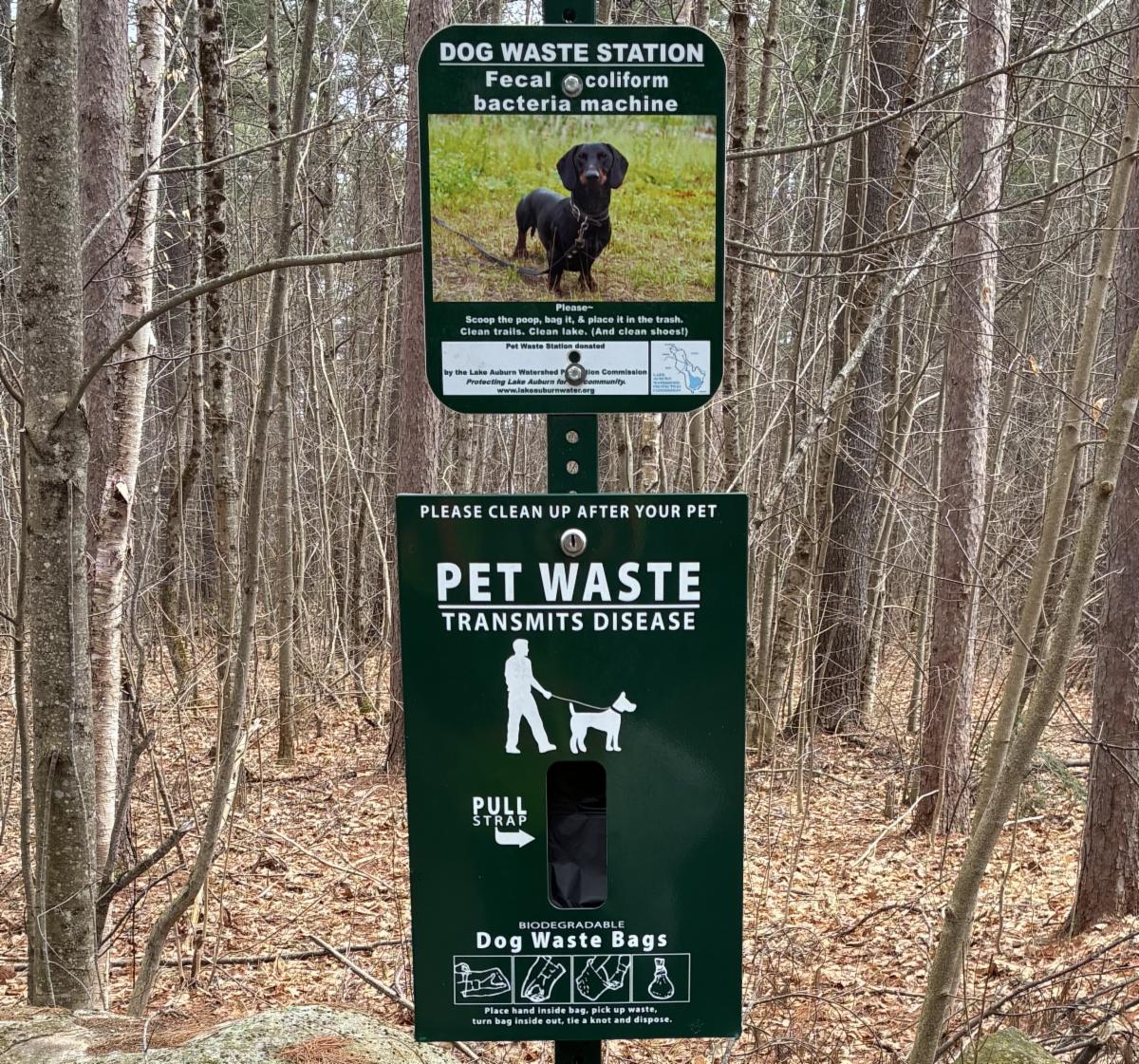
What can I do to help? Always scoop or bag up your pet's waste and dispose of it in the trash. Make sure to pick up your pet's waste no matter where you are, even in your own backyard. Use pet waste disposal stations at local trails and always keep extra bags with you, just in case.
How can I get more involved? If you notice that a pet waste disposal station on LAWPC property is full, let us know! Send an email to lakeauburnwater@lakeauburnwater.org, and be sure to include where the station is located. If you feel comfortable doing so, carry some extra pet waste disposal bags with you on hikes or walks, and offer them to pet owners who may need them. If pet waste is a problem in your neighborhood, consider setting up a waste disposal bag dispenser near the sidewalk for dog walkers to take from if they run out, and have conversations with your neighbors about the importance of proper waste disposal for water quality.
| |
Water Quality Spotlight
Lake Elevation
| |
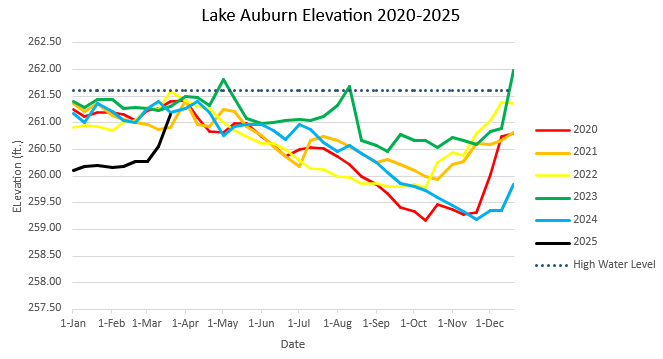
We had "well above average precipitation" in May according to NOAA, which was a wonderful thing for Lake Auburn. Water levels increased by 1.31 feet in just 24 days this spring - an increase of close to a billion gallons overall, and an average of 39,979,963 gallons a day! We are especially pleased with the higher levels given the drought conditions experienced throughout the watershed last fall and winter. Drought conditions expose more shoreline, destabilizing soil and increasing the risk of erosion. Lower lake elevations can also increase water temperatures, impact nutrient concentrations, and create more favorable conditions for invasive species. Water quality technicians monitor lake elevation weekly to track changes and help us understand seasonal fluctuations in Lake Auburn's water levels.
The graph shows lake elevation levels over the past five years, alongside the high water level of 261.60 feet. There are seasonal trends in lake elevation, with levels generally falling over the course of the summer and rebounding in late autumn. While numerous droughts have occurred in Lake Auburn's past, last year's drought was somewhat unique in that recharge occurred much later than usual. Fortunately, elevation levels are now back up to normal, but water quality staff will continue to monitor trends closely to help ensure the protection of Lake Auburn's exceptional water quality.
| | | |
Thank You
Lake Auburn Watershed Protection Commission (LAWPC) is incredibly grateful to have community members like you who care about Lake Auburn and support the protection of the watershed. Together, we can protect the drinking water source for tens of thousands of our neighbors in Auburn and Lewiston, provide a multitude of recreation opportunities, and keep Lake Auburn beautiful and clean for many years to come.
| | |
Join Us
If you are interested in becoming more involved with LAWPC, please fill out our
general inquiries form or email us at lakeauburnwater@lakeauburnwater.org. We are always looking for volunteers, and can work with you to find the best fit for your individual or group needs. We look forward to hearing from you!
| | Was this newsletter forwarded to you by a friend? If you’d like to receive our monthly newsletters, sign up here. | |
WE WANT TO HEAR FROM YOU!
If you would like to partner with us, or have ideas for events, volunteering opportunities, or other things you’d like to see happening in the watershed, let us know! Send us an email at lakeauburnwater@lakeauburnwater.org, or fill out our general inquiries form at this link. We look forward to hearing from you!
| | | | | |