Legislative Alert 1/25/24

View as Webpage


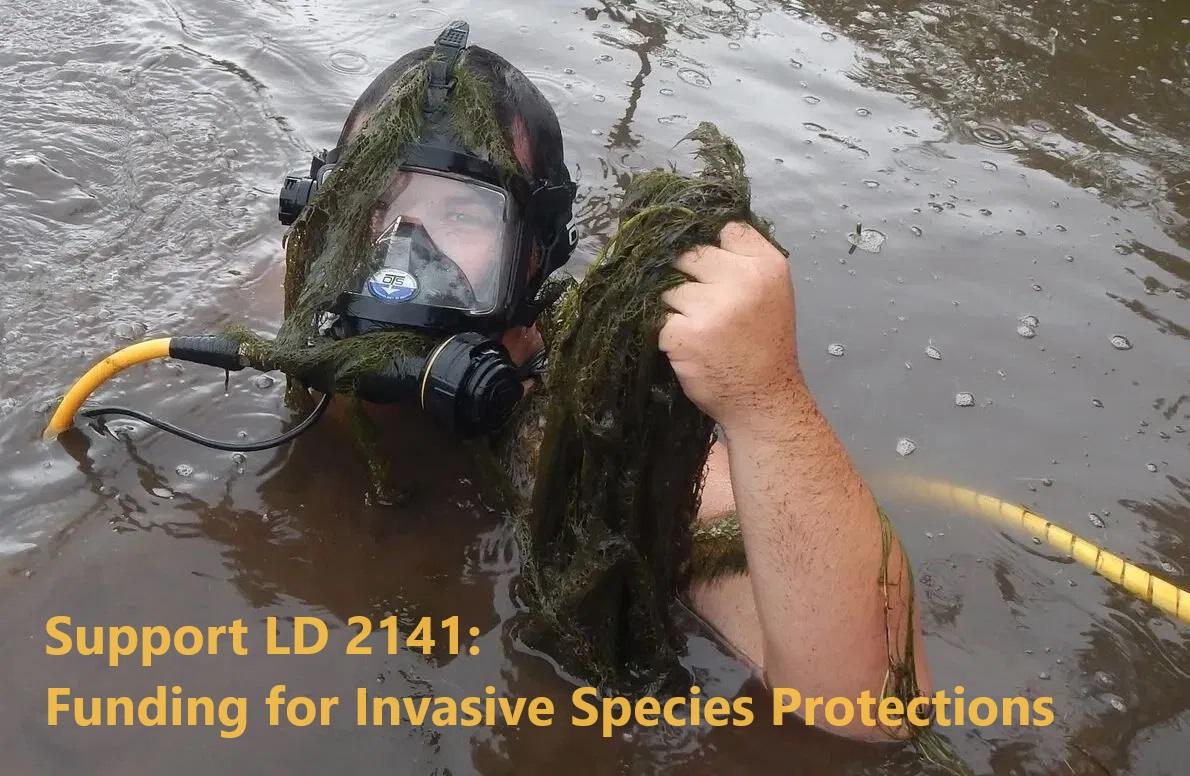
A Lakes Environmental Association diver pulls variable leaf milfoil from a lake in southwestern Maine. The milfoil can grow up to 15 feet long, making it unpleasant for swimmers and boaters and decreasing lakefront property values. (Photo credit: Lakes Environmental Association via BDN)


Dear Maine Lakes,


Inland Fisheries and Wildlife Committee Members need to hear from you!


Testify in SUPPORT of LD 2141: An Act to Enhance Protections for

and Better Address Invasive Aquatic Plant Infestations


Wednesday, January 31

1:00 p.m.

Room 206, Burton M. Cross Building

111 Sewall Street, Augusta


Invasive aquatic plants pose a serious risk to Maine's inland waters. They outcompete native plants, with potentially devastating effects on ecosystems, water quality, recreational opportunities, and property values.


For two decades, Maine's forward-thinking policies using a combination of paid staff and thousands of volunteers have kept new invasive outbreaks to a minimum and successfully managed many of our worst infestation. However, funding for these programs has not kept pace with inflation or the growing scope of invasive species spread. Nonprofit organizations across the state raise close to a million dollars each year for invasives prevention and proactive monitoring, but they are stretched to their limits.


LD 2141 provides a one-time influx of funding for invasive species work and has three parts:


  • Appropriates $2,000,000 to the Invasive Aquatic Plant and Nuisance Species Fund to address the most serious aquatic plant infestations. Managing existing infestations reduces the risk of spread, and benefits all who use Maine’s lakes. Whether you boat, bird, swim, ski, fish, or just enjoy lake scenery, your lake experience will diminish significantly as invasives spread and degrade water quality and habitat for fish and wildlife. 


  • Requires the Department of Environmental Protection (DEP) and the Department of Inland Fisheries and Wildlife (IFW) to strengthen watercraft inspection protocols. Recognizing that boats coming out of heavily infested waters pose a greater risk of invasive spread than those coming out of other waters, the bill asks the two departments to assess if current protocols are adequate for these waterbodies, and to develop guidelines for stronger protocols where needed.


  • Requires DEP and IFW to review policies and procedures for surface use restrictions. Boats passing through areas with invasive infestations are more likely to pick up plant fragments and transport those fragments to new lakes. Surface restrictions in areas of the worst infestations are a common-sense tool that can reduce that spread.  


Your testimony will make a difference!


Please consider testifying in person at the hearing. Your spoken testimony is the most impactful way to deliver your message! Click here for tips on delivering testimony as well as logistical information. Spoken testimony is generally limited to three minutes. (Click here for an update on parking near the State House).


Written testimony is a great way to share your story when you can't be there in person. You can submit testimony here. Click here for tips on writing testimony.


See below for sample testimony to help you get started.


Thank you for all you do for lakes, and for taking the time to speak to the committee about LD 2141 (and see note to right about another bill that will be in the IFW Work Session that day).

Work Session for LD 1342:

Increase Sustainable Funding of Invasive Species Programs


After the hearing for LD 2141, there will be a work session on LD 1342, a bill carried forward from the last legislative session that increases the fee for the Lake and River Protection Sticker in order to increase on-going, sustainable funding for invasive species work.


There is no opportunity to publicly speak for this bill (the hearing was held last year).


You can still make a difference by reaching out to members of the IFW committee to urge them to vote in SUPPORT of LD 1342.


For a list of committee members and their emails click here (scroll down and look for the list on the left).


Together with LD 2141, these two funding bills will help support vital invasive prevention work on Maine's lakes.


Thank you!


Click here for the Bill Information page.

Please be sure check our advocacy page here for updates, and feel free to email sgallo@lakes.me with any questions or concerns.


Help garner more testimony for this bill by sharing the "view as webpage" link at the top of this email.


Thank you again for testifying, and I hope to see you at the hearing next week!

Susan Gallo

Executive Director

Maine Lakes

Sample testimony


While you can cut and paste this letter directly into the online testimony portal, or read it at the hearing, adding additional information or stories to personalize your message and connect your experience to the bill makes your message much more meaningful. 


Some ideas for personal stories:

  • Have you had a particularly memorable encounter with an invasive infestation?
  • Have you seen the negative impact of an infestation on a lake near you?
  • Are you a Courtesy Boat Inspector or a lake association that dedicates significant time toward reducing invasives spread?
  • Are you on a lake near an infestation and worry about water quality, wildlife habitat, or property values, should the infestation spread?


Add some personal experience to your letter, then deliver it via the online testimony portal or read it in person at the hearing next week. Note that spoken testimony is often limited to three minutes.


Dear Chair LaFountain, Chair Landry, and members of the Inland Fisheries and Wildlife Committee,


I am expressing my support for LD 2141, a bill that will fund critical work to reduce the spread of invasive species.


This work benefits all who swim, work, live or play on Maine’s lakes, as well as the fish and wildlife who make lakes their home.


I care about this issue because I know how devastating invasive infestations can be to a lake, its wildlife, and its surrounding community, with far-reaching impacts to habitat, economic values, and tourism.


The needs for managing current infestations of invasive species, as well as reducing the risk of spread, far exceed the current funding available.


I urge you to support LD 2141 in order to protect the future health of Maine’s lakes.


Thank you for your time and consideration,


Your Name

Your Town

Your Favorite Lake


Click here to renew your membership or donate to Maine Lakes


Join us on Facebook, Instagram, and the

Maine Lake Talk Slack Channel.


Thank you for your support!