|
28 November 2025 (somewhere over the Atlantic) - As I wing myself back to the U.S. for my final "America" trip this year, I have been scrolling my iPad to catch up on my article timeline.
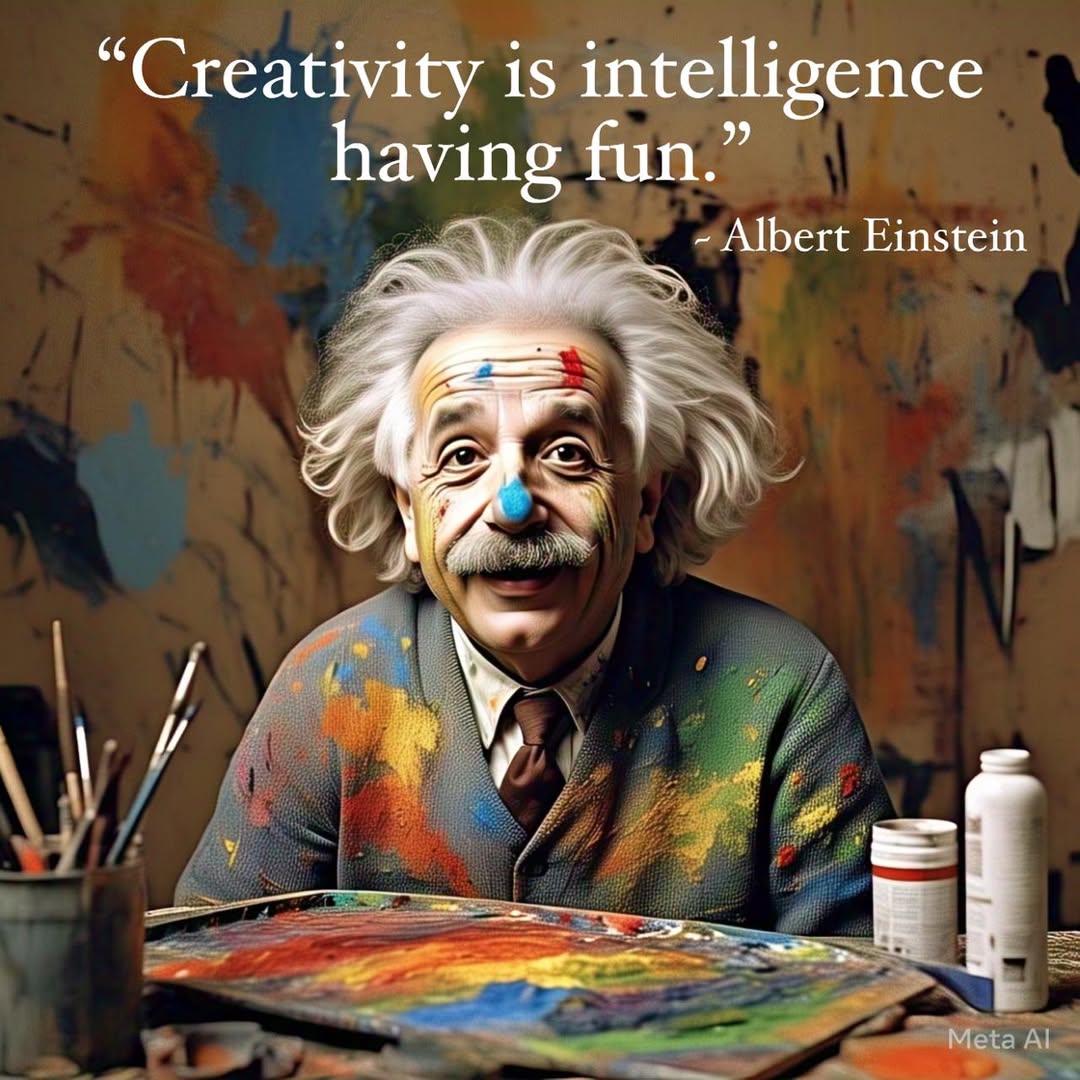
I read “A Mathematical Ceiling Limits Generative AI to Amateur-Level Creativity”.
The main idea is that the current approach to smart software does not just answer stuff dead wrong, but the algorithms themselves run into a creative wall. Here’s the alleged reason:
The investigation revealed a fundamental trade-off embedded in the architecture of large language models. For an AI response to be effective, the model must select words that have a high probability of fitting the context. For instance, if the prompt is “The cat sat on the…”, the word “mat” is a highly effective completion because it makes sense and is grammatically correct.
However, because “mat” is the most statistically probable ending, it is also the least novel. It is entirely expected.
Conversely, if the model were to select a word with a very low probability to increase novelty, the effectiveness would drop. Completing the sentence with “red wrench” or “growling cloud” would be highly unexpected and therefore novel, but it would likely be nonsensical and ineffective.
Cropley [he's the guy that did the study] determined that within the closed system of a large language model, novelty and effectiveness function as inversely related variables. As the system strives to be more effective by choosing probable words, it automatically becomes less novel.
Let me take a whack at translating this quote, what I think he means.
LLMs like Google-type systems have to decide:
- (a) be effective and pick words that fit the context well, like “jelly” after “I ate peanut butter and jelly”
or
- (b) the LLM selects infrequent and unexpected words for novelty. This is what leads to LLM wackiness. Therefore, effectiveness and novelty work against each other - more of one means less of the other.
The article references some fancy math and points out:
This comparison suggests that while generative AI can convincingly replicate the work of an average person, it is unable to reach the levels of expert writers, artists, or innovators. The study cites empirical evidence from other researchers showing that AI-generated stories and solutions consistently rank in the 40th to 50th percentile compared to human outputs. These real-world tests support the theoretical conclusion that AI cannot currently bridge the gap to elite [creative] performance.
Before you put your life savings into a giant "can’t-lose" AI data center investment, you might want to ponder this passage in the article:
For AI to reach expert-level creativity, it would require new architecture capable of generating ideas not just tied to past statistical patterns. Until such a paradigm shift occurs in computer science, the evidence indicates that human beings remain the sole source of high-level creativity.
A few observations:
-
Today’s best-bet approach is the Google-type LLM, which is exactly what my boss, Gregory Bufithis, wrote about earlier this week. I had one of my "DAMN! I wish I had said that!" As Greg noted, it has creative limits (as well as the problems of selling advertising like old-fashioned Google search and outputting incorrect answers) but it is moving to setting up creativity barriers that its competitors may not be able to match.
- And, as Greg said, the method itself erects an internal creative barrier. This is good for humans who can be creative - when they are not doom scrolling.
-
Finally, as The Boss said, there is a paradigm shift afoot that could . . . could . . . make those giant data centers extremely large white elephants which lenders are not very good at herding along.
It's why he said it does not matter if we are in an AI bubble or not. Right before I boarded my flight he texted me:
After three years of immersion in AI, I have come to a relatively simple conclusion: it’s a useful technology that is very likely overhyped to the point of catastrophe. But it doesn't matter. Because we've (finally) found out what AI is really for.
And I'm not stupid. Generative AI presents broader challenges to the integrity of our society. First is to truth. We’ve already seen how internet technologies can be used to manipulate a population’s understanding of reality. The last ten years have practically been defined by filter bubbles, alternative facts, and weaponized social media — and that was without AI.
And the scale is tipping. I don’t worry about the end of work so much as I worry about what comes after, when the infrastructure that powers AI becomes more valuable than the AI itself, when the people who control that infrastructure hold more sway over policy and resources than elected governments.
I know you picture me wildly gesticulating at my crazy board of pins and string, but I’m really just following the money and the power to their logical conclusion.
Bottom line? I agree with Greg, and I like the angle David Cropley is taking in the cited article.
And I’ve been watching technology long enough to know that when something requires this much money, this much hype, and this many contradictions to explain itself, it’s worth asking what else might be going on. The market concentration and incestuous investment shell game is real. The infrastructure is real. The land deals are real. The resulting shifts in power are real.
But whether the AI lives up to its promise or not, those things won’t go away. And sooner than later we will find ourselves citizens of a very new kind of place that no longer feels like home, but we may not care because we'll have this new tech called AI (and it really works!) and so all will be well 🤪
|