CHINA MAY HAVE BEGUN PLAYING ITS "TRUMP CARD"?
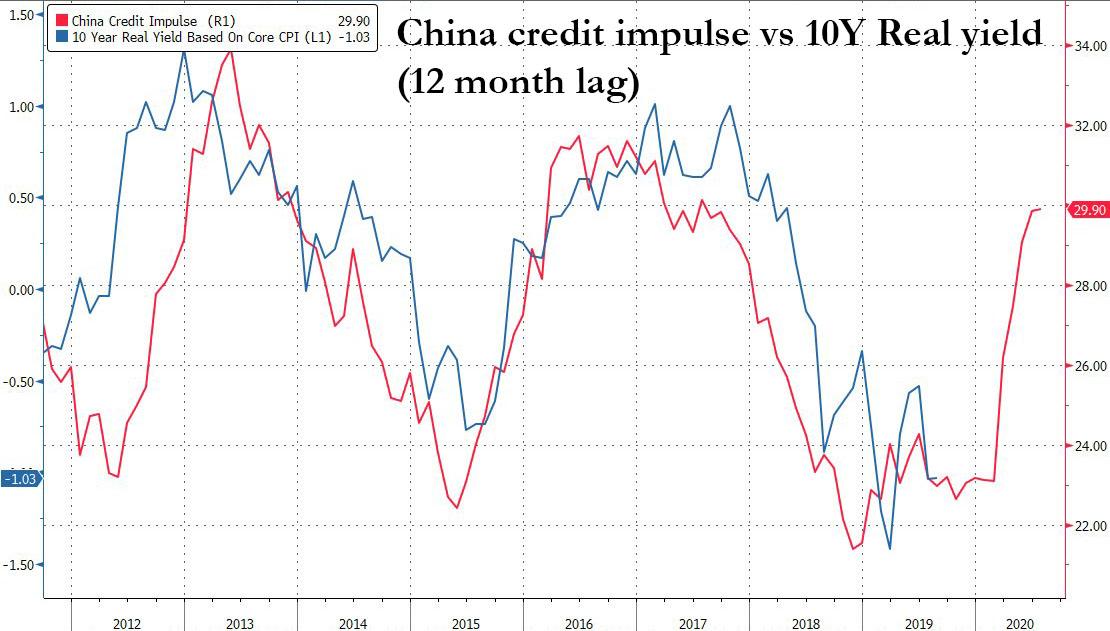
What most are forgetting is that when it comes to any global reflationary spark, China - and its $40 trillion financial system which is double that of the US - has been a far more critical reflationary driver than the US ever since the financial crisis. China's notorious credit impulse (which as UBS admitted several years ago is the only thing that matters for global reflation), and which is a function of how much credit Beijing creates leads real 10Y yields with a 12 month lead time (which we outline in the Addendum below). A rising Real Rate is the Achilles Heel for an over-leveraged and indebted US Economy which China fully recognizes.
TIMING IS EVERYTHING: WHAT IS NOW GOOD FOR CHINA IS BAD FOR AMERICA!
We stated is our last newsletter that:
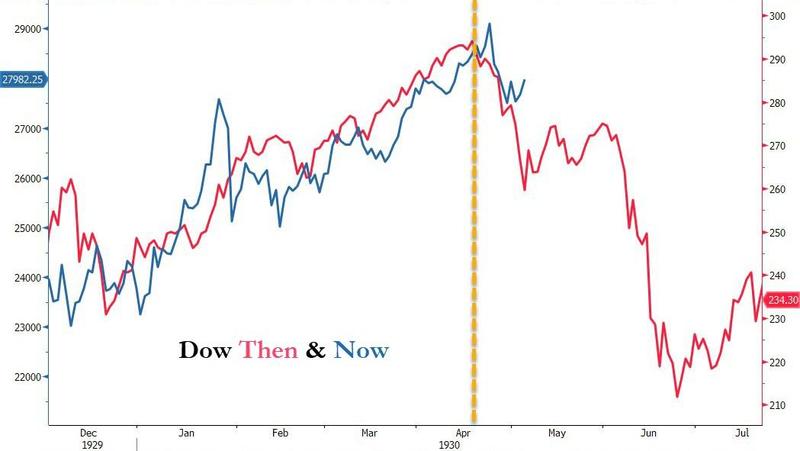 With some $27 trillion in foreign securities and dollar deposits, the US dollar is particularly vulnerable to natural liquidation by foreigners as they continue repatriating funds to their home currencies as bi-lateral trade agreements expand due to the weaponization of the US$ through sanctions - a process we outlined in the 2019 Thesis Paper: "De-Dollarization". - For this and other reasons it can be expected that markets will consequentially begin to discount rising dollar interest rates, thereby undermining financial asset values around the world.
- Rising interest rates will be accompanied by a large fall in overpriced bond and stock markets as speculative positions are unwound with the undermining of bank solvency ratios.
- The inevitable outcome will amongst other hard asset areas be an increasing flight to Commodities, including Gold and Silver. This will expectantly be despite rising interest rates for Fiat Money.
We now need to expand on the "other reasons" and why these are the "Trump Cards" China is Preparing to use. China is well aware of how vulnerable the US is presently in with the US stimulus Stalemate. China can be expected to take full advantage of the current chaos in the US to stake the course for the coming New Cold War!
China is well prepared:
CHINA HAS PREPARED FOR AN INEVITABLE CONFLICT WITH THE US:
- CHINA HAS SYSTEMATICALLY LOCKED IN GLOBAL COMMODITY SUPPLIERS OVER LAST 15 YEARS,
- Dominant Investment positions in Africa, South America and Asia
- CHINA HAS ACCUMULATED MASSIVE GOLD HOLDINGS,
- China now holds 62.26 million ounces - about 1,945 tons - of gold, according to data from the People's Bank of China. The sum is worth approximately $93.4 billion at current prices. The country has added about 94 tons of gold to its reserves in the past eight months.
- Gold mining in the People's Republic of China has made that country the world's largest gold producer by far with 463.7 tonnes in 2016 (Wikipedia)
- CHINA HAS SECURED A STRATEGIC POSITION WITHIN THE IMF'S SDR RESERVE SYSTEM
- CHINA HAS DEVELOPED STRONG REGIONAL AND GLOBAL ECONOMIC ALLIANCES
- BRICS,
- ASEAN,
- Shanghai Accord.
- CHINA HAS AGGRESSIVELY BUILT A MILITARY FORCE BIGGER THAN THE USA FOR AN INEVITABLE CONFLICT:
- Chinese Active Military Manpower: 2,300,000 US: 1,281,900
- Chinese Reserve Military Manpower: 8,000,000 US: 811,000
- Chinese Air Force - Fighters 1,150 US: 457
- Chinese Navy - Ships 780 US: 437
- Chinese Rocket Artillery 1,770 US: 1,197
- CHINESE NUCLEAR CAPABILITIES
- China has been outside the Strategic Arms Limitation Talks (SALT II signed in 1979), negotiations between the United States and the Soviet Union that were aimed at curtailing the manufacture of strategic missiles capable of carrying nuclear weapons. China has therefore has had free reign to develop and deploy Long Range and Intermediate Range Nuclear missiles while Russia and US were constrained. Trump was forced recently to exit the agreement for this reason.
RECENT CHINESE ACTIONS:
- CHINA HAS RECENTLY THREATENED SELLING ITS US TREASURY HOLDINGS
- CHINA KNOWS THAT THIS CREDIT IMPULSE WILL WRECK HAVOC AFTER THE US ELECTION :
CHINESE "TRUMP CARD"
We are not about 6 months away from the next major spike in real yields, which while probably not as violent as Stanley Druckenmiller expects with his forecast of 5-10% inflation, will be sufficient to cause another crash in both risk assets and Treasurys, and spark some real confusion within the Fed which by then will have firmly cemented the perception that no matter what happens to inflation or real rates it will not tighten financial conditions.
Alas, now that China is once again injecting credit in its economy at a furious pace and has even reactivated the shadow banking spigots, it appears that the next spike higher in real rates is scheduled to hit some time in early 2021.
-
US 10Y NOTE - TNX (YIELD) SUBSCRIBER LINK
LATEST MACRO ANALYTICS PUBLIC INTERVIEW
- VIDEO: 24 Minutes with 44 Supporting Slides A COMING SECULAR ROTATION?
|
|
|
ADDENDUMS TO THE SEPTEMBER LONGWave VIDEO
#1: REAL US TREASURY RATES WILL SOON RISE DRIVEN BY CHINESE CREDIT IMPULSE
THE US 10Y REAL YIELD MIRRORS THE CHINESE CREDIT IMPULSE WITH A 12 MONTH LAG
While the financial punditry is preoccupied with the Fed and its $7 trillion balance sheet, whether Powell is purchasing bond ETFs or has enigmatically stopped doing so (as it did in August), and whether the US central bank has any hope of sparking inflation (with or without the help of Congress), what most are forgetting is that when it comes to any global reflationary spark, China - and its $40 trillion financial system which is double that of the US - has been a far more critical driver than the US ever since the financial crisis.
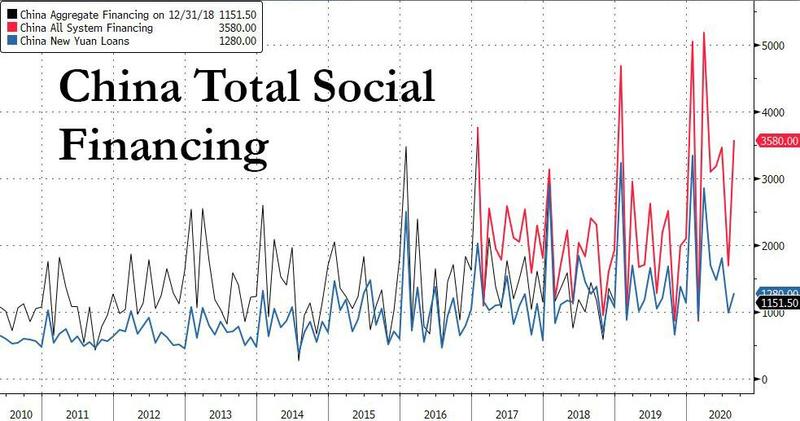
And so, five months after China injected a record 5.2 trillion yuan ($732 billion) in new total social financing - China's broadest credit aggregate - in March to offset the catastrophic hit its economy had suffered from the covid pandemic, Beijing once again surprised to the upside when in August China injected a whopping 3.58 trillion yuan into its economy ($520 billion), above the highest Wall Street estimate (1 trillion yuan above the consensus estimate of 2.585 trillion yuan) and the biggest monthly injection since the March record.
- New CNY loans: 1280bn yuan, exp. 1250 billion. Outstanding yuan new loan growth: 13.0% yoy in August, in line with the 13% increase in July 13.0%.
- Total social financing: 3580bn yuan, vs. consensus: RMB 2585bn.
- TSF stock growth: 13.4% yoy in August, higher than 13.0% in July. The implied month-on-month growth of TSF stock accelerated to 14.8% from 12.6% in July.
- M2: 10.4% yoy in August, below the consensus of 10.7% yoy. July, and down from 10.7% yoy in July.
Some observations:
- August credit data surprised the market to the upside, although even though the sequential growth of TSF rose to 14.8% mom annualized from 12.6% in July.
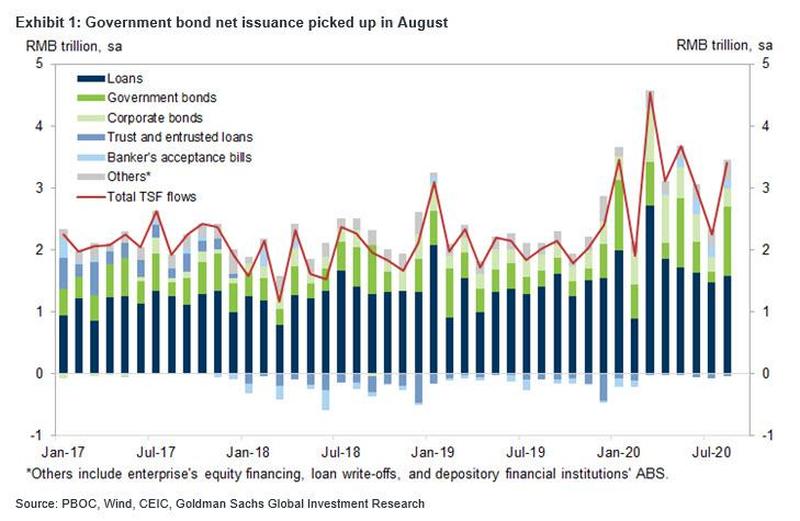
- Among major TSF components, government bonds net issuance contributed the most to the acceleration in August. Corporate bond issuance increased from last month despite higher interbank interest rates, suggesting further growth recovery
- Shadow banking rose after the steep drop in July, as Beijing appears to be easing its crackdown on sources of shadow funding. Banker's acceptance bills increased RMB 144bn in non-seasonally adjusted terms, reversing the contraction in July. The decline in trusted and entrusted loans remained modest in August. In total some 71 billion yuan in shadow debt was created.
- On loan extension, the increase in mid-to-long term loans to households remained relatively strong, consistent with the strong property sales suggested by high frequency indicators. The increase in mid-to-long term loans to non-financial enterprises picked up in August in seasonally adjusted terms.
- Finally, in an odd divergence, despite the biggest increase in TSY growth since the start of 2018, M2 growth moderated further to 10.4% yoy in August from 10.7% in July. While it remained well above 2019 levels, it begs the question of just where this newly created credit is ending up if not in the broader monetary aggregate.
Going forward, September TSF is expected to remain "robust" according to Goldman, on continued government bond issuance. Given the recent growth momentum and credit strength, policymakers are likely to stay on hold. That said, a slowdown in credit growth will likely come in Q4 as government bond issuance is likely to slow and monetary authorities are in no rush to loosen.
Why does China's record credit injection in 2020 matter? Because as we showed recently, China's notorious credit impulse (which as UBS admitted several years ago is the only thing that matters for global reflation), and which is a function of how much credit Beijing creates leads real 10Y yields with a 12 month lead time. As shown in the chart below, a simple correlation suggests that real yields are set to soar by 150bps from their current -1% to approximately 50bps, and that's assuming China does nothing to further stimulate its economy over the next 6 months #2: THE NEXT WAVE OF THE GLOBAL FISCAL RECOVERY STIMULUS WILL LIKELY TARGET INFRASTRUCTURE AND DRIVE COMMODITIY PRICES HIGHER - The next phase of the economic recovery is likely to be driven by commodity-intensive infrastructure investment as a result of needed government fiscal economic stimulus,
- "There is a massive infrastructure deficit in a lot of developed countries and that is something that could be addressed in this period" -- Nitesh Shah, Director of research at New York-based WisdomTree Investments reported to CNBC
- Shah also reported: "You can actually get through a lot of the infrastructure programs that you've been waiting decades to actually get through the door in this time. I'm not as optimistic on a big 'V-shaped,' rigorous recovery but even some sort of recovery is good for the industrial space."
- "Ultimately, if you look at the response economies are making to (the coronavirus crisis), we've had the fiscal response, we've had central banks slashing interest rates, we've had central banks pumping more money into economies, the next phase is massive investment in infrastructure and that's going to come globally." -- Andy Critchlow, head of news in EMEA at S&P Global Platts, reported on CNBC's "Squawk Box Europe"
- Looking ahead to 2021, Critchlow suggested some of the world's largest economies could soon announce "big" infrastructure developments.These projects were likely to be led by China, India and the U.S., he argued, noting that both candidates in the upcoming U.S. presidential election had pledged to spend an "awful lot of money" on infrastructure. "That's got to be good for oil demand and it's got to be good for commodities across the board."
- The Trump campaign announced the president's second term agenda last month, pledging to "build the world's greatest infrastructure system."
- Trump's prior commitments to "old school" infrastructure projects, such as roads and bridges, would likely be "steels-intensive."
- Democratic presidential candidate Joe Biden has pledged to spend $2 trillion "to build a modern, sustainable infrastructure and an equitable clean energy future." Biden has said, if elected, he plans to rebuild roads, bridges, green spaces and water systems as well as providing universal broadband.
- Biden's commitment to develop solar and wind technologies would likely benefit copper and, to a lesser degree, silver, he added.
- Analysts are currently watching for example iron ore very closely because industrial commodities are likely to move higher if we get an economic bounce-back driven by infrastructure spending,
- Note: In 2008-2009 in response to the financial crisis we got a rally in some of the industrial commodity markets
- China, which has been in recovery mode for months now, published data on Tuesday that showed industrial output growth accelerated to 5.6% in August when compared to a year earlier. It bolsters the view that Beijing's demand recovery continues to gather pace, with government stimulus helping to fuel a rebound,
- We've already seen a metals-intensive response in China, highly metals-intensive,
- "It has been absolutely stunning how strong China has rebounded on the construction side of things reflecting on the "spectacular" rally seen across the industrial commodity space as a result" - Max Layton, head of EMEA commodities research at Citi, told CNBC
- Spot iron ore prices climbed to fresh six-and-a-half-year highs trading close to $129 a dry metric ton on the back of a construction boom in China.
|
|
10Y UST NOTE - "TNX" (Nominal Yield)
THIS IS NOT A RECOMMENDATION
MATASII DOES NOT MAKE STOCK RECOMMENDATIONS.
Your LIVE DESK TOP / TABLET / PHONE
MACRO ANALYTIC Video Chart Link:
SUBSCRIBER LINK
NOTE: Any Problems with this Chart: E-Mail lcmgroupe2@comcast.net
|
LONGWave - SEPTEMBER 2020
VIDEO: 24 Minutes with 44 supporting slides.
NOTE: CURRENTLY AVAILBALE TO SUBSCRIBERS ONLY
FULL TRANSCRIPTION: SUSBCRIBER LINK
|
|
|
|
|
|