|
Building the Pathway to a Stronger Behavioral
Health Workforce in Louisiana
Taslim van Hattum, LCSW, MPH
Chief Program Officer
When we talk about the shortage of behavioral health professionals, we often begin with how to recruit more people into the field. How do we start educating young people about career pathways early? Education and recruitment are critical. And in behavioral health, and specifically social work, we also need to ask:
- What happens after people decide to enter the profession?
- What keeps them there or forces them to leave?
- What supports their skills, professional satisfaction, and growth?
- What allows them to practice in some of our most rural and at-need communities?
In Louisiana, the path from becoming a social worker to practicing clinical social work can be long, complicated, and expensive. People graduate from social work programs with significant steps still ahead before they can fully practice as licensed professionals. They must navigate master’s-level examinations, applications, credentialing, CEUs, supervision, employment, and, ultimately, clinical licensure. These requirements play an important role in ensuring high-quality care delivered by well-trained clinicians versed in evidence-based practices. At the same time, the process can create unanticipated barriers that interrupt a career before it has even begun.
Not achieving licensure can limit where social workers can work, who will hire them, how and where they can bill for services, what types of evidence-based treatments they can provide, and their long-term economic opportunities.
Overwhelming Need for an Expanded Workforce
The behavioral health workforce crisis is both a healthcare crisis and a community crisis. Demand for behavioral health services continues to grow while the workforce available to meet that demand is shrinking. Organizations are struggling with recruitment and retention, provider burnout, and unsustainable payment approaches. Individuals and families experience these workforce shortage consequences through long waiting lists, difficulty finding clinicians, and increasingly complex systems of care.
Louisiana has particular challenges. The Louisiana Department of Health estimates that only 26% of the state’s mental health needs are being met. With this level of unmet need, we cannot afford to lose people along the pathway to providing critically needed services. Social workers are especially important to closing this gap. Across community-based and outpatient settings, they are one of the largest clinician groups in Louisiana and provide approximately 40% of behavioral health treatment, particularly in roles that combine therapy, care navigation, and support for social needs. That makes the pathway into social work practice a critical workforce strategy for the health of Louisiana’s communities.
| | |
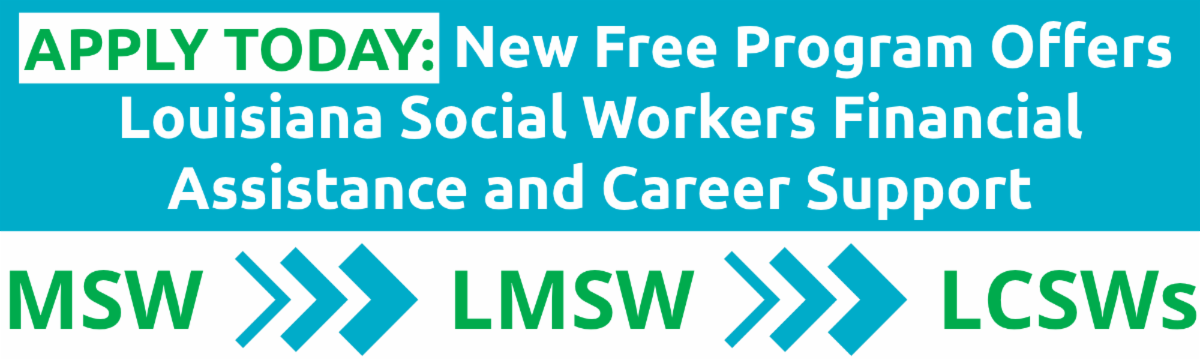
The Louisiana Public Health Institute (LPHI), in partnership with the National Mental Health Corps and with generous grant funding from the Bristol Myers Squibb Foundation, an independent charitable organization, has launched the Louisiana Behavioral Health Workforce Catalyst Program to help reduce financial and professional barriers on the path to becoming a Licensed Clinical Social Worker (LCSW).
The free, two-year program supports social workers as they progress from Master of Social Work (MSW) graduation to Licensed Master Social Worker (LMSW) licensure and ultimately toward independent clinical licensure. Selected participants will receive free licensure preparation support at both the master's and clinical levels, coordinated clinical supervision, progress tracking, financial assistance, and other resources to help them successfully navigate the licensure process.
By making clinical licensure more accessible, the program aims to help Louisiana social workers advance their careers while strengthening the state's behavioral health workforce.
| Supporting Healthy Louisiana Families | To advance a shared vision for an early childhood system where children and families have the support they need to thrive, LPHI joined partners across Louisiana for Geaux Far Louisiana Week in Alexandria, Shreveport, and New Orleans. In Shreveport, Geaux Far honored Sen. Sam Jenkins with its Legislative Champion Award for sponsoring SB 157, now Act 744, which establishes paid parental leave for eligible K-12 public school employees. LPHI team members joined partners in celebrating this important policy win, which reflects our continued commitment through the Time to Care Louisiana Coalition to advancing policies and systems that give families the time, resources, and support they need to thrive. | Maternal Mortality Symposium | |
LPHI was honored to facilitate the Louisiana Department of Health’s Bureau of Family Health's Louisiana Maternal Mortality Prevention Symposium: Data Briefing and Action Forum to Prevent Pregnancy-Associated Deaths in Louisiana this past August.
The Symposium brought together health care professionals, public health leaders, community organizations, insurance payors, policymakers, maternal health advocates, and individuals with lived experience. Together, they examined the findings from the 2020-2022 Pregnancy‑Associated Mortality Review Report, discussed key factors contributing to pregnancy‑associated deaths, and identified strategies to implement recommendations across clinical, community, and system settings. Recordings of the main session and all breakout sessions, along with key takeaways from each, are available on the Bureau of Family Health's website.
| | Regenerative Communications Workshop
Highlights the Power of Storytelling | |
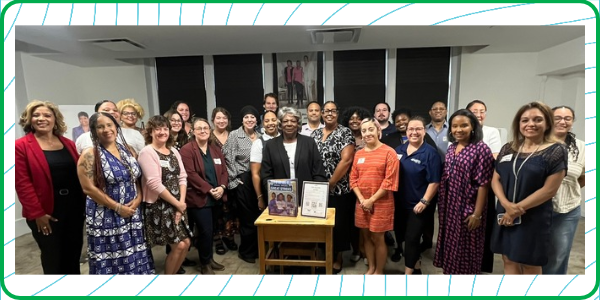
With generous support from the Robert Wood Johnson Foundation, LPHI and Amplify Resonance hosted a two-part Regenerative Communications Workshop with an in-person training at the Tate Etienne and Provost Center and a special appearance by Dr. Leona Tate, whose reflections on desegregation and truth-telling offered a powerful grounding for the workshop’s exploration of collective memory and narrative. Her message brought to life a central theme of the workshop: the stories we tell about the past help shape the stories of the future.
The conversation continued with a virtual, interactive session that moved from reflection into practice. Participants explored ethical storytelling, narrative power-building, and proactive communication strategies, with hands-on opportunities to craft stories that bring organizational vision and goals to life. Through several exercises and peer discussions, the workshop invited participants to think differently about how storytelling can empower change and health equity.
|
Raising the Bar for Collaborative Maternal
Care in Louisiana’s Hospital Systems
| |
The Doula Gold Standard Designation promotes and recognizes hospital and birthing facilities that demonstrate a clear commitment to fostering respectful, collaborative, and inclusive partnerships with doulas. It is awarded to facilities that implement the policies and practices listed in the Doula Gold Standard Checklist. By outlining a tiered designation system based on the implementation of evidence-informed policies and practices, this initiative aims to improve the birthing experience and outcomes for families by supporting environments where doulas are fully integrated members of the care team.
The Doula Gold Standard aims to improve maternal and infant health outcomes through increased patient access to collaborative doula care, reducing preventable morbidity and mortality, decreasing racial maternal care, and improving adoption and sustainability of evidence‑based practices that improve quality of care and patient experience.
Through generous support from the LA Blue Foundation, two hospital and/or birthing facility sites will be awarded up to $15,000 and implementation support to pilot the Doula Gold Standard recommendations and receive the inaugural Doula Gold Standard Designation.
To learn more about the opportunity, contact skennedy@lphi.org.
| Beyond Stock Photos:
New Public Health Image Library and Webinar | |
Finding authentic, engaging images that reflect the communities they serve can be a challenge for public health communicators. To help address this need, Health Resources in Action, in collaboration with LPHI, has launched the Public Health Visual Commons, a free, growing library of images and resources designed to help public health professionals tell more compelling stories and create meaningful, high-quality communications.
Public health professionals can explore the library, access its resources, and contribute their own photos to help expand the collection and strengthen visual storytelling across the field.
To complement the launch, LPHI and Health Resources in Action are also offering Beyond Stock Photos: Building Better Visual Stories for Public Health, on Thursday, November 19 at 1 p.m. CT. The webinar will focus on strengthening visual storytelling and helping public health organizations communicate their work more effectively.
| | Empowering People & Communities Series | | |
The Louisiana Campaign for Tobacco-Free Living (TFL) continued its Empowering People & Communities Series (EPCS) with two webinars in September and October focused on strengthening tobacco cessation efforts across Louisiana.
September’s webinar, Connecting the Dots: Tobacco Cessation, Cancer Screening & Nurse Navigation in Louisiana, highlighted TFL’s partnership with the Louisiana Cancer Prevention and Control Programs (LCP) and the Louisiana Nurse Navigation Assistance (LANNA) program to strengthen connections between tobacco cessation, cancer screening, and early detection. Watch the September webinar recording.
October’s webinar, Many Roads, One Goal: Navigating Diverse Routes to Smoking Cessation for Veterans, explored the connection between veterans’ mental health and tobacco cessation, emphasizing how families, clinicians, and public health professionals can support veterans in addressing tobacco and nicotine dependence and accessing effective cessation resources. Watch the October webinar recording.
| | November Community Grand Rounds Session | |
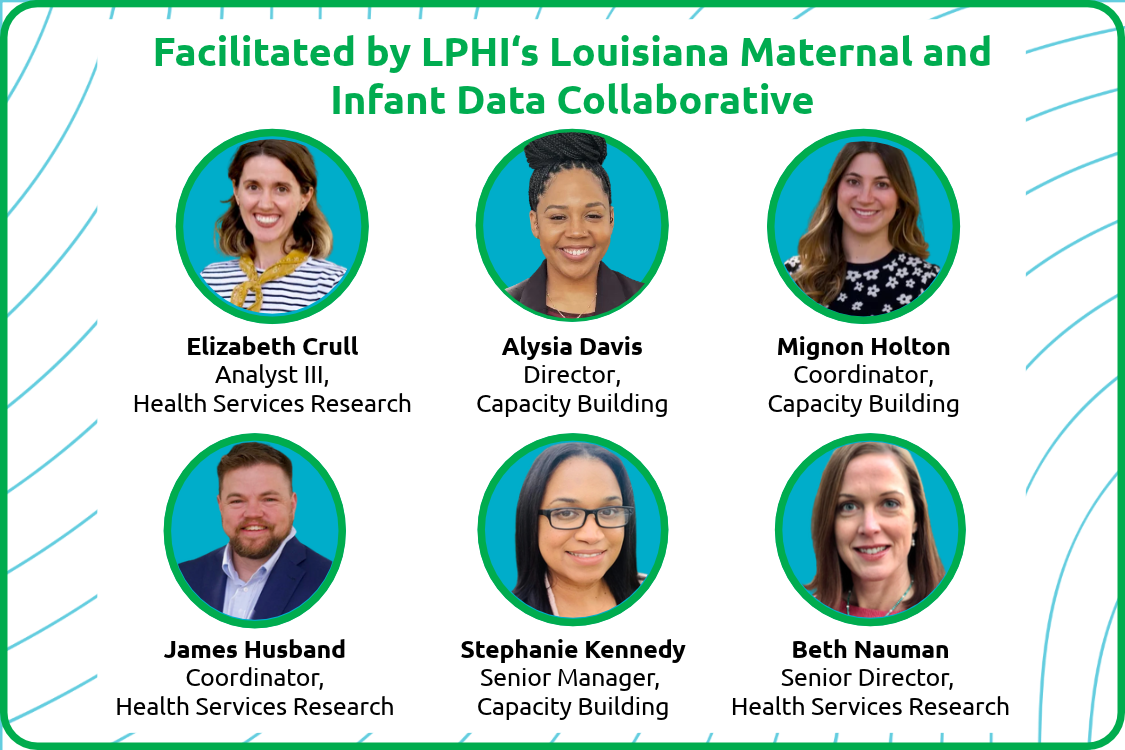
This year's culminating Community Grand Rounds session, “What is Impacting Maternal and Infant Vitality in Louisiana?” will be hosted by LPHI’s Louisiana Maternal and Infant Data Collaborative (The Data Collaborative) on November 18, from 10:00 to 11:30 a.m. CT. The session will highlight its recent data brief series examining key factors affecting maternal and infant vitality, including pediatric care utilization, low birthweight, preterm birth, hypertensive disorders of pregnancy, and postpartum depression.
Attendees will have an opportunity to ask questions about the findings, learn about future efforts, and discover how The Data Collaborative can support their work.
| |
|
Beyond Stock Photos: Building Better Visual Stories for Public Health
LPHI and Health Resources in Action are hosting a webinar on Thursday, November 19 at 1 p.m. CT, to explore how public health communicators can strengthen visual storytelling to create more meaningful, community-centered communications. The webinar will also highlight the new Public Health Visual Commons, a free, growing library of images and resources designed to help public health professionals move beyond traditional stock photography, better represent the communities they serve, and communicate their work more effectively.
| | |
Louisiana Public Health Institute | lphi.org | | | | | |