We are pleased to present "Life Sciences Legal Insights" as a valuable resource to help life sciences and pharmacy industry stakeholders in overcoming the intricate regulatory and transactional obstacles. |
|
Medicare Advantage, also known as Medicare Part C, is a program that covers over half of the country's Medicare beneficiaries. The submission of false diagnosis codes (or “upcoding”) in Medicare Advantage appears to be widespread, as a recent HHS-OIG audit revealed a 93.8% rate of improper coding for a particular Medicare Advantage Plan. The audit, coupled with a recent DOJ settlement, suggests the prevalence of upcoding and the Government’s enforcement interest.
|
|
Florida's Prescription Drug Reform Act, Senate Bill 1550, has ushered in a new era of patient-centric care. This Act, effective July 1, 2023, has provisions aimed at combating patient steering, a practice where Pharmacy Benefit Managers (PBMs) direct prescriptions to affiliated pharmacies.
|
|
The increasing cost of prescription drugs affects the entire pharmacy supply chain, with patients facing higher copay or co-insurance obligations. To address this issue, manufacturers introduced copay assistance programs, often in the form of copay coupons.
In our latest article by Frier Levitt attorneys Dae Y. Lee and Adam Farkas, they discuss the difference between manufacturer copay coupons and prescription discount cards, regulatory hurdles and the potential pitfalls that pharmacies face during PBM audits.
|
|
There is a growing trend in the emergence of third-party companies specialized in helping physicians and facilities access “unclaimed” rebates from prescription drug manufacturers. Typically, these third-party entities collect claims data from healthcare providers, organize it, and submit it through intermediaries for review by manufacturers. In this process, manufacturers review the claims and may issue rebates, with portions retained by PBMs and the third-party aggregator before reaching the healthcare practice.
|
|
As the calendar year-end approaches, PBMs conduct crucial reviews of pharmacies in their networks. Accuracy and transparency are vital, as any inconsistencies or false statements detected by PBMs during the review can lead to consequences ranging from delays to complete denial of re-credentialing.
Read article by Frier Levitt attorney Dae Y. Lee to learn more about this process, here.
|
|
PBMs are ramping up their audits of pharmacy providers. These audits are conducted year-round, but tend to increase in frequency towards the end of the year as PBMs prepare to "clean up" their networks by removing non-compliant providers.
|
|
Participation in PBM networks often comes with pharmacy audits, where PBMs review submitted claims to ensure compliance with their respective Provider Manuals. While PBMs claim these audits aim to prevent fraudulent claims, they are often used to cite alleged non-compliance as a reason for significant clawbacks.
Read article by Frier Levitt attorneys Harini Bupathi and Andrea Christine Hageman, where they discuss PBM audit guidelines that pharmacies need to know as well as specific documents that should be accounted for to avoid any attempts of unjust recoupment, here.
|
|
Home infusion pharmacies have encountered significant challenges, including underpayment, delayed payment, and non-payment by major medical plans for infusion therapies.
In a new article, Frier Levitt partner Jesse Dresser illuminates the tactics employed by health insurance companies to avoid payment to home infusion providers and explores the legal tools available for pharmacies to address payment discrepancies and protect their rights.
|
|
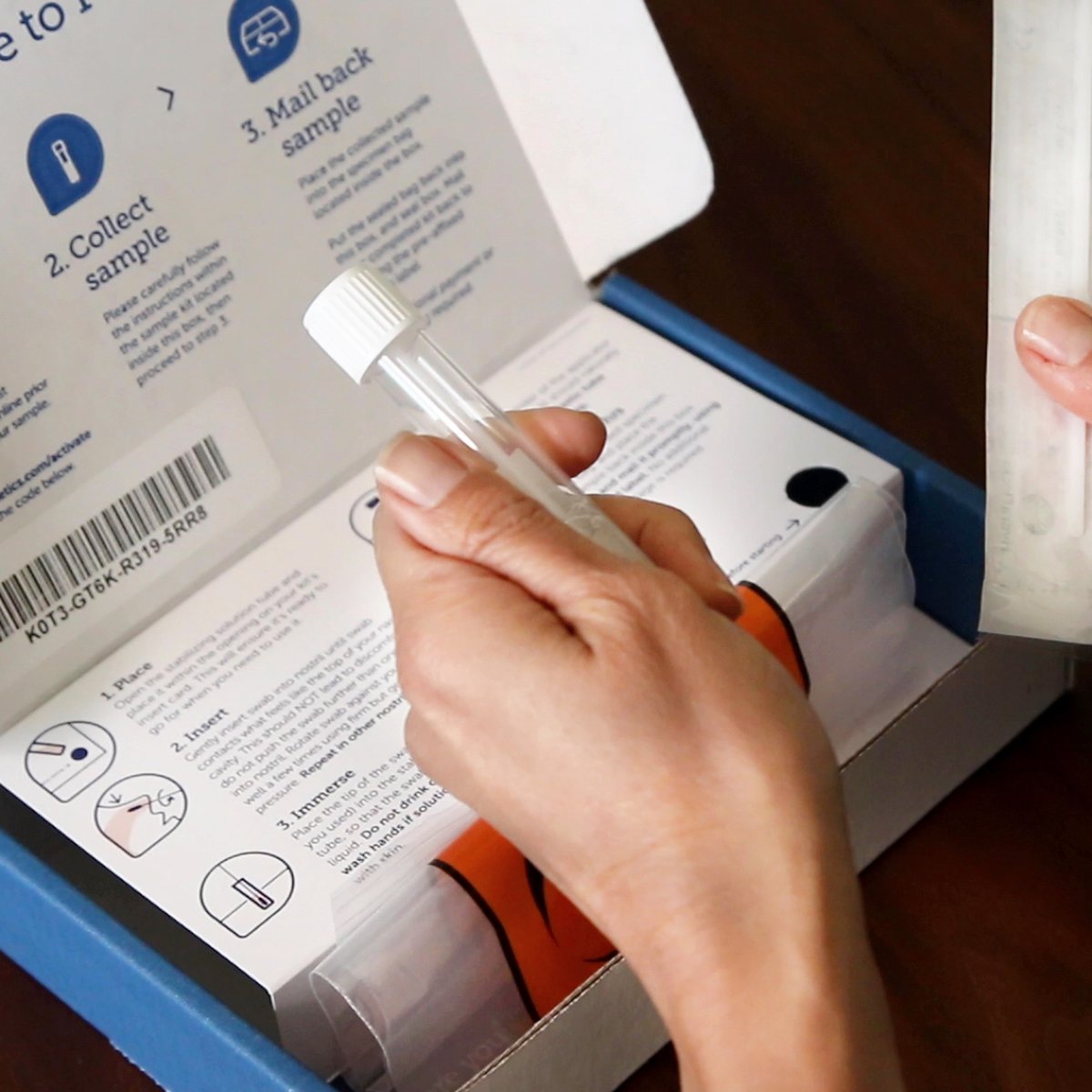
In the recent past, COVID-19 Home Test Kits dispensed by pharmacies have faced increased scrutiny. The U.S. Department of Health and Human Services Office of Inspector General issued warnings about potential schemes involving these kits, and PBMs have stepped up their audit efforts related to Test Kit claims.
In a new article, Frier Levitt attorneys Dae Y. Lee and Benjamin Youssef discuss these government investigations and how wrongdoers have exploited the system involving Test Kits. Read here.
|
|
Recently, Frier Levitt has seen a resurgence of an
older trend, where pharmaceutical manufacturers are
challenging pharmacies over patient savings programs,
such as copay coupon programs. The letters sent by manufacturers to pharmacies claiming improper use of patient savings programs often demand immediate
payment of alleged damages or face potential suit.
To learn more, read article by Frier Levitt attorneys
|
|
Pharmacy auto-refill policies, designed to enhance medication adherence and patient outcomes, have faced increased scrutiny from Pharmacy Benefit Managers (PBMs). PBMs have been targeting pharmacies that have implemented auto-refill policies through audits designed to examine the pharmacy's adherence to contractual and regulatory requirements.
Frier Levitt attorneys Dae Y. Lee and Adam Farkas explore the various aspects of these audits in a recent article.
|
|
In its continuing fight to reform PBM’s anti-competitive business practices against independent pharmacies, New York recently proposed an increased mandatory dispensing fee.
Learn more about the proactive steps that New York has taken to address the involvement of PBMs in the prescription drug marketplace, and the impact of this increased mandatory dispensing fee, in a new article by Frier Levitt attorneys Lucas Morgan and Sam Awad, here.
|
|
Providers billing Medicare Advantage or Medicare Part C (MA) should closely monitor a recent lawsuit filed by Humana against the Centers for Medicare and Medicaid Services (CMS). The lawsuit's outcome could lead to increased audits and claw-backs by Medicare Advantage Organizations (MAOs), potentially affecting capitated provider groups and other MA providers.
|
|
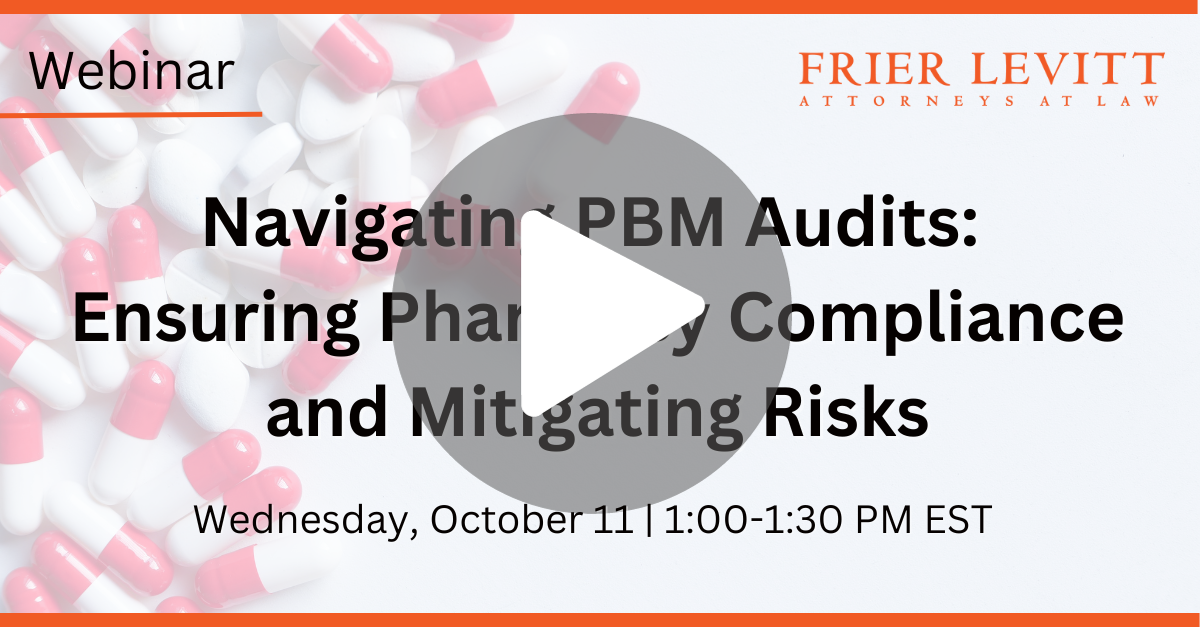
"Navigating PBM Audits: Ensuring Pharmacy Compliance
and Mitigating Risks"
|
|
This informative webinar led by Frier Levitt attorneys Dae Lee and Harini Bupathi discusses the key challenges, potential risks, and best practices to navigate PBM audits successfully.
Click the image below to view the on demand webinar:
|
|
Bonus: Download the PBM Audit Checklist to kickstart your audit preparedness journey!
|
|
|
Upcoming Webinar:
"PBM Audit Insights: Wrapping Up 2023 and
Setting the Stage for 2024"
|
|
Throughout 2023, PBMs have intensified their scrutiny of pharmacies and their network participation. The outcomes of these PBM audits and investigations have led to significant monetary penalties, disruptions in network operations, and further investigations by State Boards of Pharmacy and government agencies. As we transition into 2024, it's anticipated that PBMs will persist in their rigorous auditing practices.
In this webinar, Frier Levitt attorneys will discuss the ways in which pharmacies are advised to brace themselves for 2024 and be well-prepared to counteract the aggressive tactics of PBMs.
Join us on November 15, 2023, 1:00 - 1:45 p.m. ET
Click the button below to Register:
|
|
Key takeaways:
- Review PBM audit strategies and trends, empowering proactive measures to prevent negative repercussions.
- Gain insights into the audit and dispute resolution processes of the top three PBMs.
- Anticipate what lies ahead for pharmacies, year-end evaluations, and the outlook for 2024.
|
|
Pharmacy Benefit Manager (“PBM”) audits of pharmacies are a major profit center for PBMs. For over two decades, Frier Levitt has been fighting Pharmacy Benefit Managers on behalf of pharmacies, state and national pharmacy associations, and physician dispensers and has achieved immense success in retrieving and/or saving millions of dollars against PBM audits before all major PBM companies. We have handled a multitude of legal matters before major PBMs – including the big three (CVS Caremark, Express Scripts, and OptumRx) – during the pre-litigation dispute resolution procedure and in arbitration/litigation proceedings following the PBM audit. We have seen first-hand how onerous a PBM audit can be to you and your pharmacy.
|
|
For any questions or assistance, please contact:
Jonathan E. Levitt, Esq.
Co-Founding Partner
Frier Levitt
973.618.1660
|
|
Frier Levitt, established in 2000, is a premier law firm with offices in New York and New Jersey. Firm attorneys are leaders in providing services to healthcare and life sciences clients nationally. Frier Levitt serves the provider community, wholesalers, manufacturers and plan sponsors, large physician group practices, hospitals, hospital medical staff, ambulatory surgery centers, and laboratory companies. The firm is a renowned leader in PBM contracts and applicable law. Firm attorneys are at the forefront of disputing PBM-imposed DIR fees and have successfully challenged DIR fees against major PBMs, obtaining more than $80M in damages on behalf of its pharmacy clients arising from trials and settlements. For more information, please visit www.frierlevitt.com.
|
|
© 2023 Frier Levitt. All rights reserved. ATTORNEY ADVERTISING.
The contents of this newsletter and all related communications do not constitute legal advice or an attorney-client relationship. Publication contents are for general information purposes and are not intended to be a substitute for legal advice. You should seek legal advice or other professional advice in relation to any particular questions that you or your organization may have.
|
|
|
|
|
|
|