It is a pleasure to address you from the pages of La Frontera. And I say “from the pages of La Frontera” quite deliberately, because the simple fact that this newsletter is back in your hands -in fact, on your screens- is, in itself, good news.
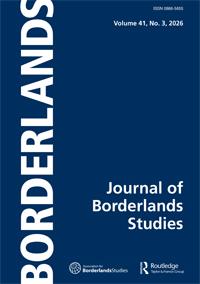
After several years of absence, we are resuming publication of our newsletter. This is not a symbolic gesture or a nostalgic indulgence: La Frontera has been, since the earliest days of the association, the primary channel through which the ABS communicates with its members. Neither listserv emails nor social media posts can replace what a newsletter offers: a calm, structured, and enduring space where the officers and the Board of Directors can keep our community informed of plans, projects, and decisions that affect us all. La Frontera is also a defining feature of the association’s identity. Having accompanied us since its very founding, bringing it back is also a way of reaffirming who we are and where we come from -all the more so in this year 2026, in which we have celebrated the 50th anniversary of the ABS and the 40th anniversary of the Journal of Borderlands Studies. Welcome back!
The most recent Business Meeting, held during the annual conference in Albuquerque, brought with it significant developments. The first is the appointment of Jennifer Bettis as our new Executive Secretary & Treasurer (ES/T). But Jennifer’s arrival represents more than a change of personnel. With her, we are inaugurating something unprecedented in the history of the ABS: for the first time, the ES/T position will be a compensated role. This was not an easy decision, as the discussions within the Board of Directors can attest. However, the current challenges facing academia -the growing pressure and workload in teaching, research, and administration, combined with the progressive reduction of institutional support- led us to a clear conclusion: we must ensure that the duties of this key position, which extends beyond annual presidential terms and serves as the operational backbone of the association, are fulfilled in a continuous, stable, and efficient manner. Compensation also allows us to move toward greater professionalization of this role. It is a step we have long needed to take.
The second major development is that the ABS has begun transitioning to a new conference model. Going forward, we will work in four-year cycles, with three annual conferences in North America (in Mexico, the United States, and Canada) and one world conference held outside the continent. This new model will launch next year, with the fourth world conference, to be held in Elvas-Badajoz, on the Portugal-Spain border, in September 2027.
This new model also means that the ABS will take full responsibility for organizing its annual conferences, independently of the World Social Science Association (WSSA). We are aware that this entails greater workload for the officers and organizing committees, as well as additional responsibilities, such as managing liability insurance for attendees. Nevertheless, we are confident that the ABS is ready to meet this challenge.
I want to be frank about the reasons behind this decision, which was also far from easy. We find ourselves at the convergence of two mutually reinforcing phenomena. On the one hand, many of our members and colleagues have chosen not to travel to the United States: some for economic reasons, given reduced institutional support; others for political reasons, given the direction the country has taken. On the other hand, the WSSA itself is in the process of transitioning to a new model: it has its conference planned for Denver in 2027, but as of yet has no confirmed location for 2028 and beyond. We are not alone in this situation: Latin American Studies and Chicano-Iberian Culture Network (LASCIC), another WSSA-affiliated association, has also decided to organize its own conferences independently starting next year.
That said, I want to emphasize that the autonomy we are seeking does not mean a break or a distancing. The ABS was born within the WSSA conference structure, and after so many years, we are bound by ties of friendship and collaboration that we deeply value. In that spirit, we have agreed with the WSSA to create a border studies section within their 2027 conference in Denver, in which we will be happy to collaborate.
The third important development I want to share is the launch of a process to revise the association’s bylaws. The current bylaws, last amended in 2016, have become partially outdated. In some respects, they no longer reflect our current reality; in others, they have been overtaken by innovations that the officers and the Board have gradually introduced to address new situations not anticipated at the time of drafting: from the disruptions caused by the Covid-19 pandemic and the need for a more professionalized ES/T position, to the consolidation of world conferences and support for symposiums and conferences organized by members. This is not a new idea: it has been discussed on several occasions over the past few years, and Naomi Chi already attempted to carry it out during her presidency.
We have designed a revision plan involving several rounds of work, with the participation of two ad hoc committees, the Board of Directors, and the full membership, as well as consultations with legal and financial experts. If we keep to the planned schedule, we will put the revised bylaws to a vote at next year’s Business Meeting.
All of these changes (the return of La Frontera, the professionalization of the ES/T position, the new conference model, and the revision of the bylaws) share a common purpose: to strengthen the ABS. We want to improve continuous, two-way communication between the officers and the membership; sharpen our decision-making; gain greater autonomy over the organization of our conferences; respond more effectively and efficiently to the needs of our community; and, also, grow our membership, with the hope of recovering at least the pre-pandemic numbers. Ultimately, this is about adapting to the challenges that mid-sized academic associations like ours must navigate in this moment.
There is much more I hope we can develop together in the years ahead: expanding collaboration with other border studies associations; increasing the participation of scholars from the Global South (Latin America, Africa, Asia); building the association’s historical archive; and giving greater visibility to students and early-career researchers. After all, navigating new borders is what we do best.
Until next time,
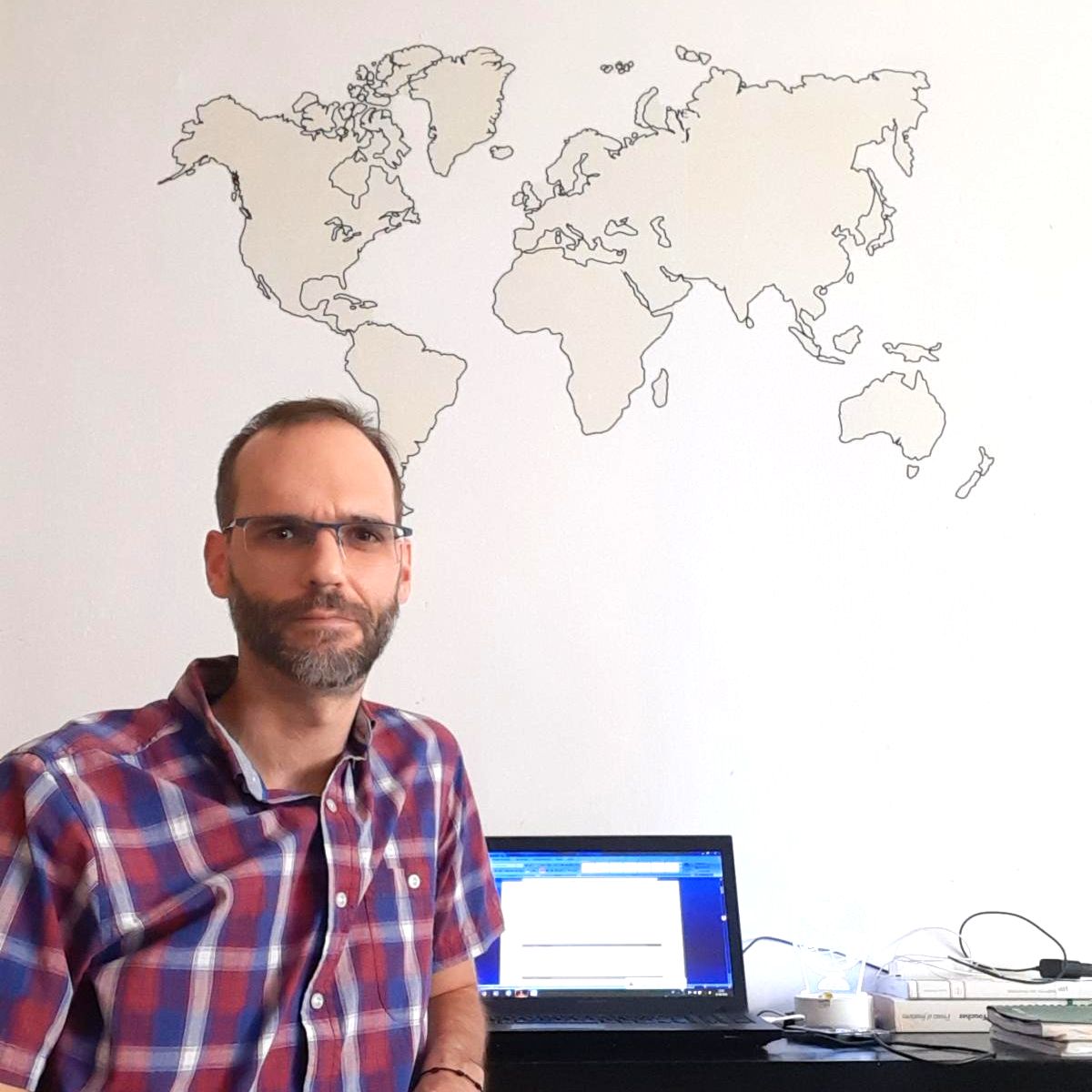
Xavier Oliveras-González
President, Association for Borderlands Studies
Junio 2026,
Estimadas y estimados socias y socios,
Es un placer dirigirme a ustedes desde las páginas de La Frontera. Y digo “desde las páginas de La Frontera” con plena intención, porque el simple hecho de que esta newsletter vuelva a estar en sus manos –de hecho, en sus pantallas- ya es, en sí mismo, una buena noticia.
Después de algunos años de ausencia, retomamos la publicación de nuestra newsletter. No se trata de un gesto simbólico ni de un capricho nostálgico: La Frontera ha sido, desde los primeros tiempos de la asociación, el canal privilegiado a través del cual la ABS se comunica con sus socias y socios. Ni los correos en la listserv ni las publicaciones en redes sociales pueden sustituir lo que una newsletter ofrece: un espacio de información sosegado, ordenado y con vocación de permanencia, donde los ejecutivos y el Board of Directors pueden dar cuenta de los planes, proyectos y decisiones que afectan a nuestra comunidad. La Frontera es, además, una seña de identidad de la asociación. Acompañándonos desde su fundación misma, recuperarla es también una manera de reafirmar quiénes somos y de dónde venimos, más aún este año 2026 que hemos celebrado el 50 aniversario de la ABS y el 40 aniversario del Journal of Borderlands Studies. ¡Bienvenidas y bienvenidos, pues, a este regreso!
La pasada Business Meeting, celebrada durante el congreso anual en Albuquerque, trajo consigo novedades importantes. La primera de ellas es la incorporación de Jennifer Bettis como nueva secretaria ejecutiva y tesorera (ES/T). Pero la llegada de Jennifer no supone únicamente un cambio de persona. Con ella inauguramos algo inédito en la historia de la ABS: por primera vez, el puesto de ES/T será retribuido. La decisión no fue sencilla, como atestiguan las discusiones del Board of Directors. Sin embargo, los retos actuales en el sector académico (la creciente presión y sobrecarga de trabajo docente, de investigación y administrativo, y la reducción progresiva de los apoyos institucionales) nos llevaron a una conclusión clara: es necesario garantizar que las funciones de este puesto clave, que trascienden los mandatos presidenciales anuales y son el pilar del funcionamiento operativo de la asociación, se cumplan de manera continua, estable y eficiente. La retribución nos permite, además, avanzar hacia una mayor profesionalización de esta responsabilidad. Es un paso que llevábamos tiempo necesitando dar.
La segunda gran novedad es que la ABS ha iniciado la transición hacia un nuevo modelo de congresos. A partir de ahora, trabajaremos en ciclos de cuatro años, con tres congresos anuales en América del Norte (en México, Estados Unidos y Canadá) y un congreso mundial celebrado fuera de este continente. Este nuevo modelo arrancará el año que viene, con el cuarto congreso mundial, que se celebrará en Elvas-Badajoz, en la frontera entre Portugal y España, en septiembre de 2027.
Este nuevo modelo implica también que la ABS asumirá plenamente la responsabilidad de la organización de sus congresos anuales, de forma independiente de la World Social Science Association (WSSA). Somos conscientes de que esto supone más carga de trabajo para los ejecutivos y los comités organizadores, y responsabilidades adicionales, como la gestión del seguro de responsabilidad para los asistentes, pero estamos convencidos de que la ABS está preparada para asumir este reto.
Quiero ser franco respecto a los motivos que nos llevaron a esta decisión, que tampoco fue nada fácil. Nos encontramos en la confluencia de dos fenómenos que se refuerzan mutuamente. Por un lado, muchas y muchos de nuestros socios y colegas, potenciales participantes en los congresos, han optado por no viajar a Estados Unidos: unos por motivos económicos, ante la reducción del apoyo de sus instituciones; otros por motivos políticos, ante la deriva del país. Por otro lado, la propia WSSA se encuentra en proceso de transitar hacia un nuevo modelo: tiene previsto su congreso en Denver en 2027, pero a partir de 2028 aún no cuenta con una ubicación definida. En esta tesitura no estamos solos: la Latin American Studies and Chicano-Iberian Culture Network (LASCIC), otra de las asociaciones afiliadas a la WSSA, ha tomado también la decisión de organizar sus propios congresos a partir del próximo año.
Dicho todo esto, quiero subrayar que la autonomía que buscamos no equivale a ruptura ni a distanciamiento. La ABS nació en el seno de los congresos de la WSSA, y después de tantos años nos unen lazos de amistad y colaboración que valoramos profundamente. En ese espíritu, hemos acordado con la WSSA la creación de una sección dedicada a los estudios fronterizos dentro de su congreso de 2027 en Denver, en la cual colaboraremos con mucho gusto.
La tercera novedad importante que quiero compartir con ustedes es el inicio de un proceso de revisión de los bylaws de la asociación. Los estatutos vigentes, modificados por última vez en 2016, han quedado parcialmente obsoletos. En algunos aspectos, ya no reflejan la realidad actual; en otros, han sido desbordados por innovaciones que los ejecutivos y el Board han ido introduciendo para responder a situaciones nuevas no previstas en su momento: desde las disrupciones causadas por la pandemia de Covid-19 y la necesidad de contar con un puesto de ES/T más profesionalizado hasta la consolidación de los congresos mundiales y los apoyos a seminarios y congresos organizados por los socios. No se trata de una idea nueva, sino que se ha comentado varias veces a lo largo de los últimos años y que Naomi Chi, cuando fue presidente, ya intentó llevar a cabo.
Hemos diseñado un plan de revisión que contempla varias rondas de trabajo, con la participación de dos comités ad hoc, el Board of Directors y el conjunto de las y los socios, además de consultas con expertos legales y financieros. Si cumplimos con el calendario previsto, pondremos a votación los nuevos estatutos en la Business Meeting del próximo año.
Todos estos cambios (el regreso de La Frontera, la profesionalización del puesto de ES/T, el nuevo modelo de congresos y la revisión de los bylaws) responden a un mismo propósito: fortalecer la ABS. Queremos mejorar la comunicación continua y bidireccional entre los ejecutivos y los socios; perfeccionar nuestra toma de decisiones; ganar autonomía sobre la organización de nuestros congresos; responder de forma más ágil y eficiente a las necesidades de nuestra comunidad; y, también, incrementar el número de socias y socios, con la esperanza de recuperar, al menos, los niveles de membresía anteriores a la pandemia. En definitiva, se trata de adaptarnos a los retos que las asociaciones académicas de tamaño medio, como la nuestra, debemos saber navegar en este momento.
Hay mucho más que espero que podamos desarrollar juntos en los próximos años: ampliar la colaboración con otras asociaciones de estudios fronterizos; aumentar la participación de académicas y académicos del Sur Global (América Latina, África, Asia); crear el archivo histórico de la asociación, y dar mayor protagonismo a estudiantes y jóvenes investigadores. Después de todo, navegar nuevas fronteras es lo que sabemos hacer mejor.
Hasta pronto,
Xavier Oliveras-González
Presidente de la Association for Borderlands Studies
New Way to Stay Updated
ABS Borderlands Groups.io
The ABS Borderlands Groups.io platform is a communication platform that distributes messages to subscribers on an electronic mailing list. This group has replaced the old listserv, so if you want to stay connected with the ABS, join now!
The ABS Borderlands groupis a great way to announce academic events, publications, fellowships, scholarships, etc. It is also a great way to solicit the advice of your peers, benefit from their experience, and participate in an ongoing conversation on topics relevant to border studies.
ABS Secretariat Jennifer Bettis is always available if you have questions.
ECR Spotlight
About her Dissertation
Deboleena Sengupta's doctoral work examined the politics of citizenship in the India-Bangladesh border enclaves following the 2015 Land Boundary Agreement. Her research showed how the physically nonexistent enclave borders continue to reappear across different times and spaces, even after their dissolution. The work therefore explains the socio-economic and political bordering that happens within a state's territory, rather than solely at its geographical edges.
Deboleena Sengupta
Deboleena is a scholar of Political Science (MA, MPhil, PhD), specializing in citizenship and border studies. Her doctoral thesis has been awarded as the “Best Dissertation 2026” by the Association for Borderlands Studies. She has published with peer-reviewed platforms such as Economic and Political Weekly, Social Action, and Orient BlackSwan. She has also been a Kochi Dialogue Research Fellow (2025), contributing to policy research for the Centre for Public Policy Research and the Indian Ministry of External Affairs. She is currently engaged in a Canadian-led New Frontiers in Research Fund (NFRF) project at Indian Institute of Technology, Kharagpur.
About her Manuscript
Vianey Rueda's manuscript has been awarded as the "Best Graduate Paper 2026" by the Association for Borderland Studies and argues that international water treaties, which have long guided resource allocation and conflict resolution among riparian nations, require modernization given ongoing changing hydrological and societal conditions. For a basin like the Rio Grande/Bravo, shared by the U.S. and Mexico and demarcating the boundary between Texas and 4 Mexican states, modernizing the 1944 Water Treaty is challenging given the predominant conflict-driven discourse that impedes cooperation. As the paper demonstrates, the eroding diplomatic relationship between the two federal governments makes collaboration and cooperation over water issues formidable tasks. The study applied a hydrosolidarity framework to examine whether alternative, cooperation-oriented discourses already exist within border communities and how these perspectives might inform treaty modernization. A core argument of the paper is that aligning the Treaty with locally grounded priorities can enhance institutional resilience and enable a community-centered, binational vision for sustainable cooperation in the basin. The authors indicate that the convergent, equity-based views on water governance provide an alternative water discourse.
Vianey Rueda
Vianey Rueda is a PhD candidate at the University of Michigan's School for Environment and Sustainability, where she leads research on the Rio Grande/Bravo for the Global Center for Climate Change and Transboundary Waters. Her work focuses on understanding the impacts of climate change on transboundary water agreements, with an emphasis on how riparian countries can adapt and modernize treaties to address emerging challenges. A native of San Elizario, Texas, Vianey's interest in environmental science and policy was sparked early through her experiences on the family farm and her proximity to the Rio Grande/Bravo. Witnessing the increasingly dry river and the growing strain on local agriculture due to water scarcity and climate change motivated her to explore sustainable solutions. Today, her research leverages science and policy to help build sustainable, equitable, and politically viable socio-hydrological systems.
Megan White
Megan is a PhD student in Transborder and Global Human Dynamics at New Mexico State University. Her research uses ethnographic and qualitative methods to examine impacts of migration and enforcement policy at the U.S.-Mexico border. Her prior experience includes bilingual teaching, Peace Corps, and AmeriCorps VISTA service.
About her Manuscript
Megan White, had her article, “Mirrored Realities: Local Perceptions of Haitian Migration and Border Enforcement in Ciudad Acuña, Coahuila, and Del Rio, Texas (2021–2023)” published in The Latin Americanist in March 2026.
The study explores local perceptions of Haitian migration and border enforcement responses in the twin border cities of Ciudad Acuña, Coahuila, and Del Rio, Texas, focusing on how residents navigated and interpreted on-the-ground changes from 2021 to 2023. Drawing on twenty-four semi-structured interviews, this research uncovered mirrored yet contrasting effects across these communities, illuminating themes of initial disruption and community mobilization, everyday life with migrants and enforcement personnel, and economic impacts.This is her first scholarly publication.
The Journal continues to excel with the 2025 CiteScore (Scopus) data:
3.7 (2025) CiteScore (Scopus)
Q1 (2025) CiteScore Best Quartile
1.867 (2025) Source Normalised Impact per Paper (SNIP)
0.747(2025) SCImago Journal Rank (SJR)
The new team members are working hard to build on this success.
ABS Member News
Gülsel Çiftci
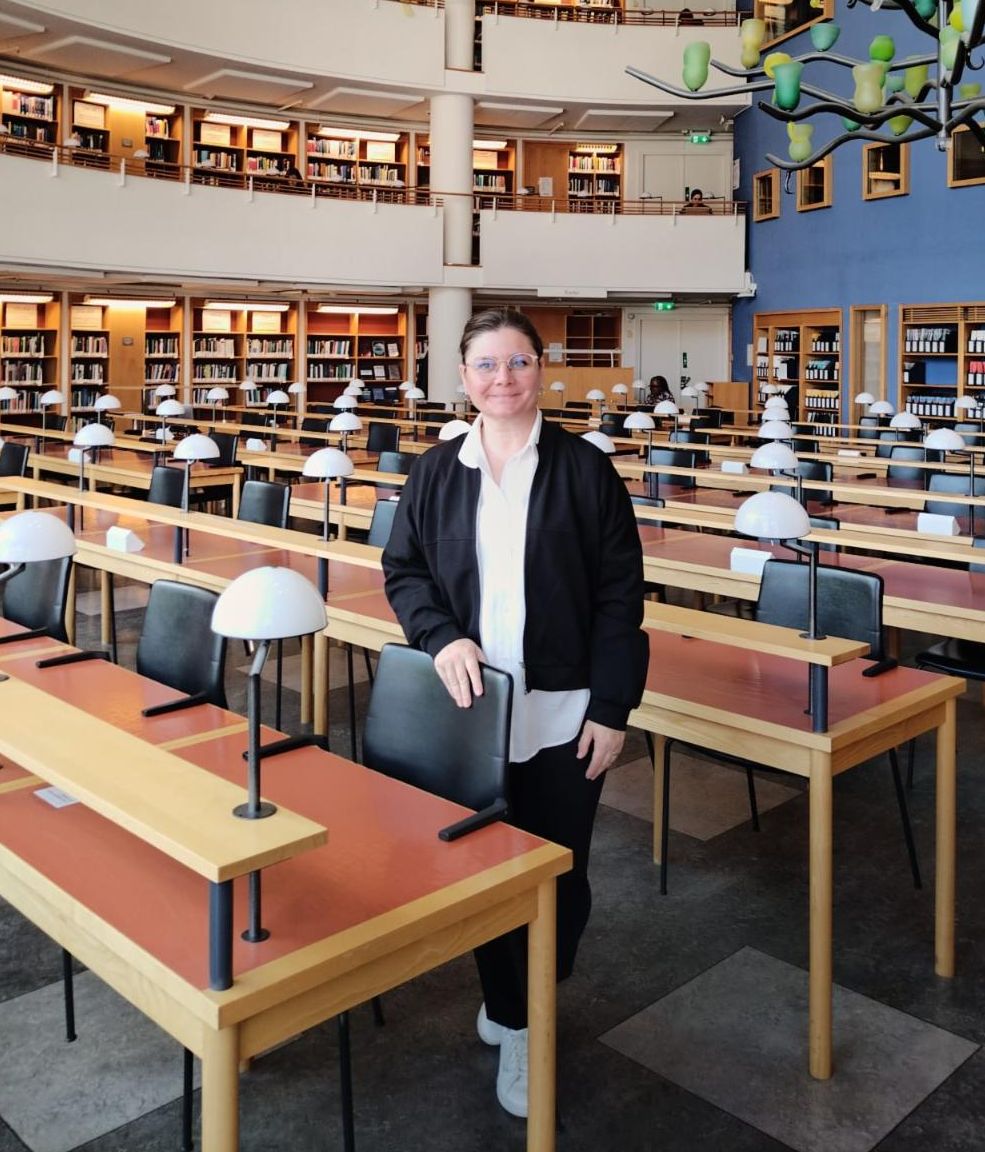
Gülsel Çiftci, ABS Board member, recently completed a Short-Term Scientific Mission (STSM) within COST (European Cooperation in Science and Technology) Action CA24125 (CRICULT), hosted by the University of Dubrovnik, Croatia (22–31 May 2026).
The mission focused on climate-related risks to cultural heritage in border and coastal regions, using a comparative perspective between the Edirne-Thrace tri-border area and the Adriatic heritage landscape. Activities included a review of governance and legal frameworks, field visits to Dubrovnik’s World Heritage sites, and consultations with local researchers.
The STSM contributed to the development of a comparative analytical framework addressing heritage governance across institutional, legal, and climate adaptation dimensions. Preliminary findings highlight structural fragmentation and limited cross-border coordination as key governance challenges in both contexts.
Another update: As part of the Erasmus+ Staff Mobility Programme, Gulsel had the opportunity to visit the Centre for Tourism at the School of Business, Economics and Law, University of Gothenburg, upon the invitation of Dr. Erik Lundberg, Head of Centre for Tourism and Associate Professor in the Department of Business Administration.
During her visit, she delivered a seminar entitled “Cross-Border Tourism Dynamics in the Edirne Tri-Border Region.” The seminar focused on tourism flows, visitor behavior, and the role of borders in shaping tourism experiences in the tri-border region of Türkiye, Bulgaria, and Greece.
In addition to presenting findings from her ongoing research, she introduced the work of the Association for Borderlands Studies (ABS) and discussed the growing importance of border studies in understanding contemporary tourism phenomena. The seminar highlighted how interdisciplinary perspectives from border studies can contribute to a deeper understanding of cross-border tourism, regional cooperation, and destination development.
The Talking Borders digital exhibition
The Talking Borders digital exhibition emerged from an advanced Master’s seminar in Public History, jointly taught by Machteld Venken and Klaus Behnam Shad at the University of Luxembourg during the Winter Term of 2025. The digital exhibition is prepared on the occasion of the 50th anniversary of the Association for Borderlands Studies.
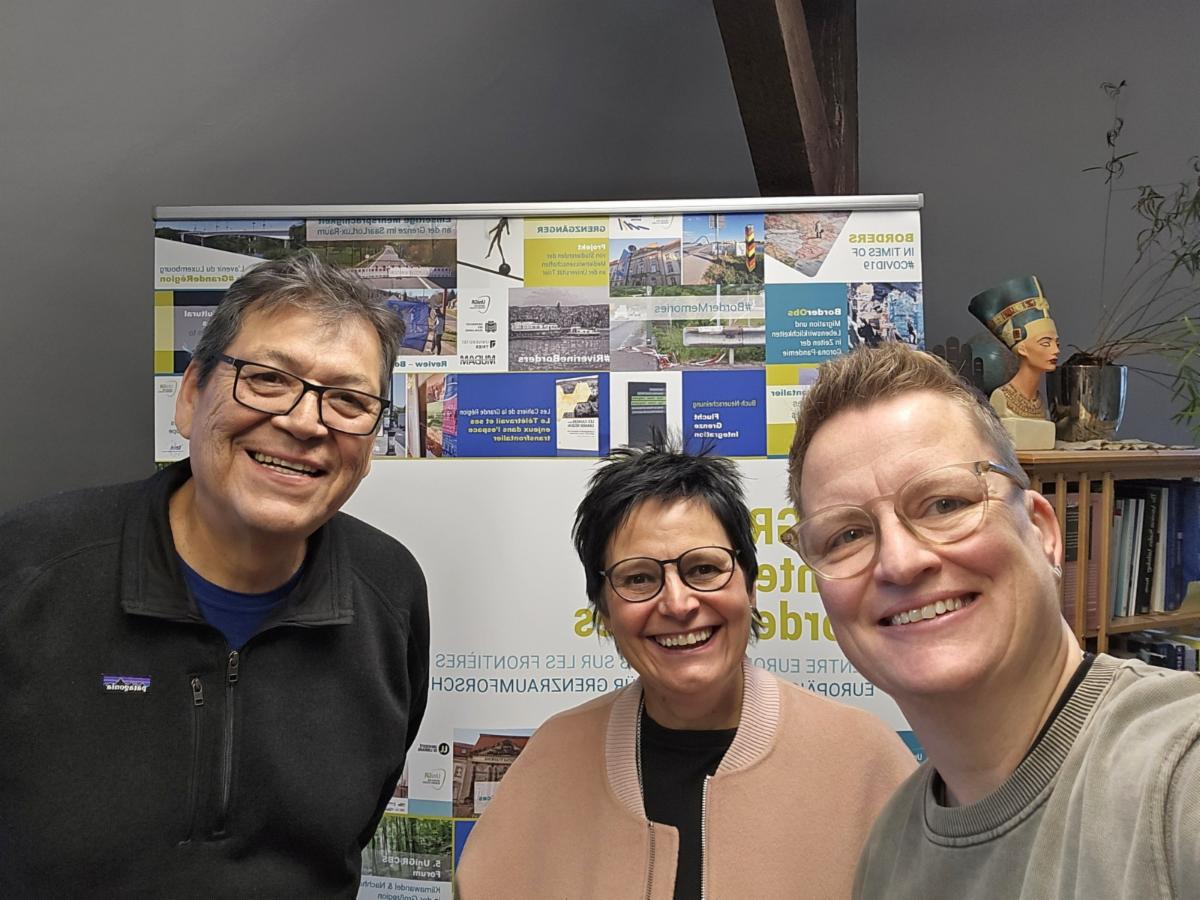
Francisco Lara-Valencia was a UniGR-CBS Fellow at LEPUR (University of Liège) in November–December 2025, where he examined the Greater Region as a cross-border socio-spatial and governance context. In an interview, he reflects on his analytical approach, methodological perspectives, and the relevance of his work for understanding cross-border dynamics in the Greater Region.
ON AIR – The Podcast Series of the UniGR-Center for Border Studies
The podcast series of the UniGR-Center for Border Studies features border research from UniGR-CBS members and international guest researchers in English, French and German. Listen to the newest episodes.
Project CROSSGOV – Governance mechanisms for cross-border functional areas
The ESPON CROSSGOV project (2024 to 2026) explores functional cross-border areas in the European context and their role in fostering territorial integration and convergence.
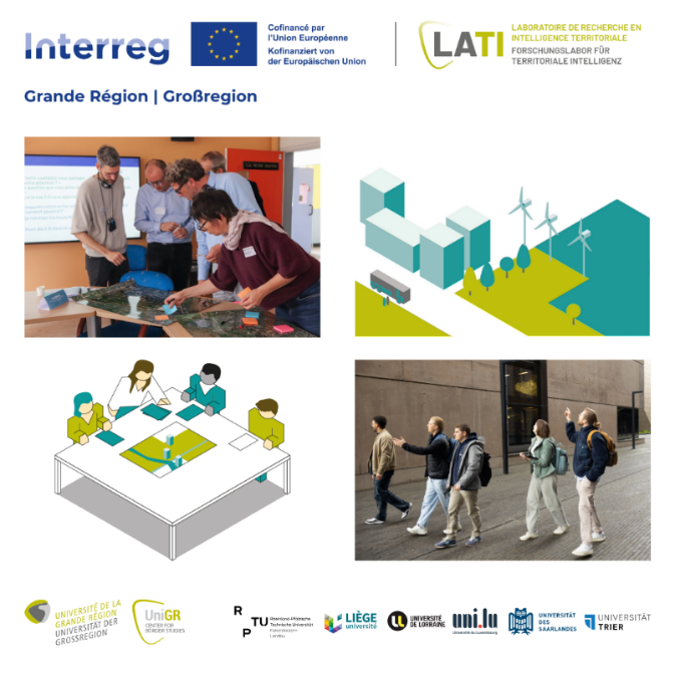
LATI Interreg project – Bridging Science and Practice Across Borders
With the LATI project, the University of the Greater Region launches, within the UniGR-Center for Border Studies, a new initiative for cross-border spatial planning. LATI fosters the exchange of knowledge and supports planning actors in jointly developing practical solutions.
On 19th May 2026, researchers and spatial planning practitioners from Luxembourg and the surrounding regions in Belgium, France and Germany met to discuss how they plan their territories and why they so often reach different conclusions.
Even seemingly straightforward issues revealed the depth of the challenge: maps follow different logics, planning rules shift at the border, and the same landscape is described in different ways depending on the country and its (planning) culture.
The meeting marked the launch of the LATI Expert Committee, a key project activity and an expression of the Science-Policy-Interface pillar of the UniGR-Center for Border Studies. LATI, short for Laboratory for Territorial Intelligence is an Interreg Greater Region project designed to bridge research on cross-border planning with practical knowledge and decision-making in the field of spatial and urban development.
The Expert Committee brings together researchers, planning actors and decision-makers from across the Greater Region in a structured working space where evidence, experience and planning constraints are confronted directly. The aim is to in search for shared practices and actionable policy recommendations. It also contributes to supporting the implementation of the Cross-border Development Strategy for the Greater Region.
The first session focused on the European objective of No Net Land Take, which aims at drastically reducing net land consumption by 2050, notably by balancing new development with the reuse or restoration of already artificialised land. Participants discussed how differently this objective is understood and implemented across administrative levels and national systems.
Against this background, LATI aims to develop the Expert Committee into a long-term network of researchers and practitioners from all planning levels of the cross-border Greater Region, continuing to explore how those who work on the same territory often do so within very different frameworks, and what can be done to bridge them.
Samuel Okunade is set to become the Head of Department of the newly formed Border and Migration Studies department at Lagos State University in Nigeria. This is the first university in Africa to have a Department in Border and Migration Studies, which means that Samuel is pioneering its kick-off.
As you would expect, this is a huge assignment, which Samuel is eager to begin. He is asking the ABS community for any support they may be able to provide. Samuel is open to any form of assistance that members of the ABS are willing to provide.
Most importantly:
in equipping the library with books and journal publications
potentially computers/ laptops to facilitate the teaching and learning process.
The BPRI and Borders in Globalization (UVic)Cross-Border Research Fellow Jamie Ferrillhas released her research report, "Connected Waters, Connected Threats: Border Governance and Environmental Security in the Columbia River Basin." The report assesses whether existing transboundary environmental governance arrangements are fit to manage pollution as a network‑based threat within a shared borderland system.
BPRI faculty fellow Derek Moscato's research report has been published, which builds on the multi-layered premise of global sport's cross-border diplomacy, and using FIFA 2026 in Seattle and Vancouver as a case study, to establish theoretical - and practical - level understandings of staging international sports in the cross-border Cascadia Region. "Global Sports in the Borderlands: Cascadia, Sports Diplomacy, and the Staging of FIFA World Cup 2026"can be read here.
Natalia Kovalchuk
Affiliation: Doctor of Philosophical Sciences, Professor, and Independent Researcher from Ukraine, currently based in Warsaw, Poland.
Natalia participated in the UniGR–Center for Border Studies seminar “Relational Borders and (Cross-)Border Relations” (Saarland University, June 25–26, 2026). Natalia presentation called, " The Evolution of the Archetype of Freedom in the Border Civilizations of Ukraine, the United States, and Poland: A Comparative Analysis" examined how the archetype of freedom emerges and transforms within the borderland civilizations of Ukraine, the United States, and Poland. She analyzes how frontier conditions shape moral, symbolic, and cultural models of freedom, with particular attention to Ukraine’s wartime experience. She utilized Archetype methodology, borderland studies, comparative civilizational analysis, and cultural-historical attribution to conduct her research.
B-Shapes
Borders Shaping Perceptions of European Societies (B-SHAPES) is a Horizon Europe Research and Innovation Action project analyzing and assessing how borders still are a key factor in how we understand societies.
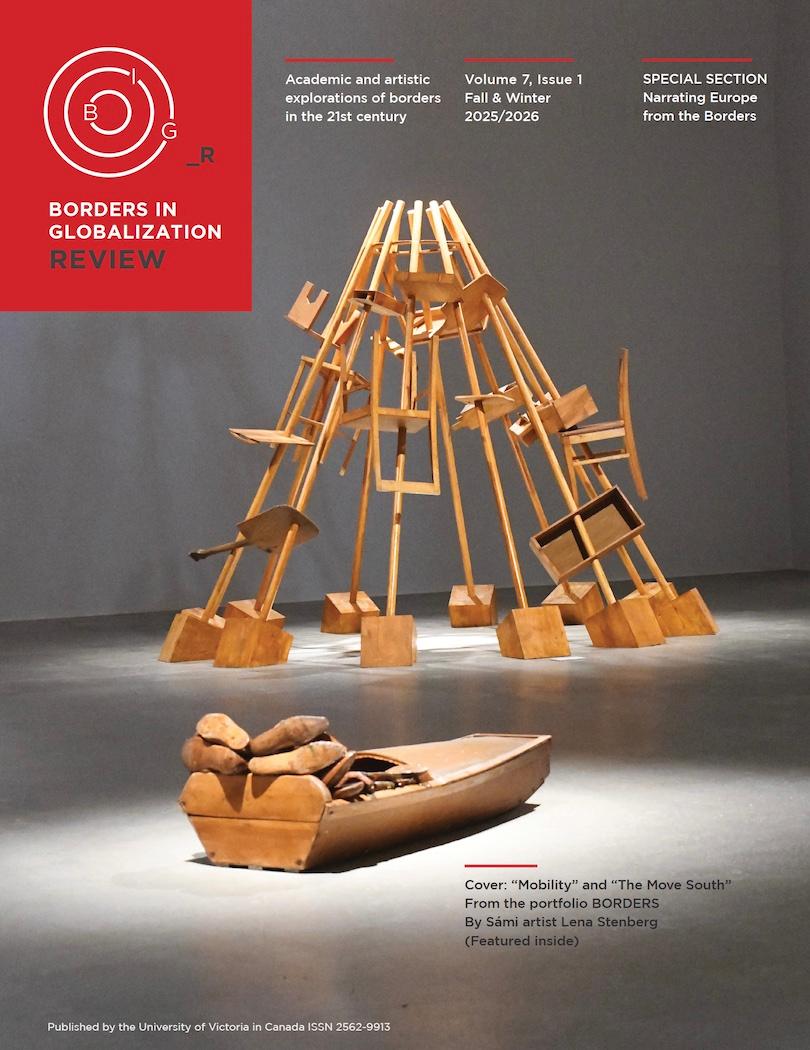
Birte Wassenberg and Pierrick Bruyas guest edited a special section of BIG_Review, "Narrating Europe from the Borders: A Media Analysis of European Integration" with four critical research articles and a substantive introduction.
The B-Shapes group has recently concluded a Horizon project on borders and borderlands, coordinated by Martin Klatt. They have a number of publications already available, but please follow along their website for future announcements.Learn more about B-Shapes.
Events & Conferences
Borders in Globalization Summer Institutes 2026 in Brussels: Registration Closing Soon
The Borders in Globalization (BIG) Lab at the University of Victoria is excited to announce that it will host its annual Summer Institute from July 6–24, 2026 from Brussels, Belgium this year. BIG is honoured to partner with colleagues at the European Commission. As always, all courses will also be offered remotely. Courses with a specific focus on Turtle Island/North America, (“Ecological Border Management” and “Indigenous Internationalisms and Border Crossings” will be hosted from Victoria, BC, and will run on Pacific Time.
Now in its seventh year, the Summer Institutes bring together scholars, practitioners, policymakers, and border professionals for intensive, university-accredited professional development focused on contemporary border governance and cross-border challenges. The 2026 program features courses on topics including comparative border management, trade and customs borders, artificial intelligence in border management, ecological border management, modern border security management, law of borders and cross-border laws, and Indigenous sovereignty and international activism.
Courses are taught by an international faculty of leading researchers and practitioners, (many of whom are ABS members) and are designed to foster dialogue across academic, policy, and operational communities. Participants may enroll in individual courses or pursue the full micro-credential program.
Second Annual Graduate Student Border Symposium (GSBS) - HYBRID
Opportunities and Challenges
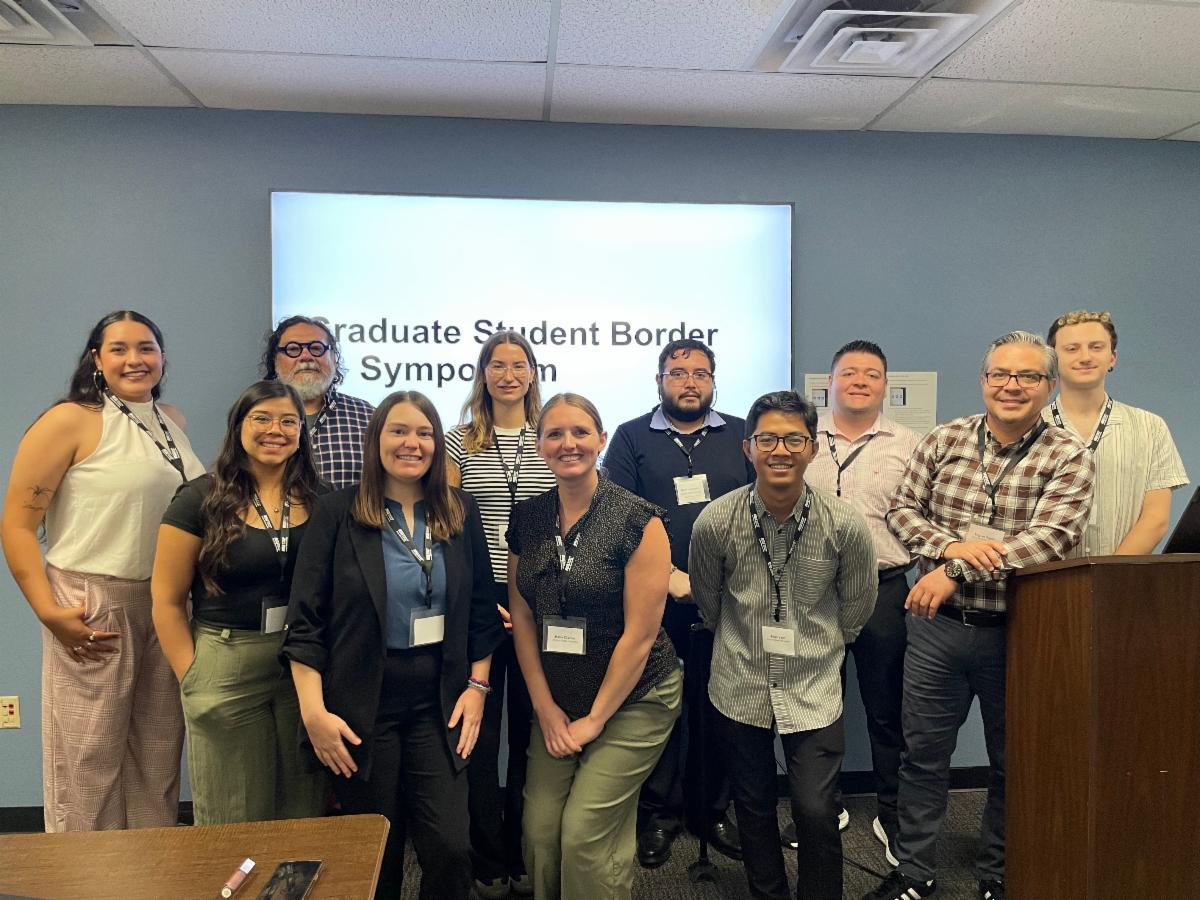
On behalf of the Graduate Student Border Symposium founders and organizing committee, we are pleased to announce the second annual Graduate Student Border Symposium (GSBS), to be held on 24 October 2026 in a hybrid format at Arizona State University.
The first GSBS brought together thirteen graduate-level discussants alongside undergraduate students, faculty, researchers, and community members for a day of presentations, collaborative discussions, and workshops centered on the present and future of border scholarship. Following the success of the inaugural GSBS in October 2025, we invite graduate students and emerging scholars working on borders, borderlands, migration, mobility, identity, sovereignty, conflict, culture, and related interdisciplinary fields to participate in this year’s symposium.
Seminar and Collaborative Workshop Format
The Graduate Student Border Symposium is designed as a discussion-centered seminar and workshop event structured around this year’s symposium’s overarching topic of “Opportunities and Challenges” to emerging scholars in border studies.Rather than traditional conference panels, GSBS emphasizes sustained trans-disciplinary intellectual exchange, collaborative pre-conference preparation, and intensive peer feedback.
Submission Guidelines
● abstract (150-200 words) aligned to symposium theme,
● a short biography (100 words),
● and institutional affiliation (if applicable).
Travel Support
A limited number of travel funding awards will be available for accepted participants attending in person. Applicants wishing to be considered for travel support should indicate this in their submission materials. Funding support will be distributed based on need and alignment to the conference theme.
Beyond Dividing Lines: Comparative Insights into Cross-Border Cooperation Worldwide
Beyond Dividing Lines is an international conference exploring cross-border cooperation across regions and world contexts. Bringing together scholars from different disciplines, the event focuses on comparative perspectives, institutions, and practices that shape collaboration across borders.
A PhD position is available at the Centre for Geopolitics, Peace and Security (GPS), Faculty of Humanities, Social Sciences and Education (HSL) in Border Studies, UiT The Arctic University of Norway. The workplace is at UiT in Kirkenes and Tromsø.
The objective of the position is to complete research training to the level of a doctoral degree. Admission to the PhD programme is a prerequisite for employment, and the programme period starts on commencement of the position. The PhD fellow position is for a period of three years and full time studies with the possibility of an extension of the appointment period.
The Position’s responsibilities:
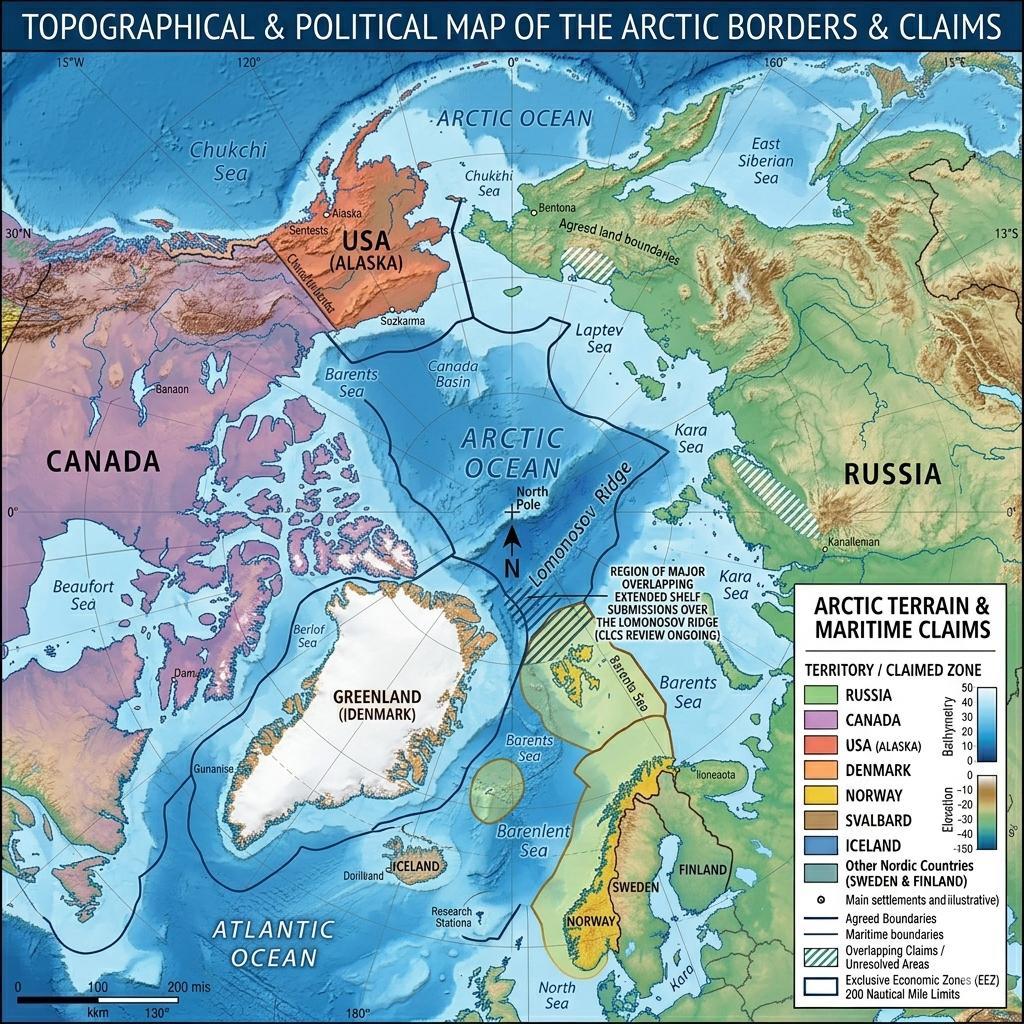
The successful candidate is expected to conduct research on topics related to Arctic borders and borderlands. The research aims to enhance our understanding of Arctic borders within the current geopolitical context. The PhD project should align with one or more of GPS's core focus areas: geopolitics, security, as well as peace and conflict studies.
The project must thematically align with UiT's strategy and the faculty's strategic long-term plan and be linked to a research group at the centre. The project should be academically relevant to the centre's research activities and capable of being supervised by staff at the centre.
The Centre for Geopolitics, Peace and Security (GPS) brings together and highlights UiT's expertise and research in geopolitics, peace, and security.
Fatherhood in the Borderlands: A Daughter's Slow Approach - Domino R. Perez
Winner - ABS Best Book Award 2026
A contemplative exploration of cultural representations of Mexican American fathers in contemporary media.
As a young girl growing up in Houston, Texas, in the 1980s, Domino Perez spent her free time either devouring books or watching films—and thinking, always thinking, about the media she consumed. The meaningful connections between these media and how we learn form the basis of Perez's “slow" research approach to race, class, and gender in the borderlands. Part cultural history, part literary criticism, part memoir, Fatherhood in the Borderlands takes an incisive look at the value of creative inquiry while it examines the nuanced portrayal of Mexican American fathers in literature and film.
Perez reveals a shifting tension in the literal and figurative borderlands of popular narratives and shows how form, genre, and subject work to determine the roles Mexican American fathers are allowed to occupy. She also calls our attention to the cultural landscape that has allowed such a racialized representation of Mexican American fathers to continue, unopposed, for so many years. Fatherhood in the Borderlands brings readers right to the intersection of the white cultural mainstream in the United States and Mexican American cultural productions, carefully considering the legibility and illegibility of Brown fathers in contemporary media.
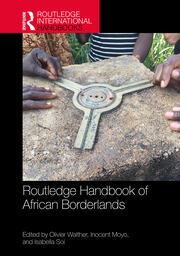
The Routledge Handbook of African Borderlands provides a comprehensive analysis of the factors shaping the past, present, and future of African borderlands, in all their complexity. Co-edited by Dr. Olivier Walther, Dr. Inocent Moyo, and Dr. Isabella Soi, its 30 chapters explore how borders are more central than ever to understanding the genesis of postcolonial African states, the source of their economic wealth, the drivers of their political conflicts, and the vitality of their solidarity networks.
Abstract: Joan B. Anderson served as the President of ABS from 1989 to 1991 and as co-editor of JBS from 1995-2000. She was a prolific scholar of the U.S.-Mexico border and Latin American economic conditions. This paper reviews her development as a scholar, her scholarship, and her contributions to ABS and the growth of border studies.
Introduction and context
I met Joan sometime in the early 1990s. She was a tenured Professor in Economics at the University of San Diego and I was a untenured Assistant Professor at San Diego State University. At some point, probably an ABS conference, we began to discuss the possibilities for estimating a human development index for counties and municipalities on the U.S.-Mexico border. That project began our friendship and working relationship of more than 25 years. When she passed away, besides a feeling of deep loss, I felt a need to write an overview of her professional and academic work so that others might learn of her contributions to border studies.
Academic background
Joan Brownell Anderson was born in Colorado Springs, Colorado, on October 15, 1938. When she was four years old, her family moved to San Diego, where she would go to school, raise her family, and make a career teaching and writing about economics, Latin America, and the US-Mexico border. After she received a BA from San Diego State University (SDSU) in 1960, she earned a MA in Economics from Stanford University in 1961. Upon returning to San Diego, she found a job lecturing (1961-64) in the Economics Department at SDSU. On a parallel track, the University of California opened its new campus in San Diego in 1960 and added new programs over the following years. In 1965, when its first group of economics PhD students were admitted, Joan was among the three students that initiated the program. She was also the first woman and the only student among her small cohort that persisted beyond the first year. Joan was not deterred by the rigorous program and graduated in 1971 as the first woman to receive a Doctorate in Economics from UCSD. One of her daughters said her mother kept a magnet on the family’s refrigerator that said “Women who want to be as good as men lack ambition.”
While she was in graduate school she published her first paper in a refereed journal.1 The paper used descriptive statistics to analyze the changes in personal income taxes paid by different income groups in the United States between 1951-62. She and her co-author showed how personal exemptions and deductions skewed tax payments in favor of better off families over the dozen plus years they analyzed. This was her first foray into academic publishing and although it was outside the two areas where she would find her research home, the U.S.-Mexico border and Latin America, the paper was in a respected economics journal and established her work as strongly empirical. This work also related to inequality and the ways in which policies contributed to it. That was to be a subject that ran through her life’s work.
Joan’s doctorate demonstrated considerable mathematical and economic modeling skills.2 Her dissertation thesis built a theoretic-mathematical model of the U.S. economy with an emphasis on the linkages between changes in prices, wages, and the demand for goods and services. It was a Keynesian model of the type that would come under strong criticism in the 1980s and later during the Neoliberal, supply side wave in economic thought. Some years after that, during the financial crisis of 2007-2009, a newer version of Keynesian models would come back into fashion. Joan used data on the US economy to empirically estimate the model. This was an econometric exercise that required significant computer usage at a time before there were econometric software programs. Writing her dissertation between 1969 and 1971, she was working without desktop computers or the statistical software that runs on most machines today. Model estimation required a mainframe computer, a computer language such as Fortran, and punch cards for conveying the program instructions and for inputting the data.
After receiving her doctorate, she decided to stay in San Diego, largely for family reasons. She had a lifetime of connection to the region, three young children, family nearby, and her husband’s career was going well. She was able to obtain a part-time lectureship at San Diego State University (SDSU) but the job and her family obligations left no time to do research or to publish over most of the 1970s. Nevertheless, her experiences at SDSU were important because Norris Clement, a colleague in the Economics Department, introduced her to border studies. Clement was interested in the regional economy of San Diego-Tijuana and helped create a regional research group at SDSU called the California Border Area Resource Center, one of the first university research centers focused on the U.S.-Mexico border.4 In 1980, Joan co-authored a working paper for the Center, “The Economic Importance of the U.S. Southwest Border Region.” Her Spanish language capabilities were passably good, but not at an academic level, so when this paper and later works were translated into Spanish, others did the translation work. This paper marked the beginning of her research on the U.S.-Mexico border.5 She did not drop her interest in the macroeconomy but most of her efforts began to focus on empirical measurement and understanding conditions in the border economy.
Career as a professor of economics
In 1981, the same year that the edited volume in Mexico appeared, Joan was offered a tenure track job in the Economics Department at the University of San Diego. She occupied the position for the rest of her teaching career. With a more secure academic position and children quickly growing up, her research began to flourish. Her econometric skills were put to good use as she began to measure working conditions and the economic performance of Mexico’s border manufacturing plants (the maquiladora industry). Border manufacturing was set up as an export processing zone (EPZ) where imported intermediate inputs and capital equipment were admitted into the country tax free as long as they were used to produce goods for export. EPZs are a strategy used worldwide to promote manufacturing and manufactured goods exports. Mexico’s program began in 1965 and by the 1980s it was beginning to flourish with U.S., Japanese, Korean and other sources of foreign investment.
Joan published two articles on the maquiladora industry in 1983, one looking at the trade-offs between capital and labor and the other measuring the economic performance of border electronics manufacturing plants.6 These were followed in 1984 with an examination of the impact of the peso devaluation on the work effort of employees in maquilas in Mexicali, and a paper on female labor in electronics and garment sewing plants.7 Women were a majority of the workforce in the border manufacturing plants, holding 86 percent of the jobs in the electronics maquila, 85 percent in the garment sector, and similar levels in other lines of production. Researchers questioned whether this was due to greater dexterity and other physical traits, or whether employers preferred women because they were more compliant and less likely to organize. Joan specified an econometric model to test these two hypotheses and concluded that the preference for female workers had nothing to do with physical traits but was likely the result of the greater compliance that resulted from the more limited job opportunities available to women when compared to men.
The 1980s were an active time in the border region and in Latin America. Border manufacturing was beginning to have a significant impact on Mexican exports but the Mexican economy suffered a string of financial and economic crises beginning in 1982 and lasting until 1989. During this period, the U.S-Mexico border began attracting more scholarly attention. The move towards a greater emphasis on border topics was also encouraged by the 1982 opening of El Colegio de la Frontera Norte (COLEF) in Tijuana. COLEF is funded by the national government of Mexico and is an advanced research institute with post-graduate degree programs in the social sciences and a focus on northern Mexico and the U.S.-Mexico border. COLEF would become an important source of academic work on Mexico’s maquiladora. Joan’s initial contribution was the Spanish translation of a paper she wrote with her co-author on apparel manufacturing that appeared in a COLEF collection edited by the industrial sociologist Jorge Carrillo.8
Sometime in the 1980s, Joan became active in both the ABS and the Business Association for Latin American Studies (BALAS). Her commitment to building organizations led her to serve as the Secretary of ABS, 1984-87, and on the executive committee of BALAS in 1984. A few years later she became the president of ABS (1989-91), followed by the presidency of BALAS (1994-95) and co-editor of JBS from 1995 to 2000 with Paul Ganster (San Diego State University) and Duncan Earle (University of Texas El Paso). In 1984, she began to publish regularly in the conference proceedings of BALAS. These working papers enabled her to explore new areas and new ideas about Latin American economies, and would later be refined into articles in refereed journals. While she became active in ABS and BALAS, she also began to attend two regional associations of Latin Americanists and to publish in their conference proceedings as well. The Rocky Mountain Council for Latin American Studies (RMCLAS) is the oldest academic association of Latin Americanists in the United States. The Pacific Council on Latin American Studies is slightly younger but both were good places to publish new ideas in conference proceedings and both were important to her development as a Latin Americanist. Her research during the 1980s reflected these institutional affiliations and a developing interest in broader range of Latin American issues. She published articles on the informal economy in Mexico, hyperinflation in Bolivia and Argentina, Christian base communities in Latin America, the impact of currency devaluations in Latin America, and her first two articles in JBS.9 The JBS papers related to the reasons behind the growth of the informal sector in Mexico’s northern border region and an examination of the economic performance of electronic and apparel maquiladoras.
The late 1980s, was the beginning of the end of the Latin American debt crisis but it continued to attract research interest from scholars and policymakers. The crisis posed a number of intractable problems for Latin American economies and policymakers found that solutions were not easy. Countries were plagued by falling real wages, large capital outflows for debt service, hyperinflation, and painful cycles of recession-recovery-recession. In 1988, she received a Fulbright research grant that allowed her to spend four months at the Central Bank of Ecuador. The outcome was an article in the journal of the central bank of Ecuador analyzing the impacts of fiscal and monetary policies on inflation and growth in Ecuador and, a few years later, a book on appropriate policies for confronting the Latin American debt crisis.10 The econometric tools she acquired in graduate school, plus her ability to develop macro-models, were fully on display in her book. She derived a set of policy recommendations for escaping the debt crisis but was careful to note that since the data and the macro-model were based on the Ecuadorean economy, the conclusions should not be blindly applied to other countries in Latin America. Nevertheless, many of her findings have been replicated by others in different contexts, and several ideas have been accepted as good policies for dealing with a debt crisis. For example, she noted the benefits of avoiding a fall in real wages, the need to renegotiate debts and to bring down public sector deficits, and the desirability of positive real interest rates, among others.
By the 1990s she had developed a substantial portfolio of interests with publications to match. She had expanded her research towards issues of social concern such as poverty and the way that families living in the border region coped with their lack of resources.11 One of the central issues in the border region that was not explicitly about poverty but that had significant weight was the role of the maquiladora production system in fostering Mexican economic growth. Did it contribute to rising incomes and social prosperity, or was it an obstacle to prosperity due to its low wages and the absence of economic linkages to the rest of the economy? Was it a way for foreign capital to exploit Mexican labor and the environment, or was it an upward step on the ladder of comparative advantage? In February, 1990, at the annual meetings of the ABS in Tijuana, Ellwyn Stoddard organized a symposium on the role of the maquiladora. One of the participants and co-organizers was Jorge Carrillo, the editor of Frontera Norte, COLEF’s journal dedicated to northern Mexico, relations with the United States, and the border. Jorge organized a simultaneous translation and publication of the papers.12 Joan’s paper was simple and direct. After acknowledging a lack of agreement as to the definition of economic development, she specified a set of economic goals that the maquiladora industry was expected to fulfill when it was created. These included benefits such as the provision of employment, foreign exchange, training for workers, managerial skills, new technologies, and industrial development. On balance, she concluded that “... the weight of the evidence is against much long term impact of maquiladoras on Mexican economic development.” (Anderson, 1990, 9). The main obstacles were the low wages offered as an incentive to business investment and the lack of forward and backward linkages to the rest of the economy.
The issue of wages continued to occupy her thinking and in the mid-1990s she began to publish a series of papers, many with her colleague at USD, Denise Dimon, on the impact of trade on wages and on the labor force participation of women in the border region and elsewhere. They examined the influence of U.S.-Mexico economic integration on country wage differences and also the effects of Mexico’s wage policies on trade.13 A related set of papers around the same time examined other aspects of female labor. These included papers on labor force participation and migration to Mexico’s border with Texas, the growth of formal sector work, and the effects of marriage on labor force participation.14
New research
Over the years, Joan’s networks and experiences in Mexico, Ecuador and other parts of Latin America together with her interests in education gradually drew her into researching the lagging performance of Latin American schools and educational systems. This resulted in a co-edited book and several articles.15 Throughout this analysis she retained her empirical approach and applied statistical analysis where it was possible. The importance of education as one of the keys to unlocking economic development remained with her at all times, and was to play a central role in her next set of research papers and a book she co-authored.
Economists have long known that GDP is an inadequate measure of a society’s level of material well-being, yet by virtue of its simplicity as a single number, and the fact that it is embedded in our system of national accounting, it continues to be used and cited. There have been many attempts to find a better measure, most of which have had limited success. One of the more widely used alternatives is the human development index (HDI). Created in the 1960s by the United Nations Development Program (UNDP), the HDI is a simple average of GDP per capita, a measure of education, and a measure of health. In the early 2000s, Joan and I explored whether it was possible to construct a comparable HDI for each of the counties (U.S.) and municipalities (Mexico) along the border. The result was a paper published in the JBS in 2004. This was followed in 2008 with the book, Fifty Years of Change on the U.S.-Mexico Border.16The book provides an analysis of the changes from 1950 to 2000 in each of the three variables that comprise the HDI (income, education, and health), and a discussion of development challenges and successes on the border. It had been decades since Niles Hansen published one of the first economic studies of the U.S.-Mexico border (Hansen, 1981), and Fifty Years of Change sought to fill the gaps created by the changes in U.S.-Mexico relations and the border economy. One of the positive results of the book was that it showed that it was possible to do quantitative and comparative analysis with Mexican and U.S. data. Updates to the HDI were published in 2017 and 2023 in the JBS.17
Parting thoughts
Joan continued to attend ABS meetings in her 80s and she continued to travel to new places and to visit friends and family. The last time I saw her was at lunch with her husband Dave, the day before she left for a week to visit friends in La Paz, Mexico. She passed away a few weeks after returning. This tribute cannot cover all of her contributions nor all of her writings. She had many roles in her long life, inside and outside academia, and loving relationships with her family and friends. She was a dedicated university professor and skilled economist who taught literally thousands of students and collaborated with many colleagues over her career. She promoted the ABS and the JBS because she deeply believed in the beneficial effects of crossing borders and learning new perspectives. Joan leaves us with a thriving organization that she once directed, and an increasingly respected journal that she co-edited in previous years. ABS celebrated its 50th year and the JBS its 40th in the same year she left us; our job is to continue her work.
Sources cited
Anderson, J.B. (1990). Maquiladoras and border industrialization: Impact on economic development in Mexico. Journal of Borderlands Studies, 5:1, 5-9; Spanish version: Anderson, J.B. (1990) Las maquiladoras y la industrialización fronteriza: el impacto sobre el desarrollo económico en México, Frontera Norte, 2:3, 142-46.
Hansen, N. (1981). The Border Economy: Regional Development in the Southwest. Austin, TX: University of Texas Press.
[1] With G. Babilot. (1967). Empirical evidence of the changing pattern of personal income taxes paid by income classes, 1951-1962, Southern Economic Journal, XXXII:4, 518-25.
[2] Anderson, J.B. (1971). An Econometric Model of Inflation, Excess Demand, and Changes in the Wage Rate (Doctoral dissertation, University of California San Diego).
[3] SPSS was one of the fist statistical packages for social scientists that could be used on mainframe computers. It was created in 1968 and its first user manual was published in 1970.
[4] A few years later, the Center became the Institute for the Regional Studies of the Californias.
[5] Anderson, J. B., California Border Area Resource Center., Clement, N. C., & Shellhammer, K. L. (1980). Economic importance of the U.S. southwest border region. California Border Area Resource Center, San Diego State University.; Anderson, J.B., Clement, N. and Shellhamer, K. (1981). La importancia económica de la frontera de Estados Unidos con México. In Noel Osborn, T., Ortiz Cruz, E., Poulson, B.W., and Rozo, C. (eds.) El Dilema de Dos Naciones: Relaciones Económicas entre México y Los Estados Unidos. México: Trillas. 429-449.
[6] Anderson, J.B. (1983). Factor substitution and adaptation in the 'off-shore' assembly plants of Baja California. Annals of Regional Science, 17:2: 29-44; Anderson, J.B. (1983). Efficiency and profitability in the electronic maquiladoras in Baja California. Proceedings of the North American Economic and Finance Association.
[7] Anderson, J.B. & Frantz, R. (1984). The response of labour effort to falling real wages: The Mexican peso devaluation of February 1982. World Development, 12:7, 759-66; Anderson, J.B. (1984). Female participation and efficiency in Mexican electronic and garment assembly plants. Campo Libre, 2:1-2, 87-96.
[8] Anderson, J.B. and Frantz, R. (1985). Production efficiency among Mexican apparel plants. Journal of Developing Areas, 19:3, 369-37. The Spanish language version appeared as Anderson, J.B. and Frantz, R. (1989). Eficiencia en la industria del vestido en Mexico. In J. Carrillo, ed., Reestructuración industrial: Maquiladoras en la frontera México-Estados Unidos. México, DF: Consejo Nacional de fomento Educativo, 341-370.
[9] Anderson, J.B. (1987). Halting hyperinflation: Bolivia and Argentina. In P.A. Sullivan (ed.), Proceedings from the 35th Annual Meeting of the Rocky Mountain Council on Latin American Studies, 23-30; Anderson, J.B. and Colombo, J.A. (1988). Christian base communities and grassroots economic development in Latin America Journal of Behavioral Economics, 17:2, 97-112; Anderson, J.B. (1988). From Christian base community to cooperative: The case of Chorrillo, Panama. Review of Latin American Studies, 1:2, 91-101; Anderson, J.B. (1989). The impact of devaluation for Latin American countries: A theoretical approach. In D. Dimon and R.D. Echeverry Romero (eds.) La Internacionalización de los Negocios: Su Impacto sobre las Escuelas de Administración. 3-14; Anderson, J.B. (1988).Causes of growth in the informal labor sector in the Mexican northern border region, Journal of Borderlands Studies, 3:1, 1-12; Anderson, J.B. (1988). Size, efficiency and profitability: empirical evidence from Mexican electronic and apparel plants. Journal of Borderlands Studies, 3:2, 1-16.
[10] Anderson, J.B. and Gerencia de Investigaciones y Estudios Econométricos del Banco Central de Ecuador. (1990). El impacto de las políticas monetaria y fiscal sobre el crecimiento real y la inflación, Cuestiones Económicas, 15, 9-26; Anderson, J.B. (1991). Economic Policy Alternatives for the Latin American Debt Crisis. New York: Taylor and Francis. Anderson, J.B. (1997). Ecuador's economy in the post war period. In L. Randall (ed.), The Political Economy of LatinAmerica in the Post war Period. Austin: University of Texas Press. 232-274. Anderson, J.B. (2000). Privatization, efficiency and market failure: Transforming Ecuador’s public sector. International Journal of Public Administration, 23:5-8, 579-602.
[11] Anderson, J.B. and de la Rosa, M. (1991). Economic survival strategies of poor families on the Mexican border. Journal of Borderlands Studies, 6:1, 51-68. Published in Spanish as Joan B. Anderson, & Martín de la Rosa. (1991). Familias pobres de la frontera. Estrategias de sobrevivencia. Estudios Sobre Las Culturas Contemporáneas, 4:11, 75–96.
[12] Anderson, J.B. (1990). Maquiladoras and border industrialization: Impact on economic development in Mexico, Journal of Borderlands Studies, 5:1, 5-9; Anderson, J.B. (1990) Las maquiladoras y la industrialización fronteriza: el impacto sobre el desarrollo económico en México, Frontera Norte, 2:3, 142-46.
[13]Anderson, J.B. and Dimon, D. (1995). The impact of opening markets on Mexican male/female wage and occupational differentials, Social Science Journal, 32:4, 309-26. Anderson, J.B. and Dimon, D. (1996). The impact of Mexican wage policy on U.S.-Mexico trade. In D. Dimon, I. Gutierrez Tomlinson, and S.E.W. Nichols, eds. Competitiveness inInternational Business and Trade, Volume II, Laredo, TX: Texas A&M, 573-588. Anderson, J.B. (1998). Direct foreign investment, economic cycles, and Mexican wage policy. In F.J. Contractor, ed., Economic Transformation in Emerging Countries: The Role of Investment,Trade and Finance, Amsterdam: Elsevier. 71-84. Anderson, J.B. and Dimon, D. (1999). How will freer trade with Mexico affect U.S.-Mexican wage gaps for skilled and unskilled workers. Paper presented to the XVII Latin American Meeting of the Econometric Society. ITAM, Cancun, Mexico.
[14] Anderson, J.B., Dimon, D., and Brannon, J. (1995). Women’s labor force participation and migration to the Texas border region, Journal of Borderlands Studies, 10:2, 5-33. Anderson, J.B. and D. Dimon. (1999). Formal sector job growth and women’s labor sector participation: the case of Mexico, Quarterly Review of Economics and Finance, 39:2, 169-91. Anderson, J.B. and Dimon, D. (1998). Married women’s labor force participation in developing countries: The case of Mexico, Estudios Económicos, 13:1, 3-34.
[15] Anderson, J.B. and Randall, L. (eds.) (1999). Schooling for Success: Preventing Repetition and Dropout in Latin American Primary Schools. Armonk, New York: M.E. Sharpe.Anderson, J.B. (2000). Factors affecting learning of Mexican primary school children. EstudiosEconómicos, 29:1, 117-52. Anderson, J.B. (2007). Social capital and student learning: Empirical results from Latin American primary schools. Economics of Education Review, 27:4, 439-449. Anderson, J.B. (2008). Principal’s role and public primary school effectiveness in four Latin American Cities. The Elementary School Journal. 109:1, 36-60.
[16] Anderson, J.B. and Gerber, J. (2004). A human development index for the United States-Mexico border. Journal of Borderlands Studies, 19:2, 1-26. Anderson, J.B. and Gerber, J. (2008). Fifty Years of Change on the U.S.-Mexico Border: Growth, Development, and the Quality of Life. Austin, Texas: University of Texas Press.
[17] Anderson, J.B. and Gerber, J. (2023). The US-Mexico border human development index, 1990–2015: Improvements but still large gaps. Journal of Borderlands Studies, 58:1, 1-20. Anderson, J.B. and Gerber, J. (2017). The US-Mexico border human development index, 1990-2010. Journal of Borderlands Studies. 32:3, 275-288.
ABS Member Publications
Special Issues
Gruziel, Dominika and Venken, Machteld (eds.). Children, Border(land)s and Mixed Economies of Welfare, in: Childhood (Special Issue) 32/1 (2025).
Jaschik, Johanna, Venken, Machteld and Wassenberg, Birte (eds.). Border Temporalities in and Beyond Europe, in: Borders in Globalization Review (Special Issue) 6/1 (2024).
Kaci, Maxime, Venken, Machteld, Brüll Christoph and Kmec Sonja (eds.). Vivre au sein de l'espace frontalier franco-luxembourgeois du Moyen Âge à nos jours : nouveaux éclairages sur les interactions entre pouvoirs et pratiques, in: Hémecht. Revue d'Histoire luxembourgeoise – Zeitschrift für Luxemburger Geschichte (Special Issue) 77/2 (2025).
Nyman, Jopi, Johan Schimanski, and Carmen Zamorano Llena, eds. 2024. Temporalities and Subjectivities in Migration Literature in Europe. Lanham: Lexington Books.
Chapters
Trautman, Laurie; Bettis, Jennifer; Bissonnette, Andréanne. (2025). Building Blocks of the Canada–US Relationship: The Integrative Role of Cross-Border Regions. In The Elgar Companion to North American Trade and Integration, Edward Elgar Publishing.https://doi.org/10.4337/9781035326570.00024
Digital Exhibitions
Behnam Shad, Klaus, Venken, Machteld. Talking Borders. Digital Exhibition: An Introduction. in: Behnam Shad, Klaus, Venken, Machteld (eds.) Talking Borders. Digital Exhibition, Luxembourg Centre for Contemporary and Digital History – University of Luxembourg. Link
Behnam Shad, Klaus, Venken, Machteld. Talking Borders. Digital Exhibition., Luxembourg Centre for Contemporary and Digital History – University of Luxembourg. Link
Articles
Astrid M. Fellner and Christian Wille (2025): Cultural Border Studies. In: Jonas Nesselhauf and Florian Weber (eds.): Handbuch Kulturwissenschaftliche “Studies”. Berlin, de Gruyter, 47-67,https://doi.org/10.1515/9783110712919-004
Balogh, Péter. 2026. “‘Now We Don’t Belong Together Again’: Attitudes to Borders and EUrope in Hungarian-Language News-Portals in Slovakia Around Covid ”. Borders in Globalization Review 7 (1). Victoria, British Columbia, Canada:53-65. https://doi.org/10.18357/big_r71202522494.
Bettis, J., Cappellano, F., Makkonen, T., & Moscato, D. (2026). A media-based indicator for studying functional cross-border regions. Regional Studies, 60(1). https://doi.org/10.1080/00343404.2026.2682498
Dittel, Julia / Weber, Florian (2025): Strengthening cross-border cooperation in a living Europe: Policy recommendations for the SaarLorLux border region. UniGR-CBS Policy Paper 7.https://doi.org/10.5281/zenodo.17076749
Gruziel, Dominika and Venken, Machteld. Introduction: Children, Border(land)s and Mixed Economies of Welfare, in: Childhood 32/1 (2025), 3-19. DOI: 10.1177/09075682241296586.
Hippe, S., Pászto, V., Burian, J., Chilla, T., Macků, K. & Voženílek, V. (2026). The potentials of “new data” in border studies: A scoping review. Regional Science Policy & Practice, 18(8). https://doi.org/10.1016/j.rspp.2026.100324.
The article uses a scoping review to analyze selected academic publications from border studies that use new data in a cross-border context. The results show that most studies originate from North America, Europe, and China. New data approaches present a new knowledge base for cross-border regional development, offering promising opportunities for theoretical and empirical contributions to border studies.
Jaschik, Johanna, Venken, Machteld and Wassenberg, Birte. Introduction: Border Temporalities in and Beyond Europe, in: Borders in Globalization Review (Special Issue) 6/1 (2024), 8-14. DOI: 10.18357/bigr61202422223.
Kaci, Maxime, Venken, Machteld, Brüll Christoph. L'espace frontalier franco-luxembourgeois du Moyen Âge à nos jours. Introduction à un dossier sur les interactions entre pouvoirs et pratiques, in: Hémecht. Revue d'Histoire luxembourgeoise – Zeitschrift für Luxemburger Geschichte (Special Issue) 77/2 (2025), 133-154.
Laine, J. P. (2026). Rajat, turvattomuus ja rehellisyyden politiikka [Borders, insecurity and the politics of honesty]. Alue Ja Ympäristö, 55:1. https://doi.org/10.30663/ay.179539
Border reinforcement has become a key instrument of late‑modern security politics, offering symbolic performances of control even as their practical capacity to address structural insecurities remains limited. Such measures narrow the political imagination of security, legitimizing exceptional actions while obscuring the deeper social and political conditions that produce insecurity in the first place.
Borders emerge from the intertwined motions of human and nonhuman agencies, but become borders only through the reflexive human acts that interpret, channel, and materialize those motions into concrete bordering practices.
Cielemecka, O., & Laine, J. P. (2026). Fencing Off Europe: Border Fortifications as Symptomatic Responses to Hybrid Insecurities in Poland and Finland. Journal of Borderlands Studies, 1–20. https://doi.org/10.1080/08865655.2026.2637501 - OPEN ACCESS
Border fences in Poland and Finland are portrayed as symbolic performances of insecurity, materializing fears of hybrid threats and instrumentalized migration, yet ultimately failing to address underlying drivers of insecurity while offering only an illusory sense of control.
Laine, J. P. (2026). Bridging the Implementation Gap: Refugee Governance and Institutional Coordination in Uganda’s Borderlands. Journal on Migration and Human Security, 14(1), 78-94. https://doi.org/10.1177/23315024251409778
Uganda’s celebrated refugee model becomes fragmented in practice in the West Nile borderlands, where overlapping authorities, contested land systems, and colonial and kinship legacies reshape national policy on the ground and produce uneven, locally mediated experiences of protection and integration.
Laine, J. P. (2025). Border anxiety and resilience: Finland’s strategic shift in a new geopolitical era. Journal of Contemporary Central and Eastern Europe 34(1), 197–211. https://doi.org/10.1080/25739638.2025.2599342
Finland’s rapid turn toward NATO is best understood as a dual quest for security and narrative coherence: a pragmatic response to Russia’s invasion of Ukraine and a deeper attempt to restore ontological security after the collapse of its long‑standing identity of military non‑alignment and pragmatic coexistence with Russia.
Laine, J. P. (2025). Navigating migration challenges in Uganda’s West Nile borderlands: policy, practice, and governance. Compararive Migration Studies 13, 86 (2025). https://doi.org/10.1186/s40878-025-00508-1
Refugee integration in Uganda’s West Nile borderlands is shown to fracture under hybrid governance, infrastructural scarcity, and competing local–refugee claims, revealing a persistent gap between progressive national policy and the complex territorial, institutional, and social realities that shape everyday protection and integration.
Laine, J. P. (2025). Beyond territorial discontents: the surprising persistence of borders in a fragmented world. Space and Polity, 1–11. https://doi.org/10.1080/13562576.2025.2605482
Borders today must be understood through border perplexity – as unpredictable material–symbolic devices that soothe ontological anxieties and operate far beyond territorial control, revealing the limits of state‑centric frameworks like Castan Pinos and Radil’s territorial discontent model.
Laine, J. & Petersson, B. (2025). Resilience as adaptive deterrence in an era of strategic uncertainty. In J. P. Laine & B. Petersson (Eds.), Resilience as deterrence: Towards a comprehensive security panorama (pp. 1–14). SAGE Publications/IOS Press. https://doi.org/10.3233/NHSDP250037
NATO’s eastern borderlands have shifted from perceived weak peripheries to strategic engines of resilience, where proximity to Russian aggression has produced distinctive whole‑of‑society defence practices that now function as force multipliers within the Alliance’s evolving deterrence and preparedness architecture.
Laine, Jussi P. (2026). Viral borders, system shocks, and the limits of territorial thinking. Dialogues in Human Geography, https://doi.org/10.1177/20438206261463544
Laine, J. P. (2026). Lupauksista ja niiden rajoista [On Promises and Their Limits]. Alue Ja Ympäristö [Online First],https://doi.org/10.30663/ay.185276
Laine, J. P. (2026). Turvallisuus ilman hyvinvointia on illuusio [Security Without Wellbeing Is an Illusion]. Yhteiskuntapolitiikka 91 (2026): 3, https://urn.fi/URN:NBN:fi-fe2026060965971
Moretti, Federica and Venken, Machteld. Transcending National Borders through Educational Practices: the Children’s Castle in Luxembourg, in: Childhood 32/1 (2025), 79-97. DOI: 10.1177/09075682241297164.
Moscato, Derek; Bettis, Jennifer; De Los Ángeles Flores, Maria; Bissonnette, Andréanne. Ballots and Borderlands: Inter-Nation Agenda Setting and News Coverage of the 2024 Presidential Election by U.S., Canada, and Mexico Press. American Behavioral Scientist.https://doi.org/10.1177/00027642261431453
Schimanski, Johan. 2024. “Space, Borders and Cognition in Urban Postmigration Literature.” In Urban Mobilities in Literature and Art Activism, edited by Patricia García and Anna-Leena Toivanen, 235-258. Cham: Palgrave Macmillan Cham.
Schimanski, Johan. 2024. “A Border Poetics of Migration: Five Mappings of Migration Literature in Norwegian and Swedish.” In The Palgrave Handbook of European Migration in Literature and Culture, edited by Corina Stan and Charlotte Sussman, 77-93. Cham: Palgrave Macmillan Cham.
Scott J., Sohn C., (2026) Landscape imaginaries as sources of resilience: German–Polish cross-border cooperation and the Oder River. European Planning Studies. DOI: https://doi.org/10.1080/09654313.2026.2671214
Smith, Julia and Piper, Julianne and Tiwana, Haaris and Lee, Kelley and Bissonnette, Andréanne and Bettis, Jennifer. News reporting on travel restrictions between Canada and the US during the COVID-19 pandemic: An equity-based analysis. Social Sciences & Humanities Open.https://doi.org/10.1016/j.ssaho.2026.102770
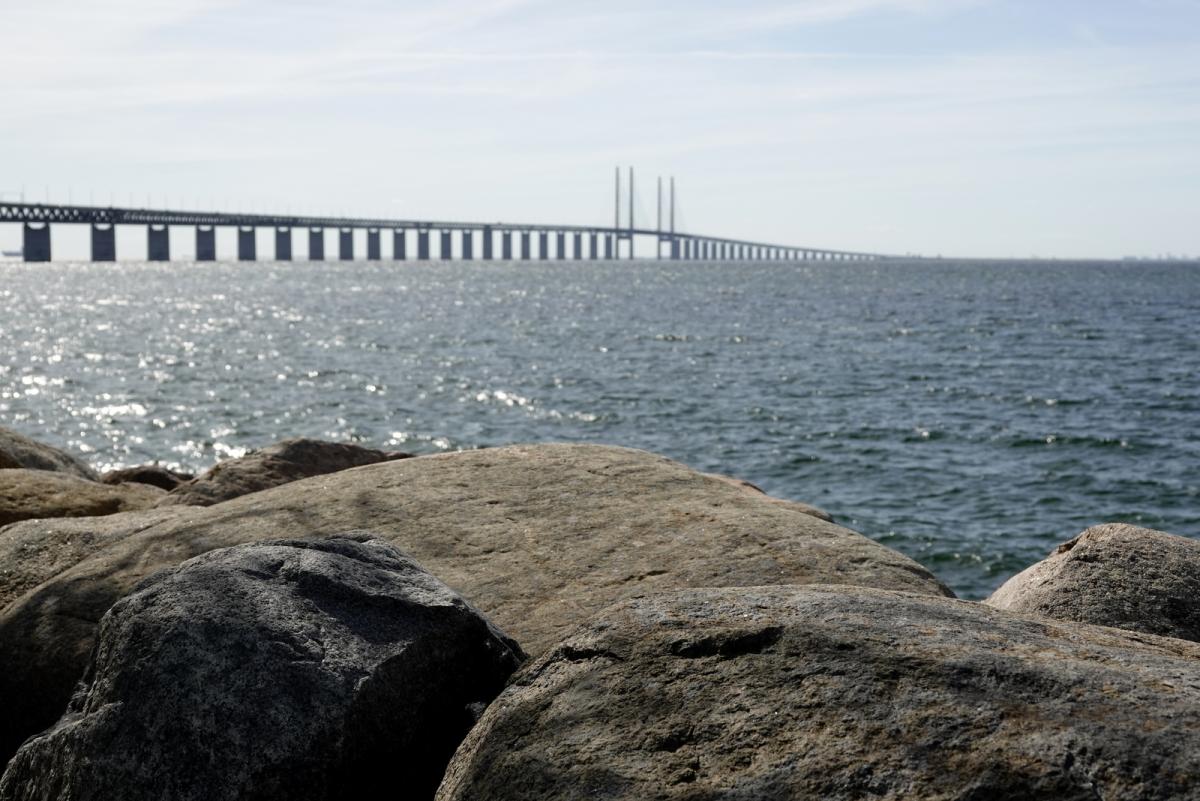
Svensson, Sara, and Oriana Miraka. 2026. “Gateway to Europe or Gateway in Europe? Attitudes to Europe and the European Union In the Danish–Swedish Øresund Border Region Before, During, and After the COVID-19 Crisis”. Borders in Globalization Review 7 (1). Victoria, British Columbia, Canada:32-42. https://doi.org/10.18357/big_r71202522496.
Wassenberg, Birte, and Pierrick Bruyas. 2026. “Narrating Europe from the Borders: A Media Analysis of European Integration ”. Borders in Globalization Review 7 (1). Victoria, British Columbia, Canada:13-19. https://doi.org/10.18357/big_r71202522613.
Wille, Christian (2025): On the Reintroduction of Temporary Controls at EU Internal Borders. Developments and Challenges 40 Years After the Schengen Agreement. UniGR-CBS Working Paper 24.https://doi.org/10.5281/zenodo.15575146
Wille, Christian (2025): Towards a New Departure in Border Studies? A Comment on the Increasing Talk of Complexity. Working Paper 22, UniGR-Center for Border Studies,https://doi.org/10.5281/zenodo.14748751
Wille, Christian (2024): Border Complexities. Outlines and Perspectives of a Complexity Shift in Border Studies. In: Wille, Christian / Leutloff-Grandits, Carolin / Bretschneider, Falk / Grimm-Hamen, Sylvie / Wagner, Hedwig (Eds.): Border Complexities and Logics of Dis/Order. (Border Studies. Cultures, Spaces, Orders, Bd. 7). Baden-Baden, Nomos, 31-56.https://doi.org/10.5771/9783748922292-31
Wille, Christian (2024): European Border Region Studies in Times of Borderization: Overview of the Problem and Perspectives. Borders in Globalization Review 5(1), 92-100.https://doi.org/10.18357/bigr51202421528
Venken, Machteld, Wissenberg, Birte, Brunet-Jailly Emmanuel. Border Temporalities. Reflections on (Post) Modernity and Age, in: Journal of Borderland Studies (2026), 1-19.
Venken, Machteld and Jaschik, Johanna. Chronoferencing the Italian-Slovenian Borderlands. Citizen Science, Oral History and Output Criticism, in: Journal of Digital History 4 (2025). DOI: 10.1515/JDH-2023-0020?locatt=label:JDHFULL.
Venken, Machteld. 'A trip organised for children is not a serious matter'? Summer treatment camps for the Belgian-German borderlands (1919-1939), in: Childhood 32/1 (2025), 38-55. DOI: 10.1177/09075682241295455.
Venken, Machteld. Border Temporalities of an Old Letter: A Hermeneutic Interpretation of Cross-Border Veteran Welfare, in: Borders in Globalization Review (Special Issue) 6/1 (2024), 15-26. DOI: 10.18357/bigr61202421650.
ABS | 516 High Street MS 9110 ATTN: Jennifer Bettis | Bellingham, WA 98225 US