Volume 252, April 8, 2024 | |
Land and Sea Change for Earth Day: Expanding the Climate Change Narrative | |
|
Have you ever considered how our perspective of climate change might shift if we focused not just on the sky above us but also on the earth beneath our feet? Today, let’s explore the role of plants, soils, and climate moderation, a tale often overshadowed by the buzz of greenhouse gases.
Human activities are not only carbon loading the air with rising greenhouse gases and drastically altering our land and sea. We're cutting down trees, scraping away topsoil, eroding the land, and suffocating wetlands and rivers with sediments. This disturbance is causing water to rush to the sea, carrying away homes and reshaping landscapes.
Furthermore, freshwater warmed by the land is spilling out over the salty sea, giving the ocean more energy. This has led to an alarming increase in hurricane ferocity. Hurricanes that pass over open seas have been observed to strengthen from category 4 to 5 in just 24 hours, a fourfold increase in destructive power.
Increased greenhouse gases retain more heat, tipping the planetary heat exchange balance by an additional 1% (3 watts per meter square). Like the doctor using a thermometer to measure a patient’s temperature, we measure degrees of climate change in parts per million atmospheric carbon dioxides. Seeing the planetary fever rise, we slow the rise by pushing for net zero carbon emissions.
In addition, expanding our efforts to address better water cycles, water vapor, and cloud cover will have immediate benefits to restoring the balance. To restore Earth’s health, we must address the splotches, rashes, and scars on the land and the bloating by hot surface waters on the sea.
| |
 | |
Let’s roll up our sleeves this Earth Day and start in yards and neighborhoods with residential lawns. Grass is the champion of restoration because it pushes out the highest proportion of carbohydrates; 50% of what is manufactured through photosynthesis uses the carbon dioxide pulled out of the air. Grasslands co-evolved with hoofed animals that walk on their toenails to break up tough plant fibers. If not stomped, chewed, or cut, plants left fallow on top of the ground rot and gas out carbon dioxide. By mowing our lawns, plant fibers are returned to the soil by springtails cutting, worms swallowing, and microbes, fungi, and bacteria digesting.
However, applying fertilizer to an established lawn disrupts this carbon nutrient cycle. It kills beneficial microbes and nematodes, destroying the living ecosystems we call soil. Without the manufactured nutrients and chemicals, roots can go deep and open the soil for oxygen, water, and life. A supportive network of fungi and bacteria spreads beneath the turf. Bacteria prepare nutrients and enzymes requested by the plants. The fungal mycorrhizal “wood wide web” connects plants to bacteria.
A natural lawn can build an inch of soil per year. Sticky carbohydrates hold minerals far apart. So much so that four inches of soil can hold seven inches of rain. Soils with more carbon are deeper to protect homes from extreme weather events. It's been found that retaining water in our landscapes could potentially reduce sea level rise by 25%. Increasing soil depth benefits everyone, and healthy plants pull down more carbon dioxide to further reduce greenhouse gases.
| |
|
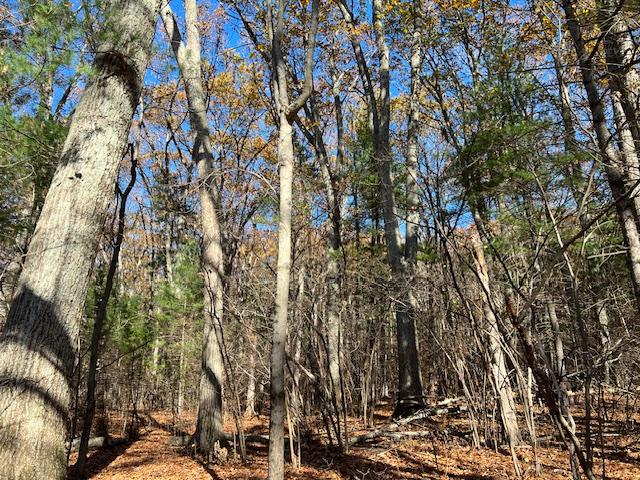
Let's take a walk into the role of forests to see climate moderation. Picture an 80-year-old forest. Majestic, isn't it? Now, you might be surprised to learn that this mature forest holds more than double the volume of carbon and water than a forest half its age. When the heat of the day rises, plants in these forests release water vapor, which evaporates and cools the surrounding air. Conversely, during the coldest hour before dawn, these same plants release water vapor that condenses into morning dew, simultaneously releasing heat.
Our old-growth forests are also the source of large volumes of bacteria and fungi that drift through the air. This organic matter serves as nucleation sites for water vapor to form cumulus clouds. These fluffy white clouds play a vital role in reflecting the Sun's energy back into space, cooling our planet.
However, we've tipped the balance and seen a decline in cumulus cloud cover due to deforestation. Less than 50% of the Earth is now covered by these cool clouds. But the story doesn't end with the plants and forests. The water vapor released by plants also plays a part in moderating climates. When this vapor condenses into mist, an exothermic reaction occurs and results in a drop in air pressure. This drop acts as a biotic pump, pulling moist air from elsewhere. As this moisture moves away from the ocean, its energy decreases. It's a simple equation: where forests stand, energy is drawn away from the ocean, and the fury of seas will be reduced.
Our ecosystems, both on land and in the sea, are intricately interconnected and cycle carbon, nitrogen, and water. Small changes can lead to significant effects. For instance, reducing the use of poisons in our yards will slow the loss of phytoplankton in the sea, providing more food for migrating whales.
The difference between today's carbon dioxide levels (420 ppm) and a more optimal level (350 ppm) is equivalent to 100 billion tons. Removing that much carbon might sound like a monumental task. However, the world's soil holds 2800 billion tons of carbon, and all the world’s plants and animals hold 564 billion tons of carbon. An increase of just 4% in vegetation and water-retaining healthy soil would be sufficient to offset this difference and restore the balance.
So, as we celebrate Earth Day, let's remember the crucial role that our forests, plants, and soil play in climate moderation. By halting deforestation and promoting the growth of vegetation and healthy soils, we can help restore the health of our planet. For this Earth Day, let's reconsider the traditional perspective on climate change and look at the whole picture by expanding the narrative for the sake of our Earth.
| |
|
The Parable of the Blind Men and the Climate Change
In the parable of the blind men and the elephant, the identity of the beast must be determined by touch and conjecture. The first person touches the trunk and says, "This being is like a thick snake." Another person touches an ear, and it seems like a kind of fan. The leg reminds the toucher of a tree trunk. The side of the elephant feels like a wall, the tail a rope, and the tusk smooth like a spear.
Three scientists went into the Arctic. The atmospheric scientist saw the air and sunlight warming the ocean. The terrestrial ecologist saw plants flourishing in twenty-four daylight, releasing water vapor, bacteria, and fungi into the air to regulate cloud formation. The oceanographer saw more sea ice being formed, causing more cold, dense, salty water to sink and strengthen ocean currents that changed the climate.
Like the blind men touching the elephant, when scientists use their logic to explain what they see with limited vision, they are unable to fathom the natural world’s complexity, the interconnections becoming one, or the agency of life that makes our planet inhabitable. Meanwhile, people are free to fortify their beliefs and draw battle lines between them and others.
The blind men can comprehend an elephant only with much dialog, with open minds listening carefully to each other. To better understand and save the Earth, we must listen like blind men and talk with everyone, or you won’t know what part you’re missing.
| |
|
ORI's Summer Internship Program
Four college students from Suffolk University, Tufts University, the University of Vermont, and New York University have been contracted to work on ORI’s 2024 Summer Internship Program.
Summer Interns will educate and enable people to do much more than treat the Earth’s fever of rising carbon dioxide levels. The blotches and rashes on our lands and the bloating of seas from our runoffs need urgent care. They will research issues and prepare presentations, create interactive webpages, host programs recorded in the studios of Cambridge Community TV, and hold community forums.
Interns reach out and develop relationships with groups and organizations. They become skilled in organizing and holding “tabling events” at parks, coffee shops, and festivals. They research, educate, advocate and develop their voices for ORI’s three primary programs that are holistic, inclusive, and empowering in problem-solving. Interns will present at four community forums and present at the National Marine Educators Association Conference in Boston.
The Slow Water Drought Relief Carbon Offset Fund is being developed to fight climate change by building more soil and reducing water runoff, which results in more carbon drawdown by photosynthesis.
The Let Forests Grow Carbon Offset Fund pays forest woodlot owners the timber value at harvest time, not to cut the trees. The fund pays the timber harvest revenues on state lands to leave trees standing.
New this summer, we are bringing together diverse interest groups, coastal communities, and individuals to call for a Right Whale National Marine Sanctuary. With government regulations addressing ship strikes and lobster gear entanglements, the sanctuary will bring users together, including fishermen, boat operators, and windmill directors, to address the degradation of the whales’ critical feeding habitats. What you do in your neighborhood affects whales because ecosystems are nested and interconnected.
ORI Summer Interns would like to work 32 hours a week for ten weeks. The Program is above the annual budget, so the number of hours they work depends on how much is donated to the program. Some foundations step up to underwrite some of the program costs, but not enough for four interns. So, without your support, they will work less hours. Every $20 pays the salary and expenses for one hour.
Lend a hand by making a donation so ORI interns may go the distance addressing climate change with more people.
| |
|
Whale’s Dance Ecosystem Bandana
Beautifully illustrated by artist and yogi Emmy Lopes, with border poem and hand calligraphy by Rhode Island artist/musician Jen Long of the Whale Guitar Project. This organic cotton bandana explores the delicate harmony between the ocean’s mighty giants, the blue whales, and the tiniest forms of life in the sea, the phytoplankton and copepods.
| |
Wear your bandana with pride, and thanks for supporting our collaborative efforts to create the Right Whale National Marine Sanctuary to rescue and protect the right whales.
With your donation, we'll include one 4" diameter and two 2" diameter right whale sanctuary logo stickers.
We’ll thank you for a gift of $35 with the Whale’s Ecosystem Bandana.
| |
Publications:
"The Earth and Three Blinkered Scientists," Seven Seas Media, March 2024
Three different scientists walked into the Arctic . . .
"Natural rights for Shaftsbury forests, fields, and rivers" illuminem, March 4, 2024
“The Kraken and the Erie Canal,” The Lowell Sun, February 15, 2024.
“We’re poking the ‘angry beast’ of climate with sticks.” MassLive, Feb 13, 2024.
“Will melting Greenland ice divert the Gulf Stream?” Daily Hampshire Gazette, Feb 7, 2024.
“As I See It: The kraken and the Erie Canal,” Newburyport Daily News, February 5, 2024
"Fallen Forests and Rising Ocean Fury" Seven Seas Media, February 2024
"How We Created the Hottest Global Average Temperature Day and What To Do About It?" One Green Planet, December 5, 2023
"Commentary: What if there was a Right Whale National Marine Sanctuary?" Gloucester Times, December 1, 2023
"What if there was a Right Whale National Marine Sanctuary?" Seven Seas Media Issue 103 - December 2023
"How We Created the Hottest Global Average Temperature Day and What to do about it." The Eden Magazine, September 2023
"Saving Forests with Carbon Offset Rewards for Not Cutting, Let Forests Grow Old." E The Environmental Magazine, March 14, 2023
"Speak for the trees: President Biden should protect public forests." Illuminem, December 18, 2022
"Slowing Water for Greener Neighborhoods." Illuminem, December 9, 2022
"Top Gun at COP27. It's not the plane. It's the pilot." The Environmental Magazine, November 29, 2022
"Biden’s game-changing administrative actions for climate at COP27." illuminem Voices, November 19, 2022
"Taking action to improve plight of right whales." Boston Herald, November 9, 2022
"Revival Coffee in Somerville takes up the Natural Lawn Challenge." The Somerville Times, August 27, 2022
"For eco groups, less lawn fertilizer is key to water crisis." By Dustin Luca, Salem News August 12, 2022
“More carbon capture, better water retention and greener emerald bracelets for Dedham.” The Dedham Times, August 12, 2022.
“Emerald Bracelets to Solve Three Of The World’s Greatest Environmental Problems.” by Rob Moir, The Environmental Magazine, June 21, 2022
"Of Mousy and Elephantine Cycles, Managing the CLIMATE CRISIS after Glasgow COP26." The Eden, March 2022
“Lincoln resident promotes natural lawn care,” Concord Journal, Aug 3, 2021
“Zumi’s host Natural Lawn Care for Healthy Soils Challenge,” Ipswich Chronicle Transcript, Aug 10, 2021
“Peabody peak capacity generator need not burn fossil fuels,” The Salem News, Aug 5, 2021
“30% preserved or restored by 2030,” The Salem News, Sep 29, 2021
“Pogie deaths, a Mystic River mystery,” Boston Herald, Oct 4, 2021
“Remember the right whales with a special day,” CommonWealth, Oct 29, 2021
“Retreating Arctic Sea Ice, Sea Ice Formation, and the Stronger Flow of the Gulf Stream” Seven Seas November 2021
"Rob Moir, PhD, Science Advocate," Bloomberg Business, April 11, 2022
| |
For healthy oceans, green watersheds, and diverse abundant wildlife. | | | | |