Large Animal Clinic

Roundup

July/August 2023

Latest News

Mondays with Mark

This month’s episode of “Mondays with Mark” looks at aspects of equine health taking place around the school. With a focus on the research and medical practices that are making an impact, Dean Stetter visits the Large Animal Clinic to talk with radiologist Dr. Mathieu Spriet about advancements in PET scanning that are now in place at some of the most prominent equine hospitals and racetracks in the country.

Watch the video

Champion Dressage Horse Saved with Colic Surgery

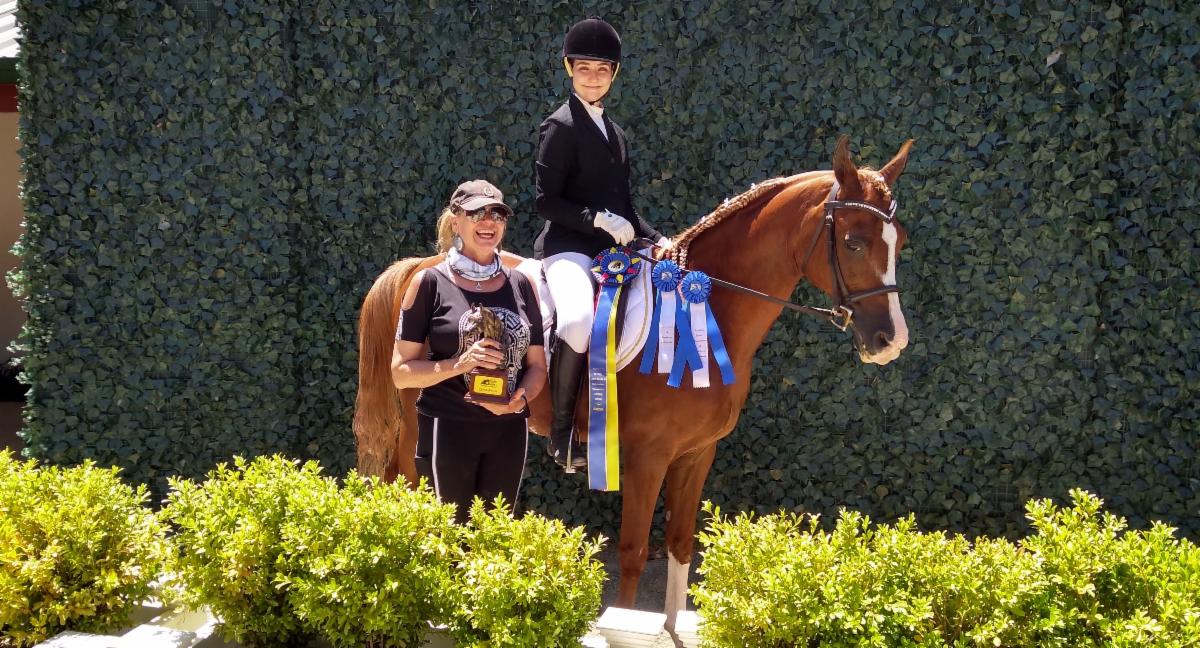
Sunny, a 24-year-old Arabian dressage athlete underwent successful colic surgery at the Large Animal Clinic after surgeons discovered a lipoma, a fatty abdominal tumor. More common in older horses like Sunny, lipomas strangulate the intestine, cutting off the blood supply until the tissue dies. In Sunny’s case, the lipoma had strangulated eight feet of his small intestine, which had to be removed to save him. The surgeons successfully removed the 8-foot section in the middle of Sunny’s small intestine, connecting the healthy ends together. A horse’s small intestine can be up to 70 feet in length, so Sunny can survive normally without the 8-foot section. Following surgery, Sunny received around-the-clock care in the Equine Intensive Care Unit and remained at UC Davis for 10 days until he was well enough to return home.

Read more

New House Officers Welcomed

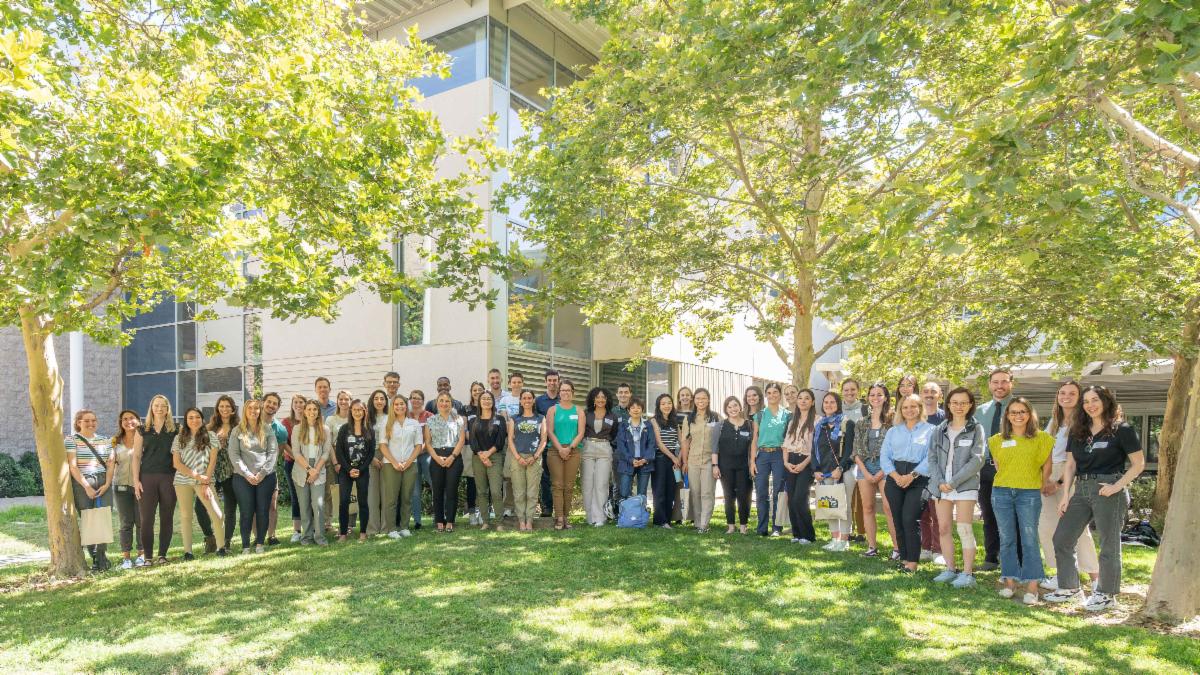
On August 1, 60 new house officers (residents, fellows, interns) entered the veterinary school's advanced training programs. The House Officer Program is the largest of its kind in the United States with 140 total house officers training in 41 specialty disciplines. Their training programs range from one to four years, where the veterinarians focus on a specific aspect of specialty medicine. Most residencies will fulfill specialty colleges’ requirements for being board eligible. Once their clinical training is completed and board examinations are passed, these highly trained veterinarians become board certified specialists in their discipline of veterinary medicine. Twenty-five of the 60 new house officers are either in specific large animal services (Equine Field, Equine Internal Medicine, Livestock Herd Health and Reproduction, Equine Surgery, and Equine Integrative Sports Medicine) or services that contribute to the success of the Large Animal Clinic (Anesthesiology, Diagnostic Imaging, Pathology, Oncology, Cardiology, and Ophthalmology).

Read more

Equine Reproduction Presents Research at International Conference

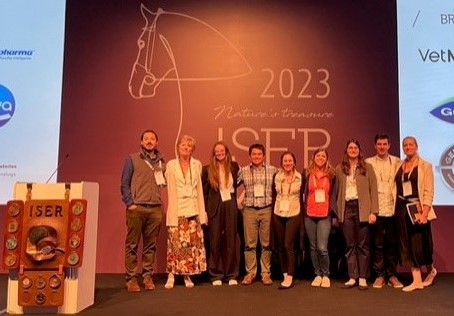
Drs. Pouya Dini, Daniela Orellana-Guerrero, Catherine Renaudin, Thadeu de Castro, and Kornelia Omyla of the Equine Reproduction Service recently presented research at the International Symposium on Equine Reproduction (ISER), the world’s largest gathering of its kind. Additionally, members of the school’s Veterinary Assisted Reproduction Laboratory also presented at the conference, held in Brazil. Over the past 50 years, the symposium has become an essential part of the calendar of scientists and veterinarians who study reproduction in horses and other equids throughout the world. ISER was held at UC Davis in 1978.

Read more

Advancing the Diagnosis and Treatment of Equine Neurological Diseases

New CT Scanner Coming Soon

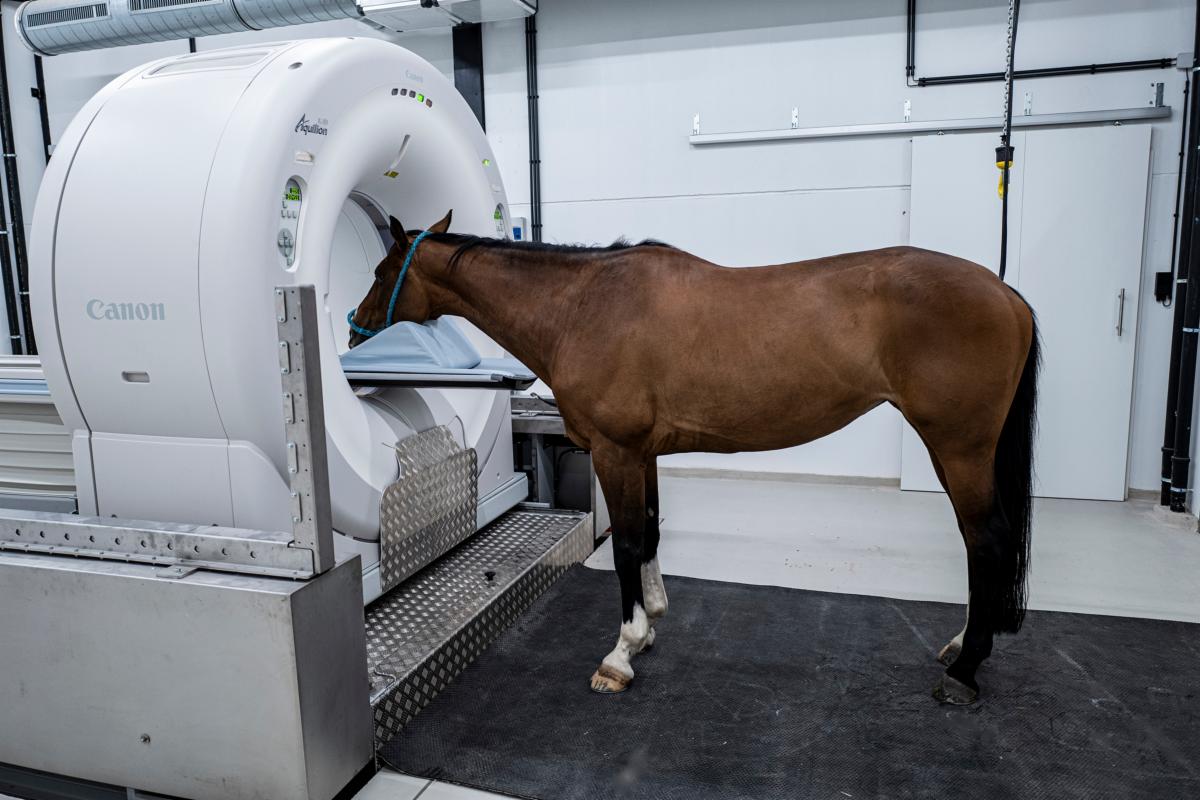
Equine patients of the Large Animal Clinic will soon benefit from a state-of-the-art Qalibra system CT scanner, thanks to the generosity of an anonymous benefactor who made a $1.3 million gift. The new CT scanner will allow standing imaging for the diagnosis of equine neurological diseases, providing a safer way to scan horses, and help accelerate discoveries in treatment.


The benefactor has a long-time appreciation of Dr. Monica Aleman, the Dr. Terry Holliday Equine and Comparative Neurology Endowed Presidential Chair, and Dr. John Madigan, distinguished professor emeritus, who have made significant strides in unraveling the complexities of neurologic disorders in horses and developing innovative treatments. Dr. Aleman is one of only two board-certified veterinary neurologists focusing on horses in the United States.


Also advancing equine health is the collaborative work that Dr. Aleman is doing with radiologist Dr. Mathieu Spriet to improve the diagnosis of equine neurologic disorders. 


The Qalibra system CT scanner will offer the versatility of imaging horses both standing or under general anesthesia and have tremendous impact on advancing neuroimaging and beyond. It will also help in dentistry cases requiring sinus and dental imaging, improve the ability of scanning limbs including stifles and even pelvises in some horses, and enhance the ability to scan thoraxes and abdomens in foals.


The new CT scanner will be included in the All Species Imaging Center anticipated to open in 2024.

Reach the Large Animal Clinic:

530-752-0290 (clients)

530-752-4050 (referring veterinarians)