Week 8 Update
1 Week To Go!
2022 Legislative Session
Large Strategies'
Capitol Health Care Summary
|
|
Click on bill to review Legislative Staff Analysis.
|
|
PASSED Legislature and
Awaiting Governor's Action
|
|
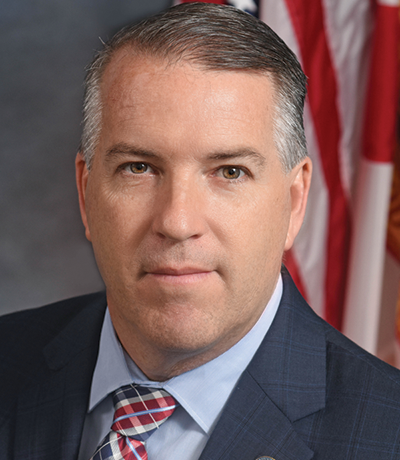
Rep Massullo
The bill authorizes physicians licensed under chapters 458 or 459, F.S., to provide emergency medical care or treatment to a minor without parental consent. This allows physicians to provide such care in prehospital settings, similar to EMTs and paramedics, or in hospital settings.
-
PASSED Legislature & awaiting Governor's Approval or Veto
|
|
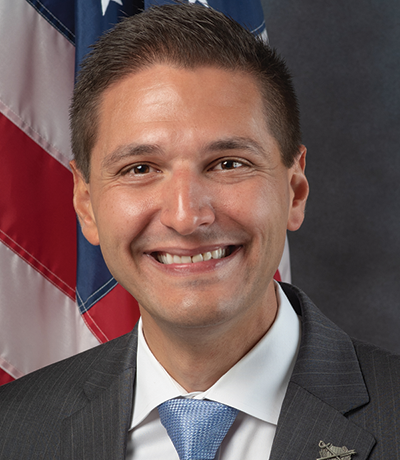
Rep Toledo
Since January 1, 2019, PBMs operating in the state are required to register with the Office of Insurance Regulation (OIR) by submitting a completed application form and fee for registration. Effective July 1, 2018, the Legislature also prohibited the use of “gag clauses” that prevent pharmacies from providing drugs to patients at the lowest applicable prices.
The bill transfers the audit provisions of the Florida Pharmacy Act to the Florida Insurance Code. This change gives OIR the authority to enforce these provisions and respond to potential violations. In addition, the bill expressly authorizes pharmacies to appeal audit findings made by health plans and PBMs using the existing dispute resolution program available through the Agency for Health Care Administration (AHCA). The bill establishes a financial penalty for PBMs that fail to register with OIR in accordance with current law. To date, OIR has lacked the authority to actively enforce the registration requirement adopted by the Legislature in 2018. Accordingly, the bill establishes a $10,000 fine for any PBM failing to register with OIR. The bill also expressly makes a health insurer or HMO responsible for violations of the pharmacy audit provisions, even if a PBM is contracted to manage pharmacy benefits on behalf of the insurer or HMO.
- PASSED Legislature & awaiting Governor's Approval or Veto
|
|
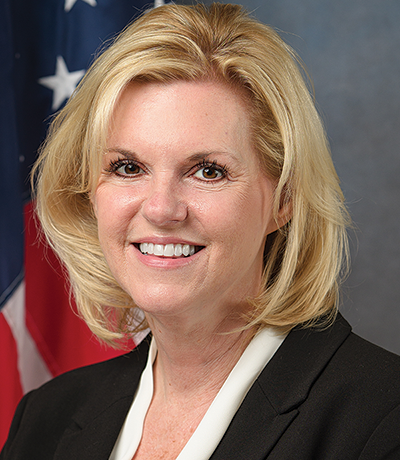
by Rep Latvala
The bill prohibits insurers of life insurance policies, industrial life insurance policies, group life insurance policies, credit life and credit disability insurance policies, and long-term care insurance policies from discriminating against living organ donors, or prospective donors, in coverage or eligibility solely on their status as a living organ donor. The bill makes such discrimination a violation of the Unfair Insurance Trade Practices Act, subject to existing penalties within the Act.
- Passed Legislature & awaiting the Governor's Approval or Veto
|
|
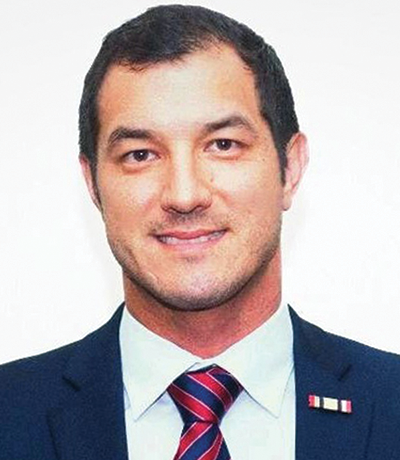
Rep Duran
To provide care for Florida’s public school students affected by epilepsy or seizure disorders while at school, the bill creates an individualized seizure action plan (ISAP) which informs school personnel of the unique health care services required by the student and how to respond in emergency situations. The bill requires a school to implement an ISAP once a parent submits it to the school principal and school nurse.
- Passed the Legislature & awaiting the Governor's Approval or Veto
|
|
Senator Rouson
CS/SB 282 promotes the use of peer specialists to assist an individual’s recovery from substance use disorder (SUD) or mental illness. Peer specialists are persons who have recovered from a substance use disorder or mental illness who support a person with a current substance use disorder or mental illness. Specifically, the bill:
- Adds the use of peer specialists as an essential element of a coordinated system of care;
- Provides legislative findings and intent related to the use of peer specialists in the provision of behavioral health care;
- Requires the DCF to designate a managing entity with an existing certified recovery peer specialist training program to provide training for persons seeking certification as peer specialists. The managing entity must give preference to trainers who are currently certified peer specialists;
- Requires the training program to coincide with a competency exam and be based on current practice standards;
- Revises background screening requirements for peer specialists;
- Adds offenses for which individuals seeking certification as a peer specialist may seek an exemption from eligibility disqualification;
- Allows peer specialists to work with adults with mental health disorders, in addition to SUDs and co-occurring disorders, while a request for an exemption from a background check disqualification is pending
Governor must act on this bill by 03/10/22.
|
|
By Rep Hunschofsky
The bill specifies that charter schools must comply with involuntary examination data reporting requirements established by the Legislature in 2021 for traditional public schools and requires the Department of Education to share school-related involuntary examination data with the Department of Children and Families (DCF) by July 1 each year.
The bill requires that the DCF use this data in its biennial analysis of involuntary examinations of minors in Florida.
The bill requires school districts to identify a mental health coordinator that will serve as the primary point of contact regarding the district’s student mental health policies, procedures, responsibilities, and reporting.
- PASSED the Legislature and awaiting the Governor's Approval or Veto
|
|
By Senator Cruz
Provides military spouses who already hold professional licenses in another state, waived fees and expedited processing when applying for comparable Florida licenses when they move to Florida due to active-duty relocation.
- PASSED the Legislature and awaiting the Governor's Approval or Veto
|
|
Rep Fine
Amends the “Florida Clean Indoor Air Act,” which regulates vaping and tobacco smoking in Florida. The bill allows counties and municipalities to restrict smoking within the boundaries of any of the public beaches and public parks they own, except with regard to the smoking of cigars that do not contain a filter or a plastic tip or the smoking of pipe tobacco in a pipe. Currently, the regulation of smoking is preempted to the state, and counties and municipalities are prohibited from regulating smoking. “Smoking” is defined in ch. 386, F.S., as “inhaling, exhaling, burning, carrying, or possessing any lighted tobacco product, including cigarettes, cigars, pipe tobacco, and any other lighted tobacco product.” The bill changes the title of the “Florida Clean Indoor Air Act” to the “Florida Clean Air Act” to account for the broader application of the act proposed in the bill.
- PASSED the Legislature and awaiting Governor's Approval or Veto
|
|
By Senator Harrell
Under current law, Medicaid requires prior authorization and step therapy for drugs not listed on the PDL. Step therapy requires recipients to first try a PDL-listed drug before obtaining a non-PDL drug, subject to a list of clinical exceptions, which must be documented by the prescriber to obtain prior authorization. SB 534 adds additional exceptions to the Medicaid step therapy policy for drugs to treat schizophrenia, schizotypal or delusional disorders, where:
- Prior authorization was granted previously for the same drug; and
- The medication was dispensed to the patient in the last 12 months.
PASSED the Legislature and awaiting the Governor's Approval or Veto
|
|
By Rep Fischer
HM 791 urges the President and Congress to:
- Condemn China for the practice of forcibly removing human organs for transplants;
- Pass legislation and measures that prohibit collaboration between U.S. pharmaceutical and medical companies and any Chinese counterparts linked to forced organ harvesting; and
- Ban people who have participated in forced organ harvesting from entering the U.S. and provide for the prosecution of such people.
PASSED the Legislature
|
|
On Special Order THIS WEEK |
|
By Rep Willhite
The bill defines “step therapy protocol” as a protocol or program that establishes the specific sequence in which prescription drugs, medical procedures, or courses of treatment must be used to treat a health condition. The bill also requires a process to receive a “protocol exemption”, which is a determination by an insurer or HMO to exempt an insured patient from an existing step therapy protocol. The bill requires an insurer or HMO to publish on its website, and provide to an insured in writing, a procedure for an insured patient and health care provider to request a protocol exemption.
The procedure must include:
- The manner in which an insured patient or health care provider may request a protocol exemption;
- The manner and timeframe in which the health insurer or HMO is required to authorize or deny a protocol exemption request; and,
- The manner and timeframe in which an insured patient may appeal the denial of a request. The bill requires an insurer or HMO granting a protocol exemption to specify the prescription drug, medical procedure, or course of treatment approved. Alternatively, an insurer or HMO denying a protocol exemption request must provide a written explanation of the denial, including the clinical rationale supporting the denial. The written explanation must also describe the procedure for appealing the determination by the insurer or HMO.
On Senate Special Order on 3/8/22
|
|
Senator Bean
CS/CS/SB 1222 authorizes paramedics and Class III institutional pharmacies, a type of hospital pharmacy, to serve hospital patients at their homes. Under the bill, a paramedic, under the supervision of a physician or acting under other standing orders, may provide basic life support services and advanced life support services to a patient receiving acute and post-acute hospital care at his or her permanent residence through a program approved by the Centers for Medicare and Medicaid Services and the Agency for Health Care Administration. A Class III institutional pharmacy may dispense, distribute, compound, and fill prescriptions for medicinal drugs for these same patients.
- On House Special Order on 3/7/22
|
|
By Rep Trasbulsy
The bill requires a 911 PST to complete biennial telecommunicator CPR training in order to have their certification renewed. The bill also authorizes certain public safety agencies to enter into a reciprocal agreement with another public safety agency to provide telephonic assistance in administering CPR, including a fire department, law enforcement department, or other emergency medical service that receives or dispatches calls for emergency medical conditions.
- On Senate Special Order on 3/8/22
|
|
By Senator A Rodriguez
CS/CS/SB 1374 amends section 483.801, Florida Statutes, to exempt registered nurses (RNs) licensed under chapter 464, Florida Statutes, who are determined by the clinical lab director of a hospital or hospital-based off-campus emergency department licensed under chapter 395, Florida Statutes, to be qualified under 42 Code of Federal Regulations (C.F.R.) section 493.1423 to perform only moderate-level or waiver-level clinical laboratory testing in accordance with section 395.0091 Florida Statutes, within the hospital or hospital-based off-campus emergency department with a separate federal Clinical Laboratory Improvement Amendments (CLIA) program clinical laboratory certification under 42 C.F.R. part 493.
- On House Special Order on 3/7/22
|
|
By Rep Senator Burgess
CS/CS/SB 1262 makes several changes to procedures surrounding voluntary and involuntary examinations of individuals under the Baker and Marchman Acts. Specifics can be viewed by clicking red bill number above for Senate Staff Analysis.
- On House Special Order on 3/7/22
|
|
By Senator Brodeur
PCS/CS/SB 1950 makes changes to the Statewide Medicaid Managed Care (SMMC) program in anticipation of the next competitive procurement for the 2025 plan year. The bill:
- Requires provider service networks (PSNs) to be reimbursed on a prepaid basis.
- Authorizes AHCA to select eligible managed care plans to provide services through a single statewide procurement and deletes the requirement to conduct separate and simultaneous procurements for each Medicaid region.
- Authorizes AHCA to award contracts to managed care plans on a regional or statewide basis.
- Outlines a new regional structure for plan selection under the SMMC program’s Managed Medical Assistance (MMA) and Long-Term Care (LTC) programs with a minimum and maximum number of plans designated for each region. The bill provides for eight regions named by letters (Regions A-H), rather than the 11 regions named by numbers (Regions 1- 11) in current law.
- Requires the AHCA to award a contract to at least one PSN in each of the eight regions under the MMA program and under the LTC program.
- Requires managed care plans to include Florida cancer hospitals that meet specified federal criteria in their networks as essential providers.
- Revises MMA plan healthy behaviors program requirements to include tobacco cessation programs, rather than smoking cessation programs, and to clarify that substance abuse programs must include opioid abuse recovery.
- Authorizes an MMA Child Welfare Specialty Plan to serve a child in a permanent guardianship situation whose parents receive payments through the Guardianship Assistance Program.
On House Special Order on 3/7/22
|
|
By Rep Giallombardo
Expands compensability of first responders, as it relates to workers’ compensation, by revising the deadline for first responders to file a notice of injury with their carrier or employer. The bill provides that the time of notice of injury is measured from one of the qualifying events or diagnosis of the disorder, whichever is later.
Further, the bill provides that a claim is barred if the notice is not filed within 52 weeks after the qualifying event or the diagnosis of the disorder, whichever is later. Current law provides the time for notice of injury or death is measured from one of the qualifying events or the manifestation of the disorder, whichever is later. A claim must be noticed within 52 weeks after the qualifying event. The bill would eliminate the 52-week deadline for filing a claim.
- On Senate Special Order on 3/8/22
|
|
By Rep Melo
The bill reduces the number of hours of required CNA direct care from 2.5 hours to 2 hours per resident per day. The bill retains current law requiring 1 hour of licensed nurse direct care per resident per day. In total, at least 3 hours of direct care per resident per day must be provided by CNAs and licensed nurses. For the remaining 0.6 hours of the required 3.6 weekly average of total hours of direct care, the bill allows nursing homes to count care provided by any combination of the following categories of disciplines and professions: physicians; nursing; pharmacy; dietary; therapeutic; dental; podiatry; mental health; and paid feeding assistants. The bill requires nursing homes to maintain records documenting compliance with minimum staffing requirements for at least five years. Legal proceedings for noncompliance with federal staffing requirements are often rebutted by nursing homes with proof of compliance with state staffing requirements as evidence of federal staffing requirements compliance. The bill provides that evidence of a facility’s compliance with state minimum staffing requirements is not admissible as evidence of compliance with federal staffing requirements.
- On Senate 3rd Reading on 3/7/22 for final passage
|
|
Senator Perry
CS/SB 806 creates section 381.825, Florida Statutes, to establish the “Ramping up Education of Alzheimer’s Disease and Dementia for You (READY) Act.” The bill requires the Department of Health (DOH) to use existing, relevant public health and community outreach programs to educate health care practitioners on Alzheimer’s disease and dementia-related disorders (ADRD).
- On House 3rd reading on 3/7/22 for final passage
|
|
By Senator Harrell
SB 704 makes several changes to provisions governing the licensure and regulation of substance abuse treatment programs and providers, including recovery residences and recovery residence administrators.
For more information on the bill specifics, click on red bill number above.
- on 3rd Reading in House on 3/7/22
|
|
By Rep Bartleman
The bill requires MMA plans to collect and report an expanded set of performance measures. Beginning in calendar year 2025, the bill requires each MMA plan to collect and report all of the Adult Core Set behavioral health measures, which are not currently required by AHCA. Beginning in calendar year 2026, the bill requires each MMA plan to stratify all performance measure data by recipient age, race, ethnicity, primary language, sex, and disability status.
- On House 3rd Reading on 3/7/22
|
|
Bouncing between the 2 Chambers |
|
Senator Diaz
Allows a telehealth provider to issue a renewal prescription for a controlled substance listed in Schedule III, IV, or V of s. 893.03, F.S., through telehealth, within the scope of his or her practice, and in accordance with other state and federal laws. Currently, telehealth providers are prohibited from prescribing controlled substances through telehealth unless the prescription is for the treatment of a psychiatric disorder, inpatient treatment at a hospital, the treatment of a patient receiving hospice services, or the treatment of a resident in a nursing home facility.1 The bill narrows this prohibition to the prescribing of only Schedule II controlled substances through telehealth, except under those specific circumstances.
- Disagreement between House & Senate on one prevision which would allow for telephonic only telehealth visits
|
|
Senator Boyd
This bill amends s. 381.887, F.S., to:
- Include the prescribing, ordering and dispensing of emergency opioid antagonists within the purpose of the section, which is to provide for the emergency treatment for suspected opioid overdose;
- Authorize a pharmacist to order, and dispense pursuant to that order, an emergency opioid antagonist with an auto injection delivery system or intranasal application delivery system to a patient or caregiver;
- Add personnel of a law enforcement agency or other agencies to the list of persons authorized to possess, store, and administer emergency opioid antagonists under the section. The bill specifies that such personnel includes, but is not limited to, correctional probation officers and child protective investigators who, while acting within the scope or course of employment, come into contact with controlled substances or persons at risk of experiencing an opioid overdose; and
- Provide immunity from any civil or criminal liability to the listed persons authorized to possess, store, and administer emergency opioid antagonists under the section for the administering of emergency opioid antagonists.
The bill amends s. 381.981, F.S., requiring the Florida Public Health Institute, Inc., to include emergency opioid antagonists as part of substance abuses in their statutorily required health awareness campaigns.
The bill also amends s. 395.1041, F.S., to require a hospital emergency department or urgent care center to report the treatment of a person in response to an actual or suspected overdose to the department if the patient was not transported to the hospital by a BLS or ALS provider and to require a BLS or ALS provider to report when it treats and releases or transports to a medical facility a person in response to an emergency call for a suspected or actual overdose of a controlled substance.
The provider must use an appropriate reporting method with secure access, including, but not limited to, the Washington/Baltimore High Intensity Drug Trafficking Overdose Detection Mapping Application Program or other program identified by the department rule and must use its best effort to report such incidents within 120 hours of discovering the incident.
- House amendment added to provide liability protections for school personnel who administer
|
|
By Rep Trasbulsy
The bill revises home health agency statutes to allow home health aides and CNAs to perform additional tasks in providing assistance to patients with self-administration of medication to create consistency.
The bill expands the duties a nurse may delegate to a home health aide or CNA to include administering an insulin syringe that is prefilled with the proper dosage by a pharmacist or an insulin pen that is prefilled by the manufacturer.
The bill removes the requirement for an ambulance driver to be an EMT, paramedic, registered nurse, or physician.
- Amended to include county detention centers
|
|
By Senator Gruters
CS/SB 1260 creates s. 189.0762, F.S., which provides a procedure for an independent hospital district to convert into a private non-profit entity by following the steps that are specified in the bill. The governing body of the district may vote to evaluate the benefits of conversion for residents of the district. If the governing body of the district determines conversion is in the best interests of the district’s residents, the governing body may negotiate an agreement with the governing body of each county in which any part of the district’s boundary is located. This agreement must be in writing and include the terms and conditions necessary for both disposing of the assets and liabilities of the system and ensuring health care services are provided to the district’s residents. After completing the negotiation, the governing body of the district and each county that is a party to the agreement may elect to approve the conversion of the district to a private non-profit entity, subject to providing documentation to the public before the vote to approve of the conversion. If the district levies ad valorem taxes, the conversion must be approved by the electors of the district voting in a referendum held during the next general election.
- Amended to specify that a referendum is not required on an approved agreement to convert an independent hospital district to a non-profit entity if the independent hospital district has not levied, collected, or received ad valorem taxes in the current fiscal year or the previous five fiscal years. Currently, the bill does not require a referendum if the independent hospital district does not exercise ad valorem taxing power.
|
|
By Rep Tuck
A pharmacist or a pharmacy intern may administer:
- Immunizations or vaccines listed on the U.S. Centers for Disease Control and Prevention (CDC) Adult Immunization Schedule as of April 20, 2021;
- Vaccines recommended by the CDC for international travel as of April 30, 2021;
- Immunizations or vaccines licensed for use in the United States by the U.S. Food and Drug Administration (FDA) as of April 30, 2021;
- Immunizations or vaccines authorized for emergency use by the FDA as of April 30, 2021;
- Immunizations or vaccines approved by the Board of Pharmacy (Board) in rule; and
- Immunizations or vaccines approved by the Board of Pharmacy in response to a state of emergency declared by the Governor. Pharmacy technicians are not currently authorized by law to administer immunizations or vaccines.
CS/HB 1209 authorizes qualified Florida-registered pharmacy technicians to administer to adults the above referenced immunizations or vaccines under the supervision of a certified pharmacist. The bill requires pharmacy technicians to become certified to administer such immunizations and vaccines. To become certified, a registered pharmacy technician must complete a certification program approved by the Board, in consultation with the Board of Medicine and the Board of Osteopathic Medicine. The training curriculum must have at least 6 hours of training that, at a minimum, includes instruction on the safe and effective administration of vaccines and potential allergic reactions to such vaccines. Upon registration renewal, pharmacy technicians must have completed at least two hours of additional continuing education.
- Amended to increase the ratio from 1-1 to 1-5
|
|
By Senator Rodriguez
CS/SB 768 addresses numerous health care-related issues regulated by the Department of Health (DOH). This is the large DOH "kitchen sink" bill, and you can review in depth the legislation by clicking on red bill number above.
|
|
By Senator Garcia
The “No Patient Left Alone Act” (Act), creating sections 408.823 and 408.8235, Florida Statutes. Specifically, the bill:
- Requires long-term care providers1 , hospitals, and hospice facilities to develop and establish visitation policies and procedures, make them easily accessible from the home page of their websites within a specified time, and submit them to AHCA when applying for initial licensure, licensure renewal, or change of ownership, and make them available for review upon request at any time.
- Provides requirements for visitation policies and procedures.
- Authorizes long-term care providers to require visitors to sign and certify that they will follow the policies and procedures and to suspend in-person visitation of specific visitors, with exceptions, under certain circumstances.
- Requires the AHCA to dedicate a stand-alone page on its website to explain long-term care provider visitation rights authorized under this Act and provide a portal and phone number for individuals to report violations.
In MESSAGES to House
|
|
By Senator Polsky
CS/SB 292 amends section 383.14, Florida Statutes, to require a hospital or other state-licensed birthing facility to test newborns for congenital cytomegalovirus should the newborn fail his or her screening for hearing loss before the newborn is 21 days old or before discharge, whichever occurs earlier. For home births and births in a licensed birth center, if a newborn fails a hearing test, the bill requires that the newborn’s primary healthcare provider must refer the newborn to be tested for CMV. For home births and births in a licensed birth center the bill changes the timeframe in which a referral for appointment for a newborn hearing screen must occur to within 7 days after birth, rather than 30 days after birth.
|
|
Senator Baxley
CS/SB 498 requires an individual health insurance policy or individual health maintenance organization contract that provides major medical coverage or similar coverage for a dependent child of an insured or subscriber, respectively, to provide hearing aid coverage for a covered child from birth through age 18 who has been diagnosed with hearing loss by a licensed physician or a licensed audiologist.
The bill requires the policies or contracts to provide a minimum coverage limit of $3,500 per ear within a 24-month period. If, however, a child experiences a significant and unexpected change in his or her hearing or experiences a medical condition requiring an unexpected change in the hearing aid before the existing 24-month period expires, and alterations to the existing hearing aid do not, or cannot, meet the needs of the child, the bill requires that a new 24-month period must begin with full benefits and coverage.
|
|
Approved by the Governor
& Signed into Law
|
|
 |
Senator Burgess
SB 7014 extends the length of time that health care providers receive certain liability protections from COVID-19-related claims.
According to legislation passed during the 2021 Legislative Session, liability protections from COVID-19-related claims apply to claims accruing within 1 year after the effective date of the act, which was March 29, 2022.
The bill extends the application period of the liability protections, making them applicable to claims accruing before June 1, 2023.
The net result of the bill is to extend the liability protections for about 14 months, from March 29, 2022, to June 1, 2023.
|
|
|
|
Senator Burgess
CS/SB 96 amends the financing provisions related to state expenditures made in response to a disaster. The bill requires funding to first come from funds specifically appropriated to state & local agencies for disaster relief or response. If those funds are insufficient, authorizes the Governor to make funds available by transferring & expending moneys in the Emergency Preparedness & Response Fund. The bill authorizes the Governor to request the Legislative Budget Commission to approve a request to transfer additional funds to the Emergency Preparedness & Response Fund. The bill directs the immediate transfer of $1 billion from the General Revenue Fund to the Emergency Preparedness & Response Fund.
|
Senator Burgess
SB 98 creates the Emergency Preparedness & Response Fund within the Executive Office of the Governor. Moneys specifically appropriated to the fund are available as a primary funding source for the Governor for purposes of preparing or responding to a disaster declared by the Governor as a state of emergency that exceeds regularly appropriated funding sources.
|
|
|
|
Archived Weekly Session Updates |
|
|
|
|
|
|