|
Teaching People to Fish - The Let Them Earn Project
September 2025
| |
Abibatu walks to her farm each morning with new confidence. This divorced mother supporting a household of five can finally get ahead. Last year she only did petty trading, buying small amounts of goods to resell, earning barely enough to feed her family day by day.
Abibatu grew up in a farming family in remote Mokomrabai village, Bumpeh Chiefdom. But as a single woman, she wasn’t farming last year. She faced insurmountable barriers: no cash for seed, no ability to do the heavy work of clearing farmland manually.
Today, she grows peanuts as a cash crop alongside traditional rice and cassava. With her three-month peanut harvest cycles, she earns money to feed her children, pay school expenses, manage her farm – and repay a loan.
The difference? Let Them Earn, our partner CCET-SL’s new program for farmers gives her what she needed most: a small loan and improved farming skills. Now she has her own three-acre farm and is getting ahead, one crop at a time.
| | |
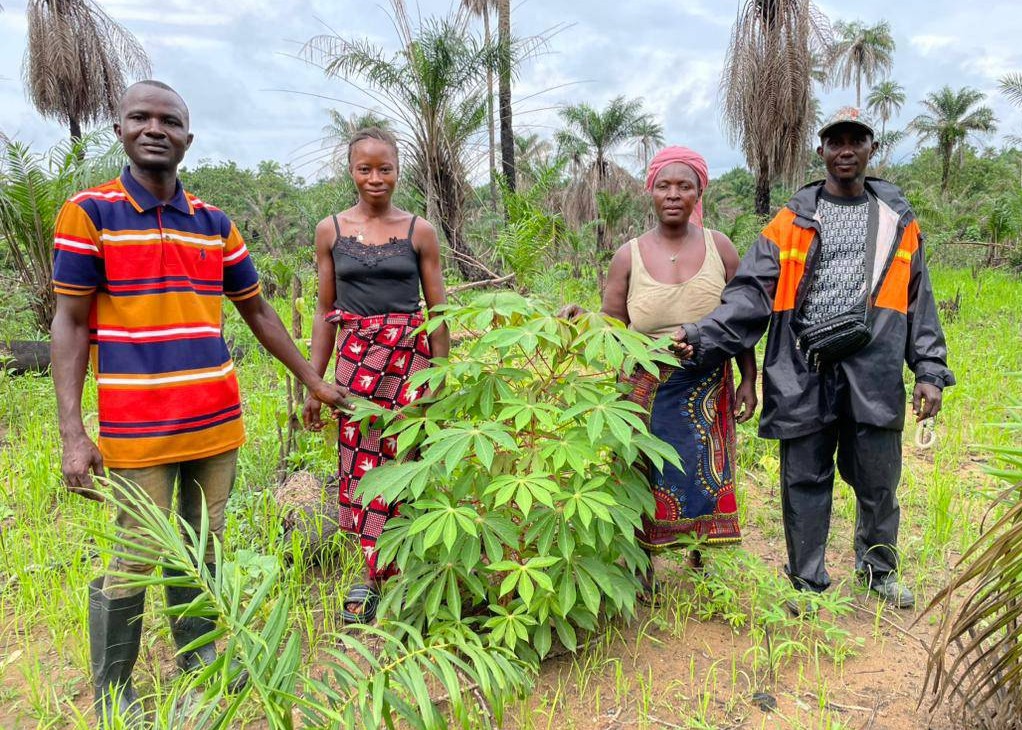
Abibatu, above second from right, grows cassava mixed in her rice farm. She added another acre growing peanuts and corn. Let Them Earn project manager, Tommy Sankoh, left, and his assistant, Salfu Kamara, right, visit her farm twice a month to guide her every step of the way.
The Microfinance Problem
Abibatu's story reflects the reality across Bumpeh Chiefdom’s 200 small, hard-to-reach villages. Most of its 40,000 people are subsistence farmers, struggling to survive for generations on 2–4-acre farms limited by manual labor. Most of their harvest is food to feed their family or barter for other local goods. They’re lucky to net $100 cash annually – not enough for children's education, healthcare, or expanding a farm as a business.
Traditional microfinance has largely failed these farmers. NGO programs designed for urban areas demand weekly or monthly loan payments when farmers have no income for 4-10 months between harvests. Interest rates of 20-30% cover city-based administration costs, but small farmers struggle to repay even the principal. To avoid police action, they take informal loans at even higher rates, staying trapped in debt for months or years.
| | |
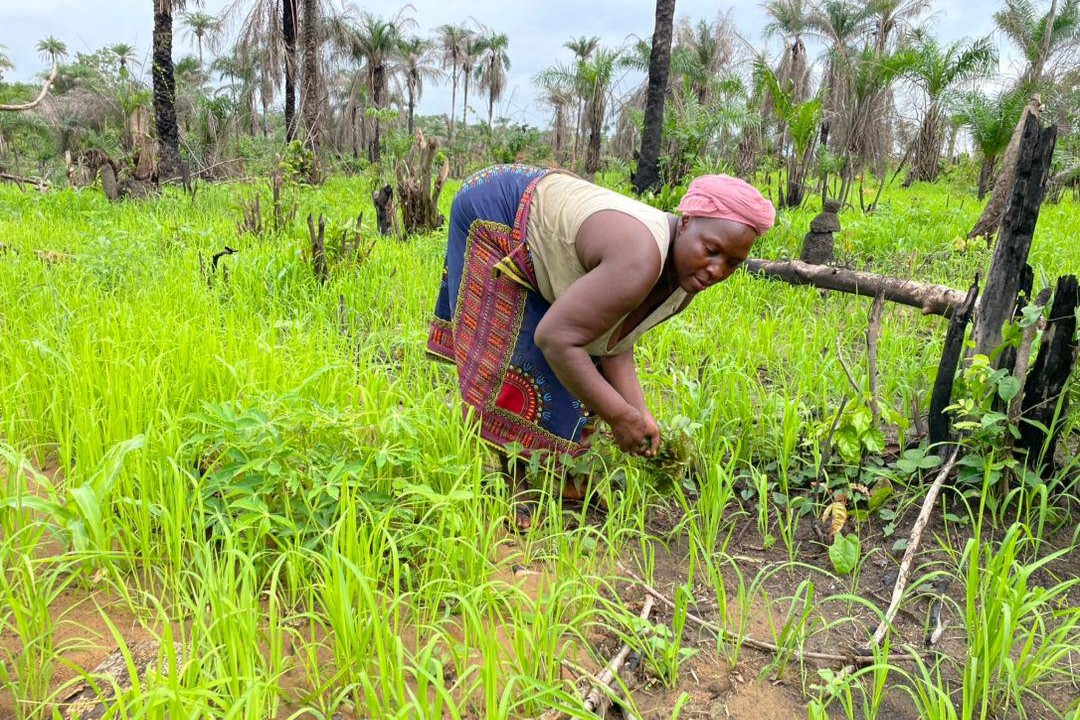
Above, Abibatu hand-weeds her rice. Without money for mechanized equipment, subsistence farmers do all work manually, limiting farm size. Growing rice is essential to feed families, but after nine months labor, there's nothing extra to sell for cash. Let Them Earn introduces 3-month cash crops to boost farmer incomes and let them start to expand their farms.
Banks won't lend to illiterate farmers who can't provide collateral or co-signers. Neither banks nor NGOs have staff to reach thinly populated rural areas on undeveloped roads. Small village farmers have no loan access and get no technical or small business training.
"I've never seen the government or NGOs give our small Bumpeh Chiefdom farmers one cent," says project manager Tommy Sankoh, who grew up farming among these villages before getting his B.S. in Agriculture.
Taking It to the People
Let Them Earn is midway through its second year. It’s expanding and has achieved what seemed impossible: 90% of first year loans repaid and 60% average increases in farm size. Some farmers doubled or tripled their acreage. Repaid money was loaned to a new farmer group, creating a sustainable cycle.
The program succeeds because our partner CCET-SL, the implementing organization, is community based. They live and work in the chiefdom they serve. Together with Paramount Chief Charles Caulker – himself a lifelong farmer – they designed Let Them Earn around a holistic vision of village development. They then took it directly to their own people.
| | |
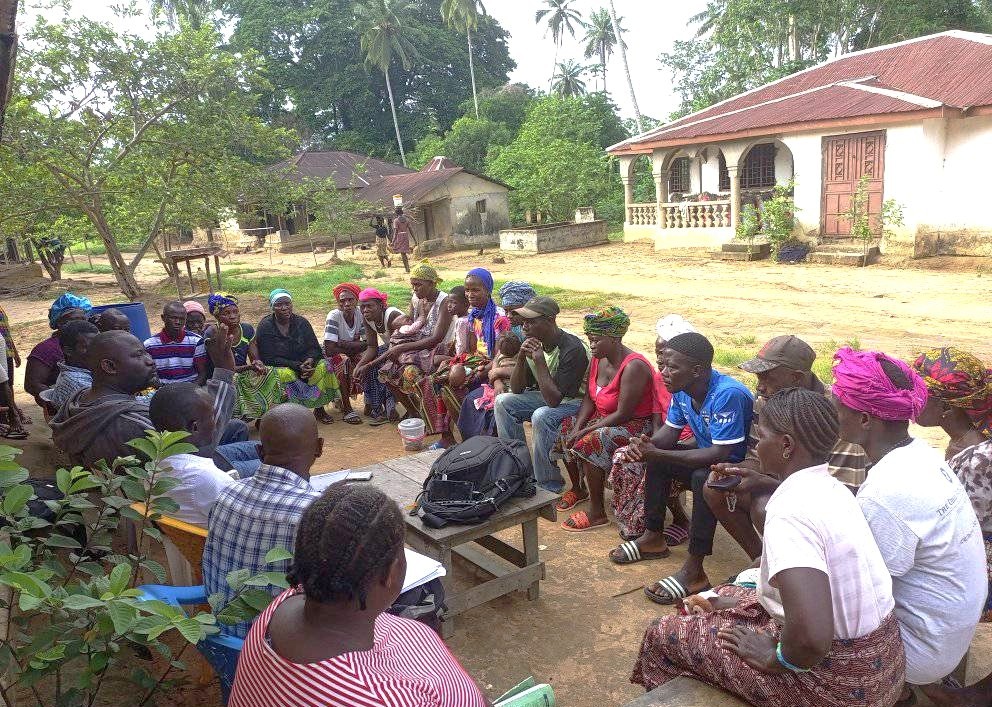
CCET-SL introduced the Let Them Earn project in village meetings with village chiefs. They regularly review project progress with participants to identify and resolve issues along the way.
Loans Tailored for Farmers: Instead of impossible collateral requirements, Tommy Sankoh personally visits each project candidate to verify their farming experience and land potential. Village chiefs vouch for residents in good standing and monitor loan repayment.
| |
$125 loans enable farmers to invest in seed and hire labor to double their acreage – crucial for women who can't handle heavy ground-breaking work.
CCET-SL serves as the bank, giving interest-free loans to maximize small farmer earnings. When repaid, farmers are eligible for a second loan.
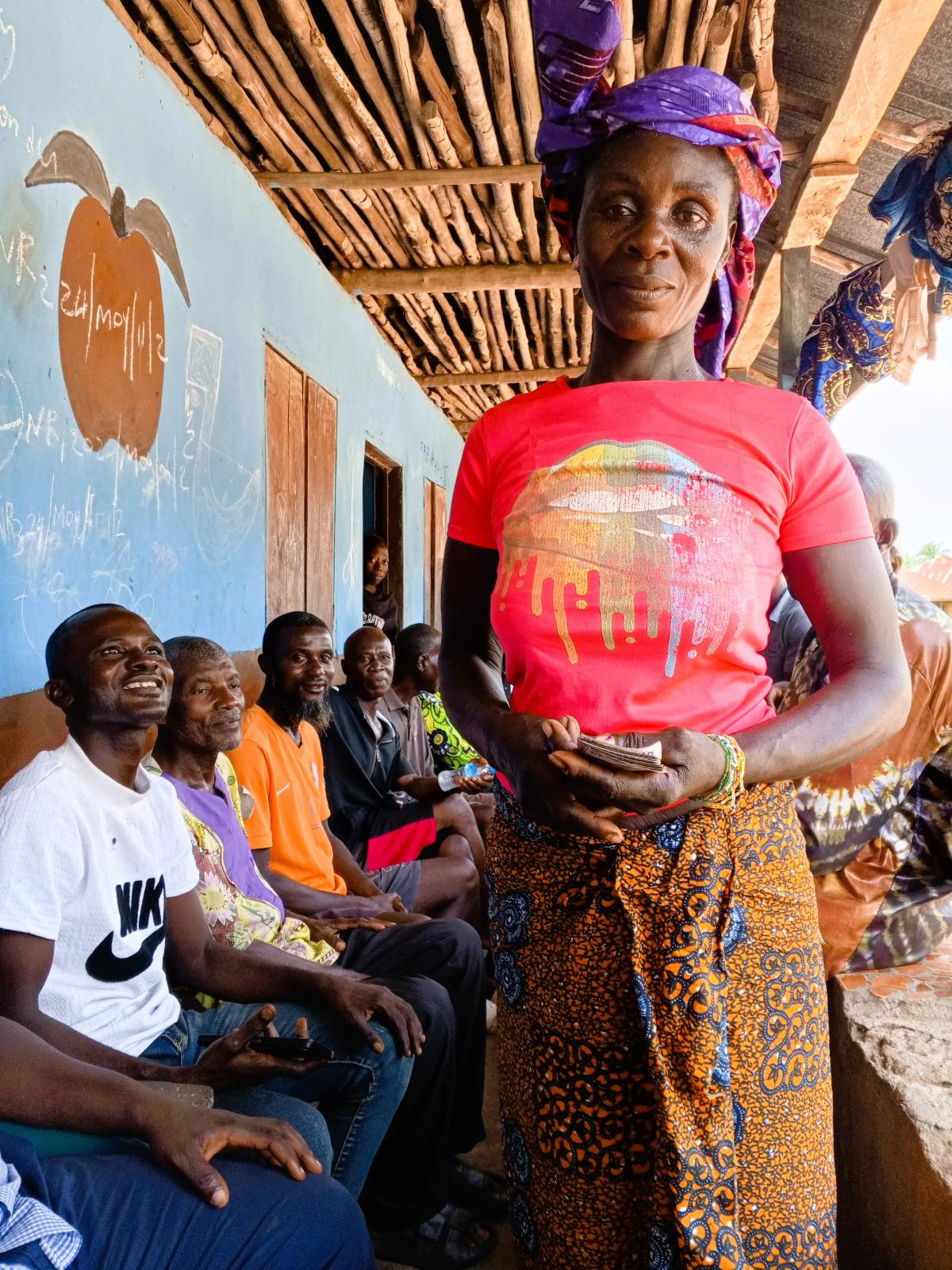
Musu, left, got a bonus for being the first Let Them Earn farmer to repay their loan in Mogbainchain village. She did it by growing peanuts in three months. Without her loan, she could not afford the $40 bag of peanut seed to get started. Now, she's planting twice in one year.
Critically, loan repayment aligns with harvest cycles when farmers actually have cash from selling produce. No weekly payments during the months-long growing season.
Training That Works: Farmers must agree to grow short-term crops harvestable every 3-4 months and participate in training on improved growing methods. But this isn't classroom theory – it's one-on-one instruction at their own farms, immediately put into practice. Project team visits 2-3 times a month keep farmers on track and ensure success.
| | |
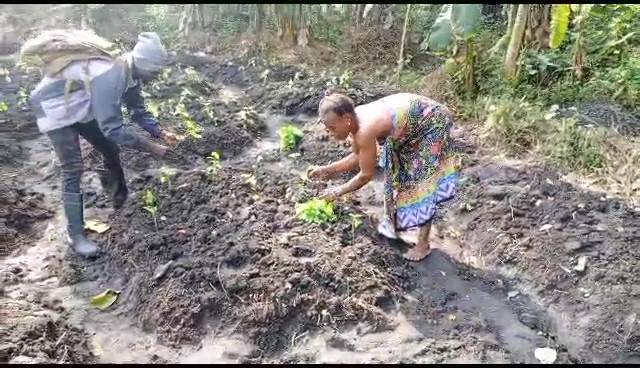
Project manager Tommy Sankoh, above left, works side by side with Let Them Earn farmers demonstrating growing techniques to improve their yields. Here, transplanting peppers seedlings.
For farmers expanding beyond subsistence for the first time, the team provides village-level financial literacy training. Weekly meetings cover budget planning, marketing concepts, and profit-loss calculations, all adapted for illiterate participants.
Transformation Beyond Agriculture
Let Them Earn intentionally targets broader social change in this traditionally male-dominated society. Women receive the loans and training, taking responsibility for family farm decisions. With increased earnings comes respect and growing self-esteem. They now assert themselves and speak up in village meetings. The change is significant.
This was one of Chief Caulker’s main project goals. He observed: "I feel so proud of what Let Them Earn has done to develop leadership in village women. When the women earn money, men agree to cooperate with their wives and have more respect for them. Men tell me their wives are serious about their family business and manage money well."
| |
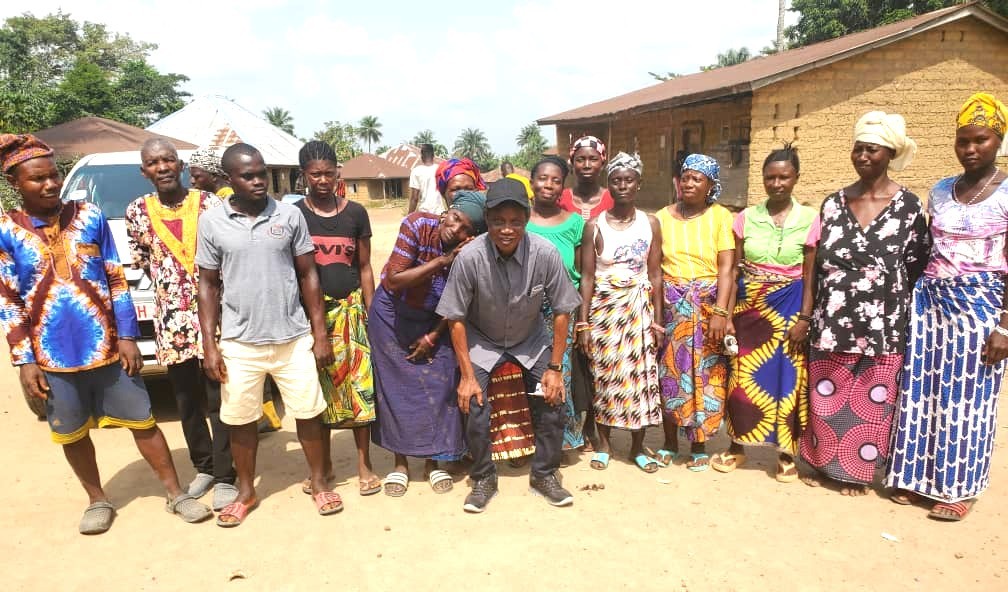
Women are the majority of Let Them Earn participants. Women and men work side-by-side as equals in village teams. Women were the first to repay loans, making a statement on their competence and earning respect. Chief Caulker, above center, is their champion.
Other project ripple effects spread through families and participating villages:
- Children attend school instead of working on farms when parents can hire labor.
- Parents can pay school expenses in September before traditional rice harvests.
- Childhood illnesses get treated before becoming life-threatening, especially malaria.
- Family food security improves as expanded farms and cash crops help break the cycle of "hungry time" and high-interest survival loans taken when the last harvest is gone. Part of harvests go to repaying these loans, perpetuating the cycle of debt and malnutrition. Families are now better fed over the year.
- Homes get repaired, keeping out rain and vermin with health benefits for whole families.
- Villages transform as farmers spend earnings locally, making purchases from neighbors and lifting other small businesses.
- Jobs are created. Project loans pay young men hired as farm labor. Men are paid for construction work and repairs. Trading businesses start, buying crops for resale in urban markets. Motorbikes and trucks carry goods in and out of villages for fares.
- Farmers start saving, making themselves more resilient for tough times. They buy and hold crops like palm oil until prices rise. They create village savings groups, pooling their small savings and making loans to each other.
Teaching People to Fish
These economic and social changes in hard-to-reach villages – accomplished in less than two years – are remarkable. There's much more to do, but the effect is becoming transformative.
Give someone a fish, you feed them for a day. Teach someone to fish, you feed them for a lifetime.
| | |
With Let Them Earn, Abibatu and a hundred other farmers are learning to fish – or rather, to farm profitably.
With small loans matched to their real needs and skills training that actually works, they're building sustainable small farm businesses that lift entire villages.
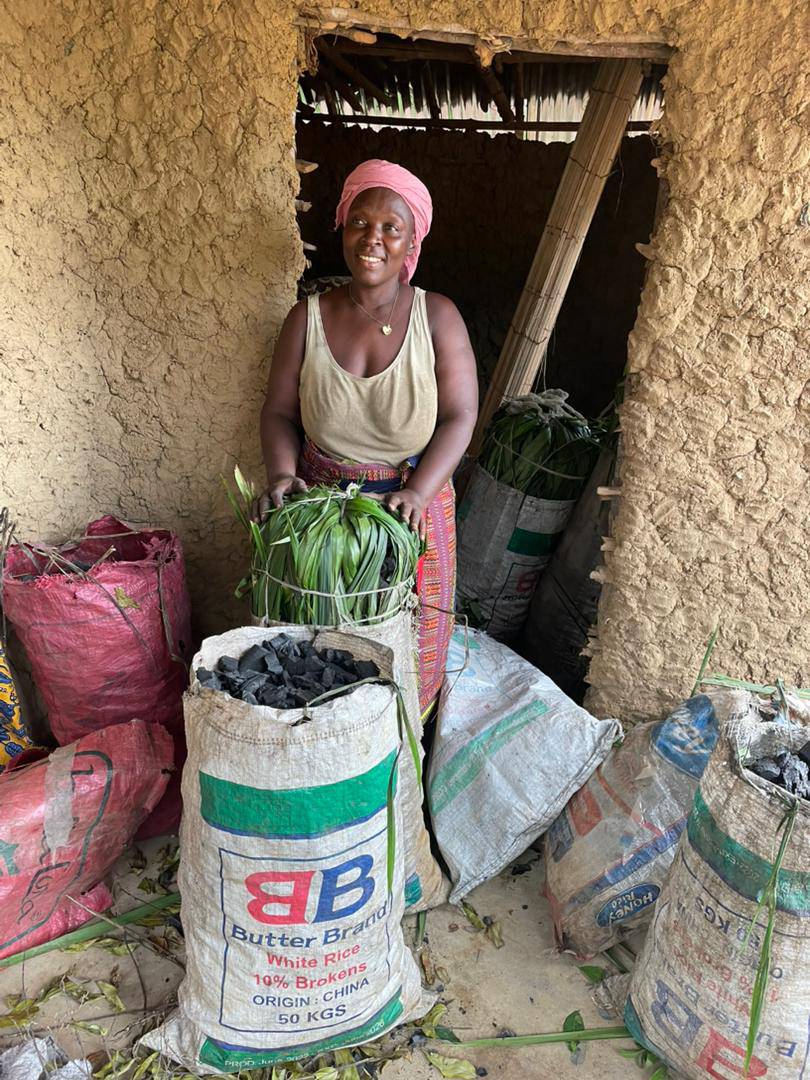
Given the opportunity, Abibatu ran with it. Right, she made charcoal, much in demand in cities for cooking, with scrap wood from clearing her farm.
This is how lasting development happens: one farmer, one family, one village at a time.
| | | |
You can help Abibatu and other Let Them Earn farmers grow more, earn more and build new lives. Please use the Donate button below. We're all grateful for your support!
-- Arlene Golembiewski
Executive Director
| |
Contact Us: sherbrofoundation@gmail.com
3723 Sachem, Cincinnati OH 45226
| | | | |