IBANYS Weekly E-Newsletter | | |
I encourage everyone to read the Albany and Washington sections of today's newsletter for insights into what the state could potentially have planned for new tax brackets and raising taxes on businesses -- and, what the federal government is saying about regulations on community banks. . .Some very important information.
Here is some information on upcoming webinars from our preferred partners at Newcleus and Stifel
-
NEWCLEUS: (IBANYS Preferred Partner) WEBINAR: “Solutions for Success: Retain and Reward Your Key Personnel in Today's Economy” Virtual meeting: Wednesday, November 12 – 10:00 – 11:00 a.m. EST. . .What are banks doing to keep top talent motivated — and thriving? Join IBANYS Preferred Provider Newcleus as we dive into creative strategies your peers are using to reward and retain employees. From 401(k)s and SERPs to BOLI and beyond, we’ll break down the opportunities that can make a real difference for your team and your bottom line — all in less than an hour! To Register: https://us06web.zoom.us/meeting/register/QmsJkUfyQgKgKJO3p3PI1Q
-
Stifel Solutions for Year-End Planning -- Thursday, October 30 | 1:00 – 2:00 p.m. ET. . . The Fed has resumed its monetary policy easing cycle with an interest rate cut of 25 bps after a period of holding rates steady. The Fed’s updated quarterly "dot plot" indicated policymakers expect two more quarter-point cuts before yearend and one during 2026. Depositories should benefit from interest rate cuts -- but persistent inflation could mean the Fed doesn’t cut rates as much as expected, which may dampen the current projected improvement to net interest income for next year. The webinar will discuss current economic landscape, market conditions and actionable strategies designed to assist your institution to improve earnings in 2026: 1) Investment Portfolio and Balance Sheet Trends: Analyzing current trends to inform future strategies; 2) Year-End Investment Strategies: How to optimize investment portfolios strategies as the year closes; 3) Funding and Swap Strategies: Tools to manage funding costs and interest rate risk; 4) Balance Sheet Positioning for 2026: Strategies to prepare for next year’s economic environment. Register by clicking the link below:: https://stifel.zoom.us/webinar/register/WN_o0QRNoFgT2ajpoB6bhyA3w#/registration
-
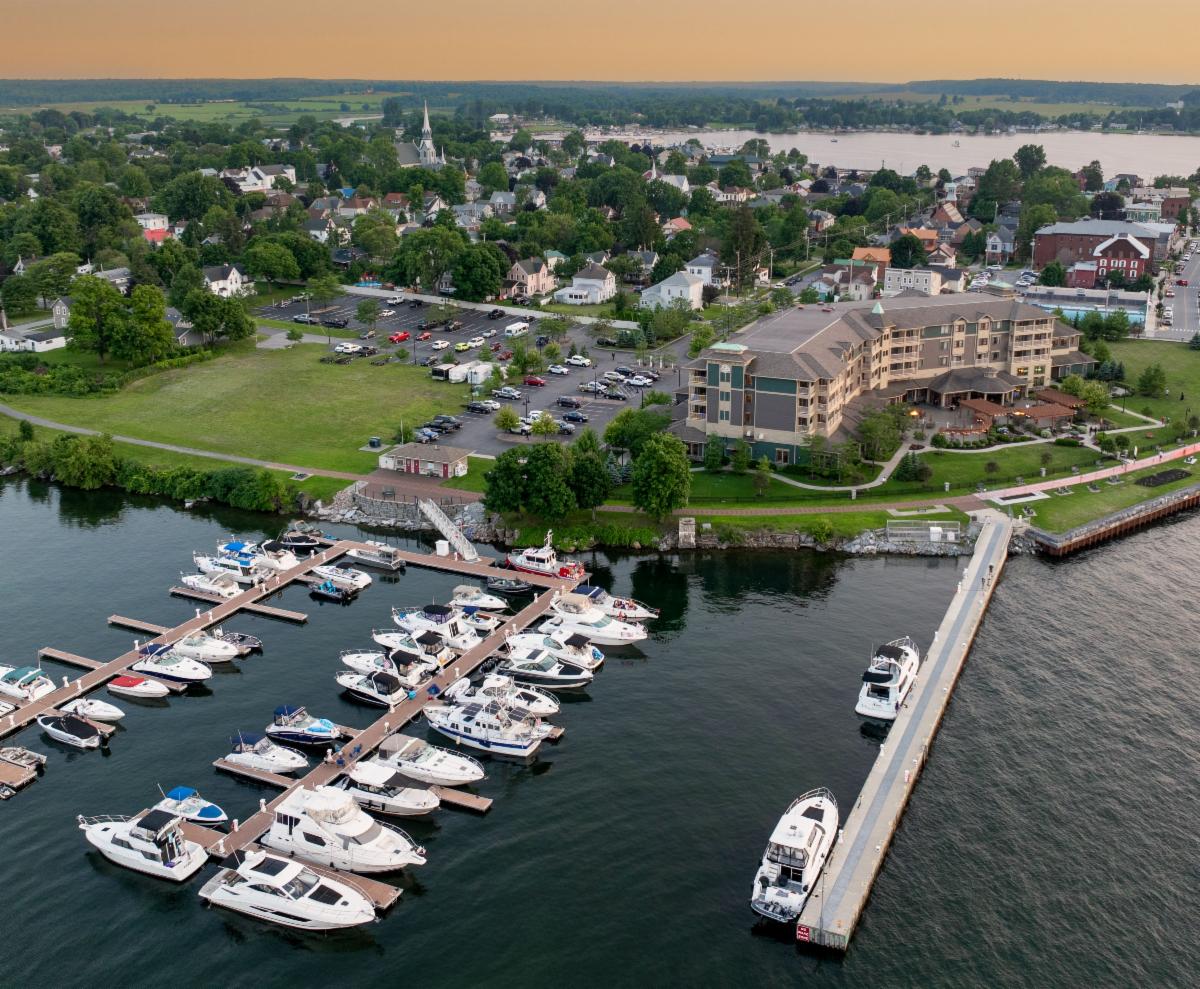
SAVE THESE DATES for two major IBANYS conferences next year: 1) Our 2026 Executive Leadership Symposium October 5-7, 2026, at 1000 Harbor Hotel in Clayton, NY, and 2) Our 50th Annual Convention & Trade Show at Resorts World Catskills June 8-10, 2026 -- a New Date & Location, but still our same Premier Event. Mark Your Calendars and share the news with your officers and management teams!
-
We’re preparing for the 2026 state legislative session in Albany, continuing outreach efforts with state legislative and Banks Committee leadership and the NEW DFS regulatory leadership. On the federal scene, we continue to work closely with ICBA to monitor and engage on federal legislative and regulatory matters. Check out our New York State and Federal sections below for details. Please note: If you – or one of your officers or employees - are interested in getting more involved in our committees, governance, government relations efforts -- email me at Johnw@ibanys.net.
. . . . .
. . . Visit our website at https://ibanys.net/ and review information about IBANYS, our mission and what we do for New York community banks – we’ve been the sole voice at the table representing ONLY New York community banks since we were formed by them more than a half-century ago. . .
As always, thanks for all you do for your local customers and communities, our community banking industry in New York. . . and of course, for IBANYS.
. . .John
| | 2026 CONVENTION & LEADERSHIP SYMPOSIUM | | | | |
New Dates. New Location. Same Premier Event.
IBANYS’ 50th Annual Trade Show & Convention is headed to Resorts World Catskills!
Mark your calendars and save the date—June 8-10, 2026.
We look forward to celebrating this milestone event with you!
| | | | |
Executive Leadership Symposium
October 5-7, 2026
1000 Harbor Hotel
Clayton, NY
| | ASSOCIATE & PREFERRED PARTNERS | | |
October 9, 2025
Volume 22 of The Bankers’ Bulletin
We have updated our monthly Bankers’ Bulletin publication with a revised presentation format, featuring new content and additional practical tips to help banks implement the regulatory developments we cover. Today we published Volume 22, which provides our insights into key banking industry developments from September 2025, including:
- The FDIC’s removal of references to disparate impact;
- The OCC’s guidance on considering debanking in licensing and CRA reviews;
- A federal circuit court’s rejection of Jarkesy as applied to bank enforcement;
- The FDIC’s loosened standards for removing cease-and-desist orders;
- FinCEN guidance on cross-border information sharing;
- and more.
A link to the latest edition of the Bulletin is available here. If you have any questions related to any of the items covered in this edition of the Bulletin, please reach out to Brendan Clegg (bclegg@luselaw.com), Marc Levy (mlevy@luselaw.com), Scott Brown (sbrown@luselaw.com), Keeler Fina (kfina@luselaw.com), or your regular Firm contact. To learn more about Luse Gorman, please visit our website.
| | |
THE WEEK OF OCTOBER 14, 2025
The Municipal Market Monitor is a weekly overview covering key themes of the general municipal market. The update includes the AAA yield curve, municipal to treasuries ratio, fund flows, expected issuance volume and Piper Sandler’s weekly calendar, along with brief commentary, designed to provide issuers and investors insight into current market conditions.
| | |
Virtual Simulation
Join one of the upcoming Banque Simulation one-day virtual sessions on Oct. 24, or Nov. 7. Designed for 3–5 team members (with the option for additional observers), this interactive program—led by David Sidon, CPA—offers hands-on learning to strengthen decision-making and strategy.
Register today: barretbanking.org/landings/banque-sim
Click here for more details
| | |
Barret Compliance Series
November 4-6, 2025
Barret Compliance Topics:
Lending
- Fair lending/Reg B
- ATR-QM
- HPML/HOEPA
- Lending to service members
- Mortgage origination, including TRID
- Mortgage servicing
- RESPA Anti-Kickback Rule developments
- Appraisal issues
- Flood insurance- updated FAQs
- FCRA Litigation
- Fair Debt Collections Practices Act
- Cosignor vs Guarantor Issues
- Valid When Made/True Lender Doctrines
- UCC Article 9 Developments Bankruptcy update
| | |
Operations/Deposit
- Reg CC
- Reg DD
- Reg D
- Reg E
- Converting Retail Accounts and Charging Fees on Free Accounts
- Garnishments and Garnishing Federal Benefit Payments
- Privacy
- Social media and advertising
- UDAAP developments
- NACHA Rule Updates
- Wire transfer and ACH fraud issues
- Mobile/Remote Deposit
- Technology Litigation
- ADA Website Accessibility guidelines
- IRS Tax Reporting update
- Cybersecurity Risks and Mitigation
Bank Secrecy/ Anti-Money Laundering:
- FFIEC Exam Procedures and risk assessments
- Suspicious Activity Reporting
- CIP
- Beneficial Ownership
- Cannabis and Hemp
- Elder financial abuse
- Recent penalties
| | |
FEATURES:
- Day one (seven hours) covers Lending Compliance
- Day two (seven hours) focuses on Operations/Deposit Compliance
- Day three (three and one-half hours) concentrates on Bank Secrecy Act/Anti-Money Laundering
- CPE credit is available
Pricing:
Barret Compliance Series, All-Access Pass (3 Days)
In Person and Virtual (Zoom) Available: $795
Lending Compliance
In Person and Virtual (Zoom) Available: $345
Operations, Deposit, BSA, AML
In Person and Virtual (Zoom) Available: $475
BSA, AML
In Person and Virtual (Zoom) Available: $225
| | | |
Registration is open for ICBA LIVE 2026
Registration is now open for ICBA LIVE 2026, the world’s largest gathering of community bankers.
Details: Set for March 6-9 at the San Diego Convention Center, ICBA LIVE is where ICBA members connect with peers, are inspired by new ideas, and gain practical insights to stay competitive.
Theme: The theme for ICBA LIVE 2026 is Anchored in Purpose to recognize community bankers as the anchors of their communities—providing stability and support during turbulent economic times—and ICBA as an anchor for community banks.
More: ICBA LIVE features industry-leading speakers, education opportunities for community bankers, a lively expo floor, and more.
LEARN MORE AND REGISTER
| |
|
Legislative & Regulatory
-
Gov. Hochul announced the launch of the New York State Secure Choice Retirement Savings Program, a state-sponsored retirement savings program for private-sector employees without access to a workplace retirement plan, TheBuffalo News reports.
-
IBANYS recently met with NYS Senate Banks Chairman Senator Sanders to discuss the upcoming 2026 state legislative session, including three bills IBANYS proposed late in the 2025 legislative session that passed the State Senate but did not advance in the Assembly. We discussed the need to get them passed in the Assembly early in 2026.: 1) S8357, a proposal to have additional monies for the State Banking Development Districts and the entrance for reciprocal deposits. . . 2 ) S8406, which relates to the seldom used State Community Banks Deposit Program. The NYS Comptrollers’ office has agreed to increase the maximum in the program to $30MM (up from $20MM) but still has the time-consuming application program and inflexibility of a 6-month time period. IBANYS has asked for the program to be mirrored after California’s state deposit program, which is much more fluid and easily run by just two people. We currently only have 4 banks participating and are looking to improve this program for more banks to participate. We would like your feedback on the Community Deposit Program and the reasons it is not appealing today. We have made positive strides but looking for more to help banks who lose municipal deposits to the third-party investors like NYCLASS and NYLAFF. . . 3) S8199, to conduct a study on the Banking Development District Program currently in place to seek allow MDIs to automatically be approved based on their desire to build a branch in “banking deserts”. Chairman Sanders’ office would like to improve the bill to serve the underbanked and underserved.
-
Gov. Hochul is working her way through hundreds of bills approved by the state Legislature. She now has 347 bills left to sign or veto before the end of the year. The Legislature approved 856 bills in 2025, Hochul has signed 429 and vetoed seven (not including line items from the budget.) On the pending action list is the Fostering Affordability and Integrity through Reasonable (FAIR) Business Practices Act advocated by NYS Attorney General James and former FTC head Khan. It's intended to crack down on “abusive or unfair” business practices.
-
State Sen. Gonzalez (D, W/F- Queens) wants to reform New York’s tax brackets to ensure the wealthiest residents in the state “pay their fair share” to combat federal funding cuts. Ramos proposed a series of measures to raise additional revenue within New York State, including: 1) 10 new tax brackets aimed at the highest earners in New York; 2) An increase to the state’s corporate tax rate to match that of many states in the Northeast to” generate an additional $7 billion per year”; 3) A surcharge for capital gains of over $500,000 per year to result in “another $12 billion in annual revenue”; 4) Taxing inheritance above $250,000 to “generate roughly $4 billion annually, and 5) A 1% increase in personal income tax for all taxpayers earning over $250,000 to add “$5 billion per year. https://qns.com/2025/10/kristen-gonzalez-reform-state-tax-brackets/
-
State legislators say New York’s lack of comprehensive data privacy legislation is going to make managing the unwieldy implications of artificial intelligence more challenging the longer the state goes without such regulations, State of Politics reports.
-
State senators plan to hold a public hearing in mid-November to examine why residential insurance has “skyrocketed for New York property owners” battling higher rates and the risk their policies won't be renewed. They want data from insurers and regulators statewide, including examining the impact of climate change and New York's shift to renewable energy on insurance costs. Read More.
The Budget, The Economy, The Federal Funding Cuts
-
Gov. Hochul will unveil her proposed state budget early in 2026. The Legislature will conduct budget hearings and offer their rebuttals in March and budget negotiations will begin in earnest. It will likely be her most challenging budget process yet considering deep federal spending reductions and a push by left-leaning Democrats to raise taxes, which the Governor opposes. Hochul is also targeting regulations that make New York unaffordable, POLITICO Pro reports. In the annual “call letter” to cabinet leaders and agency officials -- marking the unofficial start to the state budget season -- State Budget Director Washington’s asked them to draft up lists of regulations for potential elimination by Oct. 24. Their annual budget requests will be expected to keep funding flat and find ways to scale back regulations as the state navigates federal funding cuts.. https://nystateofpolitics.com/state-of-politics/new-york/politics/2025/10/10/agencies-to-identify-obsolete-regulations. Hochul wants a sweeping review of rules, regulations & other “public facing policies” that should be altered or repealed, and to target regulations “outdated or obsolete” for review by the governor’s counsel. Read More.
-
Prior to the news that Gov. Hochul plans to review unnecessary or outdated state regulations, the Business Council of New York's had issued a report that decried the state’s regulatory environment. Business Council President Mulligan said. “We have work to do, but this report shows that we are all willing to work together with state leaders to address these challenges and make necessary changes to enhance our business climate, quality of life, and ultimately, strengthen our economic competitiveness to improve economic opportunities for all New Yorkers.”
-
Gov. Hochul pledged to “fight like hell” to ensure President Trump doesn’t make good on his threats to freeze more federal funding for New York City if Democratic nominee Zohran Mamdani is elected mayor -- responding to the president’s comments on Tuesday that he “wouldn’t be generous with a communist because it’s like throwing money out the window.” Hochul added: “New York City is the economic engine for the entire state, and just as no one should ever root against our country, you should not root against New York City.”
-
Sen. Gillibrand released a county-by-county breakdown of how health insurance premiums will increase in New York State without an extension of Obamacare enhanced tax credits. She said at least 1.6 million New Yorkers will face an average yearly increase of $1,360 in the amount they pay for their premiums.
-
The President of the New York State Association of Counties said counties face rising costs from Big Beautiful Bill and warned federal changes to the administration of Medicaid and food assistance programs will cost local government millions of dollars without relief from the state.
-
NYC Democratic mayoral candidate Mamdani has proposed nearly doubling the local minimum wage to $30 by 2030. According to some economists, it could mean larger paychecks for thousands, but possibly hasten the demise of some jobs altogether. Gothamist reports.
| |
-
There is still no resolution of the federal government shutdown in sight. The House is not in session this week. The Senate returns tonight. https://punchbowl.news/archive/101325-am/. GOP House Speaker Mike Johnson predicted the shutdown may become the longest in history, saying he “won’t negotiate” with Democrats until they hit pause on their health care demands. The Associated Press reports.
-
ICBA has updated its “Advocacy in Action” government relations dashboard for the fourth quarter with the latest community banking advocacy successes and priorities. It spotlights hot-button community banking advocacy issues such as: 1) Repealing the CFPB’s overdraft rule; 2) Lowering the Community Bank Leverage Ratio; 3) Proposing changes to the Section 1033 rule, including permanent tax relief in the One Big Beautiful Bill’ 4) Establishing digital asset regulatory frameworks; 5) Restricting “trigger leads,” and more. Read about ICBA’s advocacy.
On Deposit Insurance Reform
-
ICBA expressed support for the Main Street Depositor Protection Act by Sens. Haggerty (R-TN) and Ashbrooks (D-MD) to strengthen the nation’s deposit insurance system while minimizing additional costs for community banks. S. 2999 would provide expanded deposit insurance coverage of up to $10 million per depositor for noninterest-bearing transaction accounts. To control premium costs for community banks, during a 10-year transition period, banks under $10 billion in assets are not required to pay any special assessment or increase in assessments to the FDIC to offset any impact on the Deposit Insurance Fund’s reserve ratio resulting from the additional insurance coverage. Read ICBA’s press release: https://www.icba.org/newsroom/news-and-articles/2025/10/10/icba-supports-bill-to-strengthen-deposit-insurance-while-minimizing-costs-to-community-banks. . . Read ICBA’s letter to Sens. Hagerty and Alsobrooks. Treasury Secretary Bessent has indicated support for congressional efforts to modernize deposit insurance and said he was “encouraged to see emerging bipartisan support for increasing FDIC insurance limits on noninterest-bearing transaction accounts.” ICBA has called on Congress to consider deposit insurance reforms.
-
In American Banker (subscription required), former FDIC Chair Sheila Bair wrote that community banks are the crown jewel of America's banking system, but face disproportionately harsh regulatory burdens. Bair said: 1) The percentage of community banks' budgets spent on compliance personnel is twice that of larger institutions; 2) Dozens of reporting thresholds meant to protect smaller banks from unnecessary paperwork have not been updated for decades; 3) Rather than layering even more requirements on highly regulated community banks, policymakers should focus on expanding CRA requirements to nonbank lenders. Bair said community banks are the best equipped to provide the kind of personalized banking services so needed by local households and businesses and that help for community banks must be a higher government priority.
On Community Bank Regulations
-
ICBA thanked Treasury Bessent and Federal Reserve Vice Chair/Supervision Bowman for their pro-community bank remarks at the Fed’s Community Bank Conference: “Spotlighting the positive impact community banks have on Main Street communities while showing ongoing support for tiered and proportionate regulation will help ensure community banks continue to lead the way in meeting the needs of local communities nationwide. . .As stated by Vice Chair Bowman, policymaker support for community banks must translate into specific actions that right-size regulation and apply appropriate supervisory standards. We thank Vice Chair Bowman’s for supporting Community Bank Leverage Ratio relief, simplified regulatory application review, and new capital options for mutual banks.” Bowman said the Fed will continue to prioritize changes to the community bank regulatory and supervisory framework that will allow community banks to continue to thrive, and the Fed is: 1) Refocusing supervisory efforts on core material financial risks; 2) Reviewing the CAMELS ratings framework; 3) Revising the community bank leverage ratio; 4) Prioritizing work to assist in the fight against fraud.
-
Federal Reserve Governor Barr said community banks play an indispensable role in America’s economy and have a bright future. “We all share an interest in responsible regulation, which means promoting the safety and soundness of community banks and compliance with applicable law but also ensuring that regulation is appropriate to the size, business model, and risk profile of regulated institutions. We all want community banks to succeed and continue to play their important role in the communities they serve.”
-
The OCC will continue to prioritize reforms targeted to community banks ahead of broader reforms for the industry. Ongoing work includes adjusting the community bank leverage ratio framework and a simplified strategic plan process for community banks to comply with the Community Reinvestment Act, the agency said. In a national news release, ICBA commended the OCC for taking meaningful steps to reduce unnecessary regulatory burdens on community banks. “Today’s actions are a great first step and reflect a thoughtful and proportionate approach to regulation and supervision that recognizes the unique role community banks serve in supporting local economies.”
Legislative & Regulatory Updates
-
ICBA asks community bankers to urge their senators to ensure proposed crypto market structure legislation bars all digital assets market participants from offering yield, interest, or rewards on payment stablecoins. The GENIUS Act stablecoin law prohibited payment stablecoin issuers from paying yield or interest directly to stablecoin holders, though this prohibition can be evaded by marketing the interest as “rewards” to stablecoin holders and having payments come from affiliates, exchanges, and other third parties instead of directly by the stablecoin issuer. Community bankers: Use a customizable message on ICBA’s Be Heard grassroots action center -- tell your senators to minimize risks to the banking system and local economies by extending the prohibition to crypto exchanges and other third parties. ICBA offers: A summary of the GENIUS Act for community bankers with insights on the regulatory framework for payment stablecoins, policies on bank issuance, and more; 2) An on-demand community banker briefing on the GENIUS Act and other digital asset policy developments.
-
ICBA urges community bankers to submit comment letters by Oct. 23 on the final round of the banking agencies’ Economic Growth and Regulatory Paperwork Reduction Act (EGRPRA) of 1996 review. ICBA’s Be Heard grassroots action center offers a guide to help community bankers submit letters on regulatory burden concerns. Community bankers can also use the guide to deliver oral comments, either virtually or at an in-person public outreach meeting on Oct. 30 in Kansas City. (Registration required by Oct. 22.) The banking agencies are seeking comments on three categories for this final round: banking operations, capital, and the Community Reinvestment Act.
-
The Fed released a FAQs and two templates regarding mutual banks’ ability to raise capital. The FAQs cover the considerations under Regulation MM that a mutual banking organization should evaluate in proposing to issue a mutual capital instrument. The first template sets out key terms for special instruments or capital certificates issued by mutuals eligible to qualify as additional tier 1 capital pursuant to section 217.20(c) of Regulation Q. The second template sets out key terms for special instruments or certificates issued by mutuals eligible to qualify as common equity tier 1 capital pursuant to section 217.20(b) of Reg Q. Vice Chair/ Supervision Bowman said, “These approaches are just a start—we are open to further refinement and improvement once mutuals have an opportunity to review and work to implement this new approach.”
-
Comptroller of the Currency Gould commended the Fed for providing clarification regarding mutual capital. Before meeting with FDIC Acting Chairman Hill and OCC staff ICBA and other groups published a position paper encouraging clearer capital rules for mutual banks. A recent Independent Banker article highlights how ICBA advocates to ensure mutual institutions are equally represented and accorded parity in all respects with other charter forms.
-
Politico reports “our Katherine Hapgood reported" Senate Finance Chair Crapo hopes to roll back the Trump administration’s move to eviscerate Treasury’s Community Development Financial Institutions (CDFI) Fund, which awards federal dollars to community banks, credit unions and other financial institutions and enjoys strong bipartisan support. The elimination of all employees at the fund occurred Friday. Crapo is co-chair of the Senate Community Development Finance Caucus. His co-chair Sen. Warner (D-VA) said: "For at least my office and Crapo’s office, the first reaction was shock,” and that the move to abolish CDFI “goes against the law.”
-
ICBA issued a statement on actions to dismantle the CDFI Fund and is “concerned about the economic impact eliminating the CDFI Fund would have on the local communities that CDFIs serve. Hampering the work of CDFIs would threaten the financial well-being of rural communities that rely on CDFIs to access capital, build businesses, and create opportunity. While all community banks are the economic engines of local communities, CDFI community banks are uniquely positioned to serve rural areas, and the successful CDFI Fund ensures CDFIs can serve these hard-to-reach communities. In a recent five-year period, CDFIs financed more than 252,000 small businesses to create or maintain over 2.2 million jobs, and they provided more than $28 billion in loans and investments in a single year.” A recent Treasury review noted the CDFI Fund is performing its statutory functions as required by law, and that CDFIs “are trusted partners in neighborhoods across the country, and their work continues to have strong bipartisan support from Congress. Read ICBA’s press release: https://www.icba.org/newsroom/news-and-articles/2025/10/11/icba-urges-policymakers-to-continue-to-support-local-communities-served-by-community-development-financial-institutions
| | | | |