IBANYS Weekly E-Newsletter | | |
-
I am pleased to share a great opportunity for all independent banks in NYS. IBANYS is partnering with the Empire State Development (ESD) on a new $50 million Loan Guarantee Program designed for community banks in New York State. Rafael “Ray” Salaberrios, (SVP for Capital Access at ESD) and I have been talking about this program and how it can help community banks in the upstate NY region. It was created to help community banks with a flexible, low-cost credit enhancement to support and expand lending to eligible small businesses, particularly in distressed and rural communities across the state. Here are a few “Key Program Features” for IBANYS Members and community banks: 1) Borrower Eligibility: Businesses located in distressed and/or rural areas of New York State with 500 or fewer employees; 2) Maximum Loan Amount: Guarantees available on loans up to $500,000; 3) Guarantee Structure: The State will guarantee 80% of eligible loans, subject to a 25% cap on total enrolled loan allocation per lender; 4) Bank-Driven Underwriting: Participating lenders use their own underwriting, credit standards, and approval process. ESD does not conduct a credit review—only a completeness check of the enrollment submission; 5) Low Enrollment Fee: A very competitive 0.75% enrollment fee on the guaranteed amount; 6) Submittable Platform: Loan enrollments will be processed through Submittable, providing a streamlined, secure, and efficient way for lenders to submit and track enrollments. IBANYS and ESD are excited to offer this program to community banks to help grow their small business portfolios and support the businesses that anchor New York’s local economies. If you have any questions, please contact me at johnw@ibanys.net or Ray Salaberrios: (212) 803-3219 | Rafael.Salaberrios@esd.ny.gov.)
-
I wanted to share this invitation I received (see below) from Federal Home Loan Bank of New York President & CEO Randy Snook to participate in a panel discussion at the FHLBNY’s February 2026 board meeting. “The Independent Bankers Association of New York State is a prime example of the value of strong, unified advocacy. The work you do on behalf of your members not only benefits them, but also the customers and communities they serve. I would be thrilled if you would join us at our February 2026 Board meetings for a panel discussion with the leadership of our members’ trade associations. . .The FHLBNY benefits tremendously from our partnership with IBANYS, and I believe our Board and management team will gain important insights from your participation on the panel.” . . .I'm honored to accept the invitation: All our community banks rely on the FHLBNY's support and the important things they do for your communities. Let me know any suggestions you’d like me to include in my comments.
. . . . .
SAVE THESE DATES FOR 2026 IBANYS CONFERENCES:
-
Virtual Compliance Meeting — February 3rd, 2026: Agenda and registration are coming out soon. Please look to register for these important meetings and interact with our regulatory agencies and business partners with important tips for 2026 exam cycle.
-
Virtual Director’s Meeting — March 3rd, 2026: Bank Directors update from subject matter experts on what to look for in 2026. The landscape of community banking and the changes that may be ahead for financial institutions.
-
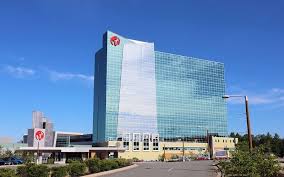
50th Annual Convention & Trade Show at Resorts World Catskills in Monticello, New York June 8-10, 2026 -- a New Date & Location, but still our same Premier Event. Mark Your Calendars. and please share the news with your officers and management teams!
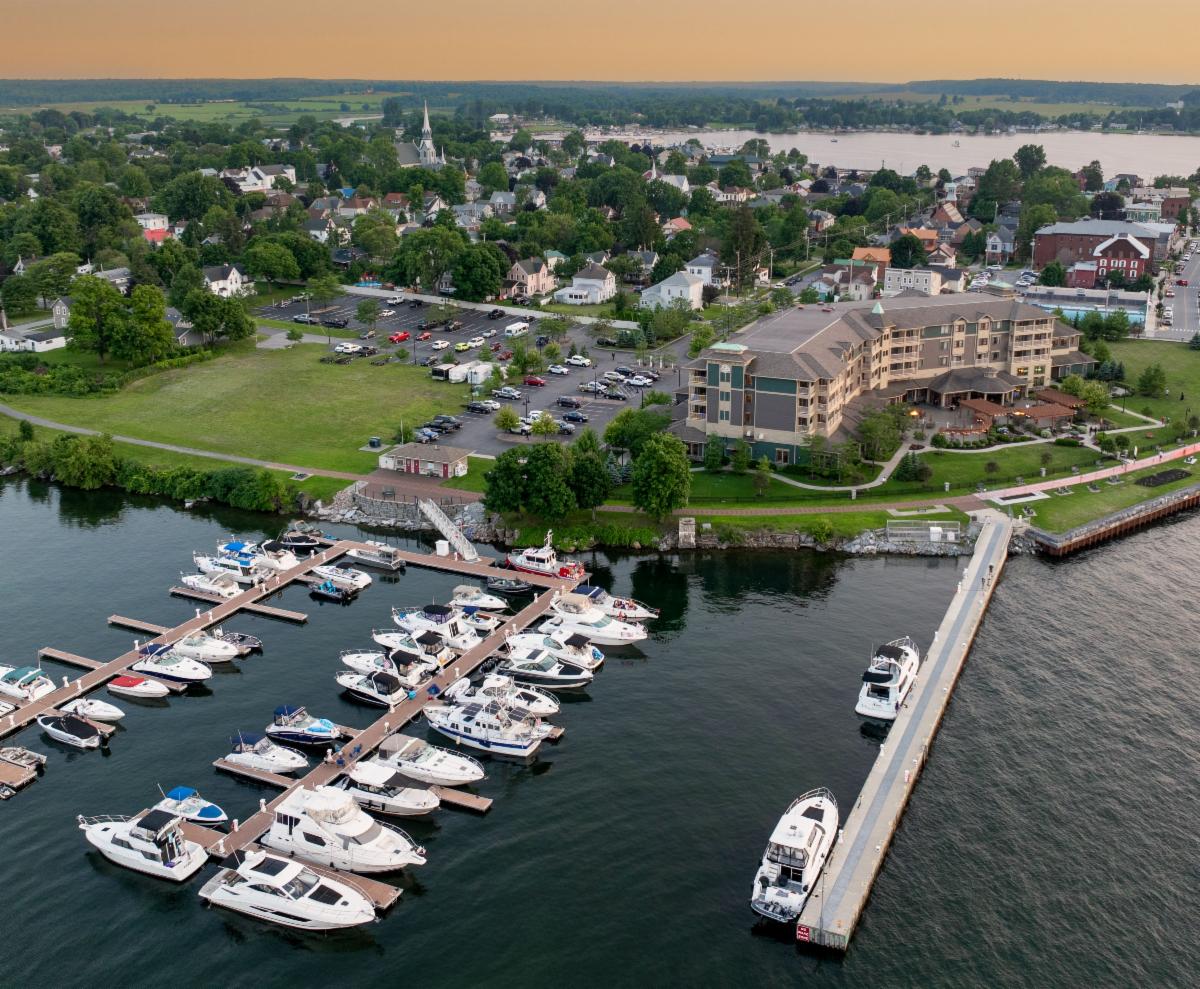
- 2026 Executive Leadership Symposium October 5-7, 2026 at 1000 Harbor Hotel in Clayton, New York.
. . .Stay tuned! As future meeting agendas are finalized, details and registration information will be shared via email, on IBANYS website (ibanys.net/meetings-schedule), and in Updates and e-newsletters.
. . . . .
. . . . .
As we wind down 2025, I want to thank you all for your commitment to and support of IBANYS. There will be some positive changes in 2026 for all of member banks, associate members and preferred partners. IBANYS is rolling out our new CRM called Jumbl in early 2026 to streamline:
- Communication to our members
- Registration for meetings, webinars and events, including “pay on-line” registration
- Resources for our banks including white papers, articles and business partner information
- Government Relations communication on active bills at the state and federal level.
The Onboarding Process will be distributed in a few weeks and we look forward to providing more support for our members, banks and business partners.
. . . . .
The new year is on the horizon. It’s time to examine whether your bank fully participates in IBANYS’ committees, webinars, seminars, meetings and conferences. . .Are you sharing IBANYS’
weekly updates and newsletters with your management teams? Are you keeping your senior management, officers, employees and directors fully informed on available opportunities & activities and developments impacting our industry? It’s time to get engaged -- email IBANYS' Director of Administration & Operations Linda Gregware (Lindag@ibanys.net) or me (Johnw@ibanys.net) . . .Visit our website at www.ibanys.net -- review IBANYS' mission and what we do for N.Y.'s
community banks. . .IBANYS is still the voice at the table representing just New York community banks, just as we were founded more than a half-century ago.
| | Stay tuned! As meeting agendas are finalized, details and registration information will be shared via email, the IBANYS website (ibanys.net/meetings-schedule), and in upcoming e-newsletters. | | | |
Regulatory Compliance Update
Tuesday, February 3, 2026
9:00 a.m. – 3:00 p.m.
Live Webinar – Zoom
| | | |
2026 Bank Directors Conference
Tuesday, March 3, 2026
8:45 a.m. – 3:30 p.m.
Live Webinar – Zoom
| | | |
Virtual Spring Meeting
April 14-15, 2026
9:00 a.m. - 2:30 p.m.
Live Webinar - Zoom
| | | | |
2026 Annual Convnetion
IBANYS’ 50th Annual Trade Show & Convention is headed to Resorts World Catskills!
Mark your calendars and save the date—June 8-10, 2026.
We look forward to celebrating this milestone event with you!
| | | | |
Executive Leadership Symposium
October 5-7, 2026
1000 Harbor Hotel
Clayton, NY
| | ASSOCIATE & PREFERRED PARTNERS | |
|
THE WEEK OF DECEMBER 15, 2025
The Municipal Market Monitor is a weekly overview covering key themes of the general municipal market. The update includes the AAA yield curve, municipal to treasuries ratio, fund flows, expected issuance volume and Piper Sandler’s weekly calendar, along with brief commentary, designed to provide issuers and investors insight into current market conditions.
| | |
Basic Information:
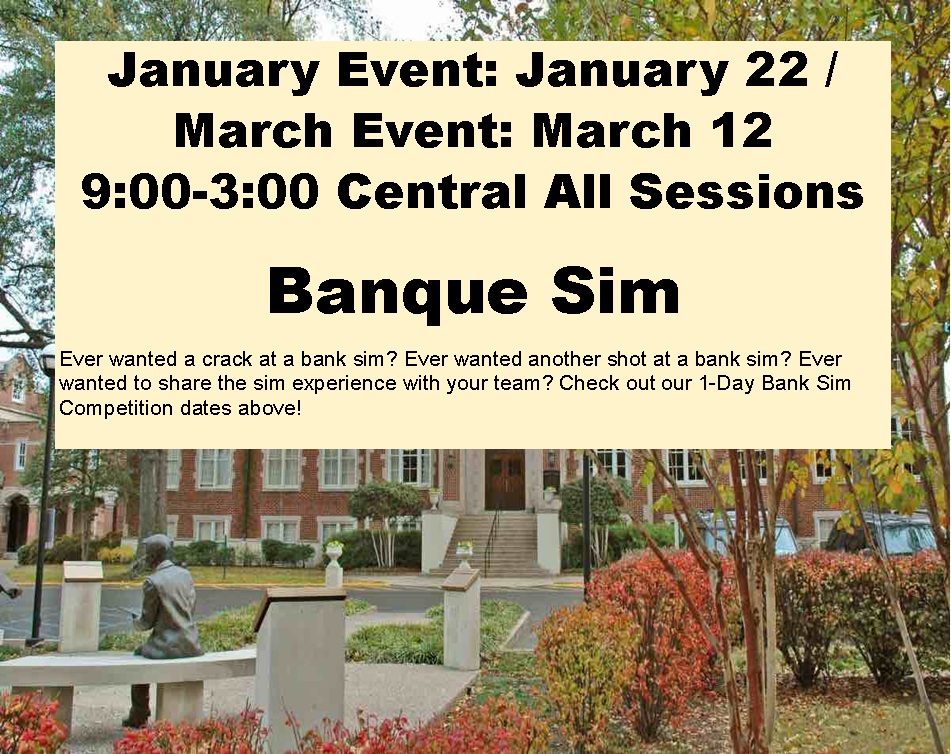
Cost: $1495/team for a virtual one-day session
Dates: January 22 / March 12 - choose preferred date on registration page
Session Structure: 6.5 hours, including intro and ratio review, followed by 3 years of balance sheet management and interest rate decisions
Schedule: 9:00am-3:30pm CST / 10:00am-4:30pm EST
Audience: Bank Execs, Division Heads, Bank Trainers, Directors/Trustees, Management Teams...or any banker wanting to take a swing at bank sim.
Ideal Team Structure: 3 to 5 members (although bank could include extra observers)
| Check out the video below to learn more: | | |
How's This Going To Work?
Up to 12 teams of 3-5 participants will compete virtually against banks from all over the country for bragging rights. You will immerse yourself in this one-day event simulating three years of interest rate, balance sheet management, and strategic banking decisions.
What are the logistics for each bank, you ask? Although teams could remain individually virtually corralled within a team Zoom room, we think it is optimal that you gather in a conference room setting for your effort (this also allows for some “observers” if you want training to extend a little further). We’ll need your attention for the full day, but you’ll be able to remain flexible enough to sign that stray wire transfer form or put out any of the daily mini-fires while your team carries on.
Ahead of the event, we’ll need to set up
Smartsheet access for your team (just one shared username and password) and do a Zoom-room shake-down cruise with one of your team members 15 minutes before showtime. Challenge your team – heck, challenge the bank across town! Let’s do this!
| | |
May 17-22, 2026
Barret Graduate School
Our three year graduate program. Annual one-week residency session.
Barret Graduate School Curriculum in Brief
One week per year for three years • 130+ hours of core classroom study • Nine on-campus case studies• Eight home study problems.
Over the three year graduate program, participants will have access to 200+ hours of training.
| | | |
Registration is open for ICBA LIVE 2026
Registration is now open for ICBA LIVE 2026, the world’s largest gathering of community bankers.
Details: Set for March 6-9 at the San Diego Convention Center, ICBA LIVE is where ICBA members connect with peers, are inspired by new ideas, and gain practical insights to stay competitive.
Theme: The theme for ICBA LIVE 2026 is Anchored in Purpose to recognize community bankers as the anchors of their communities—providing stability and support during turbulent economic times—and ICBA as an anchor for community banks.
More: ICBA LIVE features industry-leading speakers, education opportunities for community bankers, a lively expo floor, and more.
LEARN MORE AND REGISTER
| |
ICBA Securities Is Moving
Hello everyone! Effective 1-1-2026, ICBA Securities is moving its offices. The new address is:
8700 Trail Lake Drive West
Suite 140
Memphis, TN 38120
However, I would greatly prefer mailings to be paperless, so if you can update my preferences to digital, I’d appreciate it.
Also: My email address will change to jim.reber@icba.org. My phone number of 901-262-1353 will not change. Please let me know if I can assist you in these updates.
Thanks for your help with this, and Happy Holidays to all.
Jim Reber, CPA, CFA
President/CEO
ICBA Securities
901-262-1353 | jim.reber@icba.org
8700 Trail Lake Drive West, Suite 140 | Memphis, TN 38125 | www.icba.org/icba-securities
| | |
-
The 2026 New York State legislative session in Albany is just three weeks away, convening Wednesday, January 7. (Here is the 2026 New York State Legislative Session Calendar.) Session is scheduled to adjourn Thursday, June 4. Gov. Hochul will deliver her “State of the State” address Tuesday, Jan. 13 at 1 p.m. in Albany – which will followed shortly thereafter by the presenting of her proposed executive budget for FY 2026-27.
-
Business activity declined slightly in New York State in December, according to the Federal Reserve Bank of New York’s Empire State Manufacturing Survey. New orders held steady, shipments decreased, delivery times quickened, unfilled orders declined, and firms grew increasingly optimistic.
-
A new report released by NYS Comptroller DiNapoli says New York’s young adults — some members of Gen Z (born 1997-2012) and Millennials (born 1981-1996) — face a complex economic landscape including higher unemployment rates, increasing costs, and larger debt burdens, that threatens their financial well-being. The unemployment rate for these groups was 8.6% in 2023, more than double the statewide average, and was especially pronounced among Black and Hispanic young people (double that of their white counterparts). Outmigration among young people has outpaced other states: The U.S. Census Bureau’s American Community Survey found New York had a 1.9% decline in this age group over the past decade, while the national population of young adults grew 4.2%. DiNapoli noted: “Retaining the state’s young workforce is a critical component of New York’s prospects for its long-term economic growth and prosperity.”
-
In an op-ed, an attorney, former member of the Giuliani administration and an adjunct fellow at the Manhattan Institute noted the New York City Council is preparing to end the year by adopting the Community Opportunity to Purchase Act (COPA). He stated: "COPA would represent an unprecedented use of the body’s legislative power to bestow an “interest” in private property on a favored class of not-for-profits. It would enable those organizations to bid on and purchase certain multifamily dwellings before an owner is permitted to offer his property for sale to the general public. While the bill has sparked significant opposition on policy grounds, it also raises profound legal questions about the extent of the city council’s authority, and its ability to intrude on fundamental private-property rights. . .COPA is a bizarre and unprecedented attempt to make the city co-owner of every covered property. It would, under the guise of housing regulation, undermine the basic legal framework that guarantees the right of an owner of private property freely to sell his land. Its enactment would constitute an illegal, unconstitutional, and dangerous usurpation of a fundamental right. The city council must reject it." https://www.city-journal.org/article/new-york-community-opportunity-to-purchase-act-copa-nonprofits-housing-legal
-
The latest Siena poll found that New York voters hold favorable views of both Gov. Kathy Hochul and New York City Mayor-elect Zohran Mamdani. The poll also found: 1) In a head-to-head matchup, Gov. Hochul leads Rep. Stefanik by nearly 20 points in the race for governor, 49% to 30% for Stefanik. Hochul performs even better against Nassau County Executive Bruce Blakeman, leading him 50%-25%. Hochul also leads Lt. Gov. Delgado 56%-13% in a Democratic gubernatorial primary, and Stefanik leads Blakeman 48% to 17% in a GOP primary race. 2) Statewide, 46% of statewide voters had a favorable view of NYC Mayor-Elect Mamdani, while just 31% had a negative view, and more than two-thirds of voters support Mamdani’s pitch for universal childcare funded by taxes on the rich. 3) Hochul’s 43-41% favorability rating is up November’s 43-45% and her job approval rating is up four points, to 52-39%. Stefanik’s favorability rating is 22% - 33%, from 28-36% in November. Blakeman has a 13-17% favorability rating, similar to 16-17% in June. Delgado has a 17-15% favorability rating, from 20-20% last month. 5) President Trump has a 32-62% favorability rating, down from 35-61% in November, and his job approval rating of 34-62% is down from last month’s 37-61%. 6) By 44% to 41%, voters think New York State is on the right track rather than headed in the wrong direction (up from 39-45% in November), while voters said the country is headed in the wrong direction, rather than on the right track, by a 63-31%. 7) Voters continue to strongly support increasing taxes on the wealthiest 5% of New Yorkers, 58-35%. 8) New York’s senior Senator, Minority Leader Chuck Schumer’s favorability rating remains decidedly underwater, 36-49% (up from 32-55% last month). https://nystateofpolitics.com/state-of-politics/new-york/politics/2025/12/16/poll--hochul-keeps-strong-lead-over-stefanik--blakeman
| |
-
After ICBA urged the House Financial Services Committee to vote yes on five pro-community bank bills during its two-day markup, the committee voted to advance all of the bills on day one, including three with unanimous bipartisan votes. Committee Chairman Hill (R-Ark.) said the committee is “advancing smart, pro-growth banking legislation that strengthens our banking system, expands access to credit, and reduces unnecessary regulatory burdens that drive up costs for families and small businesses. In its letter ahead of the markup, ICBA urged the Committee to advance: 1) H.R. 5577, the NFIP Extension Act of 2026, which would extend the National Flood Insurance Program until Sept. 30, 2026. The committee voted 53-0 to advance it; 2) H.R. 6536, the Rural Depositories Revitalization Study Act, which would require the federal banking agencies to study improving the growth, capital adequacy, and profitability of rural depository institutions. The committee voted 50-0 to advance it; 3) H.R. 6554, the Community Bank Representation Act, which would raise the asset threshold for the community bank seat on the Federal Reserve Board. The committee voted 29-22 to advance it; 4) H.R. 6544, the Regulatory Efficiency, Verification, Itemization, and Enhanced Workflow (REVIEW) Act, which would amend the Economic Growth and Regulatory Paperwork Reduction Act of 1996 to provide for agency review of regulatory impact every five years rather than every 10 years. The committee voted 30-23 to advance it; 5) H.R. 6552, the Bank-Fintech Partnership Enhancement Act, which would require the federal banking agencies to study how partnerships between fintechs and banking organizations can support new banking organization formation and community bank health. The committee voted 53-0 to advance it.
-
ICBA expressed strong opposition to PayPal’s application to form an industrial loan company, saying the FDIC should not allow nonbank firms to benefit from the federal safety net while avoiding prudential regulation and supervision. In a national news release, ICBA President and CEO Rebeca Romero Rainey said, “Any company that wishes to own a full-service bank should be subject to the same restrictions and supervision that apply to any other bank holding company.” A loophole in the Bank Holding Company Act allows commercial and fintech companies to own or acquire ILCs chartered in a handful of states without being subject to federal consolidated supervision, leaving a dangerous gap in safety and soundness oversight and introducing unnecessary systemic risk into the banking system.
-
ICBA continued raising concerns about digital asset firms and nonbank fintechs receiving special-purpose bank charters during an event in Washington. At Modern Money: The Next Chapter in Banking, Regulation & Financial Trust, hosted by The Hill, ICBA’s Brian Laverdure juxtaposed the vital role of community banks in small-business and ag lending against the systemic risks posed by many nonbank firms. “We are rightly concerned that as these new ideas come up, these new entrants, if all the risks are not properly addressed, that’s where problems arise. I’m a student of history. You could trace all financial crises back to somebody, somewhere saying, ‘This time is different, I’ve got the risk under control.’”
-
The FDIC issued a proposed rule that would implement the application provisions under the Guiding and Establishing National Innovation for U.S. Stablecoins Act (GENIUS) Act. The GENIUS Act allows insured depository institutions to issue payment stablecoins through a subsidiary and to engage in certain related activities. The FDIC and other banking agencies are required to issue regulations establishing an application process for bank subsidiaries to seek approval to issue payment stablecoins. The proposed rule would establish procedures for the agency to accept and process payment stablecoin issuer applications from FDIC-supervised banks, including: 1) Filing requirements. 2) The statutory factors to be considered; 3) Process details including a 120-day timeframe for the agency to review an application; 4) An appeal process for denied applications; 5) Input: Comments on the proposal will be accepted for 60 days after publication in the Federal Register.
-
The FDIC approved a final rule that it said would streamline the processes for establishing and relocating domestic branches and main offices. The final rule: 1) Provides that most filings qualifying for expedited processing will be deemed approved three business days after submission; 2) Eliminates the FDIC’s discretion to remove filings from expedited processing; 3) Eliminates the filing requirements for de minimis branch facility changes; 4) Streamlines filing content requirements; 5) Eliminates public notice and public comment requirements; 6) Extends the expiration period for an approved filing. The FDIC said the final rule is intended to improve the speed and certainty of, and reduce the regulatory burden associated with, branch and main office filings. The final rule will take effect 60 days after publication in the Federal Register.
-
The FDIC approved an interim final rule to amend the collection of the special assessment to recover losses to the Deposit Insurance Fund arising from the systemic risk determination announced in March 2023 following the closures of Silicon Valley Bank and Signature Bank. The rule is designed to ensure the amount collected from paying banks equals the total cost of failures. Absent the interim final rule, the FDIC would invoice and collect its eighth quarterly special assessment at a rate that would result in institutions paying approximately $250 million more than estimated losses as of Sept. 30, 2025. The FDIC estimates the total cost of the failures of Silicon Valley Bank and Signature Bank that must be recovered through the special assessment is approximately $16.7 billion as of Sept. 30, 2025. Community Bank Exemption: When the FDIC announced the special assessment in 2023, ICBA secured an exemption for community banks with less than $5 billion in assets. This FDIC announcement makes no changes to the exemption.
-
With Congress crafting legislation to establish a regulatory framework for digital assets markets, ICBA this week released a new analysis showing the harmful impact on local economies of allowing crypto exchanges, affiliates, and other intermediaries to pay interest, yield, or rewards on payment stablecoin holdings. ICBA’s analysis of industry research found that continuing to allow crypto intermediaries to pay interest or yield on payment stablecoin holdings would reduce community bank lending by $850 billion due to a $1.3 trillion reduction in the industry’s deposits—significantly diminishing access to credit in local communities. ICBA is asking community bankers to use its Be Heard grassroots action center to urge senators to ensure the measure bars all digital assets market participants from offering yield, interest, or rewards on payment stablecoins.
-
ICBA expressed support for the CFPB’s proposed revisions to its 1071 small-business data collection and reporting rule while pushing for additional relief and regulatory parity. In a letter to the CFPB, ICBA said: 1) The proposal to exempt institutions that originate fewer than 1,000 covered small-business loans per year would cover the vast majority of community banks, though the CFPB should exempt all community banks under $10 billion in assets; 2) Categorically exempting Farm Credit System lenders would provide disproportionate benefits to some of the largest financial institutions in the country; 3) The proposal to decrease the Gross Annual Revenue threshold that defines a small business from $5 million to $1 million better aligns with the statutory purpose of Section 1071.
-
The FDIC board approved a 2026 budget of $2.49 billion, a 16.4% decrease from the previous year’s budget.The FDIC said it reflects the reduction in staffing resulting from the agency’s workforce optimization efforts in the first half of 2025, when it conducted a review of areas where the workforce could be streamlined without sacrificing the agency’s ability to fulfill its statutory mission. The FDIC also proposed a 2026-2030 Strategic Plan to replace the 2022-2026 plan. The new plan’s five strategic goals are: 1) Protect FDIC-insured deposits from loss without recourse to taxpayer funding; 2) Modernize the FDIC’s supervisory approach and promote safe and sound practices at FDIC-insured institutions; 3) Ensure large, complex financial institutions are resolvable in an orderly manner; 4) Manage resolutions in an orderly, timely, and cost-effective way and maximize net return on receiverships; 5) Pursue internal efficiencies to serve as responsible stewards of the Deposit Insurance Fund.
-
Regulators announced that the 2026 threshold for higher-priced mortgage loans that are subject to special appraisal requirements will increase from $33,500 to $34,200. The threshold amount will be effective Jan. 1 and is based on the 2.1 percent annual percentage increase in the Consumer Price Index.
-
The FDIC’s national rates and rate caps for savings accounts, interest checking accounts, money market accounts, and CDs have been updated and are available on the FDIC website.
-
The OCC reported that the federal banking system remains sound, but cyber threats are a concern. In its Semiannual Risk Perspective, the OCC said: 1) Balance sheets remain satisfactory, with high capital and liquidity ratios positioned to absorb potential stress; 2) Lower funding costs, moderate loan growth, and modest expense growth contributed to the satisfactory earnings performance; 3) Investment portfolio unrealized losses fell to half of amounts reported in 2023; 4) Net interest margin generally expanded throughout the federal banking system and non-maturity and term deposit costs reset in line with lower rates; 5) Commercial and retail loan portfolio delinquencies, loss rates, and noncurrent and classified levels remain manageable; 6) Liquidity remains sound; 7) Deposit levels, net of brokered deposits, continued to increase during the first half of 2025. Contingent liquidity sources are satisfactory and expanding; 8) It has observed an increase in foreign state-sponsored actors and sophisticated cybercriminal groups targeting the financial sector. The report focuses on issues that pose threats to financial institutions regulated by the OCC and is intended as a resource to the industry, examiners, and the public.
| | | | |