This summer was full of exciting field (and lab) research, outreach/extension programs, and a lot of activity at professional conferences. At the ASABE Annual International Meeting in Toronto, we had over 42(!) MSU BAE team members attending, presenting, leading, and being recognized with a variety of awards, including a Superior Paper Award, 2nd and 3rd place in the K.K. Barnes Undergraduate Paper Competition, three graduate oral/poster presentation awards, 2nd place in the Boyd-Scott M.S. Graduate Paper Competition, and the New Holland Young Researcher Award! An amazing Green and White Wave in Toronto! We expect even more next year in Indy! | | | |
This fall brought three new tenure-system faculty members, joining us in the general area of agricultural resilience, with specific focus on groundwater modeling/management, animal production systems, and nanomaterial-plant interactions. That brings us to 10 new tenure-system faculty members over the past five years (net +6)! BAE continues to grow in nearly every possible metric. We’ll share detailed profiles of our newest colleagues in a future update.
Lastly, I encourage you to click through to the stories linked below, highlighting recent example BAE developments in online training (food), a NASA satellite mission launch (environment), anaerobic digestion programming (energy), and rapid testing and diagnostics (health). These are just a few examples of the latest exciting and impactful work by BAE faculty members, followed by a story highlighting Biosystems Engineering freshman Brent DeSaegher’s current service as President of the Michigan FFA.
As always, please feel free to drop me a note if you want to discuss ideas or opportunities for collaborations or partnerships.
Go Green!
| | |
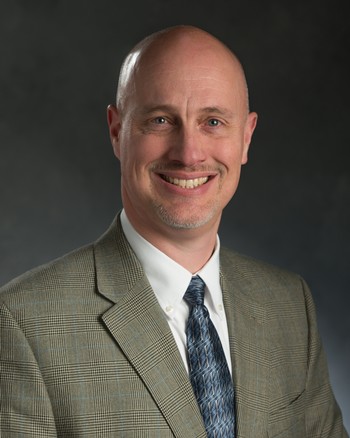
Bradley Marks, Ph.D., P.E.
Professor and Department Chair
MSU Department of Biosystems and Agricultural Engineering
| | New online self-paced Better Process Control School is available | | |
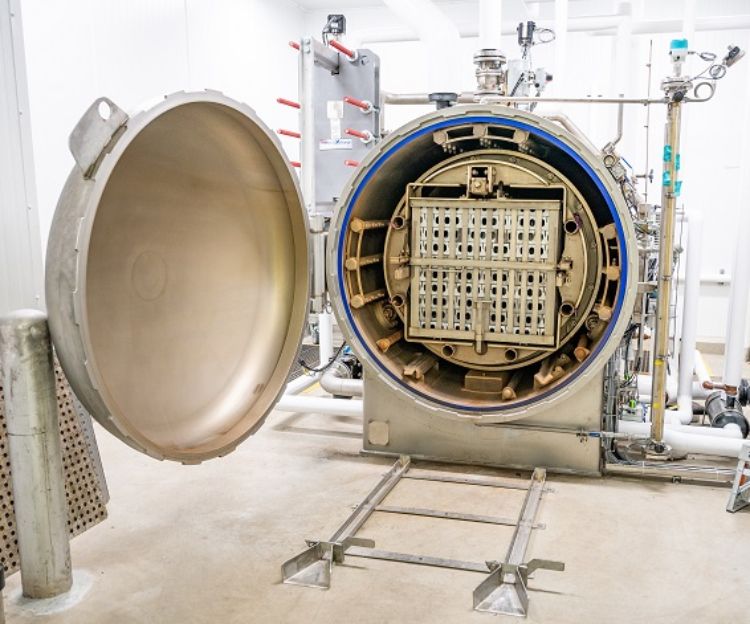
Michigan State University Extension is offering a new Online Self-Paced Better Process Control School, instructed by Kirk Dolan, MSU professor in the Department of Biosystems and Agricultural Engineering and the Department of Food Science and Human Nutrition.
This course is required for all processors of acidified and low-acid canned foods. Examples of acidified foods are all pickled products, many salsas and tomato-based soups. Examples of low-acid canned foods are soups without tomatoes, such as soups with meats, legumes and vegetables.
Read More
| | | |
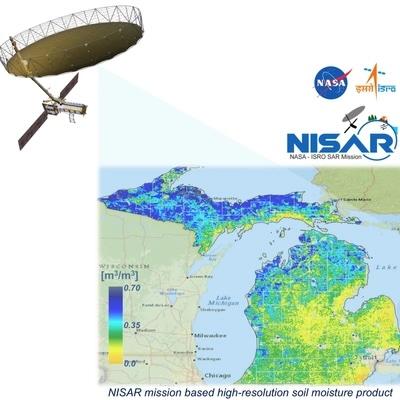
In a first-time collaboration between NASA and the Indian Space Research Organization, or ISRO, in India, the NASA-ISRO Synthetic Aperture Radar, or NISAR, mission launched July 30, 2025. The satellite will circle the Earth at an altitude of 747 kilometers, or 464 miles, for the next three years. The goal of the mission is to monitor Earth’s changing surface while following the growth of crops from planting to harvesting. This information could provide new insights into agricultural practices that determine the timing for planting crops or irrigating.
Narendra Das, an associate professor in the Department of Biosystems and Agricultural Engineering, is a member of NASA’s NISAR science team. He created the algorithm that includes the steps and software that uses the data from NISAR’s Synthetic Aperture Radar, or SAR, to create an image revealing levels of soil moisture at a resolution of approximately 100 to 200 meters.
Read More
| | | Transforming Waste Into a Public Asset: Michigan State University Leads Next-Generation Anaerobic Digestion Innovation | | |
On May 15, George Smith, director of MSU AgBioResearch, and Wei Liao, director of the MSU Anaerobic Digestion Research and Education Center (ADREC), testified in front of the Michigan House Agriculture Committee that through cutting-edge anaerobic digestion research and deployment, MSU researchers are demonstrating how agricultural and food waste can be harnessed to produce clean energy, recover valuable resources and protect the Great Lakes ecosystem.
Anaerobic digestion is a natural biological process in which microorganisms break down organic materials — such as livestock manure and food waste — in the absence of oxygen. The result is the production of biogas, primarily composed of methane and carbon dioxide, and a nutrient-rich byproduct known as digestate.
Read More
| | | Faster Methods for Detecting Viruses in Food, Water | | |
Waiting is the hardest part. Especially in the case of testing for water or food contamination, which can take days or even a week in some cases for the results, leaving the possibility that people have been unknowingly exposed.
To address this issue, Michigan State University researchers have developed two innovative methods to test for bacteria and viruses in food and water that reduces this time from days to hours, offering real-time results in the field.
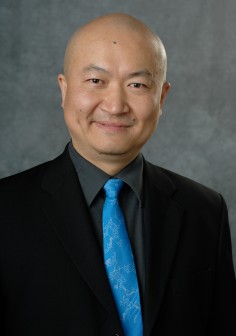
“We know it’s a problem,” said Evangelyn Alocilja, professor in the Department of Biosystems and Agricultural Engineering in the College of Engineering and the College of Agriculture and Natural Resources. “The beach is closed today, but what about the people who went swimming before the test results came back?”
Read More
| | | Student view: Leading Michigan FFA at MSU | | |
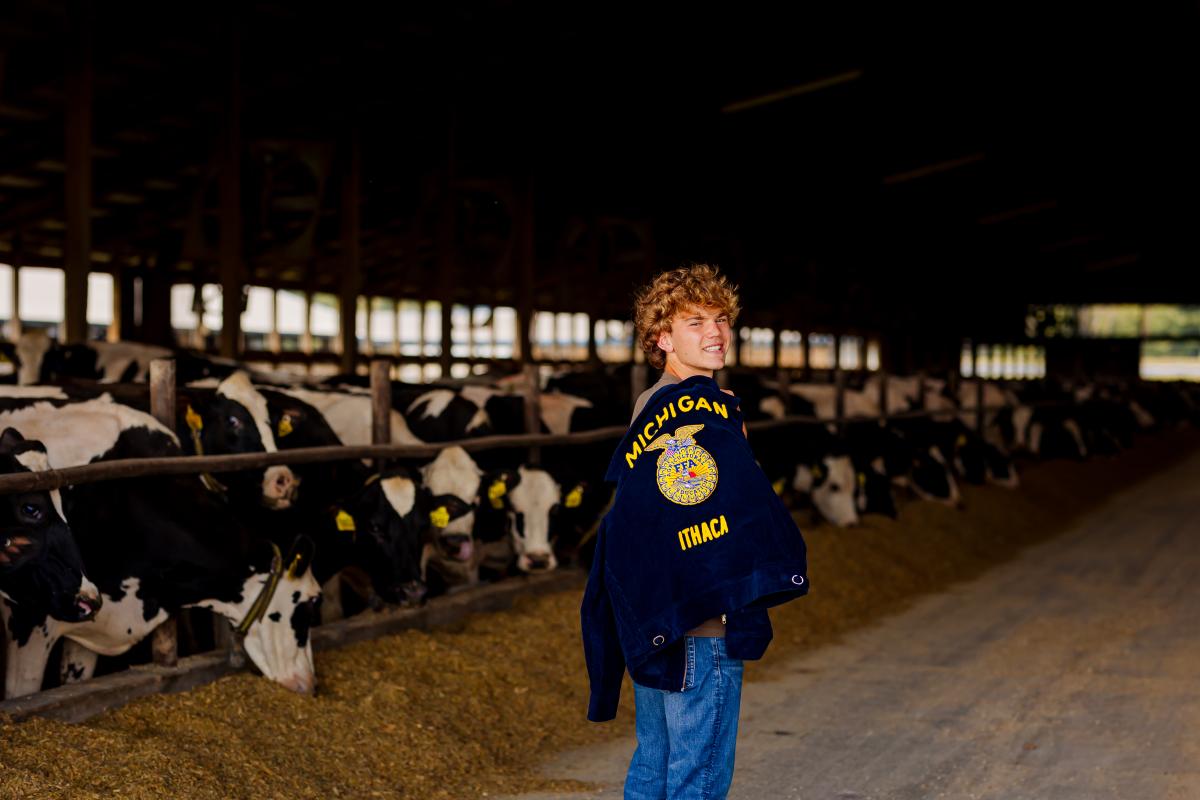
Brent DeSaegher will lead Michigan’s 10,000 student members in the Michigan FFA as an incoming first-year student at Michigan State University. He will major in biosystems engineering.
“I’m excited to be at Michigan State and begin my Spartan years as the new president of the Michigan FFA.”
FFA helps students explore Michigan’s vast agriculture industry through leadership, personal growth and career opportunities. We currently have more than 10,000 members in 134 chapters and are seeing phenomenal growth around the state.
“I’ve been part of FFA for six years, and I know that every single member brings something very special to the table. Each student has their own area to thrive, whether it be working out in the field or engineering solutions to help agriculture modernize and become more efficient.”
Read More
| | | | |