|
On November 30, 2022, ChatGPT went mainstream and within just five days, the chatbot had over one million users. Google CEO Sundar Pichai put it perfectly, calling Artificial Intelligence (AI) “the biggest technological shift we’ll see in our lifetime” and “bigger than the internet itself.” For those of us who have been around long enough to remember the days when you had to go to the library to find answers for a school project… or had to buy an actual paper map to figure out how to get somewhere (like a new school or hospital)… or carried a pocket calendar to keep track of your appointments. Wow, how times have changed! Now, it’s hard to imagine life without the internet. But this took years to become this dependent on it, and today we rely on it for almost everything on a daily basis.
So here’s the big question: How will AI reshape our lives? How different will things get as AI keeps evolving? And more specifically, how will it change higher education and the labor market?
In higher education, students are already using AI regularly. And when we say “AI,” we are not just talking about one tool, we are talking about various programs that can do all kinds of things: write essays, improve grammar and writing, summarize articles, create images and graphics, write code, generate poems and short stories, build websites, design presentations, create videos, translate languages, analyze data, make playlists, answer complicated questions, and probably five other things that were invented yesterday.
It is exciting, but at the same time a little overwhelming! The big challenge for colleges, educators, and employers is figuring out how to adapt as AI becomes part of everyday life, work, and learning.
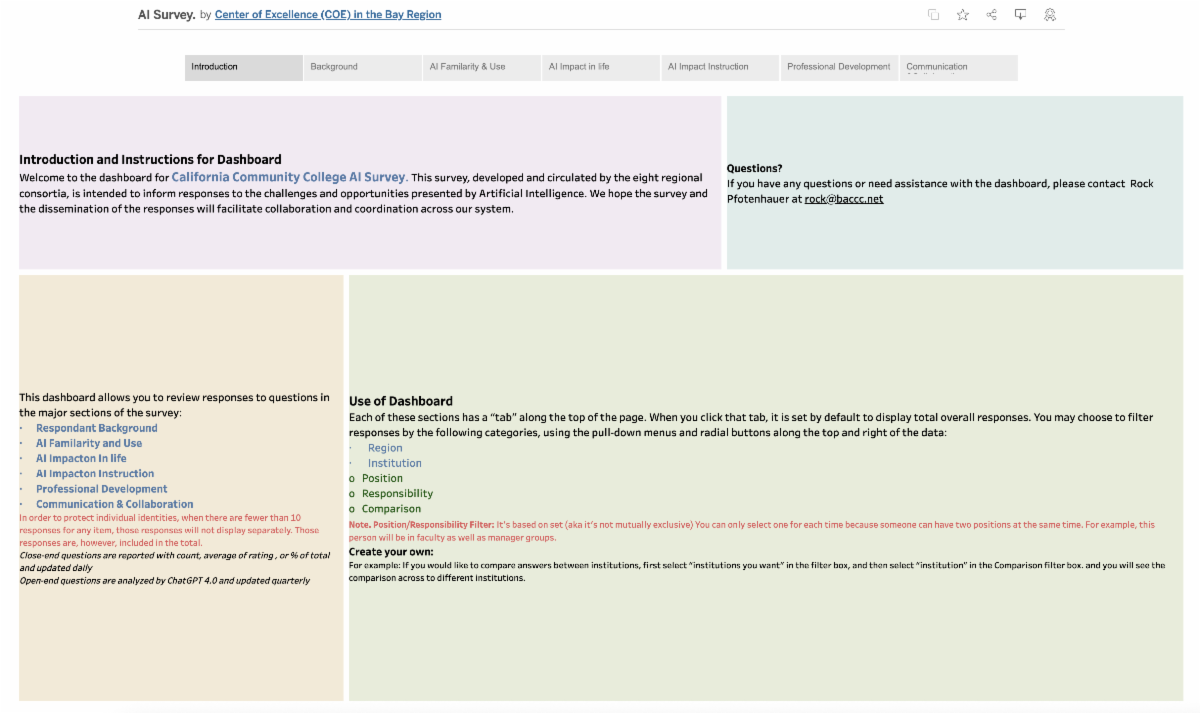
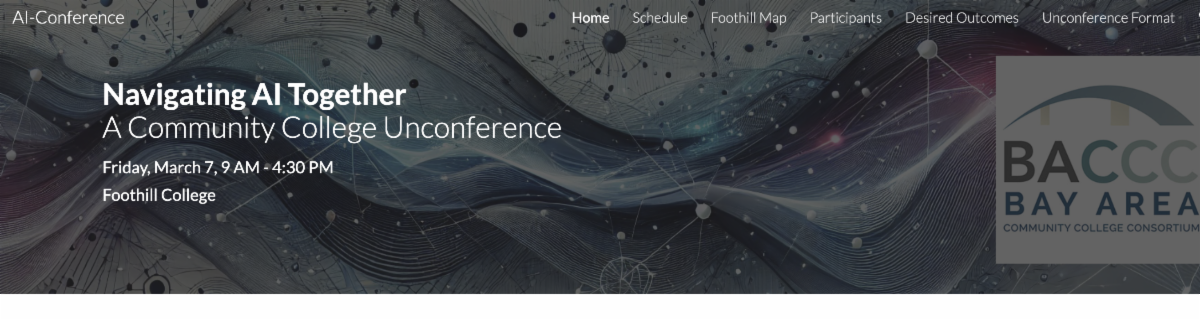
In this newsletter, you can view statewide survey results from California Community College faculty, administrators, and student workers who shared their experiences and opinions using AI. You can also review outcomes from the Bay Region AI non-conference and the Bay Region Vision 2030 meeting that included discussions on AI. At the end of this newsletter, you will find tools along with short descriptions on how to use them for AI assistance, research and information, image generation, and more.
|