Weekly Update
February 7, 2025
| |
Open enrollment bills heard in Missouri Senate | |
|
School choice remains a top priority for Governor Mike Kehoe’s administration, and this week, Missouri lawmakers made progress on one key component—open enrollment. In his State of the State speech last month, Kehoe said, “To expand school choice, I urge the General Assembly to pass voluntary open enrollment in public schools.”
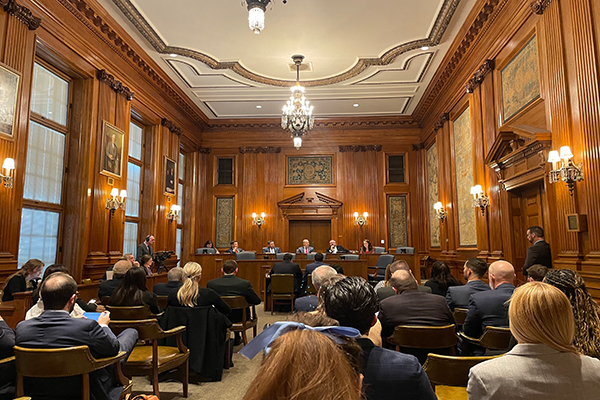
On Thursday, the Senate Education Committee heard SB 70 (Gregory) and SB 215 (Trent), both of which would allow nonresident students to enroll in public school districts outside their home boundaries. The chair said he would merge these bills into a Senate Committee Substitute next week.
Understanding Open Enrollment
Open enrollment policies enable families to choose public schools outside their assigned district, expanding access to quality education. Proponents argue that these policies provide more educational opportunities, while opponents raise concerns about funding and district stability.
Missouri is one of a handful of states without a statewide open enrollment policy, meaning students must remain in their home districts. Currently, transfers depend on district policies and are often limited by capacity or other restrictions.
The Role of Transportation in Open Enrollment
One of the biggest challenges for open enrollment is transportation. Families who wish to enroll their children in another district must often arrange their own transportation, which can create an equity barrier—especially for low-income families. If open enrollment policies do not include funding for transportation, access may be limited to only those who can afford the commute.
States with robust open enrollment programs often allocate transportation funding to ensure that students can attend the schools that best fit their needs. Without such support, choice is only available to those with the financial means to make it work.
Opposition and Concerns
Open enrollment has broad support among school choice advocates. However, some rural districts worry about losing students—and the associated state funding—to larger, better-resourced districts. Others argue that without transportation assistance, open enrollment may widen educational inequities rather than reduce them.
Aligned’s Take: We support expanding school choice through open enrollment but emphasizes that the legislature must include transportation funding to make the policy equitable for all families. Ensuring that every student can access high-quality education regardless of income or location is essential to making open enrollment a viable and fair solution.
| |
The Senate Education Committee met this week to hear two bills related to open enrollment policies in Missouri. PHOTO CREDIT: Jim Malle | |
|
Senate Activity
Despite a flu outbreak in the Senate, lawmakers got to work on the Floor, with Democrats delaying debate Tuesday on a utilities omnibus that would tie utility ratemaking to future projections. On Wednesday, after passing four non-controversial bills, tensions rose when Sen. Brattin successfully amended a tax bill to permanently ban gender-affirming care for minors, prompting a Democratic filibuster before the bill was set aside
Key legislation
-
Educator Tax Deduction - On Wednesday, the Senate Economic Development Committee heard SB 12 (Hough), which proposes a $500 tax credit to reimburse teachers for classroom expenses.
-
Hazing Legislation – The Senate Judiciary Committee passed SB 167 (K. Gregory) by a 6-0 vote. The bill criminalizes hazing and protects those who assist or report victims.
-
Open Enrollment – On Thursday, the Senate Education Committee reviewed SB 70 (D. Gregory) and SB 215 (Trent), which permit nonresident student enrollment in public school districts. The bills will be merged into a Senate Committee Substitute next week.
Next week's docket
-
Student Surveys – The Senate Government Efficiency Committee is set to review SB 223 (Coleman) on Monday. This bill outlines new regulations for student surveys in school districts, including a mandate for parental consent at least 24 hours before distribution.
-
DEI Restrictions – The Senate Education Committee will consider SB 56 (Coleman) on Tuesday, a bill banning diversity, equity, and inclusion (DEI) programs in public schools across the state.
-
Critical Race Theory – SB 115 (Brattin) is scheduled for a hearing in the Senate Education Committee on Tuesday. The proposal seeks to ban the teaching of critical race theory (CRT) and formally establish a "Parent’s Bill of Rights" in public schools.
-
Early Childhood Tax in St. Louis County – The Senate Progress & Development Committee will take up SB 20 (Williams) on Tuesday. If passed, this measure would direct revenue from specific sales taxes in St. Louis County into an Early Childhood Education Fund managed by the Children’s Services Fund.
House Activity
Floor Action Begins Next Week – The House referred bills to House Rules, the final step before they reach the Floor, setting up next week’s legislative action.
Key legislation
-
Open Enrollment – On Wednesday, the House Committee on Elementary and Secondary Education Committee voted do pass on HB 711 (Pollitt) by a vote of 16-7. This bill permit nonresident student enrollment in public school districts.
-
Childcare Tax Credits – The House Economic Development Committee passed HB 269 (Shields) on Tuesday (6-0 vote), advancing tax credits to support businesses and childcare providers.
-
Student Cell Phone Bans – On Wednesday, the House Elementary & Secondary Education Committee heard HB 306 (Steinhoff), HB 854 (Lewis), and HB 408 (Gragg), all deal with restricting student cell phone use during class.
-
Educator Salary Cap – The same committee also heard HB 712 (Pollitt), which would eliminate an automatic annual increase to Missouri’s minimum teacher salary, currently tied to the Consumer Price Index (CPI) starting in 2028.
Next week's docket
- No House priorities have been scheduled for next week.
Career and Technical Education Perceptions Survey
Missouri’s Department of Elementary and Secondary Education (DESE) is gathering feedback on Career and Technical Education (CTE) programs. Students, parents, educators, and business leaders are encouraged to share their perspectives through an online survey, available until February 27.
Access the survey.
Read the weekly legislative report.
| |
Budget and Revenue
The House Budget and Senate Appropriations Committees continued reviewing departmental budgets this week, focusing on operating expenses and new decision items (NDIs).
-
On Monday, the House Budget Committee reviewed HB 2020, which allocates nearly $2.6 billion in ARPA funds—with $1.2 billion spent so far. All funds must be used by the end of 2026 or shift to the state's foundation formula. The committee also reviewed Capital Improvement bills (HB 2017, HB 2018, HB 2019).
-
The Office of Administration, National Guard, MoDOT, and several other departments testified throughout the week. With new members on the committee, questions have ranged from procedural details to spending history. Budget subcommittees are expected to draft recommendations within two weeks.
-
Meanwhile, the Senate Appropriations Committee reviewed NDIs from the Departments of Labor, Agriculture, Corrections, and Public Safety, with funding sources and federal funding losses as key discussion points.
See more details on the budget bills.
State Budget Director Dan Haug announced this week that Missouri's net general revenue collections have declined, with both monthly and fiscal year-to-date revenues showing a decrease compared to last year:
-
January 2025 Revenue Decline – Net general revenue collections for January 2025 totaled $1.29 billion, reflecting an 11.5% decrease from $1.45 billion in January 2024.
-
Fiscal Year-to-Date Revenue Drop – Year-to-date net general revenue collections for FY 2025 (through January) totaled $7.42 billion, a 2.2% decline from $7.59 billion at the same point in FY 2024.
| |
|
Kansas Update
We have an SLDS Bill!
Aligned is excited to announce the introduction of House Bill 2303, a significant step toward establishing a Statewide Longitudinal Data System (SLDS) in Kansas. This initiative reflects months of collaboration with legislators from both sides of the aisle and has garnered strong support from the business community, which recognizes the value of leveraging data to guide informed decision-making.
How HB 2303 works:
HB 2303 creates a statewide, secure data system that connects education, workforce, and other key data sources to provide policymakers, educators, and employers with valuable insights. The bill has the Legislative coordinating council oversee the system, ensuring transparency, security, and alignment with state priorities.
Key provisions include:
-
Creation of the Division of Longitudinal Data: A new division within the Legislative Research Department, led by a director appointed by the Legislative Coordinating Council.
-
Development of the Kansas Longitudinal Data System: A statewide system designed to securely collect and analyze data from cradle to career into the workforce.
-
Establishment of a public online registry: An accessible dashboard of in-demand, high-wage educational and occupational credentials to assist individuals in navigating career pathways.
-
Data privacy and security measures: Strict protocols to protect personally identifiable information, ensuring data is de-identified and securely managed.
With 42 other states already utilizing SLDSs, Kansas has the opportunity to modernize its data infrastructure, ensuring better coordination between K-12 schools, higher education institutions, and employers. By passing HB 2303, the state can better align (wink) education with workforce needs, improving student success and strengthening Kansas’s economy.
To learn more about SLDSs and their benefits, check out our new explanatory video.
Aligned remains committed to advancing this legislation and will keep you updated as it progresses through the legislature.
Next week on Wednesday February 12, Aligned and others will testify in support of the bill before the House Committee on K-12 Education Budget.
K-12 Budget Takes Shape in Topeka
The House Appropriations Committee advanced a $6.6 billion budget (p.163) for Kansas public schools in 2026 but made key changes to Governor Kelly’s education funding proposals, including reductions in proposed special education funding and school meal support for at-risk students.
Adjustments to the Budget:
-
Scaling back the amount of state special education funding. The governor proposed $72.6 million annually to fully fund special education by 2029. Instead, the committee approved $30 million, maintaining current funding levels but not increasing support to address rising costs.
-
Declining funding for universal school meals. The governor recommended $5.5 million to cover copayments for free and reduced-price meals. The budget subcommittee proposed $2 million, but the full committee removed it entirely.
-
Holding off funding for Advanced Placement exam fees. A $500,000 proposal to help cover AP test fees for low-income students was excluded.
-
Reallocating school security grants. The committee cut $2 million in additional security funding but redirected some funds to install AI-equipped surveillance cameras in schools.
While some lawmakers pushed to restore funding for special education and student meals, budget leaders argued that recent increases in state education aid should allow districts to cover these costs locally – leaving Governor Kelly’s proposals up to individual school districts.
Aligned’s take: By law, Kansas must fund 92% of districts' excess special education costs by 2029. Last year, the legislature covered 75%, and the state hasn’t met the 92% threshold in years. While progress is being made, there are more effective ways to structure special education funding than covering excess costs. Stay tuned—we’ll have more to say on this in the coming weeks.
The education budget still faces further revisions in the House and Senate, meaning some of these decisions could be revisited in the coming weeks. Aligned will continue tracking developments as lawmakers finalize the state's education funding plan.
Read the legislative report.
In other news
| |
|
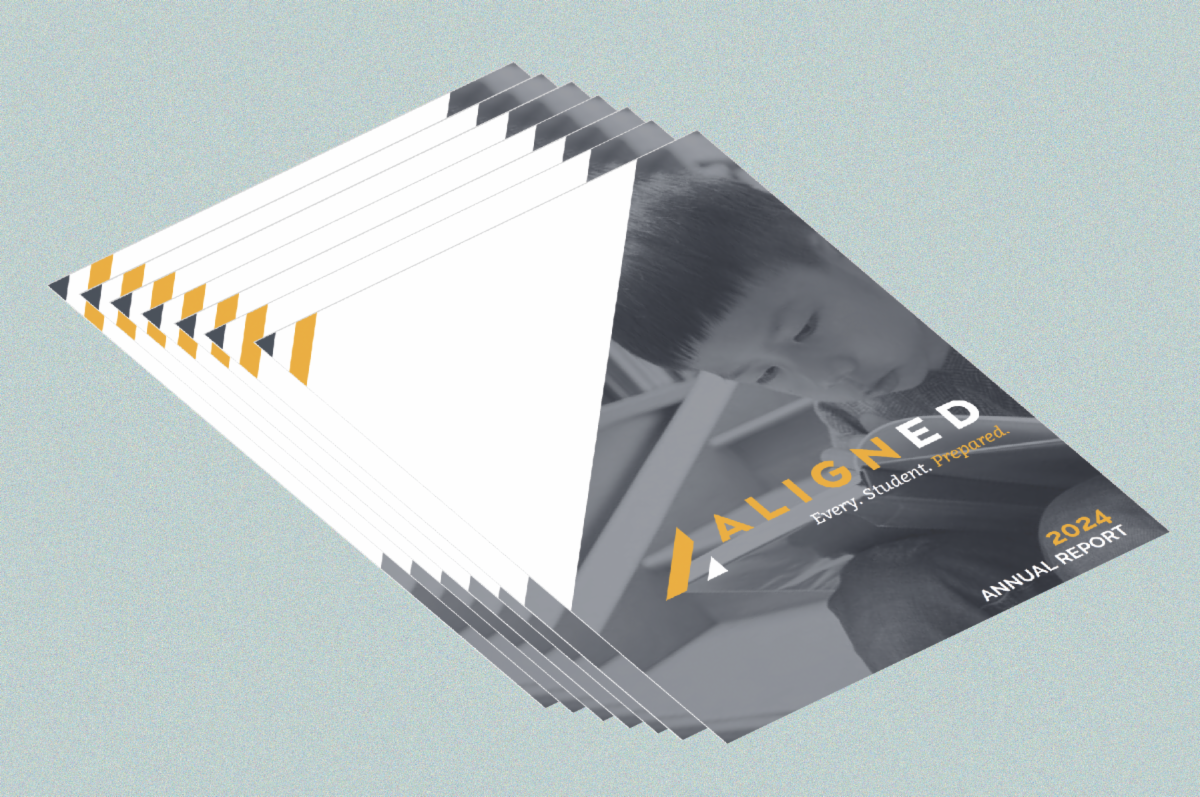
Our 2024 Annual Report is now available!
Inside, you’ll find a comprehensive review of our year, including a message from our President, highlights from key activities, and a look at the impactful work we're doing across Missouri and Kansas.
Dive into the details of our efforts in early care and education, teacher recruitment and retention, school finance reform, and the development of state longitudinal data systems.
Plus, don't miss our in-depth case study on the Visiting Scholars teaching certificate.
Explore the full report today to see how Aligned is shaping the future of education policy.
| |
Upcoming Events at Aligned | |
|
Earn a Georgetown University Certificate in Finance
There’s no better time to understand education finance than now, with the ongoing political debates at the federal level affecting how resources are allocated to local schools.
Join us in June as Aligned and Georgetown University present the Edumonics Certificate in Education Finance course in Kansas City.
You will learn about:
- Cost drivers in education
- Allocation and accountability structures
- Instruction delivery model implications
- ESSA and state policy effects in a local context
- Productivity analyses
Participants earn 3.0 CEUs, 36 CPEs, and/or 30 professional development credits upon successful program completion.
Register to attend the in-person event.
Download our brochure for sponsorship opportunities.
We are grateful to our event sponsors for their support:
-
Venue Sponsor - Ewing Marion Kauffman Foundation
-
Platinum Sponsor - Missouri Charter School Association
-
Gold Sponsors - U.S Engineering and Holland 1916 Inc.
-
Bronze Sponsors - JE Dunn Construction and KIDaccount
| |
There's also no better time to say "Go Chiefs" - here's to securing that ever elusive three-peat! | |
|
About Aligned
Aligned is the only state-wide non-profit, nonpartisan business group working in Kansas and Missouri on educational issues impacting the full development of our children, from supporting high-quality early learning to solid secondary programs that provide rigorous academic programs and real-world learning opportunities.
Our vision is that our public education systems in Kansas and Missouri have the resources and flexibility to prepare students to pursue the future of their choice.
We are currently focused on education policies that will strengthen early childhood education, teacher recruitment and retention, and school finance reform.
Learn more about our work.
| | | | |