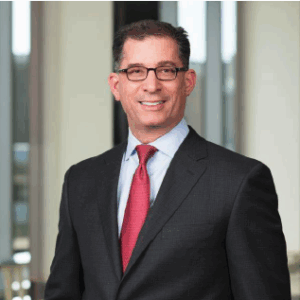
Letter from the President | | |
Dear Friends and Colleagues,
I hope you all are staying warm and looking ahead to spring!
In early February, members of our Foundation team—including Associate Vice Chancellor for Advancement and Chief of Staff Marianne Horrigan, Chief Operating Officer/Chief Financial Officer Tom Gilbert, Vice President and General Counsel Becca Salsbury, Chief Investment Officer Sharcus Steen, Director of Board Relations Carrie Browne, Foundation Director Lonnie Robbins and Foundation Board Chair Alan Cason—joined me at the Association of Governing Boards of Universities and Colleges' (AGB) 2026 Foundation Leadership Forum in San Diego. In addition to escaping the winter weather, we gained invaluable insight by connecting with leaders from Foundations across the nation. Sessions on board leadership, governance, fundraising, and investment strategies left us energized and eager to apply what we learned, particularly as we prepare to develop our next strategic plan.
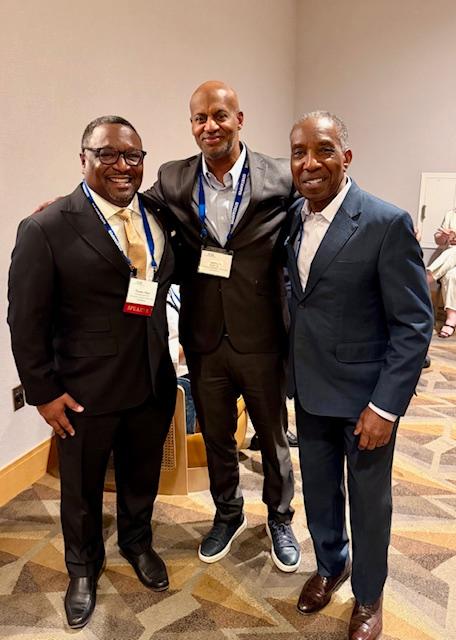
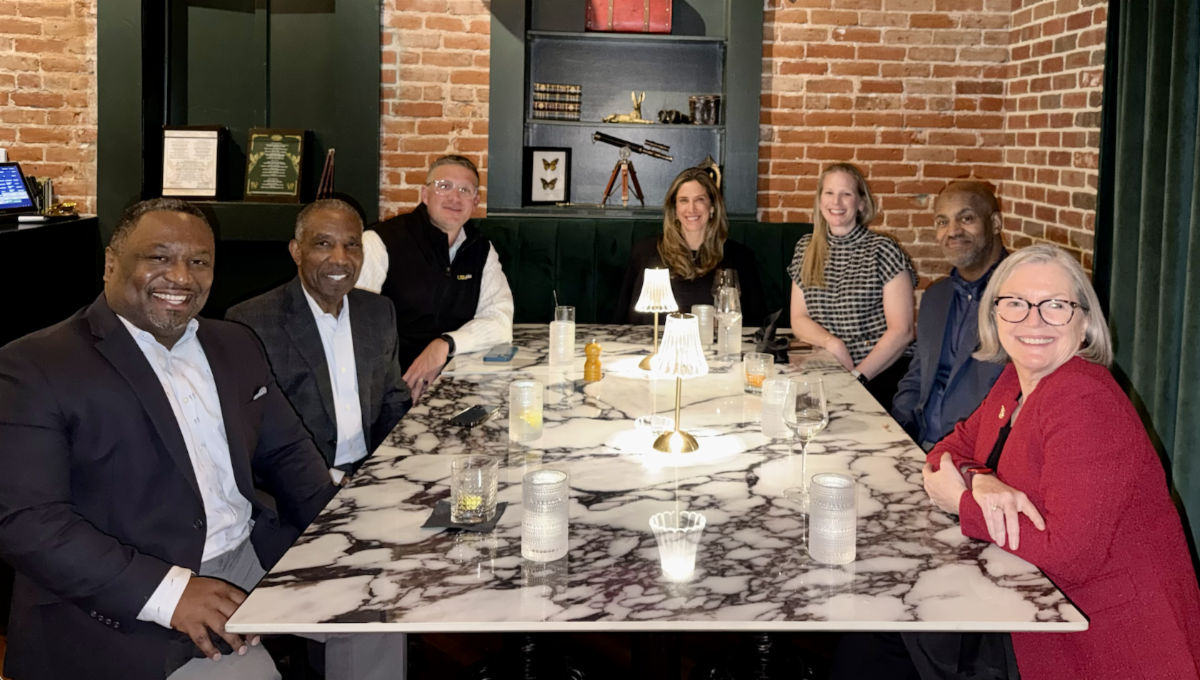
| | Timothy Minor, Alan Cason, and Lonnie Robbins at the AGB 2026 Foundation Leadership Forum | | Timothy Minor, Lonnie Robbins, Tom Gilbert, Becca Salsbury, Carrie Browne, Alan Cason, and Marianne Horrigan at the AGB 2026 Foundation Leadership Forum | | |
Since joining the Foundation last September, I have been busy visiting our USM institutions. These visits have been a wonderful opportunity to travel around the state to meet with institutional leadership. We’ve already visited the University of Maryland, College Park; University of Maryland Global Campus; University of Maryland, Baltimore County; and Coppin State University, with additional campus visits planned in the spring. These visits and conversations have provided valuable insights into how the Foundation can better serve our campuses and have underscored opportunities to strengthen how we communicate our available resources.
Most recently, members of our team (Marianne Horrigan, Carrie Browne, and myself) and our Board of Directors (Gregory Abel, Anirban Basu, Alan Cason, Steve Dubin, Brian Meenaghan, and Lonnie Robbins) visited key members of the state's legislature for Advocacy Day in Annapolis. During our meetings, we thanked the legislators for their support of the USM and the Foundation. For many of our Directors and myself, this was our first time meeting these legislators face-to-face, and it was a great opportunity to make new connections.
Looking ahead, one of our major priorities for 2026 is the development of the Foundation’s next strategic plan. Our leadership team met in January for a productive planning session that will guide us into the next phase of this work. I look forward to sharing more details with you soon!
I’m also deeply honored to have been named one of the Baltimore Sun’s “25 Black Marylanders to Watch.” This recognition reinforces the significance of the work ahead and inspires me to continue pushing forward. I’m energized by the opportunity to help shape the future of our universities, our communities, and the broader impact we can make together. Thank you to everyone whose support has guided me on this journey.
Warm regards,
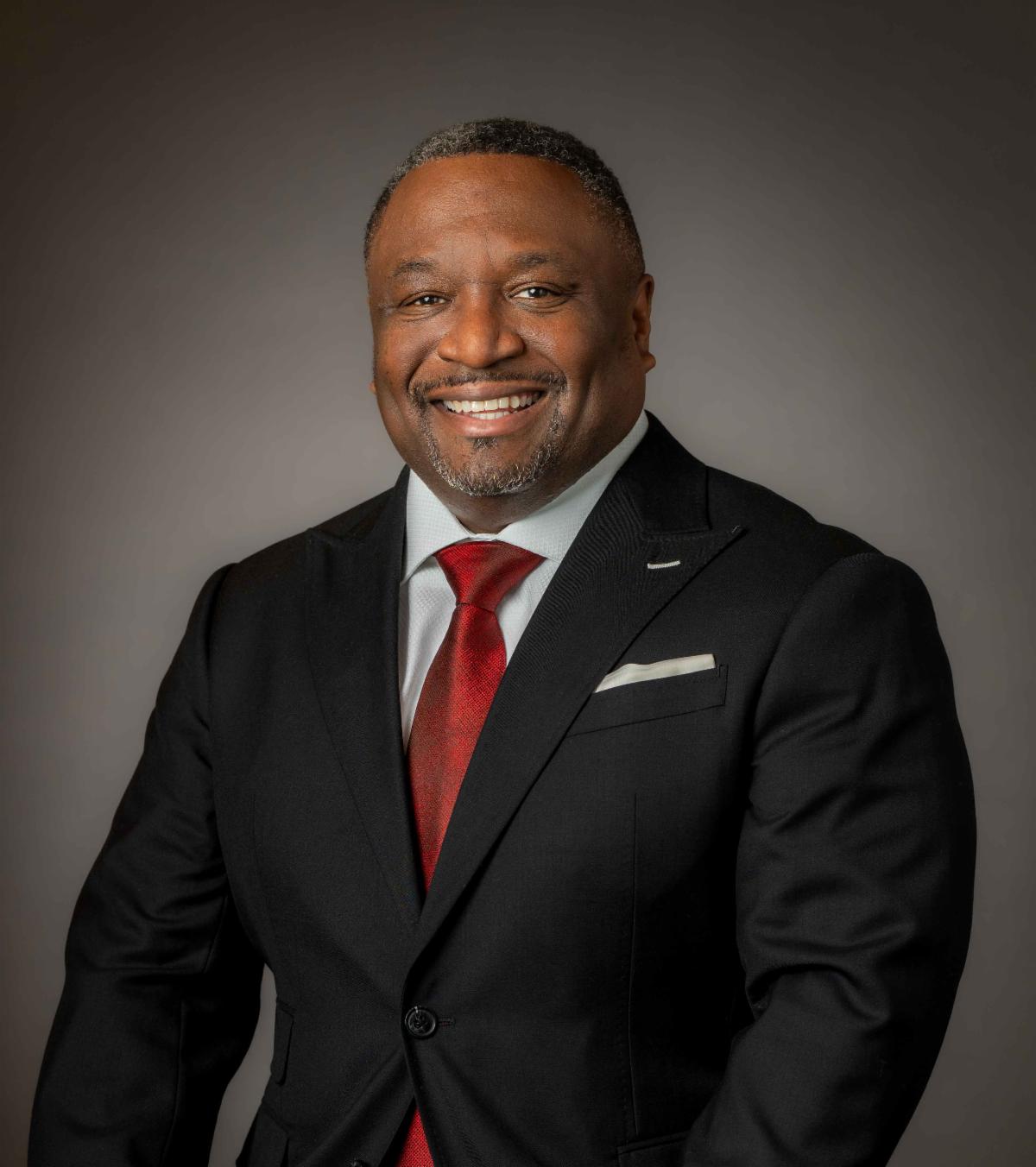
| | Timothy A. Minor
President and CEO | | USM Foundation Board Meeting Recap | | |
The USM Foundation's Board of Directors met virtually on February 24.
Alan Cason, chair of the Board of Directors, kicked off the meeting by acknowledging the passing of Elaine Johnson Coates, the first Black woman to receive an undergraduate degree from the University of Maryland, College Park. Coates went on to become a social worker and earned her master's degree at the University of Maryland, Baltimore.
Next, the Board heard from Chancellor Jay Perman, who spoke about the Early College initiative in the state of Maryland. Early College is a partnership between a college and high school that gives students access to transferable credits up to an associate degree and emphasizes career-aligned pathways. The USM commissioned Empowered Schools to deliver a landscape report on the state of Early College in Maryland and found that the state ranks near the bottom nationwide in Early College and Dual Enrollment. However, with significant assets, Maryland is positioned to lead in Early College. Chancellor Perman spoke to the Board about the path forward, specifically House Bill 479, the Southern Maryland Early College Teacher Pathway. This bill establishes the Southern Maryland Early College Teacher Pathway Program and Workgroup and convenes the USM, the Maryland State Department of Education, and the Maryland Higher Education Commission. The program will establish a scalable model for regional implementation statewide and will enable coordination across K12 systems, community colleges, and four-year universities to build an end-to-end teacher-prep pathway that leverages existing resources and aligns with state priorities.
The Board received a positive Investment Committee report from Barry Garber, Investment Committee chair, as well as a report from Anirban Basu, Advocacy Committee chair, who spoke to the group about Advocacy Day in Annapolis.
Next, the Board heard from Barry Gossett, Budget and Finance Committee chair, who shared that the Foundation's financial position is positive. The committee reports concluded with a report from Linda Ellen Jones, Audit Committee chair, who shared that the committee is working on mitigating risks for the Foundation and Sang Oh, Spending Policy Committee chair, who shared that the committee recommended that the Foundation's spending remain at four percent.
The meeting ended with a report from Timothy Minor, which contained the news covered in his letter above and the remaining newsletter below. Tim also shared that as of the end of January, our USM institutions have already fundraised $400 million, five percent over the FY26 goal of $385.1 million. For the first time in our history, the USM has surpassed $400 million with five months remaining—an extraordinary and historic achievement.
| | News from our Board of Directors | |
The U.S. Department of Energy has appointed Director Mark Lewis, managing partner, Bracewell LLP, to the National Petroleum Council for the 2026–2027 term. This prestigious Council, created by President Truman in 1946, plays an important advisory role on issues related to the oil and natural gas industries. Congratulations to Mark!
| | Philanthropy and Grants Across the System | |
In December 2025, Bowie State University received a $6.5 million gift from Elior Collegiate Dining. The unrestricted gift will support key institutional priorities, including expanding access and affordability through student scholarships and renovating student dining and learning spaces to create collaborative environments that inspire community engagement and academic excellence.
Salisbury University's Rommel Center for Entrepreneurship recently received a $100,000 gift from alumnus Mike Wilmot ’82 and his wife, Kathy Wilmot. The Wilmots served as judges during the university's Idea Factory competition, where students pitched their business idea posters to a panel of business leaders in the fall. Wilmot started Wilmot Modular Structures Inc. in 1989.
Towson University established the Jenny Jochens History Faculty Research Endowed Fellowship in the Department of History, as a result of a $500,000 gift from Jenny Jochens' son, Dr. Peter Baldwin, global professor at NYU's Center for European and Mediterranean Studies. Jenny Jochens was a longtime Towson faculty member with a groundbreaking legacy of research, teaching, and scholarly engagement.
Additionally, Towson University also announced a $100,000 gift from Patrick Brennan and Helga Maria Surratt in support of the Cpl. Nicholas “Nick” Ziolkowski Memorial Scholarship. The scholarship is an endowment that honors a fallen U.S. Marine who planned to attend TU after his service. Patrick Brennan's son grew up alongside Nick Ziolkowski, who was killed in Iraq in 2004.
The University of Baltimore received a $100,000 grant from the Carnegie Corporation of New York. The multi-year grant will be disbursed over three years and will be used to fund UBalt's “Near Completers” program, for undergraduate students who are within 30 credit hours of finishing a bachelor's degree.
In 2024, a group of donors dedicated to strengthening environmental conservation in central Appalachia launched the Appalachian Laboratory Investors Network (TALIN). TALIN supports the UMCES Appalachian Laboratory in Frostburg, Maryland by providing hard‑to‑secure funding for pioneering research. In December of 2025, UMCES announced that TALIN has renewed their support for the Appalachian Laboratory for a second year and has funded two additional projects focused on forest conservation and management.
| | |
Coppin State University was recently recognized by the Baltimore Business Journal as Greater Baltimore’s fastest‑growing college. CSU saw a 29 percent increase in enrollment in one year, reflecting the university's commitment to advancing strategic initiatives such as enhancing student experience, expanding academic programs, and strengthening partnerships throughout the state of Maryland. In late November, Coppin State University announced that they have seen a 52 percent increase in male enrollment since 2021, in stark contrast to national and regional trends affecting HBCUs.
Frostburg State University’s Social Work program has been granted eight years of continuing accreditation by the Council on Social Work Education (CWSE). FSU’s social work program has been continuously accredited by CWSE for more than 30 years. FSU's Social Work program equips students for entry‑level roles in the profession by emphasizing the value of human relationships and the broader impact of social work.
The University of Baltimore's Doctor of Public Administration is becoming a permanent part of the academic offerings at the Universities at Shady Grove. The program offers a fully online option for degree completion, as well as all in-person classes at the USG campus.
The University of Maryland (which includes the University of Maryland, Baltimore and the University of Maryland, College Park as a single research enterprise in the HERD survey), was named fourteenth among all U.S. institutions and ninth among public institutions in the National Science Foundation’s latest Higher Education Research and Development (HERD) survey. This ranking is one of the highest to-date, up from eighteenth overall and eleventh among public institutions the previous year. The survey is a widely recognized national benchmark for sponsored research activity, which ranks research and development spending at U.S. institutions.
In December, the University of Maryland Global Campus announced its largest graduating class in the institution's history, with 17,855 students earning a degree or certificate in FY 25, marking a 17.6 percent increase from the previous year. UMGC also announced that their graduates are completing their studies faster, with their average time-to-completion dropping below 36 months for the first time.
| | Shadow JQ Robinson Named President of Frostburg State University | |
Shadow JQ Robinson has been appointed the next president of Frostburg State University. Prior to joining the USM, he served as provost and vice chancellor for academic affairs at the University of Arkansas–Fort Smith (UAFS). At UAFS, an institution with many first-generation students, Robinson aided in the launch of new academic programs, secured $7.5 million for key initiatives, and boosted freshman enrollment by 20 percent. Prior to UAFS, Robinson served as dean at the University of Tennessee at Martin, where he oversaw major capital projects and fundraising efforts.
Robinson holds a Ph.D. in theoretical nuclear physics from Rutgers University. He grew up in Appalachia in eastern Kentucky and began his studies at the University of Kentucky at age 14. Robinson will begin his tenure as president on July 1.
Click here to read more.
| | Timothy A. Minor Named to Baltimore Sun’s ‘25 Black Marylanders to Watch’ List | |
Timothy Minor, president and CEO of the USM Foundation and USM vice chancellor for advancement was named to the Baltimore Sun’s fifth annual “25 Black Marylanders to Watch” list. The list recognizes emerging and established Black leaders across the state. Honorees were selected by editors and reporters from the newspaper who cover the communities and sectors these individuals influence. “The incredible talent that won Tim this honor from the Baltimore Sun is exactly what we saw when we hired him last fall,” said USM Chancellor Jay A. Perman. “His drive to build and expand key partnerships has already made an impression. We’re lucky to have Tim leading our philanthropy at the USM, and the entire state is lucky to have him advancing public higher education in Maryland.”
Click here to read more about Tim’s vision for the Foundation and the System.
| | Seven University System of Maryland Institutions Recognized with 2026 Carnegie Elective Classification for Community Engagement | | |
Seven USM institutions have received the 2026 Carnegie Elective Classification for Community Engagement.
The institutions include:
Salisbury University
Towson University
University of Baltimore
University of Maryland, Baltimore
University of Maryland, Baltimore County
University of Maryland, College Park
University of Maryland Eastern Shore
The classification is administered by the Carnegie Foundation for the Advancement of Teaching and managed by the American Council on Education. It recognizes colleges and universities that demonstrate an ongoing, institution-wide commitment to community engagement, characterized by reciprocal partnerships and measurable public impact.
In the 2026 cycle, only 157 public institutions nationwide were recognized with the Carnegie Elective Classification for Community Engagement.
| | | | |