|
As communities around the world experience another month of record-breaking heat, devastating wildfires, rising ocean surface temperatures, and extreme flooding, the summer of 2026 underscores that the climate crisis is rapidly accelerating and its impacts are being felt everywhere. Speaking on this current reality, our WECAN Executive Director wrote in a recent blog:
"There is something deeply unsettling about watching governments suddenly realize and announce, in the fierce blaze of a burning country, what scientists, Indigenous Peoples, frontline communities, and climate campaigners have been warning since before many of today's ministers entered politics.” -Osprey Orielle Lake
As it stands, political response remains far from commensurate with the scale of the emergency. Globally, governments and corporations continue to expand fossil fuel extraction while advancing the large-scale build-out of energy-intensive infrastructure, including data centers, despite concerns about water and electricity demand and the loss of culturally significant lands. At the same time, environmental protections continue to be weakened despite overwhelming scientific evidence that healthy ecosystems are essential to climate resilience. Too often, the connections between extreme weather events and the climate crisis remain absent from public discourse. As climate journalism faces newsroom consolidation and declining coverage, access to trusted, science-based climate information has never been more important.
Taking all of this into account, we are more determined than ever to build out our work at WECAN and with our partners. This month's newsletter highlights movements already building a regenerative future rooted in a Just Transition and Rights of Nature. Across the globe, Indigenous Peoples and frontline communities continue to lead some of the world's most inspiring climate movements. From defending waterways and sacred lands from fossil fuel pipelines, creating moratoriums against data center developments, taking governments to court for climate injustices, advancing the Rights of Nature, to leading food sovereignty and other community-led climate solutions, these movements demonstrate that a regenerative future is not only possible, it is already being built through community stewardship, women's leadership, social justice, reciprocity, and collective action.
As many communities continue to experience extreme heat, we encourage everyone to take good care of their health and well-being by staying hydrated, checking in on neighbors, friends, and loved ones, and sharing trusted public health resources to prepare for and respond to increasingly frequent and intense heat events.
| | |
Big Win for Line 5!
Week of Resistance Recap and Honoring Indigenous Women and Relatives
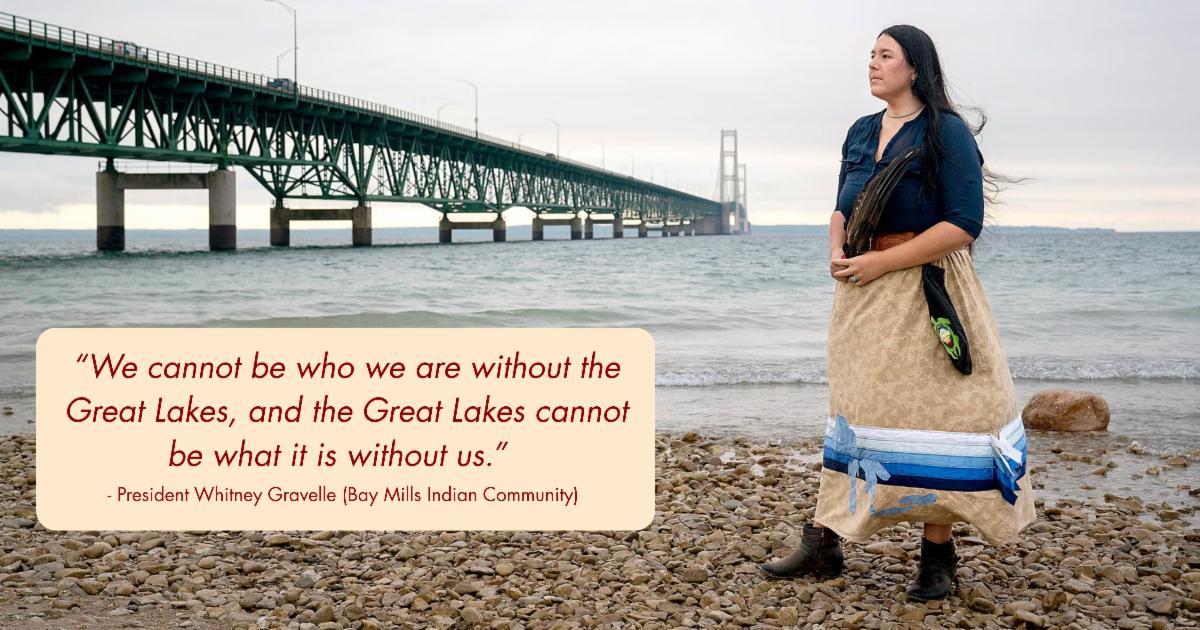
| President Whitney Gravelle of the Bay Mills Indian Community. Photo Credit: Sarah Rice, Earthjustice | Victory! Federal Court Affirms: Enbridge Has No Right to Operate on Bad River Band Lands | |
In a significant victory for Tribal sovereignty, the U.S. Court of Appeals for the Seventh Circuit affirmed that Enbridge is trespassing on the sovereign lands of Bad River Band of Lake Superior Chippewa and must remove Line 5 from the Reservation.
"The Straits of Mackinac are not simply a route for an oil pipeline to be abused. They are sacred waters, the heart of creation for Anishinaabe people, and a source of life for millions...Some things are simply too sacred to be buried beneath a tunnel."
-President Whitney Gravelle (Bay Mills Indian Community)
While the court directed further proceedings regarding the timeline for removal and damages, the ruling affirmed a critical principle: Enbridge does not have the right to continue operating Line 5 across Bad River Band lands without Tribal consent. The decision represents a major step forward in Bad River Band’s years-long defense of their lands, waters, treaty rights, and community.
As legal challenges continue and Indigenous-led resistance grows, WECAN remains committed to standing alongside Tribal Nations, water protectors, and frontline communities working to defend the Great Lakes, uphold Indigenous sovereignty, and advance a Just Transition and phase-out of fossil fuels.
Together, we will continue building the collective power needed to protect these vital waters for present and future generations.
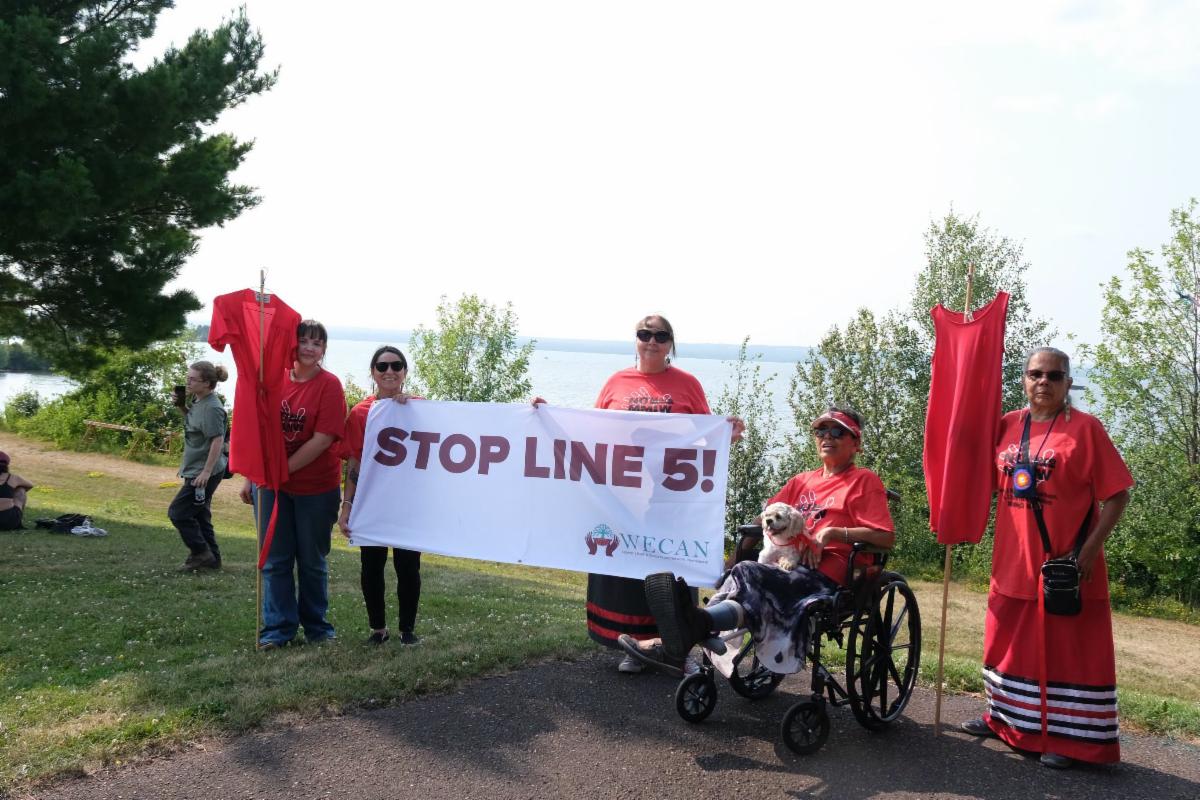
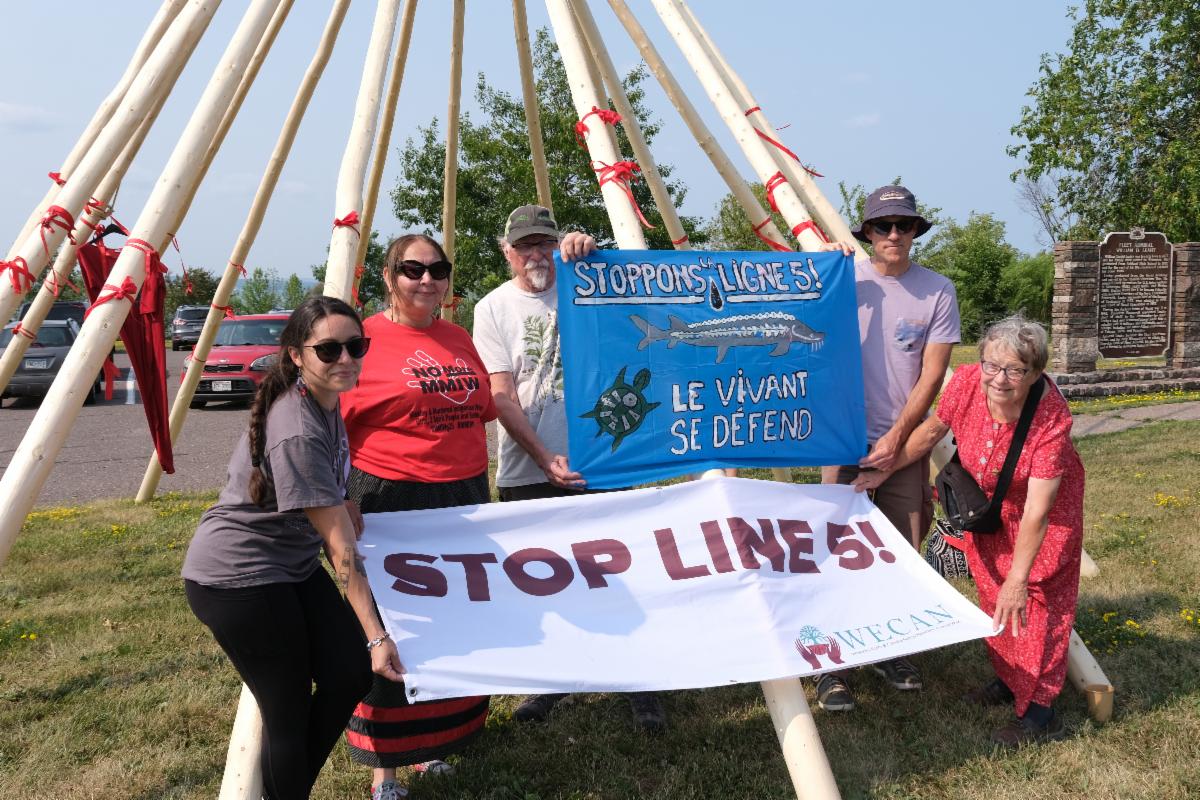
| Members of the Indigenous Women’s Treaty Alliance, facilitated by WECAN, standing in solidarity to Stop Line 5. Photo Credit: WECAN 2026 | |
Protecting the Great Lakes and Tribal Sovereignty
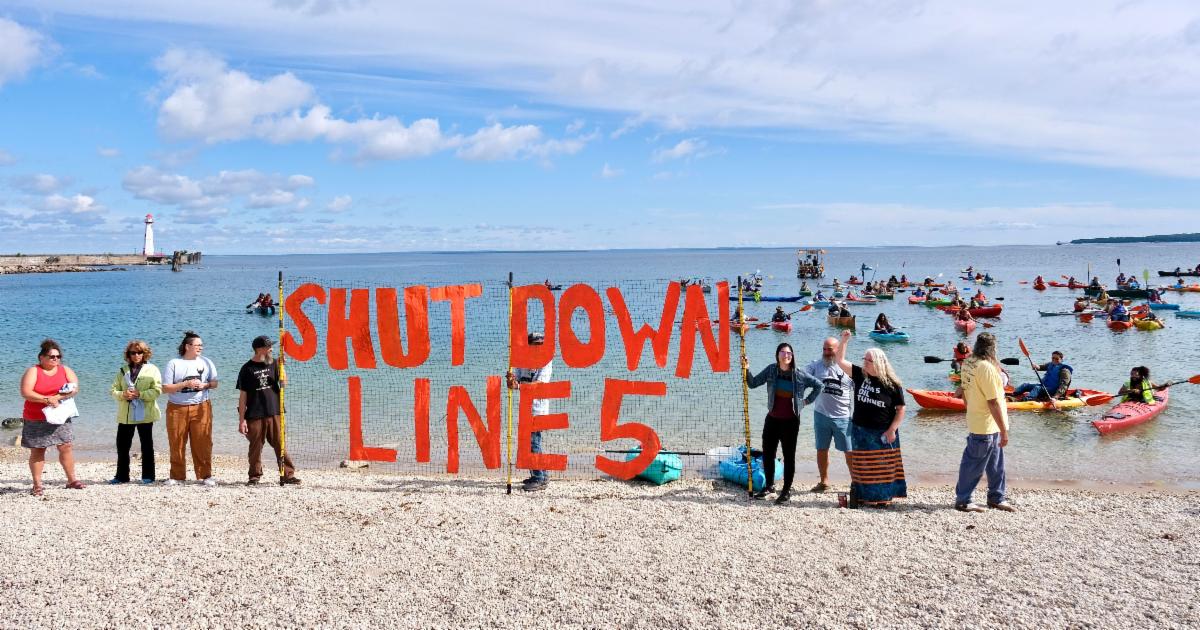
This July, WECAN joined Indigenous leaders, water protectors, and frontline communities in Ashland, Wisconsin, for the Week of Resistance to Stop Line 5. Together, we stand to protect the water, land, and communities threatened by Enbridge’s aging Line 5 pipeline and its proposed reroutes.
Through collective gatherings, relationship-building, knowledge-sharing, and public activities, participants strengthened the collective power needed to challenge the ongoing harms of fossil fuel expansion, violations of Indigenous rights and sovereignty, and continued threats to the Great Lakes and our shared future. The Great Lakes hold 20% of the world's fresh surface water and supplies drinking water to over 40 million people.
From honoring Indigenous women and relatives, to remembering the Kalamazoo oil spill, to celebrating an important legal victory for Tribal sovereignty, each moment reinforced a shared truth: that the commitment to protecting the Great Lakes, upholding Indigenous sovereignty, and advancing a Just Transition beyond fossil fuels is growing—and here to stay.
WECAN is honored to facilitate and organize with the Indigenous Women’s Treaty Alliance (IWTA), working to stop Line 5. Learn more about our work on Line 5 here.
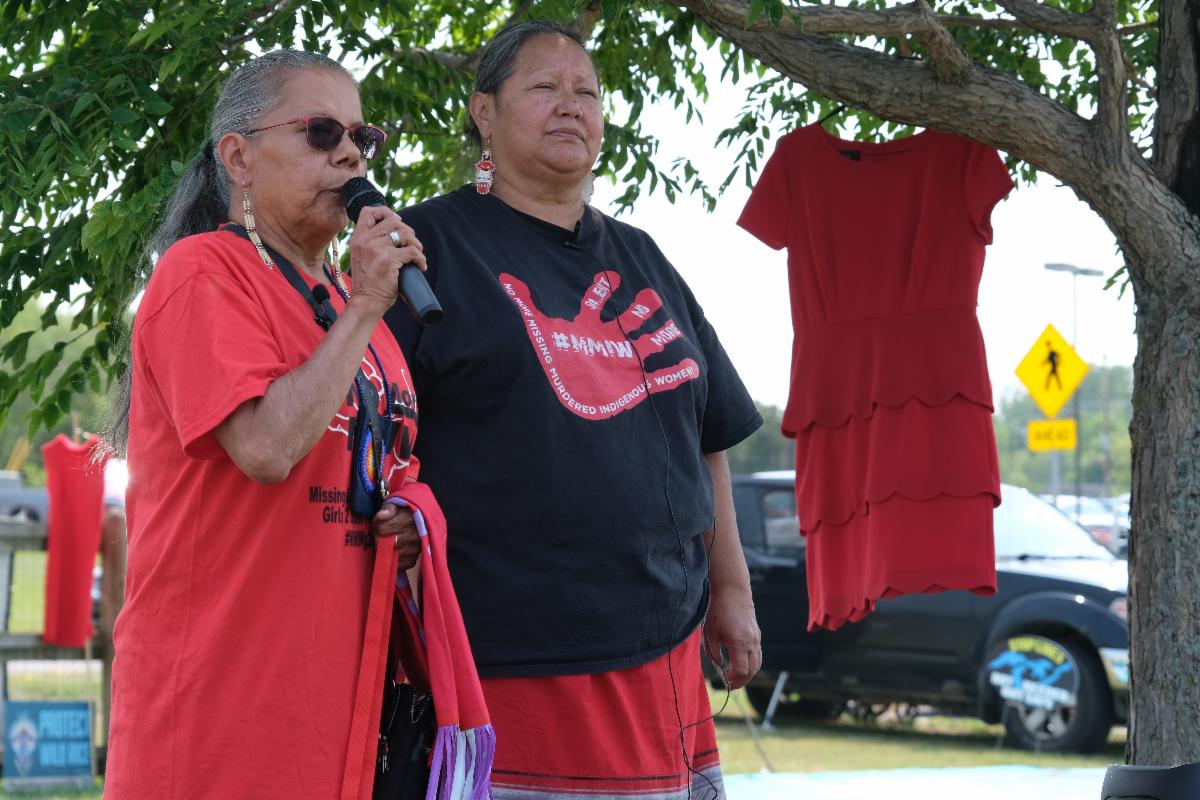
| | Rene Ann Goodrich and Edith Leoso, Bad River Ojibwe, speaking at an MMIWR event in Ashland, Wisconsin, pictured with a red dress honoring missing and murdered relatives. Photo Credit: Ashley Guardado/WECAN 2026 | | Honoring Indigenous Women and Relatives: Connecting Fossil Fuel Expansion to Violence | | |
One powerful moment during the Week of Resistance was the Missing and Murdered Indigenous Women and Relatives (MMIWR) gathering led by Indigenous Women’s Treaty Alliance member Rene Ann Goodrich (Bad River Ojibwe), Founder of the Native Lives Matter Coalition, and member of the Wisconsin Department of Justice MMIWR Task Force.
The gathering uplifted the ongoing movement for justice while connecting the impacts of extractive industries and fossil fuel expansion to violence against Indigenous women, girls, Two-Spirit people, and relatives. These large-scale extractive projects often bring temporary workforce housing, commonly known as "man camps," which research has linked to increased rates of gender-based violence, human trafficking, and the disappearance and murder of Indigenous women and relatives in nearby communities.
“We want to recognize our missing, our murdered, our Indigenous women and relatives and families and communities that are directly impacted. As Indigenous people, I do not know a single family that is Indigenous that has not been impacted by MMIWR.”
- Rene Ann Goodrich (Bad River Ojibwe)
Standing together in a circle on the grass, participants learned from Indigenous women’s leadership and honored those who have been lost. Rene Ann shared that the red dresses serve as a powerful but quiet form of advocacy—honoring missing and murdered relatives while reminding communities that the crisis continues. The event reaffirmed that the defense of Indigenous lands and waters is inseparable from the protection of Indigenous lives and communities.
| | Ashley Guardado, WECAN Outreach and Special Programs Coordinator, with members of the Cross Border Organizing Working Group honoring the Kalamazoo River oil spill during the Week of Resistance in Ashland, Wisconsin. Photo Credit: WECAN 2026 | | Remembering Kalamazoo: Holding Enbridge Accountable | | The Week of Resistance coincided with North American Oil Spill Day, July 25, marking sixteen years since Enbridge’s catastrophic 2010 Kalamazoo River oil spill—the largest inland tar sands oil spill in U.S. history. The spill released more than one million gallons of oil into Michigan waterways and surrounding communities. The Kalamazoo spill remains a stark reminder of the dangers of aging fossil fuel infrastructure and Enbridge’s ongoing history of environmental harm. | | |
WECAN at NY Climate Week 2026
Registration is Now Open
| | |
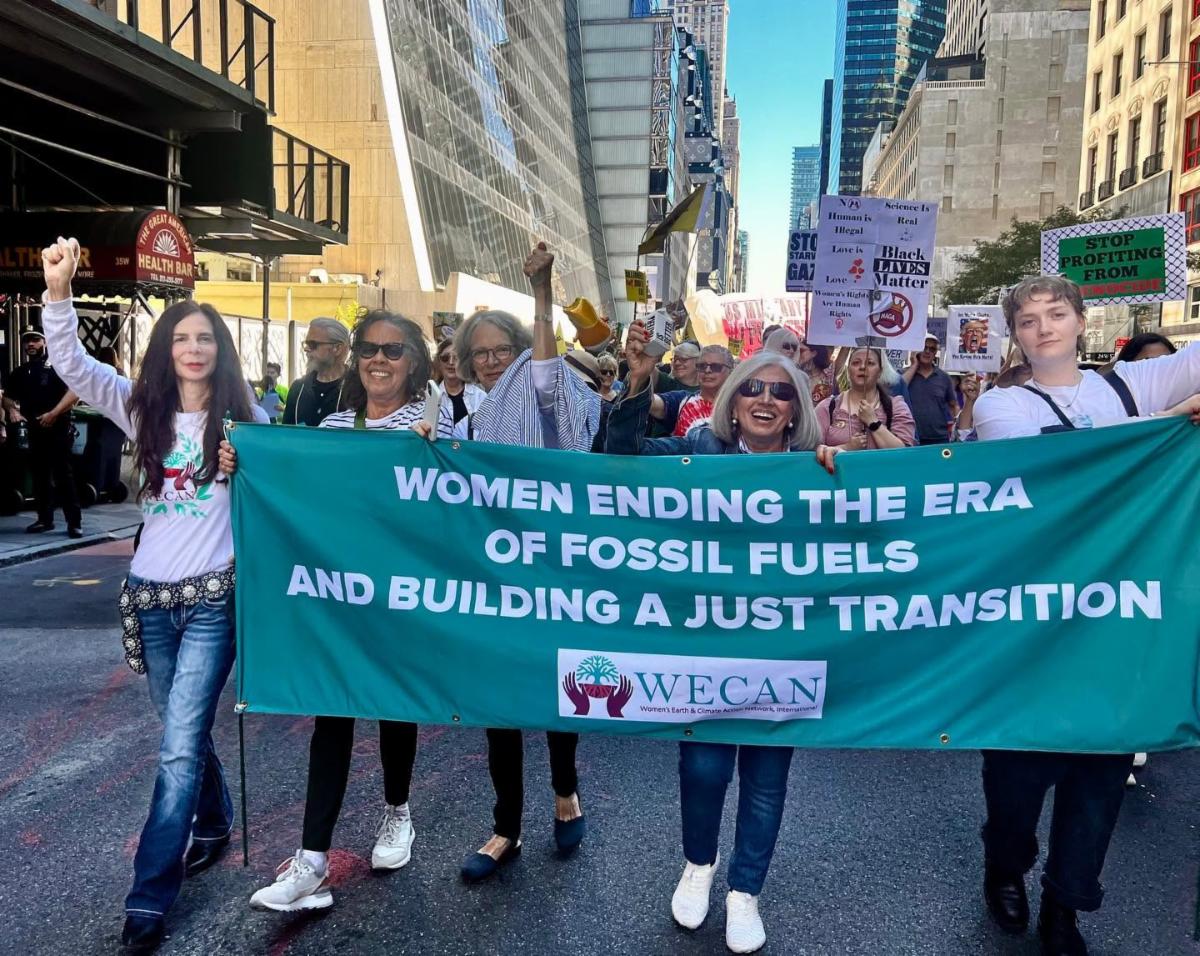
Join WECAN at New York Climate Week this September! The escalating impacts of extreme heat, wildfires, flooding, and biodiversity loss underscore the urgent need for systemic change and transformative climate action. This political moment calls for strong leadership rooted in justice, care, equity, and solidarity.
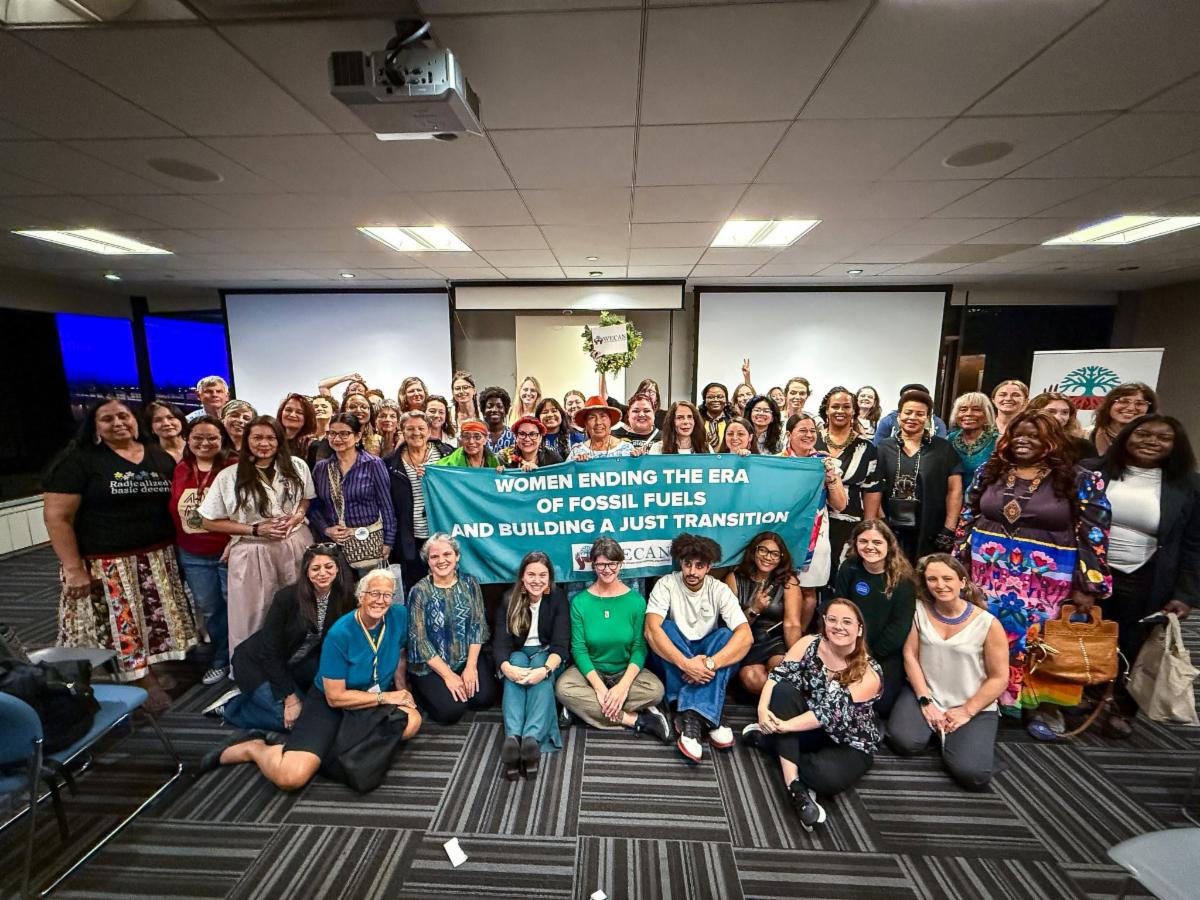
During NY Climate Week, WECAN is convening global women leaders who are advancing bold, innovative, and community-led solutions to the climate crisis. Through our events, roundtables, and partner meetings, we will convene women around the globe who are leading climate solutions. We will also be advocating for gender-responsive climate policy, the Rights of Nature, a Just Transition, the phaseout of fossil fuels, and community-led climate solutions that build a more equitable, resilient, and regenerative future. Please be welcome to join us!
Visit our WECAN at Climate Week webpage to learn more about our advocacy at New York City Climate Week. On this page, we will also share details of events hosted by our partners – more coming soon!
| |
Okla Hina Ikhish Holo Food Sovereignty Program
WECAN Project Spotlight
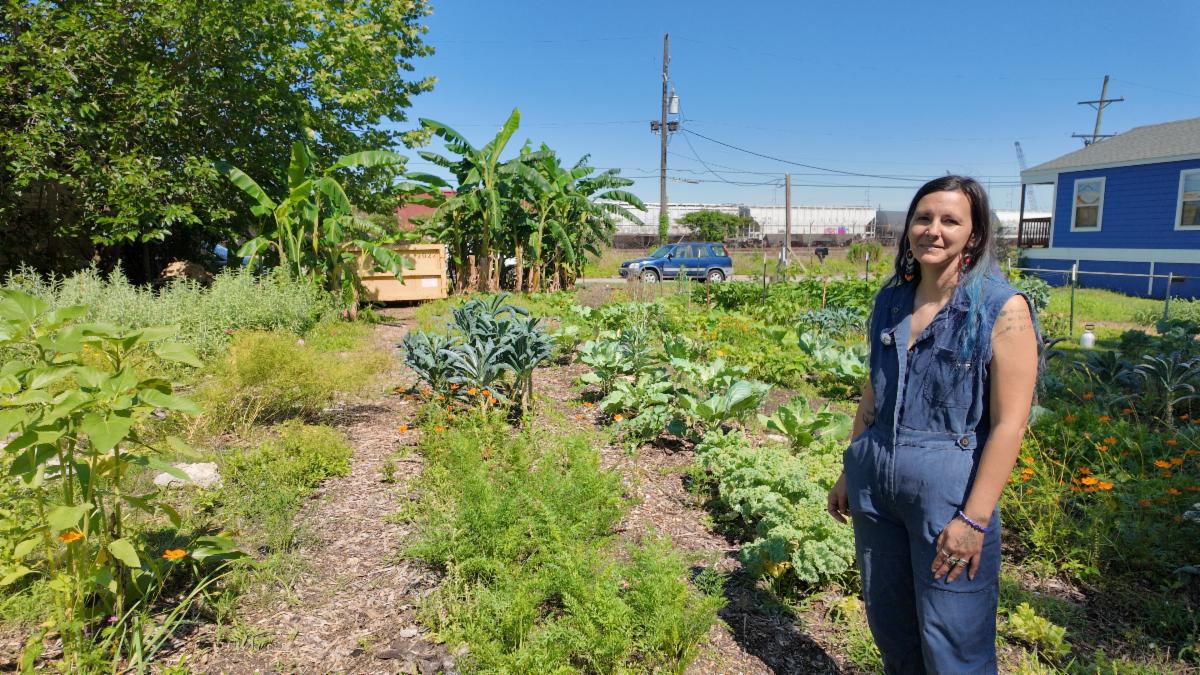
| | WECAN Gulf South OHIH project participant shows vegetables and fruit plants that are growing at one of the project farms. Photo Credit: WECAN 2026 | |
Initiated in 2020, the WECAN Okla Hina Ikhish Holo (People of the Sacred Medicine Trail) project is defending, protecting, and restoring the lands and waters of the Mississippi River Delta and within the ancestral territories of the Chata and Mvskoke. As part of the WECAN Just Transition and Climate Resilience Program, the Okla Hina Ikhish Holo collective, led by WECAN Gulf South Coordinator Monique Verdin (Houma Nation), is a network of Indigenous women farmers in all of their diversity who are urgently building toward a Just Transition and climate resilience.
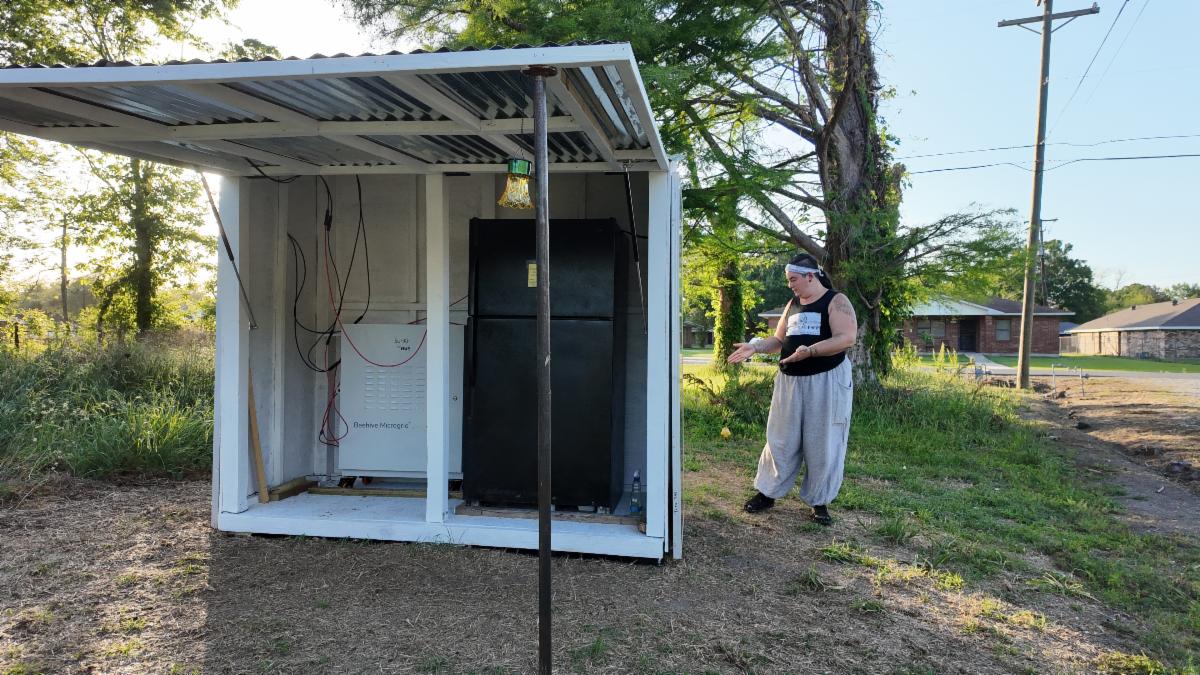
In times of food system and energy grid destabilization, intensifying climate disasters, and ongoing harms of fossil fuel extraction, the Okla Hina Ikhish Holo collective is reclaiming and revitalizing Indigenous agricultural techniques and narratives, promoting food sovereignty and rematriation, conducting workshops, providing mutual aid, and building emergency response hubs equipped with solar power, water and food storage, and autonomous communication systems. To advance the shift away from systems of industrial agriculture, extraction, and colonization, WECAN is building on-the-ground solutions and advocating for global policy that advances a Just Transition, builds climate resilience, nurtures community well-being, protects ecosystems, and fights against the extraction and commodification of nature.
| | WECAN OHIH project participant showing the new solar-powered community food refrigerator for mutual aid. Photo Credit: WECAN 2026 | | |
Join the WECAN Team!
Policy Coordinator Position Available
| | |
The Women’s Earth and Climate Action Network is seeking a full-time Policy Coordinator to join our dynamic team working for climate justice, systemic change, and women’s and feminist leadership in global climate solutions.
The Policy Coordinator will work remotely, with the support of WECAN’s Executive Director, to coordinate ongoing policy campaigns and advocacy efforts. This will include conducting research; analyzing policy strategies; writing reports, briefs, and educational materials; and supporting WECAN campaigns and coalition-building to advance progressive policies within a climate justice framework.
Applications are accepted on a rolling basis and remain open until filled, with a first-round deadline of August 14, 2026. Candidates are encouraged to apply as soon as possible because we will close the process once we find a match.
Please consider sharing this opportunity with your networks. Thank you!
| | |
New Blog Post by WECAN Executive Director
Out of the Ashes of Massive Political Decay Must Come a Just Transition
| | |
This summer's devastating heatwaves and wildfires have forced several governments to publicly acknowledge what climate justice movements have warned for decades: the climate crisis is a national security threat.
In her latest blog, WECAN Executive Director Osprey Orielle Lake reflects on this political moment and asks a critical question: if climate change is truly recognized as an emergency, when will governments match that recognition with the transformative action, public investment, and Just Transition needed to protect people and the planet?
Implementing a Just Transition is crucial in combating the climate crisis, as it addresses the root causes of social injustice and environmental degradation. Women in all their diversity, Indigenous Peoples, Afro-descendants, communities from the Global South, and environmental justice communities have long fought for intersectional Just Transition policies that address the root causes of the climate crisis and champion equitable climate solutions.
Learn more about our work on implementing a Just Transition.
| | |
3rd Regional Rights of Nature Tribunal
XII Pan-Amazonian Social Forum (FOSPA)
| | |
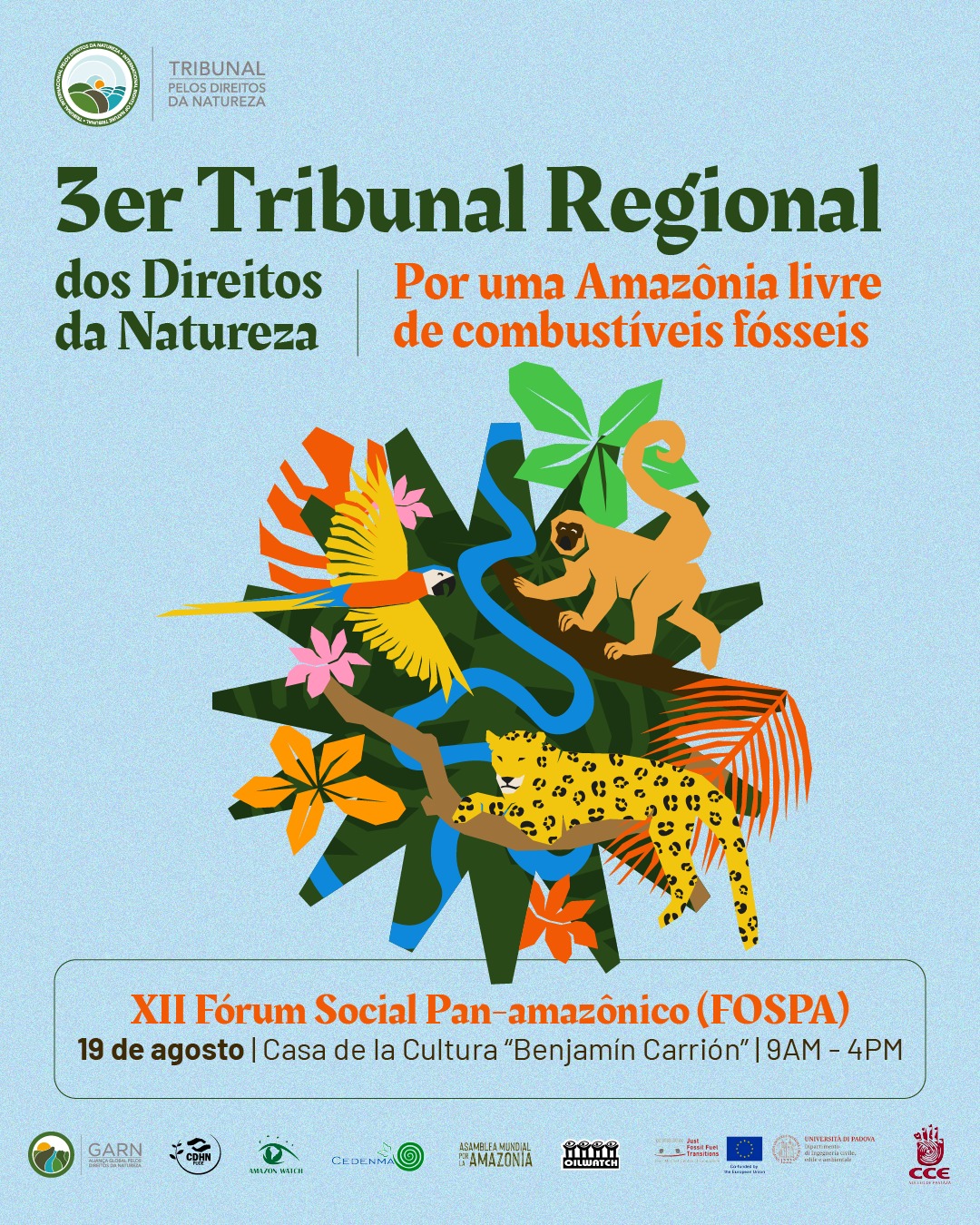
On August 19th, 2026, the Global Alliance for the Rights of Nature (GARN) will hold its 3rd Regional Rights of Nature Tribunal for a Fossil Fuel-Free Amazon in Puyo, Ecuador, as a central feature of the XII Pan-Amazonian Social Forum (FOSPA). Held biannually, FOSPA brings together Indigenous Peoples, Afro-descendant communities, local leaders, social movements, and civil society from all nine countries of the Amazon Basin. The forum’s purpose is to strengthen the struggles for life, territories, environmental and social justice, and systems of self-governance in addressing the multiple threats the region faces amid the global climate crisis.
This year, the 3rd Regional Rights of Nature Tribunal session will focus on a single, urgent question: “How is the expansion of fossil fuel extraction violating the Rights of Nature across the Amazon basin?”
Indigenous peoples, local communities, civil society organizations, scientists, and international judges will gather to examine six emblematic cases from across Amazonian countries including Ecuador, Brazil, Colombia, Venezuela, Peru, and Bolivia. Through testimony and evidence, the Tribunal will assess the impacts of the fossil fuel frontier on Amazonian ecosystems and communities through the framework of the Rights of Nature.
This session builds on the Declaration of the Rights of the Amazon adopted at XI FOSPA and contributes to global initiatives such as Fossil Fuel Free Territories and the Fossil Fuel Non-Proliferation Treaty. Our WECAN Executive Director serves on the Executive Committee of the Global Alliance for the Rights of Nature and participated in the first round of hearings for all the Amazonian cases, held in Santa Marta, Colombia, earlier this year.
3rd Regional Rights of Nature Tribunal for a Fossil Fuel-Free Amazon
Location: Casa de la Cultura Benjamín Carrión, Núcleo Pastaza — Puyo, Ecuador.
Virtual Participation: Livestreamed globally via Zoom and the International Rights of Nature Tribunal YouTube channel.
Language: Interpretation will be available from Spanish to English and Portuguese
Learn more here about our Rights of Nature advocacy.
| | Please consider supporting WECAN as we continue to uplift the leadership and solutions of women worldwide fighting for climate justice and the defense of the planet for current and future generations. | |
For the Earth and All Generations,
Women's Earth and Climate Action Network
(WECAN) International Team
| | S T A Y C O N N E C T E D | | | | |