League Logo.jpg

Fall 2024 Government Affairs Update

October 18, 2024

State Still Sporting a Big Budget Surplus


This week, the Wisconsin Department of Administration announced that Wisconsin ended Fiscal Year 2024 with a $4.6 billion surplus and a record-high $1.9 billion in the Budget Stabilization Fund. Prior estimates by Legislative Fiscal Bureau projected the surplus to be $3.25 billion. While Wisconsin Policy Forum's Jason Stein stated that tax revenues exceeded estimates by $275.7 million while spending fell $423 million below projections for building projects and will be transferred to FY25, meaning the surplus is actually closer to $4.2 billion. Regardless of the specific number, once again there is a large surplus heading into the next biennial budget. See DOA's full report here.

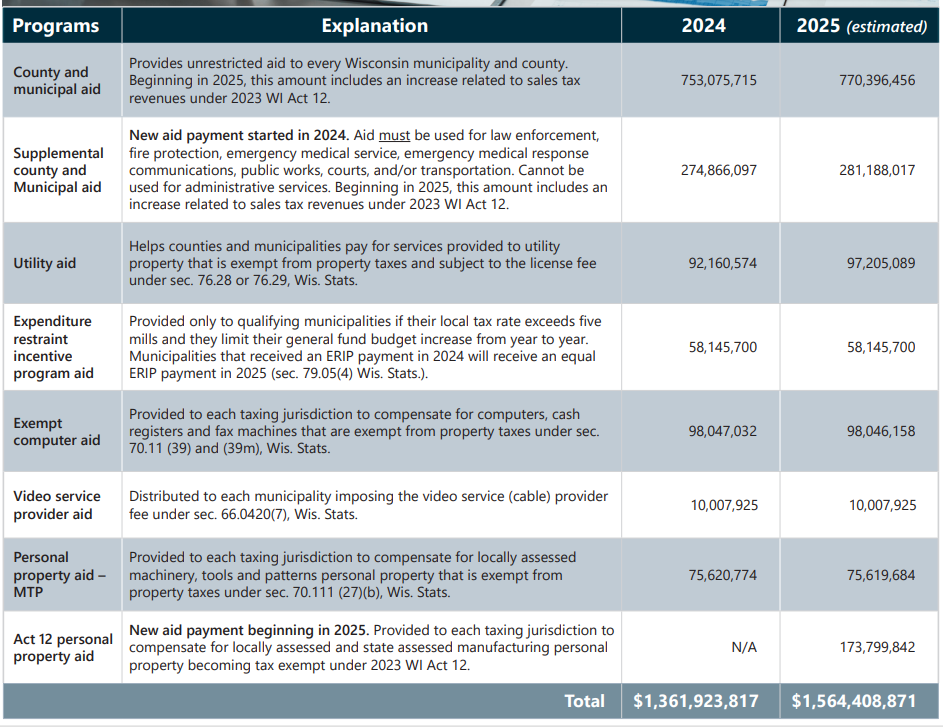
Chart Source: DOR 2024 Fall/Winter Newsletter

2025 Estimated State Aid to Local Governments


Wisconsin Act 12 provided the first shared revenue increase to local governments in two decades. It also linked shared revenue payments and the new supplemental payment to the rate of the sales tax increase. New numbers are out and show that the local government fund has grown to over $1.56 billion for 2025.

After Shared Revenue What's Next?


Even with partisan divides, last session had some very key bipartisan moments that were critically important for the state and local governments. The League and partners secured significant policy achievements in the 2023-2024 session. The compromises forged did present challenges and generate some opposition, but legislative leadership and the Governor were able to find common ground on several issues that political insiders would have opined impossible at the beginning of 2023.


So what is next for the 2025-2026 Legislative Session? The League Board of Directors will vote on our legislative agenda at the October Board meeting during our 126th Annual Conference next week! Stay tuned for more information on the issues and policies that the League will tackle in the next session.

NEW: League Partner Brings You More Capitol News


Recently the League entered into a partnership with the Wheeler Report in Madison to help curate additional content for our legislative updates. Members will gain access to valuable summaries from Wheeler. In the off season, Wheeler focused the first summary on the municipal referenda on the November ballot across the state.

Engineers Give Infrastructure Mixed Reviews


A recent report from the Wisconsin Chapter of the American Society of Civil Engineers graded Wisconsin’s infrastructure a C+, a slight improvement from the C received in 2020. Every four years statewide infrastructure is evaluated in 17 categories, including bridges, drinking water, roads, energy, parks, ports, and wastewater with this year's assessment including broadband for the first time.


The report found that some areas like waste water, transit, and parks require immediate attention with grades in the D range. Other critical infrastructure like drinking water were graded a C. It is not a good look for Wisconsin to be average or below average. The report aims to highlight areas needing improvement and ensure that functioning infrastructure remains reliable. Key recommendations to improve Wisconsin’s infrastructure grade include increasing investment, enhancing safety and resilience, and improving data collection.


Also related to infrastructure, last week a report from DOA/DNR detailing The First Version Biennial Finance Plan on the Wisconsin Environmental Improvement Fund was filed with the Joint Finance Committee. For the first time in its history, the Environmental Improvement Fund (EIF - which includes the Safe drinking Water and Clean Water Fund Programs) did not have sufficient resources to meet demand in state fiscal year 2024. Limitations on revenue bonding produced unmet needs of $126.6 million in 2024. The projected need is estimated to be over $750 million for the next biennium. A significant influx of funding into the state EIF will be needed to meet needs of municipalities as we grapple with PFAS, phosphorus, EPA total maximum daily loads, and lead regulations. Luckily revolving loan funds are a good use of one time funding!

Legislative Documents of Municipal Interest


Remember MOE When Budgeting


While finalizing your 2025 budget keep in mind considerations related to the new Maintenance of Effort (MOE) reporting requirements under 2023 WI Act 12.

All municipalities and counties were able to certify the first year of MOE on July 1, 2024 which meant the 2024 effort was "on pace" with 2023. The 2025 report will be an extension verifying that all of 2024 levels were equivalent to 2023.


However, as you finalize your 2025 budgets it is critical to consider how the budget compares to 2024.

  • For the 2026 reporting period – not due until July 1, 2026, municipalities and counties will be required to certify to DOR that law enforcement (only for those with populations 20,000 or more), fire, and EMS services provided in all 12 months of 2025 were equivalent to the level that was provided in all 12 months of 2024.
  • Remember you can choose different reporting criteria for the 2026 report, but the effort in 1 of 3 for law enforcement and 2 of 4 for fire and EMS have to be equivalent to the 2025 calendar year you are budgeting for now.


⭐For further information DOR will continue to update the common questions of their MOE website. For updates register to receive DOR's newsletter.

Get Ready, Get Set, INNOVATE💡


In November DOR will launch the application for the Innovation Planning Grant that can fund staffing or consultant expenses as your municipality plans to take advantage of the larger Innovation Grant program by transferring allowable services or duties.


Awards: maximum of $100,000 for each proposed project, with a total of $3 million available. If your municipality or tribe has a population less than 5,000 get ready to apply and take advantage of this planning opportunity!


To Apply: DOR will launch the Innovation Planning Grant (Form SL-400) within MyDORGov in November. The application period will run until February 2025. DOR will review applications and make distributions through spring 2025. 

EPA Announces Lead Out in 10!


On October 8th the Environmental Protection Agency issued the Lead and Copper final rule requiring drinking water systems to identify and replace lead pipes within 10 years. The final rule also increases testing of drinking water and lowers the threshold requiring communities to take action. This will be a costly rule for municipalities to implement and the resulting infrastructure costs should not be solely funded by ratepayers. EPA did announce additional funding for the implementation, however, Wisconsin's share is only about $43 million. EPA also announced a competitive grant program of $35 million nationally, but that program includes schools, factories, office buildings, and hospitals with their own water systems.

We now have 8 briefing papers and interviews discussing a suite of tools local governments can utilize to address the housing crisis in their own municipality including public private partnerships, costs associated with development, tools for increasing missing middle and ADU's, and the popular, Housing Ready Checklist, which is a tool to help municipal officials and staff review and evaluate their zoning and subdivision regulations, land use plans, permitting process, fees and other policies and procedures to ensure they are aligned toward the goal of creating more workforce housing for the community. Check out all the informational papers at the More Housing Wisconsin webpage.

More Housing Wisconsin is a joint initiative between the League, Wisconsin Builders Association (WBA) and Wisconsin Realtors Association (WRA) to provide a toolkit for local governments with ideas and solutions to help remedy the workforce and senior housing shortage. Watch our social media channels and website for monthly briefings and interviews.

Host a Legislator this Fall


The legislature is out of session. Now is the perfect time for local officials and municipal staff to take some time to connect with legislators. Building effective relationships is a cornerstone of successful advocacy.


This election will see many incumbent legislators running in modified or totally new districts. The Wisconsin Legislative website now details the new 2024 districts. You could have a new legislator representing your municipality or have an entirely new slate of candidates running for state office. Whatever the situation in your municipality, this fall continues to provide perfect opportunities to interact with legislators and candidates.


Consider hosting a community forum or a municipal roundtable with your state legislators, establish a quarterly Lunch and Learn on issues of importance to your municipality, or inviting state officials on tours to see municipal issues first hand! If you need help getting started please contact the League and remember to take 📷 and send them to us to use in future magazines and newsletters!

Email questions or comments to:

Toni Herkert, Government Affairs Director, therkert@lwm-info.org or

Facebook  Twitter  LinkedIn  Web