View as Webpage

Behind the Cue Sheets, Part I

Why We Pick the Roads We Do

From hotel hurdles to steep grades, every mile is a balancing act.

Here’s how safety and rider experience shape the Ride’s 500-mile journey.

By MARK ANDREW

Ride for Runaways Committee


As I take on the lead route design role, one of my immediate goals is to make the process more transparent. Over the next few newsletters, I’ll share how routes are chosen, scouted, and finalized so the work behind the ride feels a little less cryptic.


This first installment focuses on the roads themselves. After this year’s ride, the August survey showed that about 80% of riders did not raise concerns about the route. Around 20% mentioned safety or climbing issues. Both matter—the smaller group highlights areas to improve, while the majority suggests the design worked for most.


Designing a 500-mile, seven-day ride is not a trivial exercise. Every day must balance safety, flow, and logistics. Safety means judging traffic, visibility, and shoulders. Flow means avoiding highways, left turns, or steep passages. Logistics means finding towns that can house and feed 140+ riders and supporters. That part has grown tougher as hotels have become more costly and rigid, often requiring two-night minimums. Lodging realities now dictate not only which towns we can use but also which roads must connect them.


Grades are another challenge. Riders understandably dread long climbs that sap energy and split our groups. Whenever possible, we favor rolling terrain, but flatter roads often mean highways with trucks, while quieter roads tend to be hillier. The Scranton departure was a perfect example: there was only one safe way out, and it involved steep streets that tested all of us.


This is where the identity of the Ride matters. The Ride for Runaways is not a commercial tour designed for comfort at every turn. It’s a grassroots fundraiser that asks more of its riders. Over the years, riders have relied on their cycling experience—riding single file, holding steady lines, signaling clearly, and adapting when terrain or traffic demands it.


Survey feedback helps us adjust. Concerns about trucks confirm challenges we already track and push us to explore alternatives. Notes about pavement or debris are logged for review, and where possible we look to replace sections or add SAG/rover support.

Some stretches remain unavoidable—the only bridge, the only connector, or the only town with space for us. In those cases, we strive to keep them short and surround them with SAG stops and rovers.


The big picture: safety always comes first, with rider experience a close second.


In the next issue, I’ll take you further Behind the Cue Sheets into the tools that guide these choices—heat maps, crowdsourced intel, and the alluring role of trails and alternative paths.


Thank you

A letter from Executive Director Kim McNear

Dear Ride Participant,


On behalf of all of us at Anchor House, I want to express my deepest gratitude for your participation in this year’s Anchor House Foundation Ride for Runaways. Whether this was your very first journey or you have been part of the Ride family for many years, thank you for choosing to support our mission to provide youth and young adults who are experiencing abuse, neglect, homelessness, or are aging out of the child welfare system with comprehensive services that offer them and their families the support they need to succeed and thrive.


Your generosity is not just felt during Ride season—it is felt through the entire year. When a youth finds refuge from the streets on a cold winter night, I will be thankful for you. When fall arrives and our young people are back in school and thriving, I will be grateful for you. Because of the Ride, our doors remain open winter, spring, summer, and fall. Every pedal, every step, and every dollar raised ensures that we can continue to provide our programs and services year-round. 


At a time when funding cuts and so much uncertainty looms, your support means more than ever. The Ride is not only a tradition—it is a lifeline. Please know that your impact lasts far beyond this event and that you are helping Anchor House remain staffed and ready to be able to serve the youth and young adults in our community who need us most.


The Ride’s mantra has always been “it’s for the kids.” Everything we do at Anchor House is for them. Thank you for making a lasting difference in their lives and for standing with them—and with Anchor House—every step (and every pedal) of the way.


With sincere thanks,


Kim McNear

Anchor House


This issue marks the return of a popular feature from back in the days when our newsletter was printed. If you have a question for Hutchie, you can mail it here. 


Dear Hutchie, 

I have a bone to pick with you. I paid extra so I could have a hotel room to myself all week, but it turned out that 2 of the nights we were housed in a college dorm instead of a hotel room. The mattresses were horrible. The rooms were small. One even had a hallway bathroom that the whole floor had to use. We had to bring our own soap. I feel that was too much money to pay for these accommodations. Who made that decision and why? 

Love My Own Mattress 


Dear Love, 

Thank you for expressing your dissatisfaction and providing that feedback. We did have a handful of others that complained about the mattresses and the hallway bathroom. 


The best answer I can provide is that THIS IS A CHARITY RIDE. We’re doing this for kids that need shelter and care and our goal is to raise as much money to help them as we can. This also means we should SAVE money wherever we can. Hotels are the Ride’s largest expense–and each year are getting more and more expensive-– so saving some money by using a dorm is generally a good idea. Many charity rides make the participants pay full price for hotel rooms and/or actually camp or use school gymnasiums for sleeping — so one might say that the RFR actually has “deluxe” sleeping options compared to other charity rides. 


To ease your money worries, look at it this way: The two dorm rooms are free. So if you paid extra for hotels for five nights, it was most likely $200 (or less) per night. AND you had free breakfast each morning. Probably cheaper than most hotel rooms you’d stay in, right? 


Hope that helps. 


Dear Hutchie,

It seems as though the RFR should consider increasing their recruitment efforts. The Ride needs more younger people that will make up for those that are “aging out.” Why don't you organize a subcommittee that would include people expressing and implementing some ideas for increasing rider numbers, especially younger ones? Maybe this subcommittee could try different methods for recruiting, i.e. speak and advertise at different venues to encourage more participants. Thoughts? 

Love Drafting Off Gen Zers. 


Dear Love, 

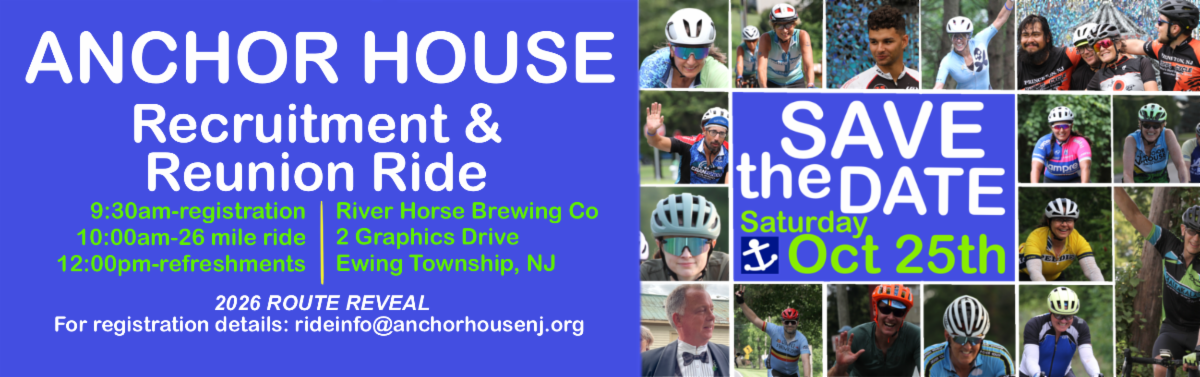
So first let’s talk about demographics. As you might remember, during the “stand-up” drill at the banquet, the majority of the participants were between 40 and 60. After working on this Ride for many years, it has come to my attention that 20-30 somethings aren’t REALLY the group that is attracted to a ride like this and/or will STAY with it for more than two or three years. First of all, they work FULL TIME, some at multiple jobs. (Yuk). Next, they spend their weekends and evenings at soccer games, dance recitals, sesame place, and chuckie cheese. They MIGHT join the Ride for a yr or 2–which is a wonderful thing– but then realize that they are way too busy to become lifers. 


HAVING SAID THAT, we still need to add younger participants. I think it's an enthusiastic, exuberant, and nifty idea to form a subcommittee to find some. I definitely need to check with the Ride Big Cheeses, but consider it “almost” done. 


Thanks for the idea.


Are you having problems viewing these emails with Outlook when using your computer?

Does some or all of the text appear wider than your screen and you have to scroll to the right to see the end of a sentence? You're not alone.


You need to 1) change a setting in Outlook and then 2) close and open Outlook. The change to the settings does not hold unless you close and open Outlook.


(An alternative to changing the settings, you can also click the View as Webpage link at the top of the email.)


To change the setting in Outlook, go to File, then Options, then Mail. Scroll all the way down.


Under the Message Format section, add a checkmark to "Reduce message size by removing format information not necessary to display the message."


Close and open Outlook.