|
Stay tuned! We visited a local Dairy Farm!
|
|
2.
Background Building Links
|
Learn About the Dairy Food Group
|
|
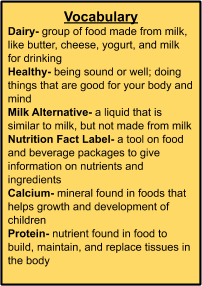
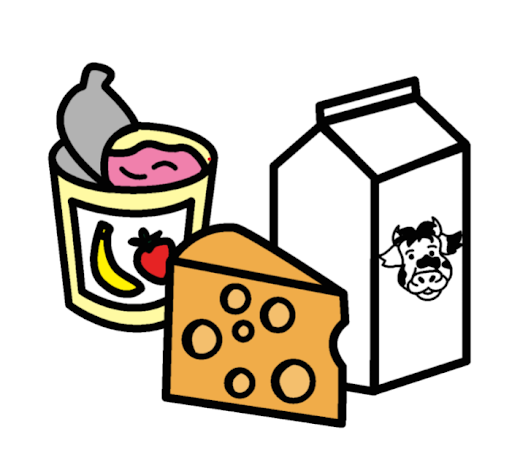
The group of food made from milk--such as butter, yogurt, and cheese--is known as dairy. Dairy foods have many benefits.
Click the link below to learn more about the benefits of dairy foods!
|
|
Try one or all of the activities below!
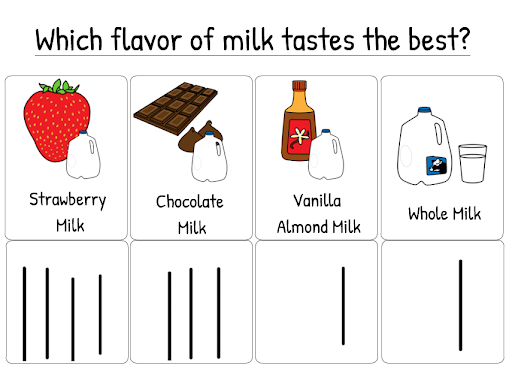
Survey each class or family member asking their favorite of all the options. Following the example, use tally marks to record responses.Use counting to interpret the data. Which milk was liked the most? Which milk had the least likes?
To extend the discussion, ask if different kinds of milk would be better paired with other foods. For example, which milk is best for cereal? Which milk should we use to make mashed potatoes? How would chocolate cheese or strawberry butter taste?
|
-
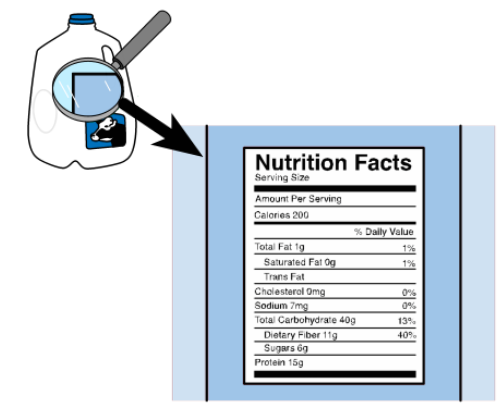
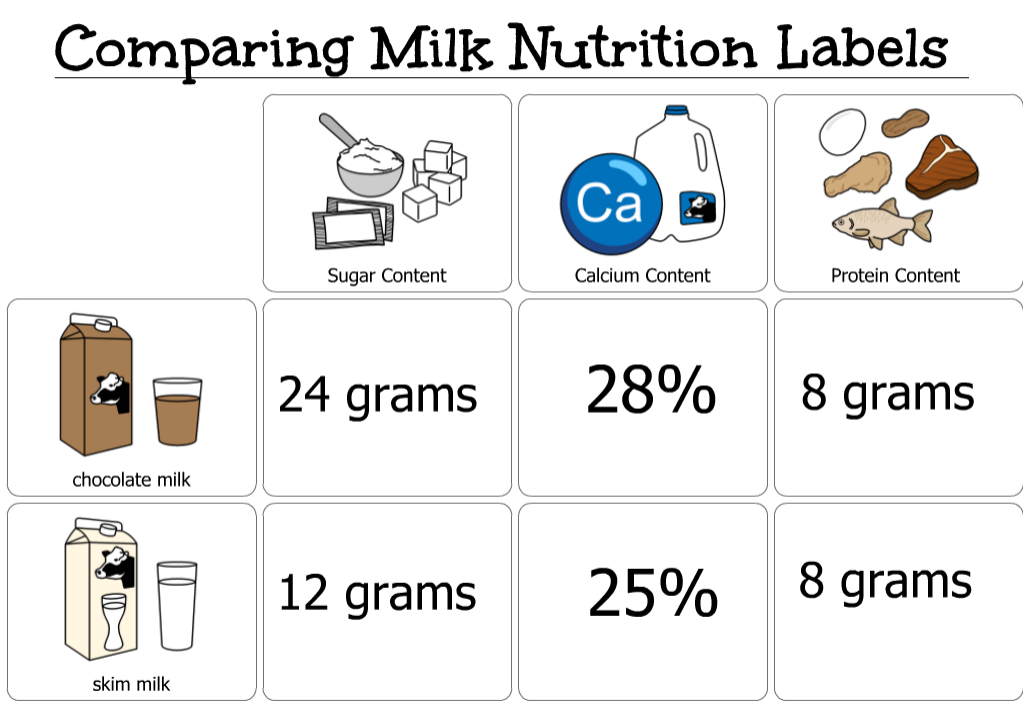
Milk's nutrition fact labels can be found by purchasing the different kinds of milk, looking at them while at the grocery store, or searching online.
-
What nutritional facts--total fat, calcium, sugar, or protein-- does your childcare site or family value?
-
Using the example chart as a guide, write down the values to be compared, and the corresponding numbers found.
-
Together compare the size of the numbers (larger or smaller) and explain the health information, such as calcium is healthy for our bodies as it helps our bones grow; the ones with more calcium are better choices.
-
CATCH.org recommends using GO, SLOW, and WHOA to describe the nutritional value of foods.
|
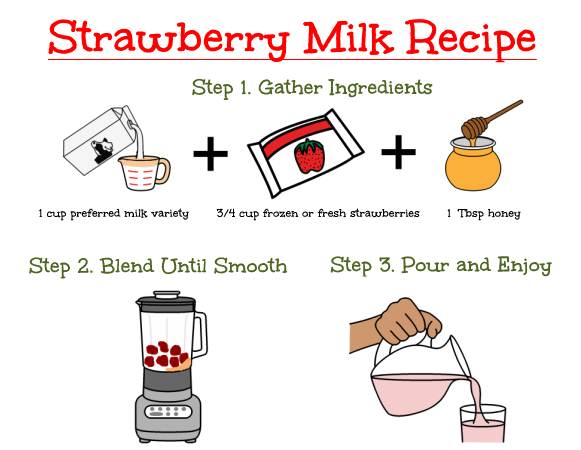
3. Science Through Cooking
|
|
*Remember to consider food allergies and d
on't forget to share a video or picture with
#ELCManatee or #LearningFromAfar!
|
|
|
|
Focus Standards: 4 Years to Kindergarten
Domain I: Physical Development
D. Health and Wellbeing - Feeding and Nutrition
Domain 4: Language and Literacy
C. Vocabulary- Shows an understanding of words and their meanings
-
Understands or knows the meaning of many thousands of words including subject area words (e.g., science, social studies, math, and literacy), many more than he or she routinely uses
Domain 5: Mathematics
A. Number Sense
F. Measurement and Data
-
Represents, analyzes, and discusses data (e.g. charts, graphs, and tallies)
-
Begins to predict the results of data collection
Domain 6: Scientific Inquiry
A. Scientific Inquiry through Exploration and Discovery- Uses senses to explore and understand their environment
C. Physical Science
-
Benchmark C. Distinguishes between the properties of an object and the properties of which the material is made (e.g. milk and butter)
-
Benchmark D. Investigates and describes changing states of matter - liquid, solid, and gas
|
|
|
|
|
|