This week's edition focuses on the UN Climate Change Conference COP 31, taking place November 9-20. This conference brings together governments and other stakeholders from around the world to assess progress and strengthen efforts to address climate change. 


Climate change is increasingly affecting human health, species distribution and the ability of Earth's ecosystem to sustain our economic, social and environmental needs. Addressing the climate emergency is a critical conversation in which teachers and students should be actively engaged in.


LSF invited high school students from across Canada to share their perspectives on climate change education. Students were asked: "If you had the opportunity to tell decision-makers one thing about your perspectives on climate change education, what would you say?" Hear what they had to say!


This week, we invite you to explore the climate change resources and suggested activities with your students. By building climate knowledge, encouraging critical thinking, and inspiring meaningful action, we can empower students to become part of the solution and help shape a more sustainable future.


Our Home, the Planet Earth

Grades K-3

Our Home, the Planet Earth is the first of ten episodes that aim to teach students more about climate change and positively influence their lifestyle to help reduce greenhouse gas production and limit climate change. In this episode, students will be introduced to climate change from a scientific point of view.


Activities

  • Use this video to introduce climate change and spark discussion among your students. Have students try the bonus experiment at home or at school and complete the quiz to test their understanding of the episode
  • Get outside and play Maple Trees and Marmots, a role playing game for younger elementary students where students learn the effects of climate change on animals and plants. 
  • Get outdoors and play Racing for Resources students learn how they can make responsible choices with the natural resources

Lily and the EcoClub to the Rescue

Grades 4-6

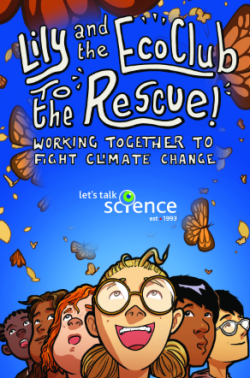
This story follows 10-year-old Lily as she experiences growing eco-anxiety while learning about the impacts of climate change on the world around her. Concerned about the future, Lily researches climate change online and discovers troubling information about global warming, melting ice caps, rising sea levels, and wildfires. At her small Canadian elementary school, Lily joins the Eco Club, where students work together to explore solutions and take action to address climate change.


Activities

  • After reading the story invite students to form an Eco Club, identify an environmental issue in their school or community, and work together to develop and implement an action plan to address it.
  • Become acquainted with the concept of reusing and create your own reusable bags using old clothing items
  • Write letters to your principal, city councillor, or member of parliament about a transportation issue that the students would like to see change. Some examples include requesting more bike racks so that more students can bike to school or creating a carpool lane at the school drop-off zone
  • Words with Strings has students collaborate on climate solutions.This activity teaches students that we must work together to take action on climate change

Evidence of Climate Change

Grades 6-10

This activity engages students in investigating concrete signs of a changing global climate. Through documentary analysis and group work, students explore diverse forms of data, from personal stories to scientific sources, to understand the nature, causes, and global impact of climate change.


Activities

  • Begin a discussion on climate change, by asking each student to share one observation, photo, news item, or family comment that they think shows climate change—for example, “It hardly snows here anymore.”
  • Create an anti-idling campaign at your school and make students and parents aware of your school's no-idling zone
  • Get outside and play Climate Balloons to learn how the North American lifestyle contributes to climate change and threatens the survival of those living in the developing world
  • Try your hand at Climate Change Dodgeball, a great introduction activity before a climate change discussion

Canada in a Changing Climate

Grades 9-12

This resource encourages students to think critically about the impacts of climate change and explore meaningful adaptation actions. Students learn how climate change is affecting youth across Canada and examine the social and environmental impacts of individual and community actions. To conclude the lesson, students develop practical strategies to support climate change adaptation within their school and community.


Activities

  • Invite students to share how they have experienced climate change in the world around them, including changes to the places they love, the activities they enjoy, or their daily lives. Ask students to identify ways they could adapt to the climate change impacts they have discussed.
  • Complete the You Are What You Wear lesson plan to calculate the distance your clothes have travelled. Have students calculate the distance of the clothes they are wearing
  • Have students design an eco-friendly home as a class. The concept of the lesson plan is to design an eco-friendly home and calculate what it would cost and which way would be the most cost efficient. As a class, map the first floor of one of the homes designed on the gym floor or outdoors, design an obstacle-course styled activity based on doing household movements for classmates to promote exercise
  • Calculate your personal plastic consumption, then use suggested tips to help break free from single-use plastics!

About Learning Inside Out


Above you will find a selection of activities, broken down by various grade levels. These guides will be released biweekly and archived on our Learning Inside Out page, so you can always access the full catalogue.


Some of the activities have been modified from resources on our R4R database, simplified and adapted for both outdoor learning in the school yard or at-home as needed. The activity descriptions above should contain all the information and links that you need!


We want this guide to work for you, so your feedback is invaluable to us.

Please complete the feedback form below, or email us at info@LSF-LST.ca.


Follow us on social media for continued weekly highlights & other exciting opportunities through the school year!

Facebook  Twitter  Instagram  Linkedin  

Please share widely with any parents and teachers in your life!

Learning for a Sustainable Future (LSF) is a Canadian charity with over 25 years of experience working within the education system. Our Resources for Rethinking (R4R) database is an award-winning collection of resources that are peer-reviewed by certified teachers and connected to curriculum in all provinces and territories. R4R is recommended on many Ministry of Education websites.