Learning Student's Names

✤ January 23, 2026 • CTL Article 0006 ✤

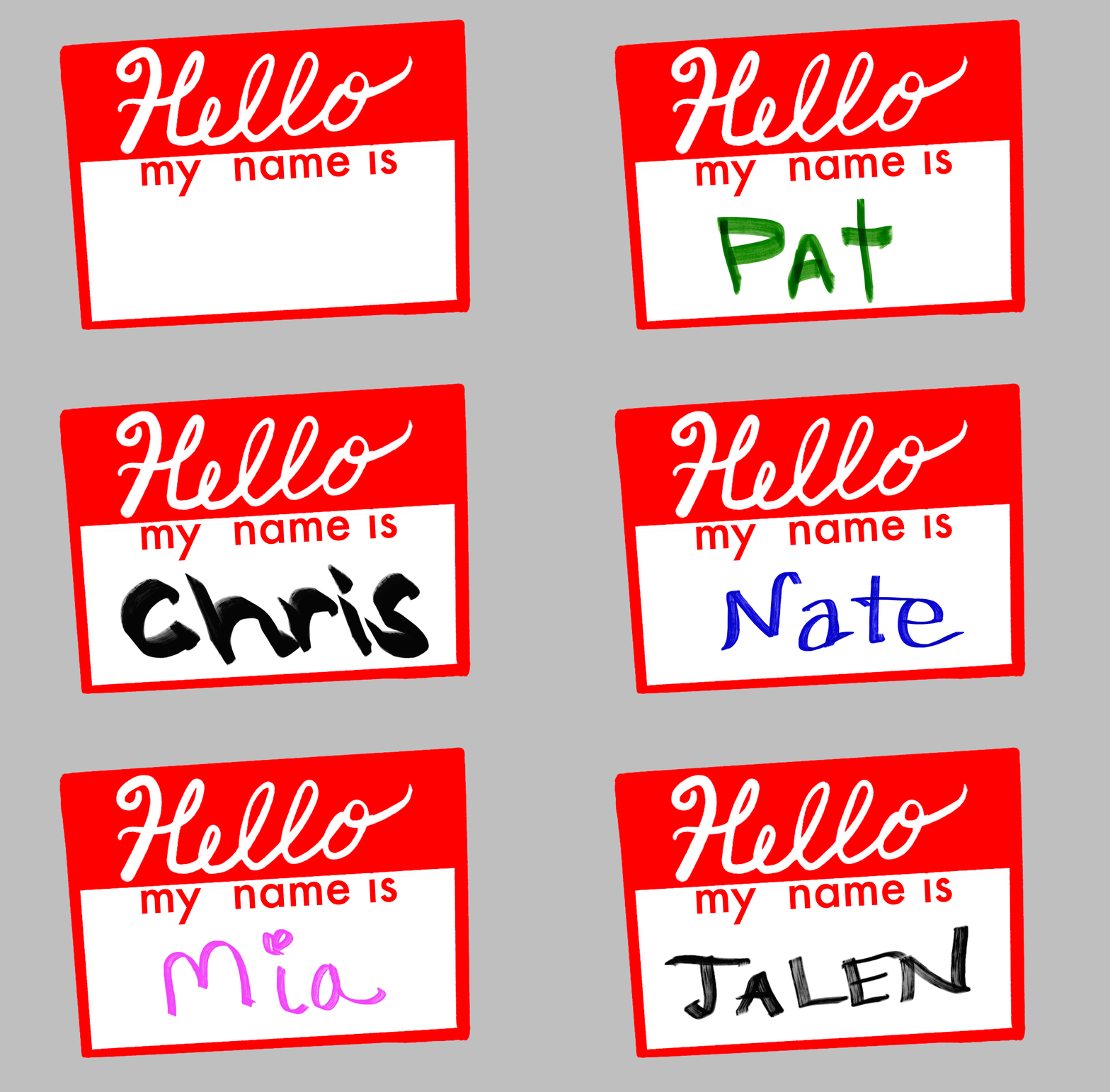
"Hello My Name Is" nametag sticker with rotating names written in marker.

First, a Moment of Vulnerability...

Maybe you are like me—you start a new semester as prepared as you can be (maybe even too prepared), but then on day one, class one, you're quickly knocked down a peg when you're reminded of how daunting it is to learn the names of all the new faces in your classes.


I find myself starting a lot of my classes with a shameful disclaimer: “It’s going to take me 8–10 weeks to get to know your names. Please know that doesn’t mean I don’t care about you or don’t want to get to know you—it just means I’m bad at remembering names”.


As a colleague of mine, maybe you’ve noticed I address you as “hey” instead of saying your name (it’s because I don’t remember your name—I hate myself for that).


In the spirit of embracing a growth mindset, I’ve decided it’s gotta stop. Is this new aspiration to get better at name learning wishful thinking? Perhaps. Let’s research!

Research

Did you know there is an entire field about the intersection of memory and language processing? Psycholinguistics. The discipline is mainly concerned with the mechanisms by which language is processed and represented in the mind and brain—that is, the psychological and neurobiological factors that enable humans to acquire, use, comprehend, and produce language. We’ll be leveraging the research from this field.


You know that wildly popular book, How to Win Friends and Influence People? Dale Carnegie says “a person’s name is to the person the sweetest and most important sound in any language”. There is likely some truth to that: we are primed to hear our names and respond to it (though someone should tell my kids that’s how it’s supposed to work).


More importantly, learning the names of our students—and saying them correctly—is a major part of creating a supportive learning environment in which we acknowledge who our students are as individuals and the places they see themselves fitting into the world.


Research also back up the idea that hearing their names used makes students feel more engaged and supported by their instructors. A study that polled students in a large science course on the perceptions of name usage found that 85% felt as though instructors knowing their names was important. They feel more valued. They feel as though they are more than just a face in the crowd. (What’s in a Name? The Importance of Students Perceiving That an Instructor Knows Their Names in a High-Enrollment Biology Classroom)

Memory

Having trouble learning names is the rule, not the exception. It’s all about how (most) brains work. Names are more or less arbitrary labels. They don’t come with any spontaneous associations that would help us remember them (outside of other people we might know with the same name, or celebrities, or cultural nuances).


We move through a familiar process when trying to remember something:

  1. Encoding - what happens in our brain to create a lasting impression of information in the memory
  2. Storage - leaving the newly encoded information alone until we need it again
  3. Retrieval - the process of reactivating the memory that we’ve stored.


Phonological Working Memory (PWM) kicks in when you hear a brand-new word. It buys you time to setup a representation in your mental lexicon—things like what the new word means and, in the case of a name, who it stand for. This process involves connecting the sound of the name to related aspects of what you know about the person, such as their face, the context you know them from, and any other meaningful facts.

So, How Do We Get Better at Remembering Names?

Michelle D. Miller’s A Teacher’s Guide to Learning Student Names (available to borrow from the CTL Resource Library) outlines the ASAR method:

  • Attend: Noticing focus—focusing when we are introduced to someone as a simple but essential habit to build.
  • Say: (Output Phonology) This is the weakest link in name recall. Strengthen it by using the new name at least twice right away. This also gives you a chance to correct any mispronunciations—important to do before names get ingrained. Don’t be shy about asking “Did I say that right?” And invite the person to correct you.
  • Associate: Start building connections relevant to the person you’re trying to remember. The best associations link something easy to remember about the person with a specific aspect of their name. Mental imagery tends to be a lot more memorable than sounds. Mnemonic tricks work well as initial supports, fading away seamlessly as the new knowledge solidifies. 
  • Retrieve: Newly learned names last only if you using them—ideally by pulling them out of memory. Actively retrieving a memory is the best way to strengthen it.


Sidenote: This ASAR method is absolutely applicable to how students learn anything new. Consider pulling back the curtain on this process and letting students know that the effort we place in learning each other’s names is the same kind of effort we can use to learn x, y, and z.

Introduction Icebreaker Exercise

Tell the class that you are going to go around the room and have people introduce one another. Instead of introducing themselves, people will pair up and introduce their conversation partners. They'll gather basic information about their partners. Set an 8–10 minute timer. Each pair should take turns asking each other a few questions with the goal of ensuring that they can say few words about their partner—including their name.


An obvious perk of this exercise is that students also get to know each other—a win-win!


As the instructor, you can focus on the ASAR method while this exercise is going on and even get in some pre-studying by looking at your class roster with pictures. If the confidence is there, you can test yourself in front of the class by naming as many students as you can (don’t let them know that you cheated by studying the roster).


Variation to the Introduction Icebreaker:

Go around the room and ask students to tell you something about the meaning of their names—the origin, original meaning, or why their family chose it. Invite them to share nickname preferences and any stories behind them too.


⚠️ Caution ⚠️

Students with names perceived as “unusual“ by the dominant culture have probably already had bad experiences with teachers in the past, and the impact of whatever you say will be amplified in the social spotlight of a classroom. Egregious mispronunciations aren’t the only possible blunders. Even worse are commenting on the perceived difficulty, anglicizing, outright changing the student's name, or refusing to try altogether. Avoiding these missteps is well worth the effort. An educator who learns to correctly pronounce a student’s name signals respect and validate the student’s culture. Make use of a quick internet search for the pronunciation of a new-to-you name—there are plenty of sites, apps, and tools to help!

Resources

This newsletter was formulated primarily from the valuable insight shared in A Teacher’s Guide to Learning Student Names: Why You Should, Why It’s Hard, How You Can By: Michelle D. Miller.


‼️ Available to borrow in the CTL Resource Library.

I’d Love to Hear From You!

Your thoughts and suggestions are important. If you have any feedback on this newsletter, success stories from adopting these ideas, or insight on future content, please take a moment to share your thoughts. Your input can help make each release better and more relevant to you!

Gary Meacher, MFA

Founding Director of The Center for Teaching & Learning

CTL@quincy.edu

FRH 135

-----

meachga@quincy.edu

217-228-5432 (x3151)

FRH 344