|
May 2026
Fun activities, aligned with the Pennsylvania Early Learning Standards,
to help prepare children for school success!
| | We're learning in the grocery store! | |
Babies
Select different food items as you prepare a meal and describe to your baby what they are seeing. Use different words to describe the colors, shapes, smells, and noises they may experience. Tell them what you plan to do with the items. Use facial expressions to enhance your experiences.
Toddlers
With items in your pantry or cabinet, have your toddler help identify which item is largest, smallest, heaviest, etc. For example, compare the size of a lemon and a grapefruit or a can of soup and a can of tuna, and help them decide which item is larger or smaller.
Preschoolers
Talk about grocery items that were purchased and are now at home. Help your preschooler describe each item — hard, soft, rough, smooth, red, green, etc. How many different words can they use to describe the item? Create a shopping page on paper or a tablet with pictures and descriptive words.
Kindergartners
Have your kindergartner create a grocery list. Draw or cut out different types of food from a magazine. Talk about where different foods come from--do they grow in the ground, on a bush, or on trees--and if they are fruits, vegetables, meats, etc.? Which item is their favorite to eat?
Get more activities at Learning is Everywhere: May – PA Promise for Children.
| |
11 books about the grocery store
Grandpa's Corner Store by DyAnne DiSalvo-Ryan
Out and About at the Supermarket by Kitty Shea
Put It on the List by Kristen Darbyshire
A Visit to the Supermarket by Blake A. Hoena
Our Corner Grocery Store by Joanne Schwartz and Laura Beingessner
A Busy Day at Mr. Kang's Grocery Store by Alice K. Flanagan
To Market, To Market by Anne Miranda
Shopping with Dad by Matt Harvey and Miriam Latimer
What's in Grandma's Grocery Bag? by Hui-Mei Pan
Just Shopping with Mom by Mercer Mayer
Maisy Goes Shopping by Lucy Cousins
Print this list!!
| |
What can you do with the monthly book lists?
Each month Learning is Everywhere provides a list of books that complement the activities. What can you do with this list?
-
Make a short video of your child reading or giving a book review of one of the books on the list. What was their favorite part of the book? Share the video with family and friends. Tag PA's Promise for Children on Facebook or Instagram!
-
Share the list with your friends who have children. You can forward this email to them, or they can sign up to get the email.
-
If you are a teacher, print this list and give it to the families of your students, or post this list where families can see it. They'll know which books are being read in your classroom.
-
If you are an early learning community partner, host a special reading event for families using the monthly book lists. Each month has a different focus--find them at PA's Promise for Children. Include an activity from the monthly list to engage families.
-
Print the list and take it to your local library. Your librarian can help you find the books on the list. Then read the books with your child. Help your child circle or cross out the books on the list as you read them.
How do you use this book list? Share on PA's Promise for Children, the Facebook page, or send it to Mary at marhal@pakeys.org.
| |
Enroll Now for PA Pre-K Counts
Quality pre-kindergarten can give your child a strong start in school and life. Pennsylvania Pre-K Counts provides free half-day or full-day pre-kindergarten for at-risk children throughout Pennsylvania.
Children and their guardians must meet the following requirements to be eligible for the PA Pre-K Counts program:
- They must be residents of the Commonwealth of Pennsylvania
- They must meet the income eligibility requirements of at or below 300% of the federal poverty level for their family size
- The child must be between the ages of 3 and younger than the kindergarten entry age for the district in which they reside.
Once these eligibility requirements are met, enrollment procedures are based on local community needs. These procedures may contain other considerations for enrollment, such as diagnosed disabilities or developmental delays, English as a second language, or any other factor that the program deems a priority to ensure that their communities’ needs are being served.
There are PA Pre-K Counts classrooms in many Pennsylvania counties. If you would like to find PA Pre-K Counts programs near you, contact your local Early Learning Resource Center (ELRC), which can help you locate your local PA Pre-K Counts program. Find your ELRC at raiseyourstar.org.
| |
Celebrating 20 Years of Supporting Young Children and Families in Pennsylvania
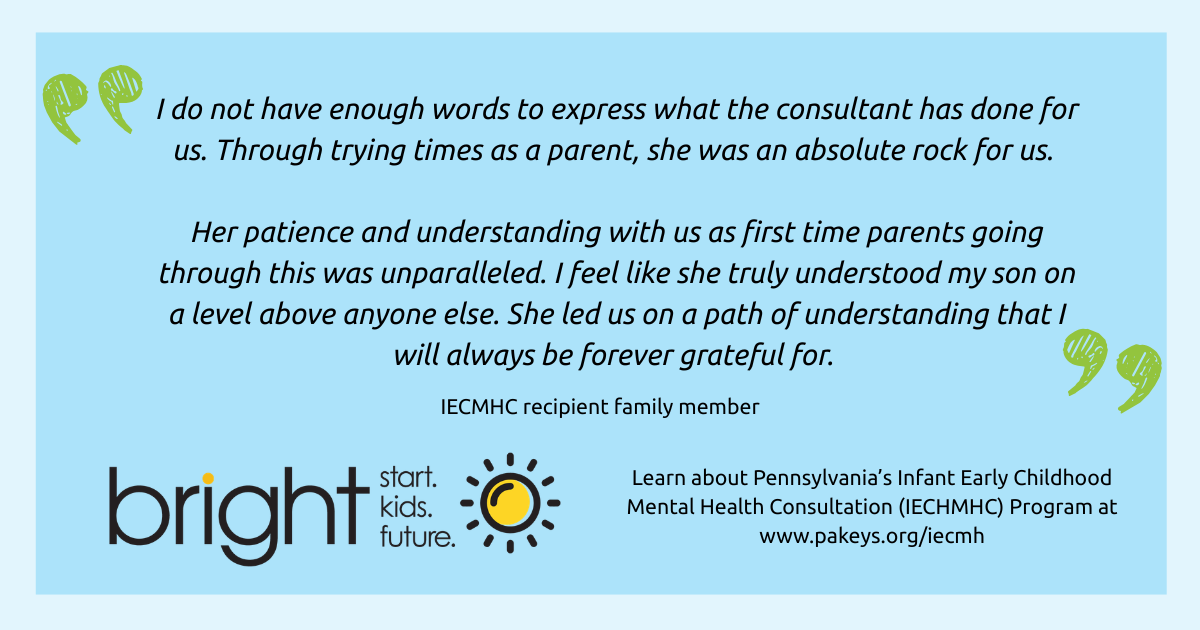
In May 2026, Pennsylvania’s Infant/Early Childhood Mental Health Consultation (IECMHC) program proudly celebrates 20 years of supporting young children, families, and the early childhood professionals who care for them every day.
For two decades, IECMHC has worked alongside Pennsylvania child care providers, educators, and families to help young children build strong social and emotional skills, the foundation for lifelong learning and healthy relationships. Caring consultants partner with adults in children’s lives to strengthen positive caregiver-child connections, support nurturing classroom environments, and better understand children’s feelings and behaviors. Together, they work to ensure every child has the opportunity to grow, learn, and thrive. Learn more.
| |
World Play Day – Thursday, May 28
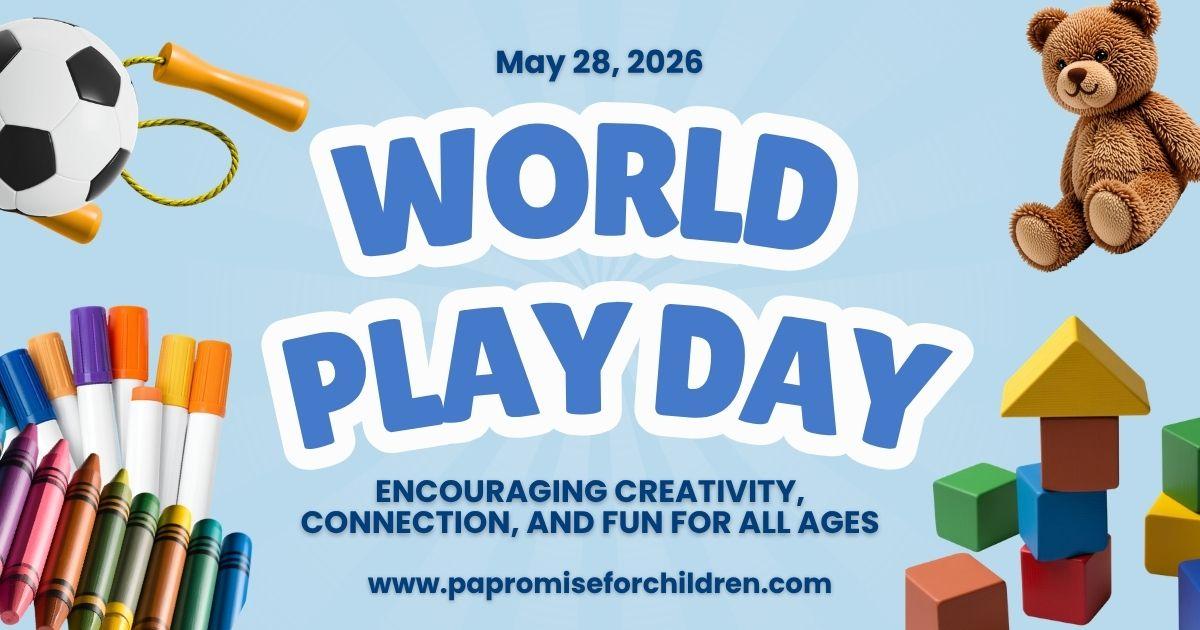
Play is powerful—and fun! On World Play Day, Thursday, May 28, families are encouraged to celebrate the important role play has in children’s growth and learning.
Through play, children develop social skills, creativity, language, and problem‑solving abilities, while also building strong connections with the adults in their lives. Learn more about why play matters at 👉 The Importance of Play – PA Promise for Children
The best part? Play doesn’t require special toys. Everyday items can turn ordinary moments into learning opportunities—whether it’s sorting kitchen utensils, building with boxes, or playing outside. Find easy, everyday activity ideas at 👉 Learning is Everywhere – PA Promise for Children
This World Play Day, take time to slow down, join in, and enjoy learning through play together!
| |
Watch the PA One Book Recorded Author Visit
Enjoy the recorded 2026 PA One Book Virtual Author Visit featuring Jessica Shaw, author of The Great Cookie Kerfuffle. This lively session brings the story to life as Jessica shares insights from her book, discusses the creative process, and engages young readers with warmth and humor.
The video will remain available through July 19, 2026, so watch, rewatch, and share the experience with your classroom, library, or family reading time. Watch the video on the Pennsylvania One Book website.
| |
Reading 101: A Bilingual Guide for Families
One of the most important gifts families can give their children is to help them learn to read and write. Learn how families can support their children's reading and literacy development at different ages and stages. Explore the guide in English or Spanish.
| |
Explore, Learn, Play: Pennsylvania’s Geo‑Trail Adventure
Pennsylvania is inviting families and adventurers of all ages to explore its beautiful state parks in a fun new way! A GPS‑based scavenger hunt called Geo‑Trail encourages visitors to search for hidden “caches” while learning about Pennsylvania’s rich history.
The Department of Conservation and Natural Resources (DCNR) recently announced the program, which runs through March 2028. This free, family‑friendly geocaching adventure includes 25 caches tucked away in state parks across Pennsylvania. Each stop shares an interesting story from the state’s past as part of the celebration leading up to America’s 250th anniversary.
A GeoTrail is a group of geocaches connected by a shared theme. This one helps families discover new parks, enjoy time outdoors, and learn something new along the way.
Learn more and find a Geo‑Trail to start your adventure!
| |
The Importance of Independent Play
Sara, 18 months old, stacks blocks on top of each other, knocks them down, then builds them again.
Chen, two and a half years old, takes books off the shelf, looks through pages, and shares stories with stuffed animals.
Jamal, four years old, hooks play trains together and runs them along imaginary paths.
What do all of these have in common? They’re all examples of independent play!
Research has shown the importance of play. Play can enhance brain structure and function and promote executive function (the process of learning). While interaction with adults and other children during play builds essential cognitive, language, and self-regulation skills, independent play also has benefits. When a child plays alone, it can foster imagination and creative play, build persistence and problem-solving skills, and teach patience and resilience. Discover how you can help your child develop independent play skills.
| |
Spring Activities Scavenger Hunt
Active for Life has a fun spring scavenger hunt printable to have on hand the next time you and your family go outside to visit a park, nature trail, playground, or even your own backyard. There are 25 separate outdoor activities on this printable. You and your child can do them all in one day or spread them out over time.
| |
Health Trends in Early Childhood Education: Preventing Lead Poisoning in Young Children
Lead is highly toxic to neural development in infants and young children. Exposure to lead in older housing, water infrastructure, and air pollution continues to adversely affect families, especially in low-income communities. The May 2026 Health Trends in Early Childhood Education focuses on Preventing Lead Poisoning in Young Children. Lead exposure can cause permanent damage to the developing brains of fetuses and children, as well as a host of additional life-long impacts to health. Learn about the risks of lead poisoning and get resources to help keep children safe.
Each month, Health Trends in ECE shares information about a recent health trend, helping readers understand why it is important. Discover the impact it has on children, their families and caregivers, and the community, as well as actions to take to ensure the health and well-being of children in our communities.
| |
National Children's Mental Health Awareness Month
May is National Children's Mental Health Awareness Month, a time for everyone to learn about and promote positive youth development, resilience, recovery, and the transformation of mental health services delivery for children and their families.
Children’s mental health is important because it affects their thoughts, feelings, and behavior. It can impact areas like:
- Foundation for Lifelong Well-being
- Academic Performance
- Social Relationships
- Physical Health and more!
How can you help support your young child’s mental health? These resources and supports are collected by PA's Promise for Children.
Pennsylvania CHIP provides care for children by covering behavioral health care. Visit CHIP | Department of Human Services | Commonwealth of Pennsylvania for more information about CHIP.
| |
Keeping Your Kids Safe from Tick Bites
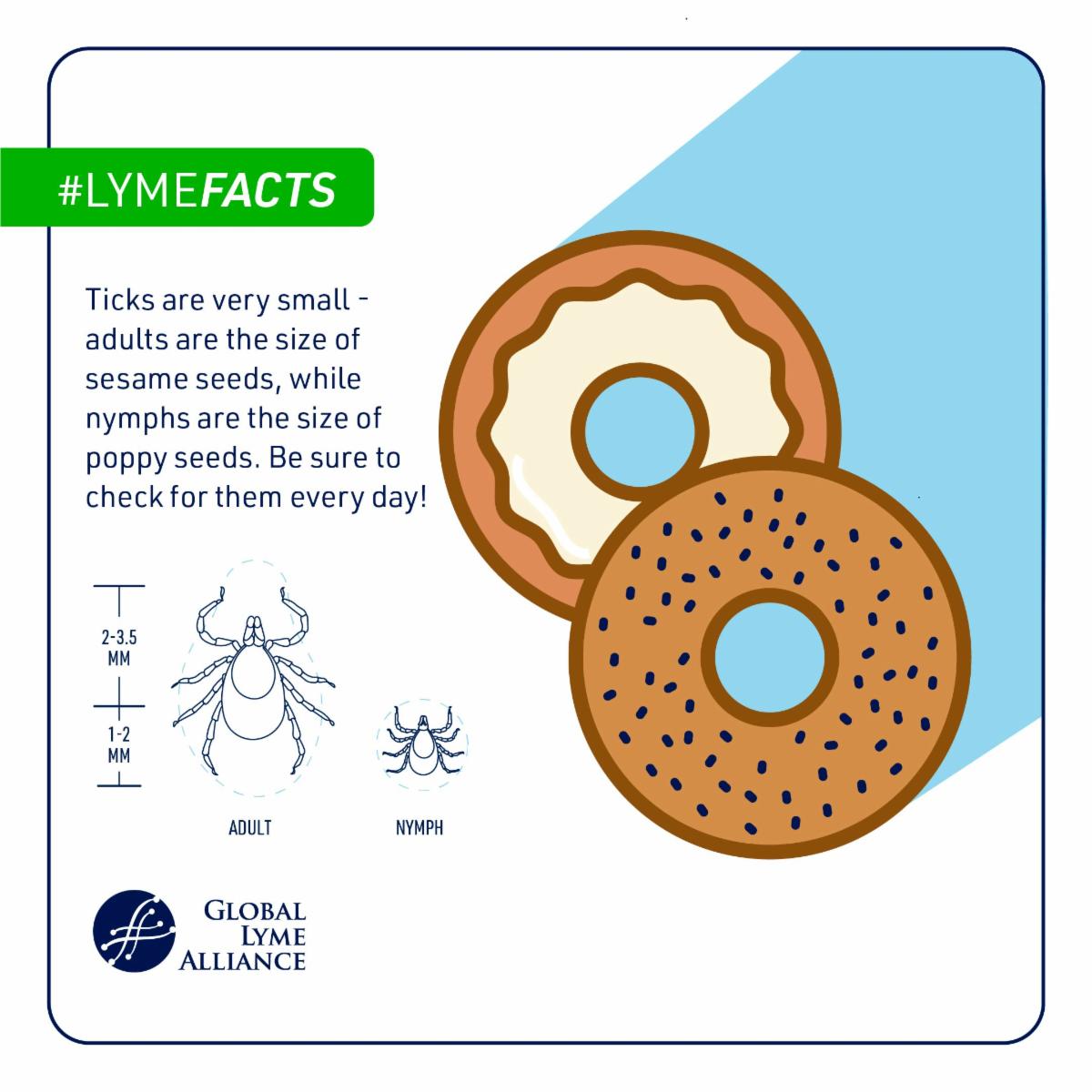
As warmer weather brings us outdoors, it’s important to remember that ticks are more active during the spring and summer. These tiny pests can carry diseases, so protecting your children from tick bites is crucial. Here are some simple tips to help protect your child:
-
Dress for Protection: When heading out for walks or hikes, dress your child in light-colored clothing. This makes ticks easier to spot. Long sleeves, long pants, and tucked-in socks can help keep ticks away from the skin.
-
Use Tick Repellent: Apply insect repellents that are safe for children, especially on exposed skin. Look for products containing 20-30% DEET or those specifically labeled for tick prevention.
-
Stay on Trails: Encourage kids to stay on well-maintained paths and avoid brushing against tall grasses or bushes, as ticks tend to hide in these areas.
-
Check for Ticks: After outdoor play, carefully check your child’s skin, especially in warm areas like behind the ears, underarms, and the waist. The sooner a tick is removed, the lower the risk of illness.
-
Shower After Outdoor Activities: A quick shower after outdoor adventures can help remove ticks before they can attach.
Following these simple steps, you can help ensure your children have a fun, safe summer while keeping ticks at bay!
Have you been bitten by a tick? The Pennsylvania Tick Research Lab can analyze your tick, testing for tick-borne diseases such as Lyme disease, anaplasmosis, and Rocky Mountain spotted fever. Order your test online and learn whether you’re at risk before symptoms appear.
| |
Watch: Videos to Help Preschool Kids Recognize Their Emotions
The Healthy Minds, Thriving Kids Pre-K Project is a video series based on mental health research created to make important mental health skills available to preschool children (ages 3 to 5). These videos introduce important ideas and teach how young children learn best through entertaining, relatable stories set in a vivid, imaginary world. Each video features a memorable song that reinforces the key messages.
Watch the complete series with your child. You can also download the free companion guides, which summarize key ideas and include activities to help kids practice the skills they’re learning. For older children, explore more free evidence-based video resources for K-12. Each video in the series is available in both English and Spanish.
| |
Calendar of Activities for Early Learning Providers
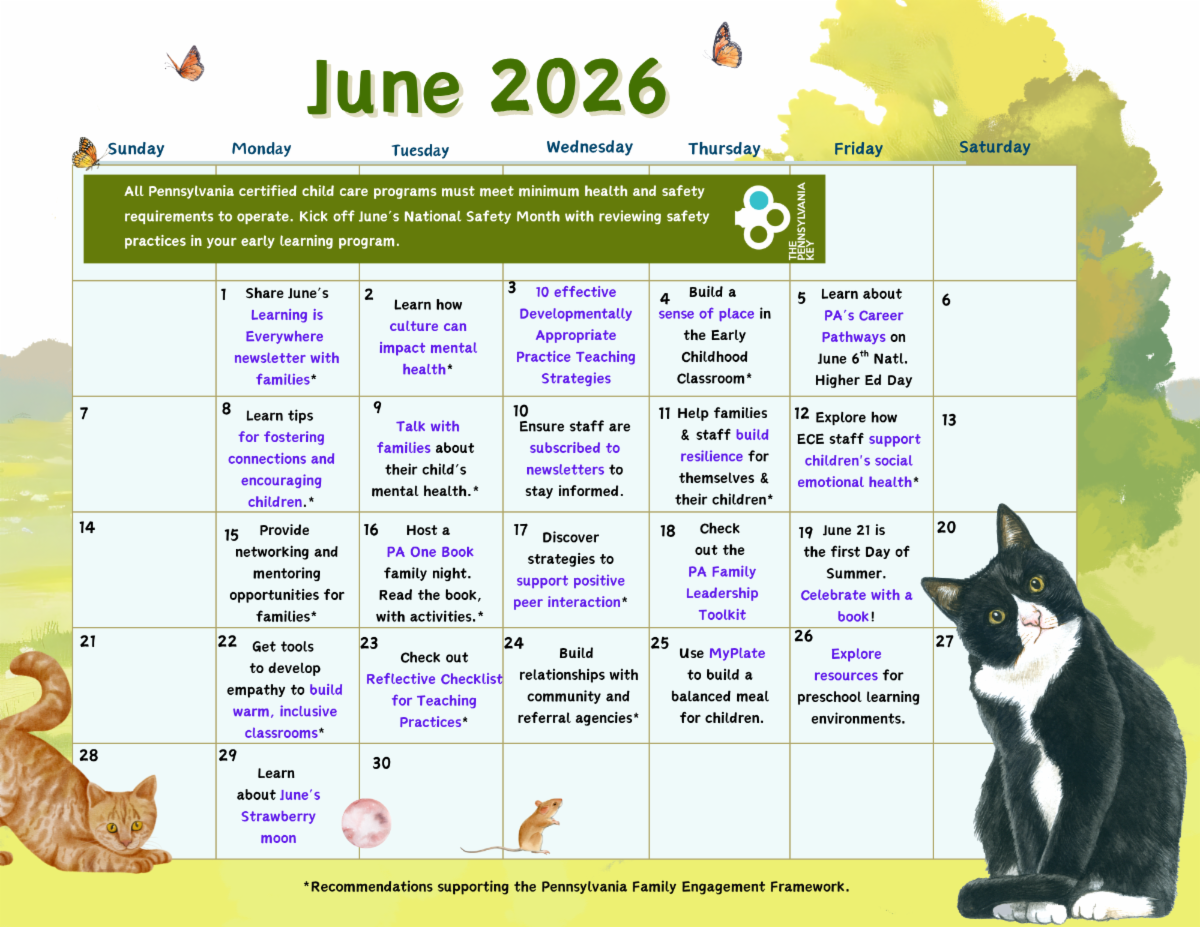
Did you know that all Pennsylvania-certified child care programs are required to meet essential health and safety standards to operate? With June marking National Safety Month, it’s the perfect time to take a fresh look at your program’s safety practices and ensure your environment is ready for a safe, successful summer. Check out the June Calendar of Activities designed specifically for you, with activities and information to help prepare children and their families for school success.
Still need some ideas for May? The May Calendar of Activities for Early Learning Professionals is still available!
| | | | |