|
September 2026
Fun activities, aligned with the Pennsylvania Early Learning Standards,
to help prepare children for school success!
| | We're in the Living Room! | | |
Babies
Put on music or sing a nursery rhyme and help your baby clap hands, wiggle feet, bicycle legs. Show and help your baby to clap hands, wriggle fingers, twirl, and bob up and down. Get more at PA's Promise for Children!
Toddlers
Save clean containers of all shapes and sizes, like yogurt containers, margarine tubs, and plastic spice jars, for your toddler to play with. Talk about which ones are big and which are little. Encourage and help them put the small container inside the big container or add items (like blocks) into the containers. Talk about when the items are in the containers and when they are out. Let them practice putting the lids on and taking them off. Get more at PA's Promise for Children!
Preschoolers
Low-adhesive tape, such as masking or painter's tape, can be used to create a roadmap in the living room. Working with your preschooler, ask where the roads should go. Will they go over a sofa? Under a table? Behind a chair? Once created, they can use toy vehicles, dolls, or toy animals to follow the roads. Ask where the roads lead and what they will find at the end. Get more at PA's Promise for Children!
Kindergartners
Make giant ice cubes by filling plastic containers with clean yogurt, cottage cheese, or sour cream, then setting them in the freezer. Add a small item to the water-filled container, such as a toy or other small item. Have your kindergartner decide what item will be added. Is it too big or will it fit? Can they see the item once the ice is frozen? Once it's frozen, remove it from the container and use it as an ice puck. Kick or push the ice puck in the grass or a hard area, like a sidewalk. How fast will it melt? What happens when it melts? Provide your kindergartner opportunities to touch the containers, feel the water before and after freezing, feel the weight, and compare the containers empty, filled with water, and filled with ice. Get more at PA's Promise for Children!
| |
12 Family and Friends Books
Ciencia Magica enla sala de estar by Richard Robinson
Please, baby, please by Spike Lee and Tonya Lewis Lee
Who’s in my Family by Robie H. Harris
More More More, Said the Baby: Three Love Stories by Vera Williams
Annie Rose is My Little Sister by Shirley Hughes
Lion in the Living Room by Caelaach McKinna & A. R. Stone
Crazy Hair Day by Barney Saltzberg
Toot & Puddle You Are my Sunshine by Holly Hobbie
Guess How Much I Love You by Sam McBratney
Max’s First Word by Rosemary Wells
Hunter’s Best Friend at School by L. M. Elliott
Harold and the Purple Crayon by Crockett Johnson
Print this list!
| |
Celebrate National Early Literacy Month!
September is National Early Literacy Month, a time to celebrate the important role that reading, talking, singing, and storytelling play in a child’s development. Early literacy skills begin long before children learn to read on their own. Every book shared, song sung, and conversation held helps lay the foundation for future learning and success.
You don’t need special materials or long lessons to help a child develop literacy skills. PA's Promise for Children has easy activities you can do with your child to encourage and support early literacy. Check out the resources for families and early learning professionals and see how you can become an Early Literacy Champion!
Watch the video below for a special message from Shante' Brown, Deputy Secretary for the PA Office of Child Development and Early Learning (OCDEL).
| |
Read Aloud for 15 Minutes Per Day
The start of the school year sets the tempo and often brings chaos in its early days; therefore, it is very important to maintain good habits during this time. Reading aloud for 15 minutes every day can provide a calm moment during a hectic day and help your child develop. Find many useful free resources on the Read Aloud website.
| |
Is Your Family Ready for An Emergency?
September is National Emergency Preparedness Month. Use this month to help your family prepare for emergencies such as floods, fires, winter storms, and more.
Check out these resources to help your family prepare for emergencies.
-
Pennsylvania Emergency Preparedness Guide: This guide will help you become better prepared by learning about different kinds of emergencies, how to create emergency plans and kits for your home, your vehicle, and your workplace, and how to plan ahead if you have a special need.
-
Family Communication Plan for Parents and Kids: Guidelines to help your family determine who would be your out-of-state point of contact, and where you would meet away from your home.
-
Helping Children Cope: Tips to help children recognize their reactions during and after emergencies, and also help children cope with their emotions.
-
Ready Kids: Ready Kids has tools and information to help before, during, and after disasters. Play games, learn about disasters, and get tips to prepare before a disaster strikes.
| |
The Ultimate Back-To-School Guide for Families of Children with Disabilities
The excitement of a new school year is in the air! For parents of children with disabilities, this time brings unique challenges and opportunities. Proper preparation can make all the difference in your child’s growth and success. This blog post from The ARC offers some practical tips to help you and your child start the school year off right.
| |
School Success Kit for Kids with Sensory Processing Issues
Going back to school is an exciting time, but for kids with sensory processing issues, it can be overwhelming. Read about these strategies from the Child Mind Institute to help your child (and you!) feel calm, comfortable, and confident this year.
| |
September Health Trends in Early Childhood: Early Literacy and Children’s Health
September is National Early Literacy Month. This month’s Health Trends in Early Childhood highlights how early literacy helps support children’s health and well-being.
Reading, talking, and learning with young children helps build important skills that support healthy choices and lifelong wellness. Families can encourage early literacy through everyday activities that strengthen learning, communication, and healthy habits.
Health Trends in Early Childhood, a monthly resource from The Pennsylvania Key, explores health topics affecting children from birth to age 5, as well as their families and caregivers. Each edition explains why a health topic matters, its impact on young children and communities, and simple actions families and caregivers can take to support children’s health and development. It also includes trusted resources for learning more.
|
Free Parent Webinar! New Baby, New RSV Season: What Parents Need to Know Now
RSV season is approaching, and families with new babies may have questions about how to protect their infants. Parents and caregivers are invited to join Dr. Jennifer Shu, Medical Editor of HealthyChildren.org, and pediatrician Dr. MaryAnn Garcia-Phillip on September 18 at 1:00 pm Eastern time for a practical conversation about preparing for RSV season. They'll discuss what's new in RSV prevention this season; who should receive RSV immunization and when; RSV vaccination during pregnancy; when to contact a doctor if a baby is sick; and other ways families can help protect their babies. Parents may register using this Zoom link.
|
The Importance of Breakfast for Kids
Breakfast is an essential step in refueling the body for children and adults. Skipping breakfast can make kids feel tired, restless, or irritable, making it harder for them to learn! Breakfast eaters get better grades and score higher on standardized tests. And kids who participate in school lunch programs have fewer school absences.
Kids who eat breakfast also tend to eat healthier overall and are more likely to be physically active — two great ways to help maintain a healthy weight.
This article from KidsHealth offers great breakfast tips to help fuel your kids' bodies and minds and set them on the path to learning.
| |
Five Ways to Encourage Vegetables
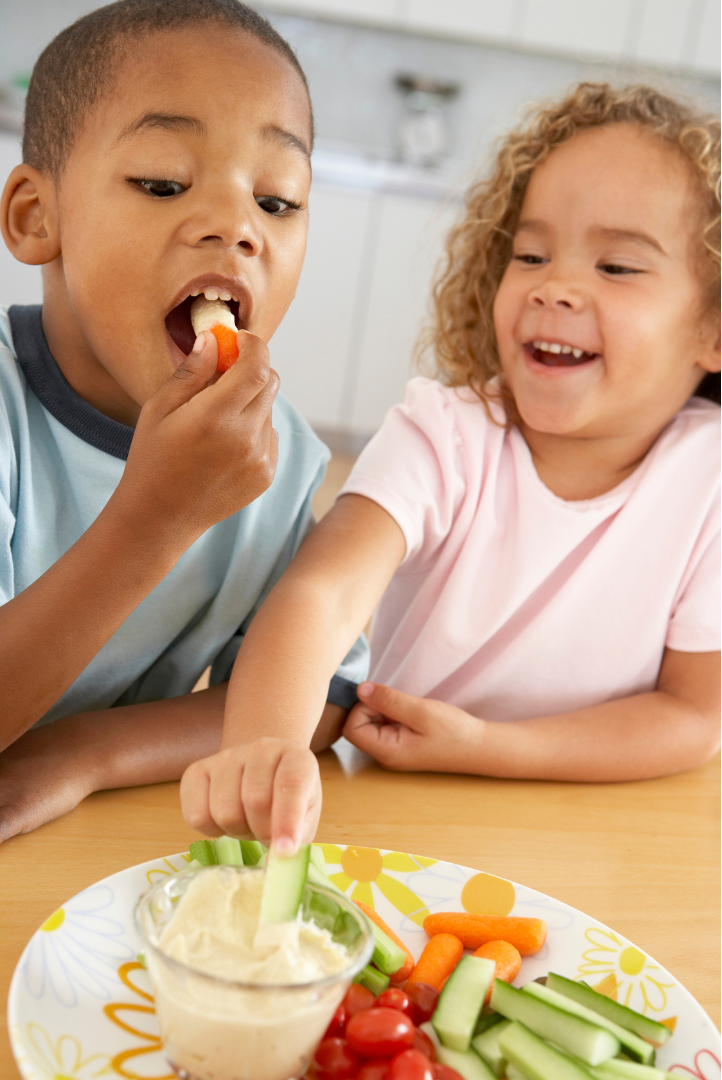
Many young children can be choosy eaters, especially when it comes to eating vegetables. It can take them 10 or more tries before they like a new food. Keep trying – it will help them have healthier eating habits later. Here are five ways to get started:
-
Eat together. Let your child see you enjoying vegetables at meals and snacks.
- Prepare together. Teach your child how to tear lettuce or add vegetable toppings to pizza.
- Get colorful. Choose different colors of vegetables to eat.
- Make vegetables fun. Read about them in books. Plant a seed and watch it grow.
- Share the adventure. Try a new vegetable each week.
Check out the USDA's Nibbles for Health Newsletter, Encouraging Vegetables, for more ideas!
| |
Go, Slow, Whoa
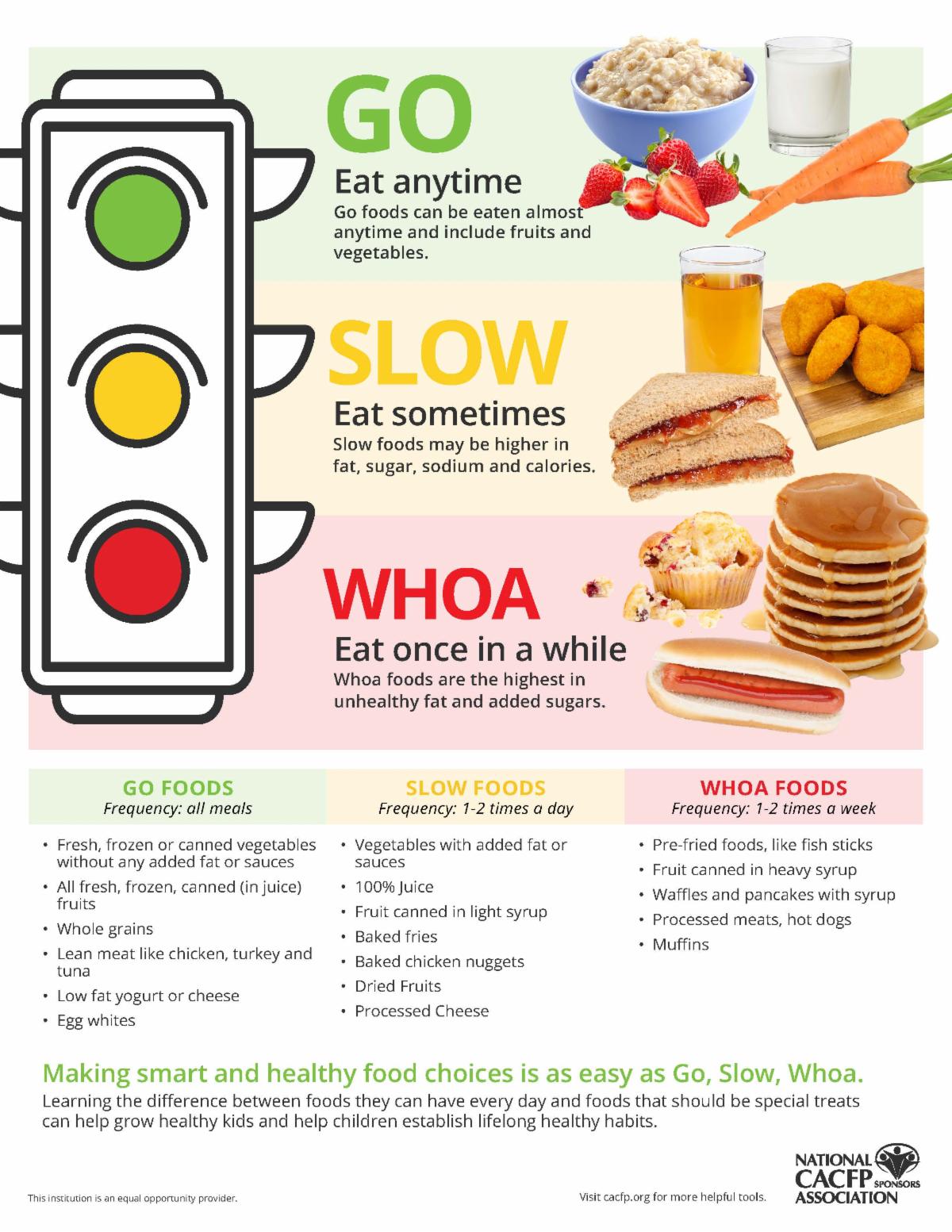
While children are being introduced to new foods, parents and caregivers should also stay informed on what foods their kids should eat anytime, sometimes, or only every once in a while. The National CACFP’s Go, Slow, Whoa handout includes quick tips for caregivers and a coloring activity to help kids understand which foods are good for their bodies.
| |
Free Mobile App - Vaccines on the Go: What You Should Know
It's easier than ever to get health information. But sometimes, it’s difficult to weed out the good, scientifically accurate information from the bad information, which is not based on science. This is especially true for vaccines.
To provide the public with information about vaccines' science, safety, and importance, the Vaccine Education Center at Children's Hospital of Philadelphia (VEC) has a popular, award-winning mobile app, Vaccines on the Go: What You Should Know. Anyone can access vaccine information wherever and whenever they need it.
| |
Brain Smart Start Guide: Free Download for Educators & Parents
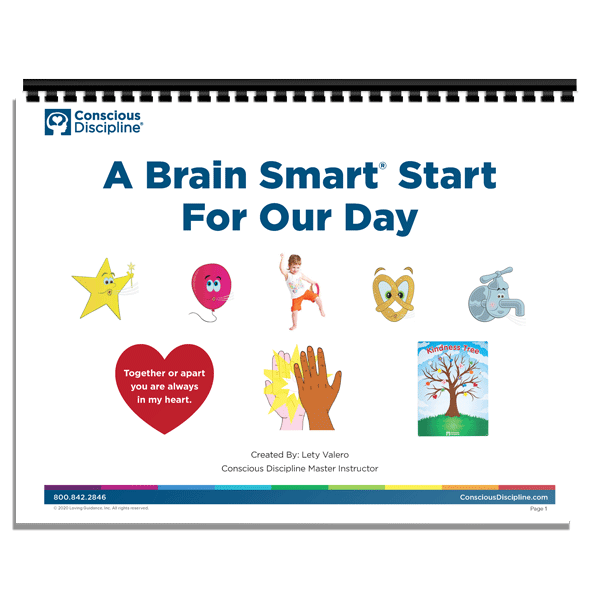
Did you know all behavior comes from an internal state? This printable book from Conscious Discipline will help guide you so that you and your child can start the day in an optimal state and make the best out of the day.
| |
Buckle Up for Safety
Make sure your child travels safely! On www.pakidstravelsafe.org, sponsored by the PA Chapter of the American Academy of Pediatrics, you can find a wide range of travel safety information to keep your child safe. Search for car seat recalls, locate a car seat loan program, find a car seat fitting station, and access a child car seat technician to ensure proper car seat installation in a vehicle.
| |
Is Your Preschooler now a Kindergartner?
Get ready for an exciting year ahead with Kindergarten, Here I Am! — a FREE monthly eNewsletter just for families like yours.
Each issue is packed with fun activities, helpful tips, and easy-to-use resources to support your child’s success all year long. From first-day jitters to learning milestones, we’ve got you covered!
✨Sign up today and make your kindergartner’s journey even more amazing!
| | | | |