Plant native!
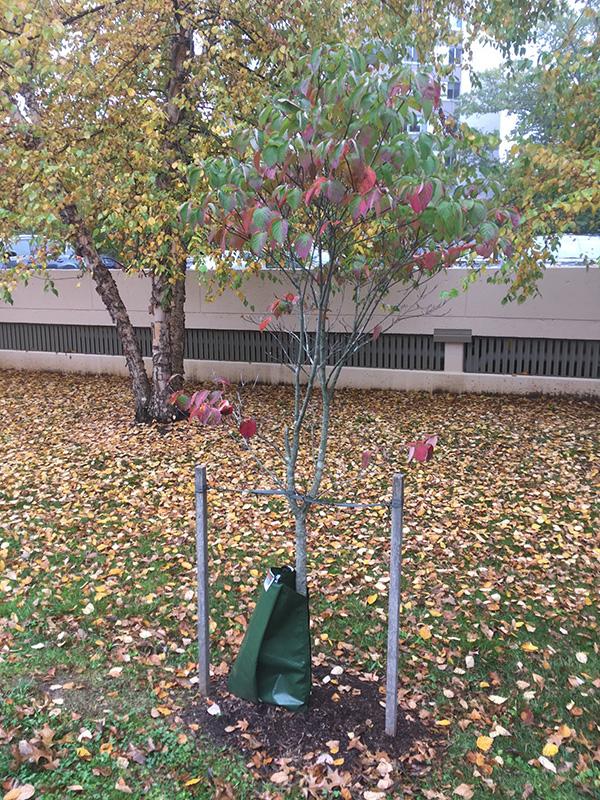
Fall is a great time to plant native trees. Young trees transplant well during this time and have time to establish a root system before winter. Cooler temperatures also mean that trees are more easily able to absorb and retain water. It’s best to plant native trees is when the soil temperature remains above 50⁰F, usually before the first hard freeze of winter.
Native trees are well suited to our environment and typically require little maintenance once established. They provide habitat for far more native pollinators than non-native trees and are unlikely to outcompete other native species. Use the Reforest Montgomery native tree coupon to get $50 off nearly 50 qualifying native tree species at six local nurseries. This coupon can also be combined with the State of Maryland’s $25 Marylanders Plant Trees coupon for $75 off the price of a tree that qualifies for both programs.
|
Invasives to know: Chinese and Japanese wisteria (Wisteria sinensis and Wisteria floribunda)
Wisteria is a popular ornamental vine amongst gardeners. But this brilliant purple flower can be deadly to our native ecosystems if left untreated and is classified as a Tier 2 invasive species by the Maryland Department of Agriculture.
| |
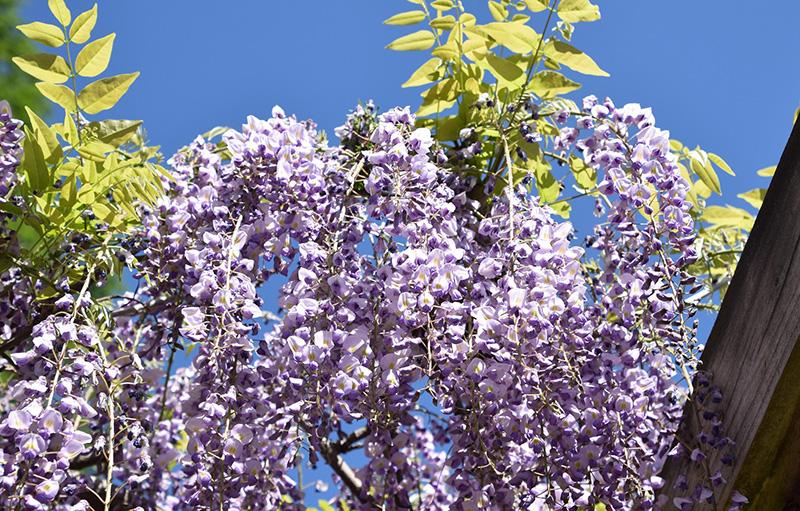
Chinese wisteria. Photo courtesy Montgomery Parks | |
|
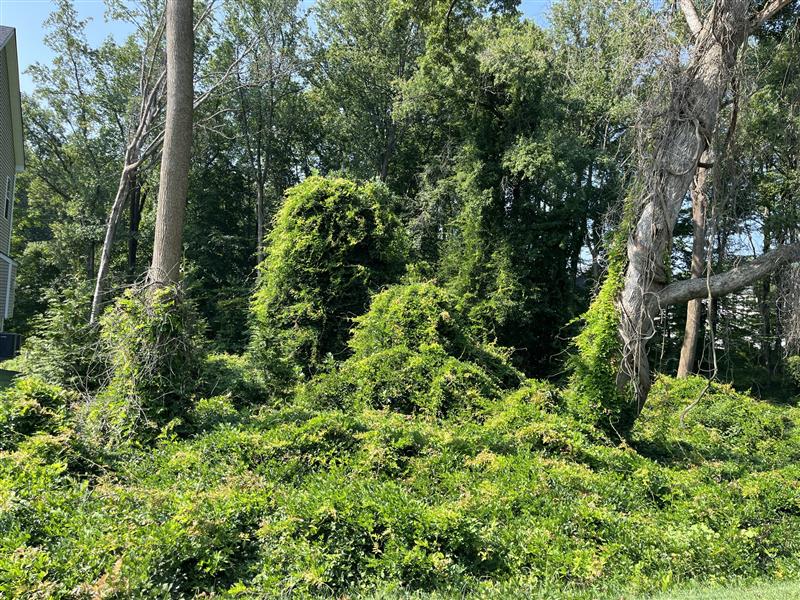
Chinese and Japanese wisteria are fast-growing and woody wines that quickly shade out native trees with their foliage. Further, these vines wrap around tree trunks, strangling their vascular systems. Wisteria vines quickly take over vast areas of forest and can be difficult to treat when left alone. The vines reproduce by dropping seeds and can also sprout anywhere the stem touches the ground or where a piece of root is left.
You can tell invasive wisteria vines by their compound leaves and extensive vining, and clusters of light purple flowers in spring. The leaves typically have 9-11 leaflets, wavy edges and a strongly pointed tip. In contrast, native wisteria (Wisteria frutescens), which is relatively uncommon, has smaller, rounder leaves and flower clusters. These wisteria vines, though less weedy, should still be monitored to ensure they do not interfere with tree health
| Wisteria vines blanket a forest area. Photo by Kara Farthing, M-NCPPC. | |
The best way to treat wisteria is to cut “windows” in the vines hanging on trees and pull up as many roots as possible. To do this, cut the vines at roughly chest height and at ground level. For safety reasons, never attempt to pull vines out of trees; severing the vine from its root system will prevent further growth and cause it to die | |
|
As the days grow shorter and trees have less light to conduct photosynthesis, our trees lose their leaves. But did you know leaf litter provides innumerable benefits to our ecosystems if you leave them where they fall? Leave your leaf litter!
There are a few benefits to leaving leaf litter where it falls or gathering it into garden areas. Leaf litter deposits carbon back into the soil as they decompose. This both benefits the health of the soil and keeps carbon captured, reducing what is released into the atmosphere as a greenhouse gas. Leaf litter also hosts overwintering insects, snakes, and other animals. Finally, any seeds left over contained within the leaf litter provides an important winter food source for birds as they migrate.
The trees and forests of Montgomery County provide innumerable benefits, even through winter. Rather than bagging up fallen leaves, leave them be in your yard and garden.
| |
Trees provide habitat for migrating birds and pollinators | |
¡Plante árboles nativos!
El otoño es un excelente momento para plantar árboles nativos. Los árboles jóvenes se trasplantan bien durante esta estación y tienen tiempo para establecer un sistema de raíces antes del invierno. Las temperaturas más frías también implican mayor facilidad para que los árboles absorban y retengan el agua. Es mejor plantar árboles nativos cuando la temperatura del suelo permanece por encima de los 50 °F, generalmente antes de la primera helada del invierno.
Los árboles nativos son apropiados para nuestro entorno y, por lo general, requieren poco mantenimiento una vez plantados. Proporcionan hábitat para muchos más polinizadores nativos que los árboles no nativos y es poco probable que desplacen a otras especies nativas. Utilice el cupón de Reforest Montgomery para árboles nativos para obtener $50 de descuento en casi 50 especies de árboles nativos que reúnen los requisitos en seis viveros locales. Este cupón también se puede combinar con el cupón de Marylanders Plant Trees de $25 del estado de Maryland y así obtener $75 de descuento sobre el precio de un árbol que reúna los requisitos de ambos programas.
| |
Reconocer especies invasivas: glicinias china y japonesa (wisteria sinensis y wisteria floribunda)
La glicinia es una enredadera ornamental popular entre los jardineros. Pero esta flor púrpura brillante puede ser mortal para nuestros ecosistemas nativos si no se le aplica un tratamiento, y el Departamento de Agricultura de Maryland la clasifica como una especie invasiva de nivel 2.
| |
Glicinia china púrpura. Imagen cortesía de Montgomery Parks | |
|
Las glicinias china y japonesa son enredaderas leñosas de rápido crecimiento que, por su follaje, ponen rápidamente a los árboles nativos a la sombra. Además, estas enredaderas envuelven los troncos de los árboles, lo que ahoga sus sistemas vasculares. Las glicenias se adueñan rápidamente de las vastas áreas de bosque y pueden ser difíciles de tratar cuando se dejan solas. Se reproducen al dejar caer semillas y también pueden brotar en cualquier lugar donde el tallo toque el suelo o donde quede una raíz.
Se pueden detectar las glicenias invasivas por sus hojas compuestas y su extensa ramificación, así como por sus racimos de flores púrpura claro en primavera. Las hojas típicamente tienen de 9 a 11 folíolos, bordes ondulados y una punta marcadamente puntiaguda. Por el contrario, la glicenia nativa (wisteria frutescens), que es relativamente poco común, tiene hojas y racimos de flores más pequeños y redondos. Estas glicenias, aunque forman menos maleza, deben monitorearse para garantizar que no interfieran con la salud de los árboles.
|  | Glicenias cubren un área forestal. Imagen cortesía de Kara Farthing, M-NCPPC. | |
La mejor manera de tratar la glicenia es cortar “ventanas” en las ramas que cuelgan de los árboles y tirar de tantas raíces como sea posible. Para hacerlo, corte las ramas a aproximadamente la altura del pecho y a nivel del suelo. Por motivos de seguridad, nunca intente sacar las ramas de los árboles: cortar las ramas de su sistema de raíces evitará un mayor crecimiento y hará que muera. | |
|
A medida que los días se acortan y los árboles tienen menos luz para realizar la fotosíntesis, estos pierden sus hojas. Pero ¿sabía que las hojas residuales proporcionan innumerables beneficios a nuestros ecosistemas si las deja donde caen? ¡Deje sus hojas residuales!
Es beneficioso dejar las hojas residuales donde caen o reunirlas en áreas de jardín. Las hojas residuales depositan carbono nuevamente en el suelo a medida que se descomponen. Esto beneficia la salud del suelo y mantiene el carbono capturado, por lo que se reduce la cantidad que se libera en la atmósfera como un gas de efecto invernadero. Las hojas residuales también albergan insectos, serpientes y otros animales que hibernan. Por último, cualquier semilla sobrante que quede entre las hojas residuales proporciona una importante fuente de alimento durante el invierno para las aves a medida que migran.
Los árboles y bosques del condado de Montgomery proporcionan innumerables beneficios, incluso durante el invierno. En lugar de embolsar las hojas caídas, déjelas en su patio y jardín.
| |
|
Aumentar la biodiversidad
| Los árboles proporcionan hábitat para aves migratorias y polinizadores | |
|
About Reforest Montgomery
Reforest Montgomery, supported by the Forest Conservation Fund, plants trees and forests throughout Montgomery County. This program offers residents a variety of options to get involved with reforestation programs in Montgomery County and provides property owners incentives to plant trees within the county such as free trees and reforestation for property owners, discounts on native trees, and more.
| | | | |