|
As we embark on this exciting journey with the formation of our newly merged law firm, we want to take a moment to express our deepest gratitude to you—our valued clients and colleagues. Your trust and partnership have been the foundation of our success.
As we move forward together, we remain steadfast in our commitment to providing the same high-quality legal counsel you have come to expect. This transition marks not just a new name or structure, but a strengthened ability to serve you with even greater depth, expertise, and dedication. We look forward to continuing this journey with you and keeping you informed on key legal updates that impact your business and industry.
Should you have any questions, please do not hesitate to reach out to our team.
| | Top 5 Medicare Reasons to Deny Ambulance Claims | | |
A Medicare Administrative Contractor (MAC) has recently released a new summary of their Target Probe and Educate (TPE) audits for emergency ambulance transports. Of the ambulance services reviewed, 46% failed the first round of review, meaning they had an error rate of more than 20%. The top 5 errors identified were:
1. No documentation received
2. No Beneficiary Signature
3. Transport Not Medically Necessary
4. Documentation for Wrong Patient or Date of Service
5. Provider Signature Does Not Include Credentials.
In this quarter’s newsletter, we will address the top two and the fourth most prevalent reasons to deny claims according to this report, and next quarter we will tackle the remaining two.
1. Documentation Sent in Response to TPE Request. The top error identified was that the targeted ambulance services simply did not respond to the TPE request, and the 4th most common error was that the information sent in was not what was requested. These issues may seem easy to fix, but there is a reason that these denials are common. First, when an ambulance service is under TPE review, there is not just one letter that asks for all of the patient's records to be audited, instead, you will receive a notice letter advising that the TPE review will be starting within the next few weeks, and then there are individual “additional documentation requests” (“ADR”) for each claim being audited. We often hear from clients who received the initial TPE letter and then are surprised by the subsequent results letter, not being aware of the individual claims selected between the two. The ADR letters may go unnoticed, or at least their importance is under-appreciated, causing the documents not to be sent in within the time allowed. Once you receive a TPE notice letter, make sure that your staff is watching for the ADR letters and that they understand their significance and the short time limit in which to respond.
2. Beneficiary Signatures. The “patient signature rule” regulation at 42 CFR 424.36 requires that a patient sign at the time of transport. If the patient is not able to sign, there are five other acceptable signatories (the patient’s legal guardian, the patient’s healthcare power of attorney, person who receives government benefits on the patient’s behalf, person who arrange the patient’s medical appointments, or representatives of another provider who cares for the patient), and if none of them are available, then and only then should the crew sign and state why the patient was not able to sign for themselves and get the receiving facility to sign or give you documentation showing that the patient was actually transported on that date.
Occasionally we receive questions about “lifetime signatures”. While there is a technical argument that a “lifetime” signature is acceptable for assignment of benefits, this is often not what the auditor is looking for in the TPE review, and there are four things you should consider before relying on lifetime signatures.
First, do you have the appropriate lifetime language in your signature block? If not, then the signature would only be good for one trip. Second, do you have a lifetime signature form for every patient? Even if you have the right language, it can be difficult to keep track of who has signed. Third, even if you have the lifetime form, can you find it? We have seen situations where a trip report or billing claim form notes “signature on file” but the office was not able to locate it when asked for a copy. Fourth, and most importantly, “lifetime” signatures are recognized under 42 CFR §424.40, but the other code section at 42 CFR §424.36 anticipates a signature on each transport. There is a good legal argument that lifetime signatures are sufficient, but be aware that many of the auditors and Medicare Administrative Contractors, who initially review claims, are looking for signatures for each date of service under section 424.36, and they do not seem to acknowledge the possible exception in section 424.40, therefore it may take going through a lengthy appeal process to get them paid.
This is not the first TPE summary to find that beneficiary signatures or an alternate signature are not being properly captured by EMS providers. As we mentioned above, there are three ways to meet the signature requirements, so there is no reason that a valid signature cannot be obtained on each transport. Make sure your staff understands the requirement, and that the EPCR software being used is set up to meet the signature requirement; specifically, it should be clear in the signature section who is signing and, if it is not the patient, why the patient did not sign. The assignment of benefits language should also be present in the software where the person is signing and when the PCR prints. If any of these elements are unclear or are missing, we recommend working with your EPCR vendor to correct those issues. Also, we are happy to review how the signature section is set up in your software and provide you with our thoughts if you wish.
4. Documentation for Wrong Patient or Date of Service. When you are retrieving the requested records, double-check and make sure it’s the correct patient and the correct trip. You may have patients with the same name, or a patient with multiple transports on the same date. Keep in mind that most of these audits are currently for emergency ambulance transport, so if you took the patient to the hospital and returned them to their home on the same day, then it is likely the trip to the hospital is the one being requested. To be safe, it cannot hurt to send in both; there has never been an error in sending in too much information. If you are uncertain about the patient or date of service, contact the auditor and request clarification.
TPE audits are frequent in EMS. If you notice that you are the subject of one of these audits, please feel free to reach out to us to help you navigate the process. Failing multiple rounds of TPE can result in having your billing privileges with Medicare revoked, so successfully getting through TPE review is critical to your service.
| | Congress Extends Medicare Ambulance Relief | | On March 15, 2025, President Trump signed into law the Full-Year Continuing Appropriations and Extensions Act, 2025. The continuing resolution funds the federal government through the end of the current fiscal year. Section 2203 of the continuing resolution extends the Medicare temporary add-ons for ground ambulance (i.e., the 2% urban, 3% rural, and super-rural bonus) through September 30, 2025. These add-ons were previously set to expire on March 31, 2025. | | Protecting Access to Ground Ambulance Medical Services Act | | On March 18, 2025, Representative Claudia Tenney (NY-24) introduced the Protecting Access to Ground Ambulance Medical Services Act (H.R. 2232). This bill would extend the temporary add-ons for ground ambulance through January 1, 2028. The bill is cosponsored by Representatives Cliff Bentz (OR-2), Mike Carey (OH-15), Danny Davis (IL-7), Carol Miller (WV-1), Marie Gluesenkamp Perez (WA-3), Terri Sewell (AL-7), and Paul Tonko (NY-20). | Representative Mike Carey to Introduce Legislation to Cover Treatment-in-Place Under Medicare | Representative Mike Carey (OH-15) has indicated that he plans to re-introduce the Comprehensive Alternative Response for Emergencies Act (CARE Act) shortly. The CARE Act would mandate the creation of a demonstration project to test Medicare payment for treatment at the scene without an ambulance transport. A previous version of the bill was introduced in the 118th Congress. | | HHS Announces Transformation to Make America Healthy Again | | |
On March 27, 2025, the U.S. Department of Health and Human Services (HHS) announced a dramatic restructuring in accordance with President Trump's Executive Order, “Implementing the President’s ‘Department of Government Efficiency’ Workforce Optimization Initiative.”
Read more.
| | Trump Administration Issues Executive Order that Reduces the Federal Mediation & Conciliation Service | | |
On March 14, 2025, President Donald Trump issued an executive order titled the “Continuing the Reduction of the Federal Bureaucracy,” aimed at reducing the size of the federal bureaucracy. This order targeted several agencies, including the Federal Mediation and Conciliation Service (FMCS), instructing them to eliminate non-statutory functions and minimize statutory operations to the extent permitted by law. The order provided each agency head seven (7) days to notify the Office of Management & Budget (OMB) of compliance with this order.
Established in 1947, the FMCS has played a critical role in mediating labor disputes across both private and public sectors. By facilitating negotiations and preventing work stoppages, it is estimated that the agency has been instrumental in saving the U.S. economy over $500 million annually. The FMCS does this by facilitating disputes between employers and unions at no cost.
Following the executive order, the FMCS has significantly reduced its workforce, retaining only a "skeleton crew" of approximately a dozen employees. This downsizing has led to the cessation of most mediation services, with remaining staff focusing solely on functions mandated by statute.
Impact on Employers
The reduction of FMCS services poses several challenges for employers:
-
Increased Risk of Prolonged Labor Disputes: Without FMCS mediators to facilitate negotiations, employers may face longer and more contentious labor disputes, potentially leading to costly work stoppages.
-
Higher Costs for Private Mediation: Employers seeking to resolve disputes may need to engage private mediators, which can be significantly more expensive than the services previously provided by the FMCS.
-
Compliance Obligations Remain: Despite the reduction in FMCS operations, employers are still required to adhere to statutory obligations, such as filing notices under Sections 8(d) and 8(g) of the National Labor Relations Act.
Unions have expressed strong opposition to President Donald Trump's executive order. The FMCS has played a critical role in mediating labor disputes and facilitating collective bargaining agreements between employers and workers. The dismantling of the FMCS underscores a broader effort by the Trump Administration to reduce the federal workforce. Unions and employers fear the potentially far-reaching implications for labor relations and the economy.
We will continue to keep our clients advised about these changes and to consider alternative strategies to navigate this rapidly evolving landscape. If you have questions, please don't hesitate to contact us.
| | EEOC and Justice Department Issue Joint Statement on Workplace Discrimination and DEI Programs | | |
The U.S. Equal Employment Opportunity Commission (EEOC) and the Department of Justice (DOJ) issued a joint statement on March 19, 2025, reaffirming their commitment to enforcing anti-discrimination laws in the workplace while addressing concerns related to Diversity, Equity, and Inclusion (DEI) programs.
The statement clarified that while DEI initiatives are legal and often beneficial for fostering inclusive workplaces, they must comply with federal anti-discrimination laws, such as Title VII of the Civil Rights Act, and other discrimination statutes, such as the Americans with Disabilities Act (ADA) and the Genetic Information Nondiscrimination Act (GINA). Employers should know that DEI, or what constitutes DEI programs, is not defined under any of the anti-discrimination laws. The agencies emphasized that employers cannot implement DEI policies that result in unlawful discrimination, such as hiring or promotion practices that unfairly disadvantage certain groups based on race, gender, or other protected characteristics.
Deputy Attorney General Todd Blanche and Acting EEOC Chair Andrea Lucas stated that they are committed to ending illegal DEI practices in the workplace. It is important to highlight that DEI efforts should focus on equal opportunity rather than quotas or preferential treatment. The agencies reiterated that they would continue to investigate and address workplace policies that violate federal law.
This joint statement comes amid ongoing legal and political debates surrounding DEI programs, with some critics arguing that certain initiatives amount to reverse discrimination. However, the EEOC and DOJ underscored that properly designed DEI programs remain an important tool for fostering fair and equitable workplaces.
Employers are encouraged to review their hiring and workplace policies to ensure compliance with both state and federal law while maintaining a commitment to workplace diversity and inclusion. If you have questions or require assistance with this, or any other workforce issue, please contact us below.
| | NPRM HIPAA Security Rule to Strengthen the Cybersecurity of Electronic Protected Health Information | |
On January 5, 2025, the Department of Health and Human Services published a Notice of Proposed Rule Making HIPAA Security Rule To Strengthen the Cybersecurity of Electronic Protected Health Information (ePHI). The rule is the first meaningful update to HIPAA since the Health Information Technology for Economic and Clinical Health (HITECH) Act was passed in 2009. HHS stated in its announcement that the proposed rule intended to improve cybersecurity in light of the growing number of cyber-attacks, and to better align the rule’s provisions with modern practices in cyber security and technology. HHS is accepting comments from stakeholders through March 7, 2025.
HHS included significant background to provide context for the proposal of the updated provisions. HHS stated that many of the proposed provisions are as a result of common findings following cyberattacks and HHS breach investigations. HHS stated that it believed that many covered entities either wrongly interpreted existing ePHI Security Rule requirements, or drafted the required administrative, technical, and physical policies and procedures, but meaningfully failed to perform or implement the underlying safeguards associated with them.
In drafting the proposed rule, HHS was seeking to more accurately define and update the Security Rule’s terms, removing vagueness, and formalize a distinction between “required” and “addressable” implementation specifications as articulated in existing Security Rule language, which would result in all specifications listed in the Security Rule being required for Covered Entities. The NPRM is broken down into several segments including Definitions, Security Standards, Administrative Safeguards, Physical Safeguards, Technical Safeguards, Organizational Requirements, and Documentation Requirements.
Read more.
| Executive Order Regulatory Freeze Pending Review | | |
Earlier this quarter, President Trump signed an Executive Order freezing any regulatory action pending his administration’s review. President Trump signed numerous Executive Actions within a few hours of taking the Presidential Oath. This Executive Order places a minimum of a sixty (60) day hold on the publishing of any new rules to the Federal Register and a hold on any rule that is in process and has not finalized.
In the Executive Order, President Trump stated that he does not want any rule being sent to the Office of the Federal Register (OFR) until a department or agency head appointed by President Trump has had an opportunity to review and approves the rule. Additionally, the President wants OFR to withdraw any rule that has been sent to OFR but not published. Lastly, the President wants to postpone the effective date for any rules that have been published to the Federal Register but not taken effect for “the purposes of reviewing any questions of fact, law, and policy that the rules may raise.”
As our clients are aware, there are several rules that have been published to the Federal Register that will significantly impact your organization. Specifically, the OSHA Emergency Response Rule and the recent HIPAA Security Rule To Strengthen the Cybersecurity of Electronic Protected Health Information. We do not know how this freeze will impact the future of these rules. It is possible that these rules will be modified in content, applicability, or be rescinded entirely.
| |
"I always thought being an attorney would be fun, but the idea of spending seven years in college led me to rule out the legal profession early on, so I became a paramedic instead. Over the years, I have had the privilege of working as a ground and flight paramedic, educator, supervisor, and manager. As my career evolved, I began seeking a new challenge—one that led me to meet Scott and Brian at a conference, where I quickly realized the next step was a legal career.
Now, as I begin my journey as an attorney, I’m incredibly grateful to work alongside and learn from Scott, Brian, and Chris. I’m excited to continue contributing to the field that I’ve always been passionate about. I’ve always enjoyed public policy and advocating for industry. Now, as an attorney, I can continue that work by helping ambulance companies navigate the complexities of the legal and regulatory landscape, ensuring they can focus on the critical work they do every day.
I am a lifelong native of North Dakota and currently reside in Bismarck with my wife, Jessica, and two children, Christian and Brooklynn. I hold a Master’s in Business Administration from the University of Mary and a Juris Doctor from Mitchell Hamline School of Law. I am licensed to practice law in North Dakota, Minnesota, and South Carolina.
I’m excited to build relationships with all of our clients and provide thoughtful, strategic legal counsel to support your ongoing success. In future newsletters, I’ll dive deeper into legal issues. For this first edition, I thought a brief introduction would be most fitting. Please don’t hesitate to reach out—I look forward to getting to know you all!"
| | |
The team at Newton 360 is committed to improving the EMS and public safety workplace. That is why we have developed a tool to improve the working relationships and work environment for those in our profession. We believe that there is no cause nobler than serving others and helping those in need. This includes our own team members. To that end, a portion of every Newton 360 license fee is donated to The Code Green Campaign. Our hope is to lend a hand and be part of the solution for the challenges facing individual EMS professionals and organizations who employ them.
We hope that you subscribe to Newton 360 and join our customers in trying to change the daily working experience for all who work in EMS and the larger public safety field. However, if your organization is not ready to become a Newton 360, we strongly encourage you to donate to The Code Green Campaign.
| | A Note Regarding the Mail Issue | | |
We wanted to extend an apology to those of you who sent in correspondence to our office over the first few months of 2025. We have heard from a few that their correspondence was returned as undeliverable. We are not sure why the U.S. Post Office returned those items. We assure you, our home office is at 100 South Main Street, Suite 100-J, Middleton, MA 01949. We believe we have resolved the problem with the individual letter carrier who we believe may have returned those items.
In the event that you receive any correspondence back, please email or call Scott Moore at smoore@wmklawgroup.com or (781) 771-9914. Again, we apologize for any inconvenience this may have caused you and your team.
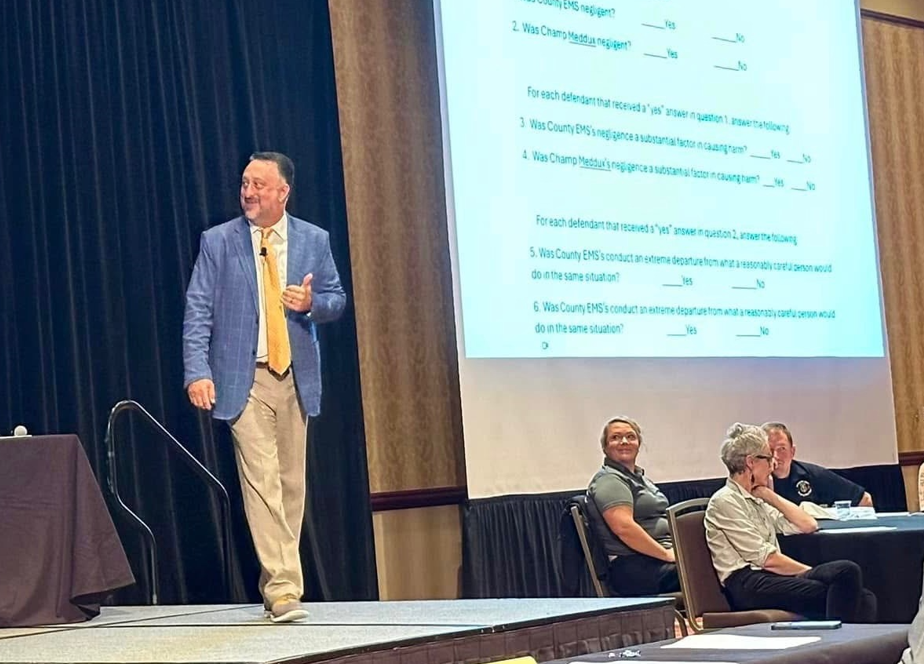
| | New laws and standards are changing daily, and it is our pleasure to be the ones to help you navigate them. We are dedicated to providing you with the highest level of service, expertise, and support. Please reach out with any challenges or questions you may have. | | |
Conference Engagements
Catch up with us at the following EMS events!
Events that we will be presenting at are indicated with a *
| | |
Texas Ambulance Association Annual Conference, South Padre Island, TX
April 2-4, 2025
Scott Moore
North Dakota EMS Conference & Trade Show, Bismarck, ND
April 3-5, 2025
Adam Parker
Kentucky Office of Rural Health Leadership Program, Lexington, KY
April 9, 2025
Scott Moore
Clarity 2025 User Summit, Charleston, SC
May 4-6, 2025
Brian Werfel, Scott Moore, Chris Kelly*
AAA Annual Conference & Trade Show, Lexington, KY
June 22-24, 2025
Brian Werfel, Scott Moore, Chris Kelly*
Tennessee EMS Educators Association, Murfreesboro, TN
July 31-August 1, 2025
Chris Kelly*
Texas EMS Alliance Evolution 2025, College Station, TX
September 22, 2025
Chris Kelly*
2025 GEMSA Providers & Educators Conference, Jekyll Island, GA
October 13-14, 2025
Chris Kelly*
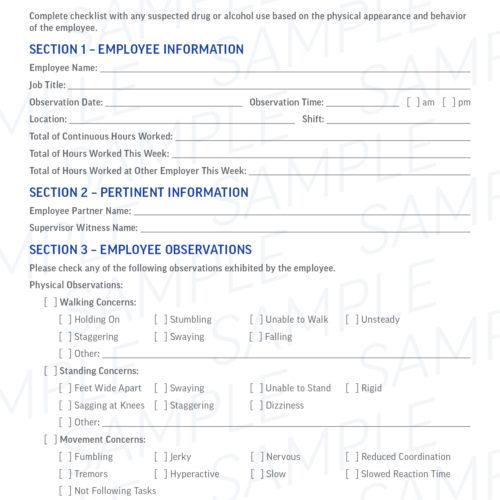
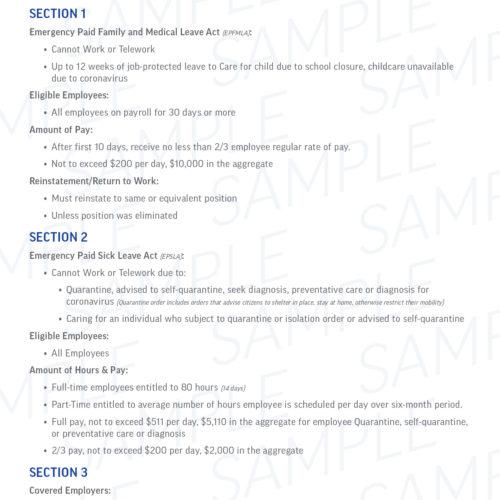
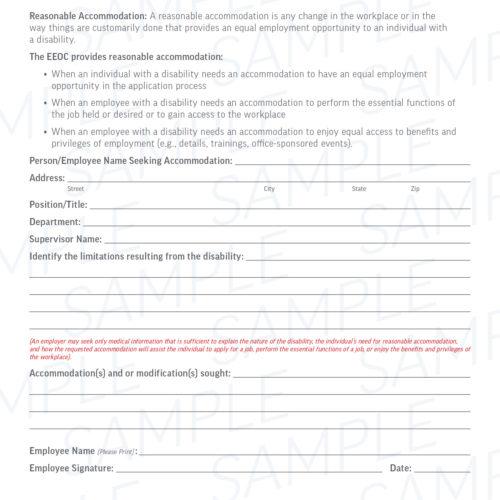
| | Fillable Forms For All Your HR Needs | | New to Werfel, Moore, & Kelly Law Group? We'd love to work with you! Contact us by clicking the button below for a free consultation or to start your comprehensive HR Audit today! | | | | |