This year marked an important milestone for our firm, and we couldn’t have done it without you. Thank you for sticking with us as we navigated our first year as a new firm. Your continued trust, patience, and partnership have been the foundation of our success. As we wrap up Q4, we’re excited to share a few updates and reflections. Read on to see what we’ve been working on and what’s coming next. | | Client Advisory Highlights: Last Quarter in Review | | |
Social Media and Free Speech in an EMS Workplace
Emergency Medical Services (EMS) professionals are often called upon to serve their communities in highly visible, high-stress roles. EMS professionals have a front seat to the consequences of the more socially and politically charged environment we operate in today. Alongside the professional and clinical responsibilities of the job, EMS personnel, like all employees, also must navigate the boundaries of their rights to free expression. This is especially true in an era where personal opinions, frustrations, and experiences are frequently shared on social media.
Many EMS training and workplace orientation programs dedicate nearly all their time to teaching clinical skills. While clinical skills are important, they are only part of the dynamic set of skills that equip our team to care for the patients and the communities we serve. EMS professionals must remember that a super-majority of the population never actually utilize our services but are beneficiaries of our readiness to serve. This means their confidence in our ability to care for them in their time of need is paramount and cannot be tarnished or diminished by divisive or hateful speech.
One of the most common complaints I hear from EMS providers is that they want to be recognized as a professional. Yet, in my 36 years of experience as an EMT, firefighter, EMS executive, HR consultant, or employment attorney, we rarely discipline or terminated employees for clinical errors. In fact, terminations for clinical errors are rare. Most of the remediation EMS organizations perform are tied to the non-clinical aspects of the profession. I encourage EMS professionals, at all levels, to recognize that professionalism is who you are both on and off duty.
Repeatedly, EMS professionals fail to understand that their personal social media posts can result in workplace discipline, including termination. We have seen this over the last several years through the civil unrest following the Black Lives Matter movement, numerous Presidential elections, and, most recently, following the death of Charlie Kirk in Utah on September 10, 2025. It is clear that our training and onboarding programs need to be updated to include employee off-duty conduct, including social media use.
Read more.
| |
IRS Guidance on Overtime Premium Under the OBBBA
On November 21, 2025, the Internal Revenue Service (IRS) released Guidance for Individual Taxpayers who received Qualified Tips or Qualified Overtime Compensation in 2025. This guidance addresses how employers and taxpayers should address Overtime Premium tax benefits under the One Big Beautiful Bill Act (OBBBA). Back in July, we provided clients with an overview of the workplace provisions of the Act and shared that the IRS would be issuing guidance as we approached the end of the year. While many clients will rely on the guidance or assistance of their payroll processing company, it is important to remember that the compliance obligation remains with the employer.
OBBBA Tax on Overtime
Under the OBBBA, beginning in tax year 2025 and continuing through 2028, employees may claim a new federal income-tax deduction for qualified overtime compensation, effectively exempting the premium portion of overtime pay from taxable income up to annual limits. The deduction applies only to the amount of overtime compensation above the employee’s regular rate of pay. For example, the additional 0.5× premium in time-and-a-half overtime or the premium component of double-time or other enhanced pay rates. Workers may deduct up to $12,500 per year ($25,000 for joint filers), and because Forms W-2 will not itemize the qualifying amount, employees must calculate the deductible portion using employer-provided pay records or another reasonable method as outlined in the IRS guidance. The guidance offers numerous examples to help employers and employees understand the excludable portion of overtime or premium pay.
Key Changes Under the Law & IRS Guidance
The OBBBA (effective for tax years 2025–2028) establishes a new federal income tax deduction for both Qualified Overtime Compensation and Qualified Tips. This advisory will only address the treatment of Qualified Overtime Compensation. Qualified Overtime Compensation is defined as:
- “Qualified overtime compensation” — i.e., the premium portion of overtime pay required under the Fair Labor Standards Act (FLSA).
- For qualified overtime: the deduction applies only to the portion of overtime pay that exceeds the regular rate (i.e., the “half-time” premium, not the entire overtime pay).
- The deduction limit: up to $12,500 (single) / $25,000 (joint filer) per year.
- The deduction is available to taxpayers regardless of whether they itemize or take the standard deduction.
- Initially, we thought that the IRS would issue an updated Form W-2, which would separately itemize Qualified Overtime Compensation. However, the IRS has stated that the 2025 versions of W-2, 1099-NEC, 1099-MISC, and 1099-K will not reflect separate line-items for qualified overtime or tip. The IRS Guidance instructs workers how to determine their deduction when separate reporting is not provided.
- Under the Guidance, employees receiving multiple pay rates (regular, overtime, double-time, premium, holiday shift, etc.) must use a "reasonable method" to calculate and substantiate the amount of Qualified Overtime Compensation. This can be done by employer-provided records, including pay stubs, separate wage statements, and/or hours worked.
- It is important to note that the new tax rules do not change existing pay obligations under the FLSA or other labor laws. Employers must continue to pay overtime (or double-time or premium pay) per applicable law/contract. The tax deduction affects only the employee's individual income tax.
What This Means for EMS Agencies & Providers
Because EMS agencies often pay multiple rates (base pay, overtime, double-time, holiday premium, “special detail” pay, shift differentials, etc.), the new IRS rules may create administrative challenges for both employers and employees.
Read more.
| | |
CMS Publishes CY 2026 Ambulance Fee Schedule Public Use Files
On December 8, 2025, CMS posted its CY 2026 Ambulance Fee Schedule Public Use Files. This includes an Excel spreadsheet with the allowed amounts for the various levels of air and ground ambulance services, together with the allowed amounts for any associate mileage. These allowables reflect a 2.0% inflation adjustment for 2026. The CY 2026 Ambulance Fee Schedule Public Use File can be downloaded from the CMS website by clicking here.
Please note that these allowables also reflect the extension of the temporary add-ons for ground ambulance services (i.e., the 2% urban, 3% rural, and super-rural bonuses). These temporary add-ons were recently extended through January 30, 2026. Barring further legislation, these add-ons will expire on that date. If that occurs, it may be necessary for CMS to issue updated CY 2026 Ambulance Fee Schedule Public Use Files.
For whatever reason, CMS has elected in recent years to release its Public Use Files without state and payment locality headings. As a result, in order to look up the rates in your service area, you would need to know the CMS contract number assigned to your state. This is not something the typical ambulance service would necessarily have on hand. For this reason, WMK has created a reformatted version of the CMS Medicare Ambulance Fee Schedule, which includes the state and payment locality headings. This reformatted version of the Medicare Ambulance Fee Schedule can be downloaded using the button below.
| | Legal Answers: Ask the Attorney | | |
Believe it or not, not every client question has a simple answer. Sometimes there are multiple answers and sometimes there is no answer at all. Part of the reason for this is the way the laws and regulations are written. That is, every possible situation was not – and cannot – be contemplated when drafting legislation and rules. One recent example of this came from a client question asking whether a representative signature captured for AOB purposes must be legible, and/or require a full printed first and last name.
There was no simple answer to this because this is something that has never been directly addressed by CMS. Keep in mind that the issue of “signature legibility” and ways to correct a defective signature is outlined in the Medicare Program Integrity Manual, Chapter 3, Section 3.3.2.4. However, that guidance is (generally) more applicable to signatures for purposes of those who order or provide services (i.e., PCS or crew signatures). Signature legibility and completeness requirements are not clear for a sending facility representative (under 42 CFR 424.36(b)(4)), or a receiving facility representative (under 42 CFR 424.36(b)(6)).
In these cases, the regulation simply requires a “signature.” There is no mention that such a signature be legible, or be accompanied by any printed name, or how complete that printed name must be. One place to look for guidance is common sense: that is, every signature (no matter whom or for what purpose) should be accompanied by some printed name – enough of a name to help identify the identity of the signer. Another place to look for guidance is the Program Integrity Manual (referenced above). Curiously, while that Manual used to offer all sorts of examples of what constituted a “legible” signature (in the form of a table of different permutations of names, signatures, initials, and the legibility of each), that table has been removed from the Manual. In its place, the Manual now notes that when a signature “is required per statute, regulation, NCD or LCD, then Contractors” (in Medical Review situations) shall use the “totality of the record to determine if the signature requirement, as outlined in statute, regulation, NCD, or LCD is met.”
This so-called clarification brings us right back to the applicable language of 42 CFR 424.36: its language requires a signature for claim submission authorization purposes, with no explanation of how (or whether) that signature must be accompanied by a printed name. It seems we’re back at square one: sometimes the answer must be one of little more than best practice, what makes the most sense, or erring on the side of caution. That is, when someone signs on behalf of a patient, some identifying information should accompany the signature (e.g., a full printed name of the signer). Although the underlying regulation might not specify that a signature be legible, such signatures must be made by an appropriate person. If the signature is little more than an illegible squiggle, with initials only, its hard (if not impossible) to determine who signed in the first place. Since only certain people can sign in specific circumstances, it is important to ensure that the signer is one of those appropriate persons. The best way to do that is to have enough information about that signer to ensure they have legal authority to sign on behalf of the patient.
If the signature lacks such additional printed name, the signature might be deficient, but not all is lost. One option might be to obtain an attestation statement from the signer or obtain a signature log from the facility where that signer works (but this requires a lot of additional effort, and likely non-responsiveness from the facility). A second option is to rely on a previously obtained patient lifetime signature (which only works if the patient signed for a previous transport and the signature language contained the “now, in the past, or in the future” language). A third option is to send a paper signature form to the patient afterwards (and get is returned within one year from the date of service to meet Medicare timely filing deadlines).
Therefore, if the signature is from some representative and the identity of that person is unclear (due to an illegible signature accompanied by minimal first and last name information) the solution should not be to simply take your chances and submit the claim. In fact, some MACs (Palmetto in particular) specifically deny payment for faulty AOB signatures, including cases of allegedly “illegible” signatures. Instead, the solution is to correct the defective signature on the back end. Of course, this also presents a good teaching tool to the crewmembers: gather as much information about the signer as possible (on the front end), even if it means asking for a full name, or looking at the ID badge of the healthcare professional to find a name to insert into the signature area.
There are ultimately several lessons here: 1) not all questions will have a definitive answer; 2) every question often comes with a teaching point and way in which improvements can be made; 3) even if a question cannot be answered, there might be other ways to solve the potential problem. The attorneys and consultants at WMK might not always have an answer, and the reason is not because we don’t know the answer. The reason we don’t have the answer is because there isn’t always an answer to be had. Even then, we will likely be able to provide a solution to the underlying issue that triggered the question in the first place. Must an AOB signature from a patient representative be legible and/or be accompanied by a full name? Technically no, but you probably don’t want to risk overpayment liability on that. Therefore, find the most appropriate (and easiest) workaround to guarantee a solid, defensible signature so you don’t risk overpayment liability in an audit. (Christopher Kelly, Esq. and Daniel Pedersen, Esq.)
| | Risk Watch: TriZetto Data Breach | | |
TriZetto Data Breach: What We Know (and Still Don’t Know)
Any data breach can be a scary proposition. It becomes even scarier when it’s beyond your control. That is, most ambulance services (which are covered entities) ultimately share PHI with third parties (other covered entities or business associates, such as a facility, a billing agent, or a clearinghouse). So, what happens when one of those contracted entities experiences a data breach which ultimately impacts your PHI? The answer, unfortunately, is not always clear, and is not always consistent. The answer might reside in the BAA or depend on what the entity which experienced the breach offers to do to mitigate.
Recently, news broke of a data breach impacting TriZetto - a clearinghouse and data entity. TriZetto contracts with software and data companies, other clearinghouses, and covered entities. In some cases, TriZetto may itself be a covered entity (remember that a clearinghouse is a covered entity, along with health plans and healthcare providers that engage in electronic billing transactions). In other cases, TriZetto may act more in a capacity of a business associate to covered entities.
TriZetto became aware of a breach on October 2, 2025. Upon investigation of the breach, TriZetto learned that “beginning in November 2024, an unauthorized actor began accessing certain historical eligibility transaction reports stored on our system, including certain protected health information of some individuals associated with your organization.” That means the data was compromised for 11 months. That’s a lot of potential data. TriZetto noted that it plans to “issue formal notifications on or around January 5, 2026, that will include further details specific to your organization.” It also offered to make notices to relevant persons/parties (including patients, media and HHS) but also clarified that it “will not make any notices on your organization’s behalf unless you specifically authorize them and will notify media outlets and the consumer reporting agencies of the incident on a general basis without specific reference to your organization.”
Therefore, it is important to be on the lookout for any notices from TriZetto or any of your business partners (software vendors or billing agents) in which additional information about this breach comes to light. Obviously, an ambulance service (as a covered entity) can only provide notice of a breach once it has appropriate information about that breach. Absent specific information from TriZetto (e.g., the direct impact of the breach on your organization and the impacted patients) there is (unfortunately) nothing that can be done. Best thing to do now is to check your BAA’s, identify your business partners, and wait to see what else comes from this TriZetto breach. If you are impacted, then you’ll have to decide your next steps. If you don’t heard anything more about this, your entity (probably) is not impacted.
If you think this TriZetto breach might impact your organization and are seeking guidance (or have any other questions about this breach or any other breach situation) feel free to reach out - we’re here to help! (Daniel Pedersen, Esq.)
| | Legal Landscape: State Law Watch | | |
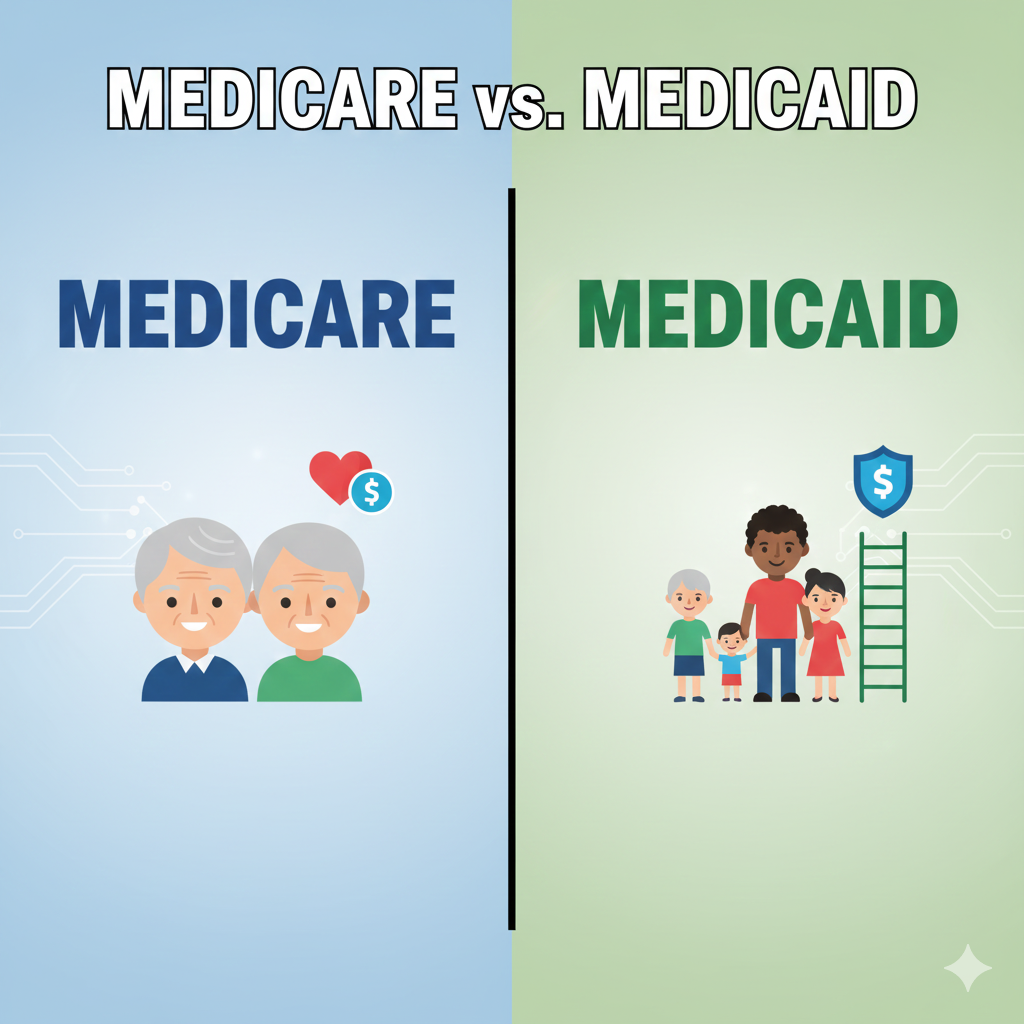
Beware the Differences Between Medicare and Medicaid Definitions
A common misconception is that state Medicaid programs follow the Medicare definitions. After all, CMS is the “Centers for Medicare and Medicaid Services.” However, Medicare is created under Social Security Act Title 18, and state Medicaid exists under Social Security Act Title 19. Therefore, these insurance programs are created under separate legal provisions since each state Medicaid program is governed under state (not federal) law. The federal government becomes involved to simply approve of the state Medicaid plan.
While many state Medicaid programs indeed follow the Medicare definitions others do not. Some states perhaps try to follow the Medicare definitions but create slight differences (intentional or accidental). For example, the Massachusetts Medicaid definition states:
"Advanced Life Support, Level 1 (ALS1) — when medically necessary, the provision of an assessment by an advanced life support (ALS) ambulance provider or supplier, and the furnishing of one or more ALS interventions. An ALS assessment is performed by an ALS crew and results in the determination that the patient’s condition requires an ALS level of care, even if no other ALS intervention is performed."
By contrast, the Medicare definitions state:
"Advanced life support, level 1 (ALS1) means transportation by ground ambulance vehicle, medically necessary supplies and services and either an ALS assessment by ALS personnel, or the provision of at least one ALS intervention."
Advanced life support (ALS) assessment is an assessment performed by an ALS crew as part of an emergency response that was necessary because the patient's reported condition at the time of dispatch was such that only an ALS crew was qualified to perform the assessment. An ALS assessment does not necessarily result in a determination that the patient requires an ALS level of service.
Curiously, the state Medicaid definition here follows an old, proposed Medicare definition from 2003 (which has since changed to the above-referenced one). Many state Medicaid laws, rules, and definitions are not updated regularly, so it is not (totally) surprising that Massachusetts Medicaid relies on an antiquated (and perhaps contradictory) definition for ALS. (Daniel Pedersen, Esq.)
| | Legal Pulse: EMS Law & Regulation Updates | | |
2026 Bonus Payment, Medicare Deductible & Premium, and AIF Roundup
As part of the “Continuing Resolution” (HR 5371 - signed on November 13, 2025 which ended the government shutdown), the Medicare ambulance bonus payments (also referred to as temporary add-ons) were extended through January 31, 2026. This continues the 2% urban, 3% rural, and 22.6% super rural payment amounts which are added to the ambulance fee schedule calculation. These bonus payments previously expired September 30, 2025, but the Continuing Resolution made the add-on payments retroactive to October 1, 2025. Therefore, there is no gap of time for which the add-on payments did not apply to ambulance payments.
By means of some additional back-story, in early October CMS ordered a claim payment hold for ambulance services with dates of service of October 1 and beyond. At that time, the intent was to allow time for a new budget to pass, which would bring a definitive answer to the future of the bonus payments. That is, CMS did not want to adjudicate claims incorrectly by either: adding the bonus payments (if they did not get extended) or not including the bonus payments (if they get extended and made retroactive). Nonetheless, on October 21, 2025 (and despite the continued government shutdown and no resolution to the bonus payments) CMS announced that the claim hold was now lifted, opening the door for claims to be processed and paid by the MACs. Since these bonus payments were not finalized until November 14, some payments were made without bonus payments being included in the paid amount. Since the Continuing Resolution made the bonus payments retroactive to October 1, the bonus payments should have occurred.
Therefore, monitor your Medicare Part B EOBs/RA (and any adjustments) from October 21 – November 14 to ensure that correct payment amounts were made. Finally, remember that Medicare Part C (Medicare Advantage) only requires the allowed amount to mirror that of Medicare. The split (payer vs. patient responsibility amounts) can differ from that of Medicare Part B. Therefore, any Medicare Advantage EOBs may have different total paid amounts than those of Medicare Part B.
On November 14, 2025, CMS released information about the Medicare Part B 2026 premium ($202.90 per month - an increase from $185 in 2025), and deductible ($283 in 2026 - an increase from $257 in 2025). Remember it is important to hold claims at the beginning of the year (or otherwise monitor the status of the patient’s deductible before submitting claims). That is, as an ambulance service you don’t want the reimbursement to be chalked up to deductible, and have to rely on payment from a secondary payer or the patient. Instead, it is better to wait until the deductible is satisfied, so you can recover the full ambulance fee schedule paid amount from Medicare.
Finally, the 2026 Medicare Ambulance Inflation Factor (AIF) is 2.0% (calculated by subtracting the 0.7% productivity adjustment from the 2.7% CPI-U). Remember that the AIF does not simply increase the previous year’s fee schedule by this amount. Instead, the AIF is just one part of a complex formula. Since the AIF is a positive number, there will be an increase to the ambulance fee schedule. Remember to monitor your Medicare payments at the beginning of 2026 to make sure the fee schedule payments indeed reflect an increase from 2025. (Daniel Pedersen, Esq.)
| | PSA: Don't Skimp When it Comes to Compliance | | |
We’ve heard all of the excuses: “it’s too expensive,” “we’re too small of an entity for Medicare to care about,” “a government audit won’t happen to our organization.” Sound familiar? The problem is that these excuses will not fly when there is an investigation. Remember, a Medicare or Medicaid audit - or worse, an OIG, OCR, or DOJ investigation - can be triggered in a variety of ways including data anomaly, complaint (from patient, competitor, current or former employee, or whistleblower), or a “random” review (such as TPE or RAC review).
The funny thing is that it’s not all that difficult (or expensive) to implement an effective compliance program. In fact, a famous quote from former US Deputy Attorney General Paul McNulty sums up the issue perfectly: “If you think that compliance is expensive: try non-compliance.” Despite these warnings - and the relative ease in which a compliance program could be created - many ambulance services instead choose to be reactive instead of proactive. That is, the entity reactively implements a compliance program when it is forced upon them after an unsuccessful audit. That mandatory compliance program (and underlying overpayments detected in the audit) is always more expensive than it would have cost to simply proactively implement a compliance program.
To make things simple, the OIG outlined the steps for creating an effective compliance program. Such guidance exists for various types of healthcare providers (including ambulance services and third-party billing agencies). Despite this roadmap, many entities simply choose not to implement a compliance program, hoping that a problem will not arise (or if one does arise, it will not be detected by the government). Here’s a little secret: a problem will always arise (and a problem is still a problem even if the government doesn’t know about it). In other words, you can’t just sweep something under the rug. Instead, having a compliance program can help keep the problem small because it is detected early and handled swiftly. Without an effective compliance program, small problems become big problems, and big problems cannot be ignored.
The other problem is that even when an entity becomes aware of an issue, it still chooses to ignore the problem and wait for the government to make an overpayment demand. This brings up another secret: when an entity is aware of overpayment liability, the entity has a legal responsibility to make a refund of detected overpayments. In fact, the failure to resolve a known overpayment situation can rise to a concept known as a “reverse false claims act.” When this happens, the penalties and other ramifications are far more expensive than what it would have cost to make the refund in the first place. (Daniel Pedersen, Esq.)
| | |
Updates from the December 9, 2025 Meeting
Perhaps surprisingly, most of us can recall the old times known as “BC”, that is to say, “Before Covid”. That period between 1997 and 2020, when all we had to worry about was passing the never-ending cycle of temporary Medicare add-on payments for ambulance service. At what point after more than a dozen renewals do we have the necessary body of evidence to roll the add-on payments up into the permanent base? Perhaps we are inching closer than we think. In the most recent extension from the Bipartisan Budget Act of 2018 (BBA), the ambulance community rallied around a cost data collection system to be implemented by CMS to capture cost data (GADCS) and direct MedPAC to prepare a report on the cost of ambulance services and appropriateness of the Medicare ground ambulance fee schedule using that data. This was to be done as a one-time event, collecting data for half of the ambulance services in one year and half in another year. Due to the lengthy public health emergency, data collection was delayed. This month, CMS published its report on the full two-cohort project with data from the 2023-2024 reporting periods. MedPAC is due to issue a final report no later than June 2026.
MedPAC held a public meeting on December 9, 2025, at which staff presented the commissioners with historical information about the ambulance fee schedule and highlights from initial reviews of the CMS report, as well as stakeholder interviews. While nothing conclusive was determined at the meeting, the discussion was informative and illuminated a few early areas of possible consensus by commissioners for inclusion in their final report.
MedPAC staff clearly identified what they saw as positive aspects of the report, being that the data can be used to evaluate the cost of providing ambulance service and assess the accuracy of AFS payments. Staff further felt that the sampling weights used would allow for nationally representative results. Drawbacks were identified as well, specifically that the data set was too large and cumbersome, with MedPAC only using 150 of 600 data points collected. Additionally, there was no way of segregating Medicare costs from those of all patients. Along with reviewing the CMS GADCS report, the staff also interviewed CMS, RAND, and ambulance trade associations in order to develop its findings. Staff summarized its presentation by noting that the GADCS is a “good first step” and that some form of data collection should continue.
After a robust discussion among the commissioners, Chair Chernew summarized by making a few key points for those of us in the industry to be mindful of.
- The relative payments for different levels of service may not be exactly right and are in need of some adjustment, but that will be complicated to achieve.
- The basis for any change must be data-driven. There should be some type of continuation of data collection for ground ambulance services however, it needs to be simpler, more streamlined, and less burdensome than the current GADCS.
While this meeting was interim, it was very important to gain a sense of where the commissioners may be heading this spring. There were encouraging signs that the complexity of ground ambulance is finally beginning to be understood. The crystal ball at this point seems to indicate that we should keep our own institutional memory about cost data collection and reporting alive and well. Continued cost data collection in some form will likely become a regular, if not frequent, part of our business practices. (Shawn Baird, Consultant.)
| | Resources: Quick Tools & Templates | | |
The team at Newton 360 is committed to improving the EMS and public safety workplace. That is why we have developed a tool to improve the working relationships and work environment for those in our profession. We believe that there is no cause nobler than serving others and helping those in need. This includes our own team members. To that end, a portion of every Newton 360 license fee is donated to The Code Green Campaign. Our hope is to lend a hand and be part of the solution for the challenges facing individual EMS professionals and organizations who employ them.
We hope that you subscribe to Newton 360 and join our customers in trying to change the daily working experience for all who work in EMS and the larger public safety field. However, if your organization is not ready to become a Newton 360, we strongly encourage you to donate to The Code Green Campaign.
| | |
Conference Engagements
Catch up with us at the following EMS events!
Events that we will be presenting at are indicated with a *
| | |
WEMSA 2026, Green Bay, WI
February 3-7, 2026
Scott Moore*
ACCT Spring Conference, Miami, FL
February 10-11, 2026
Scott Moore*
EMS Association Summit, Kansas City, KS
February 17-19, 2026
Scott Moore*
GA EMS Association Directors & Leadership Conference, Lake Lanier, GA
March 18-20, 2026
Chris Kelly*
NAMIHP MIH Summit, Scottsdale AZ
March 22-24, 2026
Chris Kelly*
NEMSMA Leadership Conference 2026, Arlington, VA
March 23-24, 2026
Scott Moore*
SCEMSA Symposium, Myrtle Beach, SC
March 25-26, 2026
Chris Kelly*
American Ambulance Association Annual Conference, Las Vegas NV
April 20-22, 2026
Brian Werfel, Scott Moore, Chris Kelly, Daniel Pedersen*
Solutions Group Clarity User Summit, Laguna Beach, CA
May 4-5, 2026
First There, First Care, Fort Lauderdale, FL
June 2-5, 2026
Chris Kelly*
| | New to Werfel, Moore, & Kelly Law Group? We'd love to work with you! Contact us by clicking the button below for a free consultation or to start your comprehensive HR Audit today! | | | | |