Eight juicy tidbits (most of which you definitely didn’t know) about Bill Lickle
|
|
Get to know the three-time champion owner:
Find out why they used to call him 'Mr. Foxfield,'
plus hear how he narrowly escaped Castro's revolution (and lived to tell about it)
|
|
Yes, we’d all rather be at the Foxfield Spring Races shoulder-to-shoulder with 20,000 college students in Charlottesville, or on a Maryland hillside at Hunt Cup. Since that’s not happening this year, walk memory lane with one of NSA’s all-time leaders with decades of fond memories of both. What Bill Lickle reveals may surprise you.
|
|
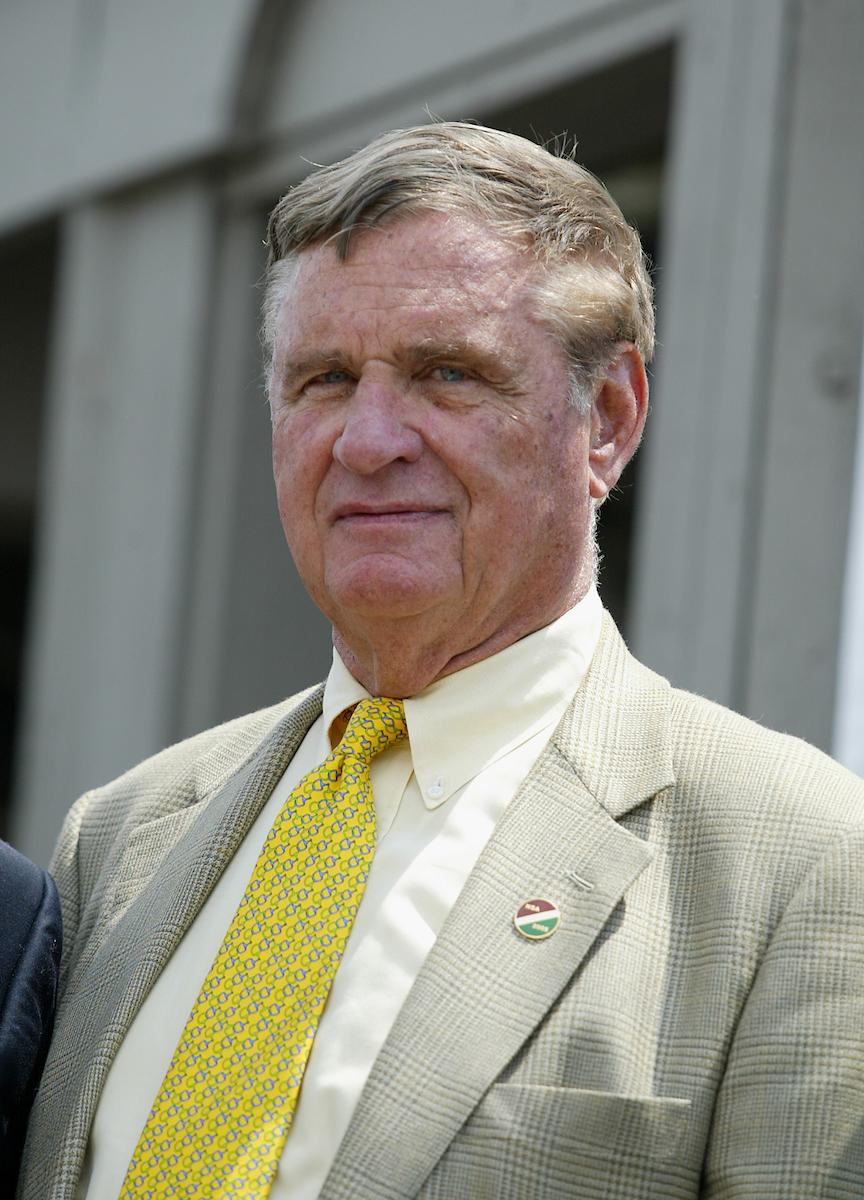
From championship golf to championing causes, William Cauffiel Lickle was never one to do things halfway.
(
Tod Marks
photo)
The Wilmington, Delaware native wasn’t born into racing but he taught himself handicapping as a boy, becoming a student of form at Delaware Park with his mother and her girlfriends. He dovetailed the skill into a wildly popular bookmaking business at prep school.
It got him in big trouble in 10th grade. Lickle reluctantly admits the transgression some 74 years later, but he retained an ardor for racing that took him from his first runner in 1974 to claiming racing’s most coveted award, the Eclipse in 1996. In three short decades, Lickle earned six National Steeplechase Association titles, won every top prize in American steeplechasing and won some of the best-known races on the flat.
He’s been away from the sport for 15 years, but Lickle, 90, remembers that it was one wild ride.
“We rode the crest of the wave for a while,” Lickle says, explaining his abrupt departure after the ’05 season. “It was simple, really. I’d won every race I wanted to win, and more. A lot of our friends were gone. We wanted to travel. It was time.
“I don’t regret anything. We made such good friends, and enjoyed (jump racing) as a sport. It’s not like the flat track – we did both, and I have to say, we (liked) steeplechase so much more.”
Lickle and his wife, Renee, married 70 years this November, currently split time between Delaware and their place in Palm Beach, Florida. It’s on a spit of land overlooking the Intercoastal Waterway at the Everglades Club two blocks from the Atlantic. It gives Lickle plenty of time to work on his golf game – he was intercollegiate champion at the University of Virginia and still loves to play, and they’re both involved in the local arts in both places.
Lickle recaptures the magic of the meteoric rise in steeplechasing that’s left the three-time leader – 1991, 1992 and 1997 – still fifth all-time leading owner in the sport, with more than $3.22 million in earnings. He's got a lot to say, and a lot of surprises.
|
|
How he got involved in racing is a little embarrassing.
|
|
My aunt foxhunted, and my wife’s family had horses, but I was never really rode.
I did go to the races all the time as a little guy, though, since my mother used to love to go to Delaware Park with her girlfriends. It was the crème de la crème back then.
I’d watch the races, read the form, look at the horses and pick the winner. I got real good at it, so when I went off to prep school, I decided I’d open a bookmaking operation.
So one day in 10th grade, I finally got caught. The dean told me he was going to throw me out of school and told me to call my parents to pick me up.
Before I did that, I had to tell him – I had to, you know – that my biggest customer was one of the senior professors on staff.
He looked at me and decided to let it go.
|
|
When our (third, of four, daughters) Ashley was young, she trained with Ronnie Mutch and was one of the top juniors in the country. We went all over the place with her – she won at Harrisburg, Washington, New York, so during the ’60s, we got used to horse ownership on a certain level.
I met Jonathan Sheppard at a party in the early ’70s and told him I’d always wanted a racehorse. Our first starter (Quel Chic at the Fair Hill fall meet, Charlie Fenwick Jr. up) gave me a real taste for it. Quel Chic was just beat at the wire. I was hooked.”
|
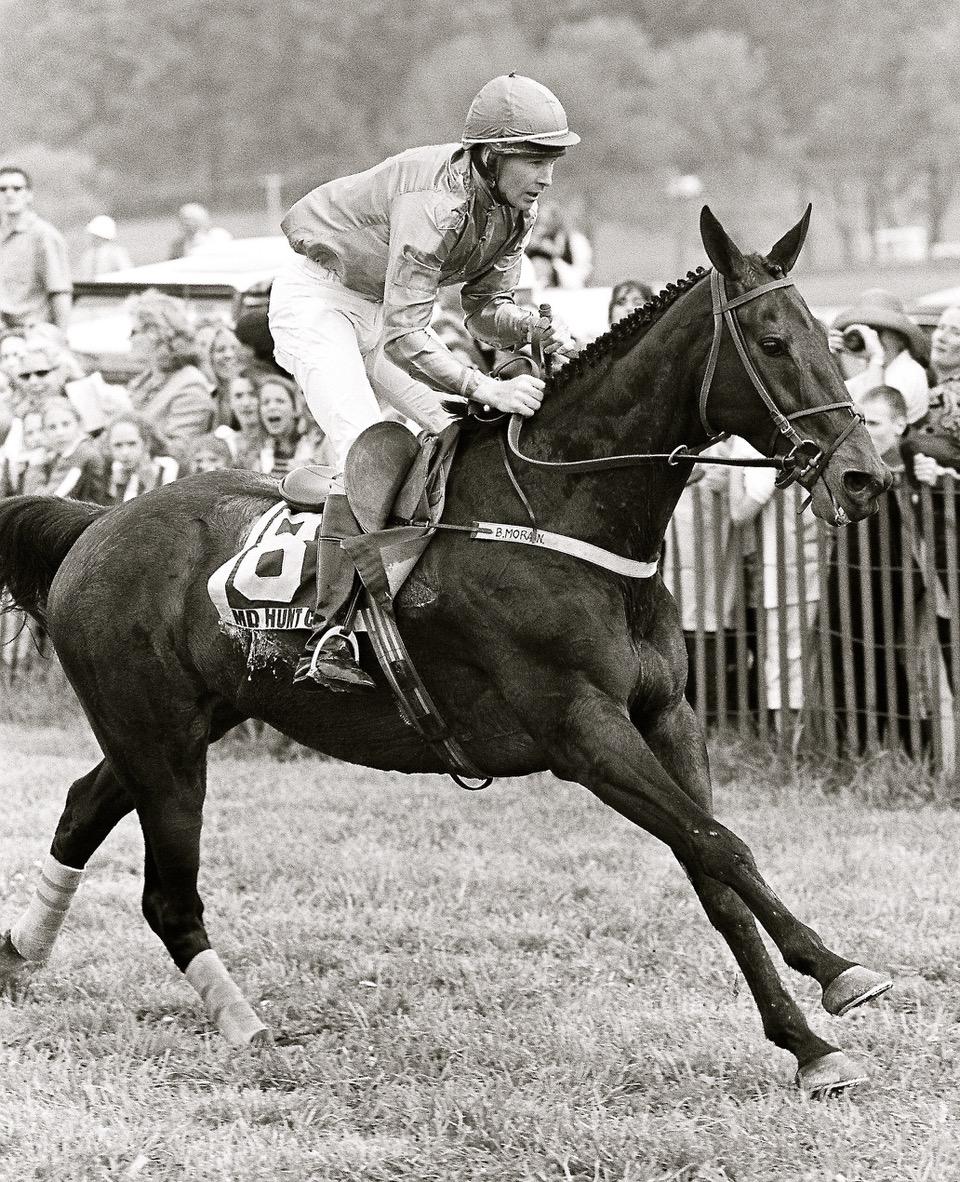
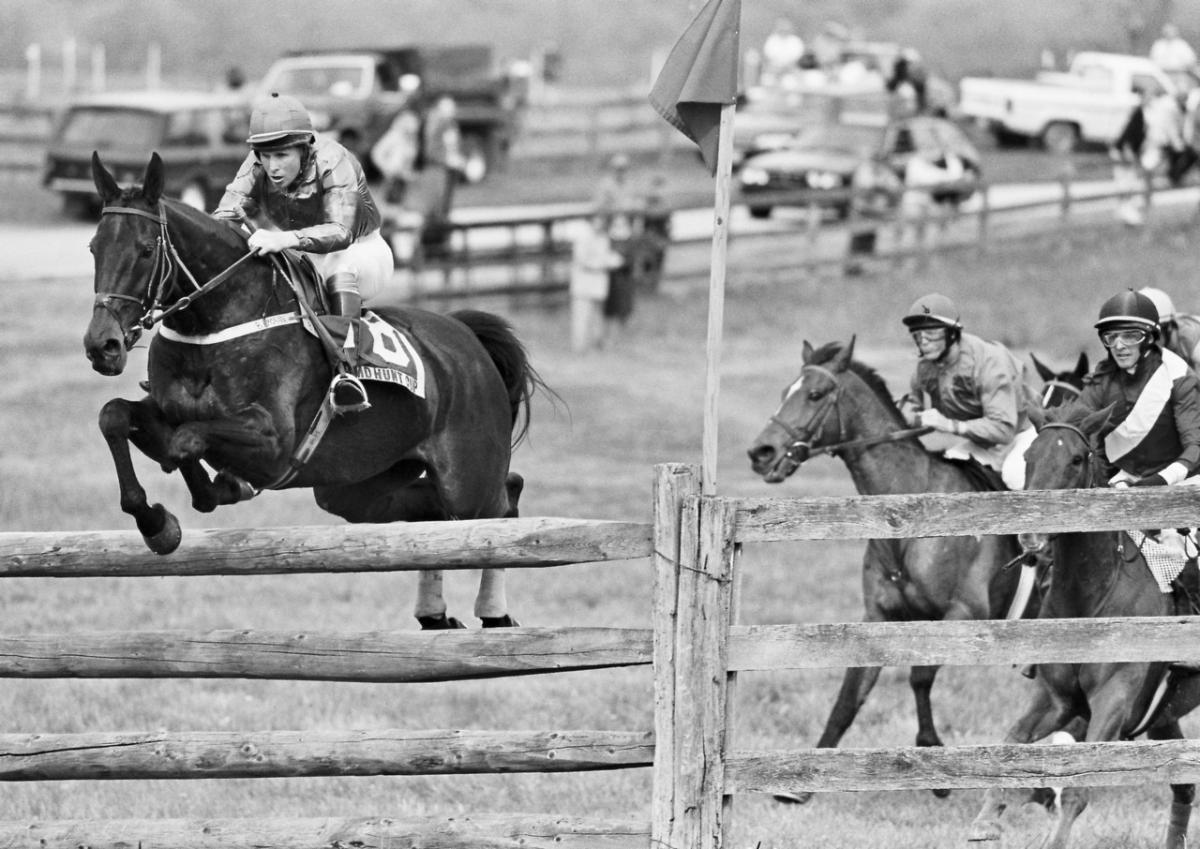
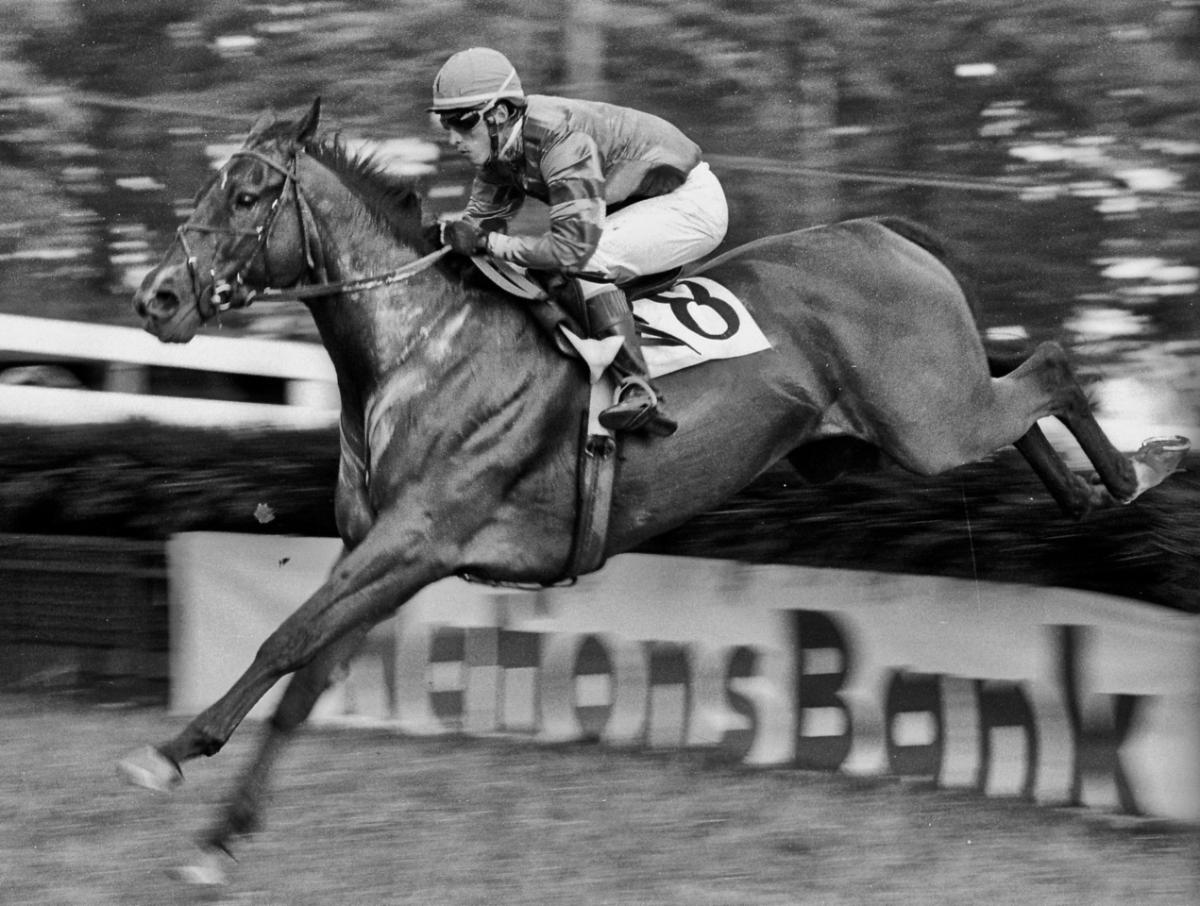
Bill Lickle's Young Dubliner, with Brian Moran in the irons, won the 2002 Maryland Hunt Cup.
D
ouglas Lees
photo
|
Sheppard produced Lickle’s first winner – Steel Dukes at Essex a month later. He had horses with Sheppard over the next six years, adding timber to his racehorse team in 1980 with Argentine-bred Afilador with Delaware neighbor Duncan Patterson.
When he purchased unraced 3-year-old Victorian Hill in 1988, Lickle started a run on the top hurdle stakes on the circuit.
|
Seventy-eight years after his first date with wife Renee, he’s still glad she accepted his offer of a hot dog.
|
I met Renee when she was in kindergarten. I was “the older man” – I was in second grade.
Her family owned the Philadelphia Phillies – one day at a game, I went from my family’s box to her family’s box. I asked her if she wanted a Coke and a hot dog.
She said yes.
I was 12, and we haven’t been apart since.”
|
The former Renee Carpenter Kitchell married Bill Lickle on Nov. 24, 1950 – this year marks their 70th wedding anniversary.
Lickle says Renee’s stock was pretty high since her family owned the Philadelphia Phillies MLB franchise.
Grandfather Robert Ruliph Morgan Carpenter Sr. bought the team in 1943 for $500,000. Son RRM Carpenter Jr., Renee’s cousin, became principal owner upon his father's death in 1949 and would serve as president of the Phillies until 1972, when his son succeeded him.
The Phillies won National League championships in 1950 and 1980, National League East Division titles in 1976, 1977, 1978 and 1980, and the team's first World Series title in 1980.
The Carpenters
sold the Phils in 1981
, ending the major league’s second-longest continuous ownership. The sales price was a record $30.175 million to a group of five investors headed by Bill Giles, executive vice president of the club for nine years.
The Phillies rewarded the new owners by making the ’81 playoffs and winning the ’1983 NL pennant.
|
He once said he looked at his race string like a baseball team.
|
Yes, I looked at my stable like a coach looked at a baseball team – I wanted a horse to fill each position. A timber horse, some top-rated hurdlers, mid-level horses, up-and-coming maidens.
We imported some horses from Ireland with guidance from Tom and Peaches Taaffe (Tom’s father was Pat Taaffe, of Arkle fame.)”
|
Bill and Renee accept the trophy at Foxfield in 1993, for Victorian Hill's win, with Sean Clancy in the irons. Janet Elliot trained Victorian Hill. Douglas Lees photo
|
Multi-tiered involvement
Lickle wasn’t just involved at the ownership level, he also labored long and hard at the executive level, and in the trenches. He helped start the Winterthur races and the Steeplechase Owners and Trainers Association. He served on the Breeders Cup Ltd. Board and helped form Thoroughbred Racing Communications.
Lickle’s silks and trophies are on display at the National Museum of Racing and Hall of Fame that he helped create in Saratoga, New York.
|
Reading Lickle’s list of professional and volunteer involvement makes you a little sleepy. But he says he never needed much sleep.
|
When did I sleep? (I) never needed much sleep, and that’s the truth.
When I was in law school (at the University of Virginia), I was married, with two small children. I played on the golf team, and was of course enrolled in many classes.
None of my classmates did all those things – they just studied.
So I had to work on time management. Sleeping is what I let go.
I’d go to class, take a nap, and play some golf in the afternoon. I’d have dinner with the wife and kids, then I studied 12 midnight to 5 a.m., nap a little, and start over.
The naps were the secret.”
|
|
Just the facts:
Bill Lickle
|
His resume reads like a Who’s Who (because, well, he actually is)
William Cauffiel Lickle earned undergrad and law degrees from the
University of Virginia
, passing the bar before graduation and by 36 running the biggest brokerage firm in Delaware.
|
He’s former chair and CEO of Laird Bissell and Meeds, the
Delaware Trust Company
and chairman of
J.P. Morgan
International Holdings Corporation. He was director of Dean Witter brokerage.
|
A history buff and member of the
Society of Colonial Wars
,
Sons of the American Revolution
(an ancestor, Col. Cauffiel, fought in the Revolution and the Spanish-American War) and
Magna Carta Barons
, Lickle worked extensively with the
Delaware Better Business Bureau
,
Delaware Community Foundation
, Delaware Cancer Network, United Community Fund of Delaware,
Delaware Chamber of Commerce
,
Delaware Business Roundtable
and
Delaware Museum of Natural History
. In Florida, he’s served the
Palm Beach Civic Association
,
Planned Parenthood of Palm Beach County
,
Kravis Center for Performing Arts
and
Society of the Four Arts
.
|
He’s also been deeply involved with the Republican party: Lickle worked with Citizens for Eisenhower in the ’50s. He was active on the Goldwater, Nixon and Reagan campaigns and worked as a treasurer for the Delaware Republican Party. In 1988, Lickle was appointed by President Reagan to the
President's Export Council
.
|
Lickle has been a member of dozens of professional societies and organizations over the years, including the UVa Skull and Keys, Naval ROTC, Kappa Alpha fraternity, Phi Alpha Delta, Raven Society.
|
|
He had a knack of sniffing out the action. Sometimes good, other times, bad. Hear how he and Renee barely missed being blown up during Fidel Castro's 1953 Cuban revolución.
|
|
We were on vacation in Havana Cuba (the summer of 1953.) That’s where the action was. Cuba was vibrant, and beautiful.
I opened the trunk of the car we’d hired to take us to the beach. Under my swim trunks was a machine gun. We’d seen tanks in the streets as we drove out of the capital city, and there were whispers of trouble afoot.
Headed back to the city center, our driver panicked, flipping the car into a sugar cane field. It rolled over and over.
I was covered in broken glass, and Renee was badly hurt.
|
|
I had to pay for gasoline to put in the ambulance so it could take us to the American hospital. Gun-toting rebels beginning to gather on the street corners to support Castro's government overthrow. (It was late on July 23, 1953, Dia de la Revolución.)
We checked out of our hotel – changed clothes because ours were all torn and bloody. I got us a 4 a.m. limo to the airport and (eventually) got us a private jet out. We put our good old American dollars to good use, and basically bought our way out, since the airport was closed.
I feel like we got a pretty good deal really. I never actually had to pay the hotel bill, because a tank blew the lobby up later that morning.”
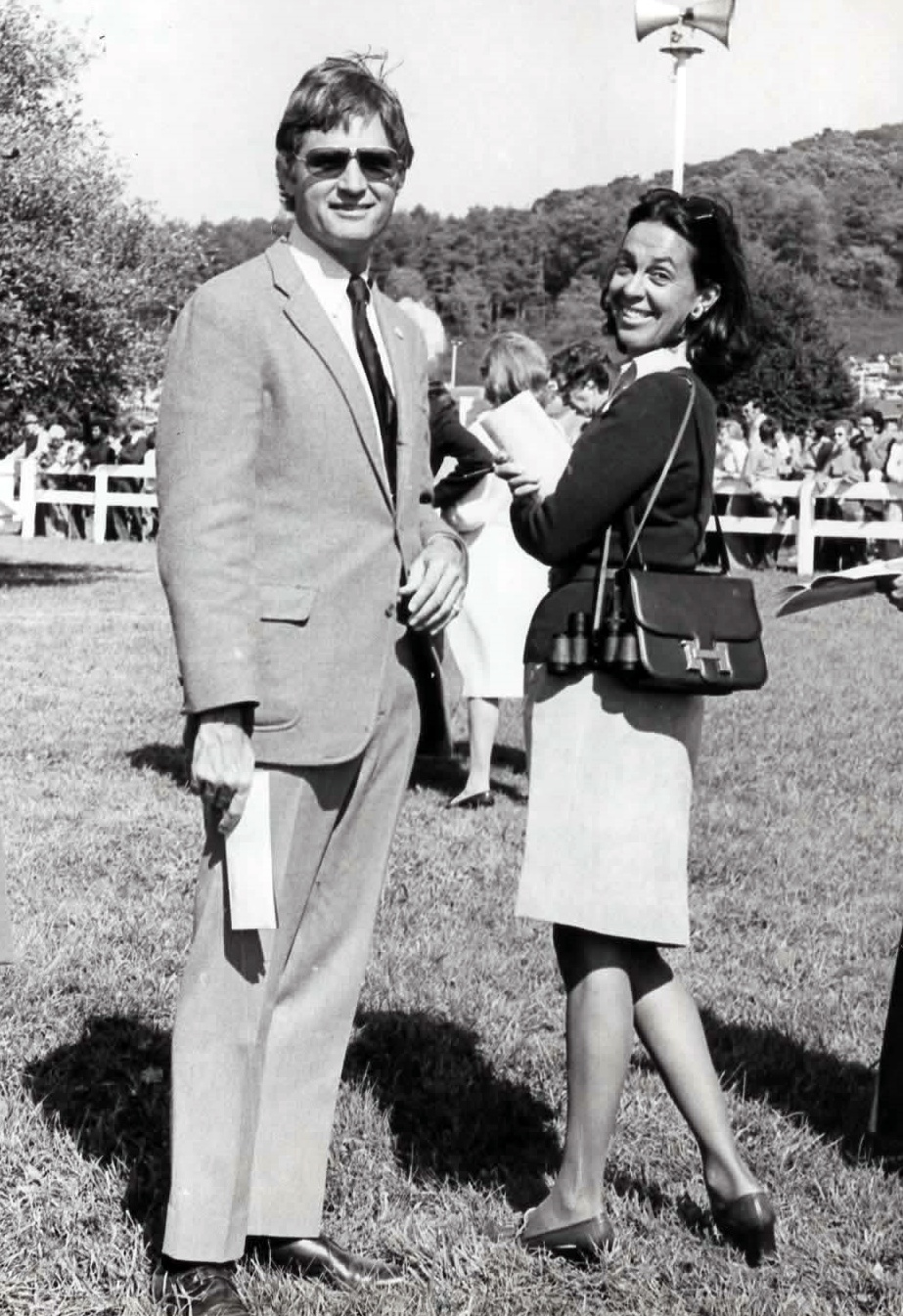
(Freudy Photo from 1974, above)
|
|
~ ~ ~ ~ ~ ~ ~ ~ ~ ~ ~ ~ ~ ~ ~
|
|
He got involved with neighbor and friend Duncan Patterson to add timber to the mix in 1980.
|
|
Duncan Patterson
(
Tod Marks
photo) trained timber horses for Lickle more than 25 years. “We won at least one race for him every year,” Patterson recalls the great run the two Wilmington neighbors had. “He was great to train for, a great winner and a great loser.
“(His wife, Renee) wasn’t as visible as her husband, but she was always involved and always supportive.
“Winterthur was their home meet – he helped found it, so he was always wanting a horse to run at Winterthur. The course is just three miles from (our houses.)
“Bill Lickle was really a great host. We’d go up and stay at his house in Saratoga a week or two every year for 30 years in a row. My liver couldn’t take any more than that.”
|
|
He had a great run with trainer Janet Elliot, though it almost ended in tears
|
Janet Elliot, who trained Lickle’s Eclipse winner, Correggio, and his chief earner, Victorian Hill, says the longtime owner had a sporting nature. “He was always very fair,” Elliot says. “When I’d ask his input, he’d say things like ‘well, you’re the trainer. You know best.’
“Having said that, there was a time when I wanted to run Correggio at Red Bank – in his condition, but Mr. Lickle wanted to go straight to the stake at Far Hills.” The Irish import had won over hurdles in Ireland, then returned after a layup in 1996 to win a turf tune-up at Philadelphia Park and the non-winners of two over hurdles at Foxfield in September.
“He let me decide in the end, of course. So I get to Red Bank on race morning, and it’s pouring. Just pouring. I didn’t even pull in the course, and, sure enough, they actually canceled the races.
“So I consequently entered at Far Hills the next week. And Correggio consequently won (the featured Breeders Cup Grand National stake.) He was voted Eclipse champion, so I guess it all worked out.”
|
Bill and Renee Lickle with Janet Elliot after Correggio's win in the Grand National at Far Hills in 1996.
Laurel Scott / NSA Archives photo
|
|
Lickle: Helping With Horses
|
|
Even more memorable was their partnership with an athletic Florida-bred son of Dickens Hill. Victorian Hill was gorgeous, Elliot says.
(Douglas Lees photo, at Foxfield Races)
“I watched (then-owner) Arthur McCashin loose school this big bay horse,” Elliot offered the unraced gelding to Lickle, who says he “trusted Janet if she told me she’d found me a nice horse.”
Victorian Hill won his first start for Lickle – on the turf at Fair Hill, and his first three tries over fences – at Atlantic City, Virginia Fall and at Fair Hill’s fall meet. He fell in the 3-year-old hurdle stake at Colonial Cup next out; it was the only fall he recorded in an extensive, nine-year career.
Victorian Hill was consistent, winning 18 of 65 starts, in the frame 40 times, earning more than $750,000 lifetime.
The horse did have one issue – a nervous stomach, Elliot says. She recounts a nightmare emergency trip to New Bolton, his owner away on business overseas as the champion struggled to survive on the operating table.
“Vic was prone to colic. Mild, you know,” Elliot easily managed it at home, she says, but that autumn day in 1991, it was acute. “I wasn’t sure he’d even make it.
“The New Bolton crew weren’t even sure he’d live through the surgery, much less race again, much less at the (top level.) They took out half his large colon.”
“The horse was a real fighter,” Lickle remembers Vic’s determination that day, and in the slow months of recovery that followed.
Victorian Hill not only survived, he thrived. He was placed in the handicap at Atlanta the next April, just a few months post-surgery, and the Gwathmey before winning his second-straight Iroquois weight-for-age in May. He went on to finish second in two consecutive Grand National hurdle stakes, and win four in a row at Foxfield to cap the career before retiring at 11.
|
|
Winners circle photo of the Lickles, Victorian Hill and jockey Sean Clancy at Foxfield in September of 1993.
Douglas Lees photo
|
|
|
Maryland Hunt Cup was one of the races Lickle aimed to win. Young Dubliner came through.
|
|
Young Dubliner filtered through three of Lickle’s trainers’ barns, starting with Ricky Hendriks and moving to Janet Elliot’s, but it was Kathy Neilson that produced Young Dubliner’s championship season.
The Irish import jumped for fun, Neilson recalls, to win the 2001 steeplethon at International Gold Cup then gave an eye-popping performance to win the 2002 Maryland Hunt Cup in his first try in the four-mile classic.
Brian Moran was aboard, and their winning time – 8:25 3/5 – is still the record mark. He claimed that year's NSA timber championship.
(Douglas Lees photo from Fence 13)
|
|
Young Dubliner returned to defend his Hunt Cup crown in 2003, but made a mistake – of brilliance, Lickle recalls, and lost rider Charlie Fenwick III at the 14th. He came back in ’04, finishing third with then-amateur Paddy Young.
Lickle gave the talented horse, and several others, to Neilson when he stepped away from the game after the 2005 season. Young Dubliner went on to win two of three NSA foxhunters’ races, and the series title, in 2006 for Todd McKenna.
“I was lucky to work for such generous, kind, fun people,” Neilson recalls. “When I first told them I thought Young Dubliner was a Hunt Cup horse, they said ‘Great! Let’s do it!
“They were game, and loved going wherever their horses took them.
“Looking at it now, it must have been all the good karma the Lickles generated. They were a wave of enthusiasm that brought everyone to a higher level, including the horses.”
|
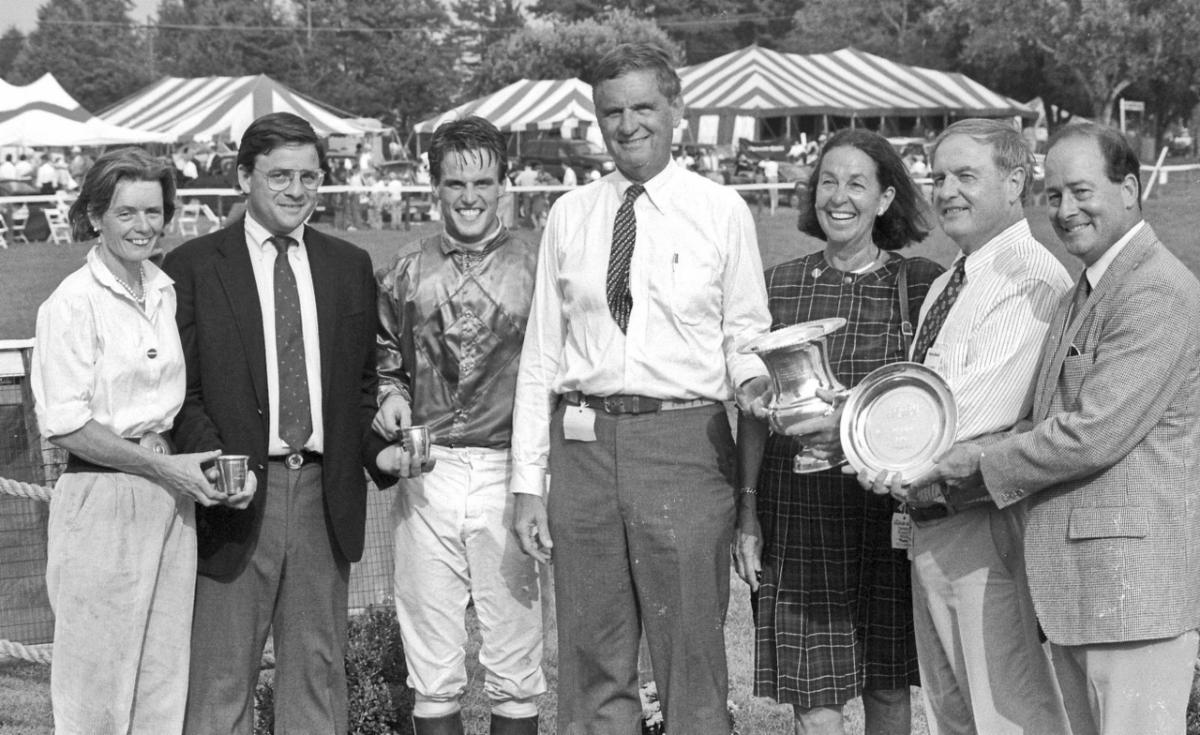
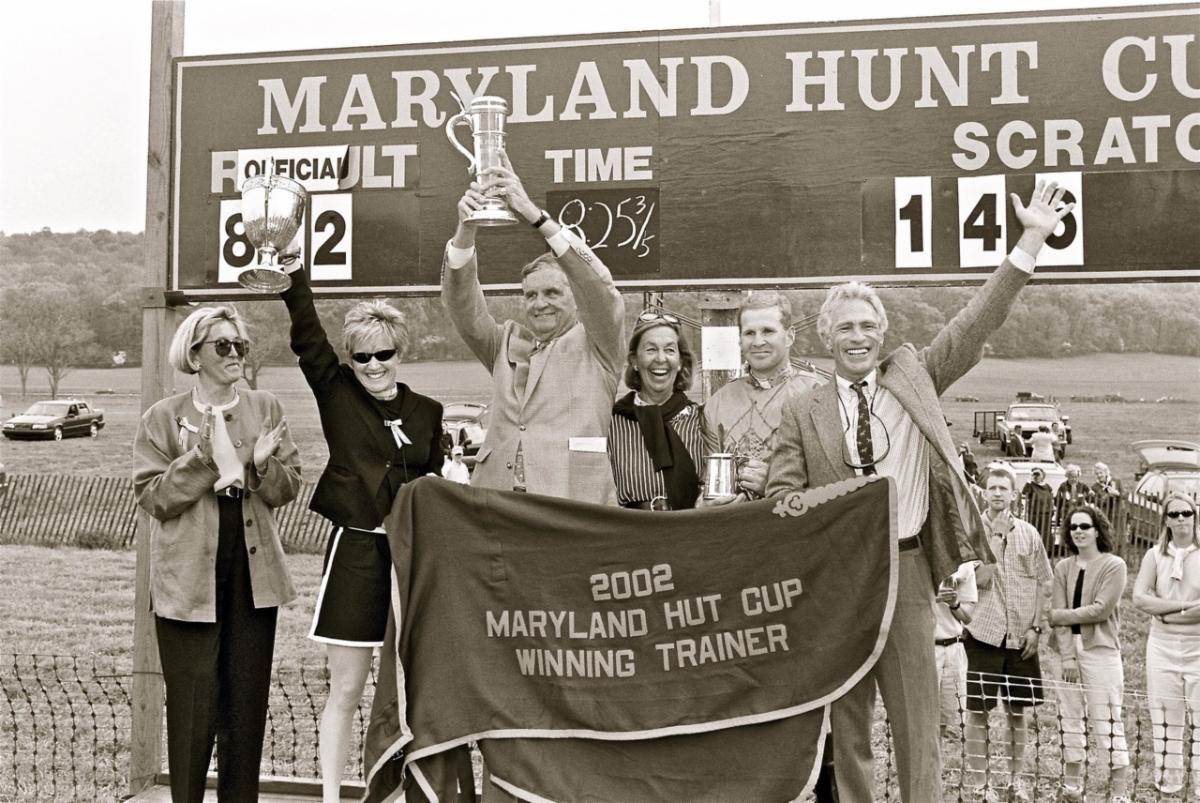
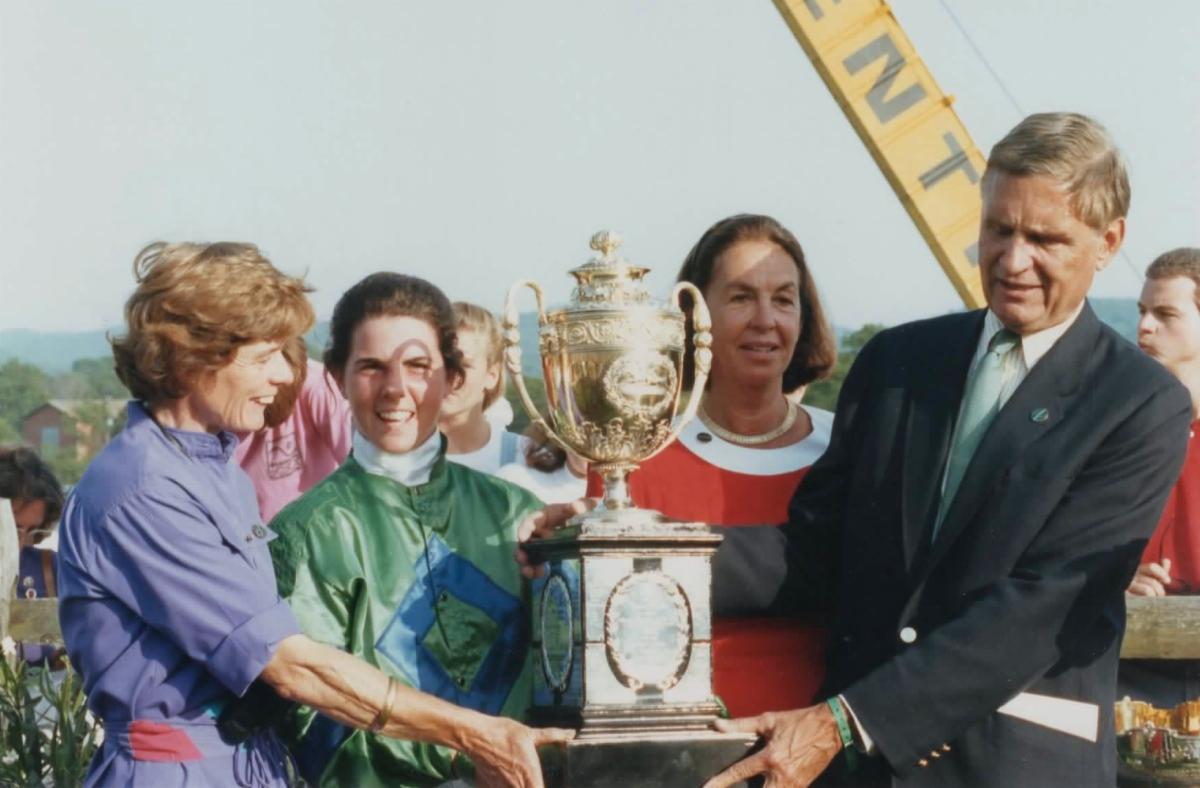
Bill and Renee Lickle and Kathy Neilson receive the 2002 Maryland Hunt Cup trophy from Margaret Worrall on the far left. Jockey Brian Moran and Billy Santoro round out the trophy presentation.
Douglas Lees photo
|
Lickle stable Maryland Hunt Cup stats
|
1986 –
Ventarron (lost rider Duncan Patterson – but went on to be close-up third to winner Sugar Bee in the Virginia Gold Cup a week later)
|
1987 –
Spouting Creeque (lost rider Duncan Patterson)
|
2002 –
Young Dubliner (first with rider Brian Moran)
|
2003 –
Young Dubliner (lost rider Charlie Fenwick III)
|
2004 –
Young Dubliner (third with rider Paddy Young)
|
|
1986 –
DVPA
champion –
Spouting Creeque
|
1990 –
DVPA
novice timber champion –
Stacy Sum Time
|
1991 –
NSA
champion owner
|
1992 –
NSA
champion owner
|
1996 –
NSA
timber champion –
Where’s Pepo
|
1997 –
DVPA
novice timber champion –
Javavoom
|
2001 –
VSA
claiming series champion –
Master McGrath
|
2002 –
NSA
timber champion –
Young Dubliner
|
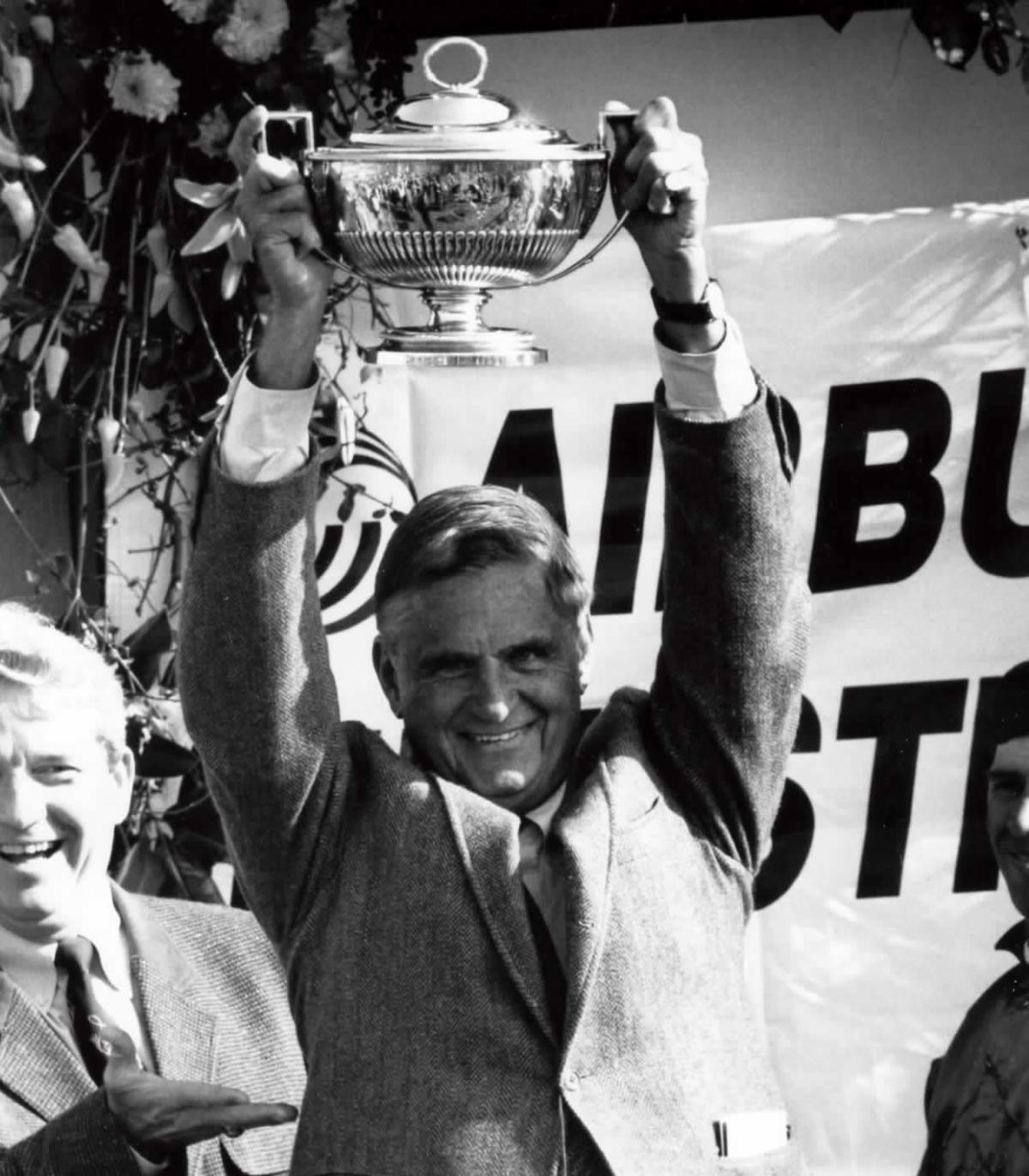
Accepting the trophy for Victorian Hill at the 1992 Iroquois Steeplechase.
Catherine French photo
|
|
The Lickle Stable Top runners
|
|
Victorian Hill: Currently sixth all-time leading NSA earner with 18 wins from 65 starts (including point-to-points) and more than $750,000 in earnings. He set four course records.
|
|
As with many top ‘chasers, Victorian Hill was a course specialist; he adored Charlottesville’s Foxfield racecourse nearly as much as his owner loved the University of Virginia. “Jeff Teter told me once the reason Vic won at Foxfield so many times (four – 1993-’95) is that he’s one of the few horses that can really ‘run downhill,’ I mean, accelerate on that steep grade that takes you from the end of the homestretch all the way on the backside of the course,” Lickle repeats Teter’s reasoning. “Most horses brace when they go downhill. Jeff said Vic would extend his stride.”
(Douglas Lees photo from Foxfield in 1993)
|
|
Dynasty
Victorian Hill’s dam, Victorian Lace, produced two other foals to race, including distaff hurdler Gemini’s Gem, who herself went on to found a steeplechase dynasty. Dam of nine winners from 10 foals, her produce included winning hurdlers Three Carat, Sparkled, Rare Mix, Brilliant Match, Birth Sign and One Giant Step. Hurdle-winning daughter Effervescent in turn produced hurdle stakes winner Italian Wedding.
|
|
Correggio: 1996 Eclipse Award winner; grade 1 winner of $258,880
|
|
Hudson Bay: Set Saratoga track mark; grade 2 winner of $232,685
|
|
Master McGrath: Grade 1 winner of $331,355
|
|
Trebizond: Won two legs of the hurdle “Triple Crown” – Keeneland and Belmont (Pimlico canceled due to weather); earnings of $223,088
|
|
Green Highlander: 1992 NSA novice hurdle champion; set course mark at Saratoga on the turf
|
|
Young Dubliner: 2002 NSA timber champ, 2002 Maryland Hunt Cup winner
|
|
Where's Pepo: 1996 NSA timber champ
|
|
Sintra: Won the inaugural Queen Elizabeth II Challenge Cup at Keeneland and the grade 1 Test at Saratoga; earnings of $378,606. Sold for $700,000 in foal to Topsider at Keeneland November
|
|
Tide: Multiple graded stakes-placed, she won the listed Budweiser Breeder's Cup at Fairmount Park in 1986. Sold for $500,000 in foal to Apalachee at Keeneland November
|
|
|
|
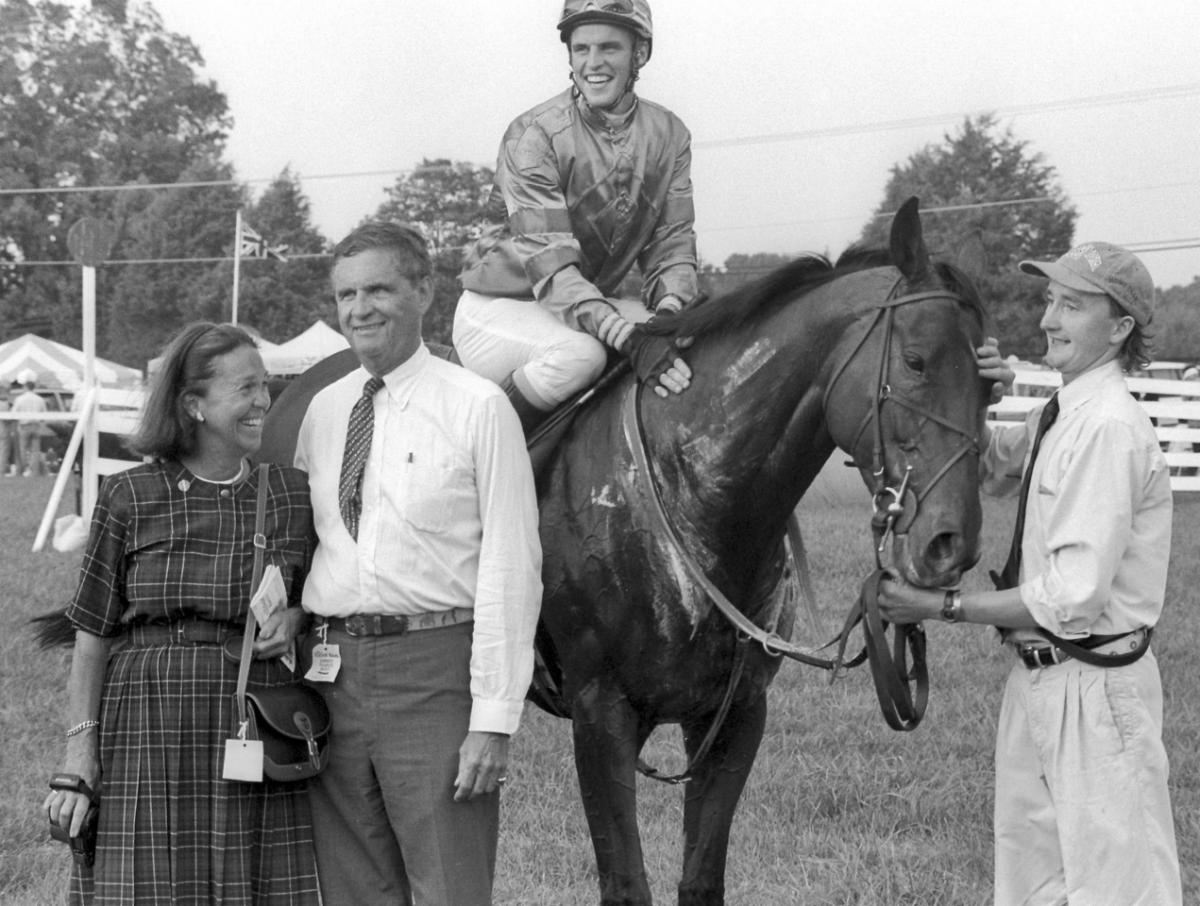
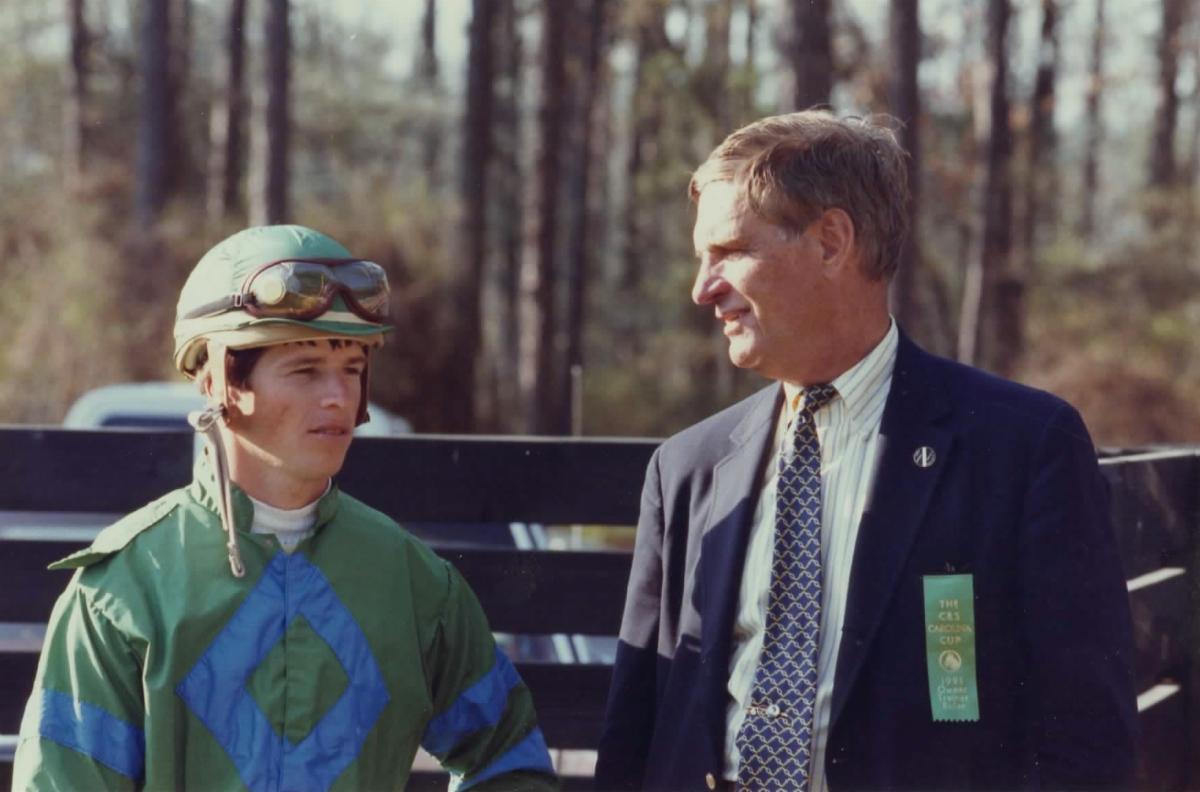
Bill Lickle and jockey Jeff Teter at the 1991 Carolina Cup Races. Teter and Victorian Hill finished second that year in the Carolina Cup.
Catherine French photo from the NSA Archives
|
|
|
|
See what's happening on our social sites:
|
|
|
|
|
|
|