The quiet confidence of four-time champion rider John Cushman
|
|
Trace the trajectory of the fourth-generation horseman and long-time director of the
Carolina Cup
|
|
Study the career course of four-time champion rider John Cushman on paper, and it follows a comfortingly familiar trajectory. A fourth-generation steeplechase horseman, the Camden, South Carolina native grew up riding ponies, showing and hunting, breaking yearlings when he was big enough – age 12, and getting on a couple each morning before hurrying to class at the middle school adjacent to the downtown training center.
As soon as he turned 16, Cushman took out his National Steeplechase license. At first, he rode family horses trained by his father, standout horseman Charles V.B. Cushman Jr.
|
|
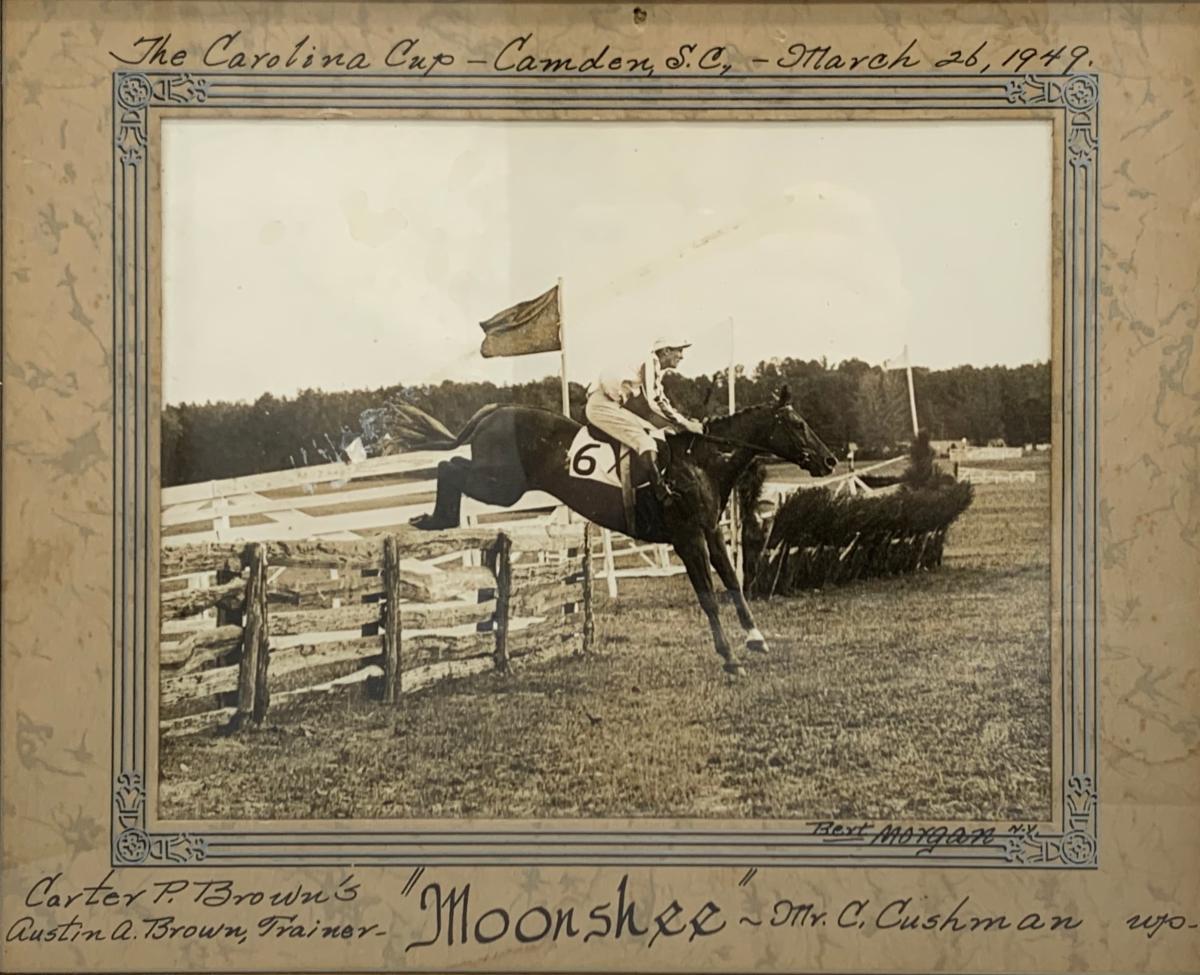
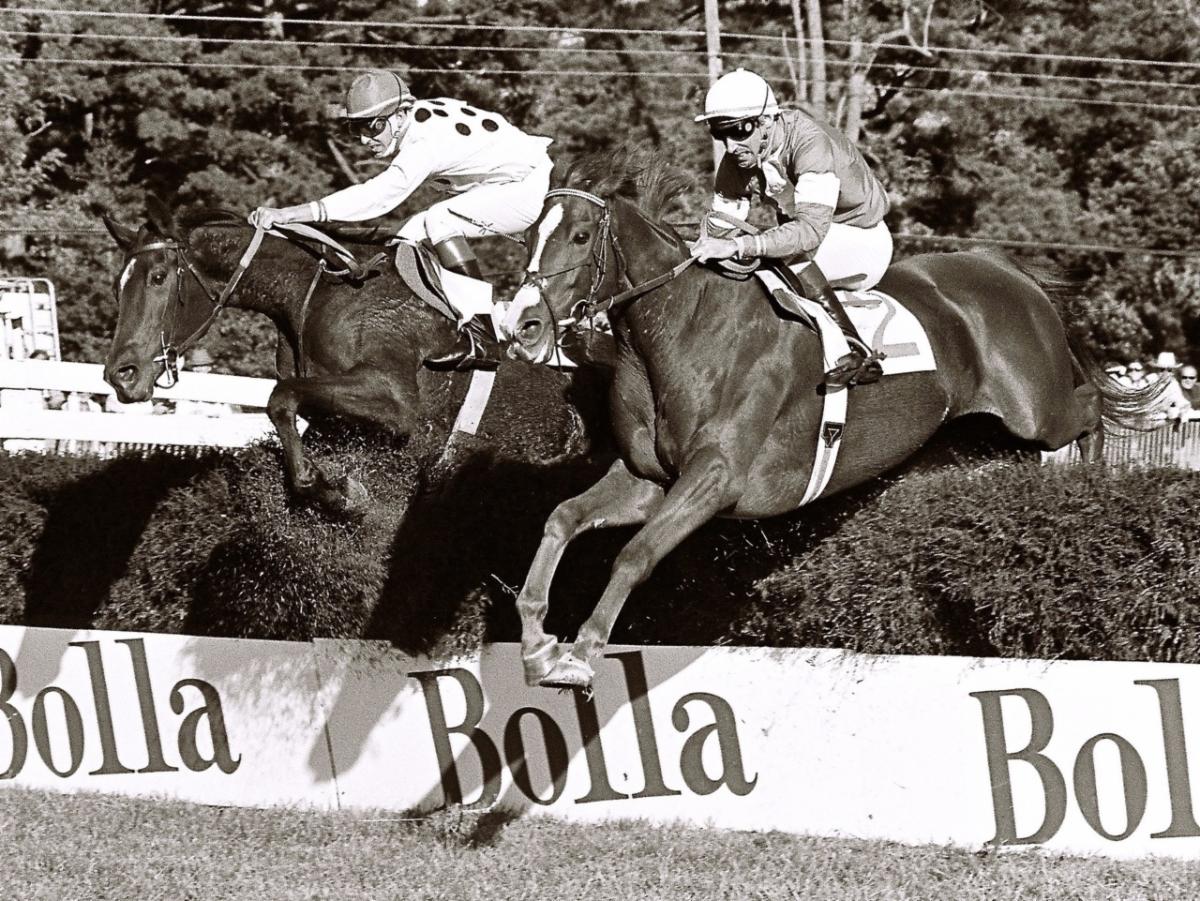
The 1949 Carolina Cup, with Charles Cushman, Jr. riding Moonshee for trainer Austin Brown. Photo courtesy of John Cushman.
|
|
|
Charlie Cushman, by all counts, had an excellent eye for a horse, and a gentle manner with his charges, equine as well as human. He gave son John his first ride – on the turf at the Nov. 17, 1973 Colonial Cup meet, and gave him his first winner – veteran hurdler Nelson at the May 11, 1974 Fair Hill races. The elder Cushman steered John right, encouraging him to take a few outside mounts as the fledgling career took wing.
|
Pore over official Daily Racing Form records and chart Cushman from a few modest placings to riding the card at the hunt meets the following season. Cushman was thinking career. “When it was time to think about college, I sat my dad down. I said, hey, let’s save your money and save my time and I’ll just go to work.
“He said, ‘damn, you’re smart.’ Life took me where it took me.”
But as suddenly as it started, on paper, John Cushman’s career just stops. After 1978, there’s nothing, not a single mount recorded in 1979. You might think a year-long break was due to injury – after all, one of his last rides in ’78 was a fall from Zero Launch at Belmont Park, a Ronnie Houghton horse Cushman rode to break his maiden that summer at Saratoga. Perhaps explain the withdrawal by rethinking the choice to bypass college – at 22, Cushman was still student-aged. Maybe he, rightly, chose to focus on operating The Tack Room saddle shop he’d purchased from his mother.
Looking back, Cushman says he actually quit for a most unlikely reason.
He was frustrated, he recalls, losing confidence and impatient for the career break he sorely wanted but couldn’t seem to get.
“I rode seven years, got on some moderate horses with moderate success but just couldn’t break through,” Cushman explained the abrupt departure from the rider ranks. “I wasn’t sure this was a good career path after all, so I just stopped. I was winning six or 10 races a year, but it didn’t make a lot of sense.
“I was ready to go another direction.”
As often happens, it was all in the timing.
|
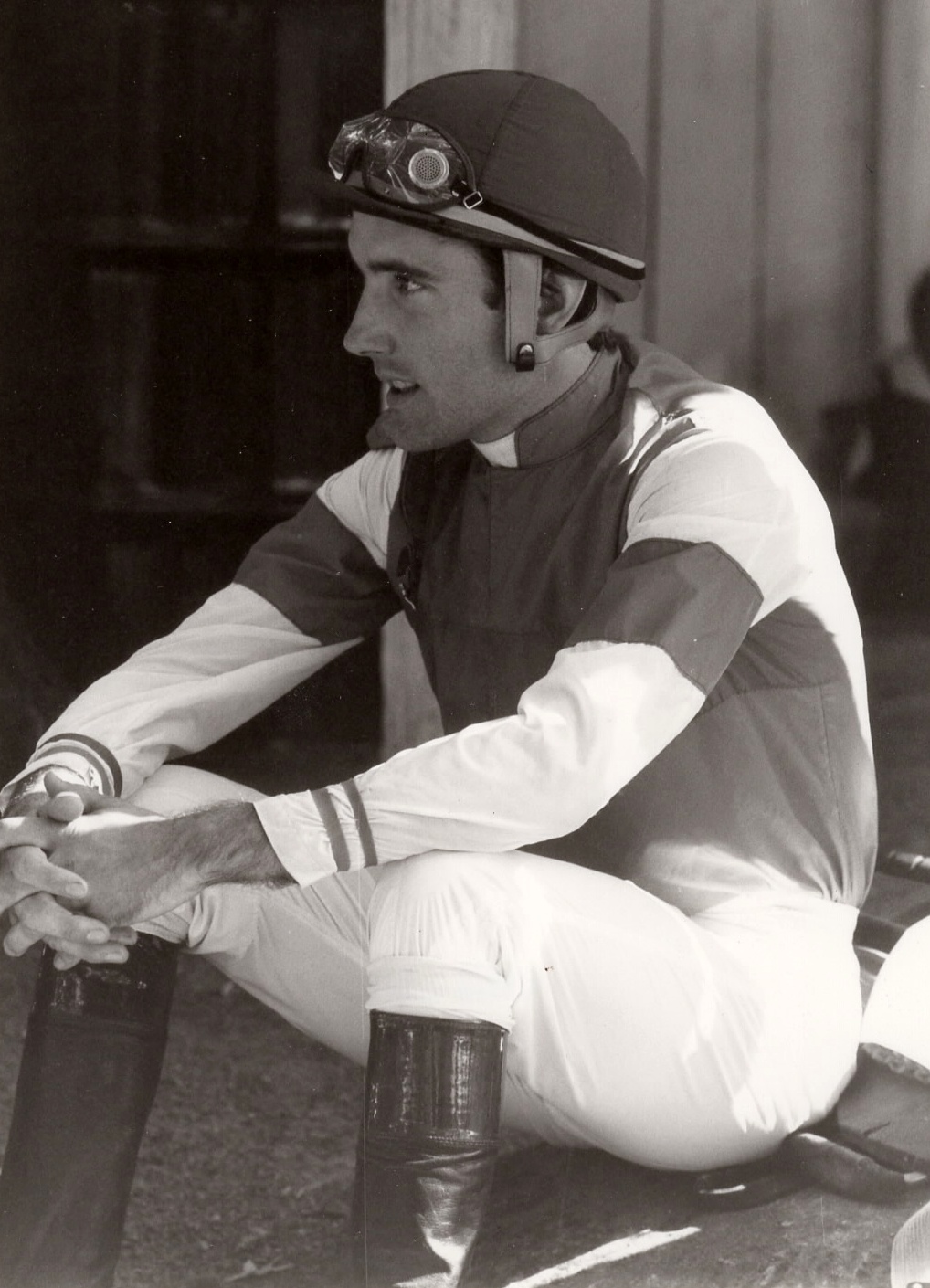
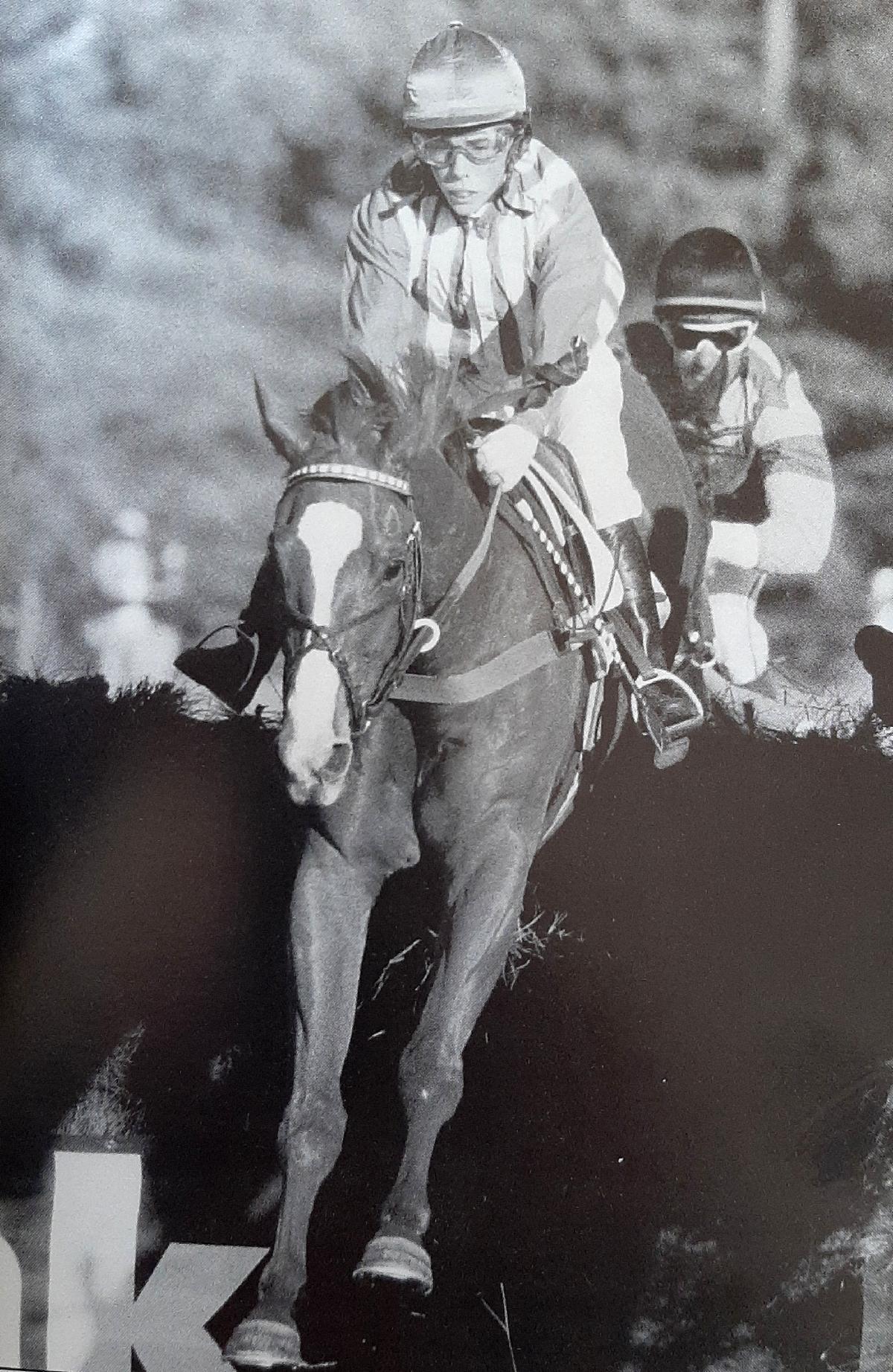
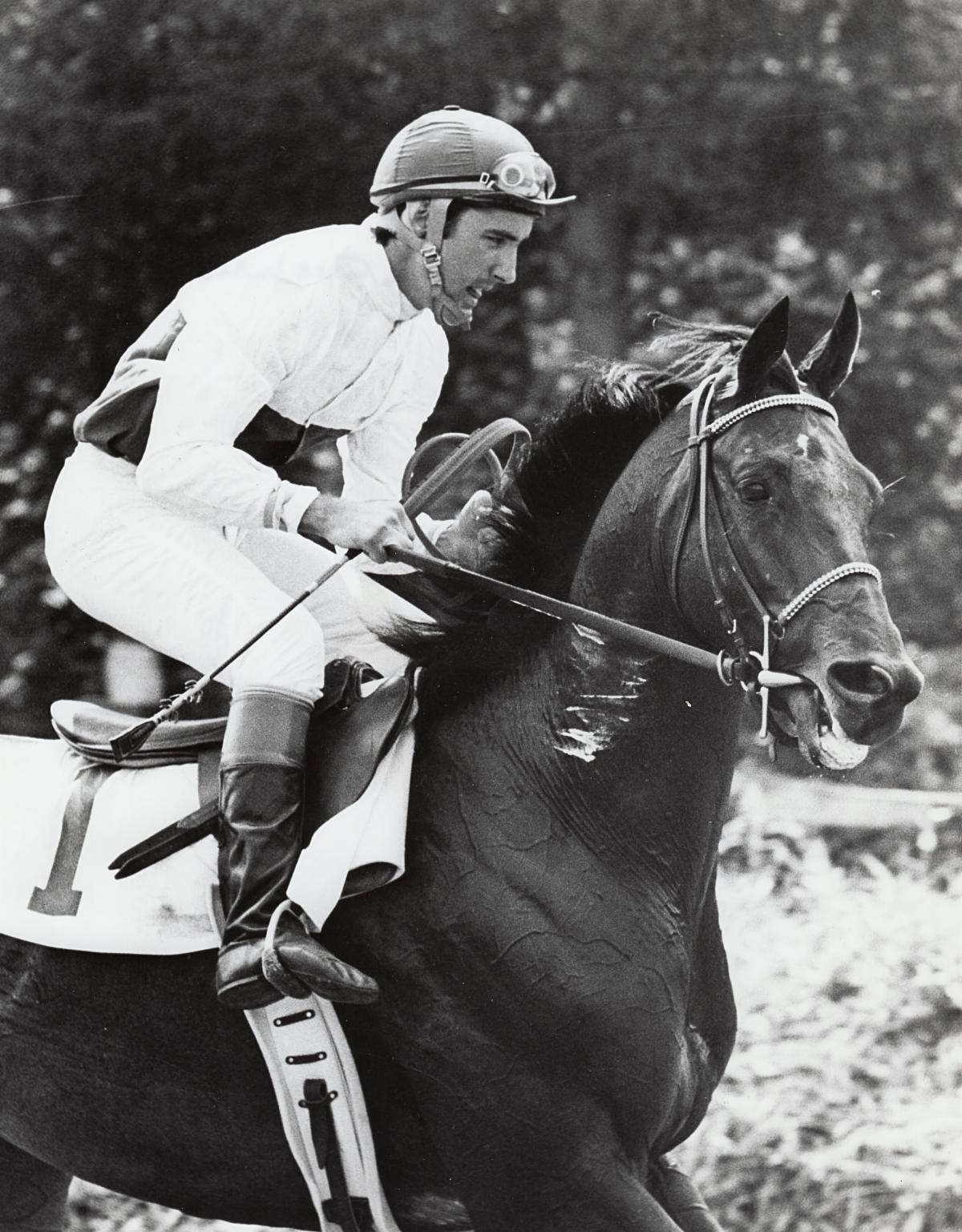
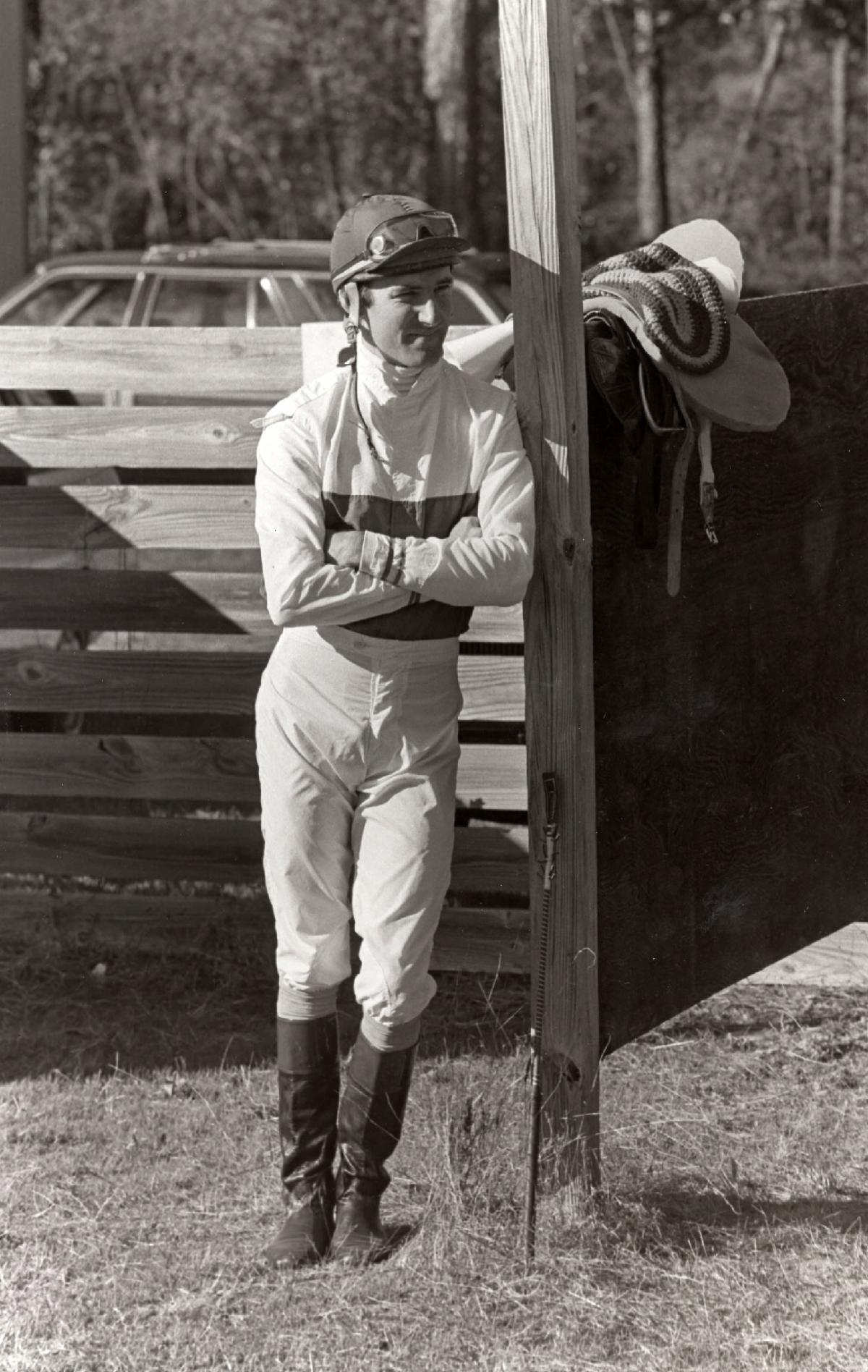
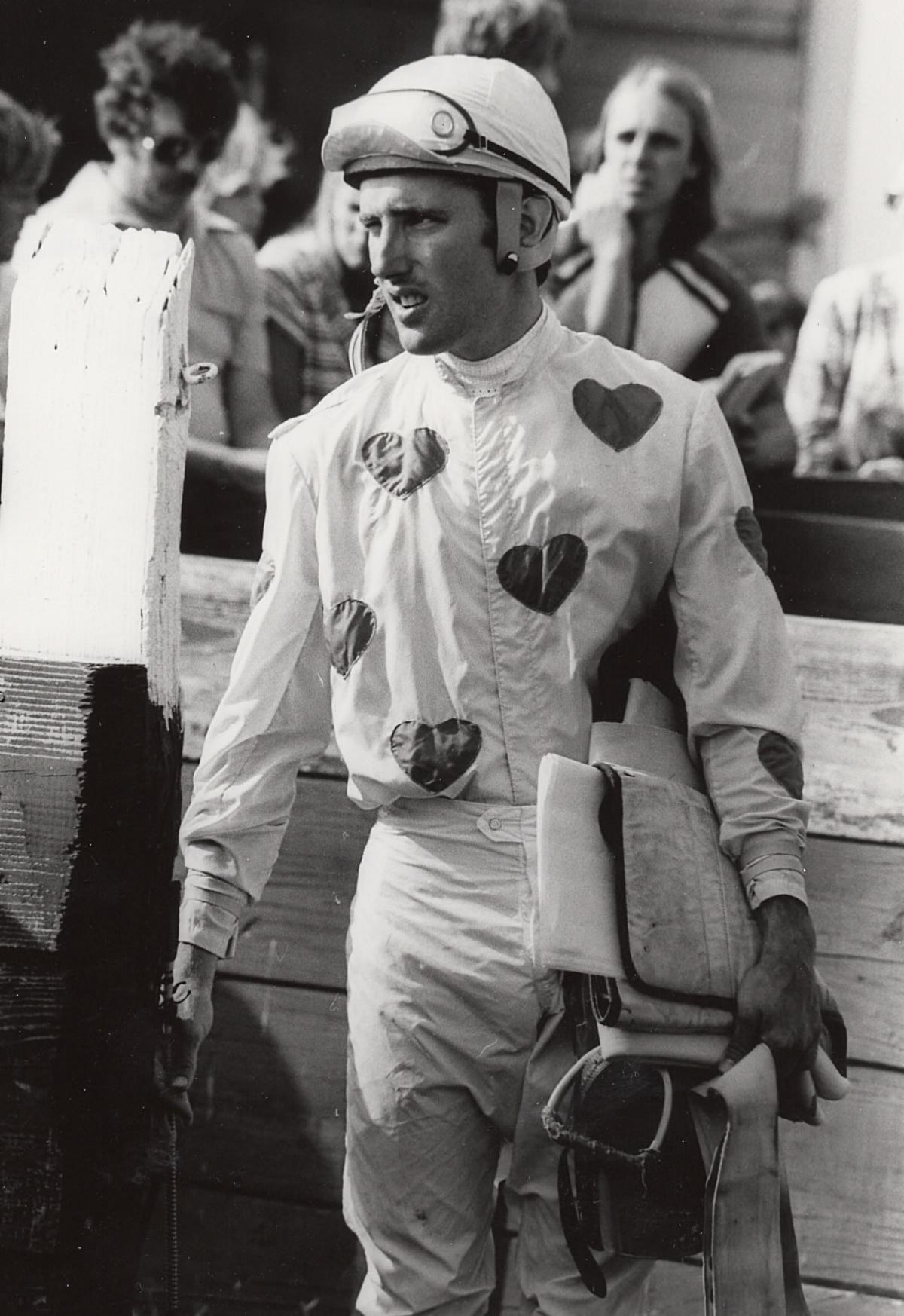
John Cushman. Photographer unknown, from the NSA Archives
|
Comeback
Pick up the journey on paper the following year.
Cushman had continued schooling horses through 1979, and in early 1980, his fate changed.
“I was schooling a horse for somebody a week before Aiken,” Cushman recounted the sudden pivot in the curtailed career. “Mr. Cocks came over and said ‘hey, you want to ride at Aiken’?
“These were the days if you didn’t ride for Burley Cocks or Jonathan Sheppard, you were basically second-tier,” Cushman said. Cocks’ first-call rider, Doug Small, had broken his leg.
It was his chance, and Cushman ran with it.
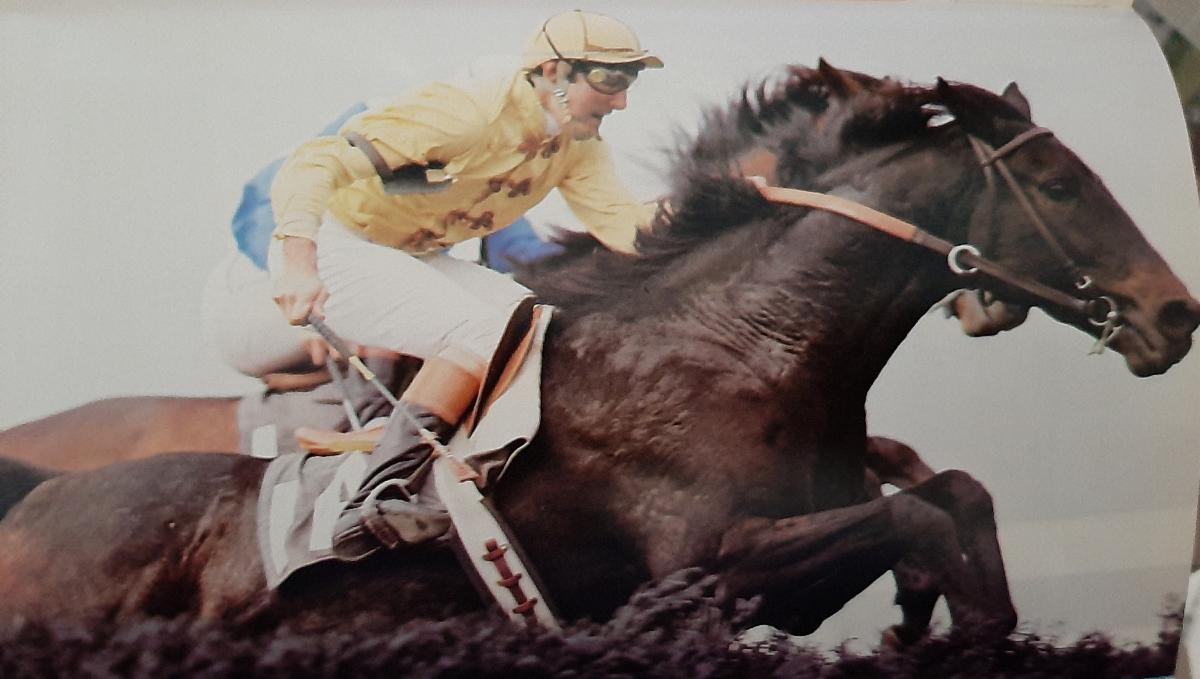
Cushman won with his first jump mount that spring for Cocks – Mrs. Miles Valentine’s Winter Wonderland at the March 29, 1980 Carolina Cup. Frustration was displaced by increasing, quiet confidence, and skill began to build, he says. They added winners through the hunt meets to the major tracks – Cushman taking Winter Wonderland from his maiden score to trouncing the field in that summer’s Tom Roby hurdle stake at Delaware Park.
|
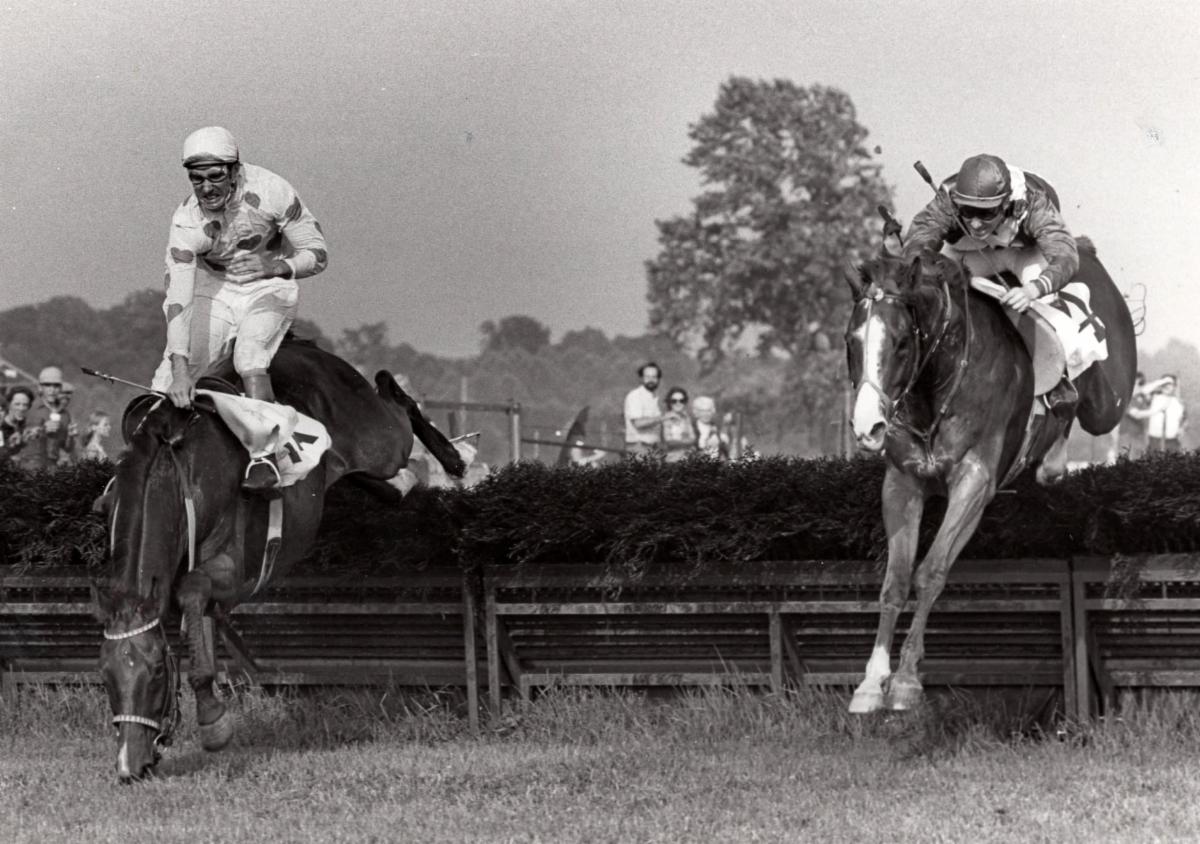
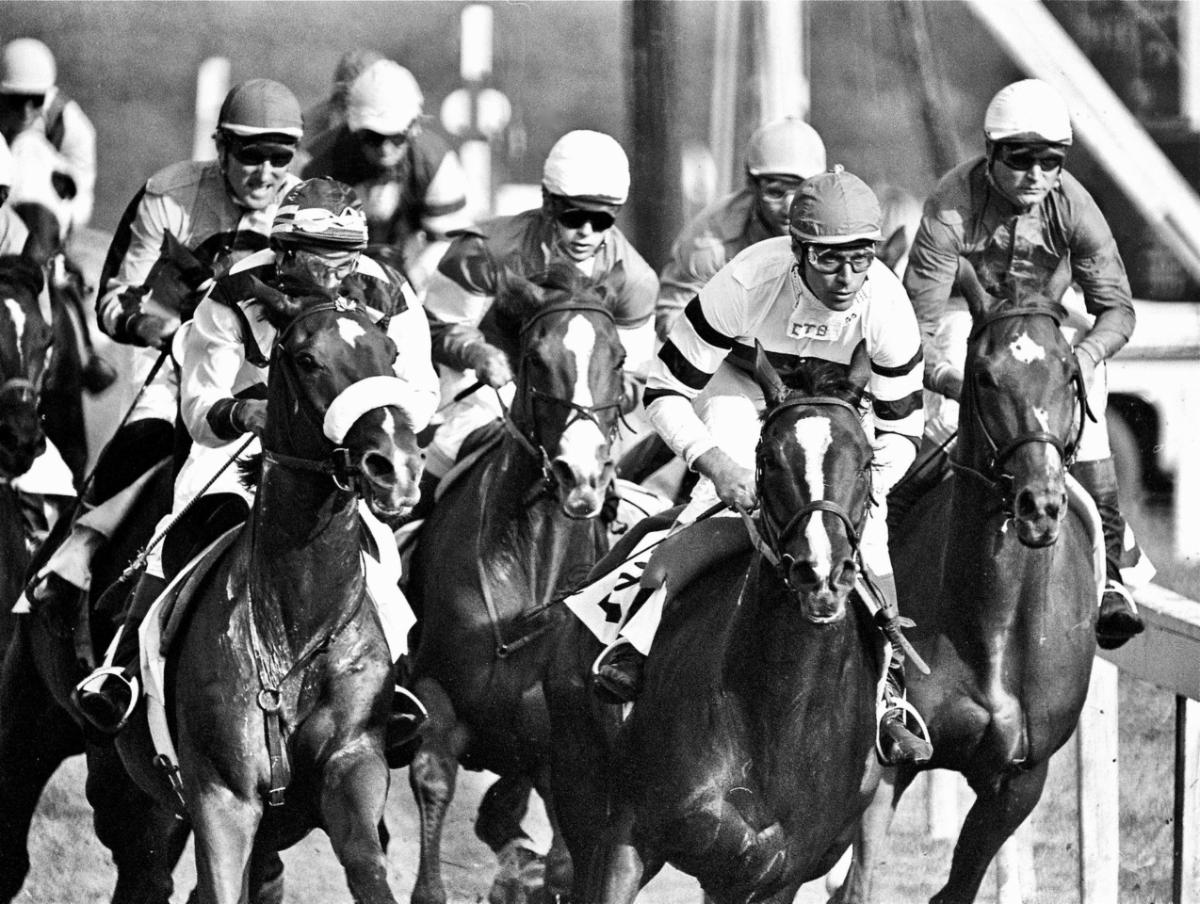
The final fence of the 1980 National 'Chase at Fair Hill - Cushman on Winter Wonderland (left) and winner Running Comment. Rosanne Birkenstock photo / NSA Archives
|
|
The March 28
Carolina Cup
may have been second on the National Steeplechase Association spring lineup, but it was first to cancel due to the worldwide Covid 19 crisis.
The strong response came after lengthy internal debate that left the Carolina Cup Association making a decisive move.
|
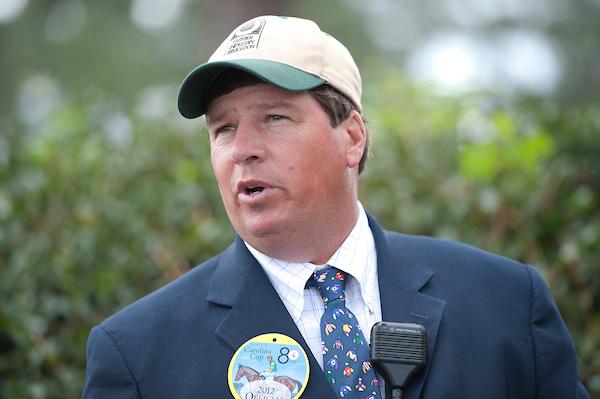
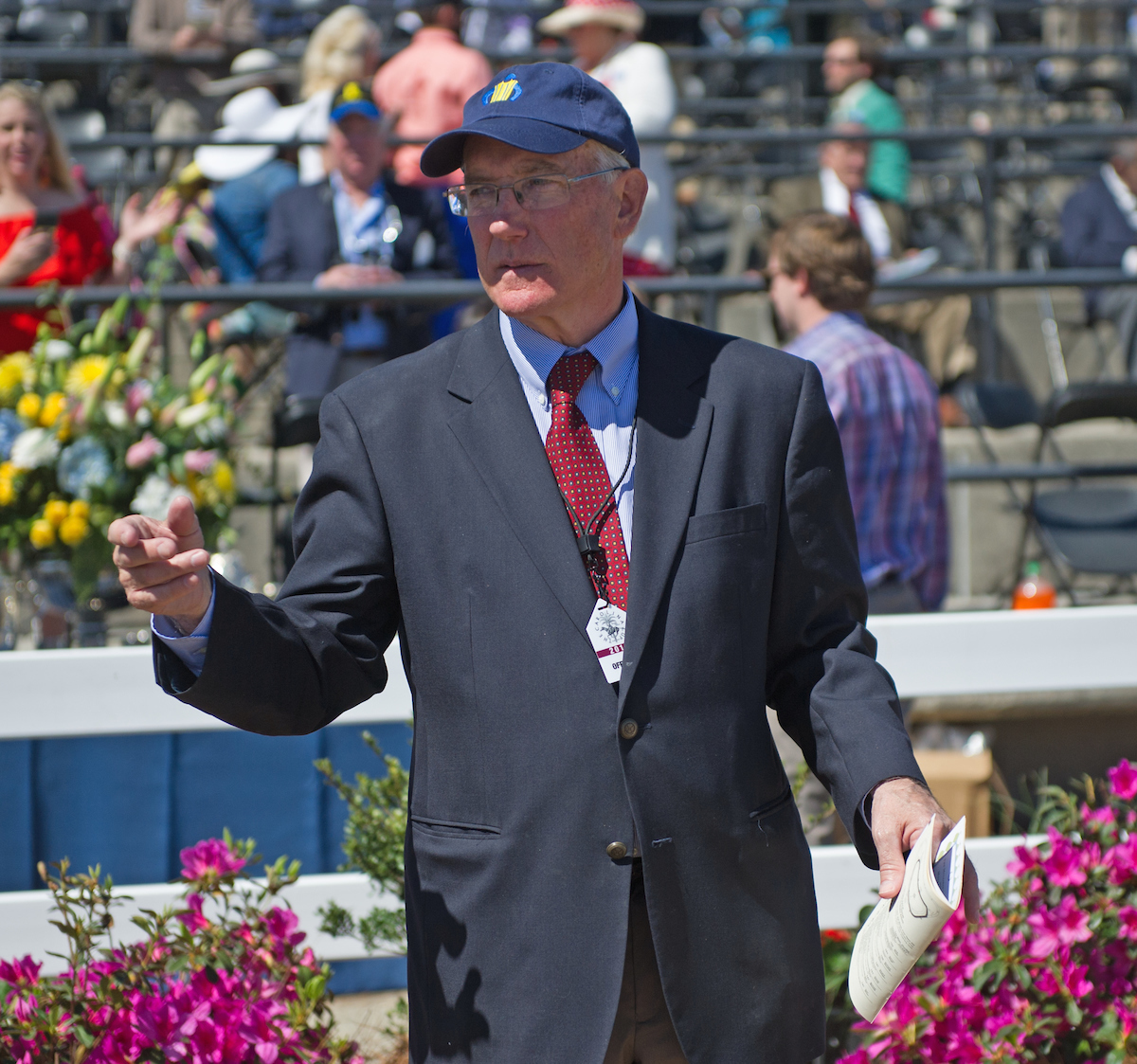
“I’m really proud of Toby Edwards,” said CCA board chair John Cushman of the new CCA director. “About two weeks before the pandemic really got going, Toby called me to lay out some scenarios. We had a board meeting and made plan A, plan B, plan C.
“We were the first major (horse) association to pull the plug, an unpopular decision at first. You just can’t run this kind of risk, and we had to be on the conservative side.
“In hindsight that was obviously the only choice.”
Edwards said coronavirus “had been on my radar since the beginning of the year. I was aware of it in China, and I knew it would impact us.
“I wanted to have a plan in place, under our terms, not get pushed into it. John’s daughter, Laura, and I made a plan for the worst case scenario, and that’s what ended up happening. We actually had already booked the May 30 fallback date, but we gave it up pretty quick because I’m not so sure this will all be done by then, plus it gets pretty hot down here. You’d have to be lucky to get good weather that time of year.”
Edwards says CCA staff was prepared, going from taking ticket orders at 10 a.m. three weeks ago to reading from a printed script to explain the meet’s cancellation by 10:15 a.m.
Like most major sporting events, Carolina Cup is offering a rollover or refund to ticketholders, advertisers and sponsors. Cushman says almost all the sponsors are in for next spring, as are a majority of ticketholders.
There was a brief thought of moving Carolina Cup to the fall schedule, but Cushman says there was a valid reason the old Colonial Cup meet had been discontinued several years ago.
The spring meet is hugely successful, but the association “couldn’t keep hemorrhaging money on the fall meet,” he explained. Colonial Cup may have been beloved by steeplechase horsemen, but in the U.S., especially in the south, “fall sports” mean college football. “You just can’t compete.”
|
|
Mid-season, Cushman said he found himself in an improbable position, one he would never have predicted a year previous – atop the leaderboard.
Of course, when Small’s leg was healed that summer, Cocks took him back.
Cushman understood, grateful for the opportunity. He steeled himself with the confidence he’d built and walked directly across the Saratoga courtyard that very day, from Cocks’ barn to Sheppard’s.
Sheppard took him on readily, and the momentum mounted.
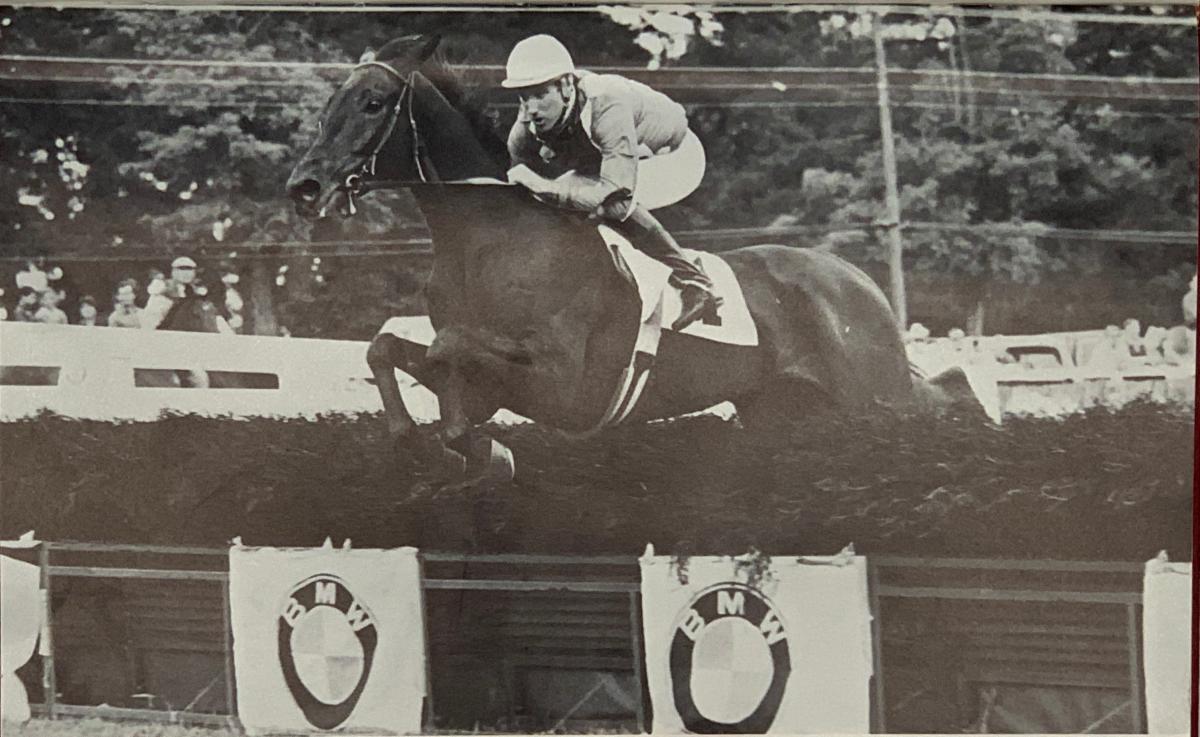
Cushman won the Temple Gwathmey at Belmont that fall with Leaping Frog
(Jerry Cooke photo, below), and his confidence continued to grow.
|
|
“Race riding (skill) comes with experience,” Cushman explained. “You can’t read it. You can’t watch it on film. You’ve just got to ride enough races. On enough good horses.
“Jonathan was dominant back then like Jack Fisher is today. These were high-class horses, steering jobs, some of them. Sheppard had stacks of really good horses.
“The big thing is that Jonathan isn’t one to be critical of his jockey. He’d say ‘if the horse is good enough, he’ll win.’ He was never looking for an excuse – he’d just say ‘don’t get him beat.’
“So the way to do that is to get a horse relaxed and jumping well, and that’s what you learn from riding race after race. I used to call it putting them to sleep. Then produce them at the right time. You get on better horses, you ride better.”
|
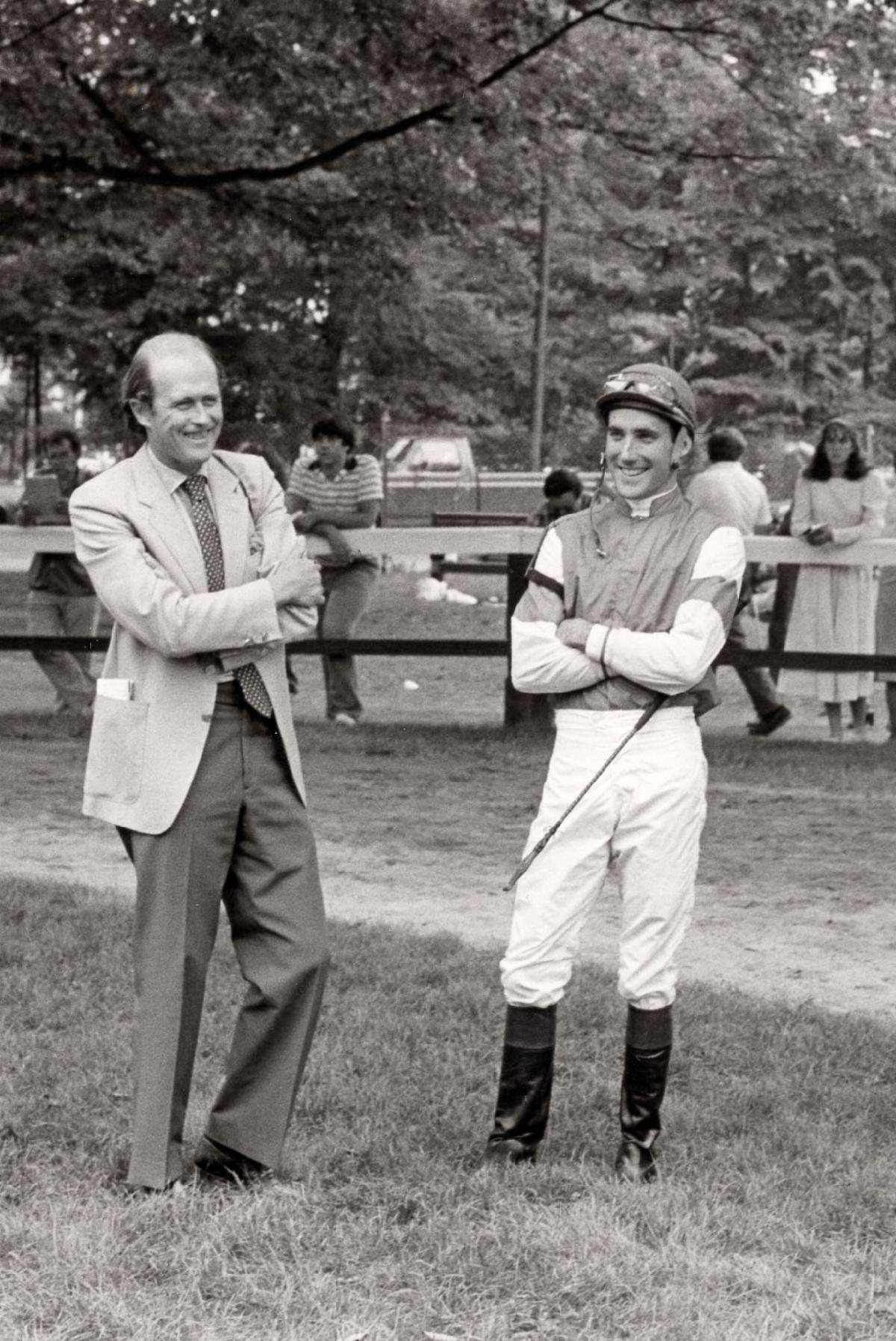
Sheppard and Cushman in the paddock at Saratoga in 1982. Julie Seibert photo / NSA Archives
|
Cushman had called winning the 1980 championship “unbelievable,” 15 wins from 79 rides – 23 percent strike rate. He followed up in ’81 – 26 wins with 91 starters – 29 percent, and ’82 – 23 wins and a 30 percentage win ratio, but the 1983 season was off the charts, on paper and in real life.
The 36 percent strike rate – 32 wins from 96 rides – has never been rivaled. A big part of the total came from producing eventual Hall of Fame champion
Flatterer. Cushman handled the early schooling and first starts for the Bill Pape-Jonathan Sheppard homebred, who won with Cushman at first asking at the April 9, 1983 Atlanta Steeplechase. They marched through his conditions that summer and won the American Grand National in October at Foxfield.
|
Flatterer and Cushman coast to victory in the 1983 American Grand National at Foxfield. Douglas Lees photo
|
|
Cushman was director of the Carolina Cup Association 1991-1998.
|
He created the NationsBank Challenge, a $250,000 bonus paying to a horse winning both the Carolina and Colonial Cup in the same year. A feat never before accomplished, Lonesome Glory won both, and the bonus, in 1997.
|
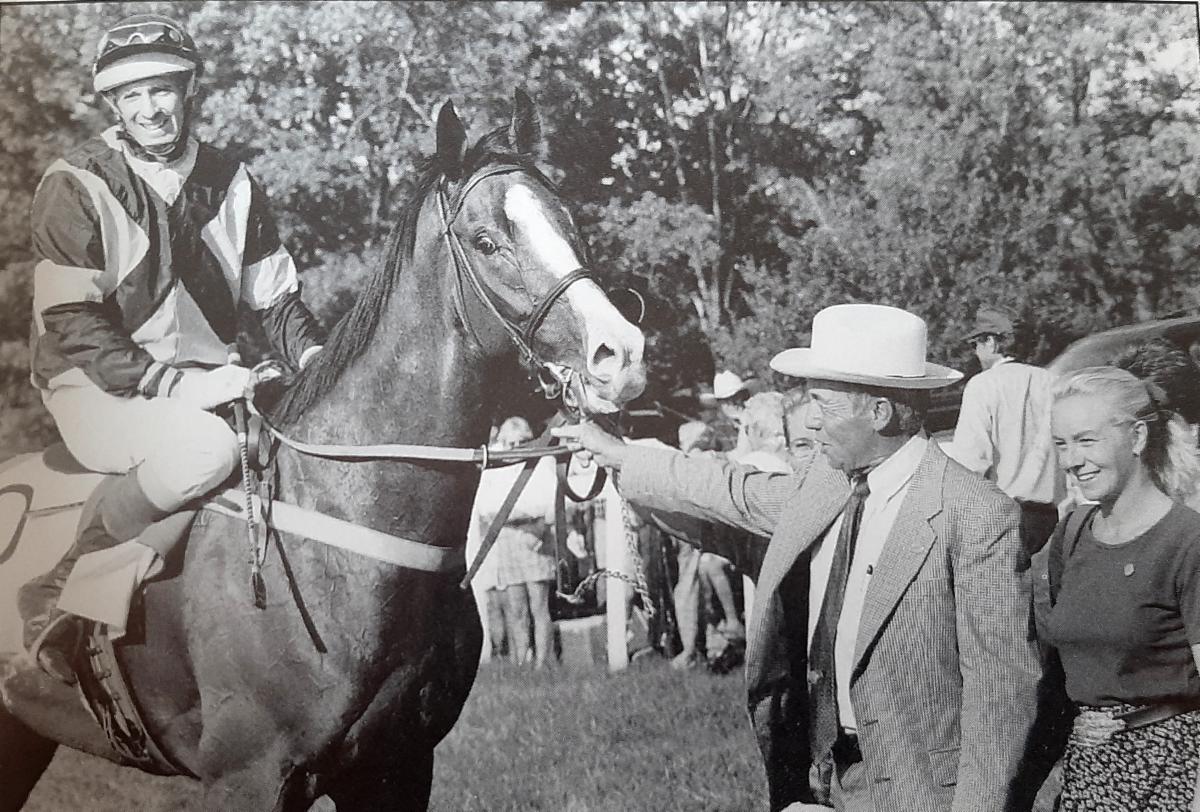
Lonesome Glory and jockey Blythe Miller winning the 1997 Colonial Cup. Ron Cockerille photo / NSA Archives
|
When Cushman stepped down from CCA in 1998, he handed the reins to Hope Cooper, director of administration, and Jeff Teter, director of racing. Cooper also manages the National Steeplechase Museum, which opened in 1998. Teter was three-time champion rider.
|
He returned to help in 2018, helping settle former jockey-trainer Toby Edwards into the role last year.
|
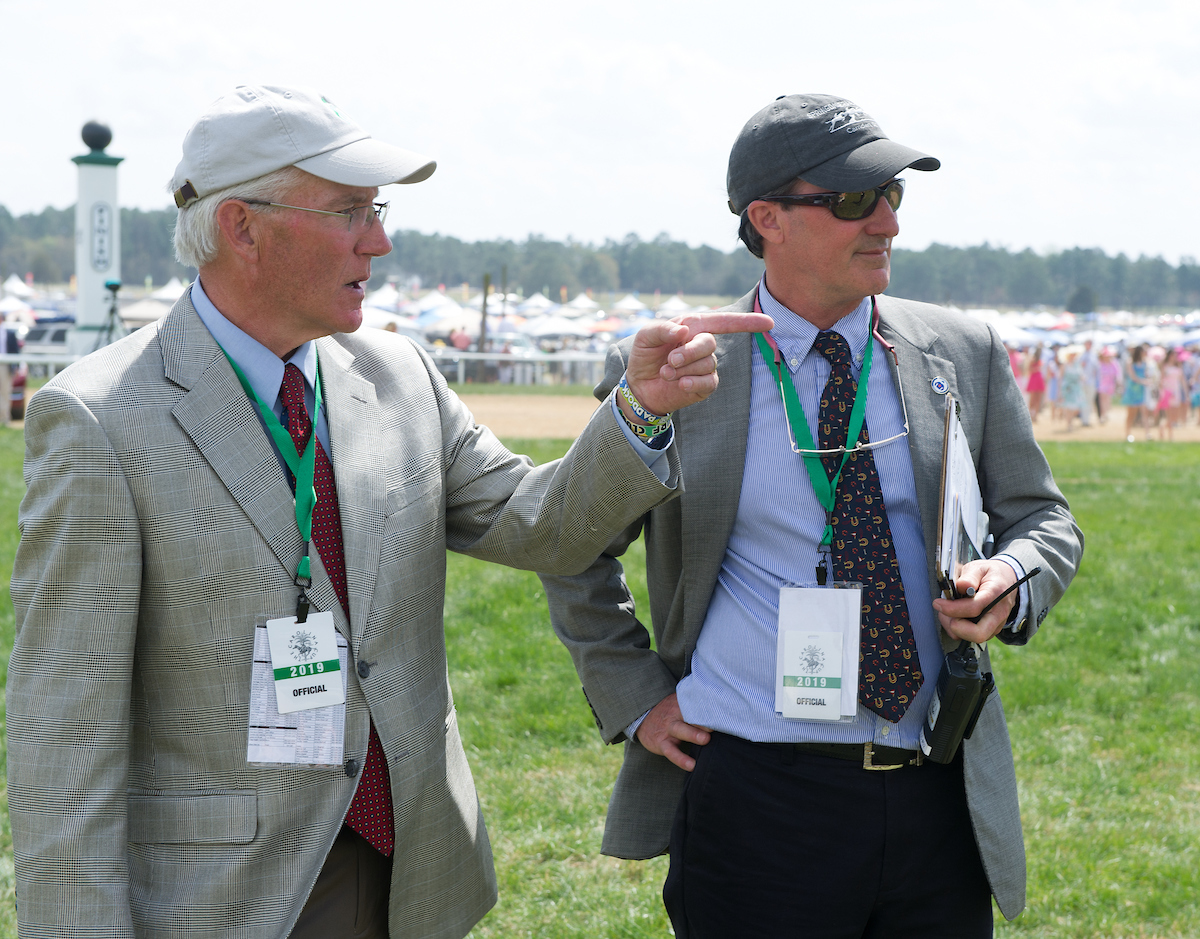
Cushman and Edwards at the 2019 Carolina Cup Races (
Tod Marks
photo)
|
|
“I never had it so good” when aboard a horse like Flatterer, Cushman told Peter Winants in his book, “Flatterer.” “There’s nothing like riding a horse that’s running and jumping well.”
English champion John Francome got the mount on Flatterer to win the Gwathmey that October (Cushman was on the Sheppard “entry” that day – sixth on Thrice Worthy) and in the Colonial Cup that November (Cushman was second on Sheppard’s Twas Ever Thus.)
|
|
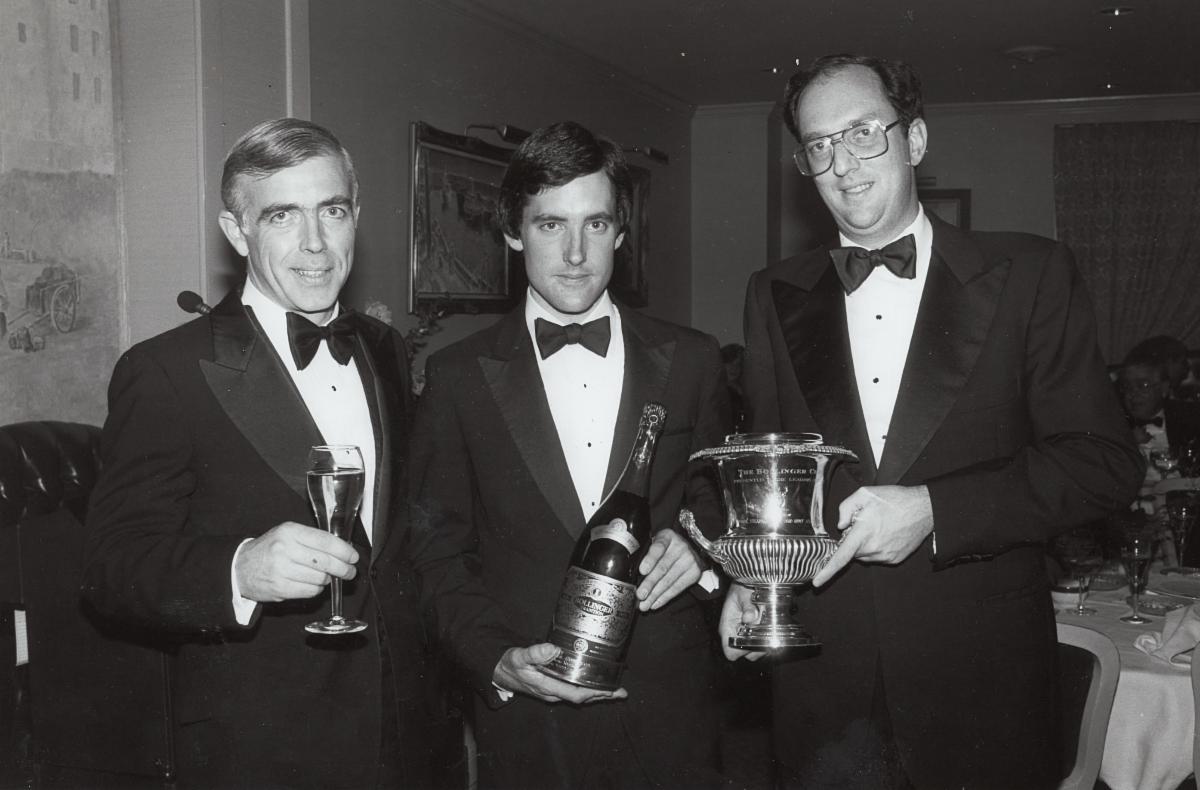
Bollinger executives Brian Moffatt (l.) and Cornelius Marx (r.) present first annual Bollinger Cup to champion jockey John Cushman at NSHA Awards Dinner in Washington, DC in 1981. NSA Archives photo
|
|
|
As he collected his fourth-straight Bollinger Cup, the champagne-fueled sponsor of champion rider through the ’80s, Cushman had no way to know his pro career was over, but, again, the stats on paper just stop. To be sure, Cushman “came out of retirement” for a handful of rides on the flat over the next 20 years, but a knee injury from a fall from a yearling before the 1984 season ended Cushman’s run.
|
|
He was disappointed, Cushman recalls, but circumspect. “I was just in right place at the right time when the door opened in the first place,” he said. “It was all about timing.”
|
Race of the Year! (per the NSHA yearbook) - 1981 match race at Foxfield in the American Grand National, left to right: Sailor's Clue (Woody Maloney, up) - 2nd; Zaccio (on his way to second of three Eclipse Awards with John Cushman, up) - 1st. It was the only time Cushman rode the Burley Cocks-trained Zaccio. Douglas Lees photo
|
Cushman built
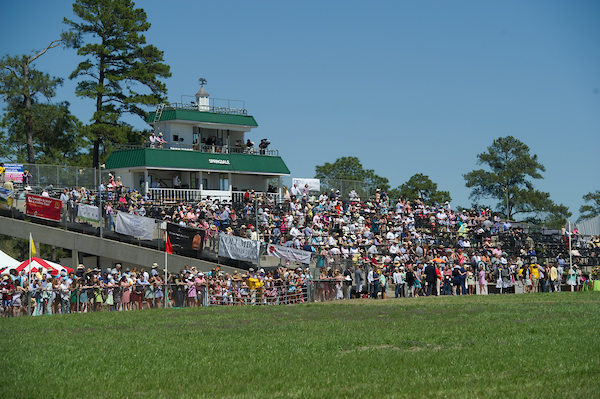
The Tack Room into one of the nation’s biggest tack stores, and served for 10 years as director of the Carolina Cup Association. He grew the meet to become NSA’s largest – the 2000 Carolina Cup still holds the record with 71,000 spectators. Cushman helped new CCA director Toby Edwards last year, and now serves as chairman of the board of directors. He’s handed over management of The Tack Room to his daughter, Adriane, and her husband, and today Cushman focuses chiefly on his golf game.
He looks back on his career trajectory as much about luck as anything, though Sheppard stresses that Cushman’s “focus and quiet manner with a horse” while racing played a huge role in his story.
“I was very fortunate,” Cushman said. “And I was lucky enough to take advantage of it.”
|
Cushman at the 2018 Carolina Cup Races.
Tod Marks
photo
|
Since opening in 1954 as a mobile tack supply,
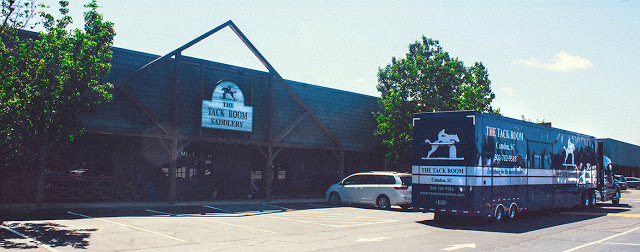
The Tack Room has grown to be one of the nation’s largest tack supply stores. The Tack Room was founded by legendary polo player Cyril Harrison, then converted to a downtown storefront by second owner Hope Cooper. In 1963, The Tack Room was purchased by John Cushman’s mother, Ida.
John Cushman and wife Sandy (she’s Blythe Miller Davies and Chip Miller’s aunt) bought The Tack Room from Ida in 1978, moving to a larger building and expanding the business. They expanded again when moving to the old Winn Dixie building outside town, 33,000 square feet of retail space.
“The store has changed its focus from 80 percent racing to 98 percent hunter-jumper these days,” John Cushman said. “But you learn to be attentive to your customer, make sure you’ve got what they want.
“It doesn’t work to have a customer come in your door one time. You’re after repeat business.”
John and Sandy’s eldest daughter, Adriane Potter, and her husband, Jonathan, now operate The Tack Room, adding an online store in 2009, and a mobile unit in 2011.
|
|
Riding Years: 1973-1983 (plus six races as an amateur, 1988-2003)
|
Rides: 616 (includes point-to-points)
|
Title: 1980, 1981, 1982, 1983
|
Notable: Cushman’s 1983 championship season was his best – 32 sanctioned winners from 96 mounts. It was a
win rate of 36 percent, a feat never equaled, and neared only by Tom Skiffington (34 percent in 1976) and Dooley Adams (34 percent in 1954 and '51)
|
Top horses: Hall of Fame ‘chasers Flatterer, Zaccio (once), Cafe Prince, plus stakes standouts Straight and True, Double Reefed, Breaking Dawn, Leaping Frog, Thrice Worthy
|
Cushman and Double Reefed at Rolling Rock in 1980. Douglas Lees photo
|
Fast fact: Though his father rode in the 1949 Carolina Cup – then (and until 1967) run over timber, and his grandfather rode in the first Carolina Cup in 1930, John Cushman only rode one race over timber (Prince Sultan for trainer Blaine Holloway at Oxmoor in 1977), not because he didn’t like timber, but because “in that era when I was riding, timber races were almost all limited to amateur riders. The professionals were riding the hurdle races.”
|
Fast fact, II: Cushman retired from racing after a knee injury incurred in a fall with a young horse before the 1984 season, but he wasn’t quite finished: The four-time champion professional “came back” as an amateur to ride a few on the flat from 1988 to 2003. The 2003 races (three seconds, including his final race on eventual Maryland Hunt Cup winner Professor Maxwell) meant that he rode races for, literally, 50 years.
|
|
Like father, like son (times two)
|
|
Charles V.B. Cushman Sr.
(left), John Cushman’s grandfather, rode in the first Carolina Cup. The 1930 race was won by Noel Laing on Bellast II, and he beat some of the best in the business – Tommy Smith, Temple Gwathmey, Rigan McKinney.
His son and namesake, Charles V. B. Cushman Jr. – Charlie, was born June 9, 1926. Raised at Windsor Farm in Upperville, Virginia, Charlie Jr. attended Phillips Exeter Academy and the University of Virginia. He went into ’chasing just after school, one of a number of young jockeys and future trainers working at Burley Cocks’ Hermitage Farm in Pennsylvania after World War II. Among young horsemen schooled under the future Hall of Fame trainer were Paddy and Mike Smithwick, Mike Freeman and Jonathan Sheppard.
Like his father, Charlie Jr. rode as an amateur, riding in his first Carolina Cup in 1949; he won it with Explode II in 1971. Charlie Jr. trained horses after retiring, training 1961 champion Peal, and providing his son, John, his first race rides, first winner and first stakes winner.
Charlie Jr. sold bloodstock, with John traveling to South America to purchase ’chase prospects in Chile; some finds included stakes winners Retador, Tostadero and others.
Charlie Jr. died in 2011, at age 85.
Another champion rider who came up under Cocks’ tutelage, 1986 and ‘87 champion jockey Ricky Hendriks called Charlie Cushman “larger than life. A real giant, a real gentleman.”
After his father died, John Cushman told This Is Horse Racing’s Sean Clancy that he “felt like I had a hole in me, still do – but the last five years of his life were the best years of his life. He was so comfortable in his own skin, … and it was great to see, great to be a part of."
|
|
 |
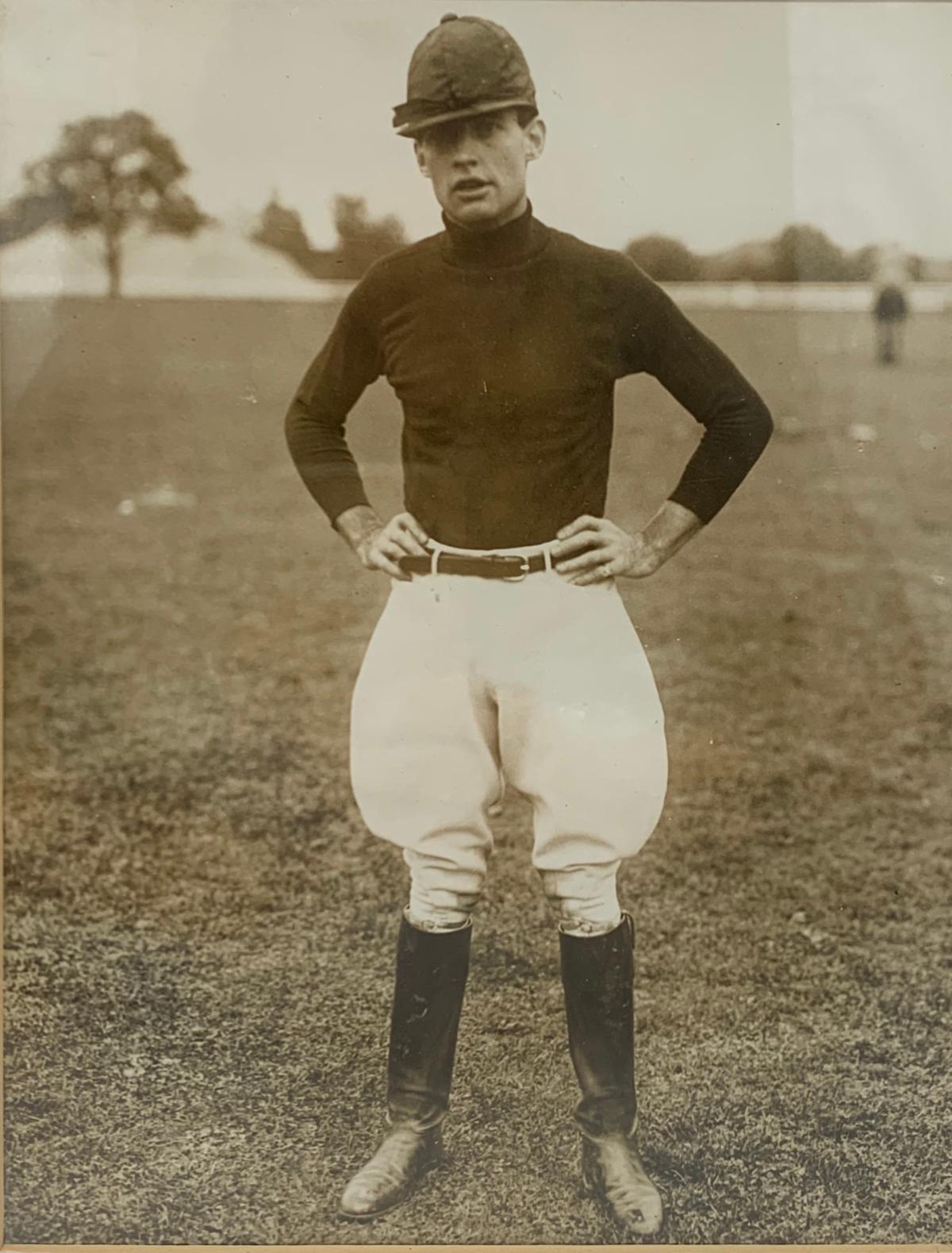
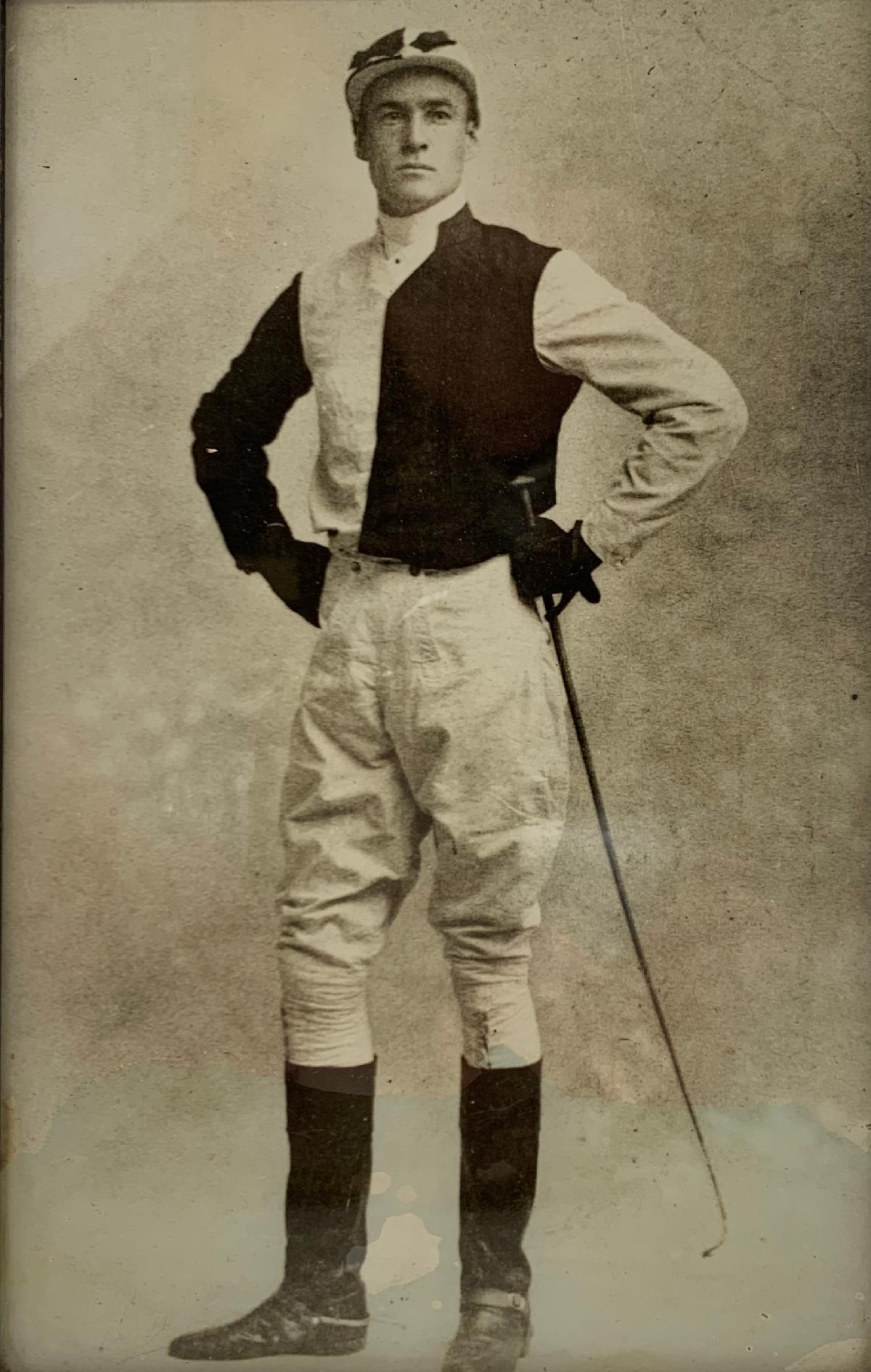
Four generations of horsemen - John Cushman's great-grandfather, Allerton Seward Cushman. Photo courtesy of John Cushman
|
|
|
|
The striking resemblance to Allerton Seward Cushman - John Cushman in the paddock at the 1981 Colonial Cup. Milton C. Toby photo / NSA Archives
|
|
|
|
See the champ’s climb through the eyes of:
|
|
Hall of Fame trainer Jonathan Sheppard knew Cushman “since he was a kid” growing up in Sheppard’s winter quarters in Camden. “He’d been riding for Burley (Cocks), and he joined us about the same time Jerry Fishback was stepping down (when Fishback retired, for the first time, in 1980.)
“John was a gifted rider, but more than that, he was extremely focused, conscientious and he just naturally knew how to get the job done. He was very pleasant, and he got better and better as he rode more races.
“He became a real asset to the stable. We had a great run.”
|
|
|
|
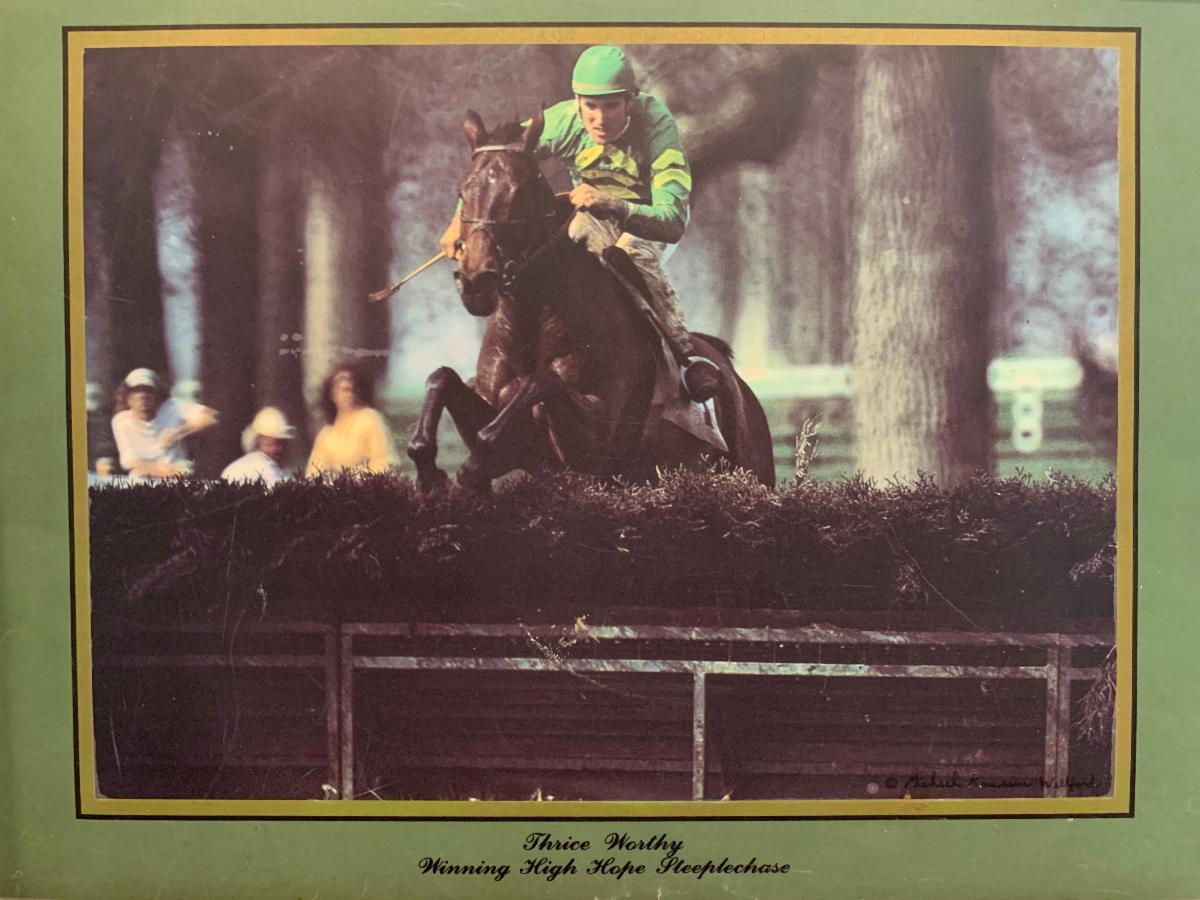
Cushman riding Sheppard-trained Thrice Worthy, owned by Will Farish, to a win in the 1983 Pillar Steeplechase Stakes at High Hope. Thrice Worthy reeled off nine consecutive wins in 1982 - 83, all with Cushman in the irons. Read more at
This Is Horse Racing
.
Michael Wellford photo, courtesy of John Cushman
|
|
|
|
Champion jockey in 1986 and ’87, trainer Ricky Hendriks was a veteran pony racer but a first-time jump jock at the 1980 Virginia Gold Cup meet. He’d known John Cushman a long time, Hendriks said, and was comforted when his father told him to “stick right beside John – he’s going to take you around,” helping him navigate the Broadview course with quiet coaching and advice as they raced.
“Going to the first, I was stirrup to stirrup with John headed to the hurdle. He took me way to the outside of the fence, and it’s lucky, too, because two or three of those maidens fell over each other up the inside at the first.
“We jumped together a full lap of the course, and then he looked over and saw I was going okay, and my horse was going okay, and he said ‘go ahead and let him run a little bit.”
Hendriks finished third on his father’s T.V. Warrant, Cushman fourth on Zepha for Tom Voss.
“I learned a lot from John, a lot by watching him, but he told me something once,” Hendriks recalled. “He told me ‘loose horses don’t fall.’ Meaning, it’s our job to learn how to leave the horse alone. John was great, he kept horses within themselves.”
Hendriks caught the fallout from Cushman’s abrupt retirement before the 1984 season earning a trip to the Rail Freight Jockey Championship that year at Cheltenham as de facto "U.S. leading rider," having finished second to Cushman on the 1983 jockey table.
Today, Hendriks and Cushman share a second passion – golf. They play together whenever possible. With a 3 handicap, Cushman ranks among the top 1 percent of players, “usually he beats me,” Hendriks said with a laugh.
|
|
|
|
A 1982 Allowance flat race at Fair Hill. Zaccio won the race, prepping for winning the '82 Temple Gwathmey and a third Eclipse award. Zaccio, with Ricky Hendriks up, is in the middle of the photo (white helmet cover). John Cushman is to the left of Hendriks, and finished 10th on Right Now Bill. Douglas Lees photo
|
|
|
|
Carolina Cup Association director Toby Edwards says John Cushman has been a wealth of information since Edwards took the reins last year.
Edwards traces the series of steps leading from his native England to running one of the south’s largest sporting events in a small South Carolina town.
“It’s funny, but back in England I’d sort of heard of Camden, but didn’t even know where it was, really,” Edwards said. “I was working for Arthur Moore in Ireland, and he would tell us about ‘going to Camden’ with L’Escargot,” trained for Raymond Guest by his father, Dan Moore, for the 1970 Colonial Cup. It was the inaugural running of the race, set up as a world championship and offering steeplechasing’s first $100,000 purse.
Winner of the Cheltenham Gold Cup that spring, and having been 1969 U.S. steeplechase champion with two major track hurdle stakes wins, L’Escargot was well regarded in the Colonial Cup. He finished fourth – best of nine invited international runners, but the trip indirectly paved the way for Edwards to, eventually, come to Camden.
Edwards first visited the U.S. in 1988, riding work in Ocala and at Belmont Park, returning the next year to get his first look at American jump racing at Saratoga. Edwards returned for good the following year, eventually ending up with a string at Springdale, riding nearly 500 races 1993 to 2001.
In 2003, Edwards was asked to help run the Southern Pines meet, rising eventually to be Stoneybrook race director and later helping at Tryon, Charleston and, starting last year, at Camden.
“John worked with me directly last year. As I’ve gotten to know him better and better, turns out, we think a lot alike. We came to this job basically on the same path – we’ve seen racing from each side of the fence.
“We both laugh about back when we were race riding, how we thought the whole race day should revolve around us. Now, I recognize ... there are a lot of moving parts to putting on a race meet."
|
|
|
|
Dale Thiel's Plumb Bob, ridden by jockey / trainer Toby Edwards, won the NSA Three-Year-Old Championship in 1997. The Freshman jumper won at Virginia Fall and at Far Hills, and was second at Camden.
Douglas Lees photo
|
|
|
|
His doctor threatened him,
sort of.
Before the start of the 1984 season, Cushman took a hard fall from a young horse, snapping a ligament in his knee.
He was lame, but he was eyeing a fifth-straight title and had his pick of mounts for the upcoming season.
“I’d done a ton of damage to it through the years,” he said. “So my doctor had operated on it already a few times.
“I went in, he took one look at it and shook his head. ‘I’ll operate on your knee again,’ he told me. ‘But if you keep at this riding career, I’m going to also refer you to a psychiatrist.’
“He was serious.”
|
|
|
|
Cushman in the paddock at Fair Hill in 1980, for the Kent Steeplechase on Mrs. Valentine's Baronial (Ire), trained by Burley Cocks.
Douglas Lees photo
|
|
|
|
See what's happening on our social sites:
|
|
|
|
|
|
|