FROM D.C. TO YOUR DISTRICT: SPECIAL ED POLICY UPDATES

Join your Midwest special education colleagues for a FREE, MEMBER ONLY, federal legislative update from Myrna R. Mandlawitz, policy and legislative consultant to the Council of Administrators of Special Education (CASE), and Kuna Tavalin, senior policy and advocacy advisor to the Council for Exceptional Children (CEC).


This session is presented in collaboration with the Midwest Executive Directors from Illinois, Michigan, Minnesota, Missouri, and Wisconsin.


Logistics:

Date: February 19, 2026

Time: 1-2:30 PM ET

Weekly Update 1.16.26


Literacy Law Update

Governor Whitmer, members of the Michigan Legislature, and candidates on the gubernatorial campaign trail all have noted that early literacy will get a great deal of attention this year in Lansing.  As we are partway through the second school year since the Legislature passed significant changes to literacy and dyslexia laws, implementation is ongoing to review, evaluate, and enact curricula and other provisions included in both that policy change as well as initiatives included in the FY 2025-2026 School Aid budget.  Michigan  Department of Education officials provided an update to the State Board of Education Tuesday on the state’s timeline for implementing PA 146 of 2024, which is roughly halfway complete. The timeline sets the goal of the 2027-28 school year to round out the process of fully enacting the reforms required in the law, which include using evidence-based reading curriculum and assessment methods rooted in the science of reading.


Consensus Revenue Estimating Conference

The Consensus Revenue Estimating Conference is taking place on Friday, January 16, 2023. It is expected that similar to last year, the K-12 budget will see some healthy upward revisions, in contrast to more pessimistic projections in the General Fund.  We will see final numbers Friday afternoon that the Governor, House, and Senate will utilize to prepare their respective budget proposals in the near future, starting with Governor Whitmer releasing her final budget proposal in mid-February.  Of interest this year is whether or not we will see budgetary proposals from the House and Senate prior to the May Consensus Revenue Estimating Conference - recall that last year the Senate released a budget proposal under the traditional timeline, while the House waited until later in the year to utilize the revised May estimates.  


Lansing Updates

There were no education committee hearings or Senate sessions this week. 


House Activity

The House reconvened for session on Wednesday, and HB 4141 passed overwhelmingly. The “cell phone bill”  requires school boards to create a policy concerning the use of electronic devices, essentially a cell phone prohibition during instructional time with numerous exemptions negotiated in concern with the Senate.. It has bipartisan support, so we expect it will go to the Senate and potentially move through the legislative process to the Governor, though we expect a Senate companion bill to be passed as well, Senate BIll 495.  


HB 4556 and HB 4557 would remove the writing portion of the Michigan Merit Exam, and remove SAT scores from the student transcript. We will expect this legislation to continue through the legislative process in the Senate as well.


There were no education bills introduced this week.  Expect legislative activity to pick up in earnest next week, as the second Wednesday in January is traditionally the start of the legislative session year. 

Advocate. Connect. Make an Impact — Join Mi SELS 2026!

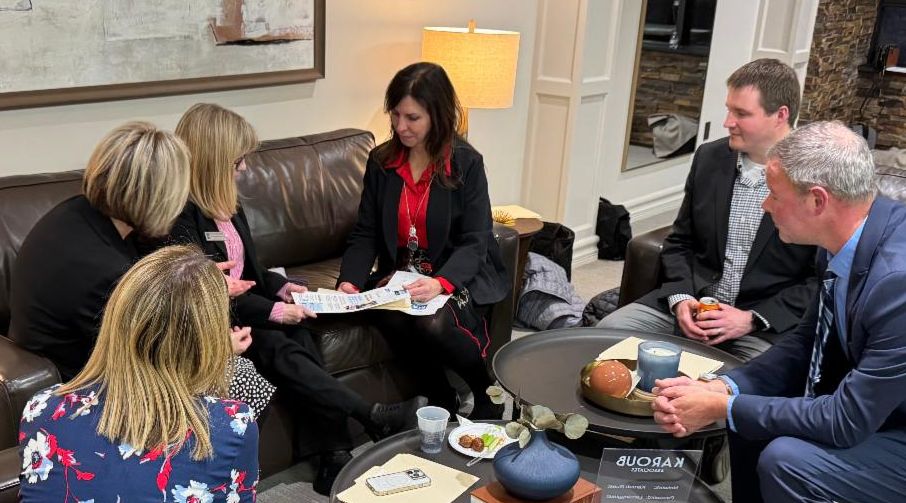
Educators, administrators, and special-education professionals: here’s your chance to make a difference. On March 3–4, 2026, the Michigan Association of Administrators of Special Education (MAASE) will host the Michigan Special Education Legislative Summit (Mi SELS) — a 2-day event designed to empower you to advocate for students with disabilities and build meaningful relationships with your state legislators.


Why Attend?


  • Understand the legislative landscape. Day one begins with a comprehensive review of MAASE’s Legislative Platform and Priorities — giving you the context and clarity you need to speak up for what matters.
  • Hear from multiple perspectives. A panel discussion will highlight current issues impacting special education — helping you see a broader picture and prepare informed advocacy messages.
  • Practice advocacy in a supportive environment. Night one includes a reception to meet legislators casually. Day two gives you the opportunity to visit legislative offices — working in teams so even those new to advocacy can join confidently.
  • Strengthen your leadership and commitment. Advocacy is a cornerstone of educational leadership. Mi SELS helps you grow as a leader committed to equity and access for students with disabilities.


Logistics at a Glance


  • Cost: ONLY $40!!!
  • Date: Tuesday, March 3, 2026 (4:00 PM EST) – Wednesday, March 4, 2026 (5:00 PM EST)
  • Location: Karoub Associates — 121 W. Allegan St., Lansing, MI 48933
  • How to Register: Click below! Seats are limited, so register soon!

Action Alerts


Council of Administrators of Special Education (CASE) Action Alert


On November 18th, the Administration announced six interagency agreements transferring management of most K–12 and postsecondary education programs out of the U.S. Department of Education. While IDEA has not yet been moved to the Department of Health and Human Services, CASE is expecting an announcement to this effect—a shift that would increase bureaucracy and put critical supports at risk. The Senate Labor–HHS–Education appropriations bill will be finalized within the next week. Congress needs to hear—now—why moving education programs is bad policy.


Take action today! Contact your Senators and Representatives and urge them to keep IDEA and education programs where they belong.

This Week's Headlines

Education Funding for the Fiscal Year Nears Finish Line, Education Department Central Issue of Debate


Despite being nearly a third of the way through Fiscal Year (FY) 2026, Congress is still actively debating how to appropriate funds and whether to add any additional requirements this year. Under a tight deadline (the current extension will expire on January 30), appropriators appear to have struck an agreement on funding levels, and special education funding does not appear to be at risk.

House Hearing Considers Building an AI-Ready America


The full Education & Workforce Committee held a hearing on Wednesday titled "Building an AI-Ready America." Mr. [Adeel] Khan, a former special educator, testified that the software his company has developed is grounded in direct experience in education at all levels. Rather than reject artificial intelligence (AI), he advocates for shared standards and safe tools.

MAASE_Tagline_-_Adovcates.jpg